I read your post. It is hard to describe the rage that I felt at the colourist dismissal of your work that you called out. As someone who has closely observed your admirable work of saving Kerala ‘s Kudumbashree network meant for the support of the underprivileged from deteriorating into a bunch of crumb-seeking women, I can only say that the comment was also probably driven by sheer envy, and not just shallow thinking. It may be true that your efforts did not fructify everywhere. It is also true that much has regressed, but some aspects continue to endure despite determined push from the political class. No one can deny your exemplary achievements, rare among civil servants.
സമൂഹത്തിനും ആരോഗ്യ സംവിധാനത്തിനും ഇടക്കുള്ള മുഖ്യ കണ്ണിയായി പ്രവർത്തിക്കുന്ന ആശ വർക്കർമാരിൽ ഒരു വിഭാഗം 45 ദിവസത്തിലേറെയായി, കേരള സെക്രട്ടേറിയറ്റിന് മുന്നിൽ പ്രതിഷേധിക്കുകയാണ്. കഴിഞ്ഞ ഏതാനും ദിവസങ്ങളായി ഇവർ നിരാഹാര സമരവും നടത്തുകയാണ്. സംസ്ഥാന സർക്കാർ ആശമാർക്ക് നല്കുന്ന ഹോണറേറിയം വർദ്ധിപ്പിച്ച്, മിനിമം കൂലി പ്രതിദിനം 700 രൂപ എന്ന നിലയിൽ മാസം 21000 രൂപ വേതനം നല്കുക, വിരമിക്കൽ ആനുകൂല്ല്യങ്ങളും ഇൻഷുറൻസ് അടക്കമുള്ള പരിരക്ഷകളും അനുവദിക്കുക തുടങ്ങിയവയാണ് ഇവർ മുന്നോട്ട് വയ്ക്കുന്ന ആവശ്യങ്ങൾ. പൊതുജനാരോഗ്യ വിഭാഗം വിദ്യാർത്ഥികൾ എന്ന നിലയിൽ പല അവസരങ്ങളിലും ആശാ പ്രവർത്തകരുമായി നേരിട്ട് ഇടപെടുകയും, അവരുടെ പ്രയാസങ്ങൾ അടുത്ത് നിന്ന് മനസ്സിലാക്കുകയും ചെയ്തവരാണ് ലേഖകർ.
Indian federalism is on the verge of breakdown for multiple reasons. A crucial contributor is the collapse of the system of revenue sharing between the Centre and the States and the weaponization of vertical transfers as an instrument for political contestation.
The conflict over resources in India’s quasi-federal political structure is by no means new. Framers of the Constitution, who recognised that the division of taxation rights and spending responsibilities between the two principal tiers of government in India was asymmetrical, sought to partially resolve this problem by providing for a share for the States in a defined set of tax revenues garnered by the Centre, with the principles governing the share devolved and distributed to individual States recommended by successive Finance Commissions. But State governments have been increasingly disappointed with the actual experience with devolution, because of the concentration of resources mobilised in the hands of the Centre.
The issue, however, is not one of mere competition for resources between the Centre and the states. Having gained control over the Lok Sabha, the BJP has made it clear that it is keen on establishing an opposition-free political space. To realise this objective, it has not only sought to undermine the legitimacy of individual opposition politicians with charges of corruption or “anti-national” activity, but of opposition-ruled State governments by eroding their ability to adopt economic policy measures and initiatives that could win them political legitimacy. Expenditures on building State infrastructure or social expenditures on subsidised food provision, a modicum of social protection, and employment guarantee schemes, do contribute to winning a party in power in a State a degree of political legitimacy. The attack on the fiscal capacity of the State governments helps limit such expenditures, even while Central claims on expanding infrastructural investments and social sector spending are advanced, with an increase in ‘central’ schemes, especially those attributed to the patronage of the highest authority, the Prime Minister.
Speaker :
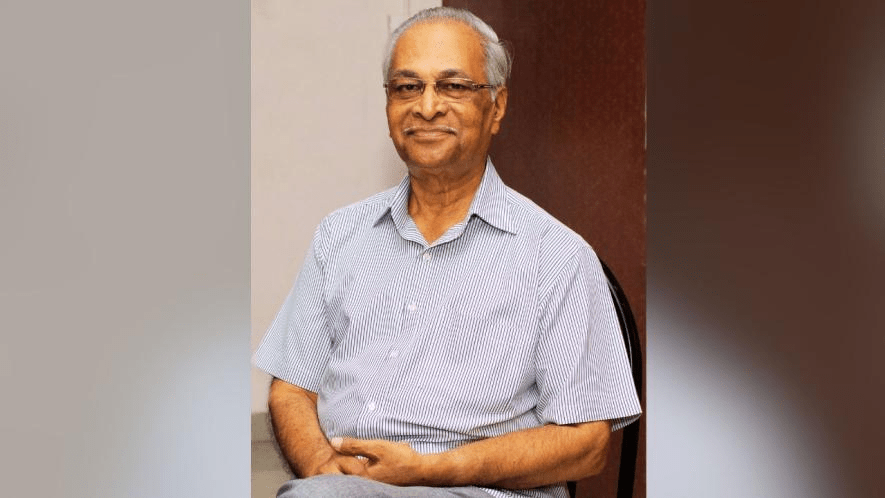
Prof C P Chandrasekhar
Prof C. P. Chandrasekhar is emeritus professor at the Centre for Economic Studies and Planning, Jawaharlal Nehru University (JNU), New Delhi. He has published widely in academic journals and is the coauthor of Crisis as Conquest: Learning from East Asia (2021, Orient Longman), When Governments Fail – A Pandemic and Its Aftermath (with Jayati Ghosh et al) , 2021 ; Interpreting the World to Change It – Essays for Prabhat Patnaik (with Jayati Ghosh), 2018 ; After Crisis : Adjustment, Recovery and Fragility in East Asia ( with Jayati Ghosh) 2009 ; The Market that Failed: Neo-Liberal Economic Reforms in India (2002, Leftword Books), and
He received his MA and Ph.D (economics) from Jawaharlal Nehru University, where he served as a professor from 1997 until his retirement. He is a member of the executive committee at International Development Economics Associates (IDEAs) and the World Economics Association, as well as a contributor to Frontline, Economic and Political Weekly, and Businessline.
Chandrasekhar received the Malcolm Adiseshaiah Award for 2009 for contributions to economics and development studies.
[This is my translation of the statement issued by Kerala’s People’s science /development movement, the Kerala Sastra Sahitya Parishat, about the ASHA workers’ strike, which is now in its forty-fourth day.]
The ASHA workers of Kerala have been on strike since forty-two day now, engaged in seeking an increase in honoraria and other benefits. The issue continues to remain unresolved. The ASHA workers comprise a sector in which 26,000 workers currently work. They are all women, attached to a Central scheme, and receive merely Rs 7000 per month as honorarium. For this reason, it is the duty of both Central and State governments to consider their demands in a democratic fashion and respond with sympathy. The very many struggles unfolding among Accredited Social Health Activists now must be developed into a people’s struggle against globalized economic policies, and the issue of their wage must be settled with Central and State governments working together. What we see in the ASHA workers’ struggle in Kerala is the crisis and tension emerging from the one-sided and top-down imposition of globalizing tendencies upon a society that had grown and developed within the framework of a welfarist state.
Kerala’s public health sector was well-coordinated and accessible to all since a very long time. It is marked by a pro-poor orientation. A large network of health experts and professionals, from doctors to public health nurses, work in it. They are all appointed officially and formally, and are regarded as workers and employees. Therefore, their remuneration and conditions of work are well-defined according to existing rules and laws.
The ASHA workers’ strike in Kerala is in the forty-third day today. It is the fifth day of their hunger strike — three women have been on hunger strike since the failure of talks with the government last week. Today, they have called for a mass hunger-strike at the protest site. ASHA workers who stand with the strike but are not able to reach Thiruvananthapuram have been requested to wear black at their workplaces and homes. The KAHWA has issued an open call to all women in Kerala to wear black and post pictures supporting the strike.
As the debate on the three-language policy has intensified, what was originally an exchange between ministers of the union government and the government of Tamil Nadu, or between leaders of the Bharatiya Janata Party (BJP) and the Dravida Munnetra Kazhakam (DMK), has become a subject of commentaries and criticisms coming from observers, intellectuals and activists. The union government says that no state could be exempted from the implementation of the three-language formula as envisioned in the New Education Policy (NEP) 2020 and adds that Hindi is not made mandatory under the present formula. The condition is that two of the three languages must be native Indian languages. The DMK leadership argues in response that the three-language policy can still be an indirect route to push Hindi into the state. The latter has appeared firm in its argument that it is the state’s prerogative under the federal system to determine its language and education policy (though during emergency education was shifted to the concurrent list of the union government). It also opposes the measure adopted by the union government, that is, to link the funding under the Samagra Shiksha Abhiyan to the implementation of NEP 2020 and the language formula it includes. The parties which are not in alliance with the DMK in the state allege that the DMK has staged this conflict in order to ignite sub-national/regional sentiment to strengthen its position before the elections.
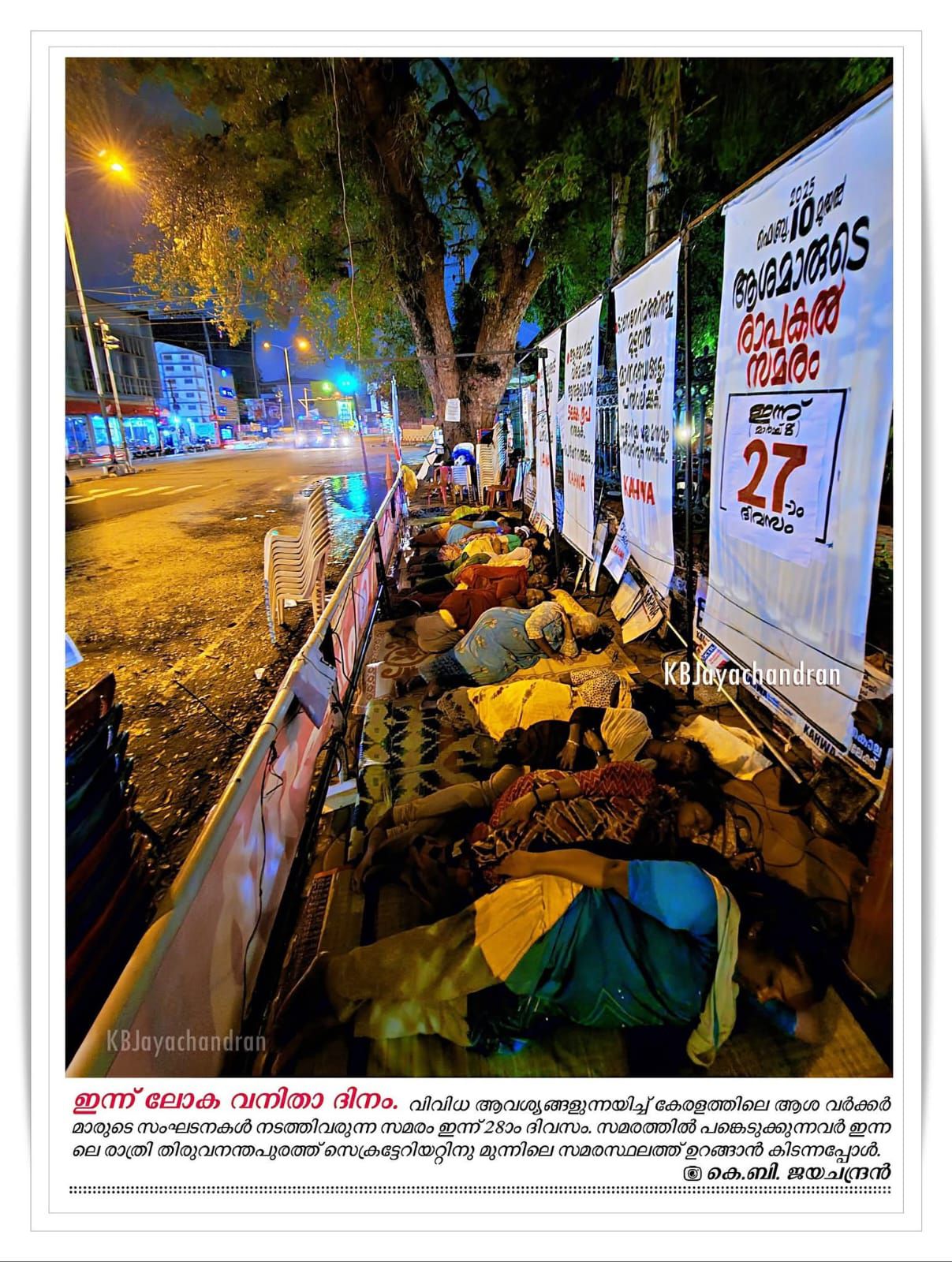
ASHA workers on strike for the twenty eighth day, sleeping in front of the State Secretariat in Thiruvananthapuram.
Happy Women’s Day from Kerala, the Land of Women’s Empowerment!!
On this day, true to the fighting spirit of the women workers who fought valiantly for their rights and who faced the tyrant’s bullets fearlessly, Kerala’s COVID-warriors, our ASHA workers, sleep on the rain-soaked pavement in front of the State Secretariat in the capital city of Kerala.
Happy Women’s Day, Pinarayi Vijayan and Veena George. You must getting ready for the day refreshed by sleep in your soft beds, in the mansions that we the citizens of Kerala have funded for the comfort of our rulers.
Happy Women’s Day, Com. Thomas Isaac. Yes, you wouldn’t have been so famous the world over, if not for ‘women’s empowerment’ and the whole local-level development jingbang! See how empowered they are now. I am sure you must be happy now.
Happy Women’s Day, all of you in the CPM who have fattened on the achievements of women development workers — T N Seema and others — and the CPM hanger-ons who have managed a ‘feminist look’. Those women have learned to resist power, what a shame! I can imagine you rolling your kohl-lined eyes, frown-lines creasing those big red bindis on your foreheads . Those who set out to empower Kerala’s poorest women are now truly EM-powered. What an interesting and convenient twist!
Happy Women’s Day to Kerala’s ‘development movement’, the Kerala Sastra Sahitya Parishat! But I did not know that a people’s science movement went into mauna vratas, en masse. There can be no other explanations for their stunning silence, for all their concern about Kerala’s local-level development and public health.
Happy Women’s Day, feminist development experts who have all got nice shares of glory, along with other resources, from the Kerala government’s propaganda upholding its commitment to women’s empowerment … you who have not bothered to utter a single word despite seeing this rank injustice unfold … Private expressions of shock are useless, you know?
How Hindutva Supremacists are engaged in ‘rewriting history’.
‘There are times when madness reigns
And then it is the best who hang’
– Albrecht Haushoffer
[January 7, 1903 – April 23, 1945, German geographer, diplomat, author, who faced martyrdom for his resistance to Nazism]
Uday Bhembre, the 87-year-old widely respected Konkani writer, son of legendary freedom fighter Laxmikant Bhembre, who has been a Sahitya Akademi awardee, is a worried man these days.
He has discovered to his dismay that his courage to speak the truth and challenge a narrative being peddled by the ruling dispensation in Goa, .. regarding well established facts of Goa’s own history, would lead to protests, led by Right-wing formations and many among them trespassing his house at night and pressuring him to issue an public apology.
Not very many people outside Goa know how this great writer – he was even a MLA (1984-89) — had neglected his literary career to fight for rights of Konkani language and has been against attempts to merge Goa into Maharashtra, to preserve its culture.
Thanks to the existence of powerful voices of resistance and a vibrant civil society in Goa, a significant number of people have publicly condemned these attempts to intimidate Bhembre and demanded strict action against the perpetrators and exposed the collusion of the Right-wing formations with people in power. Many even went to meet the noted writer to express solidarity with him. ( Read the full article here :https://www.newsclick.in/goa-who-fears-truth)
The COVID-19 pandemic brought home that everything of value, beginning from the very regeneration of life, is entirely dependent upon human labour in all its diverse, productive and reproductive forms. Yet, this life-making regenerative labour is pegged at the lowest level when it comes to recognition, rights, entitlements, and status in the labour market. While this is a no-brainer when it comes to governments committed to capitalism that rely on women’s unpaid/partially paid labour to drive development schemes, one wonders how the government of Kerala, committed to a more egalitarian political economy, unleashes violence of such magnitude on grassroot women workers.
The Indian Community Activists Network (ICAN) extends it unwavering support to the striking ASHA workers led by the Kerala ASHA Health Workers Association (KAHWA).
ASHA workers, at the grassroots level, are the main workforce of the public health sector. However, the succeeding governments at the Centre and states have always refused to recognise their immense value to the poor and needy in the rural India. They serve village folk and carry the health messages to the doorsteps of every household.
Despite their great service they are the lowest paid employees who are euphemistically known as volunteer-workers. Using this title, the government has abandoned its responsibility to pay them a decent salary. We are dismayed to note that the situation is no better in a state like Kerala ruled by LDF which boasts of speaking for the poor.
Friends, your demand to raise your remuneration up to Rs. 21,000 is just in view of the minimum wage Rs. 18,000 of an unskilled industrial worker approved by the government. ICAN hopes that the LDF government sees merit in all five demands raised by you and act in a reasonable manner by accepting them. We are confident of your success.
Kerala’s public health system, the pride of the state, stands on the labours of many groups of people who are neither paid well nor recognized enough. The ASHA workers form one such important group who reach out to Kerala’ those sections of the lower middle class and the poor sections who cannot afford expensive private care. They are our vital health support structure in the event of pandemics and natural disasters, too. In Kerala, in the past decade we have known at least in two moments of crisis – the floods of 2018 and the pandemic – how crucial this force is in containing disease and keeping up the morale of people even in the remotest locations. As Kerala’s public health system gears up for further challenges, the workloads of these workers will only increase; the current workloads they carry, of carrying out numerous health surveys is already huge indeed.
As a long-time advocate for the rights of women and their empowerment, we are used to comparing the situation of women in Kerala as a good model for women’s empowerment in all fields of life. The history of workers’ struggles and the fact that even women in the informal sector receive government benefits after retirement is a shining example to the rest of the world.
In the past few weeks, the CPM ministers, CITU leaders like Ilamaram Kareem and CPM cyber propagandists have been relentless in their attack against the SUCI, heaping on them insult after insult. The preferred insults have been ‘anarchists’ and ‘tin-pan fund collectors’. The SUCI is a small group of committed people who have however produced significant political impact. They have indeed been a thorn in the flesh of the local CPM for quite some time — from at least the anti-waste dumping struggle at the panchayat of Vilappilsala in 2012 to the K-Rail protests, the SUCI’s intrepid persistence was important in forcing the government to back off. These insults are not new either; we have been hearing them since back in 2012 or earlier. But the Kerala Asha Health Workers’ Association has been especially targeted for slander, as though they were just a tool of the SUCI.
We request the Kerala Government to take necessary actions to end the day/night strike of the Accredited Social Health Activist (ASHA) workers in front of the Kerala secretariat for the last 17 days by meeting their just demands. ASHA workers were the backbone of our valiant fight against the COVID-19 pandemic. However, their work is not acknowledged by our society or our government. The honorarium they receive is paltry compared to the important work they are doing.
It is distressing to read the news of the way in which the ASHA workers’ strike in Kerala is being handled. To say that ASHA workers are being misled by anarchist organisations, as one of your senior leaders did, is to deny their own agency as they agitate for their just demands. It is wilful forgetting of the long history of trade unionism and social activism in the state, which contributed to the famed Kerala model of development.
After branding the ongoing ASHA workers’ strike in Kerala, now in its third week, as ‘unnecessary’, the CPM, the leading constituent of the ruling LDF, is now proceeding to stage 2 of strike-denigrating, deploying its master-strike-denigrator — the ex-Minister and CITU leader Elamaram Kareem. This man is notorious for his anti-people stance in many earlier workers’ struggles, notably the epic struggle to end the terrible pollution of the Chaliyar river by Birla’s factory there. The full misogyny that defines the present-day CPM leadership in Kerala, as well as its reeking elitism, may be found in the ugly article that he wrote in the CPM’s organ, Deshabhimani a couple of days back. Despite the CPM’s claims about ‘women’s empowerment’, if one takes Kareem seriously, it now firmly believes that the public care work that the ASHAs do are only ‘service’ and that they are ‘not workers’.
In the democracy of our dreams, you, I and Asha workers are equal. But in this world, a (yet to be identified) person shouted at Asha workers from the first floor of the health minister’s official residence and they had to return without meeting the minister. A huge reason why the health department was praised by the world was the labour of these women. The minister’s demeanour towards them makes me wonder if she has forgotten this.
आस्था और गंदगी सहयात्री रहते आए हैं। आस्था के तमाम जाने-माने केन्द्रों पर या अपनी आस्था को सेलिब्रेट करने के नाम पर मनाए जाने वाले समारोहों में-प्रचंड ध्वनि प्रदूषण और रौशनी का प्रदूषण आदि के माध्यम से-इसकी मिसाल अक्सर देखने को मिलती है। प्लास्टर ऑफ पेरिस की मूर्तियों से भरे गंदे जलाशय-जिनकी मौजूदगी पानी के ऑक्सीजन की मात्रा पर विपरीत असर डालती है, पानी में ही फेंकी गयी सूखे फूलों की मालाएं आदि आदि से महानगर भी अछूते नहीं रहते हैं।
इस सम्बन्ध में ताज़ी मिसाल महाकुंभ के बहाने से उजागर हुई है, जब केन्द्रीय प्रदूषण नियंत्रण बोर्ड (CPCB) की रिपोर्ट ने इस बात को उजागर किया कि किस तरह प्रयागराज के पानी में उन्हें उच्च स्तर पर मल के जीवाणु मिले हैं, जो किसी भी सूरत में नहाने योग्य नही है। इस सिलसिले में नेशनल ग्रीन टिब्यूनल ने उत्तर प्रदेश प्रदूषण नियंत्रण बोर्ड (UPPCB) के अधिकारियों को तलब भी किया है कि ‘प्रयागराज/इलाहाबाद में गंगा, यमुना के पानी की गुणवत्ता के उल्लंघन को लेकर-उन्होंने जो दिशानिर्दश जारी किए थे उस पर उन्होंने अमल नहीं किया है।
गौरतलब है कि राष्ट्रीय ग्रीन टिब्यूनल (NGT) ने उत्तर प्रदेश प्रदूषण नियंत्रण बोर्ड की इस बात के लिए भी आलोचना की है कि अपनी जो रिपोर्ट उन्होंने प्रस्तुत की है, उसके सैम्पल पुराने है और सभी 12 जनवरी के पहले के-अर्थात कुंभ मेला शुरू होने के पहले के है। ….
…निस्संदेह महाकुंभ के अवसर सीवेज युक्त पानी को लेकर उठे सवाल अब दबना मुश्किल है। सरकार जो भी प्रचार करे, अधिक से अधिक लोग अब इस बात का अनुभव करेंगे कि गंगा किनारे उन्होंने जो ‘पवित्र स्नान’ किया उस वक्त वह पानी कत्तई शुद्ध नहीं था। यात्रियों का एक छोटा सा हिस्सा अब यह कहने का साहस भी जुटाएगा कि किस तरह सत्ताधारी समूह ने उनकी धार्मिक आस्था का दोहन किया है। [ Read the full article here :https://janchowk.com/beech-bahas/the-other-aspect-of-the-holy-bath/]
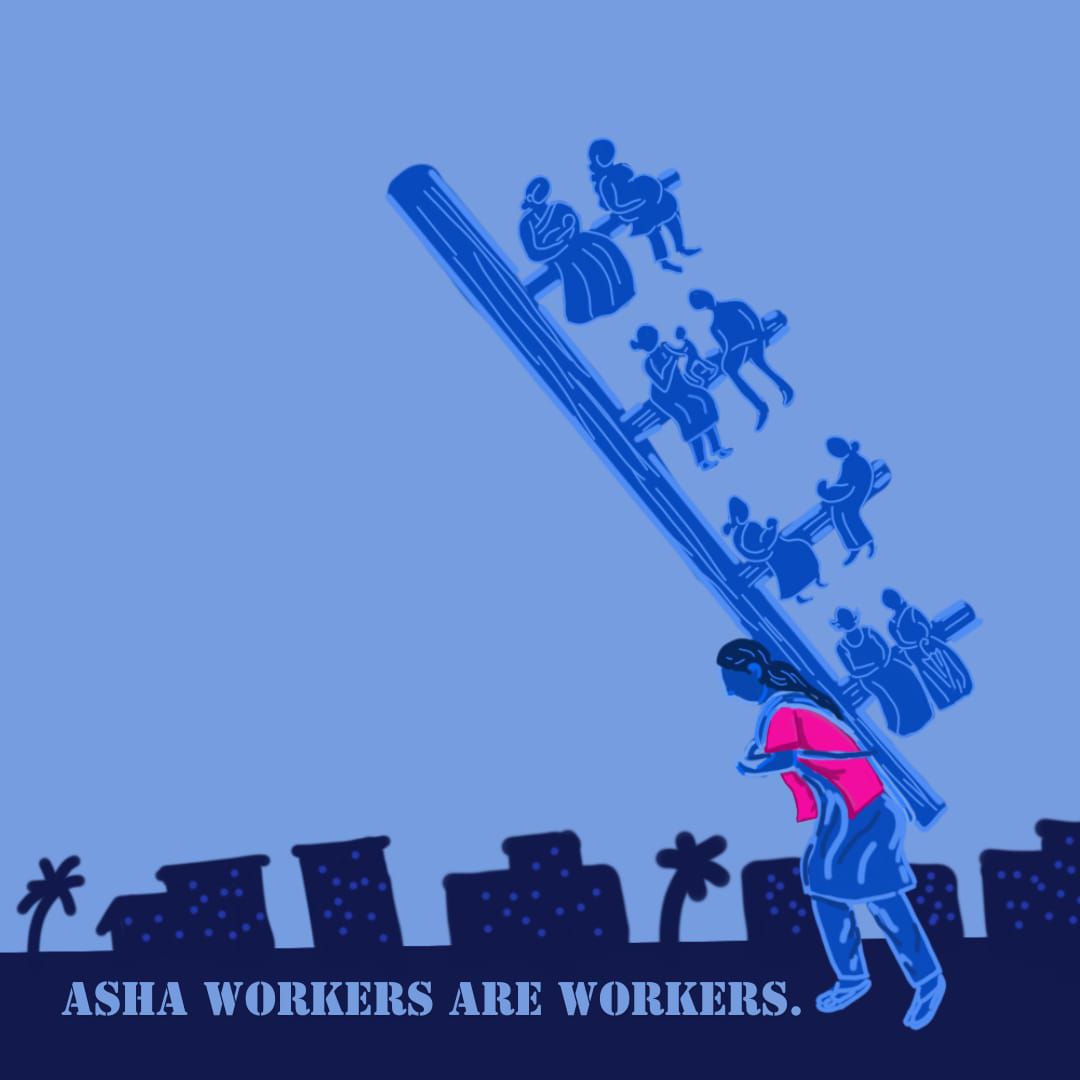
ASHA workers, the backbone of community healthcare, are neither privileged nor part of the ruling class. They receive honorariums, not wages, for their essential services. This constitutes a clear instance of labor exploitation and informalisation, a practice ironically reminiscent of the current government’s own historical roots in worker strikes dating back to the 1920s. Today, Dalit, Bahujan, and Adivasi women are leading the charge in this strike, demanding recognition as workers entitled to dignified working conditions and a basic living wage.


 KAFILA - COLLECTIVE EXPLORATIONS SINCE 2006