Category Archives: Debates

Unpacking India’s Internet Censorship Debate

Recent debates on Internet censorship in India have focused to the allegedly free-for-all nature of the internet. Those of us who have argued against internet censorship have been somewhat misrepresented as arguing for absolute freedom whereby the reasonable restrictions laid down in Article 19 (A) of the Constitution of India don’t apply. Nothing could be farther than the truth.

It has been said that the internet can be used to incite violence, particularly inter-communal violence, and there needs to be a mechanism to prevent that. Communications minister Kapil Sibal wants internet giants to “self-regulate” for this reason, denying that he wants to censor political dissent on the internet. Following on the heels of his expression of such concern in December 2011, Mufti Aijaz Arshad Qasmi and journalist Vinay Rai filed cases against various internet companies for similar material that is religiously offensive.It needs to be pointed out, however, that the cases filed by Qasmi and Rai are under the Indian Penal Code and do not even invoke the Information Technology Act. So if the Indian Penal Code can be used against religiously offensive material why do we need any new mechanism to “regulate” or even “self-regulate” the internet? Continue reading Unpacking India’s Internet Censorship Debate

The Semiotics of Happiness

Guest post by ABHIJIT DUTTA

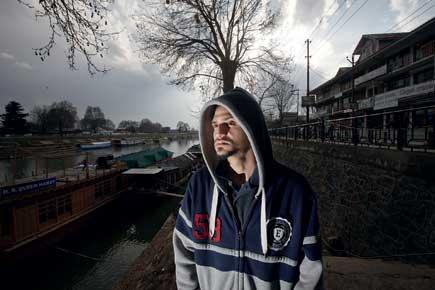
MC Kash - Photo by Ashish Sharma / Openthemagazine.com

It is not every day that you wake up to find your Twitter timeline flooding with the assertion that Kashmir – of all places – is happy. Dangerous? Of course. Beautiful? well, yes, the postcards are pretty enough. Angry? Sure, they look it. Radical? Oh god, yes. Happy?

If you ask Manu Joseph, author of Serious Men and editor of Open, the answer is yes. In this article, he talks about his interactions with “regular” people in the valley – the non elite, the non journalist, the non artist, the non writer – and is convinced that Kashmir is ready to move on. That it has already moved on. That Kashmir is happy. As proof, he offers these exhibits: (a) record high tourism numbers, (b) 2010 IAS topper Shah Faesal (who tells him “commonsense is finally winning”), (c) a meeting of a District Magistrate with elected leaders of a village (“not a word about politics”, says the DM to Mr. Joseph, “They want to talk about things that matter to them and their families”) and (d) the desire for city life (“we want KFC”).

Continue reading The Semiotics of Happiness

Is India’s HRD Ministry Barking Up The Wrong Tree?

Guest post by RAM KRISHNASWAMY

HRD Minister Kapil Sibal seems to be getting a lot of flak from so many quarters on Jan Lok Pal Bill, HRD Computer Tablet Aakash and now his backing of ISEET, one common national entrance exam for science and engineering. Now as HRD Minister he has inadvertently attracted the wrath of over 1,75,000 IIT alumni globally; as also faculty and students of all IITs who are opposed to his idea of killing IIT-JEE and replacing it with a common national exam called ISEET.

Yes, Kapil Sibal is the HRD Minister but he is a lawyer and a politician and is not a technologis. It appears that he is being advised by technologists who are misleading him and telling him what he wants to hear, as opposed to giving him solid advice in the interest of the nation.

Let us just look at IITs and JEE alone.

Let us see what truly is wrong with IITs & JEE and what recommendations the HRD Minister has received and from whom.

If we were to simplify the problem with JEE as it is administered in 2012 they can be listed as follows (not a comprehensive list):

Continue reading Is India’s HRD Ministry Barking Up The Wrong Tree?

Forget Hair-Oil-Powered Indulekha, Remember the Muditheyyam

Well, the truth is that I care two hoots for Indulekha Hair Oil, their stupid ads, and the wide-eyed chubby-cheeked teenage girls who they usually cast as epitomes of Malayalee feminine grace. All of Mallu FB world is agog with discussion about a brainless ad for the Indulekha Hair Oil, in which a fiery-looking woman whose dress-style follows the dress conventions of our Malayalee AIDWA Stars, bursts with indignation over the terrible harassment that women with long hair face on buses, how we are all forced to cut off “the hair that we have” (‘Ulla mudi’) and go about with short hair “like men” because of this horrible injustice, and finally, how we all ought to grow our hair long (and let it down, possibly) and hit back at such harassers. This stupid ad is actually only one among other stupid ads for this hair-oil which uses currently-common ideas like ‘women’s collectives’ (stree koottaimakal). All of them are jarring since the concepts they use, and what they aim at, simply don’t mix.Part of the outrage has been fueled by the fact that the ad uses as a model Sajitha Madathil, who is well-known as a feminist theatre activist in Kerala. Continue reading Forget Hair-Oil-Powered Indulekha, Remember the Muditheyyam

Updates from Koodankulam

Via NITYANAND JAYARAMAN

Koodankulam: Curb on Free Speech

Video Interviews with  eminent legal scholar Dr. Usha Ramanathan and Adv. R. Vaigai, a senior lawyer from the Madras High Court.

Since March 19, 2012, when Tamil Nadu Chief Minister Jayalalithaa announced that work on the controversial Koodankulam nuclear plant could be resumed, and even before that actually, the protesting villagers have been at the receiving end of a vicious state led campaign to paint their non-violent struggle as a violent one, and to crush their campaign into silence by using harsh sections of the Indian Penal Code. More than 7000 cases of “sedition” and “waging war against the Government of India” have been filed just in the Koodankulam police station just between September and December 2011. These are part of 107 cases filed against 55,795 people during the same period. That is probably more than in any other police station in India. Certain sections of the media too have played the role of a willing partner in propagating the State’s propaganda. In pursuing this counter-campaign against its own people, the State Government has placed itself above the law of the land and pursued an openly anti-democratic agenda.

See interviews in two parts at at 

1. chaikadai.wordpress.com

2. chaikadai.wordpress.com

PRESS RELEASE

Cases against K-protestors a parody of law: Fact Finding Team

18 April, 2012. CHENNAI – A fact-finding team headed by senior journalist Sam Rajappa confirmed that the Government had indeed restricted movement of essential goods and people in the days following the Chief Minister’s March 19th declaration announcing her support to the nuclear plant. The report, which was released at a press conference in Chennai, noted that the spirit of opposition to the nuclear power plant was very high, and warned that arresting the leaders could lead to a serious law and order problem in the region.

Continue reading Updates from Koodankulam

On the India hand in Nepal

In an interview with this writer for The Hindu newspaper last week, Maoist chairman Prachanda explained the sudden decision to send the Nepal Army to the cantonments, revealed the possible meeting points on constitutional issues, said that he would have no objection to an NC-led government promulgating the constitution, and declared his personal ambition of wanting “5-10 years” to “implement his vision”. But the bit that has drawn the most attention here in Kathmandu is his public acknowledgment of India’s role in Nepal’s political transformation—from the 12-point agreement, to the CA elections, to the declaration of republic and the progress in the peace process.

Expectedly, ultra-nationalist websites have latched onto this as proof of Prachanda’s “subservience”; right wing stalwarts have the “We told you so” smug look about how they were right all along that this was an external plot. In a different context, there has also been commentary projecting India’s current phase of engagement with the Maoist as somewhat opposed to the Nepali people’s aspirations for peace and democracy.

It would be useful to look at the several issues enmeshed here separately, based on the evidence currently available. Continue reading On the India hand in Nepal

A turning point in Nepal

Manmohan Singh with Prachanda, circa 2008

Prashant Jha interviews the Nepali Maoist leader Prachanda:

All of us reviewed the situation. I presented a document in my party last April stating that the 12-point agreement must be the basis, and we must conclude the peace and the constitution process. India then changed the way it viewed Maoists, and realised it must help the process succeed. It was a realisation that we must revert to the environment of trust that existed during the 12-point pact.

Would it be right to say that Nepal’s peace process and the constitution would not have been possible without Indian support?

Definitely. Saying that the 12-point understanding was signed in Delhi means that there was India’s active support — otherwise it was not possible. CA elections would not have been possible. There could have been problems with the declaration of a republic. Now also, to take peace and the constitution to a logical conclusion, without Indian support, it will be very complex and difficult. [Full interview]

Kanak Mani Dixit critiques such a conclusion of the peace process: Continue reading A turning point in Nepal

Review: ‘Behind the Beautiful Forevers’ by Katherine Boo

Guest post by MITU SENGUPTA

In a remarkable book about slumdwellers in Mumbai, Katherine Boo brings to light an India of “profound and juxtaposed inequality” – a country where more than a decade of steady economic growth has delivered shamefully little to the poorest and most vulnerable.  But though indeed a thoroughgoing and perceptive indictment of post-liberalization India, the book fits into a troubling narrative about the roots of India’s poverty and squandered economic potential.

This is a beautifully written book.  Through tight but supple prose, Boo offers an unsettling account of life in Annawadi, a slum near Mumbai’s international airport.  In Boo’s words, this “single, unexceptional slum” sits beside a “sewage lake” so polluted that pigs and dogs resting in its shallows have “bellies stained in blue.” It is hidden by a wall that sports an advertisement for elegant floor tiles (“Beautiful Forevers” – and hence the title).  There are heartrending accounts of rat-filled garbage sheds, impoverished migrants forced to eat rats, a girl covered by worm-filled boils (from rat bites), and a “vibrant teenager,” who kills herself (by drinking rat poison) when she can no longer bear what life has to offer.

Continue reading Review: ‘Behind the Beautiful Forevers’ by Katherine Boo

Between Aid Conditionality and Identity Politics – The MSM-Transgender Divide and Normative Cartographies of Gender vs. Sexuality: Aniruddha Dutta

This guest post by ANIRUDDHA DUTTA continues a theme raised on Kafila by Rahul Rao

Late last year, the UK and US governments made announcements supporting the global propagation of LGBT (lesbian-gay-bisexual-transgender) rights as human rights, suggesting that the future disbursal of aid might be made conditional on how LGBT-friendly recipient countries are perceived to be. The potential imposition of ‘gay conditionality’ on aid has been rightly critiqued for imposing a US/European model of sexual progress on ‘developing’ countries, which may justify covert geopolitical agendas and fail to actually benefit marginalized groups. But whatever form such conditionalities may take in the future, a more implicit and routine form of aid conditionality has been already at work, relatively unnoticed, for several years now – the presumption of distinct and enumerable minorities corresponding to categories like homosexual or transgender as target groups for aid in socio-cultural contexts where gender/sexual variance may not be reducible to such clear-cut categories or identities. Increasingly, community-based organizations (CBOs) working to gain gender/sexual rights or freedoms need to define themselves in accordance with dominant frameworks of gender-sexual identity to get funding both from foreign donors and the Indian state, creating identity-based divisions among CBOs and presenting existential challenges to communities that do not exactly fit these categories.

Continue reading Between Aid Conditionality and Identity Politics – The MSM-Transgender Divide and Normative Cartographies of Gender vs. Sexuality: Aniruddha Dutta

Life After Capitalism? A Document From Another Time

The French Marxist philosopher Louis Althusser, who perhaps reflected most on the question of ‘ideology’, once wrote that “ideology moves, but with an immobile motion that keeps it where it is”. Althusser did not make any claim about the truth or falsity of ideology. At a certain level, ideology undoubtedly refers to something that is real or true. What interested Althusser instead, was the relationship of ‘ideology’ to what he called ‘science’ – namely, that critical activity, which continuously works to take knowledge forward. Science, according to him, always lived by focusing on that which it did not know; ideology on the other hand, was that which remained with the obviousness of the already-known. Every new question that a science poses is effectively subsumed by ideology to give us something that we already knew. That is why science, he believed, was always  pursued, beseiged and occupied by ideology and had to continuously struggle to free itself from its grasp in order to live.

The CPI(M)’s ‘Draft Resolution on Some Ideological Issues’ prepared by the party for discussion and adoption at the party’s 20th Congress that began in Kozhikode today, is truly an ideological document in Althusser’s sense. It claims to move with the times and update the party thought apparatus but in reality, moves in order to stay where it is. It works to relentlessly re-present all the difficult questions of our times as if they were already known to the founders of something called ‘Marxism-Leninism’.

Continue reading Life After Capitalism? A Document From Another Time

CPI(M) shelves class struggle in action: Sankar Ray

Guest post by SANKAR RAY

[As the CPIM)’s 20th Congress began in Kozhikhode today, we bring two pieces marking the occasion. AN]

Unbelievable though it may seem even to the staunchest critic of CPI(M), ‘class struggle’ is totally missing in the 20950-plus word Draft Political Resolution (DPR) of the CPI(M), circulated and debated inside the party for over two months, that will be finalized with amendments, deletions and additions, at the 20th party Congress at Kozhikode between 4 and 9 April. The finalized political resolution is to be party’s tactical line until the 21st Congress four years later. The omission of ‘class struggle’ in the DPR, a basic document for committed struggle is stupefying as communists the world over frequently quote Marx that the history of mankind is “the history of class struggles”.

It’s not new as class struggle was omitted in the Political Resolution adopted at the 19th Congress ( Coimbatore, 29 March- 3 April 2008). But unlike at Coimbatore, the latest draft document talks of ‘people’s democracy’, CPI(M)’s main ideology, enshrined in the Updated Party Programme ( adopted at a special party conference in October 2000 at Thiruvananthapuram). But the pledge for moving forward to “a new, alternative path – towards people’s democracy and socialism” is vague.

Continue reading CPI(M) shelves class struggle in action: Sankar Ray

Who are the real stakeholders of Indo-Pak peace?: Ayesha Siddiqa

This guest post by AYESHA SIDDIQA is the text of a speech delivered by her at a recent civil society review of the India-Pakistan peace process, organised by the Centre for Policy Analysis in Delhi.

This time it seems better then last time! I suppose this is what we said the last time as well. India–Pakistan relations have a cycle of ups and down: a crest followed by a trough and then a crest again. Although there is increased frustration on both sides for not being able to solve the ‘relationship’ mystery, the leadership and people in general remain eager to have peace rather than war. However, we also remain elusive regarding our threshold of peace, or what would be the cut-off point in settling for peace with each other. This cyclic peace of war and peace has remained primarily due to the peace process being elitist and confined to the strategic/security community. Therefore, I would like to argue three points: Continue reading Who are the real stakeholders of Indo-Pak peace?: Ayesha Siddiqa

The Many Uses of a U.P Election

I live in Noida, which is the child of an extra-legal union between Delhi and Uttar Pradesh. Noida is not-quite Delhi, not-quite U.P, not quite itself on most days. Living in a cusp has several advantages, however, the main one being that one can look either way, up at Delhi and right down over U.P’s scruffy head. I found myself doing both in the recently-concluded U.P election. Curiously it seemed, for Delhi people, U.P’s 2012 elections were flush with new meaning. For decades the favourite whipping boy of Delhi, U.P had overnight become its favourite gap-toothed angel. For Pratap Bhanu Mehta of the Delhi-based Centre for Policy Research, the U.P election was a historic battle between empowerment and patronage, the future and the past, performance and rhetoric, sincerity and cynicism, and (this is my favourite) ‘rootedness over disembodied charm’. Mehta believes that while voters ‘carefully assessed’ candidates through the ‘prism of local circumstances’, they were no longer prisoners of their identity. Most confounding is Mehta’s view of democracy, “In a democracy, where you are going should be more important than where you are coming from”. These U.P elections “redeemed that promise” according to Mehta, since they were “without a trace of community polarisation: no one felt on the edge or under siege, all could exercise options without being unduly burdened by the past.”

Continue reading The Many Uses of a U.P Election

Politics, ‘Political Society’ and ‘the Everyday’

Politics, ‘Political Society’ and ‘the Everyday’

 Book Review 

Lineages of Political Society, by Partha Chatterjee, Permanent Black, Ranikhet, 2011. Pages: 278, hardcover, Rs 750.


Lineages of Political Society

 Over a decade ago, political theorist Partha Chatterjee embarked on what was a novel journey in the history of political thought in India and perhaps, in the postcolonial, non-Western world. Bringing together the results of decades of his own intellectual engagement with Indian politics and the question of subalternity in particular, Chatterjee began articulating a concept that has now acquired wide currency: his concept of ‘political society’. ‘Political society’, in Chatterjee’s hands, was a way of recuperating a sphere of politics that had been a permanent source of anxiety for theorists of Indian (and postcolonial) modernity and democracy – the vast domain that existed outside the designated spheres of modern politics, where the untutored masses made claims on the state and formed their own associations and organizations, unmindful of the formal grammar of rights and citizenship. A crucial part of what defines activities in this domain is ‘illegality’, or, at any rate, non-legality, where the state itself places the law in suspension in order to recognize the claims of the governed. Thus for instance, squatting by the poor on government land that is strictly speaking, encroachment in legal terms and can never acquire the status of a ‘right’, is nevertheless allowed by governments to continue through the recognition of some kind of moral claim of the poor on governments and society at large.

Continue reading Politics, ‘Political Society’ and ‘the Everyday’

Kerala and Kudankulam: The Media Sleeps

It is amazing how the very same Malayalees and their media, which made Mount Everest out of that molehill of Mullaperiyar, remain sweetly calm in comparison at the events unfolding in Kudankulam. In fact the amnesia is so complete that it is as if few remember (except the anti-nuclear activists in Kerala who have been consistently supporting the struggles of the local people) that it was common knowledge in the late 1980s that the plant would affect both Tamil Nadu and Kerala.There was far greater awareness of the special problems of locating the plant in Kudankulam for Kerala, where natural radiation levels are already very high. The violence too had an early start, with the police firing on a people’s rally against the plant in 1989, which killed one person.

Continue reading Kerala and Kudankulam: The Media Sleeps

Let’s not count the poor (seriously)

As someone recently commented on a Kafila post, we live in a post-fact world where there are no facts. Everyone believes what they want to. So depending on your  ideology, poverty in India has reduced or increased. But such is the debate on poverty that the definition of poverty itself is subject to debate. How poor do you have to be, so that the government will say you are poor? This poverty debate has been on around the same lines for about ten years now, with the economic left arguing that India isn’t shining, and the economic centre-right arguing that millions of people have been lifted out of poverty by India’s super-successful economic growth. The debate will go on forever, there will be no certainty in numbers, and perhaps there shouldn’t be – perhaps counting the poor cheapens the issue of poverty. Counting the poor leads us to ask, what about the only -slightly-better-than-the-poor? Counting the poor leads us to compare poverty numbers and give us relief. Ah, only 30% Indian poor now, as opposed to 50% in such and such decade, nice! Great job India! No, this is not what the poor deserve, whether they are 30% or 50%. Perhaps we should stop counting the poor. Continue reading Let’s not count the poor (seriously)

Thinking through UP election results with numbers: Rahul Verma

Guest post by RAHUL VERMA

Here’s a closer analysis of Uttar Pradesh 2012 election results

In an article the Times of India says the Samajwadi Party’s victory in Uttar Pradesh seems to be an even more impressive sweep than the BSP’s 2007 showing, but it’s actually a less comprehensive domination. According to the same article, the SP did not do well in western UP and Bundelkhand. They do not provide any reason for this.

My analysis of the election results data shows that average number of candidates per assembly constituency and average number of candidates per one lakh electorate in west UP and Bundelkhand, was slightly lower than other regions of the state. In west UP and Bundelkhand, the average number of candidates per one lakh electorate was approximately 8.5 and average number of candidates per assembly constituency was approximately 16. Whereas in other parts of the state average number of candidates per one lakh electors was approximately 9.5 and average number of candidates per assembly constituency was 17. This means that in other regions of the state votes were more divided and thus the SP got an edge in terms of winning seats. In the first-past-the-post (FPTP) system with multi-cornered contests, even such small gaps lead to big swings in terms of seats a party can win. Continue reading Thinking through UP election results with numbers: Rahul Verma

A Flawed Democracy – The Case for Proportional Representation in India: Srinivasan Ramani

Guest post by SRINIVASAN RAMANI

Times of India graphic

For all the chest thumping and tomtoming about the Samajwadi Party’s emphatic victory – winning 224 seats out of 403 in the UP Assembly elections – a true reflection of the mandate is to be seen in the individual vote shares of the four main (“effective”) parties in the elections (the Bahujan Samaj Party – Bhartiya Janata Party, the Samajwadi Party, and the Congress – in alliance with the Rashtriya Lok Dal). Data from the Election Commission of India website shows the following in terms of vote shares:

Continue reading A Flawed Democracy – The Case for Proportional Representation in India: Srinivasan Ramani

The Unique Identity of a Standing Committee – The UID in Parliament: Taha Mehmood

This long guest post by TAHA MEHMOOD, who has been independently  researching surveillence, biometrics and identification techonologies for a long time dissects the discussion and discourse around the Unique Identification Database scheme of the Government of India

  1.   The Discreet Charm of UID

The January 2012 issue of The Economist, a magazine published from London, has an article on India’s national ID card scheme, titled, The Magic Number. The article focuses on how UID is progressing. The  brave hero of the story is of course Nandan Nilekani and villain is ‘India’s stubborn home minister, P. Chidambaram,’ who ‘is now blocking a cabinet decision to extend the UID’s mandate, which is needed for the roll-out to continue’. According to the unnamed author of the article, ‘Indian politics hinge on patronage—the doling out of opportunities to rob one’s countrymen. UID would make this harder. That is why it faces such fierce opposition, and why it could transform India.’ This article appeared in The Economist days after the report of Standing Committee of Finance was released. What went on in the deliberations of this standing committee?

Continue reading The Unique Identity of a Standing Committee – The UID in Parliament: Taha Mehmood

Defending Narendra Modi: An Exercise in Obfuscation

In Outlook magazine last week, its web editor Sundeep Dougal asked 25 questions of Narendra Modi about the 2002 Gujarat pogrom and the subversion of justice since then. Predictably, the army of Narendra Modi Defenders began to spill outrage at such blatant compilation of true charges against Mr Modi. Doing the rounds of the internet is a point by point rebuttal to Dougal’s questions by a blogger, Shashi Shekhar, who goes by the name Offstumped, and is a known online Modi defender. Offstumped’s answers have been responded to by Dougal, and yet Offstumped’s rejoinder is being circulated all over the internet by Modi defenders in the hope of persuading public opinion that Mr Modi is a spotlessly clean man whose actions and inactions did not result in any loss of life, property or dignity of anyone in 2002 and later. The rather large army of Narendra Modi Fans on the internet hopes that by repeating their standard lies again and again, they will one day become accepted truth. Continue reading Defending Narendra Modi: An Exercise in Obfuscation

UGC’s point system – Why should we care? Pratiksha Baxi and Umesh O

Guest post by PRATIKSHA BAXI and UMESH O

Is it really surprising that Jawaharlal Nehru University has implemented the controversial UGC guidelines on the Career Advancement Scheme (CAS) with effect from its date of announcement in 2008 (rather than date of notification in 2010, thereby benefiting Associate Professors rather than Assistant Professors? Is it really shocking that JNU did not register protest with the UGC about the case of CAS, dubbed by some as the Comic and Sad Guidelines? Perhaps not?

This scheme does not merely impact all academics already hired, especially at the rank of lecturers/assistant professors, but will also impact all those who will apply for the many vacancies now advertised, especially senior doctoral students, now looking for teaching jobs.

However there has been little concern about how does a scheme, which prolongs promotions for Assistant Professors from 5 years to 12 years (9 odd years in JNU), impact junior academics?

Continue reading UGC’s point system – Why should we care? Pratiksha Baxi and Umesh O