Category Archives: Debates

The Unique Identity of a Standing Committee – The UID in Parliament: Taha Mehmood

This long guest post by TAHA MEHMOOD, who has been independently  researching surveillence, biometrics and identification techonologies for a long time dissects the discussion and discourse around the Unique Identification Database scheme of the Government of India

  1.   The Discreet Charm of UID

The January 2012 issue of The Economist, a magazine published from London, has an article on India’s national ID card scheme, titled, The Magic Number. The article focuses on how UID is progressing. The  brave hero of the story is of course Nandan Nilekani and villain is ‘India’s stubborn home minister, P. Chidambaram,’ who ‘is now blocking a cabinet decision to extend the UID’s mandate, which is needed for the roll-out to continue’. According to the unnamed author of the article, ‘Indian politics hinge on patronage—the doling out of opportunities to rob one’s countrymen. UID would make this harder. That is why it faces such fierce opposition, and why it could transform India.’ This article appeared in The Economist days after the report of Standing Committee of Finance was released. What went on in the deliberations of this standing committee?

Continue reading The Unique Identity of a Standing Committee – The UID in Parliament: Taha Mehmood

Defending Narendra Modi: An Exercise in Obfuscation

In Outlook magazine last week, its web editor Sundeep Dougal asked 25 questions of Narendra Modi about the 2002 Gujarat pogrom and the subversion of justice since then. Predictably, the army of Narendra Modi Defenders began to spill outrage at such blatant compilation of true charges against Mr Modi. Doing the rounds of the internet is a point by point rebuttal to Dougal’s questions by a blogger, Shashi Shekhar, who goes by the name Offstumped, and is a known online Modi defender. Offstumped’s answers have been responded to by Dougal, and yet Offstumped’s rejoinder is being circulated all over the internet by Modi defenders in the hope of persuading public opinion that Mr Modi is a spotlessly clean man whose actions and inactions did not result in any loss of life, property or dignity of anyone in 2002 and later. The rather large army of Narendra Modi Fans on the internet hopes that by repeating their standard lies again and again, they will one day become accepted truth. Continue reading Defending Narendra Modi: An Exercise in Obfuscation

UGC’s point system – Why should we care? Pratiksha Baxi and Umesh O

Guest post by PRATIKSHA BAXI and UMESH O

Is it really surprising that Jawaharlal Nehru University has implemented the controversial UGC guidelines on the Career Advancement Scheme (CAS) with effect from its date of announcement in 2008 (rather than date of notification in 2010, thereby benefiting Associate Professors rather than Assistant Professors? Is it really shocking that JNU did not register protest with the UGC about the case of CAS, dubbed by some as the Comic and Sad Guidelines? Perhaps not?

This scheme does not merely impact all academics already hired, especially at the rank of lecturers/assistant professors, but will also impact all those who will apply for the many vacancies now advertised, especially senior doctoral students, now looking for teaching jobs.

However there has been little concern about how does a scheme, which prolongs promotions for Assistant Professors from 5 years to 12 years (9 odd years in JNU), impact junior academics?

Continue reading UGC’s point system – Why should we care? Pratiksha Baxi and Umesh O

Batla House and the problem with the deluded journalist: Manisha Sethi

This guest post by MANISHA SETHI is a response to “Congress and the Problem with the Deluded Liberals” by Mihir Srivastava in Open magazine

Mihir Srivastava is very upset that the debate on Batla House refuses to die down. In his view, his piece in India Today – “Inside the Mind of the Bombers – appearing soon after the ‘encounter’ should have settled the debate once and for all. But he was surprised that it wasn’t received as a resolution. He is even more upset that deluded liberals (read Arundhati Roy) are no longer on talking terms with him.

“In the Batla House case, which I reported much the same way I had reported so many of the cases they were happy with, it is just that the facts I saw and reported did not mesh with what they wanted to believe.”

This is simply not true. The many stories that deluded liberals approved of, according to, Mr. Srivastava, and which he cites to bolster his own reputation, are in fact very different from his India Today’s ‘story’. His expose on the Red Fort terror attack in Tehelka, for example, critically examined the evidence produced by the police, verified and cross checked the statements made by the accused in court and even brought out the discrepancies in the observations made by the court and its eventual judgement which upheld the death sentence of Md. Arif alias Ashfaq alias Abu Hamad. ‘Wrong Man to the Gallows’ is an example of good investigative journalism, not because it confirms our worst suspicions about the ways in which investigative agencies frame innocents, but because it painstakingly pieces together evidence and doesn’t get swamped under nationalist hyperbole spun by the mainstream media to take a cold, hard look at the evidence. Continue reading Batla House and the problem with the deluded journalist: Manisha Sethi

Understanding Indian human rights movements through the lives of two human rights defenders: Jinee Lokaneeta

Guest post by JINEE LOKANEETA

Watching Advocate alongside Democracy Dialogues: a Tribute to Balagopal, both by Deepa Dhanraj, made for a powerful experience for its remarkable documentation of human rights movements in Andhra through the lives of these two human rights defenders and the collectives that they were a part of whether it was Andhra Pradesh Civil Liberties Committee, Human Rights Forum or People’s Union for Civil Liberties. There is of course a sharp sense of loss, since in the last few years we have lost both these incredible people but one was grateful for this effort to record and document their inspirational lives in such a beautiful manner. It also points to a further need for us to understand the connections of human rights groups to law, the relationship of human rights defenders to the courts, and their role in pushing for the realization of some of substantive aspects of the Indian Constitution in the process. Continue reading Understanding Indian human rights movements through the lives of two human rights defenders: Jinee Lokaneeta

Fuel Prices and Protesting Voices in Sri Lanka: Mahendran Thiruvarangan

Guest post by MAHENDRAN THIRUVARANGAN

The United People’s Freedom Alliance government’s inability to put forward economic policies that address the grievances of the downtrodden sections of the Sri Lankan polity, outside the frameworks of neo-liberalism, has led to chaos in the country. The government’s move to privatize the higher education sector created a major uproar in the country last year. The academic staff attached to Sri Lanka’s universities began a trade union action demanding higher wages in 2011. In the Katunayake Free Trade Zone, garment sector workers took to the streets against a pension scheme introduced by the government much against the interest of the workers. These protests have brought to light the government’s ill-conceived economic policies, and its indifference to the concerns of the working people. Financial mismanagement, corruption at the various levels of the state, the escalating expenditure on the militarization of the North and East provinces, and the government’s sheer disregard for the fundamental needs of the people have created an atmosphere of economic instability. This situation might lead to political unrest in the future, if the Sri Lankan government continues to lack the will to salvage the economy from neo-liberalism and mismanagement. The government’s move to increase the prices of fuels has aggravated this situation.
Continue reading Fuel Prices and Protesting Voices in Sri Lanka: Mahendran Thiruvarangan

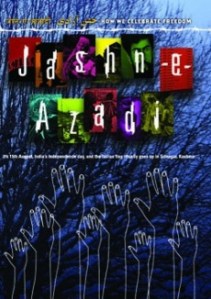
Screening Jashn-e-Azadi at Presidency University, Kolkata: Waled Aadnan

Guest post by Waled Aadnan

It can be said that 86/1 College Street, Calcutta, has seen a microcosm of the history of modern India unfold within its walls. Since 1874 when the already fifty-nine year old Presidency College shifted to its current address, future Presidents and Prime Ministers of  India, Pakistan and Bangladesh; Nobel Laureates, freedom fighters, an Academy Award winner, Bharat Ratnas; the leadership of the Naxalite movement of the 60s and 70s; and eminent judges, writers, journalists, scientists and actors, have spent their student days at 86/1.

Two years ago, soon after I joined the institution, the Left Front government upgraded Presidency College to the status of a state University in a last-gasp bid to hold on to the votes of the bhadralok intellectuals. 2012 dawned with no Student Union elections having been held the previous year, and it is in this backdrop that the following events unfold.

Salman Rushdie’s well-publicised ostracism from the Jaipur Literature Festival was met not with outrage in Presi’s canteen addas, but with the absence of even a poster put up in protest. News filtered in of a seminar in Symbiosis University being “threatened.” But little awareness existed among students who were more inclined to read tabloid-like, unputdownable newspapers than their relatively austere counterparts, including The Hindu which broke the story.

Continue reading Screening Jashn-e-Azadi at Presidency University, Kolkata: Waled Aadnan

Rethinking Urdu Nationalism in Pakistan: Raza Rumi

Guest post by RAZA RUMI

Urdu has been a controversial language in Pakistan despite its official and holy status. The Bengalis rejected it way back in the 1940s when Jinnah, advised by a bureaucracy, with imperial moorings declared in that it would be the official language. Subsequently, Sindhis, Baloch and Pashtuns have also resisted the one-size-fits-all Urdu formula. Yet, Urdu has emerged as the functional lingua franca that connects Pakistan’s federating units, and its conflation with Islam and Muslim ‘nationhood’ remains the paramount narrative in Pakistan.

It takes arduous scholarship and infinite courage to author a book like From Hindi to Urdu: A Social and Political History (Oxford University Press, 2011). Dr Tariq Rahman, ironically, has worked as the Director of the National Institute of Pakistan Studies at the Quaid-i-Azam University and therefore his challenge to the mythical dimensions of ‘Pakistan Studies’ comes from within and not as an outsider. Sixty-four years after the creation of Pakistan, we have not arrived at any conclusion about our ‘national’ or cultural identity. Dr Rahman’s book if anything shatters the myths that we have built around Urdu; and therefore presents a valid alternative to Goebbelsian tone of our official history. Continue reading Rethinking Urdu Nationalism in Pakistan: Raza Rumi

Compounding the Error – Marks inflation at Delhi University: Shobhit Mahajan

Guest post by SHOBHIT MAHAJAN

In politics, policy making or indeed any interaction with the larger world, one notices a distinct characteristic – one makes a decision, then facts or circumstances make it obvious that it was a wrong or bad one.  And what does one do? In most cases, one continues to take further decisions to bolster the impression that the original decision taken was correct and in the process, makes matters worse. This is relatively innocuous in normal social interaction but disastrous in the public sphere as we have witnessed in mishandling of the events related to the Lokpal movement. A very similar situation has recently emerged in the University of Delhi. Continue reading Compounding the Error – Marks inflation at Delhi University: Shobhit Mahajan

Beyond the Four Corners of the Law and the Diggy Palace: Faiz Ullah

Guest post by FAIZ ULLAH

I.

Highstreet Phoenix, an upscale shopping mall, rose from the ashes of Lower Parel’s semi-functional Phoenix Mills in the late nineties’ Bombay. It has since successfully emerged as one of the most popular shopping and leisure destinations for the city’s affluent set. Highstreet Phoenix is just one of the many mills in the South-Central Bombay’s Girangaon that have been leased, sold or redeveloped in contravention of industrial and land-use policies and court judgements especially in the last two decades. These large swathes of urban land, two thirds of which was meant for low-cost housing, civic amenities and open spaces, are being fast converted into exclusive housing societies, office complexes and recreation zones that only a few can access and afford. Such tensions, some like McKinsey & Company (of Vision Mumbai report fame) would say, are inevitable, even necessary, for the cities that aspire to be world class.

Continue reading Beyond the Four Corners of the Law and the Diggy Palace: Faiz Ullah

The Place of Dissent in the Campus: Akshath Jitendranath

This is a guest post by AKSHATH JITENDRANATH, student at Symbiosis International University, Pune, where a screening of ‘Jahsn-e-Azadi’ by Sanjay Kak was cancelled under pressure from right-wing groups and the Pune Police.

The university campus is where nascent opinion moulds itself into ideological shape. Care must be taken to surround the student with ideologies of different shades. This is a prerequisite for any educational ideology that aspires to be holistic. Pursuant to this end the Symbiosis International University is guided by an ideology that reads, Vasudhaiva Kutumbakam, meaning the whole world is one family. This is a high ideal to be guided by.

However, the events that transpired over the last few days have left this vision a little blinded. Following threats received from the Akhila Bharati Vidyarthi Parishad  (ABVP henceforth), the Symbiosis College of Arts and Commerce have postponed indefinitely, ‘Voices of Kashmir’, a national symposium on Kashmir which was to be held with the support of the University Grants Commission. The ABVP’s major bone of contention was the screening of well known film maker Sanjay Kak’s film, Jashn-e-Azadi (This Is How We Celebrate Freedom). The ABVP claim that the film and the film maker represent an ideology that is anti-India. Further, they threatened violence if the film were to be screened. The administration of the Symbiosis International University, instead of being guided by their ideological vision, gave in to the ABVP threats. Continue reading The Place of Dissent in the Campus: Akshath Jitendranath

Letter from the Stinkcity of Thiruvananthapuram

Respected development tourists, leftists and scholars from the West who have been coming here seeking your heterotopia, welcome to the city of Thiruvananthapuram.

Yes, you are here to see that Kerala which gives you relief from the relentless decline of the left in your part of the world.You have been honouring us with such visits since the 1970s. We have been happy to oblige, cast and recast to suit your projections. When ‘social development’ was fashionable in the UN circles, Kerala was indeed the space where you found ‘social development’ thriving. But when ‘human development’, the theoretical and political provenances of which are quite different from those of ‘social development, became your preference, Kerala transmogrified itself most willingly into the paradise of ‘human development’. And then you came to be fascinated by ‘participatory development’, we diligently turned into the very fount of ‘participatory development’. Thank you very much for keeping us afloat in the imagination of Western left developmentalist intellectuals (though I do see that the oodles of ‘agency’ showered upon us by you may actually be your way of compensating for the shrinking of your own agency in the face of the triumphant march of neoliberal capitalism in your homelands) Continue reading Letter from the Stinkcity of Thiruvananthapuram

Why Kashmiri Pandits May Never Return to Kashmir: Raju Moza

Guest post by RAJU MOZA

It was in the month of January in 1990 that the onset of militancy in Kashmir resulted in the exodus of Kashmiri Pandits to Jammu, Delhi and elsewhere. Every year since then, January brings back the question of their return to their homes, in the press and increasingly on the internet.

There was something different about it this year. Several recent incidents have given the question of return a new impetus. Continue reading Why Kashmiri Pandits May Never Return to Kashmir: Raju Moza

Confuse and deceive – Email interception in Kerala and the formula for political survival: Yaseen Ashraf

Guest post by YASEEN ASHRAFassociate editor of the Malayalam weekly, Madhyamam

An article by Viju V Nair in Madhyamam Weekly (issue 727, 23 January 2011) has raised the hackles of the Kerala Government and its political allies. Strange, because the report was about the excesses of the police intelligence, something which can be – and should be – investigated and corrected. The investigative report claimed that 268 email accounts were ordered by the Kerala state intelligence to be tapped, out of which a huge majority belong to Muslims. None of these persons has any previous criminal history. So it is not clear why they are put under the cyber scanner. Continue reading Confuse and deceive – Email interception in Kerala and the formula for political survival: Yaseen Ashraf

Following the Protest Movement in Sri Lankan Universities

Some of the stronger protests and forceful political debates in Sri Lanka are taking place in relation to student rights, university teachers pay, allocation of government expenditure on education and inequalities relating to the Government’s private university bill. University students have been on the boil over issues from militarisation of the universities, including compulsory military training for entering university students last year, to attempts to ban student unions. University teachers carried out strike action for months last year extracting promises of higher pay and input into educational policy which were not carried forward with the Budget, leading to a token strike on January 17th. I wrote an article on the neoliberalisation of university education in the Sunday Island on Jan 15th discussing the larger project at work with the backing of the World Bank and IMF. Kumar David has written an article in the Jan 22nd issue of the Sunday Island explaining the z-scores scandal – about the Advanced Level exam results which are used for university entrance – and its relationship to the protests against the private university bill. The Young Asia Television in their episode of Connections today has documented the recent protests including some interviews with student leaders and university teachers. The uteachers blog is an excellent resource to find more articles and presentations by academics involved in the recent protests and actions. Historically, the universities have been a hot bed of protest as well as social and political change in Sri Lanka, and those in solidarity with progressive forces struggling for social justice in Sri Lanka may want to follow the protest movement gaining ground in the universities.

Le Grande Triptych Humanism: Brinda Bose and Prasanta Chakravarty

Guest post by BRINDA BOSE and PRASANTA CHAKRAVARTY

Haruki Murakami’s much-hyped IQ84 that released worldwide in translation a couple of months ago is (Our) Big Fat Japanese Novel, three volumes in one. Closer home, Amitav Ghosh is in the process of completing the definitive South Asian Maritime Novel in trilogy. Young, prize-winning, promising writers from around the world – New Zealand, Malaysia, Bangladesh – are pledged to regale us with long large narratives that will tell us everything we ever wanted to know about their cultures, societies, lives – in trilogies and quartets. Intriguing? Indeed. Coincidental? Perhaps not.

Even as new literary canons are continually in consolidation, interrogation and re-formation, Franco Moretti – acclaimed, revered, preeminent theorist of the Novel and World Literature (which enjoy an odd synecdochic relationship) – has systematically constructed a blueprint for ways to appreciate the worth of such a grand, if loose, canon as World Literature by a particular reading technique he calls ‘distance-reading’.

Continue reading Le Grande Triptych Humanism: Brinda Bose and Prasanta Chakravarty

Fear, Safety and Livelihood: The Biopolitics of Mullaperiyar: T. T. Sreekumar

Guest post by T. T. SREEKUMAR

The Mullaperiyar Dam controversy  embodies a concrete and complex example of the imperial matrix of biopolitical legacy that post-colonial societies continually encounter even after decades of political independence.  More than a century ago, the British colonial Government administering Madras Presidency, which included parts of Tamil Nadu State, directed the erstwhile princely state of Travancore (which forms the southern districts of Kerala) to sign an agreement to divert water from the Periyar river in Travancore to the relatively arid zones adjoining the Western Ghats within the presidency, and to lease out a large tract of its territory for the construction of a Dam for a time span of 999 years.  In the post-independence period, two supplemental agreements to the original Lease Deed of 1886 have been signed between the Madras government and the Government of Kerala regarding fishing rights and generation of hydroelectric power, the former in favour of Kerala and latter favouring Tamil Nadu. The supplementary agreements negotiated and enhanced the annual lease rent and the rate of pay for the electrical energy generated.

Continue reading Fear, Safety and Livelihood: The Biopolitics of Mullaperiyar: T. T. Sreekumar

JTSA lists some more ‘genuine’ encounters in Delhi for the Home Minister

This release comes from the JAMIA TEACHERS’ SOLIDARITY ASSOCIATION

Mr. Chidambram,

You say there shall be no re-visit of the Batla House encounter. You are of course absolutely right. All those agencies who conducted the encounter have already given themselves a clean chit. What further proof could be required of the genuineness of the encounter than the fact that no less than Karnail Singh, Joint Commissioner of Police, Special Cell, Delhi, (who by the by, was also trying to derail the probe into Ishrat Jahan encounter) wrote to the Lt Governor and the NHRC vouching for the innocence of their gallant heroes. Speaking of gallant heroes, we are sure it has been brought to your notice—or maybe it hasn’t—that some of the brave hearts of the Delhi Police Special Cell have been indicted by the courts in the past couple of years for scripting and executing fake encounters. These are the very men whom you have been felicitating with gallantry awards and Presidents’ medals. But Sir, rest assured, we are not asking what sort of democracies fete and glorify killers. Our kind, of course. Continue reading JTSA lists some more ‘genuine’ encounters in Delhi for the Home Minister

Nepal – The Nostalgia for 1990

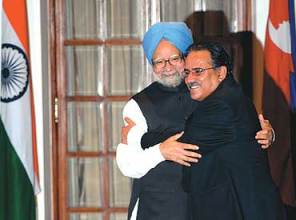
Kanak Mani Dixit’s efforts to portray 1990s as blissful, and Maoists to solely blame for all of Nepal’s ills, is revisionist history, facts be damned. Dixit’s rejoinder (‘The perils of executive presidency’, Jan 5) to my column (‘A question of form’, Jan 4) reveals fundamental differences in how we see recent Nepali history. The gist of Dixit’s rather simplistic world view is that the 1990s were wonderful and the Maoists destroyed it and are all evil. Let us examine this in more detail.

The 1990s

The 1990 constitution opened up Nepali society; it guaranteed fundamental freedoms and allowed groups to organise themselves at all levels; and economic policies pursued then led to the creation of a bigger middle class.

But there were two fundamental drawbacks of that period, which is what led to its eventual breakdown. Continue reading Nepal – The Nostalgia for 1990

The Regulation of Surrogacy in India – Questions and Concerns: SAMA

Guest post by SAMA, a resource group for women and health.

As the clamor dies down, of news reports celebrating the ‘miracle of science’ that made the arrival of Aamir Khan and Kiran Rao’s baby boy possible,  it would serve to look more closely at commercial surrogacy in India.  Estimated to be a multi-million dollar industry, Assisted Reproductive Technologies  (ARTs, through which surrogacies are conducted) are a recent and fast-growing addition to India’s medical market and medical tourism sector. Their unregulated proliferation over the last few years has raised serious issues of safety, ethical practice, costs, and rights. While the proposed Draft Assisted Reproductive Technologies (Regulation) Bill & Rules-2010 is a long-awaited step towards regulation, several clauses, especially concerning commercial surrogacy, leave much to be desired.

Continue reading The Regulation of Surrogacy in India – Questions and Concerns: SAMA

On ‘gay conditionality’, imperial power and queer liberation: Rahul Rao

Guest post by RAHUL RAO

It’s not clear what (or whether) David Cameron was thinking when he suggested recently that British aid should be linked to respect for LGBT rights in recipient countries. Almost immediately, the statement evoked homophobic responses from political and religious leaders in Tanzania, Uganda, Ghana and elsewhere. Perhaps more importantly, African social justice activists (including many of the leading LGBTI activists on the continent) advanced a comprehensive critique of ‘gay conditionality’ in a letter criticising Cameron’s statement, signed by 53 organisations and 86 individuals. Warning that the refusal of aid on LGBT rights grounds could provoke a backlash against queers who would be scapegoated for reduced aid flows, the critics have pointed out the insidious ways in which such initiatives could drive a wedge between queers and a broader civil society in recipient countries, besides reinforcing perceptions of the westernness of homosexuality as well as the imperial dynamics already prevailing between donor and recipient countries.

Continue reading On ‘gay conditionality’, imperial power and queer liberation: Rahul Rao