Category Archives: Debates

Viva ‘Academic Untouchability’ !

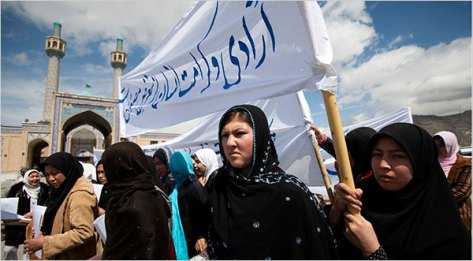
Jantar Mantar, a unique historical place in the capital, which today acts as a ‘sanctioned abode of protest’ under a liberal bourgeois regime, witnessed a protest dharna in the first week of February. Looking at the participation level, one could easily say that, it was indistinguishable from similar protest actions held on the same date. But it is incontestable that the raison detre for the dharna carried very large import which pertained to the entitlements of dalits, tribals or OBCs in higher education. It brought forth the surreptitious manner in which the Congress led UPA government is pushing a bill which would do away with reservation at faculty level in institutions of ‘national importance’.

As expected for the media managers and the pen pushers (or byte takers) employed by them the whole protest action was a non event. Question is why the articulate sections of our society, which yearn for justice, peace and progress, has joined the conspiracy of silence about this particular issue.

The return of ‘academic untouchability’ with due sanction of the parliament and the further legitimisation it would provide to the ‘merit’ versus ‘quota’ debate need to be questioned and challenged uncompromisingly. Continue reading Viva ‘Academic Untouchability’ !

Corporate Complicity and Gujarat

The 4th ‘Vibrant Gujarat Global Investors’ Summit, organized by the Gujarat government on 12-13 January 2009 in Ahmedabad, and the statements by some prominent Indian corporate leaders, have spawned protests, analysis, debates and questions about corporate accountability, complicity, responsibility and rights in Indian democracy. At this biennial event, ‘Jai Jai Garvi Gujarat’ has been showcased as an ‘ideal investment destination, both for Indian and foreign investors’, where prospective investors have ‘only Red Carpet and no Red Tape and it is where investors can sow a rupee and reap a dollar as returns’ (see Official portal of Gujarat Government).

Bringing together business leaders, investors, corporations and policy makers by a democratically-elected government, exploring business opportunities and signing memorandum of understandings are legitimate economic activities. However, the projection of the Chief Minister of the State, Narendra Modi, as the next Prime Minister of India by corporate cheerleaders is much more than mere economic activity. It is turning a blind eye to gross abuses of rule of law, and knowingly assisting a political leader and his government to continue committing them. It is becoming party to a specific political vision in a manner that incurs responsibility and blame. Such corporate leaders thus become complicit with a government and its leader in serious human rights abuses. It is negative and unacceptable.

Continue reading Corporate Complicity and Gujarat

Guantanamo and Illegal U.S. Detentions: Time for Real Change

[On the seventh anniversary of Guantanamo Bay, 11 January]

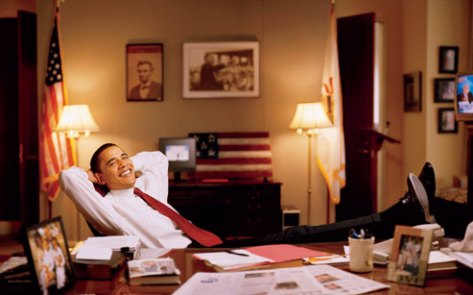
The United States detention facilities at Guantanamo Bay, Cuba – seven years old on 11 January 2009 – have become emblematic of the gross human rights abuses perpetrated by the US Government in the name of fighting terrorism. Though the U.S. President-elect Barack Obama has pledged to close down the Guantanamo Bay, there are undoubtedly substantial challenges to closing. Every day that Guantánamo is kept open is another day in which hundreds of detainees and their families are kept in the legal shadows. Distressing to the individuals concerned and destructive of the rule of law, the example it sets – of a powerful country undermining fundamental human rights principles – is dangerous to us all. It would be no less dangerous, and no less unlawful, if the USA were simply to transfer the problem it has created at Guantánamo to another locations.

Detainees at Guantanamo Bay

The detention facility at Guantánamo Bay isn’t the only prison where the United States is holding detainees from the ‘war on terror.’ At Bagram Air Force Base in Afghanistan, Camp Bucca and Camp Cropper in Iraq, and many more – some known and others secret – are used to detain those captured by the U.S. military. Camp Bucca alone has at times held 20,000 prisoners, most of whom live in groups of tents surrounded by wire. Most detainees are held unlawfully, without warrant or charge, and without recourse to challenge their detention. Even when Guantánamo is closed, the need to push for detainee human rights will continue.

Continue reading Guantanamo and Illegal U.S. Detentions: Time for Real Change

In Cold Blood: Abuses by Armed Groups

India, Pakistan, Sri Lanka, Nepal, Bangladesh, Afghanistan, Iraq, Saudi Arabia, Israel and the Occupied Territories, Indonesia, Egypt, Jordan, USA, UK, Spain, the Russian Federation, to name a few, are a testimony to the cruel attacks on civilians and other human rights abuses in the recent past by non-state armed groups, including terrorist groups. They are showing utter disdain for the lives of civilians and others, continuing a pattern of serious crimes and crimes against humanity. They fail to abide by even the most basic standards of humanitarian law. The attacks and other abuses by armed groups are so frequent and the security situation so grave, that it is impossible to calculate with any confidence the true toll upon the civilian population, let alone the long term consequences that so many people inevitably suffer.

Continue reading In Cold Blood: Abuses by Armed Groups

John Milton Takes a Stand? Prasanta Chakravarty

This is a guest post by PRASANTA CHAKRAVARTY

[Dissidence comes along with responsibility. If that sounds an utter sell out, one has to look back no further than the career and oeuvre of John Milton, whose 400th Anniversary is being celebrated around the world.]

Students of English literature usually do not prefer meddling too much with politics, especially if that comes in the way of appreciating the hermeneutics of the text, the lyricism set aside for the work of art. Sophisticated scholars have learnt to deftly negotiate and work with Marxism, new historicism and cultural criticism, without compromising on the finer points of close reading. They have also welcomed areas like textual studies and performance and newer genres like memoirs, broadsheets, travelogues, petitions, graphic fiction and so forth within the critical ambit with a careful eye that such forays do not destabilize the Great Book tradition. Students of politics and the political, on the other hand, have a certain distrust for soft aesthetic options. In one interesting recent interview, James Scott, who routinely uses Zola and Tolstoy in his classes and works, lamented in jest on his status at the Yale Political Science Department as an outlier, blaming it onto the ascendancy and monopoly of formal and rational choice models in the discipline.

Continue reading John Milton Takes a Stand? Prasanta Chakravarty

The monster in the mirror

Arundhati Roy wants you to choose:

There is a fierce, unforgiving fault-line that runs through the contemporary discourse on terrorism. On one side (let’s call it Side A) are those who see terrorism, especially “Islamist” terrorism, as a hateful, insane scourge that spins on its own axis, in its own orbit and has nothing to do with the world around it, nothing to do with history, geography or economics. Therefore, Side A says, to try and place it in a political context, or even try to understand it, amounts to justifying it and is a crime in itself.

Side B believes that though nothing can ever excuse or justify terrorism, it exists in a particular time, place and political context, and to refuse to see that will only aggravate the problem and put more and more people in harm’s way. Which is a crime in itself. [The Guardian, Saturday, 13 December 2008]

The Battle of Mumbai

Guest post by BALMURLI NATRAJAN, a member of the South Asia Solidarity Initiative (SASI)

The Battle of Mumbai did not begin on November 26, 2008. There was no clear beginning, regardless of what somnambulists who have just woken up, or saber-rattlers who have been sharpening their tools for a while, pronounce. Like all modern wars, it burst into public view over the internet, unannounced and in full-swing. Continue reading The Battle of Mumbai

Mumbai, the Hindu Right, and the Problem with Sonal Shah

Guest post by SVATI P. SHAH

Like so many millions of others, I was glued to the news for days during the Mumbai attacks.  In the aftermath of the terrible human tragedy that reverberates from those long hours, I share the universal concern about the political context for these attacks, a context that is about to change as the governments of India and the U.S. each undergo another major governmental transition. In his response to the attacks, President-Elect Barack Obama said that militants based in South Asia represent the biggest threat to the United States. As we well know by now, South Asia is about to become a foreign policy priority for the Unites States like never before, and this should give us pause. Continue reading Mumbai, the Hindu Right, and the Problem with Sonal Shah

Sandra Samuel, Faces and the ‘Nouveau’ Media – Monobina Gupta

Guest post by MONOBINA GUPTA

“The TV business is uglier than most things. It is normally perceived as some kind of a cruel and shallow money trench through the heart of the journalistic industry, along plastic hallway where thieves and pimps run free and good die like dogs, for no good reason.”

Hunter Thompson in Generation of Swine

We, in the business of media, are running a trade in ‘faces;’ swapping ordinary ones for the attractive, distorting news coverage and not really giving a damn about it. But the craft of journalism was not always so warped. We made it so.

Continue reading Sandra Samuel, Faces and the ‘Nouveau’ Media – Monobina Gupta

Mumbai terror, the revolt of the elites and Life itself

You have said everything there is to say, and felt everything there is to feel. You have shouted angrily or reflected seriously or stated in the calm tone of conviction that terrorists are as authoritarian as the states they target, that terrorists have no religion, that terrorists are cowards who target soft civilian populations. You have despaired at the carnage wreaked on a city sick and tired of having to be “resilient”; of having faced one disaster after the other – from floods to targeted attacks on specific communities to bomb blasts – and “emerged with its spirit intact”. Your heart has clenched painfully at the inconsolable tears of baby Moshe; at the blood-spattered, newly motherless one-year old Viraj in an exhausted Head Constable Salunkhe’s arms, entrusted to him by his father, a utensil seller wounded by bullets at CST. You have gazed numbly at the image of Maharashtra ATS Chief Hemant Karkare’s young son with drawn countenance bearing the ritual paraphernalia of his father’s cremation ceremonies. Despite yourself you felt a sudden glimmer of hope steal into you at the stony dignity in Kavita Karkare’s dry-eyed grief at her husband’s funeral, at her steadfast bindi and her coloured sari. You have hated yourself for being relieved that those you know in that poor torn city are safe, when hundreds you did not know were not.

In fear and foreboding the feeling has overcome you – “What lies ahead of us now?”

But after all of that, after all of the sorrow and the grieving, in the midst of absolute despair, when you start to think again – STOP. Continue reading Mumbai terror, the revolt of the elites and Life itself

Mr Friedman’s Demagoguery

Guest post by SAADIA TOOR and BALMURLI NATARAJAN of the South Asia Solidarity Initiative (SASI)

A response to his op-ed piece in The New York Times, December 3, 2008.

Among Mr. Friedman’s long list of talents seems to be the ability to directly access the minds of dead people.  After all, how else could he know that the real attackers in the Mumbai shootings shared the same set of intentions and motivations as the fictional characters he creates who murder an imam and his wife purely for being Sunni?  Maybe his short sojourns in South Asia through airports and the plush suites of the Marriot and the Taj Mahal Hotel do not allow him to imagine any other kind of Muslim than a unidimensional protestor of xenophobic cartoon images (produced, distributed and hotly defended, incidentally, by the enlightened West).  Maybe this talent comes from the same well of wisdom that made him the biggest promoter of the “innovative genius” of Wall Street bankers not too long ago, a position that he now has some trouble justifying, except by calling them “stupid”.  Or just maybe, he has simply made it a habit to promote views and policies that have no basis in fact and do not stand up to the slightest scrutiny.  After all, those are the perks that come with a regular column in a major newspaper and a guaranteed readership just waiting for one to provide the ‘expert’ fuel to their fire.  Continue reading Mr Friedman’s Demagoguery

Thinking Through the Debris of Terror: After Bombay

Last week’s terror attacks on Bombay/Mumbai, for which there can be no justification whatsoever, have targetted railway stations, restaurants, hospitals, places of worship, streets and hotels. These are the places in which people gather. where the anonymous flux of urban life finds refuge and sustenance on an everyday basis. By attacking such sites, the tactics of the recent terror attack (like all its predecessors) echo the tropes of conventional warfare as it developed in the twentieth century. These tactics valued the objective of the escalation of terror and panic amongst civilians higher than they viewed the neutralization of strictly military or strategic targets. In a war without end, (which is one way of looking at the twentieth century and its legacy) panic is the key weapon and the most important objective.

Continue reading Thinking Through the Debris of Terror: After Bombay

More reflections as Southasians on Mumbai

Anjum Altaf has sent us two posts on The South Asian Idea that reflect on the terrorism in Mumbai and discuss how best we can respond as Southasian citizens:
 

Hotel Taj: Icon of whose India? Gnani Sankaran

Gnani Sankaran is a noted Tamil writer who lives in Chennai.

Watching at least four English news channels surfing from one to another during the last 60 hours of terror strike made me feel a terror of another kind. The terror of assaulting one’s mind and sensitivity with cameras, sound bites and non-stop blabbers. All these channels have been trying to manufacture my consent for a big lie called – Hotel Taj the icon of India.

Read this scathing critique of the media here.

Terror and the Political Space of Southasia

A year ago in hearing of the assassination of Benazir Bhutto my heart sank as I thought our region was at boiling point.  Over the last week as I heard news of the brutal attacks in Mumbai my heart sinks further as I mourn not only for Mumbai but for our region.

I want to begin with Southasia, borrowing from Himal SouthasianHimal claims it wants to “restore some of the historical unity of our common living space – without wishing any violence on the existing nation states”.  I want to go further and not only hope for the eventual withering away of those nation states, but also consider the political space of not only Southasian history but of the Southasian present.  And in thinking about Southasia, I can not avoid considering South Asia, as defined by the nation states and their relationship, particularly in the form of SAARC.  And when I remember the last two SAARC Summits in 2007 and 2008, I recall a silence and an emphasis.  Silence on political processes and emphasis on terrorism.  Why the latter and not the former, even from the nation state perspective, both would be important within nation states and between nation states. Continue reading Terror and the Political Space of Southasia

Grotesque Terror Attacks in Mumbai

Courtesy Indian Muslims Blog

In one of the most daring and yet cowardly terror attacks, Bombay/Mumbai has been attacked. In an earlier post we had discussed the question of violence – ‘revolutionary’ violence, and the utter futility of resort to such methods. Violence is not a solution to anything; it cannot be. If anything, it is part of the problem; it is the problem. For violence begets more violence. Continue reading Grotesque Terror Attacks in Mumbai

Ecstatic Archaisms of Aurobindo Ghose – Prasanta Chakravarty

Guest post by PRASANTA CHAKRAVARTY

In Reflections on Revolutionary Violence Aditya Nigam makes some nuanced points about the nature of Maoist violence and by contrast, comments on the bedrock character of democracy itself. Can we trace the sublime cult of blood and gore further down, to the founding principles of Forward Bloc, for instance? Or espy it in the millennial longings of a few Gita wielding swadeshis, for that matter? One may begin to see a pattern.

Continue reading Ecstatic Archaisms of Aurobindo Ghose – Prasanta Chakravarty

Reflections on Revolutionary Violence

In the last one year, I have often found myself going back to a conversation I had had with a Maoist ideologue. As it happened, it was he who started interrogating me about my stand on violence. ‘So, you have become a Gandhian?’ he demanded. I must confess I was a bit taken aback, not quite able to figure out the context of this poser. ‘What do you mean by Gandhian’, I kind of mumbled. Pat came his reply: ‘Well you have been making some noises lately about Maoist violence, haven’t you?’ Suddenly it all became clear. Through this ridicule, he was trying to appeal to that part of me that still remained marxist – presumably now buried in some remote past – and to resurrect it against my ostensible ‘non-marxist’, ‘liberal’ present (for which ‘Gandhian’ was some kind of a short hand code). I found myself at a loss of words. Does a criticism of the mindless and nihilistic violence of the Maoists make one a Gandhian? Is there no space left between these two polar positions? The conversation did not go very far that day but has kept coming back to me ever since.

Continue reading Reflections on Revolutionary Violence

The ‘Obama Moment’: Sangay Mishra and Jinee Lokaneeta

The ‘Obama Moment’ and Conversations on Race
Guest post by SANGAY MISHRA and JINEE LOKANEETA

[The ‘Obama moment’ is much more than the man. Elementary, one would have thought. But maybe not. For, it has been intriguing to watch and listen to people – radical and nonradical liberal alike – mock this moment in a cynical, ‘we-know-it-all’ and ‘what-do-you-expect?’ mode. Intriguing, because, somewhere the insinuation is that those who celebrate are just being carried away by an ephemeral event. Maybe. It seems however, and the authors argue below, that this persona we now know as ‘Obama’ was not there even a year or two ago; he emerged in this present form, through a series of ‘encounters’ – with race, with his own history and with ‘blackness’. In his present form, Obama is produced by a certain African American investment in the earlier Obama (of, say, the pre-campaign Obama). – AN]

Much as the Obama victory on the 4th of November was expected and already predicted by a number of polls, the reaction to his victory both inside and outside the United States was breathtaking.

Continue reading The ‘Obama Moment’: Sangay Mishra and Jinee Lokaneeta

हि‍न्दी के वर्जित प्रदेश में…

[यह लेख कुछ अरसा पहले वाक् पत्रिका के लिए लिखा गया था – पुराने दोस्त सुधीश पचौरी के इसरार पर। जब यह लेख लिख रहा था तब से अब तक हालात कुछ बदल चुके हैं। इसे लिखते वक़्त तक भी मुझे यह गुमान था कि शायद एक रोज़ मैं हिन्दी के क़िलानुमा परिसर में घुस पाने क़ामयाब हो पाउंगा। हज़ार पहरों में घिरे इस क़िले में एक रोज़ ज़रूर दाखिल होने का मौक़ा मिलेगा। मगर इधर कुछ समय से ऐसा लगने लगा है कि यह क़त्तई मुमकिन नहीं है। हिन्दी के पहरेदार ऐसा कभी न होने देंगे। लिहाज़ा अब इस क़िले में घुसने की कोशिश छोड़ कर हिन्दुस्तानी के खुले और बे-पहरा मैदान में, खुली हवा में टहलना चाहता हूँ। कह देना चाहता हूँ पहरेदारों से कि मैं आप के मुल्क का बाशिंदा नहीं हूँ। मैं एक लावारिस मगर आज़ाद ज़ुबान में पला बढ़ा और वही मेरी ज़मीन है। अलविदा। – आदित्य निगम]
एक ज़माना हुआ हिन्दी से जूझते हुए। यह दीगर बात है कि हिन्दीवालों को इसकी ख़बर तक नहीं। हो भी क्यों? आप बेचते ही क्या हैं?
Continue reading हि‍न्दी के वर्जित प्रदेश में…

The Happy Consciousness

Watching the world tumble down around us, the holy markets especially, what has amused and angered is the way in which the media refuses to let go of its Sunny Disposition on Life, the Universe and Everything. This would be pathetic if it wasn’t so rampant. The Times of India has plumped up its Delhi Times this weekend to ten pages filled with exhortations to shop and full-page ads on shiny commodities. Its spectacularly vacuous Sunday Times is bursting with stories about celebrities valiantly keeping up the Diwali spirit, and thumbing their noses at the looming depression by buying more Louis Vuitton bags.

Continue reading The Happy Consciousness