Why this latest move by the state government is a worrying development.
“I have seen in Japan the voluntary submission of the whole people to the trimming of their minds and clipping of their freedom by their government, which through various educational agencies regulates their thoughts, manufactures their feelings, becomes suspiciously watchful when they show signs of inclining toward the spiritual, leading them through a narrow path not toward what is true but what is necessary for the complete welding of them into one uniform mass according to its own recipe. The people accept this all-pervading mental slavery with cheerfulness and pride because of their nervous desire to turn themselves into a machine of power, called the Nation, and emulate other machines in their collective worldliness.”
-Rabindranath Tagore, Nationalism
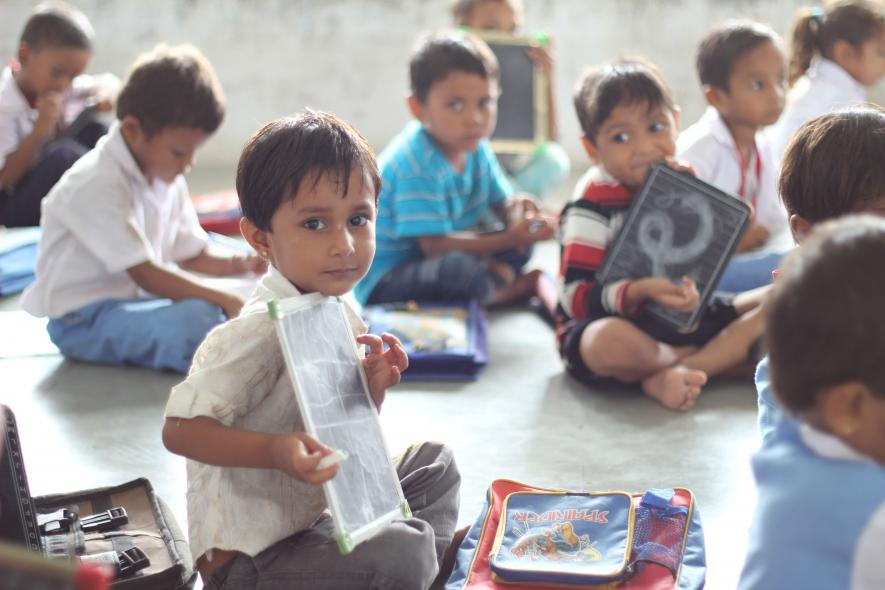
The richest state in the Indian union, Maharashtra, has embarked on a new initiative in the field of school education. It would provide basic military training to school students starting from Class 1, to promote “patriotism, discipline, and physical fitness among young learners from an early age”. Around 2.5 lakh ex-servicemen would be involved to deliver this training which will be introduced in a phased manner.
Undoubtedly, in the aftermath of Operation Sindoor, this proposal will be able to gather enough eyeballs in the rest of the country and it would not be surprise that few other Bharatiya Janata Party-ruled states would implement similar schemes in education.
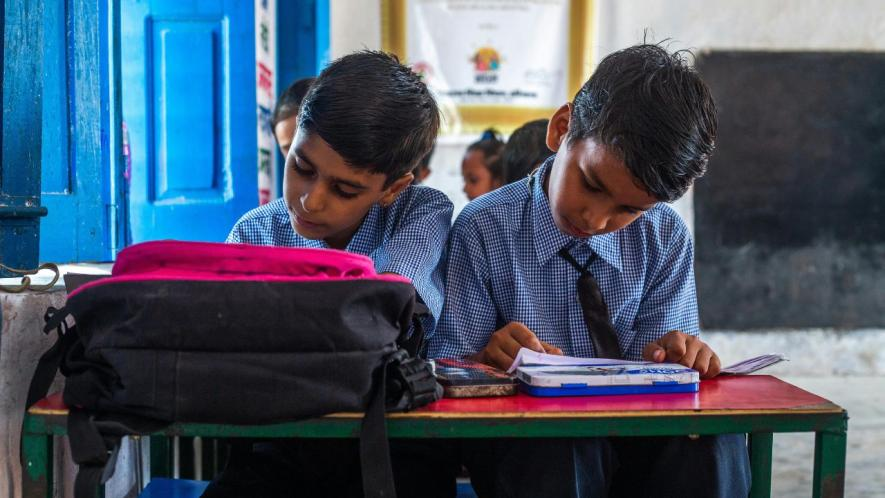
Why the Yogi Adityanath-led BJP government’s move of using public funds for imparting religious instruction violates Article 28 of the Constitution.
Representational Image. Image Courtesy: Pexels
“No religious instruction shall be provided in any educational institution wholly maintained out of State Funds” unless “established under any endowment or trust which requires that religious instruction shall be imparted in such institution”. (Article 28 of the Indian Constitution)
It has been more than 75 years since the founding fathers (and mothers) of the Constitution took this bold stand when they were shaping the guidelines around which the newly independent country would move forward. ..
…..Much water has flown down the Ganges, the Jamuna and all rivers of the country and it appears that slowly, but not so silently, attempts are on to water down the provisions of this Article and facilitating religious instruction in government schools through the back door.
The manner in which Yogi Adityanath-led Bharatiya Janata Party (BJP) government in Uttar Pradesh has suddenly decided to hold summer workshops on the Ramayana and the Vedas in government schools across the state, without any broader consultation with the stakeholders involved in this endeavour, is symptomatic of the brazen attitude of the government. We are told that these workshops will be organised under the aegis of the International Ramayana and Vedic Research Institute, Ayodhya, and will include activities, like Ramlila, Ramcharitmanas recitation, Vedic chanting, painting, and mask-making.
Keeping aside disagreement about customs like ‘Santhara’, one can at least agree that only an adult can make a decision to opt for death voluntarily in times of sickness.
Men never do evil so completely and cheerfully as when they do it from religious conviction.
Blaise Pascal (1623–1662)
French mathematician, physicist, inventor, philosopher, and Catholic writer
Namrata (name changed), the three-year-old daughter of IT professionals from Indore, is dead.
She had brain tumour which was successfully operated upon in January in Mumbai but it relapsed in March, and within less than a week, she breathed her last.
Apropos nothing seems amiss in her story.
The child got the best treatment available, and for her parents, belonging to Jain community, money was never a problem.
Despite all these relevant details, it is rather difficult to forget or disremember the past few hours of her life when she was still alive, when she must have been in tremendous pain and the way she was made to undergo some ritual to ‘improve her next birth’ — as impressed upon her parents by their spiritual leader.
We learnt that instead of hospital bed, where she should have been given palliative care, the child was shifted to the ashram of one Maharaj, a Jain monk, who had convinced his gullible disciples – her parents – to opt for Santhara“to decrease her suffering and improve her next birth”.
And these young IT professionals, barely in their 30s, had no qualms in shifting their dying daughter to the ashram, despite knowing full well that she was in tremendous pain and any sudden change would exacerbate her death. [ Read the full article here : https://www.newsclick.in/why-3-year-old-childs-death-will-haunt-us-long-time]
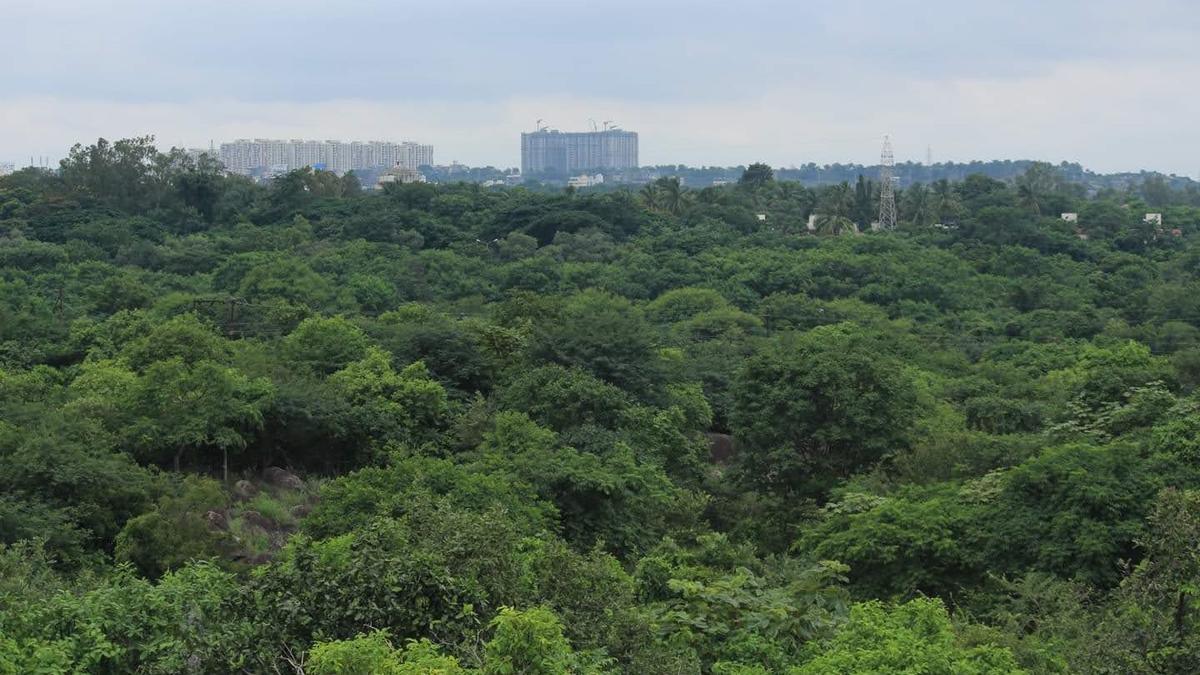
Recently, the students of the University of Hyderabad were protesting the Telangana state government’s bulldozing of 400 acres of ecologically vibrant, species-rich land within the university, undertaken as a preparatory step to auction it off. The state government sought to quell the protest by force, asserting that the land does not belong to the university and that it is within its rights to auction it. However, the Supreme Court has intervened and stayed the activities for the time being. Ego-bruised by the setback they have faced at the hands of the campus community, the Telangana government has now proposed that the entire 2300 acres of the university be turned into an eco-park, uprooting the campus in toto to a hundred-acre campus on the city’s outskirts.
Kancha Gachibowli forest, image courtesy The Hindu
Strangely, the university has not secured legal rights for the land it has occupied for several decades. However, the emphasis in the following note is on an aspect of the protest that lies beyond the legal dispute over ownership. It rather seeks to articulate the inarticulable—why the preservation of the ecology of these 400 or 2300 acres is not a standalone question but one that co-constitutes the very question of preserving the university itself.
As the debate on the three-language policy has intensified, what was originally an exchange between ministers of the union government and the government of Tamil Nadu, or between leaders of the Bharatiya Janata Party (BJP) and the Dravida Munnetra Kazhakam (DMK), has become a subject of commentaries and criticisms coming from observers, intellectuals and activists. The union government says that no state could be exempted from the implementation of the three-language formula as envisioned in the New Education Policy (NEP) 2020 and adds that Hindi is not made mandatory under the present formula. The condition is that two of the three languages must be native Indian languages. The DMK leadership argues in response that the three-language policy can still be an indirect route to push Hindi into the state. The latter has appeared firm in its argument that it is the state’s prerogative under the federal system to determine its language and education policy (though during emergency education was shifted to the concurrent list of the union government). It also opposes the measure adopted by the union government, that is, to link the funding under the Samagra Shiksha Abhiyan to the implementation of NEP 2020 and the language formula it includes. The parties which are not in alliance with the DMK in the state allege that the DMK has staged this conflict in order to ignite sub-national/regional sentiment to strengthen its position before the elections.
How Hindutva Supremacists are engaged in ‘rewriting history’.
‘There are times when madness reigns
And then it is the best who hang’
– Albrecht Haushoffer
[January 7, 1903 – April 23, 1945, German geographer, diplomat, author, who faced martyrdom for his resistance to Nazism]
Uday Bhembre, the 87-year-old widely respected Konkani writer, son of legendary freedom fighter Laxmikant Bhembre, who has been a Sahitya Akademi awardee, is a worried man these days.
He has discovered to his dismay that his courage to speak the truth and challenge a narrative being peddled by the ruling dispensation in Goa, .. regarding well established facts of Goa’s own history, would lead to protests, led by Right-wing formations and many among them trespassing his house at night and pressuring him to issue an public apology.
Not very many people outside Goa know how this great writer – he was even a MLA (1984-89) — had neglected his literary career to fight for rights of Konkani language and has been against attempts to merge Goa into Maharashtra, to preserve its culture.
Thanks to the existence of powerful voices of resistance and a vibrant civil society in Goa, a significant number of people have publicly condemned these attempts to intimidate Bhembre and demanded strict action against the perpetrators and exposed the collusion of the Right-wing formations with people in power. Many even went to meet the noted writer to express solidarity with him. ( Read the full article here :https://www.newsclick.in/goa-who-fears-truth)
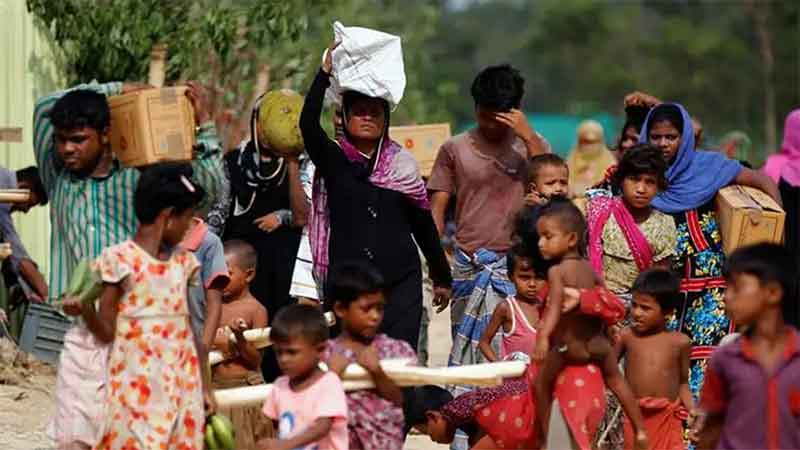
Aisha, a 7 year old girl living in Khajuri Khas Colony of Delhi, is yearning for a day when like her elder sister Asma, she would also be admitted to a nearby government school.(1)
This possibility is growing dimmer by the day, as the school has refused her admission and asked for Indian documents like Aadhar – which refugees do not possess.
Aisha is the younger daughter of Ahmad, a Rohingya refugee who has finally reached Delhi and has duly received his UNHCR card – which refers to the document issued by the UN refugee agency.
Thanks to the circular issued by Delhi government ( Dec 24) led by AAP asking schools to ensure strict guidelines during admissions perhaps Aisha will have to remain satisfied with the same private school which lacks facilities.With a drive underway to ensure that children of “illegal Bangladeshi immigrants” are not allowed enrolment, Aisha knows very well that her fate is sealed. (2)
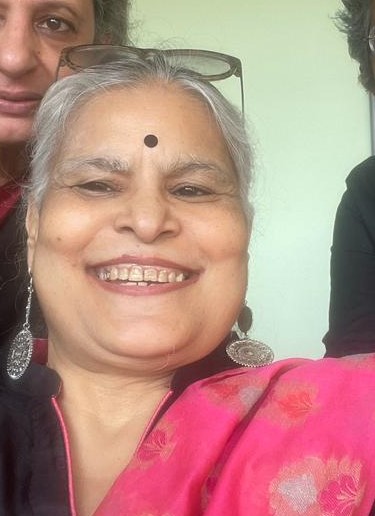
Anita Ghai (October 23, 1958 – December 11, 2024) psychology scholar and practitioner, feminist and disability rights activist, taught at Jesus and Mary College, Delhi University, for about three decades, then moved to Ambedkar University Delhi, from where she retired as Professor. She is the author of (Dis)embodied Form: Issues of Disabled Women (2003),Rethinking Disability in India (2015) and a significant edited volume Disability in South Asia: Knowledge and Experiences (2018)
How much I learnt from you, Anita my friend, and how am I performing this unthinkable task of writing your obituary! I feel as if I am writing this for you to read, for you to be gently critical about, because for sure I would have missed a nuance or two while writing about the points at which gender and disability intersect, for you cannot be written about without reference to your thinking and your scholarship. About three decades ago you sought me out to have a conversation on disability, and that destablizing conversation never ever ended. You blew open my theoretical horizons by introducing me to the field of Disability Studies, to the idea of decentering disability from a medical to a social model, to the idea that we are not divided between abled and disabled bodies, but that we all occupy a continuum of being Temporarily Abled Bodies. A sudden fracture, an illness, and within a split second you move from abled to disabled body. You wear spectacles, your hearing is mildly impaired, you have that problem in bending your wrist because of a childhood fall – each one of us is on that continuum. Continue reading Salaam Anita! 1958 – 2024→
We are reproducing below a statement by the Democratic Teachers’ Initiative seeking wider support from the university community in the struggle against the termination of employment of Prof Sali Mishra and Prof Asmita Kabra by the Ambedkar University Delhi administration. Those willing to sign may please do so by clicking on the link at the end of the statement.
We express deep shock and rage over the termination of two esteemed faculty members of Dr. B. R. Ambedkar University (AUD), Prof. Salil Misra and Prof. Asmita Kabra, and request your solidarity in building a struggle against this unprecedented and grave act of injustice.
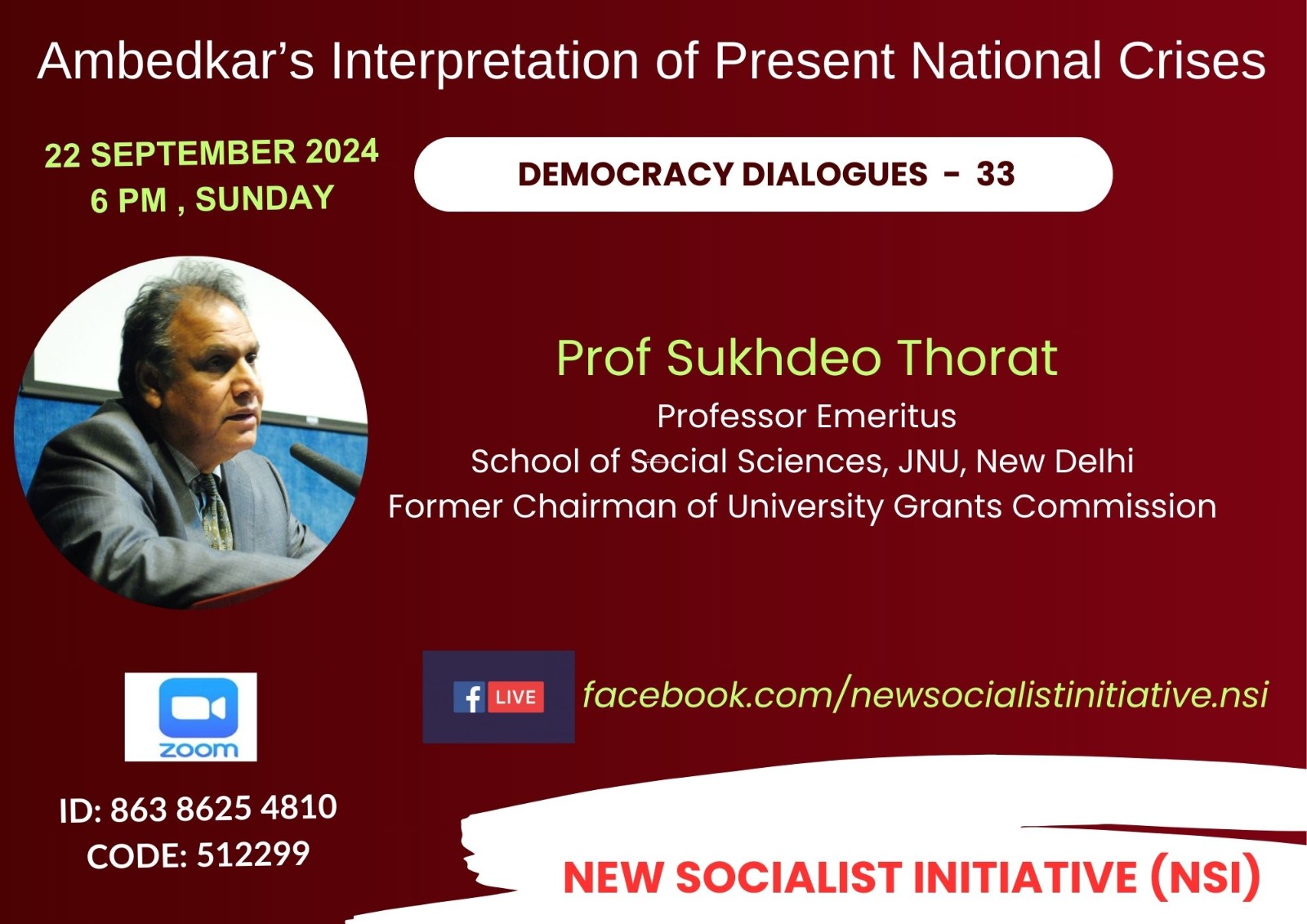
Professor Emeritus, School of Social Sciences, Jawaharlal Nehru University, New Delhi
Theme :Dr. Ambedkar’s Interpretation of Present National Crises
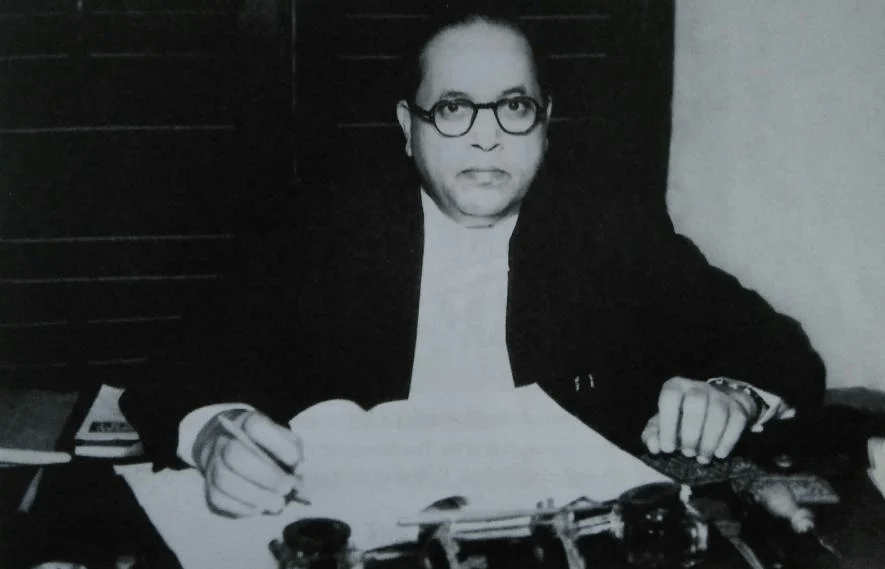
Number of scholars have tried to explain the present crisis by drawing insights from the experience of Fascism of Hitler in Germany 1930’s and/or similar viewpoints . Without undermining these attempts, I feel that Ambedkar’s theoretical perspective on Indian history presumably helps us more to grapple with the present crisis .In Ambedkar’s view it is continuation of the non-stop efforts from ancient times to bring back Brahmanism . Ambedkar observes that “that there was in ancient India, a great struggle between Buddhism and Brahmanism. It is not even a struggle but a quarrel over some creed ,The Buddhism was revolutionary and while Brahminsm was counter-revolutionary. It was a revolution and counter revolution in doctrine by a revolution in political and social philosophy”. The present attempt is an on-going legacy of the ancient Indian where it began , and carried through the medieval to British and to the present time with tenacity and stubbornness to maintain the privileges that the Brahmanical ideology bestowed on those who coined this ideology .The lecture will try to bring insights on Ambedkar’s perspective .
About the Speaker Prof Sukhdeo Thorat, Professor Emeritus, School of Social Sciences, Jawaharlal Nehru University, New Delhi ; former Chairman of University Grants Commission and former Chairman of ICSSR (Indian Council of Social Science Research) is a leading economist, educationist and writer. A renowned Ambedkar scholar Prof Thorat graduated with a B.A. from Milind College of Arts, Aurangabad, Maharashtra and has done PhD in Economics from Jawaharlal Nehru University. He was a Faculty Member at Jawaharlal Nehru University, New Delhi and visiting faculty at Department of Economics, Iowa State University, Ames, USA and has been associated with various national-international institutes and organisations. Recipient of many awards including Dr Ambedkar National Award (2011) and Padmashree ( 2008), he has authored and edited many books and monographs. Here is a list of his major publications : – Ambedkar on Social Exclusion and Inclusive Policy – Dalits in India? Social and Economic Profile (Sage) – Ambedkar in Retrospect: Essays in Economics, Society, and Politics (edited) with Aryama & Negi. (Rawat Publication) – Social Science Research in India : Status, Issue and Policies ( co-authored with Samar Varma) – Oxford University Press ( 2016) – Politics of Representation : Historically Disadvantaged Groups in India’s Democracy ( co edited with Prof Sudha Pai) Palgrave Macmillan ( 2012) – Untouchability in Rural India Sage, 2006 (with G. Shah, Harsh Mander, Satish Deshpande & Amrita) – Caste, Race, and Discrimination – Discourse in International Context (edited) (with Umakant), Rawat Publication, Jaipur (2004)
Bhakti Era as the Plebeian Plateau in the Civilizational Landscape of India
Guest Post by Ravi Sinha on a possible framework for looking at the millennial trajectory of Indian civilization
We have by now devoted several sessions to mapping the millennial trajectory of the Bhakti Movement across the history and the cultural geography of the subcontinent. Starting with the Tamil lands in the 7th century we followed Bhakti performing the pradakshina of the cultural landmass of the subcontinent, crossing the Vindhyas in its northward journey sometime in the 13-14th century. Our endeavour has been to understand the role of Bhakti in shaping the cultural and the civilizational mind of India. This, in turn, has been motivated by task of making sense of the role this mind plays in contemporary politics and in the rise of fascistic Hindutva in recent decades.
As we stated in the proposal to a previous session, we seek to understand the impact of Bhakti at two different time-scales. On the shorter time-scale of contemporary politics one looks at the phenomenon of communalism. The mainstream of the anti-colonial national movement considered Bhakti Movement as the harbinger of religious tolerance and syncretism that would help evolve the Indian brand of secularism. The subsequent history, however, paints a mixed picture. A social fabric and a cultural mind weaved by the Bhakti ideologies do not offer the kind of resistance to communalism and sectarianism as was expected of them. In our previous sessions we mainly stayed with evaluating the impact of Bhakti at the political-historical time-scale characterized by the problem of communalism and the rise of Hindutva.
On a longer – millennial – time-scale, however, one can evaluate the Bhakti phenomenon in the civilizational context. One can ask something like the Needham Question – why did the Indian civilization, despite its glory and accomplishments in the ancient and the medieval periods, fail to realize its cultural and scientific potentials? Why was it defeated often and why was it eventually colonized? Why did the West forge ahead, why has India lagged behind? Did the cultural mind and social ethos prepared by the Bhakti Movement play a role in the civilizational decline of India? These are very large questions not amenable to easy answers. But one must prepare to wrestle with them as they are of crucial importance for imagining and fashioning a desirable future for India. In this session, we finally arrive at the task of outlining a framework for asking and answering these questions.
For this purpose, we propose to take help of two large concepts – one of Axiality and the other of Modernity. The idea of axial revolutions was proposed for the civilizational breakthroughs that happened in the middle centuries of the first millennium BC in several different and unconnected societies – Judea (land of the Old Testament in the era of prophets), Greece (of pre-Socratic philosophers as well as of Socrates, Plato and Aristotle), China (of Confucius, Mencius and others) and India (of Upanishads, six systems of philosophies, and of Buddha) being the prime examples. We will briefly go through the idea of Axiality and see how we can understand it in the sequence of human cultural and cognitive evolution progressively from the mimetic (pre-linguistic, primarily based on gestures, rituals and body-language) to the mythic (linguistic but largely oral and narrative-based) to the theoretic (rational, abstract, normative and self-reflective). We will try to locate the Indian antiquity in the sequence of cultural evolution.
We will then make a millennial jump and outline the idea of Modernity, which can, in this context, be seen as a new kind of axial transition. The first axial transition did take the civilizations concerned from the mythic era to the theoretic era, but it still depended on the idea of the transcendental to reorder life in the realm of the mundane. The transition to Modernity, for the first time in human history, brings human autonomy to the centre-stage of history and civilization. Elimination of human dependence on the super-natural and on the transcendental is brought explicitly on the agenda and an objective and scientific knowledge of the cosmos is deployed into the service of human emancipation and freedom.
While the Indian civilization was a key example of the axial breakthrough two and a half millennia ago, its transition to Modernity has been faltering and patchy. While this may be true for many civilizations, it is especially disconcerting in the case of India which has had such a glorious antiquity at least in the domains of the mythic and of the theoretic. Of course, entire history of the intervening two millennia culminating in the colonial subjugation at the hands of the modernist imperialists is implicated in the complex and faltering progress of Modernity on the subcontinent and it cannot be explained on the basis of one cause or developments in any single arena. But one can be reasonably certain that the developments in the cultural-religious-civilizational arena play an important role in the civilizational transitions and transformations. The role of the millennial march of Bhakti must be assessed and evaluated in this context.
We will also engage with the theoretical issues that arise in this context of the materialist explanation of historical progress. There is no doubt that the historicalbreakthroughs and the transitions from one stage of history to the next happen through the push of advancing forces of production and, in this respect, the cultural-civilizational transformations are correlated with the developments in the material conditions of life. But there is a significant difference between the respective dynamics of systems and civilizations. While history progresses through replacement of one system by the next, in case of civilizations the older ones never entirely go out of existence. The older ones merely become the subterranean layers on which new layers arise or get deposited. The mimetic-ritualistic and the mythic, for example, have not disappeared from human civilization even after the axial-theoretic and the modernist-scientific stages have become increasingly entrenched.
Once again, I am not sure whether all this can be covered in one session even at the level of very sketchy outline of the argument. But the idea is to start thinking about these issues which, abstract and theoretical as they may sound, are of critical importance in making sense of contemporary politics and history.
Select Bibliography
Johann P Arnason, “The Labyrinth of Modernity: Horizons, Pathways and Mutations”, Rowman and Littlefield, 2020
Robert N Bellah, “Religion in Human Evolution: From the Paleolithic to the Axial Age”, Harvard University Press, 2011
S N Eisenstadt, “The Great Revolutions and the Civilizations of Modernity”, Brill, 2006
Neville Morley, “Antiquity and Modernity”, Wiley-Blackwell, 2009
Sheldon Pollock, “The Language of the Gods in the World of Men: Sanskrit, Culture, and Power in Pre-modern India”, University of California Press, 2006
Below we share a compilation of two Facebook posts by AYESHA KIDWAI. With the latest educational scandal of the UGC NET exam being cancelled because the National Testing Agency admitted to gross violations of confidentiality, we see everything come to pass, that teachers all over the country foretold regarding the drastic changes made in the education system over the past ten years. Reasonably robust public universities have been brought to their knees – drastic fund cuts to libraries and student scholarships, corresponding rise in funds to security agencies, university admissions delayed by months in some years, anomalies in admissions that are impossible to confirm because full admission lists with breakups are no longer made available to faculty or students. The system has become utterly opaque. And all this is excluding the academic changes that are still being brought about in an endless stream by the head of the UGC – a range of fantastical policies such as twice a year admissions, PhD admission immediately after a BA in subjects the students may not have studied, along with the ending of the MPhil degree. It’s like Mamidala Jagadhesh Kumar, who began the process of destroying JNU as its Vice Chancellor (a task ably taken up now by the current Vice Chancellor) asks himself every morning – what can I do today that’s fun, will create utter confusion and block the process of critical thinking and serious scholarship some more?
Teachers watch enraged, as our committed and hardworking students face hurdle after hurdle in their goal of pursuing knowledge and dignified livelihoods. As they protested this latest blow to their educational hopes outside the office of the Minister for Education they were manhandled by the police, picked up and detained.
Image courtesy The Telegraph
Along with Ayesha, we say to them –
Do not be disheartened or depressed. Do not believe that just because the BJP-RSS has smashed the entire country’s education system to smithereens, that education or honesty is worthless. It is in fact the only way out of this morass— that’s why these fascists do not want you to have it. Because if you do, you will also find your way out of them. So instead of turning your disappointment inward and causing yourself harm or distress, express your anger please.
Centralization and exclusion have been the hall marks of the transformations. Faculty inputs in admissions have been obliterated with the gigantic and bloated National Testing Agency (NTA) emerging as the chief control centre of all entrance examinations. What is this beast?
Ayesha Kidwai tells us more.
In January this year, the autonomy of universities to conduct their own entrance examinations at the research level was snatched away by the UGC by an arbitrary diktat that the UGC NET examination conducted by the National Testing Agency (NTA) will serve as the sole examination by which admission to PhD programmes will be determined. All the Central University Vice Chancellors immediately complied with this directive, riding roughshod over the internal protests by students and teachers alike. The end result of going with this corrupt, disorganised organisation called the NTA is therefore this: THERE WILL BE NO ADMISSIONS TO THE PHD PROGRAMMES OF MOST UNIVERSITIES AT THE BEGINNING OF THE ACADEMIC YEAR IN JULY-AUGUST THIS YEAR. Continue reading The National Testing Agency is a scam – shut it down now! Ayesha Kidwai→
The Right-wing party has been justifying and legitimising Mir Jafar, Mir Sadiq and associates, while demonising Siraj-ud-Daulah and Tipu Sultan.
The tomb of Nawab Siraj-ud-Daulah. Image credit: Wikimedia Commons
Elections to the 18th Lok Sabha have broken records in many ways.
Right from the arrests of Opposition leaders on the eve of elections, the spinelessness shown by the Election Commission (EC) to the open mouthing of hateful speeches targeting a community by top members of the ruling dispensation, to complete metamorphosis of the mainstream media into a cheerleader of the government, all such signs are ominous for the future of democracy in the country.
May be one should add to it the open justification by ruling Bharatiya Janata Party (BJP) leaders of the betrayal by the likes of Mir Jafar and his associates like Raja Krishnachandra Roy, Jagat Seth, Omi Chand — which lead to defeat of the Siraj-ud-Daulah (1733-July 2,1757), the last independent Nawab of Bengal in the Battle of Plassey, which ultimately opened the gates of conquest of the rest of India by the Britishers.
If 2019 elections are still remembered because BJP had fielded candidates who were accused of involved in terrorist acts, the 2024 elections would also be remembered how they helped betrayals covered in glory. ( Read the full article here : https://www.newsclick.in/how-bjp-covers-betrayals-glory)
How a Central university is being allowed to humiliate/ stigmatise Ambedkar and a conspiracy of silence still pervades it.
Mahatma Gandhi Antarrashtriya Hindi Vishwavidyalaya, Wardha, Maharashtra is again in the news for wrong reasons. It has been more than around four months that a unique initiative of doing readings from Ambedkar has been forcibly stopped, show-cause notices being issued and even punitive action being taken against Dalit teachers, but there is no murmur of protest about it and despite being in the know of these developments, the top bosses of the UGC or University Grants Commission are silent over it.
Stop readings on Ambedkar in open in University Campus, it could endanger the “safety and health of (participating) students and reputation of the university‘
The news of this unbelievable diktat by an educational institution remained dormant for a day.
Expectedly, the tremendous nationwide uproar about Prime Minister Narendra Modi’s election speech in Banswara, which is considered his most ‘divisive’ in last 30 years, overshadowed other similar urgent issues.
The institution under scanner for this diktat to teachers is Mahatma Gandhi Antarrashtriya Hindi Vishwavidyalaya, Wardha, Maharashtra, a Central university. You would recall that some time ago, this institution had similarly attracted eyeballs when a team of Hindi research scholars from China had visited it. A visit that was followed by this team’s meeting with RSS (Rashtriya Swayamsevak Sangh) leaders at their headquarters in Nagpur.
What is rather troubling to note is that it has been more than four months that this unique experiment of doing readings from Ambedkar, in open, which was an initiative undertaken by the Dalit teachers of the vishwidyalaya, under the informal group called Ambedkar Study Circle India, stands forcibly stopped, show-cause notices being issued to teachers involved and even punitive action taken against three of them, but a conspiracy of silence has pervaded it.
What must have prompted this action by the University administration against the teachers, who were were just following the UGC recommended Code of Professional Ethics? ( Please read the full article here : https://www.newsclick.in/new-india-no-ambedkar-readings)
This is a guest post by Purnima Rao and Mridula Koshy
[The Free Libraries Network (FLN) is a coalition of over 250 free libraries, librarians and library activists across India and South Asia. A member of the International Federation of Library Associations and Institutions (IFLA), FLN believes in universal access to reading materials and information. FLN offers a platform for sharing resources, best practices, and insights about free libraries in India. Although it does not own or operate libraries, FLN plays an integral role in coordinating and acting on policy issues related to access to knowledge resources. FLN actively advocates for a free public library system in India. The FLN believes that reading and access to information are a fundamental right. It is motivated by the conviction that a robust free public library system is a foundational bedrock of a just, equal, and democratic society.]
Free Libraries Network, is choosing the birth anniversary of Babasaheb Ambedkar to announce the completion of its work drafting the People’s National Library Policy. The date is fitting as Babasaheb’s love of books and reading and especially his belief in libraries gives us strength in our anti-caste work to argue for a public library system that is free and open to all. Our network of over 250 free libraries spread across nearly every state in India brings together library movement activists who recognise that without a publicly funded and locally autonomous library system, we will never realise the promise of Babasaheb’s great work, our Constitution. Our democracy suffers when the people do not have free libraries in which to have equal access to vital information.
At this time, we have every reason to fear that the long stagnant question of libraries and of library policy is being revived, but to serve narrow interests. We have seen the question raised in Rajya Sabha in 2022, and call issued from there to the Union Ministry of Culture for a national library policy; we attended the same Ministry’s Festival of Libraries in 2023, where the keynote speaker Vinay Sahasrabuddhe spoke of the “good” and “bad” books and where it was announced that the government would be shifting the library question from the State to the Concurrent list; and we have visited a model library in Delhi, created by the Gautam Gambhir Foundation and inaugurated by Amit Shah, which utilises best practices of modern library science such as open shelving with its impulse to freedom of choice to house a collection that can be characterised as propaganda.
The draft People’s National Library Policy is a counter to these threats and an attempt to revive the question of libraries in India. It recognises the pivotal role of public libraries in empowering communities and fostering societal progress, especially amongst those excluded throughout India’s history, including Dalit, Adivasi & Bahujan people, Backward Classes, women, non-binary & trans people, undocumented & refugee communities and persons with disabilities. Rooted in Dr Ambedkar’s ideals of equity and justice, the policy envisions a public library system that is freely accessible and relevant to all segments of society, transcending barriers of caste, class, gender and disability.
The PNLP will be released on 13th April 2024, at 5:00 PM, Press Club, New Delhi.
Prof Romila Thapar, great historian and public intellectual , will be delivering the 28 th Lecture in the Democracy Dialogues Series on Sunday 28 th January 2024 at 6 PM (IST).
Please reserve the time and date for the lecture. Details are given below
Democracy Dialogues – 28 th Lecture
Organised by
New Socialist Initiative (NSI)
Theme : Our History, Their History, Whose History?
The zoom invite will be shared closer to the date.
Abstract: My purpose in this talk would be to examine the link between history and particular kinds of nationalism. I hope to show that nationalism can be a process, bringing together and uniting all the communities that inhabit a particular territory in support of a change in society or opposing a target common to all. This earlier form is what I would like to call a unitary, integrative nationalism that cut across communities and drew them together in a particular country to support a single purpose. This I would differentiate from the latter forms in some countries which identified with units of society or communities according to certain common features, such as a particular religion or language, or caste or ethnicity. I would call it segregated nationalism, where each community is segregated and treated as having a distinctly different identity and its own separate goal. History is brought in when the community that gives an identity to its nationalism insists on tracing its origins to a historical past. This pattern of integrated and segregated nationalisms would seem to apply to India of the twentieth century. There was the all-inclusive national movement whose participants were from every community; its objectives were to maintain the unity of the Indian people and overthrow colonial rule. The other nationalism, segregated nationalism, was seeded in the 1920s and assumed the existence of two nations – the Hindu and the Muslim – which, it was argued, go back to earlier times. Integrated nationalism succeeded in 1947 in bringing about independence, but its foundations needed strengthening, for we are now witnessing the strong presence of religious nationalism in the attempt to inaugurate a Hindu Rashtra in India.
– Romila Thapar
About the Speaker:
Internationally renowned scholar of Ancient History, Prof Thapar was elected General President of the Indian History Congress in 1983 and a Fellow of the British Academy in 1999. In 2008, she was awarded the prestigious Kluge Prize of the US Library of Congress which complements the Nobel, in honouring lifetime achievement in disciplines not covered by the latter. Prof Thapar has been a visiting professor at Cornell University, the University of Pennysylvania, and the College de France in Paris and holds honorary doctorates from the University of Chicago, the Institut National des Langues et Civilisations Orientales in Paris, the University of Oxford, the University of Edinburgh (2004), the University of Calcutta and from the University of Hyderabad
Here is a select list of Prof Thapar’s publications Ashoka and the Decline of the Mauryas, 1961 ( Oxford University Press) ; A History of India : Volume 1, 1966 ( Penguin) ; The Past and Prejudice, NBT ( 1975) ; Ancient Indian Social History : Some Interpretations, 1978 ( Orient Blackswan) ; From Lineages to State 1985 : Social Formations of the Mid-First Millenium B.C. in the Ganges Valley, 1985 ( Oxford University Press) ; Interpreting Early India, 1992 ( Oxford University Press) ; Sakuntala : Text, Reading, Historie, 2002 ( Anthem) . Somanatha : The Many Voices of History, Verso ( 2005) ; The Aryan : Recasting Constructs, Three Essays ( 2008) ; The Past As Present: Forging Contemporary Identities Through History, (2014) ;Voices of Dissent: An Essay, (2020); The Future in the Past: Essay ( 2023)
This is a statement of support for Prof. Sameena Dalwai from the global and national academic community. We, the undersigned writers and teachers, are deeply concerned with the ordeal that Sameena Dalwai has faced for the past several weeks.
Education is key to the spirit of democracy. Autocratic regimes fear critical thinking and educators that foster it. In the series of relentless attacks on Indian universities, Prof. Sameena Dalwai is the latest.
It started with an email exchange on 7 November 2023, about Palestine shared within the university faculty that was leaked to the trolls. Dalwai was targeted as being ‘Hindu-phobic’ even though her email called for tolerance of opposing ideological views within the safe space of universities. Continue reading Statement of Support for Prof. Sameena Dalwai, Jindal University→
As academics and other concerned persons, we, the undersigned, are outraged at the manner in which discussions on the ongoing war against Palestine are being silenced on Indian campuses, and in the public sphere more broadly. We are issuing this statement to call upon university administrators and the government to respect our academic freedom. We would also like to remind everyone of India’s own long history of anti-colonial struggle which has historically provided the lens through which the Palestinian struggle for self-determination, equality and human rights has been viewed in India.
We object to the way in which any discussion of the historical context of the occupation of Palestineand the barbaric Israeli assault on Gaza, along with the denial of food, fuel and water, since October 7th 2023, is being projected as support for the brutal terror attack on civilians in Israel by Hamas on October 7th.
क्या बुद्धिजीवी वर्ग को पालतू बनाए रखने की सरकार की कोशिश या विश्वविद्यालयों में इंटेलिजेंस ब्यूरो को भेजने की उनकी हिमाक़त उसकी बढ़ती बदहवासी का सबूत है, या उसे यह एहसास हो गया है कि भारत एक व्यापक जनांदोलन की दहलीज़ पर बैठा है.
So you are the little woman who wrote the book that made this great (American) civil war’
( ‘‘‘तुम हो वह महिला जिसने उस किताब को रचा जिसने इस महान /अमेरिकी/ गृह युद्ध को मुमकिन बनाया)
[गुलामी प्रथा की समाप्ति के लिए छेड़े गए गृह युद्ध के खात्मे के बाद तत्कालीन अमेरिकी राष्टपति अब्राहम लिंकन द्वारा गुलामी प्रथा के खिलाफ लिखे गए उपन्यास ‘अंकल टाॅम्स केबिन’ / 1852/ की लेखिका हैरियट बीचर स्टोव Harriet Beecher Stowe से मिलने पर प्रगट उदगार]
लेखक, कलाकार, विद्वान आदि से हुक्मरान हमेशा ही चिंतित रहे हैं।
मिसाल के तौर पर क्रांतिपूर्व फ्रांस के बारे में यह बात मशहूर है कि वहां की राजशाही ने अपने पुलिस महकमे को अपने दौर के अहम लेखकों, कलाकारों की जासूसी करते रहने के निर्देश दिए थे। हम अठारहवीं सदी के पुलिस महकमे की मुलाजिमों की मुश्किलों को समझ सकते हैं जिन्हें ‘खंूखार अपराधियों और राजनीतिक व्यक्तियों’ के अलावा लेखकों, कलाकारों पर अपनी फाइल रखनी पड़ती थी। (द स्टेटसमैन, हिन्दुस्तान टाईम्स, नई दिल्ली, 26 सितम्बर 2006)
एक क्षेपक के तौर पर बता दें कि इस जासूसी का विधिवत विवरण जनाब ब्रूनो फुल्गिनी की किताब में मिलता है जिसका शीर्षक है ‘राइटर्स पुलिस’ – दरअसल फ्रेंच संसद के इस कर्मचारी को यह जिम्मेदारी मिली कि वह पार्लियामेंट लाइब्रेरी के पुराने दस्तावेजों को खंगाले और इस बेहद उबाउ काम के दौरान उसे यह ‘खजाना’ मिल गया था।
अगर हम अपने यहां निगाह दौड़ाएं तो मौजूदा हुक्मरानों का रूख इस मामले में कोई अलग नहीं दिखता, बल्कि वह ढाई सौ सदी पहले के फ्रांसिसी सम्राटों से कभी कभी एक कदम आगे ही दिखते हैं। ( Read the full text here)
Writers, scholars, artists have always worried the powers that be.
There was a time when the Parisian police had been given the onerous task of keeping the greatest writers of late 18 th Century who were living in Paris at that time under their watch. Poor fellows, one can imagine their difficulty in maintaining files on writers and artists and scholars ‘beyond criminals and political figures.’
The present dispensation at the centre is no different.
It could be said that it may be a step ahead.
The French Monarchs – who within few decades witnessed a mass upheaval which finally overthrew them – were wise enough to ask their minions to be rather discreet in their activities, not to offend the writers, scholars directly ; the harbingers of today’s ‘New India’ have even abandoned that discreetness for good.
The “Rome Declaration of the G20 Culture Ministers” (2021) inserted culture in the G20 process, recognising it for its social and economic value, and stating a commitment to the protection of cultural heritage and expressions at risk. This Declaration recognises the need for strengthening and developing effective, sustainable, inclusive and coordinated management models and tools for protecting cultural heritage at risk. The International Federation of Library Associations and Institutions (IFLA) has recognised this as an opportunity for libraries and documentary cultural heritage experts to play a vital role in developing these models and tools, as well as benefiting from them. As a result the upcoming G20 meeting in India will showcase libraries. This statement is by the Free Library Network, a member of IFLA, drawing attention to the imperative need for India to have a free library policy.
The Free Libraries Network (FLN), is a coalition of free libraries and librarians advocating for free library access and the right to read in India and South Asia. FLN believes in universal access to reading materials and information. FLN offers a platform for sharing resources, best practices, and insights about free libraries in India. Although it does not own or operate libraries, FLN plays an integral role in coordinating and acting on policy issues related to access to knowledge resources.
The FLN Statement
The Free Libraries Network (FLN) will participate in the Festival of Libraries by the Ministry of Culture, Government of India at Pragati Maidan, New Delhi on August 5 and 6, 2023. This conference, focused on the library landscape in India, is an opportunity for library advocates across the country to discuss the need for a public library system that offers free access to books and information to all people.
During the conference, FLN members will be contributing to three panels, aimed at sharing insights on free libraries’ potential in promoting reading, thinking and community discussions, as well as in such libraries’ potential to undo the historic exclusion of the vast majority of people from reading and to promote the Constitution’s vision of equality. Additionally, FLN members will engage in various advocacy activities both inside and outside the conference venue, appealing for a policy that guarantees free library access to all. Continue reading Public Libraries Must Be Free! Free Libraries Network (FLN) at the G20→