Category Archives: Everyday Life

The Affective Claims of Violence – Reflections on the JNU Campus Tragedy: Pratiksha Baxi

Guest Post by Pratiksha Baxi

Many competing frameworks have given expression to shock, disbelief, rage, grief, guilt and fear after the violence witnessed as the new semester kicked in, with a monumental tragedy, on the JNU campus. Everyone is stunned by the tragic turn of events that has resulted in a young woman battling for her life in a neuro–ICU in Safadarjung hospital. Confusion gripped the campus as the classroom became a scene of crime, a classmate became a bloodied body and the familiar transformed into the incomprehensible. It was devastating that the assailant, who succeeded in extinguishing his own life, aimed to unite in death the object of his obsession through a planned and highly performative act of violence in the routine setting of a classroom.

Continue reading The Affective Claims of Violence – Reflections on the JNU Campus Tragedy: Pratiksha Baxi

Unrequited love or simply ‘self love’? – Reflections in the wake of a Campus Tragedy at JNU: Shivani Nag

Guest Post by Shivani Nag

In the days following the brutal rape and murder of a young woman in December last year, I remember waking up each day and being out on the streets raising slogans on women’s freedom and liberation. For months after that, there were a series of mobilizations, vigils, parades and protests, and my strongest recollection of those events is the resounding reverberation of ‘mahilaayein maangi azaadi… khaap se bhi azaadi aur baap se bhi azaadi, shaadi karne ki azaadi aur na karne ki azaadi…’. It WAS about justice for that one woman, but it wasn’t ONLY about that… it was also about many other such women – some forgotten, some not, some dead and some still around… it was also about all women, demanding not just justice but their right to life as equal citizens. We did not come out on the streets to be told how to be safe, but to convey it loud and clear that we cannot spend our entire lives trying to be safe without actually getting to live it. We came out to demand and defend our right to choice!! Continue reading Unrequited love or simply ‘self love’? – Reflections in the wake of a Campus Tragedy at JNU: Shivani Nag

Beyond Reasonable Doubt? The Conviction of Shahzad Ahmad: JTSA

Guest Post by Jamia Teachers’ Solidarity Association ( JTSA ), Delhi.

Beyond Reasonable Doubt? The Conviction of Shahzad Ahmad is a detailed analysis and critique by the Jamia Teachers’ Solidarity Association of the judgment awarded on the 25th of July by the 2nd Additional Session Judge, Delhi-South East (Saket) Court in the ‘State vs. Shahzad Ahmad@Pappu’ case, also known as the ‘Batla House Encounter’ case. Yesterday, on the 30th of July, the judge confirmed his verdict of ‘guilty’ and awarded Shahzad Ahmad the punishment of imprisonment for life and a fine of Rs. 95,000/-. The JTSA, which has been following the Batla House Encounter since 2008 presents its findings on the trial in this booklet, and disputes the guilty verdict awarded to Shahzad Ahmad. Kafila is carrying this publication (as part of a series of posts on the Batla House Encounter) as a downloadable pdf format file.

Boyalagudem’s Search for Water: Rajendran Narayanan

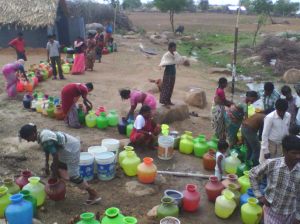
Guest post by RAJENDRAN NARAYANAN. Boyalagudem – The name sounds like one of those nondescript railway stations in south India that an express train whizzes by in utter condescension of its portly status. Except that in this case it is much worse. There are no railway tracks in a 50 kilometre radius of this village, tucked away in a corner of Mahabubnagar district in Andhra Pradesh. The landscape here is various hues of brown with not even a pretension of greenery anywhere, barring a few adamant shrubs as if standing up for their fraternity.

A not so covetous claim to fame of this region is its proneness to drought. People here spend each year in the hope that weather cannot play a prank every year. Prayers are offered each year in the second week of June to please the rain gods so that the chosen gods can have mercy this time around. But, the gods in turn haven’t been too pleased with the prayers so offered for the past few years.

Boyalagudem's scramble for water
Boyalagudem’s scramble for water

To cut to the chase, water is scarce in this region and so is electricity. Most villages in this part of the district have a central water pump connected to a storage tank that gets water when the State takes pity and provides electricity. Thus, no electricity implies no water. Electricity comes and goes at random times of the day and consequently there is no fixed schedule regarding the availability of water. Some desperate villager wakes up at 4 AM and rushes to the water pump in the hope of getting water. Another sleepy villager  walking out to take a leak at that hour observes an active man with four colourful pots running to get water and rushes back to his house to join the early riser in the daily water fetching ritual. News of water availability spreads and within 30 minutes one can see majority of the villagers, from 6 year olds to70 year olds, wiping their sleep off their face, walking, running or cycling, each with four to six bright colourful plastic pots to the solitary water pump. Multicoloured fluorescent pots form a long and winding queue to usher in the day. The chaotic queue naturally lends itself to quarrels and verbal skirmishes about who came first and why somebody has come with eight pots to hoard water.

Continue reading Boyalagudem’s Search for Water: Rajendran Narayanan

Katiyabaaz – the grid thief of Kanpur

Katiyabaaz Loha Singh in a still from the film

By SHIVAM VIJ: A new documentary film, Katiyabaaz, presents a problem that I’ve been struggling with. Although the film is set in Kanpur, it’s a problem that faces many parts of South Asia. The film-makers, Fahad Mustafa and Deepti Kakkar, obstinately refuse to offer possible solutions. With catchy lyrics and music, the film celebrates Kanpur, its people, and this messed-up system. It’s a snapshot of who we are. It’s when you think about the film that it disturbs you.

The film’s anti-hero is a thief — Loha Singh helps a lot of people steal electricity in Kanpur. He connects the illegal wire that is known in north India as katiya. Katiya is the sort of simple solution to life’s problems that South Asians feel very smart about. It’s an example of jugaad, the shortcut to problem solving that’s now integral to pop management theories. Continue reading Katiyabaaz – the grid thief of Kanpur

Ilavarasan: At a deadly new junction of caste and electoral politics: Rajan Kurai Krishnan

ilavarasan_divya-350_070513040519This is a guest post by RAJAN KURAI KRISHNAN

The gruesome death/alleged murder of Ilavarasan, a Dalit youth, at the outskirts of Dharmapurai on the afternoon of 4th July has come as a shock to all those who have heard of his case. Murders, ironically called honour killings, and socially abetted suicides as outcomes of inter-caste marriages are of course as common as catching cold in most parts of India. However, what has made Ilavarasan’s case something that could penetrate the armour of the middle class everyday plated with trained nonchalance to extract a possible expletive under their breath is the fact that his case has been in the limelight for more than eight months now.

It was a few weeks after his marriage with Divya, a girl belonging to the caste of Vanniars, a Most Backward Caste in the official description of Tamil Nadu Government,  in October 2012, Divya’s father was found dead allegedly having committed suicide due to the “dishonour” caused by his daughter’s marriage. Making the suicide an excuse, the Vanniyars organized riots in which three Dalit hamlets, about 250 houses, were destroyed. The scale of violent destruction caught the national attention and so did the love story behind the riots. The young couple earned a media profile while trying to live in peace beyond the reach of the raging Vanniyar caste men. It was fated that was not to be. The Vanniar caste leaders used Divya’s mother to temporarily separate Divya from Ilavarasan by using the well known tactics of emotional blackmail. They then broke the communication link between Ilavarasan and Divya. When Ilavarasan saw Divya in the court on the first of July, Divya told the court that she would live with Ilavarasan after convincing her mother. Divya’s lawyer, however, managed to make her tell the press that she is separated from Ilavarasan forever. Ilavarasan, on the other hand, told India Today, that he was highly hopeful of re-uniting with Divya. After two days, he was found dead near a railway track in broad daylight. Given this history, the news had some potential to shock people. Continue reading Ilavarasan: At a deadly new junction of caste and electoral politics: Rajan Kurai Krishnan

Salaam, Sharmila Rege!

2006112210820401

Sharmila (right) receiving the Malcolm Adiseshiah Award (2006) from Padmini Swaminathan, Director of Madras Institute of Development Studies (Source: The Hindu)

Sharmila Rege passed away yesterday, aged 48, a month after she was diagnosed with cancer. Sharmila described herself as a Phule-Ambedkarite feminist, and was a dear friend to many of us, a political activist of enormous integrity and the moving spirit behind Krantijyoti Savitribai Phule Women’s Studies Centre at Pune University. Her scholarship was immense and inspiring, consistently traversing the minefields of caste and gender, constantly complicating one with the other. Writing Caste, Writing Gender: Reading Dalit Women’s Testimonios brought together first-person accounts of eight Dalit women from the 1920’s to the present – the voices of Babytai Kamble, Shantabai Kamble, Muktabai Sarvagod, Shantabai Dani, Kumudtai Pawde, Urmila Pawar, Janabai Girhe and Vimaltai More, emerge powerfully and relentlessly in their matter-of-fact assault on caste society’s smugness and violence. Sharmila worked with these ‘testimonios’ (a term she drew from Latina feminism) in a series of’ ‘translations’ – translating from Marathi, translating time and place, translating herself, and encouraging  readers to translate themselves too, in terms of Phule and Ambedkar’s scholarship and politics, to read themselves through the lens of the non-Brahmin and Dalit movements in Maharashtra. Continue reading Salaam, Sharmila Rege!

पाकिस्तानी गाली नहीं है : अपूर्वानंद

लखनऊ के बारहवीं कक्षा के एक छात्र आदित्य ठाकुर ने हाल में विदेश मंत्रालय के सचिव को हाल में  एक पत्र लिखकर तकलीफ जताई  है कि भारत का संचार तंत्र , विशेषकर टेलिविज़न पड़ोसी मुल्कों के खिलाफ नफरत का प्रचार करता है. आदित्य ने यह पत्र ‘इंडिया न्यूज़’ नामक  टी. वी. चैनल  के एक कार्यक्रम से दुखी होकर लिखना तय किया. कार्यक्रम पाकिस्तान में पोलियो की बीमारी की समस्या पर केंद्रित था. ऊपरी तौर पर एक गंभीर मसले पर चर्चा करने के लिए बनाए इस कार्यक्रम का शीर्षक था, ‘लंगड़ा पाकिस्तान’. आदित्य ने लिखा है पूरा  कार्यक्रम  पाकिस्तान के बारे में प्रचलित ‘स्टीरियोटाइप’, उसके प्रति अपमानजनक  और सनसनीखेज प्रसंगों से भरा पड़ा था.रिपोर्ट लगातार पाकिस्तान को ‘दुनिया को तबाह करने के सपने देखने वाला’ कह कर संबोधित कर रही थी. ‘बम का क्या करोगे पाकिस्तान , खाओगे?’ और ‘दो बूँद से मत डरो पाकिस्तान’ जैसे संवादों से कार्यक्रम की पाकिस्तान के प्रति घृणा जाहिर थी. Continue reading पाकिस्तानी गाली नहीं है : अपूर्वानंद

Performing Heritage

By SOHAIL HASHMI: Navina Jafa’s Performing Heritage: Art of exhibit walks is one of few books dealing with the process of conducting heritage and culture walks in India. But the subject is a rapidly expanding and lucrative field that – until now – has not been very well understood.

Jafa is a student of history, a trained classical dancer, a conservationist and a heritage activist. Normally those with their fingers in too many pies end up mixing their metaphors, but this author specialises in inventing her own – the title of this book, for instance. Performing artists, performing acrobats, performing monkeys are terms that all of us are familiar with, but the concept of heritage that performs is more unusual.

The text exists simultaneously on two planes. The first locates heritage walks in the realm of public performances, distinguishing them from exhibitions in controlled environments like museums and art galleries. The second is more illustrative, and is presented as an explanation of the arguments being advanced across the first strand. Continue reading Performing Heritage

São Paulo: The City and its Protests: Teresa Caldeira

Guest post by TERESA CALDEIRA

In June 2013, a series of large demonstrations throughout Brazil have shaken up its main cities and political landscape.  They have also perplexed politicians and analysts alike, many of whom found themselves without solid references to interpret the novelty and oscillated between silence and old discourses.  It is always risky to interpret emerging processes. Minimally, we risk following secondary paths or, even worst, framing new events with the vocabulary made available by old interpretative models, exactly the ones that the new events are trying to displace. However, in order to reveal what is emerging it is necessary to risk, search for new hints, and follow signs already available.  Several references that can guide us to interpret the June events have been around for quite a while; others are new, but we can trace their lineage and contextualize them.

SP Batata 17 june
17th June, 2013

Continue reading São Paulo: The City and its Protests: Teresa Caldeira

Reading Violence in the Garo Hills : Rafiul Alom Rahman

This is a guest post by RAFIUL ALOM RAHMAN

The recent mob fury over the rumour of rape of a mentally challenged Garo girl and the consequent outburst of terror on migrant workers in Tura shouldn’t be read as a simple story of Garo men’s concern for women. If it was so, not so many labourers outside Tura would have been killed in cold blood by Garo miscreants. The claim that tribal society is free from the clutch of sexism, and that it is tribal women who face sexual abuse in the hands of non-tribals does not cut ice anymore. Continue reading Reading Violence in the Garo Hills : Rafiul Alom Rahman

Huge Rally of Narmada Dam Oustees in Bhopal: Jeevan Adhikar Satyagraha and Upwaas begins with Demand for Rehabilitation and Resettlement

This is a press release by the NARMADA BACHAO ANDOLAN

28th June 2013

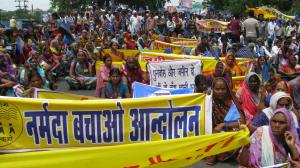
Rally 2

Thousands of oustees affected by the Indira Sagar, Omkareshwar, Maheshwar, Upper Beda and Man dam demonstrated in capital city Bhopal today and began their Satyagrah. Despite continuous rain in the entire Narmada valley, over 8000 men and women displaced persons have reached Bhopal to camp here for the next 5 days. The affected people demand that all the oustees of these dams should be rehabilitated and resettled with land and all other entitlements, and the injustice being wreaked on them for decades be stopped. Shri Alok Agarwal, senior activist of the Narmada Bacahao Andolan along with 4 men and women oustees have started their fast for 5 days in this “Narmada Jeevan Adhikar Satyagraha and Upwaas”.

Gyapan

Continue reading Huge Rally of Narmada Dam Oustees in Bhopal: Jeevan Adhikar Satyagraha and Upwaas begins with Demand for Rehabilitation and Resettlement

On Passport Divas, ‘We are Like That Only, But We Want to be Superpower’!

‘It happens only in India’ – so goes the refrain. Because we are extra special. Yes we are. In our smugness and in our conceit. In our bloated sense of Self that will stop short of nothing less than the status of the next ‘superpower’ – without anything to show for it though. Wonder where all this actually comes from? Chala Murari Hero Banane. Years ago, we were told, we had colonized Silicon Valley. Our software writers, the best in the world, had placed India in the world map of rising powers. So much had it impressed the leaders of this country that they decided that all their higher education would be geared to producing more and more such labour for the new global economy (no offense meant to the software people). However that is another story. Right now I want to tell a different one – partly out of frustration but partly because I consider it my duty to forewarn others who might be in for a similar experience as mine. Continue reading On Passport Divas, ‘We are Like That Only, But We Want to be Superpower’!

In the Belly of the Beast: Peggy Mohan

Guest post by PEGGY MOHAN: When the size and complexity of a system pass a certain threshold there is a new feature that typically and suddenly appears: self-regulation. If traffic flow through a crossing exceeds a certain amount we wake up one morning and find a traffic light. It is not there to favor any motorist: what it really signifies is that the scale of things has changed.  We are no longer in the realm of the individual but of something much, much larger: a traffic system with compulsions of its own.

It is comforting to think that there is human agency behind the bewildering transitions we are now seeing the world over towards more state surveillance and control along with less regulation of big business. Clearly there are individuals who benefit from the new order. But there is another way of looking at the direction the world is taking. It is possible to see all this as evidence of a phase change, with the emergence of the megasystem itself as a new protagonist, and with human beings relegated to the status of bacteria proliferating in (and dying in) its gut. Continue reading In the Belly of the Beast: Peggy Mohan

Aap Kare toh Renovation, Hum Kare toh Gentrification

It appears that a Delhi bookstore has relocated. This, in itself, isn’t news in a city of relocation,dislocation, demolition, destruction; a city built, looted and sacked at least seven times. Yet, the emotional coverage of Yodakin’s move – from one part of Hauz Khaas village to another – assures us that Delhi has lost a vital cultural hub, a “safe space”, an “indie book store with the ambience of a salon“. In a city of “aggression, pollution and anxiety”, Yodakin apparently offers us “reassurance”.

The problem, familiar to any intellectual in search of reassurance, is skyrocketing rents. As one particularly maudlin tribute explains: (emphasis in original):

I remember sitting with Arpita and Smita (of 11.11 Celldsgn/ The Grey Garden/ Elma’s/ Edward’s & TLR) at Elma’s across the street from Yodakin (the bakery was still only open for tastings) and vociferously advocating a shopkeeper’s union of sorts back in 2011.We were concerned about the escalating rates, discussing the impending gentrification (and doom) of our little alternative urban village. Everything popular gets subsumed into consumer culture eventually, we argued. The alternative is always being wiggled out of the spaces it fosters. The little guys make the place and then the big rich guns swoop in to ruin it, commercialize it.

But, don’t panic just yet, the bookstore is now sharing space with an organic food and art cafe called Tattva, where a  Tattvaamrita “Fruit Yogurt with Honey and Nuts” costs Rs 245, and a “cooling fennel juice” costs Rs. 175.  If the little guys are charging Rs 625 plus tax for a couscous salad, one genuinely fears what the “big rich guns” will charge. This of course brings us to a much needed conversation about all the things that you talk about in when you live in Delhi: Gentrification, alternative publishing, independent bookstores, and the all things that New York has and Delhi shall soon acquire.

Continue reading Aap Kare toh Renovation, Hum Kare toh Gentrification

Barasat Rape, Murder and the Culture of Rape in West Bengal: Soma Marik

Guest post by SOMA MARIK. [We are publishing below two articles by Soma Marik, Visiting Professor, School of Women’s Studies, Jadavpur University. The first deals with the recent case of the rape and murder of a young girl in North 24 Parganas while the second one below was written in 2003 when the Left Front was in power and documents the widespread culture of rape in the state. Between them, the two pieces alert us to the way we tend to respond selectively to such matters. This is particularly so in the case of political parties in power.]

The Barasat Rape and Murder: Some Reflections

On 8th June, a young woman, a second year college student, was returning home, Kamduni, a remote village of Barasat in the district of North 24 Parganas. She was waylaid by some criminals, who took her to a godown, where they gang raped and then proceeded to murder her. Six hours after she was seen alighting from a bus, her body was found by her brothers and other villagers. The police were forced into some action, after the family and people of the locality refused to even let them shift her body without action first. They accused a number of people, including some connected to the ruling Trinamul Congress, of being rapists. The young woman was well known, as she used to help many children of the locality in their study.

The first response from the police was to play it down, till local anger made that an impossible proposition. The first response from the government was to declare it a stray incident, and also to offer jobs and cash compensation to the family. This was angrily turned down, with the family members turning up in Kolkata, meeting Chief Minister Mamata Banerjee, and demanding the death penalty for the rapists and murderers. Continue reading Barasat Rape, Murder and the Culture of Rape in West Bengal: Soma Marik

Mourning Reingamphi Awungshi: Pratiksha Baxi

This is a guest post by PRATIKSHA BAXI:  

imagesWhen the police found Reingamphi Awungshi, a twenty-one year woman from Ukhrul district in Manipur brutalised, assaulted and dead in her rented apartment in Chirag Delhi on 29 May 2013, they did not file an FIR. Rather, the Malaviya Nagar police station, a site of anguished protests, began by designating her death as suicide, even as they waited for a post mortem report! Although the family argued that the state of her bloodied and injured body clearly indicated sexual assault and murder, the police ended up filing an FIR, after three days, as a case of abetment to suicide. 
It seems very clear that the aftermath of the Delhi gangrape protests have not made a dent in practices of policing—it should not take hundreds of protestors to ensure the registration of a police complaint. Nor is it reasonable for the police without thorough investigation and competent medical examination of the body to conclude that the death was a suicide rather than murder; and that the injuries on the body, the outcome of substance abuse rather than assault. This is evidence of bias, rather than an impartial investigation.  Continue reading Mourning Reingamphi Awungshi: Pratiksha Baxi

White Women in the Indian Imagination: Alexandra Delaney

This is a guest post by ALEXANDRA DELANEY: 

“Yeah, Indian guys think white girls are easy”, a British-born Indian remarked nonchalantly to me this week. Normally I’d be shocked by such gross racial stereotyping (of Indians) but in this case I’m inclined to agree. Not because Caucasian women by their very skin colour or cultural preferences are any more promiscuous than their South Asian sisters, but because of their sustained portrayal as loose and morally deficient. The image of the sexually liberated and ‘easy’ white woman runs deep in the Indian imagination, a perception which is drip-fed by the country’s all-pervading mainstream media.

The brutal rape and murder of an Indian student in New Delhi last December followed by numerous sexual attacks on foreign women has sparked international outrage. This year alone, a Chinese woman was date-raped in New Delhi, a Korean woman was raped after being drugged in Bhopal, a Swiss tourist was gang-raped by five men in Madhya Pradesh while holidaying with her husband, and a British woman broke both her legs after jumping off a hotel balcony to avoid an alleged sexual attack by the hotel’s manager. These incidents have led to a shift in how tourists perceive India, resulting in a 25% fall in foreigners travelling to the country and a 35% reduction in women travellers, reports New Delhi-based Associated Chambers of Commerce and Industry. Continue reading White Women in the Indian Imagination: Alexandra Delaney

Old Films: Habib Tanvir

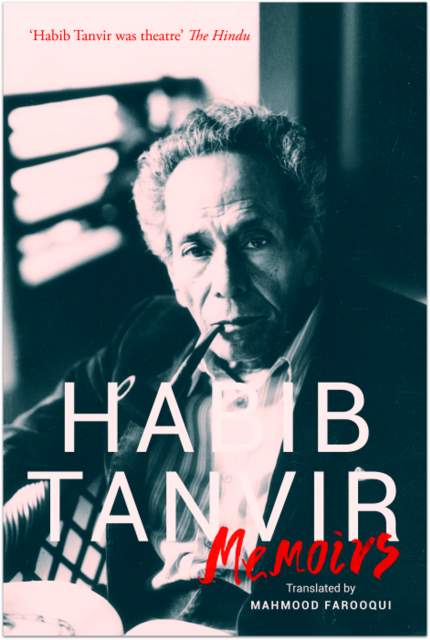
This is an excerpt from HABIB TANVIR’s Memoirs, translated by MAHMOOD FAROOQUI, to be released this evening 7 pm at the India Habitat Centre in Delhi.

1-habib-t-mahmood-cover
Memoirs by Habib Tanvir, translated by Mahmood Farooqui, Penguin Viking, Delhi, 2013; Rs. 599, pp. 400

First of all there was the bioscope. A woman wearing ghaghra and choli would roam around from mohalla to mohalla calling out to the children and gathering them at a chowk or in large courtyard, would take out a long stool from her arm pit and place it on the ground, would remove an octangular and muddy looking tin box from her head and place it on top which had a small mouth covered by a black cloth which the child would remove and peer inside. The women usually came from Rajasthan. The box would contain ten or fifteen cards of photographs, she would show them one after the other and also introduce them in a particular musical speech, ‘see the Rauza of Taj Bibi, see the Lal Qila of Dilli…etc.’ At one time only one child could see the pictures, which would be projected through a lens and lit up through a bulb inside the box which would make the photographs appear larger and more dramatic. When one child was through another would take his place. A large and restive crowd of children would be gathered around waiting their turn. Even the elders would be eager to see Hindustan through these pictures. She would charge two to three chhedams from everyone who took a peep. When the show was over, she would hawk her way to another mohalla. Continue reading Old Films: Habib Tanvir

The value of undergraduate education for ‘Other’ students: Sanjay Kumar

Guest post by SANJAY KUMAR.

We are a tired party after two days quick hike up to the base of IndraharPass in the Dhauladhar range. Half of the students are visually challenged, the other half have been painstakingly guiding them over tricky stretches of the trail. The bus for Delhi is three hours late. We are stretched over our carry mats, reclining on backpacks, on the pavement behind a row of buses at Dharamshala bus stand. The issue under discussion is Atheism. It hasn’t taken long for visually challenged students to split into firm believers who pray regularly, occasional/opportunist believers, agnostics and atheists. Arguments are both experiential and theoretical. During one particularly intense exchange an occasional believer asks a firm believer, “If there really is a God who is omnipotent, good and takes care of every one, then tell me why has he made us so that we can not see?” It is an old normative argument against the conception of God. Presumably Darwin turned atheist arguing similarly with himself after witnessing the pain of his infant daughter due to an incurable illness. Closer home, revolutionary Bhagat Singh gives a liberal juridical version of the argument in ‘Why Am I an Atheist?’ Believer’s reply is spontaneous, in a matter of fact way. “You know what, I find myself really fortunate in being visually challenged. Due to this I got a chance to study. Had it not been for this, I would have been selling sweets from my father’s push cart in our small town.”

Realities of life in a country like India have to be piercingly brutal for a talented young man to think that it is mainly through his physical disability that he got access to a decent education and moving out of a life of poverty. This note is intended to bring some consequences of such reality to the recent discussions on Kafila regarding education at Stephen’s College.

Continue reading The value of undergraduate education for ‘Other’ students: Sanjay Kumar

The Golchakkar of Premier Institutions: St. Stephen’s College as a Public Concern: N P Ashley

This is a guest post by N P Ashley: For a teacher, it feels strange to defend one’s workplace in public against the experiential remarks of an individual who happens to be in some ex-student capacity in the same college. “I didn’t like X’s classes” or “I found academic excellence in St. Stephen’s College a myth”  are statements that need no attempt to be disproven precisely because the writer, Thane Richard, makes no attempt to prove them in the first place. The narrative is anecdotal and validation is through “personal experience” which can only be countered, rather weakly, through other anecdotes. Hence, I won’t get into it. But there are certain methodological problems with the entire exercise, which, if not countered, will wrongly define the concerns of the readers.   Continue reading The Golchakkar of Premier Institutions: St. Stephen’s College as a Public Concern: N P Ashley