Category Archives: Excavation

Hope you’ve listened to all the Radia tapes?

If you haven’t, you’ve missed out on a lot. These five links lead you to all the phone calls, and you can even download them. This is history. The tapes are revelatory about the corporate media, but more than that, about the corporates. They have come out due to corporate wars. Internecine corporate wars seem to be our only hope for transparency and accountability in this nation. Please listen to every pause in every audio to for a clear insight into what today’s India is. And lament this Manmohan yug, ghor Manmohan yug. Also see Sevanti Ninan’s excellent analysis of the media black-out of the story.

Four transcripts that were submitted to the SC along with a total of eight recordings in May 2009 covering the cabinet formation, DMK politics and who’d get telecom portfolio
The conversations with M.Karunanidhi’s daughter M. Kanimozhi about keeping Dayanidhi Maran out from negotiations with the Congress and to get the telecom portfolio for A. Raja
In these Radia wants Sanghvi to tell the Congress not to negotiate with Dayanidhi Maran. He tells her that while he has been meeting Rahul and can’t “get into Sonia in the short term” he would “try and get through to Ahmed”
Recordings of conversations with the likes of Ratan Tata, Ranjan Bhattacharya, Barkha Dutt, Shankar Aiyar, Sunil Arora etc
The other big ‘national resource’ story involves the virtual who’s who: Ambani V/s Ambani V/s Tata, gas and power sector war involving big name journos, politicians, babus, corporates – this has the largest number of tapes, and perhaps the most important ones.

Before We Tape Our Mouths Forever…

It’s always better to begin with a caveat. Sets the tone, and prepares readers for what not to expect. I am one of those self-obsessed people who seldom see beyond their existence. I google my name twice a week, and inevitably find other people getting enriched when conversing with me. It’s an achievement if I could rescue their names from these conversations for my memory. So, you can imagine now my level of awareness.

But once in a while something gets my goat and then I start reading about it. One of those things has been the Nira Radia tapes recently. I first saw a mail from a friend in my inbox with the transcripts and links to the audio versions. I read the scripts and followed the audio links. It led me to more links. And soon I found it was all over the virtual world. First it was Nira Radia and Barkha Dutt, then Nira Radia and Vir Sanghvi, then Nira Radia and Ratan Tata, then Nira Radia and A. Raja, then… I don’t know what else is there. I was like what the f*#@? They just kept stumbling out. I thought Amar Singh was the most tapped guy but then I stopped following politics long back. I am told now that these days he doesn’t even make it to the 7th page. Continue reading Before We Tape Our Mouths Forever…

“Inside the networks of lobbyists and power brokers that dictate how this country is run”

This is explosive – you’ve heard of Niira Radia’s role in the 2G spectrum scam for months, and also that of two high profile journalists. Now, Open magazine has put out the phone transcripts, and even the audio, for all of us to listen in and know, as they put it, “how this country is run”. Many must have had the tapes with them for some time now, and god knows how many hundreds of hard disks have the CBI papers that made these allegations to begin with. But it takes courage to put this out.

For context, also read this profile of lobbyist Niira Radia, also in Open. Also see this April 2010 post from a media blog.

Report #2: Palhallan Under Siege

This is the second of a series of fact-finding reports on the recent violence in Kashmir. The fact-finding has been conducted independently by a team of BELA BHATIA,VRINDA GROVER, SUKUMAR MURALIDHARAN and RAVI HEMADRI. For an introduction to this series, see here, and also see the first report.

Broken windows in Palhallan testify to a widely used strategy of intimidation

Continue reading Report #2: Palhallan Under Siege

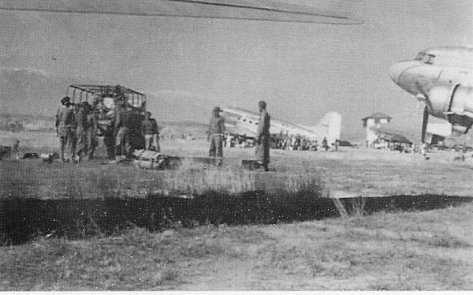
October 27, 1947: Dakota in my dell: Sameer Bhat

Guest post by SAMEER BHAT

Dakotas at Srinagar airfield, October 1947

Continue reading October 27, 1947: Dakota in my dell: Sameer Bhat

Report #1: Attack and killing on Pattan hospital premises

This is the first of a series of fact-finding reports on the recent violence in Kashmir. The fact-finding has been conducted independently by a team of BELA BHATIA, VRINDA GROVER, SUKUMAR MURALIDHARAN and RAVI HEMADRI. For a introduction to this series, see here.

View of the hospital ward ‐ staff think that Adil may have been on the bed with the red mattress when the CRPF incursion took place.

Continue reading Report #1: Attack and killing on Pattan hospital premises

Introduction: Fact Finding Team to Kashmir

This post introduces a fact finding team’s work on the recent violence in Kashmir. The contents of the report are being posted as separate posts and will be linked below as and when they’re posted.

Since June this year, the Kashmir valley has been torn by mass protests which have been met with overwhelming force by Indian security forces. Curfews and closures have been frequent, often shading into each other. No less than 111 deaths have been registered, of which a large number have been of students and youth in the age group of 8 to 25 years. There have besides, been hundreds of cases of injuries, of both protesters and those who just happened to be at the wrong place at the wrong time. An independent fact-finding team went to the Kashmir valley at the end of October to go into the totality of the situation, principally to inquire into the causes for the unconscionably large number of deaths that have occurred in the current phase of mass agitation. The team comprised of academic BELA BHATIA, advocate VRINDA GROVER, journalist SUKUMAR MURALIDHARAN and activist RAVI HEMADRI of The Other Media, a Delhi based campaign and advocacy organisation, at whose initiative the effort was organised. Each member of the team spent varying lengths of time in the valley, but in total, roughly about twenty-five person days were put in the fact-finding exercise. In groups or individually, the team met the families of almost 40 persons who had been killed since the beginning of the civil unrest. Several individuals who had suffered serious injuries were also met. The team worked out of the state capital of Srinagar, and visited villages and towns in five of the Kashmir valley’s ten districts: Baramulla in the north (Sopore and Baramulla tehsils); Anantnag (Bijbehara and Anantnag tehsils) and Pulwama (Pulwama tehsil) in the south; Badgam in the west (Chadura and Badgam tehsils) and Srinagar itself. Separate sessions were held with journalists and media practitioners, university teachers and students, doctors, lawyers and activists besides officials in the police headquarters and the civil administration. The findings of the team are being released in a series of short reports beginning with following two sections. Forthcoming reports will deal with various facets of the situation that civilians in the Kashmir valley face in a season of unabated turmoil.


Next in this series
Report #1: Attack and Killing on Pattan Hospital Premises
Report #2: Palhallan Under Siege
Report #3: Shooting the Messenger in Kashmir

The Hidden Arm – Criminals for Hindutva?

I.

Anyone ever heard about Sudhakar Rao Maratha alias Sudhakar Rao Prabhune ? A hardcore rightwing criminal who was nabbed by the M.P. police few months back in Jhansi which seized a car, a revolver and five cartridges from him. In fact one of Sudhakar’s colleague Shivam Dhakad was already under the custody of Ujjain police when Sudhakar was apprehended. According to the senior police officers Sudhakar Rao was in touch with RSS Pracharak -Terrorist Sunil Joshi, who was shot dead in Dewas in 2007 under mysterious circumstances.

Hardcore right-wing criminal Sudhakar Prabhune alias Sudhakar Rao Maratha, who could throw light on the mysterious murder of RSS pracharak Sunil Joshi, has been arrested in Madhya Pradesh. The 26-year-old was wanted in connection with a string of murders of Muslims in Ratlam and Mandsaur. The state police claimed he was arrested on Tuesday from Bilkhiria when he was on way to Bhopal from Sagar. …

Rao took to crime when he was 19. His name cropped in the murder of Jafar Khan, who was shot dead in Chittorgarh. ’ (Right-wing criminal’ held, to be questioned in Joshi murder case, Indian Express, Posted: Thu Sep 30 2010, 02:50 hrs Bhopal)

Continue reading The Hidden Arm – Criminals for Hindutva?

Ayodhya Verdict: Does it provide closure?

Guest post by WARISHA FARASAT

I was a child when the Babri Masjid was desecrated. After the news of the demolition spread across Uttar Pradesh, we were huddled in buses and packed off home from our boarding school. We were happy that the school had announced the winter break earlier than usual. That apart, we didn’t think much of the episode. In fact, I think that we were oblivious, almost entirely, to the gravity of the incident.

Much later, when I read the Sri Krishna Committee Report on the Bombay riots of 1992-93, and about thousands who had lost their life in the aftermath of the demolition, memories of 1992 returned. I remembered whispers. I remembered the fear in the eyes of our teachers accompanying us home. I remembered the instructions to the bus driver not to stop the bus if we were mobbed. I remembered leaving school at three in the morning. And, I remembered being asked not to tell my real name if we were stopped. Continue reading Ayodhya Verdict: Does it provide closure?

Islam Colony Riders vs. Ward 2 Worriers [sic]

You are a young politician in Delhi and you want to make a mark in an area, in a seat. You want to be known, you want to be a leader, you want followers, you want to be taken seriously. You want votes. You have the right kind of Delhi first name – Mahender rather than Mahendra – and an even better surname – who better than a Chaudhary to be your leader? But there would be many Mahender Chaudharys. What can you do? You can get basic work done – permissions and pipelines and land conversions and garbage clean-up. But anyone with the right contacts can do that. Anyone can become a protege of a Congress leader like Yoganand Shastri. In a city like Delhi, in a city of migrants, in a city whose citizens think they have the right to be treated better than the rest of India, in a city that does not seem to be ‘politicised’ like the seemingly distant world of the ‘real’ India, in a city that is a state – how do you begin being taken seriously as someone with political ambitions? One Mahender Chaudhary has this poster put up all over Mehrauli (which was once all there was to Delhi). Check it out: Continue reading Islam Colony Riders vs. Ward 2 Worriers [sic]

Bhagwat Purana of a Different Kind

(This post is by SUBHASH GATADE. It was initially inadvertently posted under Aditya Nigam’s name. The error is deeply regretted.)

I. Conflating Hinduism and Hindutva

Mr Mohan Bhagwat, the ‘young’ Supremo of an eighty plus year old exclusively male cultural organisation called Rashtriya Swayamsevak Sangh is in high spirits these days.

It is not very difficult to understand the glee on his face which has to do with the latest developments in the cause celebre of Sangh Parivar. One can even notice that every member of this different kind of ‘family’ also seem to be upbeat , whose representatives can be traced on neighbourhood playground in the morning doing drills, playing games or listening to ‘sermons’ of their seniors which they call Baudhik.

Continue reading Bhagwat Purana of a Different Kind

Reading Ayodhya Judgement II: Biswajit Roy

Guest post by BISWAJIT ROY

In my earlier piece, I had noted Justice Khan’s pluralist-nationalist sentiments and his anguished pleas to Muslims to ‘avail the opportunity to impress others with the message’ of ‘peace-friend ship- tolerance’ by accommodating Hindu faith-based claims to the area under the central dome of the demolished mosque as Ram Janamsthan. But I failed to find similar sentiments or espousal of the need of inter-community reconciliation on equal footing in the ‘bulky’ exposition of Justice Agarwal, despite his concurrence to Khan’s order for three-way partition of the disputed land, as well as justice Verma’s judgment that had awarded entire place to Hindus.

Continue reading Reading Ayodhya Judgement II: Biswajit Roy

Reading the Ayodhya Judgement: Biswajit Roy

Guest post by BISWAJIT ROY

In this piece, I would like to share my reading of judgments on Ayodhya. I have only managed to go through the judgment of Justice Khan in detail and parts of justice Agarwal and Sharma’s expositions. Though the Lucknow bench of Allahabab High Court accepted the Hindu faith-based claims about Ram’s birth at the disputed site and the 2-1 verdict went for its three-way partition, all the three judges differed in their takes on the issues related to claims and counter-claims reflecting not only their individual subjectivity but also social loci. To be more candid, they hardly hide their community background and their stakes as insiders.

The bench has anchored its verdict it by referring to religious scriptures, medieval memoirs, foreigners’ travelogues, colonial records, and history books well as folklore and oral tradition. But the judges’ reading of these texts differed much less on legal nuances and more on interpretations and inferences based on their own religio-political understanding and beliefs.
Here is what I found interesting in Justice Khan’s judgment. He differed with other two judges on substantial points: the acceptance of disputed site, to be precise, the area under the central dome of the demolished mosque as Ram’s birthplace, Babar’s demolition of a pre-existing Hindu temple and the mosque’s validity as a proper mosque.

Continue reading Reading the Ayodhya Judgement: Biswajit Roy

Notes from a Beautiful City


Research and Edit:
Rintu Thomas

Photography and Sound:
Sushmit Ghosh

Produced by:
Open Space & Black Ticket Films

How to Not Read the Ayodhya Judgement: Hilal Ahmed

Guest post by HILAL AHMED

There are three areas which I think we need to underline.

A. Technical problem: The question of applied principles

I ask a very fundamental question: How could a modern secular judiciary- technically an institutionalized ‘interpreter’ of the Constitution- determine the legal disputes related to religious places of worship on the grounds of ‘faith-based’ evidences?

All the three judges seem to recognize the fact that the Hindu beliefs should be (must be) taken as legal facts. Interestingly, these beliefs are supported by archeological report of 2003 to form an argument of judicial nature.

However, and quite astonishingly, the Sunni Wakf Board’s (SWB) case was dismissed on legal-technical grounds following a very mechanical interpretation of the Limitation Act.

But for Nirmohi Akhara and VHP case (referred as Ram Lalla virajman) the principle of faith was given primacy and in order to substantiate it further ASI report which is full of contradictions, is expanded to arrive on a conclusion.

Continue reading How to Not Read the Ayodhya Judgement: Hilal Ahmed

Kashmir, Lies and Audio Tape

The disinformation war is underway. Kashmir’s local media has been BANNED (not censored but BANNED!) in the world’s largest democracy, and the Delhi media is being used to spread LIES.

But what is a flag march?

Protest not allowed, this is Kashmir

So far in 2010, ‘security’ forces have killed 32 innocent Kashmiris, sometimes not even in a protest. Far from investigating these killings and promising justice, India has banned protest in Kashmir, which is what curfew amounts to, and even the media is not allowed to function. Curfew passes have been canceled even for journalists – there were no newspapers this morning. 12 photojournalists have been beaten up. Newspapers have been BANNED!

The Delhi media reports that the army has been brought into Srinagar for an indefinite period, and that the army staged a flag march. However, what is a flag march? It can’t be a security measure to deal with terrorists because there is complete curfew. The army has been asked to strictly impose the curfew. People are dying because they are not allowed to go to hospitals. After killing 32 innocent people what does “maximum crackdown” by 1,700 Indian troops in Srinagar mean? And if not even a bird is allowed on the streets, who or what is the flag march for? Continue reading But what is a flag march?

If you’re still wondering why Kashmir is protesting and demanding azadi…

A conversation in Sopore and other stories

The street that connects that Malaknag and Chheni Chowk areas of Islamabad/Anantnag in south Kashmir. Photo by Nasir Patigaru, via Facebook, posted on 27 June.

Which Indian has not heard of General Dyer? General Dyer opened fire on unarmed protesters. Hundreds died, the figures are disputed between Indian and British version to this day. A commission of enquiry was set up by the English. General Dyer told the Hunter Commission, “I think it quite possible that I could have dispersed the crowd without firing but they would have come back again and laughed, and I would have made, what I consider, a fool of myself.” Continue reading A conversation in Sopore and other stories

Three poems by Meir Wieseltier

Guest post by ADITYA SARKAR

Here are three poems by a remarkable Israeli dissident poet Meir Wieseltier. Over and above anything else, they’re beautiful poems, but they might also have something to say about the recent attacks of Gaza and the West Bank, even though they address much earlier events and times If nothing else, they might be a reminder that the kinds of issues related to Israel/Palestine that have been discussed on Kafila and elsewhere are in no sense new – each poem seems absolutely contemporary, even though they were written in 1973, 1978 and 1986 respectively. They might remind readers that far from being a ‘tragic mistake’, as the BBC and other liberal apologists have it, the attack on the flotilla represents the mainstream, indeed the only, dimension of Israeli state policy.

The last of the three poems was actually reprinted in The Nation on 15 April 2002, four days after the Israeli massacre of Palestinians at Jenin, which killed fifty people – another absolutely typical act of ‘Israeli self-defense’ that most accounts blank out. Continue reading Three poems by Meir Wieseltier

Beware Bigotry – Free Speech and the Zapiro Cartoons: Mahmood Mamdani

Text of talk on receiving an honorary doctorate at the University of Johannesburg, 25 May, 2010

MAHMOOD MAMDANI, Makerere University, Kampala, Uganda

This text was sent to us by Sujata Patel

It warms my heart to see these flowing gowns. I congratulate you on work accomplished! For over a millennium, these gowns have been a symbol of high learning from the Indian Ocean to the Atlantic. Should anyone ask you where they came from, tell them that the early universities of Europe – Oxford, Cambridge, le Sorbonne – borrowed them from the Islamic madressa of the Middle East. If they should seem incredulous, tell them that the gown did not come by itself: because medieval European scholars borrowed from the madressa much of the curriculum, from Greek philosophy to Iranian astronomy to Arab medicine and Indian mathematics, they had little difficulty in accepting this flowing gown, modeled after the dress of the desert nomad, as the symbol of high learning. Should they still express surprise, ask them to take a second look at the gowns of the ayatollahs in Iran and Iraq and elsewhere and they will see the resemblance. Education has no boundaries. Neither does it have an end. As the Waswahili in East Africa, which is where I come from, say: elimu haina muisho. Continue reading Beware Bigotry – Free Speech and the Zapiro Cartoons: Mahmood Mamdani