Category Archives: Frontiers

Letter from Ladakh

13th August 2011

Dear Chintan,

Some days ago, I was at Pangong Tso. Pangong is a lake, a large saltwater lake. I heard some days ago that the lake is not very deep. The waters were blue, green and clear at different spots, reminding me of my first visit to Robben Islands in Cape Town in 1999 where I was awed at the different colours that the sea assumed in the course of its course. There is no fish in Pangong lake, as I was also told some days later. We only saw a mother duck swimming with her babies and a few insect-like fish. Also, there is no boating permitted on the lake. This is because Pangong Tso is a border area where India border with China and for security reasons, no activity is permitted on the lake.  Continue reading Letter from Ladakh
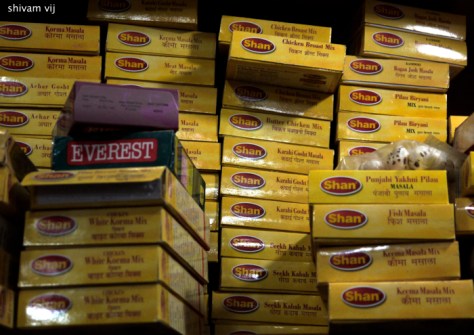
India and Pakistan: A Matter of Taste

Imported from Karachi, Shan masalas are a hit in Delhi. They make sure anyone can make good Biryani or Korma. Photo taken at a grocery store in south Delhi by Shivam Vij
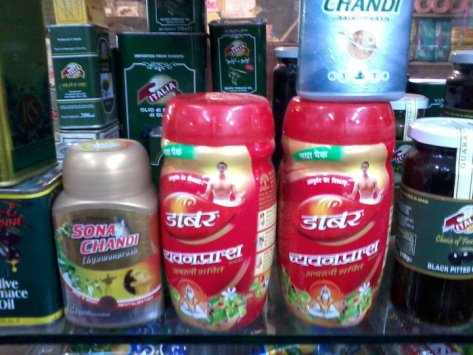
Dabur Chawanprash at a grocery store in Lahore. The Devnagiri script on the pack would be a rarity in Pakistan! Photo credit: Shiraz Hassan

Half Widow, Half Wife? Responding to Gendered Violence in Kashmir: APDP

This is a press release from the ASSOCIATION OF PARENTS OF DISAPPEARED PERSONS, The Bund Amira Kadal, Srinagar, 190001. It is about a new report, which you can download in .pdf format at the end of this press release.

Srinagar, July 28, 2011 – The Association of Parents of Disappeared Persons (APDP) today released the report Half Widow, Half Wife? Responding to Gendered Violence in Kashmir. It examines the situation of women in Indian-administered Kashmir whose husbands have ‘disappeared,’ but not yet been declared deceased. Members of APDP who are themselves half widows released this report at SK Municipal Park, Srinagar. Continue reading Half Widow, Half Wife? Responding to Gendered Violence in Kashmir: APDP

“I never knew this before, but now I know I am a human being”: A despatch by Caelainn Hogan from a new country

This guest post for Kafila comes from CAELAINN HOGAN, an Irish journalist who was in Juba for South Sudan’s independence day, 9 July 2011

This slideshow requires JavaScript.


All photos by Caelainn Hogan

At midnight on the eve of independence, the birth of the Republic of South Sudan was heralded with an outburst of celebrations. In Juba, the capital city, people ran through the streets singing and ululating, in the delirium of a moment they never though would come to be. In a local church the congregation sang happy birthday to the new nation. The next day at the official declaration ceremony thousands gathered to witness the new flag raised high and to sing the national anthem together. Many broke down in tears, thinking of loved ones who had fought or struggled and never got to see this day. The declaration brought an end to a long history of conflict; one that many believed could now be relegated to the past. Others still found inspiration and strength in the past, singing the old revolutionary song, “We will never surrender”. Continue reading “I never knew this before, but now I know I am a human being”: A despatch by Caelainn Hogan from a new country

The question we are not asking about Fai, Tramboo and Shawl

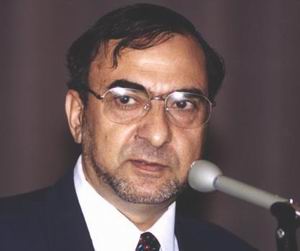
GN Fai

(Please see two updates at the end of this post.)

‘Gotcha!’ That is the sound I hear in the Indian media and amongst patriotic fellow-Indians in response to the arrest of Syed Ghulam Nabi Fai, an American citizen of Indian origin, by the Unites States Federal Bureau of Investigation.

Most analyses of the Fai arrest say it’s part of the ongojng tussle between the American CIA and the Pakistani ISI but some in India think it’s part of the American reward to India for opening up its nuclear energy and other markets to American corporations, thus creating jobs for Americans. This may have some truth in it, considering that the Americans asked their ambassador to take a flight to Srinagar four months ago to pat Omar Abdullah on the back for successfully presiding over the killing of 120 Kashmiris the previous summer, and for halting the killings when President Obama was in Delhi, so that the media attention on the President’s visit is not diluted. (And then Americans wonder why ‘Muslims hate us’). Continue reading The question we are not asking about Fai, Tramboo and Shawl

A rape in Kulgam; the dishonouring of India continues

Imagine there had been a rape in Delhi. Imagine the headlines in the papers. They would have been loud and angry. As they are, and as they must be. Do you think any of the papers would have said that the woman in question has ‘accused’ or ‘alleged’ who the perpetrator was? But there has been a rape in Kashmir and your media wants you to know that a woman has ‘accused’ an army jawan of having done so. Journalistic restrain and caution are good things when they are useful. After all, let an inquiry establish this is the truth.

Continue reading A rape in Kulgam; the dishonouring of India continues

‘Ask Brazil, South Africa and India to help stop the bloodshed in Syria’

AMNESTY INTERNATIONAL wants you to sign the statement below

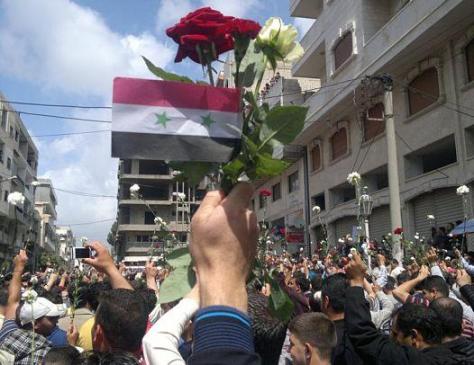
It has been over four months since the beginning of largely peaceful protests in Syria calling for political reform and for the Syrian President to step down. The Syrian authorities’ response to their people’s demands has so far been brutal to say the least.  Continue reading ‘Ask Brazil, South Africa and India to help stop the bloodshed in Syria’

Indian and Pakistani Citizens Condemn Serial Blasts in Mumbai

We the citizens of India and Pakistan strongly condemn the inhuman and dastardly serial blasts in Mumbai on 13 July 2011 in which 21 innocent people were killed and over 140 injured.  We offer our heartfelt condolences and sympathies to the bereaved families and pray for quick and complete recovery of all those injured. It is clear that these blasts are a well orchestrated heinous conspiracy to derail the resumption of the dialogue and peace process between India and Pakistan that was stalled following the terrorist attack in Mumbai in 2008. Continue reading Indian and Pakistani Citizens Condemn Serial Blasts in Mumbai

Martyrs’ Days: Memorializing 13 July 1931 in Kashmir: Mridu Rai

Guest post by Mridu Rai

It is widely believed that the Kashmir conflict has its roots in the Partition of India in August 1947. This view perpetuates the understanding of the conflict as one between India and Pakistan. However, recognising that the roots of the conflict lie in an earlier history – indeed, that there was a history before August 1947 – changes our understanding of the ‘intractable’ conflict in Kashmir. This guest post by MRIDU RAI, author of the book, Hindu Rulers, Muslim Subjects: Islam, Rights and the History of Kashmir (2004), discusses the salience of the events in Srinagar on this day, exactly 80 years ago.

While "separatists" were placed under house arrest to prevent commemorative mass gatherings, policemen took part in Kashmir Martyrs' Day ceremonies at the Martyrs' graveyard in Srinagar, July 13, 2011. Photo credit: Reuters

Continue reading Martyrs’ Days: Memorializing 13 July 1931 in Kashmir: Mridu Rai

And you thought the Valley was unsafe to visit?

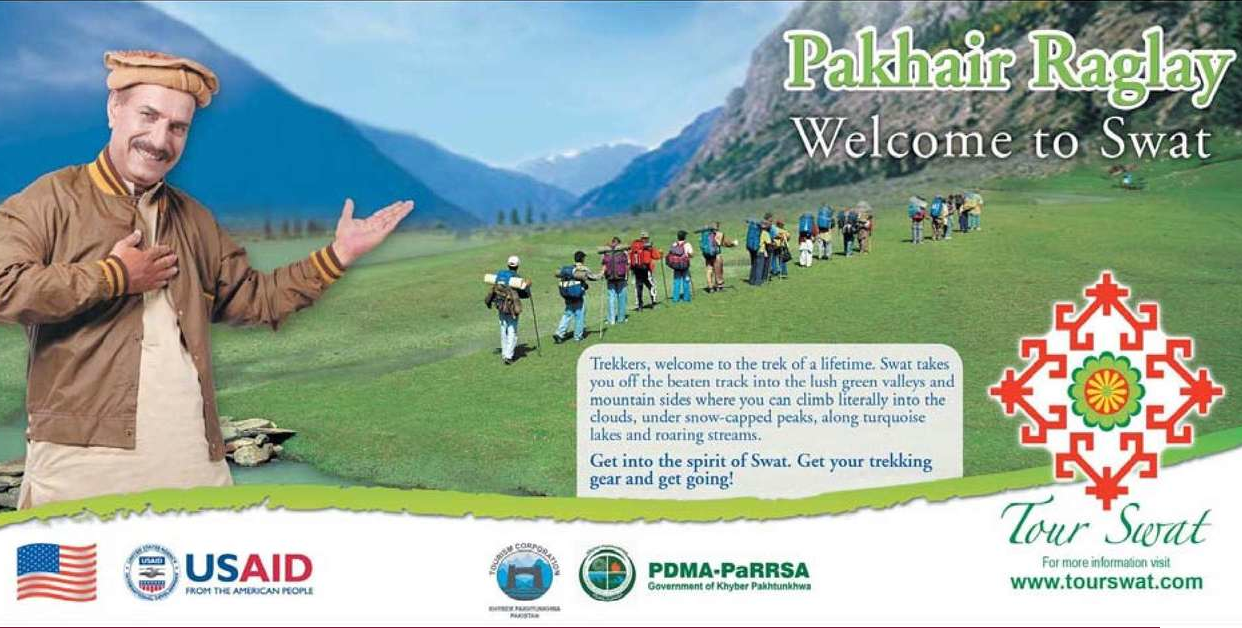
click to enlarge

That is an advertisement published on the front-page of the Pakistani newspaper Dawn this morning. Two days ago, the paper wrote in an editorial: Continue reading And you thought the Valley was unsafe to visit?

JKCCS welcomes Supreme Court order for disbanding SPOs

A press release from the JAMMU AND KASHMIR COALITION OF CIVIL SOCIETY
8 JULY 2011: Jammu and Kashmir Coalition of Civil Society (JKCCS), welcomes the recent judgment delivered by the Supreme Court of India in which it has struck down as ‘unconstitutional’ the practice of arming local tribal youth of Chattisgarh as Special Police Officers (SPOs) in order to fight the Maoists. It has asked the Chattisgarh state government to:
·         immediately stop using SPOs,
·         recall all firearms distributed to them,
·         desist from funding the recruitment of any other vigilante groups,
·         ensure the filing of FIRs into criminal activities committed by them, and
·         offer protection to those who need Continue reading JKCCS welcomes Supreme Court order for disbanding SPOs

To Manmohan Singh from a Bangladeshi: Jyoti Rahman

Guest post by JYOTI RAHMAN
In a Q&A session with five newspaper editors recently, India’s Prime Minister Manmohan Singh had this to say about the Indo-Bangladesh relations:

With Bangladesh, we have good relations. Bangladesh government has gone out of its way to help us in apprehending the anti-Indian insurgent groups which were operating from Bangladesh for a long time. And that is why we have been generous in dealing with Bangladesh. We are not a rich country. But we offered it a line of credit of one billion dollars, when Sheikh Hasina came here. We are also looking at ways and means of some further unilateral concessions. We are also looking at ways and means of finding a practical and pragmatic solution to the sharing of Teesta waters. I plan to go there myself. The external affairs minister is planning to go later this week. So, Bangladesh, our relations are quite good. So with Bangladesh, our relations are quite good. But we must reckon that at least 25 per cent of the population of Bangladesh swears by the Jamiat-ul-Islami and they are very anti-Indian, and they are in the clutches, many times, of the ISI. So, a political landscape in Bangladesh can change at any time. We do not know what these terrorist elements, who have a hold on the jamiat-e-islami elements in Bangladesh, can be upto.

There are more errors here than one would have found in the balance sheets of Lehman Brothers. Let me note a few. Continue reading To Manmohan Singh from a Bangladeshi: Jyoti Rahman

Goodbye UN, Hello Sarpanch: Jahangir Rana

Guest post by JAHANGIR RANA

It has now become an established trend for the Indian political establishment to beat the drums of ‘victory’ after every electoral process in Kashmir. Almost invariably, prior to an election, this establishment maintains that the issue of resolution is not linked to elections in the disputed state. However, as soon as the electoral process is over, the same establishment is out to cash the participation in elections as an implicit approval for the status quo.

In an interview last week, senior Congress politician Mani Shanker Aiyer went as far as claiming that Azadi can be attained through Panchayat, pointing at the recent participation in Panchayat elections. These bombastic claims are now bordering on the absurd. To assume that the twenty-year resistance in Kashmir has been about devolution of power and development at grass roots, Aiyar and his colleagues within the establishment continue to live in denial. Continue reading Goodbye UN, Hello Sarpanch: Jahangir Rana

लखनऊ और फैज़: अतुल तिवारी

Guest posy by ATUL TIWARI

(प्रगतिशील लेखन के आंदोलन से जुडे हुए प्रसिद्ध पटकथा लेखक
अतुल तिवारी ने यह लेख लाहौर में आयोजित फैज़ शताबदी समारोह में प्रस्तुत किया था और फिर दिल्ली में थिंक इंडिया मैगज़ीन के फैज़ नम्बर की रिलीज के समय होने वाले कार्यक्रम में भी उन्होंने यह लेख प्रस्तुत किया । काफिला के लिए लेखक की अनुमति से प्रकाशितThe English translation is given below the Urdu original. – SH)

“हज़रात!

ये जलसा हमारी अदब की तारीख़ में एक यादगार वाक़या है।  हमारे सम्मेलनों,अंजुमनों में – अब तक, आम तौर पर – ज़ुबान और उसकी अशात अत से बहस की जाती रही है। यहाँ तक कि उर्दू और हिंदी का इब्तेदाई लिटरेचर – जो मौजूद है – उसका मंशा ख़यालात और जज़्बात पर असर डालना नहीं, बल्कि बाज़ ज़ुबान की तामीर था।…लेकिन ज़ुबान ज़रिया है मंजिल नहीं ।

…अदब की बहुत सी तारीफें की गयीं हैं।  लेकिन मेरे ख़याल से इसकी बेहतरीन तारीफ़ “तनक़ीद-ए-हयात” है – चाहे वो मकालों की शक्ल में हो। या अफसानों की। या शेर की। इससे हमारी हयात का तब्सिरा कहना चाहिए। Continue reading लखनऊ और फैज़: अतुल तिवारी

Channel 4 documentary on war crimes in Sri Lanka

The Mountains Are Coming Closer

(This article by me has appeared in the Sunday Guardian, Delhi, and the Friday Times, Lahore.)

The voices that reverberate in your head after a visit to Kashmir leave you numb, making you sadder the more you think about them. You know that it is going to be worse when you visit next year. The mountains that you see faintly from over the bridges on the Jhelum river in downtown Srinagar, a thousand-year-old settlement, you know they are coming closer.

An old man you see on the road wants your attention. No, not here. Let’s get inside a parked car. You wonder what secrets are to be passed on. From inside his pheran he takes out a bundle of papers. Both his sons were picked up from Kathmandu in Nepal in 2000, where they were eking out a living. Had they been militants why would they have … look, look, this paper, certificate of registration of Indian nationals in Nepal? The last he heard of his sons some years ago was that Indian intelligence had detained him in Delhi. He is coming to Delhi next month. Could you help? All he wants to know is what happened to his sons, which prison are they in, could he see them once? Read more…

Alvida, Maqbool Fida: M.F. Husain, Free at Last

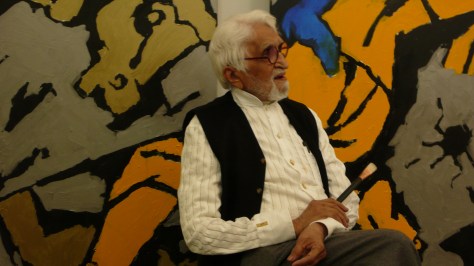
M. F. Husain at the Serpentine Gallery during the Installation of 'Indian HIghway', December 2008

Like possibly several other children growing up in the kind of lower-middle class metropolitan households that attempted to reconcile their aspirations towards culture with their frugal habits in the 1970s and1980s in Delhi, my first introduction to the art of our time was the framed print of a Husain painting. We had no television. And my parents had no gods. The only icons in our modest house were two framed pictures – an inexpensive N.S. Bendre, (Lalit Kala Akademi) print of a few women at a well and the reproduction of a Husain painting, possibly detached lovingly and carefully from an Air India calendar, possibly featuring the kind of goddess image that incensed the zealots who made it impossible for M. F. Husain to live out his final years in India. Continue reading Alvida, Maqbool Fida: M.F. Husain, Free at Last

‘The situation in Ngaba is getting worse’: An interview with Tsewang Rigzin of the Tibetan Youth Congress

Guest post by T RIYAS BABU

Lobsang Sangay meets Tibetan activists in Delhi

It all started on March 16 this year when a Tibetan monk named Phuntsok set himself ablaze in protest against China marking exactly three years since the bloody crackdown by Chinese troops on the people of Ngaba County of Tibet in 2008. Chinese government tightened security and its stronghold on Ngaba in general and Kirti monastery in particular. Tibetans allege the authorities even blocked food supplies to the monastery in an attempt to starve around 2,500 monks. They say many have been arrested and a large number are missing. Continue reading ‘The situation in Ngaba is getting worse’: An interview with Tsewang Rigzin of the Tibetan Youth Congress

The Ghosts Will Walk: Sanjay Kak reviews Mirza Waheed’s “The Collaborator”


By SANJAY KAK

Kashmir will haunt India the way Algeria haunts France.

I remember that from ten years ago, on one of those early e-groups, the provocation almost buried in the dense threads that made up conversation there. “It will haunt Indian intellectuals”, the young Kashmiri correspondent had promised darkly, “in the way Algeria continues to haunt the French”. From its first pages, as the eponymous young narrator of The Collaborator walks us into the heart of his terrors, and introduces us to his hell, Mirza Waheed’s novel gives notice that the long overdue time of that haunting may be upon us.

The book is set somewhere in the mountains of Kashmir, but not the unchanging, pastoral idyll of Bollywood cinema, of Gulmarg’s meadow and Pahalgam’s river; nor the ordered beauty of the Mughal imagination, of Shalimar and Nishat bagh. Instead it’s located in the present, in its “militarized wilderness”, in Nowgam, a “new village” settled in the violent aftermath of 1947. The mortal cut of the partition of Kashmir between India and Pakistan put a sudden end to the nomadic life of this community of Gujjar pastoralists, and Nowgam has grown in the way scarred tissue forms over wounds. Almost half a century later, sandwiched between the belligerence of those two nations, in the shadow of Koh-i-gham, the mountain of sorrow, the sound of heavy artillery fire being exchanged across these rugged peaks has become routine.

Read the full review, published in Bibliohere (download .pdf).


India’s Kashmir policy described in one photograph by Javed Dar

This photograph of an Ikhwani camp in south Kashmir was taken by JAVED DAR in 2008. Standing in the middle is a well-known ‘government gunman’, Jehangir Khan. Photo courtesy Conveyor.

Do I look painDoo?

This post is dedicated to Nadeem F. Paracha.

Photo by 'Life Church Burnley' Flickr: "shoorkot road toba tek sing love this palce.but need much improvement"

[Photo by ‘Life Church Burnley’ on Flickr: “shoorkot road toba tek singh love this place but need much improvement”]

So on Facebook I saw a fellow Punjabi who lives in vilayat has listed his hometown as Toba Tek Singh, Pakistan, which I thought was very cool. Why didn’t I get this idea? Never mind, I thought, like all good ideas this must be stolen. My hometown on Facebook now is also Toba Tek Singh, Pakistan. It was only much after going mad over Manto’s story did I discover that Toba Tek Singh was a real place in west Punjab. Always wondered what its people thought about the story. Continue reading Do I look painDoo?