Category Archives: Genders

Left, Right, Left – Notes on Radical Post/De-Coloniality: Gita Chadha

[This post is the ninth – and penultimate – essay of the series in Kafila titled Decolonial Imaginations. Links to the previous essays are given at the end.

The terms ‘decolonization’ or ‘decolonial’ have become quite critical now, given that the impulse of justice lies at the core of these concepts. Neither postcolonial nor decolonial perspectives are compatible with right-wing ideologies but the fact that Hindutva ideologues in India and the rightwing globally are now trying to appropriate that language makes it seem to some that the very idea of the postcolonial or decolonial is suspect. We believe that this demonizing of decolonial theory from a position defensive of the European Enlightenment needs to be unpacked in the interests of a mutually productive debate. Kafila has been publishing a series of interventions on what the idea of the decolonial imagination involves, locating decolonial theory as speaking from the margins, drawing attention to identities which the orthodox Left subsumed under ‘class’ and which the rightwing in India seeks to assimilate into Brahminism. Additionally the orthodox Left’s rejection of spiritual beliefs and inability to engage with them is also a factor that may have produced the space for right wing appropriations of a field marked “religion”. 

We hope that these interventions will clear the ground for productive conversations on the Left rather than polarised and accusatory claims that mark some spurious claims to ‘correctness’.]

Much has already been said in this set of essays on the difference between two kinds of Indian responses to colonial western modernity. These responses can be classified as the left leaning post(de)-colonial theories and the right-wing responses that may also be classified, by some, as post(de)-colonial theory. This set of essays are in conversations around the allegation that the former feeds into the latter. It is evident to many of us doing post(de)-colonial theory on the left that the difference between the two is unmistakable. Yet, this is missed by many on the left, leading to much misrepresentation; and by many on the right, leading to much appropriation. We also know that the responses to modernity from post(de)-colonial theories on the left are fractured on multiple axes, religion and faith being a major one. Due to the common worlds we inhabit, it is indeed possible for much confusion to occur. I think the act of demarcating the players, the fields, and the actions of the oeuvres, the right and the left is important, especially for a pedagogic purpose.  Each generation seeks clarification in the classroom on several of these confusions and debates. While demarcating the difference regularly and rigorously is an important intellectual exercise for everyone in the discourse, doing this is also an ethical responsibility, particularly for those who do not wish to be either misrepresented or appropriated, which is basically those who are not bedfellows with the orthodox left and definitely not with the orthodox right. The demarcation is required to be done in multiple domains of theory as well as practice. This set of essays seeks to precisely do that. Continue reading Left, Right, Left – Notes on Radical Post/De-Coloniality: Gita Chadha
ALIFA Condemns Rape and Death Threats to Naga Women’s Rights Leader Prof. Rosemary Dzuvichu

Statement by the All India Feminist Alliance – NAPM calls upon the State to ensure her safety, bring perpetrators to justice and uphold Naga women’s right to reservations in municipal bodies.

NAPM (All India Feminist Alliance – National Alliance of People’s Movements), a pan-India collective of feminist, grassroots organizations and individuals strongly condemns the threats of death and sexual violence made on social media to Kohima-based women’s rights activist and academic, Prof. Rosemary Dzuvichu, Advisor, Naga Mothers’ Association (NMA). The vile, violent and vicious threats on Facebook by one Mr. WJ Longkumer warn her to desist from advocating for women’s political reservation – a hard-won right of Naga women, also upheld by the Supreme Court.  We demand immediate legal action against the perpetrators and call upon the state to ensure the safety of Prof. Rosemary as well as other Naga women, facing similar threats. 

Prof Dzuvichu is no stranger to intimidation. Back in 2017, she was among those leading the struggle to ensure the long-delayed implementation of the Nagaland Municipal (First Amendment) Act of 2006, or the “Nagaland Reservation Bill of 2006″. Through this amendment of the 2001 Municipal Act, women were allotted 33% reservation in urban local bodies (municipalities and town councils), in accordance with the 74th Amendment to the Constitution of India. Article 243 T (3) of the Indian Constitution, mandates that at least one-third of all directly elected seats in every municipality in India must be reserved for women. Yet, all was not smooth as quotas for women in political bodies was posited as ‘going against the customs and culture of Nagaland’, and women who defied these customs were seen as legitimate targets of ire.

Continue reading ALIFA Condemns Rape and Death Threats to Naga Women’s Rights Leader Prof. Rosemary Dzuvichu

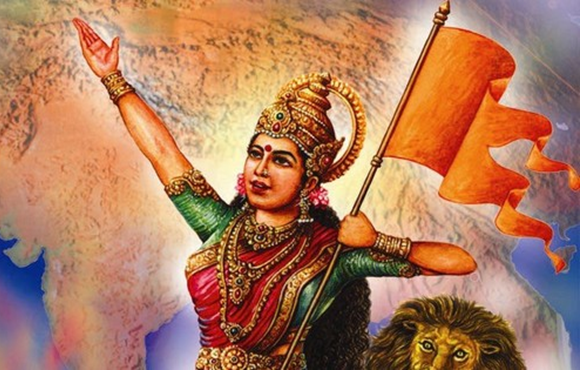
हिन्दुत्व के कल्पना-लोक में स्त्री और RSS के लिए उसके अतीत से कुछ सवाल

[मध्ययुग में पश्चिमी जगत में आधुनिकता के आगमन ने धर्म के वर्चस्व को जो चुनौती दी थी, भारत में अंग्रेजों के आगमन के बाद पैदा हुई परिस्थितियों और राजनीतिक आजादी ने यहां धर्म के प्रभाव को और अधिक सीमित कर दिया। रूढ़िवादी, प्रतिक्रियावादी ताकतों ने समय-समय पर इस बदलाव को बाधित करने की कोशिश की। संविधान निर्माण से लेकर स्त्रियों को अधिकार-संपन्न करने के लिए ‘हिन्‍दू कोड बिल’ को सूत्रबद्ध एवं लागू किए जाने का हिन्दुत्ववादी ताकतों ने जिस तरह से विरोध किया, ऐसी ही बाधाओं का ही परिणाम रहा कि डॉ. आंबेडकर को नेहरू के मंत्रिमंडल से इस्तीफा देना पड़ा। यह आलेख संविधान-निर्माण के दौरान स्पष्ट तौर पर उजागर हुए राष्ट्रीय स्वयंसेवक संघ के स्त्री-विरोधी विचारों एवं सक्रियताओं की पड़ताल करता है]

वह 1936 का साल था, जब राष्ट्रीय स्वयंसेवक संघ (RSS) के विचारों एवं कार्यों से प्रभावित होकर नागपुर निवासी लक्ष्मीबाई केलकर (1905-1978) ने संघ के संस्थापक सदस्य डॉ. केशव बलिराम हेडगेवार से मुलाकात की और संघ से जुड़ने की इच्छा जाहिर की थी। सुश्री केलकर- जिन्हें बाद में लोग मौसीजी नाम से पुकारने लगे थे- को यह कतई उम्मीद नहीं रही होगी कि संघ सुप्रीमो इस प्रस्ताव को ठुकरा देंगे और उन्हें सिर्फ स्त्रियों का संगठन बनाने की सलाह देंगे। ‘’राष्ट्र सेविका समिति’’ की स्थापना की यही कहानी बताई जाती है, जिसे आरएसएस का पहला आनुषंगिक संगठन भी कहा जा सकता है।

राष्ट्र सेविका समिति की जब स्थापना हुई, तब RSS का निर्माण हुए 11 साल का वक्फा गुजर चुका था। वह दौर औपनिवेशिक शासन के खिलाफ तथा सामाजिक उत्पीड़न से मुक्ति के लिए उठी हलचलों का था, जिसमें स्त्रियों ने बढ़-चढ़ कर हिस्सा लिया था। भारतीय राजनीतिक-सामाजिक जीवन में जबरदस्त सरगर्मियों के इस दौर में संघ संस्थापक महानुभावों में से किसी को भी यह खयाल तक नहीं आया था कि आबादी का आधा हिस्सा स्त्रियां उनके नक्शे से गायब हैं। वैसे, उन्हें इस बात का एहसास होता भी कैसे क्योंकि इन दोनों किस्म की हलचलों से उन्होंने दूरी बना कर रखी थी और अपने बेहद संकीर्ण व असमावेशी नजरिये के तहत संगठन बनाने में जुटे थे। धर्म आदि के आधार पर जिन्हें वह ‘अन्य’ समझते थे, उनको लेकर अपनी एकांगी सोच के प्रचार-प्रसार में सक्रिय थे। ( Read the full article here : :https://followupstories.com/politics/women-in-hindutva-ideological-realm-and-historical-blunder-of-rss/)

Concerns arising from the suicide of Atul Subhash – A feminist response: Naveddu Nilladiddare, Karnataka

Statement by Naveddu Nilladiddare, Karnataka, a state wide network of organisations and individuals concerned with issues related to women and all human rights

The tragic suicides of Atul Subhash and police constable, Tippanna Alagur in Karnataka have once again given rise to volatile debates on the ‘misuse’ of the laws related to gender violence specifically the (erstwhile) IPC 498 A and the Dowry Prohibition Act. It has provoked a PIL in the Supreme Court that seeks reform of these laws to “prevent harassment of Innocent husbands.”  It has also given space for irrational and dangerous fears being unleashed by men’s rights organisations and a sensational media about “greedy and exploitative” women who are a threat to the institution of the family with their rapacious demands for maintenance and alimony. Even the Home Minister of Karnataka has legitimised these fears stating that the suicide has “opened up a debate about men’s rights” in the country.  These statements and debates betray an ignorance of the processes of law in addition to a denial of violent patriarchy that continues to impact on the lives and deaths of women and men. 

Continue reading Concerns arising from the suicide of Atul Subhash – A feminist response: Naveddu Nilladiddare, Karnataka

Surokkha Istehar, Forum of Theatre Workers Memorandum to Pashchimbanga Natya Akademy on Sexual Harassment

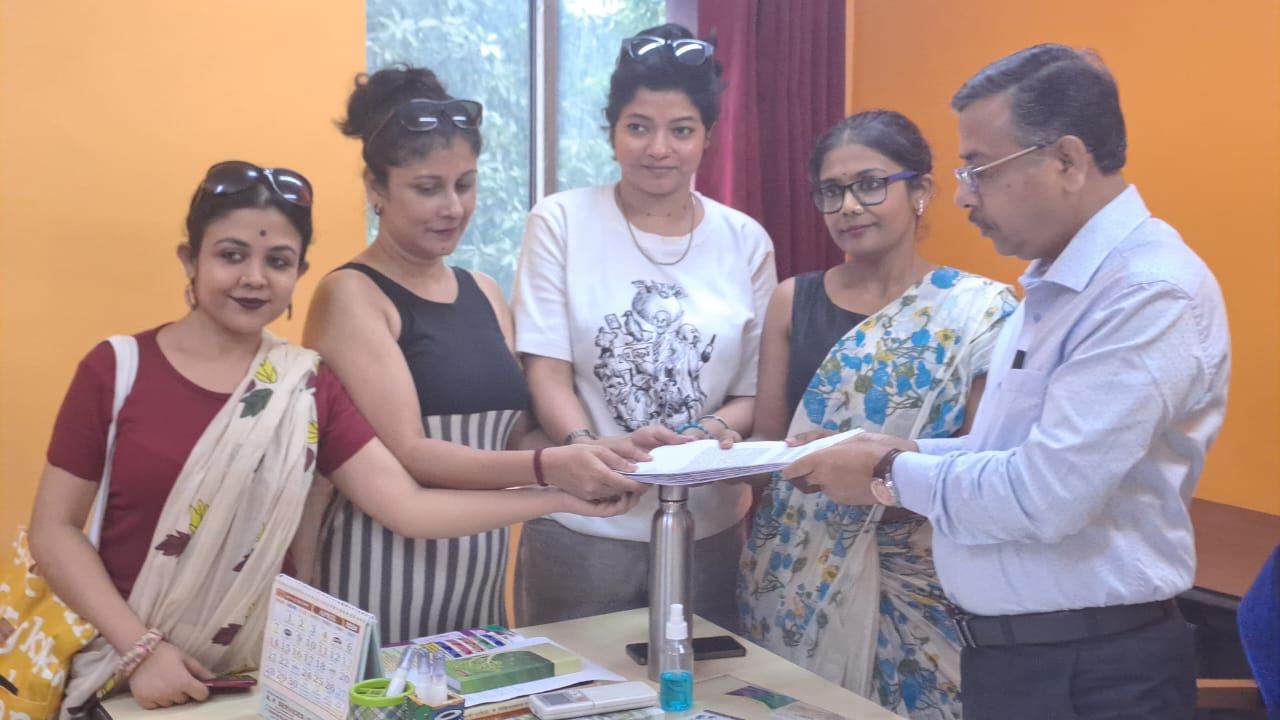
SUROKKHA ISTEHAR (Safety Manifesto), is a recently formed forum of theatre workers and individuals and organizations concerned with gender justice in Bangla Theatre. The forum was formed following a raging recent controversy arising from providing a forum to an accused in many sexual harassment cases. A deputation of Surokkha Istehar submitted a memorandum to the member Secretary, Paschimbanga Natya Akademi (the WB government body invested with the recognition and welfare of Bengal theatre groups) seeking immediate information about sexual harassment redressal mechanisms within the ambit of the Akademi, fair representation of all segments of the theatre workers’ community in the constitution of the Akademi as well as accountability of theatre groups and the Akademi in ensuring persons accused of sexual harrasment do not occupy positions of power within the Akademi, etc. 

Published below is the memorandum, containing more than 900 signatures, which also announces the launch of the forum, which seeks to offer assistance to survivors of sexual harassment in theatre spaces, to ensure gender justice in Bengali theatre, among others. 

Deputation of Surokkha Istehar submitting their Memorandum to the Pashchimbanga Natya Akademy

The Memorandum submitted to Pashchimbanga Natya Akademi

Madam/ Sir,

Continue reading Surokkha Istehar, Forum of Theatre Workers Memorandum to Pashchimbanga Natya Akademy on Sexual Harassment

उत्तराखंड महिला समूहों का बयान उत्तराखंड समान नागरिक संहिता (यूसीसी ड्राफ्ट बिल)

समान नागरिक संहिता के विधेयक के मसौदे पर उत्तराखंड महिला समूहों का यह बयान हम यहाँ छाप रहे हैं ताकि इस ख़तरनाक़ बिल पर और बहस हो सके।

6 फरवरी 2024

उत्तराखंड महिला समूह और प्रतिनिधि राज्य विधानसभा में पेश किए गए इस विधेयक को पूरी तरह से खारिज करते हैं।

  • संवैधानिक व्यवहार को अपराध बनाने वाला, नैतिक पुलिसिंग का परिचय देने वाला विधेयक अस्वीकार्य है।
  • प्रस्तुत हिंदूकृत समान संहिता विधेयक का एजेंडा सभी वर्गों के परिवारों में असमानताओं को दूर करना नहीं है, बल्कि मुस्लिम अल्पसंख्यक और वयस्कों के स्वायत्त व्यवहार को अपराधी बनाना है।
  •  मांग करें कि यह स्थायी समिति के पास जाए।
Continue reading उत्तराखंड महिला समूहों का बयान उत्तराखंड समान नागरिक संहिता (यूसीसी ड्राफ्ट बिल)

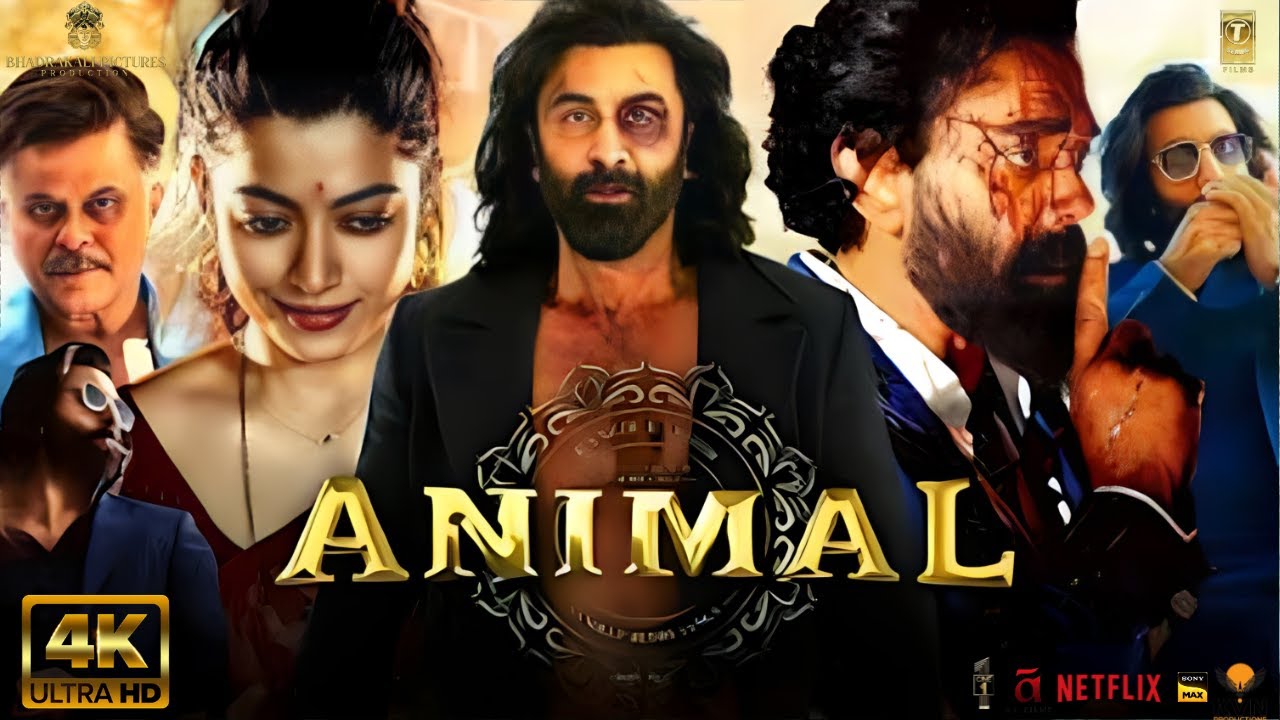
Patriarchy and Misogyny in Sandeep Reddy Vanga’s ‘Animal’: Bebaak Collective

This guest post was written by HASINA, with co-authorship contributions from Sanjhana and Mridul from Bebaak Collective, ‘Voices of the Fearless,’ a collective dedicated to addressing the citizenship rights of marginalized communities.

A thread of commonality that ties together Indian society – from familial space to the entertainment industry, from the personal sphere to the political sphere – is the oppression of gender minorities under patriarchy. The longstanding structures of patriarchy and misogyny subject women to various forms of violence and abuse within and outside the household. Such a harsh reality of society is reflected by the popular media and film industry very promptly. The new movies that are being directed and the new music that’s being produced are a great reflection of how we, as a society, have failed women and queer communities. The peppy lyrics that objectify and hyper-sexualise women’s bodies and the movies that glorify toxic masculinity do nothing but perpetuate and normalise gendered violence. As we step into the New Year, we must ask ourselves if we can leave these outdated notions behind and step into a society that fosters peace, equality, and love amongst all.

When we talk about violence, we cannot leave out the impact of mainstream popular media on the larger Indian society. Sandeep Reddy Vanga’s newest blockbuster- Animal, is a disturbing film laden with sexism, misogyny, and toxic masculinity. Continue reading Patriarchy and Misogyny in Sandeep Reddy Vanga’s ‘Animal’: Bebaak Collective

Same Sex Marriage, Welfarism and the Indian Supreme Court: Thoughts from Kerala

When I read the Supreme Court Bench’s disappointing judgment on same-sex marriage, it was a line from Lalithambika Antharjanam’s autobiography that came to my mind. Remembering her youthful struggles against the barbaric oppression of women in the traditional Malayala brahmin caste, she wrote: “Never had my heart trembled so hard than when I placed my hand on that forbidding door”. She was referring to the terrifying, dehumanising, violent structure of restrictions under which Malayala brahmin women lived.  Over centuries, she says, innumerable women had battered it with their heads. Until one day it collapsed at a small push, soaked with their blood and tears.

Continue reading Same Sex Marriage, Welfarism and the Indian Supreme Court: Thoughts from Kerala

Response to Law Commission of India on UCC: Feminist Working Group on Law Commission Submission on the UCC

In response to the LCI ‘s invitation to “stakeholders, including public and recognised religious organisations” to share their views on the Uniform Civil Code, some feminist groups and individuals came together in Delhi on July 4-5 2023 to draft a considered response. The UCC has been debated in feminist circles for decades, and a broad consensus has gradually emerged since the 1990s that gender justice and not uniformity should be the focus of reforms of laws pertaining to family, whether governed by Personal Laws (religious communities) or customary laws (Scheduled Tribes). The following response emerged on the basis of these discussions, which in turn drew on the long history of serious engagement with the issue in feminist circles for decades.

To,

The Hon’ble Chairperson and members,

Law Commission of India

14 July 2023

Sub: Response of feminist, queer and women’s rights groups and individual feminists to Public Notice of the Law Commission of India dated 14/06/2023, soliciting views on the Uniform Civil Code (UCC).

Respected Chairperson and members of the Law Commission of India,

We, the undersigned, write to you as representatives of feminist, queer and women’s rights groups, as well as concerned citizens, who have been working on issues related to gender justice and equality for women from diverse communities across the country. We draw upon our collective experience over many decades, as we respond to the current discussion on the proposed Uniform Civil Code.

Our submission is in three parts:

  1. Concerns related to the procedure adopted to initiate these discussions by the Law Commission of India (LCI).
  2. Comments on substantive issues of uniformity, equality and non-discrimination vis à vis gender justice.
  3. Governing principles for any efforts towards gender justice for all

Continue reading Response to Law Commission of India on UCC: Feminist Working Group on Law Commission Submission on the UCC

B 32 to 44: Body Politics or No Body/Politics?

B 32 to 44 is the title of a movie — it refers to the bra sizes of the protagonists of director and scriptwriter Sruthi Sharanyam’s debut film, which has been generating highly positive reviews in the Malayalam facebook world. It has also been highly-awaited  after it received funding from the Ministry of Culture and the Kerala State Film Development Corporation.

Continue reading B 32 to 44: Body Politics or No Body/Politics?

An Open Letter to the National Leadership of the AIDWA : Struggle in Unity for Equality, or Struggle in Unity against Impunity?

To the National Leadership which is currently participating in the 13th National Conference of the AIDWA in Thiruvananthapuram.

Dear sisters in struggle

I write to you from Kerala, where the CPM is currently in power for a second time, a rare achievement indeed, in a state where power changes hands usually in each election. I know that most of you hail from places where the CPM is very far from power. I know the difference that makes to activism.

Continue reading An Open Letter to the National Leadership of the AIDWA : Struggle in Unity for Equality, or Struggle in Unity against Impunity?

When ‘With the Survivor ‘ Rings Hollow: Observations on the Rage over the Civic Chandran Case

The internet frenzy over the Civic Chandran case has reached a new zenith over the two highly problematic — deeply elitist, sexist, logically and empirically flawed — anticipatory bail orders issued to the accused by the Sessions Court. There was a strange silence about the first one which was stuffed with elitist statements, and an even stranger pause over the blatantly sexist and conservative order before the active condemnation of the latter began to be voiced over the internet. Even stranger, because there is far more tolerance of elitism among the internet woke-folk than of conservative sexist understandings of the appropriate clothing for women’s bodies in Kerala. The three-day break from expressions of outrage did not, and still does not make sense.

Continue reading When ‘With the Survivor ‘ Rings Hollow: Observations on the Rage over the Civic Chandran Case

The Angry Young Woman and the Malayali (Progressive) Acchan -2 : The Second Season

I should be forgiven for this flippant-sounding title. But it is a living reality in Kerala that gender politics is increasingly reduced to soppy sentimental drama. Honestly, if there are CPM supporters out there, especially the Delhi-elite breed who call this title mere click-bait, I don’t give a flying fuck about what you think. You are not living this nightmare, we are.

Continue reading The Angry Young Woman and the Malayali (Progressive) Acchan -2 : The Second Season

How Might a Feminist Respond to a Collegial Mansplaining of Feminism? Anannya Dasgupta

Guest post by ANANNYA DASGUPTA

Scroll had recently featured the Foreword to a book, with the heading ‘What do allies write about when they write (poetry) about feminism?’ The descriptive tag read – Saikat Majumdar surveys a unique anthology in his Foreword to ‘Collegiality and Other Ballads’. What makes this anthology unique? Sometime in 2020, Shamayita Sen had circulated a call ‘seeking poems on feminist ideology’ from ‘non-women’. I remember thinking, surely the call will be revised; feminist allies must know that there is a problem with excluding women from a space meant to check the pulse of contemporary feminisms. Besides, who is non-woman enough to want to be a part of such a man-book? While the premise of the book was not revised, the category ‘non-woman’ has been. The title page of the anthology now reads: Collegiality and Other Ballads with a tag – feminist poetry by males and non-binary allies. The opening line of Majumdar’s Foreword adds to the uniqueness of this mostly male-only feminist anthology by attributing uniqueness to feminism itself: ‘Feminism is the name of a unique battle.’

Continue reading How Might a Feminist Respond to a Collegial Mansplaining of Feminism? Anannya Dasgupta

An Exorcism For Every Woman and A Curse on Every Man: Fulana Detail

This is a guest post by FULANA DETAIL

The post below is hard to read. It is written with a great deal of rage and pain and grief. It is a post about sexual violence. It is not explicit in any way. It does not describe sexual violence. It describes the feeling of being before the violence of masculinity. It describes the violence of the feeling of feeling. Which is why it is hard to read. You may wish to think carefully about whether you want to read further. Please consider this a trigger warning. 

Today I performed an exorcism. I performed an exorcism of every image that floods the media of sexual violence, of rape and mutilation, of violation, of violence that should be undoable and unthinkable. I decided to think it. I let these images move through my mind and my body. I performed an exorcism for every woman, and everyone who believes herself woman, and lives woman, and every one who lives as not man. I performed an exorcism for everyone who is not a man. I performed an exorcism for every man who is not a man. I let image, upon image, upon image, upon image, upon image, upon image, flood my mind. I opened my mind as wide as I could, without filter and protection. Eventually I let my mind break at the seams, for many hours. I let my mind descend into terror. I let my mind touch madness. I let my mind become a not mind. And not by reaching atman or bhramaan  believe you me. I let my mind become incoherent.

Continue reading An Exorcism For Every Woman and A Curse on Every Man: Fulana Detail

The gender between men’s legs and other learnings from a college in kerala

Over the past one year, I have been trying to make a college in Kerala – in a women’s college in Kerala– take some action against one of their faculty members who rained abuse on me publicly, including a public assertion about his possession of a penis, at a seminar in which I was an invited guest. This happened in November 2019.

Continue reading The gender between men’s legs and other learnings from a college in kerala

Statement on the Arrest of a Survivor of Sexual Assault in Araria, Bihar: Ambedkar University Delhi Faculty Association

15.7.2020

Ambedkar University Delhi Faculty Association (AUDFA is alarmed to hear of and strongly condemns the arrest of a survivor of gang rape along with two social workers (including former AUD student Tanmay Nivedita), at the office of the Judicial Magistrate (1st Class) in Araria, Bihar on 10 July 2020. The arrest was ordered during the course of recording of the survivors’ statement under section 164 CrPC in relation to a case of gang rape which took place just days earlier, on 6 July 2020.

It is further disturbing that the hon’ble court appears to have registered offence at the fact that the survivor sought the presence and support of two social workers prior to actually signing her statement under section 164 CrPC in the said case. The right of a survivor of sexual assault/rape to the presence of caregivers for psychological support is well established and is specifically noted in the Justice Verma Committee Report (2013, Appendix 8). Instead of recognising the right of the survivor to psychological support, the Judicial Magistrate, Araria District, thought it fit to order the arrest of the survivor and the two social workers under sections of the IPC, including 353 and 228, on grounds of “obstructing the work of public servants”.

The absence of sensitivity in dealing with cases of sexual assault, and the unfortunate use of power to discipline a survivor of gang rape for seeking psychological and social support at a time of deep trauma, lays bare the deeply worrisome reality of the functioning of the criminal justice system that survivors of sexual assault face on a regular basis. AUDFA unequivocally condemns these arrests and stands in solidarity with the arrested persons.

Gendering the Pandemic in the Prison: Pratiksha Baxi, Navsharan Singh

Excerpts from an article published in The India Forum. Link to whole article given below.

A powerful analysis of the injustice of the prison system in India (in which 70 percent of the incarcerated are under trial), the authors PRATIKSHA BAXI and NAVSHARAN KAUR make an argument for recognizing women, as well as gender and sexual minorities, as ‘custodial’ minorities.   

We argue that all women inmates may be defined “custodial” minorities. As per the 2020 statistics we collated, there are 68 persons incarcerated under the category “others”. No grave threat is posed to society by UTPs belonging to sexual and gender minorities that non-custodial alternatives cannot be found for them, while they wait for investigations and trials to be over. And alternatives to prison system need to be innovated for all convicted women, and gender and sexual minorities. There does not seem to be an attempt to recognise that their right to health and life is made far more precarious in a transphobic prison-medical complex. They must be counted and accounted for…

All women in prisons without distinction of charge, crime or sentence, whether pregnant, lactating, menstruating or menopausal, differently abled or ailing may be thought of as “custodial” minorities. Muslim women face terrible targeting and blame, as do Dalit women who face intolerable discrimination and bear the brunt of misuse of law against them. Similarly, Muslim and Dalit male undertrials are also subjected to sexualised forms of torture in police and judicial custody. And policies that exclude foreigners from interim bail position them as custodial minorities, who face institutionalised racism. However, the law has difficulty in “seeing” these prison inmates, especially undertrials, as custodial minorities.

Continue reading Gendering the Pandemic in the Prison: Pratiksha Baxi, Navsharan Singh

Farewell Kalpana Mehta – Remembering a Feminist Activist

The following is a statement Women against Sexual Violence and State Repression  on the passing away of leading feminist activist Kalpana Mehta. This English version was earlier published in Mainstream Weekly.

Women against Sexual Violence and State Repression (WSS) deeply mourns the passing away of Kalpana Mehta in Indore, Madhya Pradesh. The loss of a fellow traveller and a comrade at a time when we are going through a massive public health crisis and continuous clampdown on the right to dissent through arrests and detention is hard to bear. Kalpana has been with WSS ever since its inception in 2009.

Having done B. Tech in Aeronautical Engineering from IIT, Kanpur she had left for the US to pursue a degree in MBA. She came back to India in 1976, as it happened with many other fellow Indians who returned in those times, when the country was reeling under the clampdown of the National Emergency imposed by the Congress-led government in power at the centre. Within a few years in trade union work, she became part of a vibrant and powerful political current that brought to light women’s oppression and subordination in society and the need to organize as women, which was becoming well nigh impossible in the left and socialist movements of those years. Her life and politics have thus been shaped by the emergence of the autonomous women’s movement in the late 70s and early 80s. Kalpana was a co-founder of the autonomous feminist collective Saheli Women’s Resource Centre that was set up in 1981; she continued to remain at the forefront of the women’s movement ever since. Read the full statement here.

Break the Chain, Break the (Unconventional) Family?

My earlier posts on the Kerala Left’s inability to forge an adequate and democratizing response to the ‘societal emergencies’ that have challenged Malayali society in the 21st century, and on the completely-unjustified attack on the body artist Rehana Fathima seem to have irritated, even angered, many supporters of the CPM on Facebook.

These people are not youngsters, a detail that is really important. Indeed, they largely belong to the upper-middle-class professional elite, indeed, perhaps among the best-off sections of Malayali society, which include medical professionals, male and female. Their responses reveal very interesting details about how the pandemic shapes our understanding of ‘useful expertise’:  at this moment, we are told, just listen to medical professionals, and not just their views on issues pertaining to health, but also to ‘social health’.  Many of these professionals believe that the brazen violence unleashed against Rehana Fathima’s family — her mother-in-law has been denied free dialysis simply because she is Rehana Fathima’s mother-in-law, and BSNL has ordered the eviction of the family on completely ridiculous grounds – is a minor diversion, an irritating, trivial one, compared to the task of controlling the pandemic on the ground, which of course, brings the medical professional (even when he/she works in Kerala’s private hospitals, which are surely not the epitome of altruism) to the centre of public discourse as the ‘hero’ that everyone should be eternally grateful to. And if such heroes tell you that Rehana Fathima is just a child-abusing publicity-seeker, then you have to just say yes. And, as as the artist Radha Gomathy put it, participate in the Break-the-Chain-and-Break-the-Family campaign — or punish Rehana’s supportive family for not being freakishly conservative, like good Malayali families.

Bolstering their claim to be the only ‘real experts’ to talk about Malayali society at the moment is their implicit understanding that medical professionals are somehow more ‘scientific’ than others. Yet I was amazed — indeed, alarmed — by the carelessness with which they dealt with empirical information and their easy abandonment of logic.  The tendency to equate technical training with scientific is very strong in these Facebook debates, as also the idea that social science and history are some airy-fairy romance that lacks scientific basis.

I am mentioning these features not to put these people down — and I am also aware of, and grateful to, many other medical professionals who expressed unease at these acts of hubris. I wish only to flag what seems to me an emerging axis of power in post-pandemic Kerala. A form in which the state’s apparatus of biopower is projected insistently as the sole benevolent source of human sustenance that must engage us constantly; it is not that critical discourse should be abolished, but it must focus, and gently, on this pre-given object. In it, the biological body is the object on which the state builds its new protectionism; the only kind of body it is bound to protect. The ‘new expert’ wields power on it, and their technical interventions will henceforth be recognized as ‘scientific’  — and the significance of the gap between the two will be ignored. The suspension of neoliberal logic during the pandemic has indeed allowed the Left to behave, even think, like the left — this emerging protectionism seems to be actually riding on it.

It is not surprising at all then that for some of these experts, those of us who contested the purportedly ‘scientific claim’ that Rehana’s children will be necessarily harmed psychologically by the sight of their mother’s exposed torso, or the equally-shaky idea that they necessarily lack the psychological strength the resist the taunts of society, seem dangerous to society.  Rehana’s use of the body is aimed at the long-term; it signals the possibility of seeing the body as the site of aesthetic play and creativity; its androgynous appearance and breaking of stereotypes about the maternal body make it defy gendered classification (so necessary for the state). Her husband deserves punishment because he had abandoned the role of Reformer-Husband so central to the twentieth-century reformist discourse. Our experts’ ‘scientific temperaments’ do not allow them to perceive the fact that the Reformer-Husband carried the burden of ushering his wife into (a gendered) modernity, while in twenty-first century Kerala, women no longer need such ushering — there is data that shows that more women than men complete their education and enter higher education; that they outperform men in most examinations and have entered most modern professions; that in marriages, the bride is now likely to be more educated than the groom. The family needs to be punished as a whole for allowing such explorations of the body.

I still repose faith in the democratizing possibilities that this window of time gives us, but that does not make me blind to this wilful shutting out of the long-term and the agency of citizens. It is as if future society may be imagined by citizens only with or after the state. The state sees a vague and uncertain future, and therefore all citizens should, therefore, limit themselves to the immediate and present. Nothing should be allowed to disrupt the Left’s hegemony-building through pandemic-control exercises. Even if that requires that we turn a blind eye to the fact that the refurbishing of this hegemony may not be antithetical to the further entrenchment of biopower and the reign of these new experts.


An Appeal for an Artist: Buy Brushes for Rehana Fathima’s Son

I am making appeal here to all people who really care for children’s rights beyond the hypocrisies of the global child rights discourse.

A controversy is raging in Kerala over a video of body art posted by the body-activist Rehana Fathima in which her two children paint an image of a phoenix on the exposed torso of their mother. The children are not nude, they don’t look outside the frame. Rehana herself does not look out, nor is her body being displayed in any explicit sense. There is nothing pornographic; the video was not made for commercial purposes. However, the video has unleashed a storm of outrage and the bitter conservatism of both Right and Left-wing politics in Kerala now engulfs the family like a toxic fog.

Rehana has been subject to unimaginable violence online. She is no stranger to it; her insistent efforts to keep radical body politics alive in a society in which bodies are strictly subject to caste and religions communities and bound firmly within heternormative sexuality, patrilineal family-forms and marriages that insist of huge dowry payment to the groom have stirred all sort of insecurities, unconscious and otherwise, of the Malayali masculinist elite. During the conservative backlash against the Supreme Court’s verdict approving the entry of female devotees to the Sabarimala temple in 2018, Rehana Fathima (who claims that she had converted long back and is also known by the name Surya Gayatri) made an attempt to make the pilgrimage, resulting in her arrest and jailing. She was accused of obscenity for uploading a picture of herself in the pilgrim’s costume, but showing a little skin off her thigh.

In the present case, she is accused of corrupting her children by exposing them to her naked body and then making the video public. The first complaint was filed by a BJP functionary and then the Kerala State Commission for the Protection of Child Rights directed the police to file cases against her charging the provisions of the POCSO Act. Other cases against her have used the provisions of the IT Act and the Juvenile Justice Act.

The police raided her home — and seized the laptop and, appalling, her son’s cherished set of brushes and paints. This violence remains unnoticed. There has been much hand-wringing by hypocrites who claim that they are not offended by the art but because children have been involved. These people do not seem to notice the violence against this young boy.

Rehana’s 13 year old is serious about his art. He is not like the kids who parents force into art classes so that they can brag about it in their circle. He is not traumatised by the sight of his mother’s body, but by the loss of his brushes, taken away by the Kerala Police as ‘evidence’ of the ‘crime’! The investigation of alleged violation of child rights gets an auspicious start, I suppose, with the police committing precisely such violation.

I appeal to all of you who think this is injustice — irrespective of whether it is technically proper or not — to speak up. If you can, please contribute brushes. Or pay Rs 10.  The child’s father, Manoj K Sreedhar, is on Facebook.  The address is : Rujul manav (appu) c/o Rehana fathima Ernakulam 682036 Mob: manoj 9446767666.


J Devika.