Category Archives: Genders

Failings Foretold – Reflections on the Unreflective Masculinity in the Time of the List: R Srivatsan

Guest post by  R. SRIVATSAN

It is with a recognition of a failing foretold that I read the different posts, letters and conversations around the list (the unmistakable one today).  That one’s teachers, seniors, peers and respected fellow academics have been named as having sexually harassed women cannot be digested without trouble.  I struggled to comprehend what had happened and went through all the emotions of denial and outrage, followed by shock, acceptance and hopefully a slowly emerging wisdom.

It then came back to memory that I too have sexually harassed women on three occasions.  However, I was in anonymous situations which were not explicitly relationships of power or authority.  And I did withdraw an overture (or a pass, to call it out by its name) when rejected.  Perhaps I have been cautious in not letting my shenanigans come back from the past to bite me.  Or perhaps I cleverly chose occasions and situations that would not be traceable to me.  Also, most importantly, perhaps those women who could have named and shamed me have been kinder and gentler than I deserved.  Finally, if I were a successful teacher today, perhaps my name too would have been on the list.  This response is based on the recognition that I virtually am.

Continue reading Failings Foretold – Reflections on the Unreflective Masculinity in the Time of the List: R Srivatsan

Restore Hadiya’s Dignity as an Adult: Prof. Samita Sen to the Chief Minister of Kerala

(This is the text of the open letter from leading women’s studies scholar and renowned feminist intellectual, Prof. Samita Sen, to the Chief Minister of Kerala on the Hadiya case) Continue reading Restore Hadiya’s Dignity as an Adult: Prof. Samita Sen to the Chief Minister of Kerala

Free Hadiya March on 3 Oct: Citizens for Hadiya

On October 3, students, human rights activists, muslim-dalit-adivasi-bahujan organisations from all over India are converging in Thiruvananthapuram to march for the freedom of the twenty-four-year-old Hadiya, who is under virtual house arrest in the home of her father, Mr Asokan after the shocking annulment of her marriage to her chosen partner by the Kerala HC. The march will begin from the Martyr’s Column, Palayam, at 11 AM and end at the Kerala State Government Secretariat junction. Through this we hope to draw the attention of the public to the grave dangers posed by these decisions of the judiciary and by the shameful silence and criminal inaction of the Kerala government , which claims leftist and secular credentials. We invite all to participate in this march and strengthen the hands of those who are fighting to undo this unspeakable violation of justice to an Indian citizen and the gross attack on the fundamentals of Indian democracy. We also request you to kindly change your Facebook profile pictures to Citizens for Hadiya and/or write supporting posts.

Continue reading Free Hadiya March on 3 Oct: Citizens for Hadiya

Cutting the nose to spite the face?

It looks like the CPM’s enmity towards the Muslim organizations is such that they do not mind sacrificing women’s human rights and reinforcing the patriarchal family just to teach them a lesson. So they are happy to stick with the Sanghi understanding of conversion as necessarily forced in some way, ideological or physical. Media One broke news yesterday about a Sanghi torture camp for Hindu women who marry Christians or Muslims concealed as a yoga center. A woman incarcerated there for marrying a Christian managed to escape and complain to the police. Sixty-five women were reportedly incarcerated there when she was an inmate (a later report, after the place was shut down today on the order of the High Court, said 22 women and 23 men were allegedly for reconversion) . The reconversion therapy includes physical assault and threats. This 28-year-old woman married a Christian man without converting and her family seems to have initially accepted it. However, she was taken to this yoga cum counseling center by her own family without her consent and they left her there to the mercy of the criminals who ran the place.  She also confirms that a  young woman, Athira from Kasaragod, who had chosen to convert to Islam on her own who recently ‘returned’ to ‘Sanatana dharma’ with much fanfare, was in this place for twenty-two days and that she had continued to insist on her preference for Islam.

This place is in Tripunithura, in the heart of urban Kerala quite near the High Court at Ernakulam, which damned Hadiya’s right to choose her faith and a partner. Apparently, it is the Sanghi gang from this place who visited Hadiya at her father’s house. Here is the story:

https://youtu.be/ea-rJmuba8I

So it appears that the Sangh is clearly seeking to reverse what is an outcome of long-term social processes shaped by increasing access to higher education for most social groups in Kerala. Women entered higher education here in larger numbers in the 1980s and Muslims, men and women, since the 1990s till now. The expansion of the media and cellphones is such that young people are not influenced solely by their parents or community. In other words, there is a greater livelihood of women and men choosing partners actors communities. Even sensible people here whisper about how zealous Muslims are about conversion away from Islam but the discourse of Hindu tolerance is so pervasive that it lets concentration camp proliferate in secret. The response of the CPM participant is truly revealing — indeed, this is cutting the nose to spite the face. Whatever be their position about welfare and economic development, the CPM in Kerala seems appallingly on the side of the Hindutva security state. And the questions this raises for the fabled autonomy of women here that the CPM ideologues never ceases to claim credit for, are huge.

This is probably the calculation of utility that underlies the chilling indifference/ outright contempt of the CPM leadership towards the plight of the Muslims:  the average CPM and CPI supporter is the middle-caste ex-avarna middle-aged male of the middle or lower middle class. This gentleman’s  preferences are such that his utility is maximised by staying with the organized dominant left in matters related to securing public resources to private ends (because the mobilization for that, given Kerala’s demographics and history needs to be necessarily by a multi-community mix) and by sticking to community/caste organizations for family matters. This choice has always been detrimental to women’s personal rights, particularly personal choices. The community/caste organizations of the 20th century are becoming more of economic institutions than social — and they manage the vast community assets once secured from governments for public ends now securing mainly the interests of the community elite. The social, however, is undergoing rapid transformation, and indeed, sections of the young now even dare to define the social for themselves. Into this gap steps the Sangh, desperate to make an entry, now that their efforts to secure the ex-avarnas have failed (because of their own irremediable casteism). The above-mentioned gentleman finds it prudent to use their services in making sure that the young stay under his patriarchal thumb. Especially young women, for they have nobody to really defend their rights. Thus arise the thriving if silent business of reconversion, well-protected from public view by the pervasive Islamophobia of the Right and Left, believers and rationalists. Also remember that in a post-demographic society, children are few and they are more akin to trophies that future labour for the family. The dominant left sees that as long as they don’t disturb this gentleman’s efforts to secure his patriarchal authority through whatever means, however violent, crude, and abhorrent to democracy they may be, they retain influence. In other words, the tattered influence of the dominant left — no longer hegemonic — endures through, among other things, looking away from the social and the familial as hierarchical institutions and the abuses. This is why a sexual attack on a film actor elicits a huge response from the feminist supporters of the CPM, while the unlawful confinement of a far less privileged young woman is largely ignored or supported ‘personally’.  The dominant left leadership reasons this to be its best strategy, since it loses nothing by letting the Sanghis handle family affairs. The presence of the Sangh works well for it too, since very many Muslims and Christians, who are sizeable in demographic and economic terms, will turn to it for protection from the Sangh!!  This strategy has worked hitherto, and the sole risk lies in the gentleman ceasing to remain a Rational Agent and joining the ranks of the Indo-Gangetic barbarians, essentially irrational in the Kerala context (I keep urging them to leave for Haryana in pursuit of what must be their choices if they choose to become such barbarians). But this has been largely limited to the upper caste Hindus and some sections of elite Christians who regret the loss of traditional power and hope that the Sangh will restore it. They are not the growing power, demographically or economically. Meanwhile, the effete rationalists generate a ‘secularised’ Islamophobia that serves as a neutral-sounding justification for the government’s inactivity.

There are very few moments in which I have felt so lonely. Almost everyone I know seems to be a player, a rational agent, in this game, either participating or creating justifications for the strategy or participating by simply looking away and remaining silent. But this loneliness is so much more dignified — and indeed, more human. I stand with the six young women who braved the Sangh and the police trying to reach Hadiya; I condemn those who serve up her father’s sickening sentimental patriarchal shit in the public in a way that renders them vulnerable. Hadiya’s father who had not the slightest compunction in approaching the High Court and painting his own daughter a potential terrorist such that her entire life promises to be hell (even if she escapes his confinement), is showered with sympathy by our critical intellects for being a poor worried father. Meanwhile, a radical student who claims to be on Hadiya’s side flings abuse on me for wearing a sleeveless blouse, for leaving my hair untied – she does not even notice that her tirade is so like a Brahmanical patriarch’s diatribe against the well-known signs of Kali — immodest women with their hair open — such missiles seem convenient for all, radical Ambedkarites even, to use against those they dislike.  The only silver lining in this mess is that it reveals with unprecedented and astounding clarity,  the enormous risks, dangers, and material losses ahead of anyone who wants to remain human, and not what is substitutable with Artificial Intelligence. And that in order to be popular, you must swim with some tide or the other.  But I’d rather be human than popular, still.

Shame on all of you — AIDWA leaders, Brinda Karat, M S Josephine, C K Asha, Geeta Nazir, Sreemathi teacher, Shylaja teacher — all of you women adherents of the CPM and CPI. If Hadiya dies in that horrible hell, her blood is on your hands. Her rights are already dead and you have done precious little.

 

Judicial Ghar Wapsi : Update on the Hadiya Case

If there is one thing, besides the pervasive Islamophobia in Kerala in both the Left and Right, that the Hadiya case reveals, it is the deeply entrenched commitment to patriarchy everywhere — on the Right, Left, the radical civil society, wherever. Continue reading Judicial Ghar Wapsi : Update on the Hadiya Case

Delhi University’s Students Union Elections and the Discreet Charm of Exceptionalism: Rina Ramdev

This is a guest post by RINA RAMDEV


Public discourse on Delhi University’s staging of student union elections typically picks the ubiquitary narratives of money, muscle power and its floutings of Lyngdoh guidelines, year after clamorous year. College campuses, arterial roads and their flooding by posters, both in excess of their expenditure limit (Rs 5000 per candidate) and their prescribed nature (printed, as against handmade), as also the prohibited yet brazen processioneering of SUV armies, are experiences annually played out in tedious familiarity. Mainly configured as a contest between the NSUI and the ABVP (even as the AISA has in its recent resurgence, negotiated a space for Left politics beyond the two party dominance), the Presidential wins and panel sweeps are usually congruent with the dips and surges experienced by their parent political party on the national stage. Continue reading Delhi University’s Students Union Elections and the Discreet Charm of Exceptionalism: Rina Ramdev

The Heavy Footsteps of Brahmanical Dandaneethi : The Hadiya Case


It appears that for women in India, the modern judiciary is fading and in its place, the terrifying face of Brahmanical Dandaneethi is emerging. A ten year old rape victim is denied abortion, women fleeing dowry harassment are to submit to the rule of local elders and leaders of ‘family welfare committees’, and now, in the Hadiya case, the judges declared that unmarried daughters should be under their parents according to ‘Indian tradition’.

Read more:   https://thewire.in/169543/hadiya-islam-conversion-supreme-court/


No to ‘Geri Route’, Bekhauf Azadi/ Reclaim the Night in Chandigarh: Janaki Srinivasan

Guest post by JANAKI SRINIVASAN

Reclaim the Night

If you are a resident of Chandigarh and came across pictures of the Bekhauf Azaadi Reclaim the Night and the Streets march of August 11 in the newspapers, it is most likely that you assumed it to be just another routine protest.  Protests in ‘the city beautiful’ do tend to follow a standard template. A small number gather in the Sector 17 plaza, banners are held, a few speeches made, photographs taken and a brief news report gets generated for the inner pages of the city supplement. In a small city, finding a mention in the newspapers is no indicator of the importance of one cause or one protest over others. Over the past decade, the administration has ensured this indifference, by physically redirecting political rallies- any event with the potential for large numbers- away from both government offices and public spaces to the outer perimeter of a severely gridlined map. The ‘Rally Ground’ neighbours the crematorium and the garbage landfill. Yet just as Le Corbusier’s monotonous plan and strict guidelines have been subverted by its residents to infuse vitality and uniqueness to the city, the protest template too sees a rare upheaval. Continue reading No to ‘Geri Route’, Bekhauf Azadi/ Reclaim the Night in Chandigarh: Janaki Srinivasan

Beneath the Veil – Lipstick Under My Burkha and Debates around the Uniform Civil Code (UCC): Debaditya Bhattacharya and Rina Ramdev

Guest post by DEBADITYA BHATTACHARYA and RINA RAMDEV

*Disclaimer: Even as news pours in of Pahlaj Nihalani’s ouster as CBFC chief, consider this essay an earnest tribute to the man who is ‘alleged’ to have beeped sense out of Indian cinema. We repeat, merely ‘alleged’ – since we go on to prove otherwise.*

Let us start out with a basic methodological premise – that forms and effects of ideological mensuration cannot exhaust the life of cinema, or even be adequate to an understanding of the ways in which a film-text lives. To that extent, the ferocious debates around how much or how little of Lipstick Under My Burkha qualifies as feminist material have only generated a fair share of readings. While acknowledging the need and value of these aligned readings, we would also urge a look at cinema’s ‘coming into being’ as something more than an image or a text or a performative medium. Often, in our haste for neat hermeneutic closures, reading a film as cognitive-critical material could tend to a negation of the very relationship between the cinematic object and the everyday. The site of a film’s meaning is necessarily in excess of its narrative unfolding as viewing experience. It lies in the negotiations of its object-world – which includes the plot, the actors, the techniques of representation, the exhibition-settings, the infrastructures of distribution and marketing strategies, discourses around its production and release, celebrity-scandals or pre-release promotions, box-office statistics, publicity routines and review ratings, as well as non-audience expectations – with the other object-worlds of thought, feeling and belief. With that note of ‘methodological caution’, as one might call it, we would argue that a movie like Lipstick is also more than just a story of four women as desiring subjects, grappling with their own bodies to secure the most intimately ‘fundamental’ right to dream.

Continue reading Beneath the Veil – Lipstick Under My Burkha and Debates around the Uniform Civil Code (UCC): Debaditya Bhattacharya and Rina Ramdev

Women’s Cricket – Rules Based Only on Gender Stereotypes Need to Go: Surabhi Shukla

This is a guest post by SURABHI SHUKLA

Playing for the Oxford University Women’s team and the Oxford Cricket Club, I have noticed three different rules for women’s cricket. These may be observed in other countries as well. I argue that these rules are based only on gender stereotypes about women’s inferior sporting abilities and even if were once instituted to encourage them to join the game, have now outlived their utility. 1. The women’s match ball is lighter than the men’s ball (also true at the international level). 2. The women’s match boundary is smaller than the men’s and; 3. One of my coaches here told me that the men’s bat is different from the women’s. This is incorrect, and the England and Wales Cricket Board (ECB) website states that both men and women are entitled to use Type A bats for one-day internationals. However, I include this point in my analysis because regardless of a rule, these kinds of statements from a coach translate into the lived experience of a female cricketer, and act as a rule for them.  Continue reading Women’s Cricket – Rules Based Only on Gender Stereotypes Need to Go: Surabhi Shukla

Scientism, familism and women scientists: V Sujatha

Guest Post by V. SUJATHA

That the first woman to win the Fields Medal for mathematics in 2014 was an Iranian is important to note. Not only because Maryam Mirzakhani is the first woman to make it in the field of mathematics which is considered to be a male bastion[1], but also because her Persian background deserves some attention. There are certain enabling factors in Eastern cultures that facilitate women excel in the hard sciences, in spite of entrenched patriarchy. The point is not that everything is great in the East versus the West, but that cultural stereotypes about women are not homogenous; they vary from culture to culture and produce gender asymmetries with different effects. This is a sociologist’s
delight; let me explain.

During a literature survey in sociology of science, I was pleasantly surprised to see that the figures on women’s entry and achievements in science and technology education (S&T) in the global south were not only not bad, but were better than the countries in the Anglo-Saxon world that offered better civil liberties for women (Sujatha 2015). While there were fewer women in apex positions in the S&T sector and even lesser numbers to receive prestigious awards everywhere in the world, it is a fact that women from erstwhile socialist countries and from Asian and Latin American societies enrolled in larger numbers in science and technology courses and also made it higher in the career ladder in S&T than their counterparts in western Europe and North America.  The literature on women in science however, attributed everything to the ‘glass ceiling effect’ i.e., soft variables like gender bias in the organisational processes. I do not deny it, but it seems to me that this does not explain why the glass ceiling worked differently in some countries. Continue reading Scientism, familism and women scientists: V Sujatha

“Karenge politics, karenge pyar” – New slogan and new politics: Baidik Bhattacharya

Guest post by BAIDIK BHATTACHARYA

[While the media worked overtime to present the developments in Ramjas College and Delhi University as a clash between two student organizations and two political formations, Baidik Bhattacharya here reflects on the new kinds of politics, rooted in the everyday and in love, that found expression in the University.- AN]

On 28 February, 2017, thousands of students and teachers of Delhi University and other academic institutions of the NCR region marched across the North Campus, protesting against the recent acts of vandalism and violence at Ramjas College. As the march progressed through the winding roads, touching various colleges and departments of the university, feisty students raised several slogans to oppose the perpetrators of such violence, the student organization of the RSS—the Akhil Bharatiya Vidyarthi Parishad or ABVP. Some of these slogans were well-known, some predictable, but some were really creative. I want to briefly discuss one such creative slogan, and its implications: “Karenge politics karenge pyar, ABVP hoshiyar.” Chanted primarily by groups of women and queer activists, this innovative rendering of one’s rights across the university campuses captured some of the pressing issues that have surfaced in the last couple of years in student politics.

Continue reading “Karenge politics, karenge pyar” – New slogan and new politics: Baidik Bhattacharya

Longing for the Future – Two Days with Penkoottu and AMTU at Kozhikode, Kerala

Kozhikode, Hotel Alakapuri, 4-5 March, 2017.

Kozhikode has always upturned my feelings about the male gaze. It is of course a cheerful, bustling, place, full of fabulously good-looking people of all genders. The cheeriness has a certain effortlessly defiant quality – already evident when you look out of the window as the train from the south pulls into the railway station, and see bright, healthy, merrily-swaying wild flowers raise their heads undefeated by the ferocious summer sun– wild sunflowers in hundreds, magnificent vines of kulamariyan flowers ( literally, ‘over-the-top’ flowers, but known here also, interestingly enough, as Antigone vines), creepers happily, constantly, and untiringly winding over  little piles of rubbish and covering them with short-lived if emphatic trumpets of mauve, lavender, red, yellow, and white.  You pass this eternal artwork-in-progress of the flowers and vines and city trash and enter Kozhikode, but realise that it actually tells you a bit about the men there only when you meet them. Continue reading Longing for the Future – Two Days with Penkoottu and AMTU at Kozhikode, Kerala

An Appeal to the Education Minister of Kerala and the Teachers of the University College, Thiruvananthapuram


We, the undersigned, wish to express our dismay and deep concern about the recent violent events at University College, Thiruvananthapuram, which seem to indicate that the rights of college students, especially women students, are seriously compromised in this venerable institution. As women researchers, academics and teachers of Malayali origin, we are deeply disappointed by the responses of the police, the concerned college authorities, and the teachers there. Continue reading An Appeal to the Education Minister of Kerala and the Teachers of the University College, Thiruvananthapuram

CPM in Kerala = Caste-Gender Elitism Minus Cow

This is my Malayalam opinion piece for iemalayalam, on something despite the outcry against the CPM in the mess around Kerala Law Academy.  The public discussion has been, not unexpectedly, on the line of Kerala’s well-entrenched scandal journalism, which has a history of a hundred years, at least. This is a form of journalism that highlights the sexual lives – proper or improper – of powerful male politicians which accompanies the attack on their public failings directly or indirectly- a very highly successful tactic, hitherto, to undermine even the seemingly unassailable. When women began to figure in this kind of journalism as something more than just passive sexual objects, as active agents of corruption and manipulation – most markedly, in the controversy over the businesswoman Sarita Nair – scandal journalism worked by highlighting the huge contrast between their ‘feminine-respectable’ names, sartorial styles, behaviour, and so on, and the despicable manipulations they indulged in. This is the case also with much media discussion of the principal of the Kerala Law Academy, Lekshmi Nair.

However, this tactic is not only misogynist, it also lets the elite-femininity that she represents escape critique. This is a very contemporary form of respectable femininity that presents itself as essentially domestic, but wields delegated masculine power to vicious ends, and it is almost all-pervasive in disciplinary institutions in Kerala now. Not surprisingly perhaps, the CPM’s mishandling of the issue has not just shown how poorly committed the party is to women’s rights, but also how soft it is on this elite-feminine power.

The full essay, in Malayalam:

https://www.iemalayalam.com/opinion/cpm-j-devika-law-academy-lekshmi-nair-gender-caste-women/


Didi, I Want to Learn the Harmonium and Roam Around Freely: Samhita Barooah

Guest post by SAMHITA BAROOAH

During a visit to the Kishori Mandal at Apne Aap Women Worldwide’s Uttari Rampur Centre in Forbesganj I met some lovely girls. They stayed in the community near the red light area. They were eager to learn new things. They asked me my story of life, “Didi aapki kahani sunao? Aapne kaise yaha tak sangharsh kiya?” I was again very surprised to encounter the subversion of queries. I should have been the one to ask those questions to the girls, but they wanted to know more about me. Perceptual understanding is a perspective rooted in feminist standpoint theory which could apply to any context from the onlooker’s context. For the young girls from the Red Light Area in Forbesganj, I was trapped in some realities which connected me to them. That was why she asked me to share my story of struggle. When I said education enabled me to survive the world around me, they laughed and said that was not their story. They said, “For us we have to get married as soon as we are 18 years old but sometimes even earlier. We just want to enjoy our freedom now in this centre till we get married. After that we do not know what holds true for us.” As women whether we are in the Nat community of Bihar or we are in the liberated spaces of North East India, our identities get defined by our marriage, cultural practices and socialisation. Unbound freedom for women seems to be a misnomer which should be forbidden for women as the evolved souls say.

Continue reading Didi, I Want to Learn the Harmonium and Roam Around Freely: Samhita Barooah

Dangal and the Phogat Sisters – A Tale of Many Struggles: Praveen Verma

Guest post by PRAVEEN VERMA

1-phogats-and-film

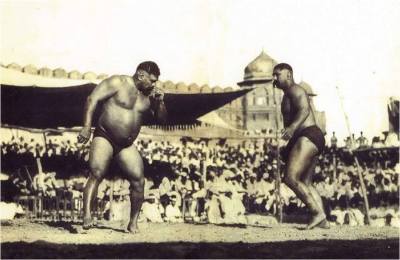
Dangal literally means the Indian style wrestling competition for male pahalwans (wrestlers). Dangal has been an important form of entertainment for ages, especially in rural (north and west) India. Dangals act in many ways. It works to settle the personal score between different Akharas and pahalwans. It’s a place where honour, reputation and social status are on stakes and personal and political rivalries are fought out, or settled. For example, one of the most important dangals used to happen every Sunday at Eidgahi Maidan, Jama Masjid in Delhi, till very recently. Itwari dangal, as it was fondly called, was the place where pahalwan like Gama, Imam Baksh, Chandgiram used to come and show their talent in front of thousands of wrestling lovers. I remember whenever I used to come to Delhi, I always wanted to win the bout at Eidgahi Maidan, as it meant a lot to win at Eidgahi maidan rather than any other place!

Gama Pahalwan at Eidgahi

As it was strictly meant for male pahalwans, women were not even allowed to watch them fighting, let alone participating. Something similar to Khap Panchayats, where women still are not welcome. Women are the fairly latecomers in wrestling arena and yet not so welcome. In this context to make a film on the emergence and development of women wrestling in India itself is a fascinating idea.

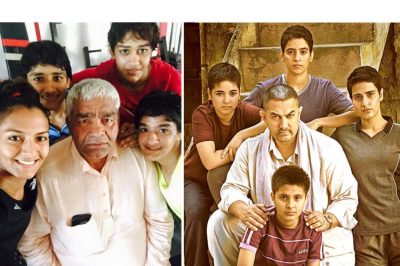
Dangal, the movie is based on a true story of Mahavir and his firebrand daughters and their ‘quietly’ active mother. It is an important movie to watch for many reasons. Firstly, it portrays a father who wanted his daughters to pursue something (wrestling) which was un-imaginable in those days. It reveals what it took for the first generation of women wrestlers to break those masculine stereotypes and depicts the overall impression of wrestling in the realm of sports culture in India. There are so many moments in the film to cheer about, to get goosebumps (at least I got many). Writing review is an unknown territory for me but there is a personal reason to taking to this venture of writing.  The release of this film forced me to say something which, as a former wrestler for almost ten years, is still left with me. Continue reading Dangal and the Phogat Sisters – A Tale of Many Struggles: Praveen Verma

Memories of a Machine, or the Machine of Memory?


Watching the much-debated ten-minute-film ‘Memories of a Machine’, which has been accused of justifying paedophilia, I remembered this woman:

I met her, a young woman professional working at Technopark, Thiruvananthapuram – where else, in these days, but in the queue in front of an ATM . In response to my grumbling, she told me that she had never experienced any kind of power in her whole life.  She had not even been affected by demonetisation much, she insisted. ‘True, I couldn’t pay the dhobi and the ironing-man, but those were minor inconveniences,’ she quipped cheerily, quite convinced, of course, that the predicament of these two people, definitely as much professionals’ as her, was none of her concern. Indeed, her constant effort was to cheer people in the queue with her don’t-worry-be-happy body-language with which she slipped and slid between acting and sounding like a grown woman and chirping and giggling like a teenager or child. She was attracted to the BJP, she said, because she needed some ‘philosophy’ in her life, to balance the heavy workload she carried in her workplace. As far I could see, her life was such that the philosophy-lesson she would find useful could have been obtained from something as commonplace as a treadmill – start slow, peak up, take regular dips, continue for a spell sufficiently long, stretch after the workout. In other words, her life seemed to be just one long workout, with no indication of when it would end or yield result. But just the feeling that she was on her way was enough to make her cheery to the point of being silly. Continue reading Memories of a Machine, or the Machine of Memory?

It Is About Women: Debating the Violence of the Uniform Civil Code – Kartik Maini

This is a guest post by KARTIK MAINI

The performative art of choice, like most habitations of discourse, is deeply political. To oppose the mythical creature of the Uniform Civil Code (UCC), as heralded by the Bhartiya Janata Party (BJP) and its parent votaries, is to find oneself in the august company of the All India Muslim Personal Law Board (AIMLB); both part, or so I must argue, of the same physics of power. Once again, if one does indeed trace the history of debating the suttee in what is now called the ‘colonial’ period, the spectre of representation (or lack of) haunts us: women are merely the grounds of debate, and the female body a site of contestation in the name of faith. As creatures of active agency, the figure of the woman disappears – not into a pristine nothingness, as Gayatri Spivak cautioned us, but into a violent shuttling of displaced figuration. It is, therefore, time to ask of ourselves the fundamentality of thought. What is the politics of rendering unintelligible the variegated nature of religious traditions and their pronouncements unto ‘uniformity,’ particularly so through the rationale of national integrity in a time when supposed dangers to the same are declared seditious? Is it not our collective responsibility to be virulently against the employment of the expressed and expressive agony of women to insidious political ends? What, finally, of those who lie at the interstices of ‘men,’ ‘women,’ and the compulsory heterosexual matrix?

Even in precluding Shayara Bano’s infamous claim on the immediate necessity of all, especially Muslims, to say ‘Bharat Mata ki Jai,’ the communal in the demand for the Uniform Civil Code is an effortless inscription. For one, the Hindu Code, which seeks the creation of uniform laws governing all Hindus, is itself not so – embedded in its semblance of pervasive homogeneity is heterogeneous pliability to the customs and traditions of different communities, as also the restriction in its uniform applicability to social groups that are now designated as the Scheduled Tribes. While Article 44 of the Indian Constitution exhorts the nation state to create a ‘uniform civil code’ for all, the Constituent Assembly had no perspectival clarity on what it would look like; B.R. Ambedkar elucidates that such a code ‘need not necessarily be mandatory.’ In fact, beyond the obvious ambiguity of Article 44, the glorious prospect of the Uniform Civil Code only finds silence, and in not being addressed in specificity, is subsequently regaled with the obstructions of political autonomy, detailed as they are in the articles and schedules on Kashmir, Nagaland, Mizoram, Assam, Tripura, and Meghalaya. In other words, the binary between the Uniform Civil Code and communalism, between Hindutva and the mythical uniformity that must now be forged against this ‘problem’ of diversity is a fundamentally false one – there is no independent discursive existence of the Uniform Civil Code, if the circular ruins of its debate are to tell us anything, besides its violent deployment against the personal laws of the Muslim community, Muslims in particular, and as it may now be said, against the idea of India in general. The indivisibility of the undivided Hindu family, tangential, if not absent, as it has been to the contention on the Uniform Civil Code, is a loud, almost resounding declaration of its essential purpose; to collapse unto its exercise the subjective agency of the patriarchal paradigm of ‘women’ collapses its very structure.

In a strongly worded missive, Noorjehan Safia Niaz of the Bharatiya Muslim Mahila Andolan (BMMA) expounds, ‘We condemn the attempt to politicize the debate by mixing up of the abolition of triple talaq – the demand for whose abolition we strongly reiterate, with the move by the Law Commission seeking views from the public on the Uniform Civil Code. These are two separate issues, and should not be treated as similar.’ Of the many meanings that azaadi has now taken, this statement of the BMMA is instructive in the difficulty of politics: as Muslim women today stand at the altar of the supposedly emancipatory modern state, complete with its accompanying structures of governmentality, their courageous struggle against the maulana-headed jamaats has reached a befitting crescendo. ‘The court is our jamaat,’ they declare, in Jyoti Punwani’s eloquent piece. Truly, the progressive thrust of judgements as Shamim Ara v. State of U.P.(2002) has faltered in its promise of remedying the inscription of subordination in the Muslim personal law, and revolution, as we know it, is in the offing. It is not my case, or, for that matter, of progressive groups that are now in the line of fire for having ‘lost the plot,’ to stand against this calling, indeed, this making of history. But history is replete with its uncomfortable lessons. It tells us tales of progression hindered by violent appropriation, of causes obfuscated by the malevolent reasons of statecraft, and of representation that fails to present its subjects. To struggle against the patriarchy of laws, then, is a struggle of its own, and therein is the opposition to the Uniform Civil Code. Historians are forgiving. History, and we need not search too arduously, is not.

Yet, appreciating the struggle that asks of the state must not presuppose an unproblematic depiction of the state itself. Indeed, if the state legitimises, then it must also render illegitimate. Such has been the case of a people who are, in a very particular expression of otherness, called the queer. Even as the Indian state, in all its time of being a modern, independent republic, debates the realm of the personal, it is our collective ignominy that what is debated as the personal eludes the queer. It is a denial, not merely of recognition, but of personhood. As the queer have sought to enter state registers of legitimation, they have had to confront the always already heterosexual nature of kinship; the governmentality manifest in personal laws and cultural politics, a totalising pontification of the compulsory heterosexual matrix, the violent institution of marriage, and, invariably, of monogamy. To queer the question of personal laws, even of the infamous Uniform Civil Code, is thus to challenge their fundamental premise: the systematic, seamless reproduction of heterosexuality, patriarchal relations, and above all, of violence. Is not, then, the making of queerness a simultaneous unmaking of how we debate the personal?

[Kartik Maini is at St Stephen’s College, Delhi]

मज़ाक मज़ाक में : किशोर

Guest Post by Kishore
(Summary: Article is about recent  racial comments on a  actress  and channel’s response to it.Now a days there is increasing trend of serving any thing in the name of comedy. This article raises questions on comedy. Is purpose of comedy is just to make us laugh or it has any social resposibility)
 पिछले दिनों तानिष्ता चटर्जी के रंग पर की गयी टिप्पणी के बाद वह एक मशहूर कॉमेडी शो को बीच में छोड़ कर चली गयी. बाद में उन्होंने इस टिप्पणी को नस्लवादी करार दिया. दूसरी तरफ इस चैनल ने इस आरोप को गलत बताते हुए कहा है वह तो बस “रोस्ट” ( एक तरह की खिंचाई) कर रहे थे और रोस्ट करना उनके शो में व्यंग करने करने का तरीका है . साथ में यह भी कहा कि उन्हें पहले ही बता दिया गया था कि उन्हें “ रोस्ट” किया जाएगा. किसी के रंग पर उलटे सीधे व्यंग करना कैसी  खिंचाई है इसका कोई स्पष्टीकरण नहीं दिया गया.
इसके बाद मुझे ध्यान आया कि पिछले कुछ सालों में टेलीविजन पर कॉमेडी शो की बाढ़ सी आ गयी है जो खुद ही कुछ कह कर खुद ही हँसते है. इन शो में किसी का मजाक उड़ाना कॉमेडी समझा जाता और इनमे किसी स्थिति से हास्य पैदा करने का सामर्थ् नहीं है. इन शो में कई बार किसी व्यक्ति या समूह को नीचा दिखा कर मजाक उड़ाया जाता है. अगर मैं कॉमेडी को एक विधा समझता हूँ या मैं उस समुदाय से सम्बन्ध रखता हूँ तो इस व्यंग पर मुझे हंसी नहीं आएगी.
वैसे मुझ जैसे अज्ञानियो को इन जैसे कॉमेडी शो से ज्यादा हंसी ए इस पर दिखाए जाने वाले होरर शो पर आती है जो डराने के मकसद से बनाये जाते हैं. खैर यह दीगर बात हएै पर एक बात तो तय है कि यह शो  बहुत लोकप्रिय हुए हैं और इनको देखने वालों की संख्या लाखो में है. भले ही तानिष्ता को उनके व्यंग करने के तरीके पर एतराज हो पर लोग इस अंदाज को बहुत पसंद कर रहे हैं.
मुझे उन लोगों की बात भी याद आई जो, जो मन में आये वह कह देते हैं और फिर कहते हैं इस बात को इतनी संजीदगी से लेने की क्या जरूरत है , यह तो महज एक मजाक था. इसी तरह किसी खास समुदाय और औरतो को लेकर बहुत से चुटकले चलते हैं जिनमें बहुत खराब खराब बातें होती है, और लोग हँसते भी है . आलोचना करने  पर इतना कह  कर बात टाल देते हैं कि यह चुटकला ही तो है. आखिर हम लोग कब कॉमेडी को संजीदगी से लेना शुरू करेंगे.
कॉमेडी का एक साधारण सा नियम तो समझ आता है कि कॉमेडी में जो हंसी का पात्र बनता है या बनती है उसे खुद भी अपनी उस स्थिति पर वैसे ही हंसी आनी चाहिए जैसे  की किसी और को आ रही है.  अर्थार्थ हंसी उसके रंग रूप , आकार या नैन नक्श से निरपेक्ष उस कलाकार के हाव भाव या उस परिस्थिति से आनी चाहिए. यह स्पष्ट है कि हंसी का कारण रंग रूप , आकार या नैन नक्श नहीं है.
दूसरी बात कि हंसी का कारण किसी समुदाय विशेष के प्रति पूर्वाग्रह नहीं होना चाहिए. हम यह कह कर मुक्त  नहीं हो सकते कि यह तो एक मजाक है. वास्तविकता यह है कि इस तरह के मजाक पूर्वाग्रहों को मजबूती देते हैं. यकीन ना हो तो अपने आसपास नजर दौड़ा कर देख लो. क्या इन पूर्वाग्रहों के सुदृढ़ होने मैं इस तरह के मजाक का हाथ नहीं है? क्या औरतों और पत्नियों के प्रति होने वाले मजाक ने समाज में उनकी स्थिति को प्रभावित नहीं किया ?
इन शो में से अधिकतर शो में कलाकार अपने हाव भाव और बातों से हंसाया जाता है. अब कोई पूछ सकता है कि हाव भाव या बातों से हंसाने में बुराई क्या है. सभी महान हास्य कलाकार बातों और हाव भाव से ही तो हंसाते थे या हैं. तो यह शो उन हास्य शो या फिल्मों से अलग कैसे हुए?
अंतर है कि किन बातों या किस हाव भाव से हंसाया जा रहा है. उस बात की विषय वस्तु  क्या है. कोई हाव भाव या बात फूहड़ या अश्लील  भी हो सकती है और सौम्य  भी. अब प्रश्न यह उठता है कि यह कौन तय करेगा कि यह विषय वस्तु फूहड़ या अश्लील है या सौम्य? हर समाज में फूहड़ या सौम्य होने के कुछ मानदंड होते हैं और कॉमेडी शो कि विषय वस्तु भी उसी से तय होगी. पर यह कहने में मुझे एक खतरा दिख रहा है? जिस तरह से किसी भी चीज को अश्लील या अनैतिक बता कर उस पर हमले हो रहे और कलाकारों की अभिव्यक्ति की स्वतंत्रता पर रोक लगाई जा रही  हैं उसमे इन शब्दों का प्रयोग बहुत संभल कर करना होगा.
मैं इस बात से आश्वस्त हूँ कि “ जाने भी दो यारों” नामक फिल्म में जो हास्य था वह उच्च कोटि का था और सौम्य था और जो मैं आजकल टी.वी. शो में देख रहा हूँ वह फूहड़ है. पर मैं यहाँ अपना तर्क गढ़ नहीं पा रहा कि क्या चीज “जाने भी दो यारों” को इन टी.वी. शो से अलग करती है. मेरा इस बात पे भी दृढ विशवास है  कि किसी के रंग रूप, नैन नक्श या किसी समुदाय के आधार मजाक उड़ाना गलत है . मैं पूरी तरह से इस शो के खिलाफ तानिष्ता का समर्थन करता हूँ.
बस मुझे बस इस बात पर संशय है कि किस आधार पर किसी बात को फूहड़ कहा जाएगा और किस आधार पर सौम्य?
(लेखक डेवलेपमेंट प्रोफेश्नल के रूप में  में कार्यरत हैं  और पिछले कई सालों से बाल अधिकारों के क्षेत्र में काम कर रहे हैं।)

The Orphaning of ‘Women’s Collective Interests’ in Kerala


There is considerable outrage in Kerala about how the accused in the murder of the young woman worker Soumya in 2011 has slipped the noose at the Supreme Court. There is considerable doubt remaining on how the murder of the young dalit woman student Jisha was handled by the present government. In both cases, the accused are not men who would earn the sympathy of the Malayali middle-class – in one case, a tamil homeless man, and in the other, a Muslim migrant worker. Not surprisingly, the cry for their blood has been particularly shrill. Outrage at the Supreme Court’s refusal to endorse the lower court’s judgment in the first case is particularly striking – not only because of its loudness, but also because one is unable to forget the Suryanelli case. The difference between the present cases and the Suryanelli case is that in the latter, the victim has been condemned to living death, though she has persistently fought to be heard as a survivor of the most horrific violence. Yet her pleas that the powerful Malayali politician P J Kurien be also tried never roused the kind of outrage was have heard recently. It appears that the Malayali public is kinder to dead violated women than women who survive violation; it also seems harsher towards abjected males than to .powerful males who occupy the pedestal of elite masculinity. Continue reading The Orphaning of ‘Women’s Collective Interests’ in Kerala