Category Archives: Government

On The Recent Communal Disturbances in Trilokpuri: People’s Alliance for Democracy and Secularism

Guest Post by People’s Alliance for Democracy and Secularism (P.A.D.S)

NOVEMBER 2, 2014

(Members of P.A.D.S. have been interacting with and visiting residents of Trilokpuri ever since the communal disturbances started on Oct 23. Along with many other citizens we are involved in efforts to re-establish peace and in providing legal aid to those wrongfully arrested. This statement is based on the experiences of P.A.D.S members.)

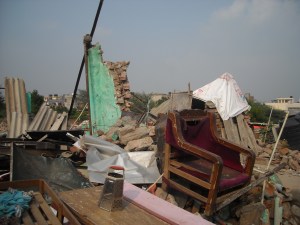
The inhabitants of Trilokpuri, a densely populated neighbourhood of working people in Delhi, went through a harrowing week after Diwali night on 23 October. A brawl around two places of worship that night proved to be the first event. Although the situation appears to have settled down that night, some motivated planning and mobilisation must have taken place that night itself, because the next day it was a full scale communal clash. Armed mobs from outside the locality are reported to have joined the rioting that involved brick throwing. Firearms were also used and two boys suffered critical bullet injuries.  Inhabitants are emphatic that the police fired into the crowd. The police first denied firing at all. Its latest claim is that it fired only in self defense. One apparel show room owned by a Muslim resident was gutted. Police intervened in force only two days after the clashes started. It turned the neighbourhood into an occupied war-zone. More than fifty men and minor boys were arrested randomly, many picked up forcibly from their houses amid verbal abuse and physical violence. Road intersections were barricaded and entry and exit points were closely monitored. Drones were used in surveillance and houses systematically searched. Essential supplies were in short supply. Daily wage earners, contract workers, and self employed who could not go out lost their source of livelihood. Seriously wounded and ill had no access to medical aid. While the entire neighbourhood suffered in one form or another, inhabitants of three blocks in particular, nos 15, 27 and 28, and attached  jhuggi clusters, mainly occupied by citizens who are Muslims bore the brunt of police action.
MNREGA’s Swan Song – Not everyone’s idea of ‘achche din’: Amitava Gupta

Guest Post by AMITAVA GUPTA

Concerned about the approach of the central government toward the Mahatma Gandhi National Rural Employment Guarantee Act (MNREGA), 28  development economists wrote a letter to the PM, urging him to stop tampering with the scheme. The letter, as one might have suspected, did not go down well with Jagdish Bhagwati. He, along with his Man Friday Arvind Panagariya, was quick to put forward a rebuttal. Though Bhagwati’s credentials as a trade theorist cannot but be acknowledged even by his bitterest critics, he is hitherto not known for his contribution toward development economics. Panagariya would merit even lesser mention. But, that should not ideally deny their argument a fair scrutiny.

The central government announced a set of measures over the last couple of months or so. Those include restricting the scheme to the poorest 200 districts; reducing the labour to material ratio from 60:40 to 51:49; freezing the real wage rate; imposing cap to state expenditure on the scheme.  Put together, those measures deliver a lethal blow to MNREGA. Bhagwati and Panagariya extend unconditional support to this rather brutal amputation. What they essentially do is to summarize the standard arguments against the scheme. The arguments can be clubbed under two heads— i) the scheme is marred in corruption; ii) it does not generate revenue to justify the spending from the exchequer and hence, it should be done away with. It is worthwhile to check whether any of these arguments has some merit or these are just political salvos packaged as economic wisdom.

Continue reading MNREGA’s Swan Song – Not everyone’s idea of ‘achche din’: Amitava Gupta

Letter to PM about US-India Bilateral Relations on Intellectual Property

Dear Prime Minister Modi ji,

We, the undersigned, wish to share with you some of our concerns on India’s position on intellectual property (IP), particularly in the context of bilateral relations between the United States of America and India. We gather from the US-India Joint Statement dated 30 September 2014 that the Indian Government

(a)greeing on the need to foster innovation in a manner that promotes economic growth and job creation…committed to establish an annual high-level Intellectual Property (IP) Working Group with appropriate decision-making and technical-level meetings as part of the Trade Policy Forum. 

The necessity for setting up the joint Indo-US IP Working Group is not entirely clear. As the Department of Industrial Policy & Promotion (DIPP)‘s press release of 3 October 2014 mentions, there is already in operation an Indo-US Trade Policy Forum since 2010. Therefore, we request your Government to kindly make the specific purpose of this joint Working Group publicly known. Continue reading Letter to PM about US-India Bilateral Relations on Intellectual Property

‘Make in India’ – Modi’s War on the Poor

For some months now, I have been thinking of someone whom I saw on television during the parliamentary election campaign. The place was Benaras and Modi’s candidature from the seat had just been declared. The television journalist was interviewing a group of clearly poor people, taking their reactions on this new, though expected development. This person, fairly drunk in his Modi-elixir – and perhaps also a bit literally drunk – swaggered as he answered, affirming his support for Modi: Modi bhi chaiwala hai, hum bhi chaiwala hain (Modi is also a tea-seller and I am also a tea-seller). His words reflected the success of the remarkable gamble – that of projecting the new poster boy of corporate capital as a humble tea-seller. It was clear how so many of the poor had bought into this campaign.

What reminded me of this person initially, was that very soon after the election results were out, even before the government was formed, ‘team Modi’ announced a series of measures for the development of Benaras, which included the building of 60 flyovers – ‘to ease traffic congestion’. Mainly meant for the benefit of smooth flow of motorized traffic (rikshas, cycles and pedestrians, after all, have little place in the economy of the flyover), this was the beginning of a plan that would transform this holy city. If the experience of building flyovers anywhere in India is any experience, this would additionally mean mass demolition of settlements of the poor, shops and even entire informal markets – including tea shops that have long been part of life of local communities.

Then the government took office. Within a couple of months, the plan for Varanasi’s upgradation started being drawn up more concretely. Not everything in the proposed subsequent plan (end July 2014) seemed objectionable -not the least the idea to work on a possible mono rail, improvement of the bus network, and a Bus Rapid Transit System (BRTS) like the one in Ahmedabad. Except that this would mean more and more dislocation of the poor and destruction of their livelihoods. We have seen this happen in city after city in India, including in Delhi. Continue reading ‘Make in India’ – Modi’s War on the Poor

Letter to PM on NREGA from Development Economists

Dear Prime Minister,

We are writing to express our deep concern about the future of India’s National Rural Employment Guarantee Act (NREGA).

The NREGA was enacted in 2005 with unanimous support from all political parties. It is a far-reaching attempt to bring some much-needed economic security to the lives of millions of people who are on the margin of subsistence.

Despite numerous hurdles, the NREGA has achieved significant results. At a relatively small cost (currently 0.3% of India’s GDP), about 50 million households are getting some employment at NREGA worksites every year. A majority of NREGA workers are women, and close to half are Dalits or Adivasis. A large body of research shows that the NREGA has wide-ranging social benefits, including the creation of productive assets. Continue reading Letter to PM on NREGA from Development Economists

Open Letter to the Prime Minister – Stop the Dilution of MGNREGA

We are publishing below an Open Letter written by concerned citizens to the Prime Minister opposing the dilution of MNREGA

Dear Prime Minister,

We are very disturbed by impending moves of this government to undermine the Mahatma Gandhi National Rural Employment Guarantee Act (MGNREGA) and the support it provides to crores of vulnerable rural families. We write this letter to seek your immediate assurance that these retrograde, anti-poor and anti-labour measures will be withdrawn, and that every attempt will be made by your government to implement the MGNREGA in its true spirit.

Based on recent public statements from Shri Nitin Gadkari, Union Minister of Rural Development, and other available information, we learn that the Central Government has initiated the following changes under MGNREGA:

  • Restriction of NREGA to tribal/backward districts of the country through an amendment to the Act.
  • Reduction of the minimum labour-material ratio from the current level of 60:40 to 51:49.
  •  Severely restricting the MGNREGA through a budget squeeze. There have been unprecedented communications by the Central Government to States capping MGNREGA expenditure for the rest of the financial year, undermining the fundamental principle of demand-driven employment.

These changes are inimical to the spirit of the Act and compromise its basic objectives. They will only benefit the contractor class and other middlemen, and severely undermine the employment generating potential of the MGNREGA. The changes are also being undertaken without any public consultation. The MGNREGA was passed unanimously by all parties and all members of Parliament. We fundamentally object to this critical social legislation being undermined through casual use of executive powers and even a parliamentary majority.

The illegal and unwarranted budget squeeze has led to widespread reports of employment rationing and acute delays in wage payments. Even as MGNREGA workers are struggling to be paid for work already done, the Central Government is sending the message that money is going to be further rationed.

The undersigned demand that your Government immediately revoke the above decisions and renounce any dilution of MGNREGA. We urge you to ensure that MGNREGA employment remains a legal right of every rural household across the country and that there is no dilution of any MGNREGA entitlements. The MGNREGA budget should be based on work demand, keeping with the spirit of the act, without any discretionary cuts. Continue reading Open Letter to the Prime Minister – Stop the Dilution of MGNREGA

‘Nirmal Gujarat’ – Chronicle of ‘Swachh Bharat’ foretold? Rohit Prajapati

ROHIT PRAJAPATI, indomitable Vadodara-based activist, invites Narendra Modi to read 2 reports:

Report of the Task Force on Waste to Energy (In the context of Integrated MSW Management)’ and

Comprehensive Environmental Pollution Index (CEPI) Report of 2009, 2011 & 2013 of CPCB’.

These reports reveal the hollowness of Modi’s political sloganeering.

Mr. Modi launched the “Swachh Bharat Mission” on 2 October 2014 and in his message on his website, he says, “A clean India is the best tribute we can pay to Bapu when we celebrate his 150th birth anniversary in 2019. […] Today, I appeal to everyone, particularly political and religious leadership, mayors, sarpanchs and captains of industry to plan and wholeheartedly engage in the task of cleaning your homes, work places, villages, cities and surroundings.”[1]

I want to remind Mr. Modi that earlier as the  Chief Minister of Gujarat,  Mr. Narendra Modi had also launched a similar campaign ‘Nirmal Gujarat – 2007’[2] and made tall claims during that campaign. But reality is best seen in Ahmedabad at illegal solid waste dumping site, the ‘Gyaspur-Pirana Dumping Site’ – a Waste Mountain near Sabarmati River adjacent to the main road.

Mr. Modi should know the basic facts as revealed in the ‘Report of the Task Force on Waste to Energy’ dated 12 May 2014 by the Planning Commission of India. This report states “As per CPCB report 2012 – 13 municipal areas in the country generate 1,33,760 metric tonnes per day of MSW, of which only 91,152 TPD waste is collected and 25,884 TPD treated.”[3]

Continue reading ‘Nirmal Gujarat’ – Chronicle of ‘Swachh Bharat’ foretold? Rohit Prajapati

Marginalized Sections Living Under Fear – A Letter to NHRC

[We are reproducing below a letter to the NHRC Chairperson by Teesta Setalvad, Secretary, Citizens for Justice and Peace, Mumbai]

October 6, 2014
To the Chairperson Mr Balakrishnan, National Human Rights Commission.

Dear Sir,

There are extremely disturbing reports about the climate of abject fear that the poor and marginalised communitoies of JJ Colony, Bawana are living in, following recent incidents. Prominent residents of Delhi have carried out an independent fact finding into allegations of cow slaughter and the systematic intimidation of local Muslims. The team consisting of Dr. Mrigank (Delhi Committee, Indian Federation of Trade Unions, IFTU), Poonam Kaushik (Gen. Secy. Pragatisheel Mahila Sangathan, PMS), Rajeev (Convener, Progressive Democratic Students’ Union, PDSU) visited JJ Colony Bawana.

This report available here.

We urge Sir that the National Human Rights Commission carries out a suo moto inquiry into the incident and especially inquires into the following;-

From the above Report (see below) the observations made are :

1. That the allegations that there is plan of cow slaughter is bogus. There is no possibility of hiding the cows. And no cows were found.

2. That there is intimidation of Muslims and they are living amidst fear. The police protection is not enough.

3. That the organizations like Hindu Krantikari Sena are not spontaneous organizations. It is clears from the fact that among the main organizer was the nephew of BJP MLA. Also total inactivity of BJP MP is a clear indication.

4. That there is total communal harmony in JJ Colony and even today they are together. Continue reading Marginalized Sections Living Under Fear – A Letter to NHRC

Unwrapping the Soldier from the Flag – Kashmir after the Flood: Chirag Thakkar

Guest Post by Chirag Thakkar

Witnessing a culture of wounds trying to put itself together in times of a grave catastrophe is a difficult pursuit. For the archivist of State violence, the horror with which TRP-hungry television studios build a spectacle that is acutely wedded to a deep-rooted, pungent nationalism around catastrophe and relief in Kashmir, is frustrating. The insensitivity with which the Indian media has rubbed salt in the wounds of a people is appalling. One wonders if ours is a culture of calculated amnesia or of sightless apathy.
There is something very unique about the way in which we relate with the pain of the other. What is unique is the precision with which we reproduce perceptions about the masculine, hardened sons of soil – the security forces – and yet, at the same time, remain unmoved in failing to recognise the state of exception Kashmir has been in. What is also unique is how measured and stingy we are with our sympathy. Continue reading Unwrapping the Soldier from the Flag – Kashmir after the Flood: Chirag Thakkar

‘Red Carpet’ in Forests: Kamal Nayan Choubey

Guest post by KAMAL NAYAN CHOUBEY

16737_32027

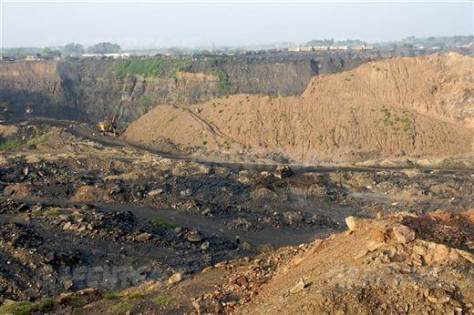
View of the Rajapur Mining Project in Jharia from Bokahapadi village

The Narendra Modi led National Democratic Front (NDA) government had promised, even before its inception, to increase investment in the country and lay down the ‘red carpet’ for investors and corporates. The process of fulfilling that promise started with the formation of NDA government and under the leadership of Mr. Prakash Javadekar, the Ministry of Environment and Forest (MoEF) working overtime to ensure huge investment in the forests for the high growth rate of the economy. Within hundred days of the formation of the government MoEF has given environmental clearance to 240 of 325 projects that had been in limbo as the previous government slowed down the process of giving clearances to various projects due to a variety of reasons. The Government has estimated that these clearances would lead to the investment of 200,000 crore rupees and it would help to revive the economy. In this whole process, the Forest Advisory Committee (FAC) decided on the diversion of 7,122 hectares of forest land into revenue land for the various development projects. It is pertinent to ask, has Modi Government followed the procedure established by law while taking these decisions? Are these decisions in consonance with the promise BJP made to the tribal population, of more decentralized power? Could these decisions empower those communities who have been facing historical injustice from both colonial and post-colonial Indian state? Can we say that this kind of development model would work as a long term strategy to control Maoist violence in the most of the tribal dominated forest areas? Continue reading ‘Red Carpet’ in Forests: Kamal Nayan Choubey

Partha Chatterjee on Partha Chatterjee – An Interview with an Impostor: Partha Chatterjee

Guest Post by PARTHA CHATTERJEE

Continue reading Partha Chatterjee on Partha Chatterjee – An Interview with an Impostor: Partha Chatterjee

From Jadavpur to Everywhere #Hokkolorob – Let There be Clamour

#HOKKOLOROB
#HOKKOLOROB

More then one hundred thousand students and their friends (according to Kolkata Police estimates) defied the rain to walk in protest yesterday against the assault on Jadavpur University by Kolkata Police, backed by an insensitive University Vice Chancellor and a cynical State Government. There were students, ex students, professors, students from Presidency University, and many other colleges in Kolkata and the neighborhood, there were many ordinary citizens, some who had never been university students, and many who had stopped being university students a long time ago.

Continue reading From Jadavpur to Everywhere #Hokkolorob – Let There be Clamour

Demolitions in Aya Nagar, Delhi: Thomas Crowley

Guest Post (and photographs) by THOMAS CROWLEY

The media is all praise for the central government’s rescue efforts in Kashmir, despite the evident hollowness of the government’s claims to heroism. But the press has little to say about the brutal destruction authored by the government in its capital city. Thursday, September 11, saw another demolition drive in a city that has seen far too many of them, from the Emergency to the Commonwealth Games. The demolition took place in the South Delhi neighborhood of Aya Nagar, where residents say about 250 houses were destroyed.

Aya Nagar 1

Continue reading Demolitions in Aya Nagar, Delhi: Thomas Crowley

Sailaab Nama – An Insider’s View of the Flood in Kashmir from the Outside: Gowhar Fazili

Guest Post by Gowhar Fazili

The floods in Kashmir can provide an outsider a momentary glimpse into the reality of Kashmir behind the corporate media propaganda smokescreen that is fumbling at the moment and like Truman Show (1998) exposing bits of the backstage. At the moment there are three key actors in Kashmir. There are the floods, the state and the people. Each one is on its own. One limb of the state—the state government was the first to crumble before the approaching waters.   The other limb—the mammoth military apparatus that has already inundated Kashmir since several decades, took two days to wake up to the crisis and when it finally did, its priority was to fish out the rich Indian tourists and the people close to the establishment out of the state. In the initial days, local people had to risk their own lives to get their marooned relatives to safety. Some hired local boats, some swam or waded through water, some made makeshift rafts out of anything that floats, including water tanks, car tubes, foam sheets, inflated baby bathtubs, so on and so forth to save their dear ones. The rest either drowned or kept moving up the floors of their houses as the waters kept rising until they reached their attics.

Continue reading Sailaab Nama – An Insider’s View of the Flood in Kashmir from the Outside: Gowhar Fazili

‘My Heart says Yes, but the Head says No’: Economizing Politics in the Scottish Referendum: Akshaya Kumar

Guest post by AKSHAYA KUMAR

I

About two months ago, while walking by the roadside in Glasgow, a middle-aged man handed me out a pamphlet. In an endorsement of UKIP, the pamphlet declared ‘Our government pays GBP 55 million a day in fees to the EU’ (emphasis added). It went on to inform that in return, the EU gives ‘us’ accounts riddled with fraud, no control over ‘our’ own borders – putting pressure on our health, education and welfare services – and a super-government that makes more than 70% of ‘our’ laws. The pamphlet intrigued me a fair bit, not in the least because as an international student in the UK, I wondered if my case was a bigger or smaller burden on the UK defined thus – their UK. But who are they? One might rubbish them as a deviant community, or one might consider them a threat to yet another definition of us – the liberals or suchlike. But what intrigued me was not the neatness of these boundaries, or the speculations about how many of ‘us’ and ‘them’ there are. I was intrigued by the language of the starkly political proposition. Let us tentatively assume that in the pamphlet, ‘us’ meant the citizens of UK and it constructs an antagonistic position vis-à-vis other national citizens who are entitled to living and working within the UK. Surely the two are politically distinguishable? Or are there too many of them living next to us, so they cannot exactly be identified as such? Continue reading ‘My Heart says Yes, but the Head says No’: Economizing Politics in the Scottish Referendum: Akshaya Kumar

Temperance in the time of Rahu

So Onam is here again — despite the fact that several contradictory stars above  now form a malefic conjunction in the fate of poor Malayalis in Kerala. Indeed, rarely has a stranger gang dominated the starry heavens of our destiny: V M Sudheeran’s targeted gullet moralism that promises to close down a very large number of bars in Kerala and pave the way for total prohibition in the future, gangs of Hindu right wing youth and women forcing the government’s liquor outlets to close, policemen puffed up with jingoistic nationalism who hallucinate about Maoists in wake and sleep and declare social activists like Ajitha “dead”, CPM offspring who think that making foul, putrid public statements justifying murder is politics. All these are, well, rather drunk on self-righteousness and to be true, present a slightly ridiculous sight. Even the weather looks ridiculously inebriated – the sky alternates between bright sunny spells and horrid, harsh showers, crazily swinging between sunny smiles and bursts of tears. Continue reading Temperance in the time of Rahu

A civil-war is on the doorstep of India: Interview with Kancha Ilaiah by Mahmood Kooria

This is a guest post by Mahmood Kooria

We are publishing an English translation of an important interview of the intellectual and academic Kancha Ilaiah, conducted by Mahmood Kooria for the Malayalam weekly Mathrubhumi. While what I see as Professor Ilaiah’s underestimation and perhaps misreading of the historic role of the Communists in Indian politics leaves me severely uncomfortable, especially when he exonerates the right from commensurate charges of elitism, his framing of Hindustva and Modi’s appeal within the great stream of caste in the subcontinent is brilliant and thought-provoking, as always. 

Kooria conducted the interview as well as translated it in to English. His introduction is as follows, “At a time when there was no any such discussion, in 2002 Professor Kancha Ilaiah predicted that Narendra Modi will be the prime-ministerial candidate of Baratiya Janata Party. It has come true and now Modi is in the office. At this point, I talked with him at Moulana Azad Urdu University Hyderabad where he chairs the Centre for the Study of Social Exclusion and Inclusive Policy. In the conversation, he talked about the future of Modi government and he predicted that a civil war is going to break out in India if Modi does not cater the needs of backward classes. A Malayalam-version of this interview was published in the Mathrubhumi Illustrated Weekly (August 24, 2014).”

Mahmood Kooria: Ten years ago you wrote that Modi will be the prime ministerial candidate of BJP. What would be your response as your prediction has come true?

Kancha Ilaiah: Well, at that time I was predicting that based on the Left parties’ indifference to understand the caste question. The caste question is not been seriously taken by the Left parties. And, after Mandal, the BJP and the RSS wings started looking at caste-question seriously because when Babari Masjid was demolished they mobilized a lot of backward classes. Though they oppose Mandal reservation, they wanted the backward classes to be part of the Hindu religion. Around 1994, a non-Brahmin called Rajju Bhaiya became the Sarsanghchalak of the RSS. Then he recruited a large number of backward classes, large number of youth, and he promoted the people like Narendra Modi, Uma Bharati at that time. Earlier, the first backward-class chief minister of Uttar Pradesh was a BJP man: Kalyan Sing. He was the chief minister in 1992 when the Babri Masjid was demolished.

The Sangh Pariwar was responding to the backward class demands more. But the Left or the Congress was not responding to the OBCs. The Congress was responding to the Dalits and Muslims. There was upper caste all the time on the top. So, when Narendra Modi became the chief minister and this whole atmosphere was created, I was writing a column in The Hindu. I thought that this seems to be cause/course of India, since the Hindu religion is surviving because of the backward classes. It is inevitable for the Hindutva organizations that they will have to project an OBC for the prime-ministership. But there was resistance from within itself. It is not that the Brahmins have given up the principle of varna-dharma. After that article came and of course after my writing Why I am not a Hindu itself, the backward classes even within RSS seemed to use that material for their advantage. The communists did not use or recognize it. The question of labour and caste which I have been consistently raising, which was also part of their theory, they did not care about. So the Communist Party remained tightly under the control of upper castes.

Continue reading A civil-war is on the doorstep of India: Interview with Kancha Ilaiah by Mahmood Kooria

Reading the Debate on the Planning Commission

I find it hard to think through the current debate on the Planning Commission (PC) outside a few things. The first is a clear centralisation of power at and within the PMO which I cannot help but be alarmed by. It’s all well and good when the decisions are those you agree with and all to easy to forget what centralisation does in the hands of, let’s please not forget so easily, a man whose IMHO has no H.

Its faults are easy to list but the PC (when it worked) did remain a space for thinking through a centre-state relationship and a development vision outside the government. It was a moment of articulation of intent with an (albeit diminishing) ability to put some weight behind it. I can’t quite bring myself to defend it because of what it refused to become in the more recent years, and the fights it refused to fight, but the need for such an autonomous voice remains. I don’t believe this new body will be anything other than a rubber stamp for a deeply authoritative PMO. In that, I am cautious of what will come. And by cautious, I mostly mean afraid.

Continue reading Reading the Debate on the Planning Commission

When David Became Goliath: Lee-Alison Sibley

Guest post by LEE-ALISON SIBLEY

Back in the 1960s when Hollywood was making a number of movies based on biblical stories, they came out with Orson Welles as King Saul in “David and Goliath.” I was a little kid when I saw this movie, but I remember identifying with little David who yes, played beautifully on his harp, and used his slingshot with divine accuracy. I also remember the monster Goliath – he was huge and ugly and represented the Philistines, our enemies.  I cheered in my head and my heart for David to defeat the monster and he did, so that I could feel the good guys won and God was indeed on our side, the side of the Israelites.

Like any idealistic Jew, though not religious, I went to Israel to work on a kibbutz in the summer of 1971.  I was in the south, near Eilat and the border with Jordan.  Young and naïve, I was friendly with everyone I met — the Sabras of Israel, the Christians in Bethlehem, and Arabs in Gaza. In Gaza?  Yes, I was there with a British fellow from the kibbutz who was picking up some cane furniture he had ordered.  I wasn’t supposed to be there, of course, and when an Israeli army jeep spotted me, my friend was in big trouble.  “Get her out of here immediately!” was the order he shouted.  I guess it had something to do with my appearance and that there were no other women on the street at that time.  Like I said, I was friendly with everyone – my parents did not raise me to hate, they raised me to love.  The Israelis tried to make me feel guilty for not staying in Israel, but I kept saying, “I’m an American, my home is the U.S.A.”  Still, I certainly supported Israel and every person I met there had lost someone, a family member or a friend in a war and I felt very sad for them and angry that they lived with the constant threat of attack. Continue reading When David Became Goliath: Lee-Alison Sibley

Scribbling in Dark Times


“In the dark times 
Will there also be singing? 
Yes, there will also be singing.
About the dark times.”

-Bertolt Brecht

 I.

There are moments in one’s life when one really feels perplexed.

You find yourself in a situation which you had never envisaged before.

Most of your predictions about the unfolding situation have gone awry or have not proved upto the mark.

One wants to remain calm, to contemplate things around you, take a break, but I know that for people gathered here – activists, writers committed to a cause, political workers – there is no such luxury. As rightly put by Jose Maria Sison, Filipino poet and revolutionary in one of his short poems

“The Tree Wants to be Calm

But the wind will not stop”

Continue reading Scribbling in Dark Times

Who is guiding Modi’s economic thinking and what is their background?: Aditya Velivelli

Guest post by ADITYA VELIVELLI

The Modi government’s actions over WTO are a case of much ado about nothing. They have pointedly created a false perception over a non-issue so as to appear pro-poor. Modi said “Do we choose feeding our poor or getting good press world-wide?” Turn this statement around and one gets to see the truth of the matter. The real attempt here is “How to masquerade as pro-poor and get good press in India by using WTO?”

This demonstration of concern for the poor helps Modi’s government in implementing ultra-neoliberal economic policies in the coming months. To understand the game-plan one should only look at the people guiding Modi’s economic thinking. Continue reading Who is guiding Modi’s economic thinking and what is their background?: Aditya Velivelli