Category Archives: Government

A Brief Summary of the Interlocutors’ Report on Kashmir: Shoaib Rafiq

This guest post by SHOAIB RAFIQ is an analysis of the Home Ministry-appointed group of interlocutors’ report on Kashmir 

We swear by the fundamentals of absurdism
of that all we have learned
our solutions will mimic the ludicrousness
that we employ in our education, research, and other related shit. Continue reading A Brief Summary of the Interlocutors’ Report on Kashmir: Shoaib Rafiq

‘Sau Mein Pachees Haq Hamara’: Caste of a Scam

This press release was put out by the SC/ST BUDGET ADHIKAR ANDOLAN after a large protest in Delhi on 24 April

Massive uproar and agitation by over a thousand SC/ST’s marked the initiation of the campaign “Sau Mein Pachees Haq Hamara” at Jantar Mantar on 24 April, 2012. The protesters flooded the roads of Jantar Mantar as they marched along the high pitch drum beats, adding to the rhythm of the march. Even the scorching heat did not deter those who joined the protest march from several other states. They hooted in unison, “Hamara Haq Idhar Rakho!” Continue reading ‘Sau Mein Pachees Haq Hamara’: Caste of a Scam

Freedom in the Cage: Photos from a protest against internet censorship in Delhi

These photographs were taken at Delhi’s Jantar Mantar on Sunday, 22 April, by MUKUL DUBE. This protest was organised by the Aseem Trivedi led Save Your Voice campaign against India’s IT Rules 2011 that, as has been explained earlier on this blog, are a set of procedures that are already causing internet censorship in India bypassing the right to legal remedy and natural justice. Trivedi’s website, http://www.cartoonsagainstcorruption.com, was taken down by its domain registrar and he was not even informed in advance, thanks to these rules. The Rajya Sabha, upper house of the Indian Parliament, will debate these rules any time between 24 April and 9 May. You can urge all Rajya Sabha MPs to vote for the motion in a petition here or write directly to Rajya Sabha MPs from your state, in just a few clicks, here.

This slideshow requires JavaScript.

Press Release Against IT 2011 Rules

PRESS RELEASE

The notification of the Information Technology (Intermediaries Guidelines) Rules 2011 in April 2011 has resulted in the creation of a mechanism whereby intermediaries (such as Google, Facebook, Yahoo, etc) receive protection from legal liability in return for trading away the freedom of expression and privacy of users.

The Rules demand that intermediaries, on receiving a complaint that any content posted online is considered grossly harmful, harassing, blasphemous, defamatory, obscene, pornographic, paedophilic, libelous, invasive of another’s privacy, hateful, or racially, ethnically objectionable, disparaging, relating or encouraging money laundering or gambling, or otherwise unlawful in any manner, have to disable the content within 36 hours of receipt of complaint. The rules also require the intermediaries to provide the Government agencies information of users without any safeguards.
Continue reading Press Release Against IT 2011 Rules

What’s up with India’s IT Rules?

*

The IT Rules of 2011 will come up for discussion in the Rajya Sabha very soon under an annulment motion.

Urge all Rajya Sabha MPs to vote for the motion in a petition here or write directly to Rajya Sabha MPs from your state, in just a few clicks, here.

Here’s an FAQ on the IT Rules by SFLC.in and here’s an analysis of the rules by PRS Legislative Research.

Is India’s HRD Ministry Barking Up The Wrong Tree?

Guest post by RAM KRISHNASWAMY

HRD Minister Kapil Sibal seems to be getting a lot of flak from so many quarters on Jan Lok Pal Bill, HRD Computer Tablet Aakash and now his backing of ISEET, one common national entrance exam for science and engineering. Now as HRD Minister he has inadvertently attracted the wrath of over 1,75,000 IIT alumni globally; as also faculty and students of all IITs who are opposed to his idea of killing IIT-JEE and replacing it with a common national exam called ISEET.

Yes, Kapil Sibal is the HRD Minister but he is a lawyer and a politician and is not a technologis. It appears that he is being advised by technologists who are misleading him and telling him what he wants to hear, as opposed to giving him solid advice in the interest of the nation.

Let us just look at IITs and JEE alone.

Let us see what truly is wrong with IITs & JEE and what recommendations the HRD Minister has received and from whom.

If we were to simplify the problem with JEE as it is administered in 2012 they can be listed as follows (not a comprehensive list):

Continue reading Is India’s HRD Ministry Barking Up The Wrong Tree?

Rajya Sabha to consider repealing Kapil Sibal’s IT Rules

When the Parliament’s budget session re-opens on April 24, the Rajya Sabha will vote on an annulment motion against the IT Rules promulgated in April 2011 that provide for “intermediaries” to remove the online content they are asked to by anyone. The motion has been moved by P Rajeeve, Rajya Sabha member from the Communist Party of India-Marxist.

Speaking on the phone from Thrissur, Rajeeve said, “The IT Rules go against the Fundamental Rights of the Constitution and against the principles of natural justice which are the foundation of our criminal justice system. The rules ask intermediaries to remove content without giving the content owner an opportunity to defend it. They will cause private censorship.”

The Left parties have decided to back the motion and efforts are on to mobilise members of Parliament across party lines. If the motion is accepted by the Rajya Sabha, it will be sent to the Lok Sabha, probably in the monsoon session. Continue reading Rajya Sabha to consider repealing Kapil Sibal’s IT Rules

A turning point in Nepal

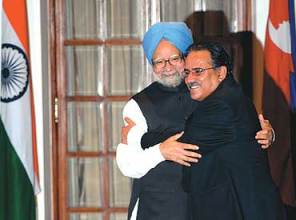
Manmohan Singh with Prachanda, circa 2008

Prashant Jha interviews the Nepali Maoist leader Prachanda:

All of us reviewed the situation. I presented a document in my party last April stating that the 12-point agreement must be the basis, and we must conclude the peace and the constitution process. India then changed the way it viewed Maoists, and realised it must help the process succeed. It was a realisation that we must revert to the environment of trust that existed during the 12-point pact.

Would it be right to say that Nepal’s peace process and the constitution would not have been possible without Indian support?

Definitely. Saying that the 12-point understanding was signed in Delhi means that there was India’s active support — otherwise it was not possible. CA elections would not have been possible. There could have been problems with the declaration of a republic. Now also, to take peace and the constitution to a logical conclusion, without Indian support, it will be very complex and difficult. [Full interview]

Kanak Mani Dixit critiques such a conclusion of the peace process: Continue reading A turning point in Nepal

Workers Struggle in Dehradun

The following is a statement from Uttarakhand Nav Nirman Mazdoor Sangh and the Inquilabi Mazdoor Sangh received via Shankar Gopalakrishnan

Between 12 and 1 yesterday, 15 April 2012, the Uttarakhand police lathi charged more than 300 workers who have been sitting on a protest in Dehradun for the last ten days. 11 workers who have been on hunger strike (six from April 6th and five who joined them on April 9th) have been forcibly hospitalised in Doon Hospital, where they are resisting attempts to force-feed them. 326 workers have been arrested and detained in various jails in the city.

The workers have been on strike for more than three weeks now. They are employees of the Rockman and Satyam Auto plants in Haridwar, both major suppliers of Hero Motors. As in Manesar, Haryana last year, these workers are being paid extremely low wages for more than 12 hours of work a day; when they sought to form a union to demand respect for labour laws, the five leaders of the union were illegally sacked immediately and the others threatened with a similar fate. On March 19th the majority of permanent workers at Rockman came out on strike in protest at this illegal brutality, and on March 22nd they were joined by all the permanent workers at Satyam. Continue reading Workers Struggle in Dehradun

After extracting US apology over Shahrukh Khan, the Indian Government owes several apologies too: JTSA

This release comes from the JAMIA TEACHERS’ SOLIDARITY ASSOCIATION

15th April 2012

After extracting US apology over Shahrukh Khan, the Indian Government owes several apologies too

The Indian government has rejected the ‘mechanical apology’ being offered by the US for detaining the super star Shahrukh Khan at the airport for 90 minutes too long. The US Deputy Chief of Mission has been summoned, and institutional mechanisms to ensure that there is no repeat of such an incident.

Now, may we ask the hyper active and sensitive Indian government to tender apologies—and genuine apology please, not a mechanical one—for detaining (illegally), incarcerating, torturing—in short, destroying and tearing apart the lives of hundreds of its own citizens in supposedly fighting terror.

  1. The government could do well by starting with apologizing to Md. Amir Khan, who has spent half his life in prisons before 17 of the 19 blasts cases in which he was accused, fell apart because there was simply no evidence against him. Could someone please say sorry to him: for a lost childhood, for his grief-crazed mother’s paralysis, for his heartbroken father’s early death, for his broken, crumbling home. Continue reading After extracting US apology over Shahrukh Khan, the Indian Government owes several apologies too: JTSA

A State of ‘Encounters’: Madhumita Dutta

This guest post has been written by MADHUMITA DUTTA, a Chennai-based activist and writer, in conversation with Savukku Shankar, a former employee of the police department and a freelance journalist

“This state has witnessed more than 90 encounters in the last 15 years.  Tamil Nadu is a state of encounters!” laments ‘Savukku’ Shankar. ‘Encounters’, a euphemism for extra-judicial killings, began in the state in the 1980s when the government started cracking down on members of Maoist organisations around Dharmapuri district of Tamil Nadu.

On April 9th of this year, a Division Bench constituted by the Madras High Court was to commence its final hearing on PILs filed by Advocate Puzhalenthi, asking filing of murder charges against policemen involved in the recent ‘encounter’ deaths of five alleged bank robbers in Velachery; and questioning the magisterial enquiry ordered by the government under Cr. P.C. 176 (1A). Said Shankar, “That section applies only to custodial deaths, but this is an encounter killing”. The matter finally got adjourned to 5th of June. It is not uncommon for cases like this to drag on for years in the Courts. A special bench constituted by the court to hear 26 ‘encounter’ cases that took place in Tamil Nadu between 2006 and 2010 is yet to commence its hearings. Continue reading A State of ‘Encounters’: Madhumita Dutta

India must reciprocate Pakistan by sending back Dr. Chishty and Pakistani fishermen

This is a statement put out by some of us; names of signatories is given at the end

We, the undersigned, welcome the decision of Pakistan government to release 26 Indian fishermen on humanitarian grounds. They were in Pakistani prison for more than two years for allegedly violating territorial border. The Pakistani gesture came in the background of a meeting, which took place in New Delhi, between the Indian Prime Minister Manmohan Singh & the Pakistani President Asif Ali Zardari on last Sunday. The poor Indian and Pakistani fishermen find it extremely difficult to recognize other country’s territorial border in the mid-sea.

We appeal to the Government of India to reciprocate Pakistani gesture by sending Dr. Khaleel Chishty and Pakistani fishermen back home. This will be a major confidence building measure. It will help in creating a conducive atmosphere in taking forward peace process. Continue reading India must reciprocate Pakistan by sending back Dr. Chishty and Pakistani fishermen

Support the annulment of IT Rules 2011, protect internet freedom in India

Given below is the text of a petition put out by SFLC.in. You can sign it here. Do urge others to sign it too. Please also consider writing directly to your or any or all Members of Parliament urging them to annul IT Rules 2011. You can read SFLC.in’s very brief primer on the IT Rules here. The web address www.IT2011.in also redirects you to the petition page.

Image credit: Aseem Trivedi / saveyourvoice.in. Please consider making this image your Facebook 'cover' picture or Twitter background image or your blog header till the end of April.

Dear Member of Parliament,

The Constitution of India praovides the citizens of this country the fundamental right to freedom of speech and expression subject to reasonable restrictions as laid down in the Constitution itself. Now, with the spread of the Internet and the availability of tools like blogs and social networks we are able to enjoy this freedom to the fullest and have a true participatory democracy.

You, as legislators recognised the importance of intermediaries like Google, Facebook, Twitter and Internet Service Providers for e-commerce as well as for free expression, helping us to express ourselves and provided them protection from any legal liability that could arise out of content generated by users. Such a protection provided in the Information Technology Act, 2000 was important for these intermediaries to operate freely without threats of frivolous legal action. Continue reading Support the annulment of IT Rules 2011, protect internet freedom in India

Eviction of Slum Dwellers and Repression of Anti-Eviction Demonstrators in West Bengal

[We are publishing below the following report based on materials received courtesy Sanhati, whose members were also arrested in the course of the struggle]

“If Didi could rush to the scene for one Tapashi Mallik, then she could surely hear the voices of 800 poor people and come here to see us” –Residents of Nonadanga slum in Kolkata

It is the same story once again. Cleaning up and beautification of cities in the clamour for urban space for consumption and the luxury of the rich. And as we have seen, it makes little difference whether the government/s are Leftist or Rightist, whether they claim to represent the oppressed poor or not. Thus, on 30th March, 2012 the TMC government forcefully evicted around 300 poor families from the Nonadanga slum area in South 24-Parganas, in the name of ‘development’ and ‘beautification’ of Kolkata. Their shanties were razed to ground by the Kolkata Metropolitan Development Authority. The homeless slum-dwellers have been staying in an open field and are facing constant police harassment. Despite these harsh conditions, they have refused to depart and are presently on hunger strike. Their demand has to date failed to draw any favourable attention from the government. This neglect comes on the heels of the Planning Commission agreeing to annual Bengal plan around 16 per cent more than last year’s.

Continue reading Eviction of Slum Dwellers and Repression of Anti-Eviction Demonstrators in West Bengal

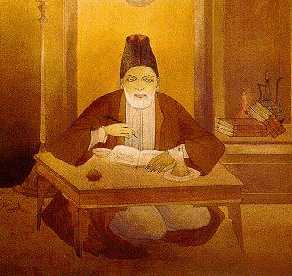
My name is Mirza Asadullah Beg Khan ‘Ghalib’ and I am not a terrorist!

Image from http://www.the-south-asian.com

Update: If you’re on Twitter please help make #Ghalib trend @ Twitter India – Tweet his sher’s!

That is what it has come down to. DNA reports that according to Maharashtra police, a Ghalib couplet on a piece of paper is proof the Students Islamic Movement of India is into the business of mass violence:

Of the several affidavits — filed in court asking for the ban on the group to continue — accessed by DNA, one by inspector Shivajirao Tambare of Vijapur Naka, Solapur, cites a Ghalib verse — as part of evidence — to show how dangerous SIMI (Students Islamic Movement of India) is.

Mauje khoon ser se guzer hi kiyon na jay, Aastane yaar se uth jaein kaya! A loosely translated Marathi version in the affidavit concludes that these lines speak of bloodshed and animosity. Continue reading My name is Mirza Asadullah Beg Khan ‘Ghalib’ and I am not a terrorist!

Review: ‘Behind the Beautiful Forevers’ by Katherine Boo

Guest post by MITU SENGUPTA

In a remarkable book about slumdwellers in Mumbai, Katherine Boo brings to light an India of “profound and juxtaposed inequality” – a country where more than a decade of steady economic growth has delivered shamefully little to the poorest and most vulnerable.  But though indeed a thoroughgoing and perceptive indictment of post-liberalization India, the book fits into a troubling narrative about the roots of India’s poverty and squandered economic potential.

This is a beautifully written book.  Through tight but supple prose, Boo offers an unsettling account of life in Annawadi, a slum near Mumbai’s international airport.  In Boo’s words, this “single, unexceptional slum” sits beside a “sewage lake” so polluted that pigs and dogs resting in its shallows have “bellies stained in blue.” It is hidden by a wall that sports an advertisement for elegant floor tiles (“Beautiful Forevers” – and hence the title).  There are heartrending accounts of rat-filled garbage sheds, impoverished migrants forced to eat rats, a girl covered by worm-filled boils (from rat bites), and a “vibrant teenager,” who kills herself (by drinking rat poison) when she can no longer bear what life has to offer.

Continue reading Review: ‘Behind the Beautiful Forevers’ by Katherine Boo

Mamata’s order that stoked the media war: Independent Observer

[This is a guest post by an independent journalist journalist and in Kolkata]

How difficult is to make a choice between the Caligula and the powerful senators who plotted against him, purportedly to save Rome from the populist-turned paranoid emperor?
The question comes to one’s mind in view of the ongoing public spat between Bengal chief minister Mamata Banerjee and a powerful section of Bengal media which has virtually likened her to a female (a non-libidinous also) version of Caligula. The row, that now involves pro and anti-Mamata media blocs also, has been triggered by a recent government order asking 2500 plus state-run and aided libraries to subscribe, initially, to eight pro-government newspapers —five Bengali, two Urdu and one Hindi— barring the market leaders in these segments. The circular of the state libraries and mass education department cited the ‘promotion of free-thinking’ as the reason behind favouring the chosen newspapers.

However, the issues involved are neither limited to Mamata’s increasing attempts to browbeat critical media as the aggrieved houses are complaining about nor her well-meaning effort to support ‘small’, resource-starved newspapers against their big brothers as she herself and beneficiaries of her patronage are claiming. A closer scrutiny reveals that there are more to it beyond the binary of Oraamra (them and us), now part of Bengal’s political and media lexicon after Buddhadeb Bhattacharjee’s infamous bragging over his government’s brute majority in the state assembly in order to rubbish all opposition to his policies. Continue reading Mamata’s order that stoked the media war: Independent Observer

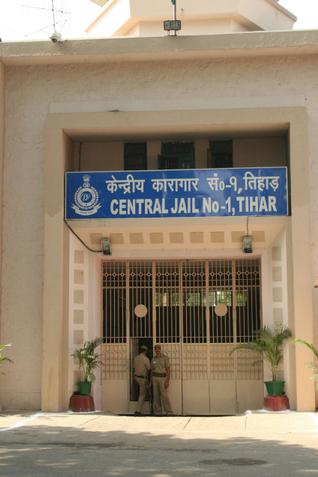
My Days in Tihar Jail

Mrs Gandhi, the then Prime Minister of India, represented the Rai Bareli seat in the Lok Sabha. On 12th June 1975 she was unseated on charges of election fraud and misuse of state machinery in a landmark judgement by Justice Jagmohan Lal Sinha of the Allahabad High Court.  Fakhr-ud-Din Ali Ahmad, the then President of India, declared internal emergency on the 25th of June,  on the recommendation of a pliable cabinet presided over by Mrs G. The people of India lost all civil liberties for a period of 21 months.

Trade unions were emasculated, political opponents were arrested, newspapers censored, the only place where a semblance of freedom survived, for a short while, were the universities, most were in turmoil and were being singled out for special attention. Students unions were being banned and activists were being picked up and thrown in jail.

Continue reading My Days in Tihar Jail

Between Aid Conditionality and Identity Politics – The MSM-Transgender Divide and Normative Cartographies of Gender vs. Sexuality: Aniruddha Dutta

This guest post by ANIRUDDHA DUTTA continues a theme raised on Kafila by Rahul Rao

Late last year, the UK and US governments made announcements supporting the global propagation of LGBT (lesbian-gay-bisexual-transgender) rights as human rights, suggesting that the future disbursal of aid might be made conditional on how LGBT-friendly recipient countries are perceived to be. The potential imposition of ‘gay conditionality’ on aid has been rightly critiqued for imposing a US/European model of sexual progress on ‘developing’ countries, which may justify covert geopolitical agendas and fail to actually benefit marginalized groups. But whatever form such conditionalities may take in the future, a more implicit and routine form of aid conditionality has been already at work, relatively unnoticed, for several years now – the presumption of distinct and enumerable minorities corresponding to categories like homosexual or transgender as target groups for aid in socio-cultural contexts where gender/sexual variance may not be reducible to such clear-cut categories or identities. Increasingly, community-based organizations (CBOs) working to gain gender/sexual rights or freedoms need to define themselves in accordance with dominant frameworks of gender-sexual identity to get funding both from foreign donors and the Indian state, creating identity-based divisions among CBOs and presenting existential challenges to communities that do not exactly fit these categories.

Continue reading Between Aid Conditionality and Identity Politics – The MSM-Transgender Divide and Normative Cartographies of Gender vs. Sexuality: Aniruddha Dutta

सत्ता और हिंसा : बद्री नारायण

बद्री नारायण का यह लेख लखनऊ के एक हिंदी अख़बार को दिया गया था पर उन्होंने छापने से मना कर दिया.

शक्ति अपने संस्थागत रुप में सत्ता में तब्दील हो जाती है। सत्ता अपने मूल अर्थ में भय एवं हिंसा पर टिकी होती है। सत्ता का अभ्यांतरिकरण हो या सत्ता का प्रतिरोध, दोनों ही अर्थो में हिंसा उसके सह उत्पादक के रुप में दिखाई पड़ती है। जनतंत्र को एक ऐसी प्रक्रिया के रुप में परिकल्पित किया गया था जो सत्ता को उसके हिंसक पक्ष से मुक्त कराके सेवाभाव के एजेन्सी के रुप में सक्रिय रखे। यह माना जा रहा था कि जनतंत्र सत्ता को रेशनालाइज कर उसे सेवा-भावि प्रशासकीय स्वरुप में तब्दील कर देती है। यह काफी कुछ हुआ भी किन्तु अपने कार्य-प्रक्रिया में इस जनतांत्रिक समय में भी सत्ता हिंसा को उत्पादित करते रहने वाली शक्तिस्रोत के रुप में सामने आई है। सत्ता पहले अपने भीतर अपने ही कारणो से क्राइसिस को जन्म देती है, फिर उससे उबरने के लिए हिंसा रचती है। बंगाल, झारखण्ड, आन्ध्र के जंगलों में पहले तो बाजार शासित विकास के तहत आदिवासी जीवन के संसाधनों पर कब्जा कर उन्हे बहुराष्ट्रीय कम्पनियों को बेचना, फिर उसके विरोध में आदिवासी जनता का नक्सलवादी विचारों एवं नेतृत्व में हिंसक प्रतिरोध का बढ़ते जाना, पुनः उसे दबाने के लिए राज्य द्वारा की जाने वाली ज्यादा आक्रामक एवं खुंखार हिंसा को इसी रुप में देखा जा सकता है। Continue reading सत्ता और हिंसा : बद्री नारायण

Who are the real stakeholders of Indo-Pak peace?: Ayesha Siddiqa

This guest post by AYESHA SIDDIQA is the text of a speech delivered by her at a recent civil society review of the India-Pakistan peace process, organised by the Centre for Policy Analysis in Delhi.

This time it seems better then last time! I suppose this is what we said the last time as well. India–Pakistan relations have a cycle of ups and down: a crest followed by a trough and then a crest again. Although there is increased frustration on both sides for not being able to solve the ‘relationship’ mystery, the leadership and people in general remain eager to have peace rather than war. However, we also remain elusive regarding our threshold of peace, or what would be the cut-off point in settling for peace with each other. This cyclic peace of war and peace has remained primarily due to the peace process being elitist and confined to the strategic/security community. Therefore, I would like to argue three points: Continue reading Who are the real stakeholders of Indo-Pak peace?: Ayesha Siddiqa