Category Archives: Government

The Blue Line Bus Saga: Aman Trust

The article is based on AMAN Trust‘s research on informal labour in Delhi.
Sent by Jamal Kidwai

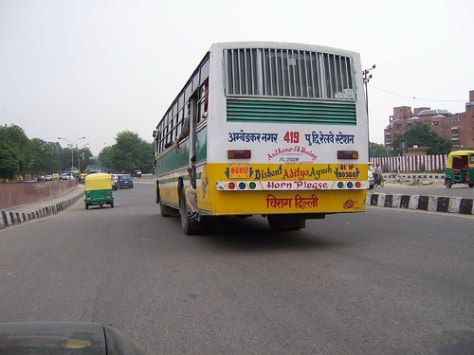
The Delhi government has announced a phasing out of nearly 3000 blue line buses from the streets of Delhi in the next few months. These buses will be replaced by nearly new 1000 low floor buses purchased to ferry athletes and dignitaries for the Commonwealth games. According to the Delhi Transport minister Arvinder Singh Lovely the phase out will be enforced under section 115 of the Central Motor Vehicle Act that deals with the emission norms. The decision has been taken even despite a petition pending in the Delhi High court regarding the decision to phase out 600 routes. According to Lovely “We will apprise the High Court about the decision and I am confident that the court will accept our proposal.”

Continue reading The Blue Line Bus Saga: Aman Trust

Sedition: ‘The highest duty of a citizen’

Sedition: the attempt “to excite disaffection towards the Government established by law in India”, a crime under Section 124 A of the Indian Penal Code, a provision introduced by the British colonial government in 1860.

The only revisions to this colonial legal provision since its passing have been over the years, to remove anachronistic terms like “Her Majesty”, “the Crown Representative”, “British India”, “British Burma” and “Transportation for life or any shorter term”.

But it seems “Disaffection towards the government”, the archaic usage notwithstanding, is a timeless crime. Section 124A, therefore, these few cosmetic changes apart, has remained unchanged for the last 150 years.

Continue reading Sedition: ‘The highest duty of a citizen’

Lovely’s Lane: Alok Rai

Guest post by ALOK RAI

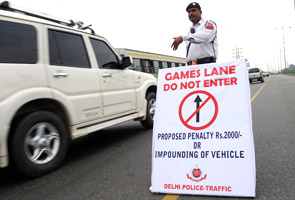
It was bound to come sooner or later. The wonder – the absolute, outrageous, impudent surprise of it all is that it has come so soon. The Games have barely limped to their pathetic conclusion – and those of us who are waiting for the post-Games reckoning are waiting but impatiently, inadequately consoled by the sound of the sharpening of the knives, the braiding of the hangman’s rope – or, most likely, the Japanese water torture of the promised Shunglu probe. And in the midst of this unfolding fiasco, this still-running disaster, the lovely Mr Arvinder Singh Lovely, Delhi’s Transport Minister, has made the suggestion that the insult of the Games lane, the closing off to the public of a significant part of the road which has been made with public money, be made permanent. This – as we were told in full-page ads paid for by us – was done with threats of  a hefty fine or, worse, far worse, being exposed to the courtesies of a Delhi cop. The ineffable experience of crawling along patiently (but proudly, always proudly!) while sundry others flashing CWG insignia whizzed past in the CWG lane – an experience that so many of us chose to miss, could now become a permanent feature of the metro experience. I can’t wait!

Continue reading Lovely’s Lane: Alok Rai

After the Games: Alok Rai

Shera

Guest post by ALOK RAI

I had imagined that there would be time after the Games. Kalmadi and his cronies would have to hang, of course, but it could have been done in a measured fashion. Now, it appears that there is no time to lose. The Shameless One has actually said something about bidding for the Olympics! And with the promise of enough money in the trough, we can expect the pigs to grunt their approval too – just like they did the last time. But in the name of all the people who have been uprooted, and had their livelihoods destroyed; the students who have been thrown out of their hostels; the long-suffering citizenry of Delhi that is currently undergoing the final stage of the insult and humiliation that has been heaped on them over the past year in the name of the Games, I say, enough! Hang the bastards, now!

But I should clarify quickly. I am not so naïve as to be outraged by the corruption. It is the stupidity I am particularly offended by. After all, corruption is only one half of the story. And, frankly, the corruption is hardly surprising. Corruption, to my lay understanding, is the whole point of these large “public” enterprises – it enables the crooks-in-power to get their hands on the money that has been gouged from the poor. That is exactly what everyone expects – the poor victims, the crooked beneficiaries. But surely the stupidity is gratuitous?

Continue reading After the Games: Alok Rai

Eight reasons why you should oppose Unique Identification: Stop UID Campaign

Drafted by KALYANI MENON-SEN for the Stop UID Campaign

AN APPEAL TO CITIZENS

The National Identification Authority of India Bill approved by the Union Cabinet on Friday has sidestepped critical privacy aspects relating to profiling and function creep — a term used to describe the way in which information is collected for one limited purpose but gradually gets used for other purposes.

Here are some reasons why you should oppose this Bill:

1. False claims

The Government of India and Nandan Nilekani, Chairperson UIDAI, have been claiming that the UID scheme will enable inclusive growth by providing each citizen with a verifiable identity, that it will facilitate delivery of basic services, that it will plug leakages in public expenditure and that it will speed up achievement of targets in social sector schemes.

Continue reading Eight reasons why you should oppose Unique Identification: Stop UID Campaign

Seen in Delhi

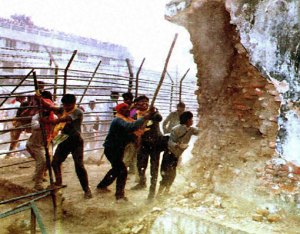
The Second Demolition: Ayodhya Judgement September 30, 2010

December 6, 1992

A shameful and shocking judgement.

I am shattered by what it does, by its implications for democracy, and by the statement it makes about what we can expect for the future.

My rage is growing with every statesman-like pronouncement from one pompous man after the other in the media, gravely holding forth on the maturity of the compromise that has been reached.

Continue reading The Second Demolition: Ayodhya Judgement September 30, 2010

How to Not Read the Ayodhya Judgement: Hilal Ahmed

Guest post by HILAL AHMED

There are three areas which I think we need to underline.

A. Technical problem: The question of applied principles

I ask a very fundamental question: How could a modern secular judiciary- technically an institutionalized ‘interpreter’ of the Constitution- determine the legal disputes related to religious places of worship on the grounds of ‘faith-based’ evidences?

All the three judges seem to recognize the fact that the Hindu beliefs should be (must be) taken as legal facts. Interestingly, these beliefs are supported by archeological report of 2003 to form an argument of judicial nature.

However, and quite astonishingly, the Sunni Wakf Board’s (SWB) case was dismissed on legal-technical grounds following a very mechanical interpretation of the Limitation Act.

But for Nirmohi Akhara and VHP case (referred as Ram Lalla virajman) the principle of faith was given primacy and in order to substantiate it further ASI report which is full of contradictions, is expanded to arrive on a conclusion.

Continue reading How to Not Read the Ayodhya Judgement: Hilal Ahmed

Repeal AFSPA: Committee for the Release of Dr Binayak Sen Mumbai


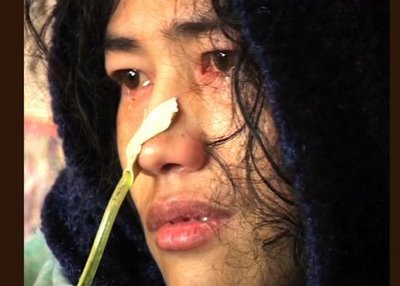
Irom Sharmila has been on a fast unto death for the repeal of the Armed Forces (Special Powers) Act (AFSPA) after troops of the Assam Rifles gunned down 10 civilians at Malom near Imphal airport on November 2, 2000. She is periodically arrested and force-fed by the Indian state.

Dear Prime Minister, Home Minister and Sonia Gandhi,

We have noticed a striking anomaly in the way the armed forces and the state treats the people of Kashmir and the Northeast. When contemplating the use of the armed forces in the forest belt, the armed forces and the state concluded (quite correctly, in our opinion) that they should not be used against the people of this region, including the Maoists, since ‘they are our people’. Yet the very same armed forces have no compunction about being deployed against the people of Kashmir and the Northeast, and the state agrees! Worse still, the armed forces insist that they cannot carry out their duties without AFSPA, which allows them to rape, torture and kill with impunity.

So what is happening here? Are the people of Kashmir and the Northeast not ‘our people’? This is indeed the message that comes across. And if these people feel that they are not regarded or treated as ‘our people’ by the state and armed forces of India, is it surprising that many of them do not want to belong to India?

In fact, AFSPA allows the armed forces to commit atrocities that would be considered war crimes even if they were directed at a foreign enemy. There is no justification for keeping it on the statute books, because it is incompatible with international humanitarian law. Its enforcement in these states has been one of the main reasons why there has been no resolution of the conflicts in them for decades. Consulting the armed forces about the repeal of a law that allows them unlimited power is worse than useless: why would they ever agree? Surely you ought instead to be consulting people like Irom Sharmila, who has been waging a heroic and totally non-violent struggle against AFSPA for ten years!

Shouldn’t the government be asking her why she is ready to sacrifice her life to get this law repealed? And taking her answer deadly seriously before she dies?

FROM
COMMITTEE FOR THE RELEASE OF DR BINAYAK SEN MUMBAI

Provincial Councils and the 13th Amendment: Interview with Lal Wijenayake

I interviewed attorney at law, veteran Left politician and former Provincial Councillor for fifteen years, Lal Wijenayake in July 2010.  His experience is all the more important given the recent discussions and debates on the 13th Amendment and the Provincial Council system in Sri Lanka.  While this interview from two months back is very much focused on his experience as a Provincial Councillor, in recent weeks, Lal Wijenayake was also a petitioner against the anti-democratic 18th Amendment to the Constitution before the Supreme Court.  This was in contrast to the shameful manner in which all five Members of Parliament of the Socialist Alliance voted for the 18th Amendment. Continue reading Provincial Councils and the 13th Amendment: Interview with Lal Wijenayake

We are all Kashmiris! Or at least should be!: Dibyesh Anand

Guest post by DIBYESH ANAND

Dibyesh Anand is Associate Professor at Westminster University and writes on majority-minority relations in China and India

Democracy is as much an idea, as it is a political system. An idea for which millions have given life and even more have been killed. When non-democratic or quasi-democratic states suppress people, it is a shame, but when established democracies kill their own citizens for exercising their legitimate right to protest, it is a bigger tragedy. Bigger because it is not only men and women who die, but also the hope that democracy offers a humane and representative form of government at least for its own people.

This is the hope that is dying in the world’s largest democracy as the security forces continue to kill unarmed protestors every day for the last two months in Indian controlled Kashmi. Till date, more than a hundred, mostly young men and children, have been killed by those who are supposed to be the protectors. Evidence of torture, gratuitous killings, and sheer brutal dehumanisation of ordinary people are in abundance and yet the Indian state responds by threatening action against those who reveal the evidence and against forums (such as facebook, youtube) that allow these to be made public. There is no sense of humility, regret or introspection. No promise of impartial inquiry and strict punishment for the law-enforcers who kill and maim with impunity. Not even A of an apology.

Continue reading We are all Kashmiris! Or at least should be!: Dibyesh Anand

Kashmir, September 2010. The Reichstag Fire (dispersed) Redux ?

(Apologies for cross posting on the Reader List)

As if by magic, those who had hidden themselves for the past few months in Kashmir are leading mobs and setting schools and public buildings on fire. And many more people have died tragic and unnecessary deaths. This time, unlike in the past, the blame must be squarely shared between those who fired the bullets, and some of those who led the incendiary crowds. Perhaps Kashmir has just entered a new and darker phase, brandishing a burning torch. This situation, in order not to be irreversible, needs the urgent and sane attention of Kashmiris themselves, and of all those who wish Kashmir and its people well.

We could do well by way of beginning by turning our attention to a surprising detail hidden within the reports of the recent events of arson. National Conference apparatchiks, who did not even dare appear in public till recently for fear of being attacked for their role in sustaining the occupation of Kashmir by India’s armed might, are now allegedly seen openly goading mobs of zealots to burn down a school in the name of the defence of religion. If this is true, the what we are witnessing is the realization by them of a wonderful opportunity to wear new costumes and speak new lines in the unfolding theatre of the moment.

Continue reading Kashmir, September 2010. The Reichstag Fire (dispersed) Redux ?

Kashmir’s Abu Gharaib?

Two days ago, I noticed a video posted by somebody on my facebook page. It was yet another video from Kashmir. It was tagged ‘brothers please watch, sisters please do not watch’. In later incarnations of the video, posted repeatedly on Facebook sites, Youtube channels and on blogs. it was tagged ‘Indian Security Forces Kashmiri Youth to Walk Naked on Road’ or ‘Kashmir – India’s Abu Gharib (sic)’.

The video was available on Youtube on the night of 8th/9th September, 2010, before being taken down.

Notwithstanding the misspelling of Abu Gharaib in these tags, there was something compellingly accurate in the designation. What I saw, and what i have seen unfold subsequently as a response by the Indian state to the circulation of this video, makes Abu Gharaib look like child’s play. Welcome to the virtual, viral, televisual reality of the nightmare of Kashmir.

For the past several weeks, I have been watching, and forwarding, several videos uploaded on to Youtube and facebook from Kashmir. Every video that I have seen contains evidence of the brutality of the Indian state’s footprint on the Kashmir valley, and of the steadfast yet resilient courage of its people, and of the innovative use they have been making of the internet to bear witness to their oppression.

See for instance – Innocent Man being Beaten in Kashmir.

I have seen paramilitary and police personnel open fire on unarmed or stone pelting crowds, mercilessly beat up young people and children, attack doctors, patients and nurses in hospitals, smash windows of homes, steal chickens and livestock and hurl the most vulgar invectives at ordinary people. I have watched the armed might of the Indian state retreat in the face of the moral courage of the opposition it encounters on the streets of Kashmir. It doesn’t take much to find these videos. Run a search with ‘Kashmir, Stone Pelting. indian Occupation’ on Youtube. Of follow the links and uploads on the growing cluster of Facebook pages from and about Kashmir. Continue reading Kashmir’s Abu Gharaib?

On torture in India and China

Guest post by FAHAD MUSTAFA

On 31st May, the Chinese government released guidelines that banned the admissibility of evidence obtained under torture in criminal convictions. This came a few weeks after the revelation of the seemingly bizarre, yet not completely uncommon, case of Zhou Zuohai.  Zhuo was released after being imprisoned for 11 years in Shanqqi, on charges of murder, when his alleged victim was found alive in his village. He was imprisoned on the basis of his confession of the crime.  A couple of days after he was released the authorities admitted that the confession was obtained under torture. Zhuo described his beatings: the pouring of chilli water in his eyes, the bursting of firecrackers over his head, and how he thought he would not survive. When he said what he was expected to say, the torture stopped, and he was convicted.

Lawyers, police, and governments in most countries, including China, understand that torture is counterproductive in extracting evidence. Indeed, China has issued several directives earlier to say that evidence under torture is unacceptable. As in the case of Zuohai, most confessions of this sort are false or misleading, and are given only to make the immediate suffering stop. Why then do police forces continue to use torture or the threat of it as a means to extract evidence? Continue reading On torture in India and China

Godhra, arson, terrorism, stone-pelting, Dalits and Muslims, and other such issues in village Lehna

A fact-finding report released today by PUCL Uttar Pradesh

Fact Finding Report on the murder of MNREGA and labour activist Shri Hari Lal, Village Lehna, Block Manjhanpur, District Kaushambhi on 15.08.2010

A fact finding committee to investigate the incident was formed with the following: members

  1. Mr. S.R.Darapuri, Retired IPS, Vice President UP PUCL.
  2. Mrs. Arundhuti Dhuru, Consultant to Commissioner Right To Food Committee of Supreme Court.
  3. Mr. Ram Kumar, Vice President UP PUCL.
  4. Mr. Jawed Rasool, Dyanmic Action Group.
  5. Dr. Nisha Srivastav, Professor  (Deptt. of Economics ), Allahabad University .
  6. Mr. Rajni Kant Rai, HRLN, Allahabad .
  7. Mrs. Bindu Singh, Convener UP Right To Food Campaign .
  8. Mr. Sanjay Singh, convenor, Parmarth, Oriye, Jalaun

The committee visited the site of incident in village Lehna  on 21.08.10 .The fact finding committee met the family members of the late Hari Lal, other residents of the village, and workers and officials of Voice of People’s (VOP). The committee also met the district magistrate and spoke to the superintendent of police. The following facts about the incidents came to light through this enquiry:

Background to the Incident

The main issue behind this incident was of MNREGA and payment of labour wages. According to the available evidence, a pond was dug in the village by 250 labourers from the panchayat quota of MNREGA in April, May and June 2007. However, the gram pradhan, Tirath (Dhobi), did not pay the labourers full wages. The gram pradhan is a mere puppet in the hands of a former gram pradhan, Bassan, and his son Fateh and a criminal named Nakkan. Continue reading Godhra, arson, terrorism, stone-pelting, Dalits and Muslims, and other such issues in village Lehna

Naba Dutta of Nagarik Mancha Arrested Under False Charges

[Well known labour and human rights activist and one of the important functionaries of Nagarik Mancha, Naba Dutta was arrested by the West Bengal police in extremely strange circumstances, after he along with his colleagues was returning from a sit-in programme at the Block Development Officer’s office. The following is a press release issued by Kirity Roy of the Banglar Manabadhikar Suraksha Mancha (MASUM) and Programme Against Custodial Torture & Impunity (PACTI).]

Mr. Naba Dutta along with his 3 companions, Ms. Progna Paromita Dutta Roy Chowdhury, Mr. Gautam Ghosh and   Mr. Dipankar Mazumdar – all attached with Nagarik Mancha, a civil society organization mainly focused on environmental and labor issues –  proceeded for a preannounced programme of sit- in in front of the Block Development Officer’s office at Narayangarh block of West Midnapur. The programme was organized by Lodha Shabar Vumij Kalyan Smiti. Mr. Naba Datta and his companions started from Kolkata by a vehicle (Toyota – Qualis 2.4 D Model) with registration number WB-02M-8565. After reaching the place they peacefully completed the meeting and started for Kolkata by the said vehicle. The driver of the car Mr. Ashok Midhya and Mr. Joydeb Singh of Lodha Shabar Vumij Kalayan Samiti was also in the car with the abovementioned activists of Nagarik Mancha. While Mr. Naba Datta and his associates with the driver (names mentioned above) were on their way to Kolkata, one police vehicle intercepted them and asked to follow their vehicle without showing any reasons. When asked about the reason for such illegal act the police personnel who made the said persons captive replied as, ‘we are taking you at Narayangarh Police Station’. Mr. Naba Dutta’s car followed the police vehicle without making any further argument. All the police personnel who had taken the persons in hostage were not in police uniform but were using a police car while being in plain clothes. When the cars crossed the Narayangarh Police Station, Mr. Naba Dutta and his companions sensed some foul play and asked the police personnel about their actual motive and where they wanted to take them but the police personnel declined to give any answer and told the driver of Naba Datta’s car to follow their vehicle.

Continue reading Naba Dutta of Nagarik Mancha Arrested Under False Charges

Interim Report of the Independent Fact-finding Team on the Sompeta Firings on 14 July 2010

Interim Report of the Independent Fact-finding Team on the Sompeta Firings on 14 July 2010

The fact-find team (FFT), under the leadership of Justice P.K. Misra, former judge of the Orissa High Court, was an initiative of certain public-spirited individuals and organizations who were deeply concerned at the firing on the people protesting against the proposed thermal power plant by the Nagarjuna Construction Company (NCC) near Sompeta in Srikakulam district of Andhra Pradesh. The firing occurred on 14 July 2010 in which two persons died and five were injured by bullets (including a cameraman of TV-9 Telugu channel). In the events prior to the firing, about 300 people belonging to the neighbouring villages opposing the power plant and about 50-60 police personnel were injured.

During 24-25 July, the FFT visited Palasapuram, Lakkavaram, Isakalapalem and Ramaiahpatnam villages in Sompeta Mandal and talked to the local people who are resisting the proposed power plant to protect their life and livelihood. The Team met the District Collector, Mr. Srikanth (on the evening of 24 July), held discussions with the representatives and members of Sri Sri Sri Kanakadurga Taapi Mestri Sangam and Kalinga Vysya Sangam in Sompeta town, and visited the Government Community Hospital in Baruva Panchayat to meet some of the injured persons undergoing treatment. (Our effort to meet an injured police officer undergoing treatment in the Seven Hills Hospital in Vizag did not prove successful as he was discharged by the time we went there on the evening of 25 July).

Continue reading Interim Report of the Independent Fact-finding Team on the Sompeta Firings on 14 July 2010

Dear Chattisgarh Police, Are You Mad?

Javed Iqbal of The New Indian Express on being targeted by the Chattisgarh Police as being on the side of the Maoists:

A High Court lawyer from Mumbai was in Dantewada a few days ago and had gone to the police station to speak to the police and understand the ground realities of Dantewada. SSP Kalluri accused him of being a Naxalite informer, and had him locked up in the police station. He was eventually let off the same evening, visibly shaken, after some frantic phone calls.

The very fact that the Chhattisgarh police would rather target civil society activists, opposition party workers and journalists than investigate the Maoists, is explicit proof of their incompetence. A kind of fascinating wife-beating syndrome, where they can’t get the Maoists, so the insecure, frustrated police will go after soft targets like journalists, activists and opposition party members.

They arrested CPI party workers for the attack on Audesh Singh Gautams home, and adivasi CPI leader Manish Kunjam confirmed the same. He, himself, has no police security. It was withdrawn by the police months ago even though there have been numerous threats to his life. He has been openly critical of the Salwa Judum that roams around Bastar, armed to its teeth, and has spoken up against corporate land grab, supporting and helping to organize the anti-displacement movements across Bastar.

Now, according to the police press release that implicated Lingaram Kodopi, Nandini Sundar, Medha Patkar and Arundhati Roy, I’ve been mentioned as someone who had gone with the Maoists, ‘videographing’ their failed assassination attempt on Audesh Singh Gautam.

Forget that they police don’t know the difference between a ‘photographer’ and a ‘videographer’. Forget that the police don’t know that at 1:00am there’s no light, and videography and photography is useless. And I believe the Maoists have infra-red cameras? Why? Because they’re ‘infra-red’? [Read the full post]

Living the Lesser Life

Guest post by SHRIYA MOHAN

A Mawasi tribal mother with 2 out of four of her children severely malnourished

Long ago Bhagavan called all the tribes of mankind for a feast. On one side he put rice, dal, vegetable and meat curry for the Hindu. On the other side he put chapattis ghee and sugar for the Baiga and Gond. As they were about to eat, a rat ran across the floor. Since Bhagavan had provided no meat for the Baiga and the Gond, they all chased the rat so they could add it to their feast. But they couldn’t catch it. When they came back they found that the Hindus had taken away all their chapattis, ghee and sugar and there was nothing left for them. Then Bhagavan dropped water into the pot in which the rice had been boiled and gave it to them. “This is paige”, he said. “And you will eat it forever.”

– Verrier Elwin, The Baigas, 1939 Continue reading Living the Lesser Life

Social Profiling – Indian Style

“The Muslim is not wanted in the armed forces because he is always suspect – whether we want to admit it or not, most Indians consider Muslims a fifth column for Pakistan” [Vengeance! India after the assassination of Indira Gandhi (New Delhi, Norton, 1985), pp. 1995-96]
-George Fernandes

Amnesty International  defines racial profiling as the targeting of individuals and groups by law enforcement officials, even partially, on the basis of race, ethnicity, national origin, or religion, except when there is trustworthy information, relevant to the locality and timeframe, that links persons belonging to one of the aforementioned groups to an identified criminal incident or scheme.

I

Is racial/social profiling practised in India? Continue reading Social Profiling – Indian Style

Don’t Treat us Like “Them”!

How inconsiderate of the Israeli spokesperson to club us, the self proclaimed largest democracy in the world and an atomic super power to boot, with the likes of failed states like Pakistan and with two others (Afghanistan and Iraq) that are currently being taught  the basics of democracy by  the marines of the most powerful  democracy in the world.

How  ungrateful of him,  considering the fact we are buying so many weapons from his country, have signed so many MOUs with her,   befriended her after betraying an entire people, who looked up to us because they thought that being founders and leaders of the Non Aligned movement we will stand with them .

We have done all this and more, in the weak -kneed statement protesting the attack on the freedom flotilla we did not even name the country that had perpetrated the crime

Despite all our most sincere efforts to accommodate them, this is how they treat us

Did the Israeli spokesperson think that we will not complain?

Did he really think that we will not seek to draw the attention of the comity of Nations and of Obama?

We will not be denied our democratic right to raise our voice of protest,

We will, with all the power at our command, appeal to world opinion and to the conscience of Benjamin Netanyahu and the entire Israeli cabinet not to club us with Pakistan, Afghanistan and Iraq.

We seek to inform Mr Yahu that we have no idea about the nature of his country’s relations with these three, what we do know is that we are friends of Israel. We have tried so hard to prove it to her and to her close ally the US, why does she not trust us. What more does she want from us? Why won’t she tell us?

Someone please help!