Category Archives: Identities

Let us not be little Arnolds in these times : Sudha K F

This is a guest post by SUDHA K F

“His right to march where he likes, meet where he likes, enter where he likes, hoot where he likes, threaten who he likes, smash as he likes. All this I think tends to anarchy. (Mathew Arnold, Culture and Anarchy, 1866)

….It certainly does. Nothing is stranger, in Arnold’s often scrupulous, often self-consciously charming and delicate prose, than the escalation, the coarseness of these Hyde Park verbs…It is a point of view. Certainly it contrives to forget the start of the disorder: the defeat of the reform legislation, the locking of the gates against the reform meeting (for which, as it happens, there were no legal grounds). As so often, it picks up the story at a convenient point: at the point of response, sometimes violent, to repression; not at the repression itself. Even so, it is a point of view and a familiar one.”


The above excerpt is from an essay by the British Marxist thinker Raymond Williams “One Hundred Years of Culture and Anarchy”, which is part of his path-breaking collection of essays Culture and Materialism. The first paragraph is a quotation that Williams makes from Mathew Arnold’s essay Culture and Anarchy written in the 1860s in response to the workers’ demonstration at Hyde Park asking for voting rights for workers. Arnold’s argument and language is all too familiar to us now, as that is the language available to us through mainstream media and in general the middle class public sphere, while talking about the brutal deployment of force and violence on the students at the University of Hyderabad. Many seem to be in the business of picking up stories at convenient points. Continue reading Let us not be little Arnolds in these times : Sudha K F

Break the Blockade: A Message from a Faculty Member at UoH

[I just got this message from a friend who teaches at UoH and has been trying to support students there. The situation sounds so serious, I asked her permission to post part of the email on Kafila]

 … It has been a very crazy time for us here. However, at this point, in my personal opinion the highest priority is to remove the blockade of entry into the campus. Let me document for you what is still happening in the campus.


1. Parents of students arrested and sister of Thathagata, the arrested faculty member are also not being allowed into campus.

2. Bhim Rao who is the currently acting lawyer of the Velivada students was also not allowed into the campus yesterday. Two of us faculty went and fought with the security officer and told him to give in writing that following the orders of the registrar, he is refusing entry of the lawyer into the campus. Then, he talked to the Registrar, went and got approval and allowed the lawyer in.

3. Rohith’s mother has attempted entry into the campus alone and with the help of civil society multiple times and has been refused entry always. On March 26th morning she was coming to the univ. and fell ill due to her high BP and her right hand going numb. She needed immediate medical attention. When a faculty member attempted to bring her into the campus so she can be looked at by the doctors in the health centre, she was not allowed. Then, doctors went out of the main gate and measured her vital parameters and got her shifted to a hospital. She was under observation for 24hrs.

4. There is still police patrolling on campus.

5. We hear now that new names have been added to an existing FIR in which students are named but not yet arrested.

So, the harassment continues. Students are standing strong despite the extreme intimidation by the administration.

I am sorry to say this and I may be accused of overstating it. However, I feel we are in Chattisgarh when I see the mainstream newspapers. We are in a war without witnesses too, it seems. No reporter is even attempting entry into the campus. There is no media outrage at what is happening on campus. There are no opinion pieces on what is happening on campus from any of the intelligentia of this country in the newspapers. I remember seeing a piece every day about JNU and we were with them. But, we now feel utterly abandoned by all. Is there no way to pressure at least the print media to cover what is happening? Maybe we do not know how to be publicity savvy?! We are stretched so thin trying to protect students – whenever there is any demo by students and so on, at least two of us faculty are around to be at least a witness if not to stop any attacks.

Appreciate any help/advice from you people on this. But, our appeal is that civil society with political parties HAS TO BREAK THE BLOCKADE OF ENTRY. The Registrar’s order states: political parties, politicians, external student organisations and media ONLY. How come lawyers are not being allowed inside? How come parents and families of affected students and faculty are not being allowed inside? What is happening in this country?

Continue reading Break the Blockade: A Message from a Faculty Member at UoH

Solidarity Statement from Concerned EFLU Alumni Against State Crackdown in UoH


We, the alumni of English and Foreign Languages University, Hyderabad, condemn in the strongest possible words the brutality unleashed by the police with the cooperation of the university administration on 22 March 2016, after the Vice Chancellor, Prof Appa Rao Podile, ‘took charge’. We are disturbed seeing the chain of events that the VC triggered to ensure ‘his smooth return’, in spite of being accused of abetting the suicide of research scholar, Rohith Vemula. In the wake of an ongoing case, the VC chose to orchestrate his return with the aid of the police so that any voice of dissent opposing his return is crushed mercilessly. As former students of this university, we are extremely angry seeing this State sponsored violence inside a university and disturbed seeing students become victims to it. An ideal university must exist as a space for dialogue, dissent and strive to be devoid of power structures inherent in relationships that students have amongst themselves, with the university workers and the teachers. However, like the world outside of the university space, all of our classrooms have not in effect been a ‘clean space’. Rather, it has been a microcosm of the realities that exist outside of our pristine gates. Thus, when ASA activist and research scholar, Rohith Vemula took his life, what was thrown open to this nation was the bare truth of caste that the intellectual and political class has been avoiding for long. Instead of interrogating this systemic problem that has been a part and parcel of this nation since its formation, the UoH administration under VC Prof Appa Rao sought to suppress a student movement, unleasing a first of its kind seeking justice for Vemula and all other Dalit, Adivasi and Bahujan students that were ruthlessly harassed and humiliated by universities. Triggering nation-wide protests, the movement had also become a topic of discussion in the center where news such as the death of a Dalit student had often been blacked out.
It is in the wake of this two months long peaceful student protest that the VC used the might of the police and the RAF to ‘protect himself’ from the democratically protesting students. Alleging that the protesters vandalised the VC’s residence (with zero evidence), the police came down heavily on the student protesters and went onto assault faculty members who were trying to protect these students. Arresting 30 students and 2 faculty members and taking them to ‘unknown’ locations, the police managed to create an atmosphere of terror for the students of UoH, wherein possibilities of fake encounters creeped on everyone’s mind. If this wasn’t enough, the VC also managed to convince workers to go on strike and leave the student community without food for 48 hours. Power and internet were subsequently cut off and women students who tried to hold their ground were threatened with rape by the RAF. When there was no food, a few students who took the initiative of cooking food at the university premises were beaten and detained, all the while when the UoH VC had taken ‘steps’ to store milk and water at his residence. Now, with reports of the police particularly picking and beating up the Muslim students badly, among those who were arrested, we are forced to believe that what happened at UoH is the ugliest face of this regime with respect to student community in India. Even more so with the Telengana government standing as mute spectator to the protest, fully knowing how students across universities in Hyderabad had supported the Telengana movement. The police has also released a fresh list of students to be arrested.
This is a planned and systematic attempt to break down the students movement demanding action against the VC and the implementation of Rohith Act. In the wake of such brutalities, we are amazed seeing the spirit of the students of UoH in standing up to the bullies and goons who have taken law into their hands. We stand in solidarity with them, their struggle and condemn the violation of their rights and dignity by the VC and the state government. We condemn the branding of students as ‘antinationals’ and vandalisers, the physical and emotional abuse of the arrested students and faculty, the assault on women students, faculty and media persons and the ruthless targeting of Muslim students by the police and the RAF. We condemn in strong words the rape threats and the police rule that was implemented on campus violating basic human rights. We demand the immediate withdrawal of cases against the students and faculty and the withdrawal of the police from the campus. We demand that the VC be removed from inflicting further harm to the students and that Rohith Act be implemented with immediate effect.
We have also seen photos and videos of the police brutally attacking student protesters in Chennai, Calicut and Mumbai who raised their voices against the atrocity meted by the UoH students. We condemn the act of the state government in the respective places and their draconian attempts of charging the protesters with IPC 153 etc to silence any voice of dissent.
In solidarity

Continue reading Solidarity Statement from Concerned EFLU Alumni Against State Crackdown in UoH

Police Attack on SIO March in Support of UoH in Calicut: Students Approach Child Rights Commission

The students arrested during the march conducted by Students Islamic Organisation in Calicut, Kerala on 26 March in protest of the police brutality in Hyderabad University filed a petition to the Kerala State Commission for Protection of Child Rights. The Calicut Town Police lathicharged the peaceful protesters near the Calicut Head Post Office. About 40 were injured and about 30 protesters were arrested. SIO leaders who visited the police station were also arrested. Several of the protesters who faced violence were school students. Worst, the arrested students have been charged with Section 153 for instigating communal riots!

Continue reading Police Attack on SIO March in Support of UoH in Calicut: Students Approach Child Rights Commission

Rise in Rage – Message of Solidarity for HCU Students: Anirban Bhattacharya and Umar Khalid

Guest Post by Anirban Bhattacharya & Umar Khalid

“We dissent, therefore we are”
The times we are living in are audacious. As the brahmanical Hindutva fascist forces in collaboration with big corporates are attempting to browbeat (or even just beat) us into silence, what better time than today to be audacious, to show our audacity. And that is precisely what Rohith Vemula did, both in his life as well as in his death. He dared to dissent against the brahmanical and communal structures of discrimination and oppression. He posed a graver “national security threat” because he was not just speaking up against the oppression against the Dalits, but also tried to build solidarities with other oppressed communities – the Muslims and other minorities. 
Of course, this invited the wrath of the powers that be – of Manu-Smriti Irani, of Bandaru Dattatreya, of the puppet VC Appa Rao and the puppeteer – the RSS. This earned him the epithet of “anti-national” as he was murdered institutionally by the communal-casteist apparatus of the state. The motive of the state was to “teach him a lesson” and “teach a lesson” to all those voices who dared to be audacious. But in vain. Rohith’s murder sparked a fire that spread across the country – across universities – demanding justice for Rohith. The need was felt by the RSS/BJP to “teach a lesson” yet again. In JNU the attack came in the form of the facile “national/anti-national” debate. When this was thwarted, in HCU it came in the form of the re-installation of the puppet VC Appa Rao.

This, of course, was an insult to the cause of justice for Rohith. It was an affront to the very idea of social justice. And it was a direct challenge to all democratic voices in the country. This outrage, this indignation could not have been taken lying low. The students in HCU yet again showed their audacity as they rose in rage against the re-installation of a killer VC. And this was met with a brutal lathi-charge by the Telangana Police, a fascist witch-hunt of student activists and teachers, their arrest on bogus charges, suspension of mess-water-electricity-internet and other facilities. The university has been turned into a war-zone.

Today universities and educational institutions across the country are being turned into war-zones and prison houses. It’s a shame today that heads of institutions and VCs – whether in FTII or HCU – are being escorted into their own campuses under police protection. On the one hand the institutionalized discrimination against Dalits and other oppressed castes is either forcing students to drop-out or hang themselves thereby necessitating the incessant demand for a Rohith Act. While on the other hand, through a concerted effort the state is imposing the brahmanical Hindutva fascist agenda of the RSS in course-curriculum. On the one hand, the state is pursuing a policy of massive fund cuts, fee-hikes or privatization so as to make higher education unaffordable for a large section – particularly the oppressed caste/class. On the other hand, to achieve the same, the ruling classes have been preparing to quell all possible resistance to the above through depoliticizing campus-spaces and curbing any and every voices of dissent. Such are the diktats, the exigencies of the insatiable thirst of global capital for profit in its bid to overcome the inherent crisis. While such anti-student pro-privatization policies were set in motion by the erstwhile Congress governments with all earnest, under the present regime, further velocity and teeth has been added to the same. The tightening tentacles of fascism in the country with RSS at its helm has only meant further witch-hunt, increasing militarization, casteist targeting, and shrinking of democratic space for debate and dissent in campuses.  

But, much to the irritation of those in Nagpur, the more vicious has been the assault, the more spectacular has been the resistance. From being against the bogey of Love Jihad to being for Kiss of Love, from being against Ghar Wapsi to calling the bluff on Swacch Bharat, from being against Dadri killing to exposing the farce of Make in India, from Hokkolorob to Pinjatod, from FTII to IIT-Madras, from Allahabad to Calicut, from Occupy UGC to Justice for Rohith, from Stand with JNU to Stand with HCU – there is a students’ spring today that swells across the country. We the students, today, are the opposition. And it is this strength that was exhibited in the streets of Delhi when Justice for Rohith and Stand with JNU merged into a sea of resistance.

If we look back in history, at times when the ruling classes has intensified its assault upon the people across the world, it is the students who have taken up a vital share of responsibility to speak up, to dissent. And more often than not we have seen various such youth and student movements talking to each other, drawing from each other, inspiring each other and thereby strengthening each other. The Black Panther movement influenced the Dalit Panthers. The struggle in Vietnam triggered massive anti-war demonstrations across the universities in America. The students of France 68 inspired millions of students across Europe and the world. The Cultural Revolution led by students in Maoist China inspired millions including the students during the Naxalbari movement which in turn inspired thousands across the subcontinent. Similarly it is important today that the movements whether of the Dalits, the women, the minorities, the LGBTIQ community, the workers, the peasants – should all speak to each other and gain strength from each other. At a time of ascendant fascism, it is imperative that we build solidarities forged in struggles. Because, even today if we remain divided into red, blue and green and so on, even if today we remain divided in HCU and JNU – fascism will ensure that tomorrow none survives. Maintaining our ideological differences – our colours, sharpening our tools of criticism and self-criticism, we must shun the path of sectarianism and build genuine unity of the oppressed against the combined assault of the brahmanical Hindutva fascist forces and the forces of big capital. 

The attack today is relentless. So has to be the resistance. The bail orders for a few individuals in a campus can be a small battle won, but the war is far from over and there can be no respite today. We are confronting fascism today; it is a difficult fight, and no one ever said it would be easy. Let us fight for the release of the students and teachers put behind bars in Hyderabad and in the process let us intensify the struggle to oust Appa Rao, to seek justice for Rohith, to challenge the brahmanical fascist forces and their tightening noose.

Rise in Rage against the reinstallation of Appa Rao, the killer of Rohith Vemula as VC in HCU.

Condemn the brutal crackdown and arrests of students and teachers by Telangana Police.
Anirban Bhattacharya & Umar Khalid are both students of Jawaharlal Nehru University (JNU) Delhi

More Videos from the University of Hyderabad – The Prison is the University, The University is the Prison: Student Videographers from UoH/HCU

Guest Post Compiled from Uploads by Student Videographers from UoH/HCU and their friends

“The only thing to fear is fear itself”

[ Since the mainstream media, particularly television channels, are steadfastly refusing to report the ‘undeclared emergency’ in the University of Hyderabad (also known as Hyderabad Central University – HCU), we at Kafila, (along with many other online platforms, such as Raiot.in, India Resists, Scroll.in, The Wire, RoundtableIndia.in and several youtube channels) are going to continue providing our readers with testimonies by students and faculty from the University of Hyderabad.

Venkaiah Naidu, Bandaru Dattatreya, Smriti Irani and Rajnath Singh (all senior ministers in the BJP government at the centre) and some of their chamchas have probably been on the phone all of the past few days with senior editors and media management to try and ensure that the situation remains unreported, un-commented upon. Or, is it  just the ‘business as usual’ matter of Savarna (Hindu upper caste, usually, but not only, masculine) privilege (and insecurity) playing itself out in newsrooms and edit meetings when it comes to reporting an assertive, articulate, intelligent protest with a very large Dalit-Bahujan component in Hyderabad. Or is it a bit of both?

What other explanation can there be for the almost blanket ban on reportage, analysis and commentary on the extraordinary situation in Hyderabad in most national TV channels? Even the reporting in major newspapers, though better than what exists on TV channels, leaves a lot to be desired. Every major news organization has correspondents in Hyderabad, and even if they are not able to enter the university because of the VC’s orders, they can still definitely speak to the students if they want to, because the students regularly assemble outside the university gates. What prevents them from doing that? What exactly is going on?

After the rage that was sparked by Rohith Vemula’s institutional murder and the crackdown in JNU, the BJP government probably believes that the only way to continue repression is to do it under the cloak of silence. And so, the heavy breathing down the phone lines. And so, the reversion to the Savarna stiff upper lip code of silence – an ‘omertà’ which disables possibilities of translation, or even just transmission of what is going on in Hyderabad.

But this mistaken belief that the media’s silence can translate into public indifference and ignorance about the war that the Modi regime has unleashed on the young, will actually work to create a backlash. It is already destroying the little credibility that the regime has, and eroding a lot more confidence in its media backers.

Young people, in Hyderabad, in JNU, and in countless other campuses, factories and workplaces, are way smarter, way more media savvy than either the idiots who run the show in the BJP, or their mavens in the media can gauge. The young (and their friends amongst their teachers) will make sure that the airwaves resonate with their voices and accounts.

The first video in the series below, all taken from Youtube channels started by students and their friends, has a speaker saying something wonderfully generous – “The only thing to fear is fear itself”. Listen to her, listen to her friends and comrades. Share this post widely. Defeat the collaborative exercise of repression and censorship undertaken by the Modi regime and the mainstream media on this issue.

Jai Bhim, Lal Salaam, Inquilab Zindabad !  – Kafila ]

With thanks to the Justice for Rohith Youtube channel, from which these videos are taken.

Updates from Hyderabad Central University

A Suneetha, The Citizen Bureau, Kalpana Kannabiran, Preethi Raghunath.

A. SUNEETHA, Anveshi Research Centre for Women’s Studies, Hyderabad:

This is to inform you all that strong local support is building up in Hyderabad for the students and faculty of University of Hyderabad. Here are some of the details.

a) During the two day shut down of UOH by the administration, students and faculty of EFLU and others sent food to UOH. Lamakaan opened their canteen to the students. A few offered their homes to the students who may have wanted to leave the campus.

b) On the legal front, support has poured in from the faculty and students. The faculty have offered generous support to stand surety for their students. Also crowds of students and faculty are in the court to express solidarity.

Continue reading Updates from Hyderabad Central University

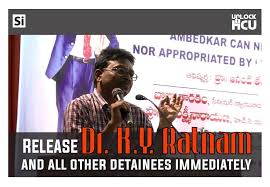
Why is Prof K.Y. Ratnam being targeted? Friends of Prof Ratnam

indexProf K.Y.Ratnam is the last person one expects to get arrested on charges of destruction of public property or provoking violence. So we were dismayed to find that he is one of the people arrested in UOH along with 27 young students and a faculty member in this week’s crackdown in the University.

But perhaps one should expect that he is on the watch-list of the current Vice Chancellor Prof. Appa Rao Podile. In 2001, Prof Ratnam, then an assistant warden of hostels, was targeted by administrative humiliation, which led to student support and the rustication of eight dalit students from the university. The current vice chancellor Prof Appa Rao Podile was then the chief warden of the hostels. He was the authority who handed out the humiliating posting to Ratnam. He has also been charged with pursuing the rustication of the nine dalit students. His antagonism with Ratnam therefore is well known.

Prof. Ratnam has been one among the SC/ST faculty who have extended whole hearted support to the Joint Action Committee for Social Justice in HCU formed after Rohith Vemula’s suicide two months ago. In the melee which led to his arrest, Ratnam was seen and heard pleading with the police not to be too harsh with the students. And this seems to be the ‘offence’ that he was arrested for. According to those who visited him in the Cherlapally prison he was beaten by the police in the van and in the police station too. And sustained injuries in his face.

Following his arrest he is likely to be suspended from the university. If this happens his course with 72 students is likely to remain unfinished. This would definitely trouble him, being the conscientious teacher that he is. He has had several dalit M Phil and PhD students successfully defend their work under his guidance over the past two decades. And his gentle and persuasive force towards rational thinking in the anti-caste struggles is too well known in the university and the states of Telangana and Andhra Pradesh too.

A few lines about his other academic credentials will not be out of place here. He started the Centre for Ambedkar Studies in the University of Hyderabad. And is the first teacher to take up Ambedkar’s writings in the curriculum and has taught the issue of caste and oppression in the department of political science. He has been part of a recent collective initiative that published a volume  analyzing and criticizing the attempt by the RSS to appropriate the thought of Ambedkar.

Conscientiousness, academic credentials and political commitment seem to be the crimes for which Prof. Ratnam is being targeted by Prof. Appa Rao Podile’s administration. Fortunately they are not crimes in the Indian Penal Code.

Friends of Prof.K.Y.Ratnam 
(R.Srivatsan, A.Suneetha, Gogu Shyamala and others) 

Statement by Concerned Faculty from The English and Foreign Languages University on the Police Crackdown at HCU

We, the concerned faculty from The English and Foreign Languages University, Hyderabad, strongly condemn the police brutality at the University of Hyderabad on 22nd March 2016, after the return of Prof. Appa Rao Podile, the Vice-Chancellor accused of abetting the suicide of the Dalit Research Scholar Rohith Vemula. As an academic community, we are extremely disturbed by the excessive interference of the state machinery, administrative conspiracies, the abuse of power and systemic oppression that prevail in many of the universities in India of late. A university should be a just and egalitarian space. But the suicides of Dalit students with the recent case of Rohith Vemula lay bare systemic structures of oppression and institutional legitimization of caste violence existing within Indian universities. Our university spaces need serious re-vamping to ensure equal opportunity, social justice and critical discourses. Continue reading Statement by Concerned Faculty from The English and Foreign Languages University on the Police Crackdown at HCU

A Fig-leaf Called ‘Vandalism’ by UoH Students: SC and ST Faculty Forum and Concerned Teachers of University of Hyderabad


For the past three days the news media has been circulating widely, stories about ‘vandalism’ by students of the University of Hyderabad that led to the police crackdown. Surprisingly little information is actually there on the actual context, timing, duration and nature of the vandalism. It appears that the claim that a group of students indulged in acts of vandalism is enough to justify a full scale war on the entire campus community of over 5000 students.  Yet this charge of vandalism is no more than a fig leaf . Continue reading A Fig-leaf Called ‘Vandalism’ by UoH Students: SC and ST Faculty Forum and Concerned Teachers of University of Hyderabad

“I used to feed fish to my widowed grandmother” by Buddhadeb Dasgupta: Soumashree Sarkar

This is an English translation by SOUMASHREE SARKAR of a column by Buddhadeb Dasgupta which appeared in the Sunday special supplement, Rabibashoriyo, of the Bengali daily Anandabazar Patrika on March 20, 2016 and can be found in the original Bengali here.

It was probably the month of November. Winter had set in firmly in a city that neighboured Kolkata. The quilts had come out even before that. Morning had not even broken and there was still a lot of sleep left to be slept when Ma yanked the quilt away from me and woke me up, “Don’t you remember who’s coming today? Get up and hurry, I’ve been calling you for the longest time, Khrushchev and Bulganin are coming, they might have reached already. My cooking’s almost done.” The words were pouring out of my mother’s mouth with frightening speed and excitement, all in the Dhaka’s native Bengali tongue.

Bathed in cold water, shivering through chattering teeth, and sufficiently clothes, we siblings went and stood in front of our mother. With a comb in hand, Ma sat on a chair, and neatly parted all our heads of hair.

I asked, “What does Khrushchev look like? What does Bulganin look like? The same rice-dal-fish curry that we eat – do they also eat that?”

Continue reading “I used to feed fish to my widowed grandmother” by Buddhadeb Dasgupta: Soumashree Sarkar

Nation and its Violences: Sanjay Kumar

Guest Post by Sanjay Kumar

Violent thoughts and deeds are increasingly getting justified in the name of Indian nation. A mob of lawyers has attacked students, teachers and journalists, right in the middle of a court complex in the national capital. Leaders of these patriotic lawyers were later caught bragging on camera about how they will next time throw bombs on anti-nationals. A young woman in Delhi has received emails and face book posts threatening her with acid attack and sexual assault, because she happens to be a sister of Umar Khalid, one of the organisers of the JNU programme, during which according to police anti-India slogans were raised. The mere being of this woman, and her defence of her brother, is enough of a provocation for many men and women of the country to justify the threat of ultimate male violence against women. Another man, Mr Adarsh Sharma put posters in the central district of the capital announcing an award of Rs 11 lakh for anyone who kills Mr Kanhaiya Kumar, the president of  the JNUSU, charged with sedition. Mr Sharma claims that his ‘blood boiled’ when he saw Mr Kumar’s much publicised speech after his release on bail. The popular movie Pyasa (1957) of Gurudutt had a song ‘Jinhen Naz hai Hind par vo kahaan hain’, which used the reality of social degradation to question celebrations of the nation. Sahir’s poem worked because it asked Indians to look at themselves in the mirror of public morality of the recently independent India. That mirror has been cracked for long. With the brazenly violent now claiming that their violence and threat to violence should really be the pride of the nation, we are now witnessing the final shattering of that mirror. Continue reading Nation and its Violences: Sanjay Kumar

निर्गुण देशप्रेम बनाम सगुण संघी राष्ट्रभक्ति

भारतीय जनता पार्टी की राष्ट्रीय कार्यकारिणी ने कल अपनी बैठक में एक फ़रमान जारी किया है जिसके मुताबिक ‘भारत माता की जय’ न कहना संविधान के प्रति असम्मान दिखाना है. इस कार्यकारिणी की बैठक में ‘राष्ट्रवाद’ का ढोल नगाड़ा तो खूब पीटा गया मगर कम-अज़-कम अख़बारों की खबरों से तो नहीं लगता की आंसू की एक बूद भी – घड़ियाली ही सही – किसी भी नेता की आँख से इस ‘राष्ट्रवाद’ के नाम पर चल रहे तांडव में मारे जा रहे लोगों के लिए बही हो. न ही ‘राष्ट्रवादी शोहदों द्वारा की जा रही क्रूर, घिनौनी और हिंसात्मक बयानबाज़ी पर ही कार्यकारिणी के पास कुछ कहने को था.

संघी राष्ट्रवाद का असली चेहरा. image courtesy, Mir Suhail

Continue reading निर्गुण देशप्रेम बनाम सगुण संघी राष्ट्रभक्ति

An Open Letter to Prof. Amita Singh from Kashmiri Students in JNU: Concerned Kashmiri Students in JNU

Guest Post by Some Kashmiri Students in JNU – See the End of the Post for Names

“Jab kendra main sarkar kamzor ya undecided hogayi to aap ko pata hai ki akhri dinoon main Manmohan Singh ji kuch ni kar rahe thei. State agencies koi kaam ni kar rahi thei. … Usi period main ye sab ghusein hain, jo Kashmiri militants hain aur ye saare hain. Ye usi period main in tatvoon ka yahan par entry hogaya hai. Varna JNU ki history main kabhi bhi is qism ki naare-baazi nahin hui. … anti-national matlab aisi naare-baazi jo desh ki akhandta  aur samprabuta  kei upar prashan chin uthayey. Aise kabhi naare-baazi nahin hui thi.”

When the government at the centre was weak and undecided, as you recall was the case in the last days of Manmohan Singh’s rule, no state agencies were doing their work…it was at that time that all these Kashmiri militants found their way in here (to JNU). It was in that period that these elements made their entry. Otherwise, at no time in JNU’s history have we heard this kind of sloganeering – of the anti-national type, meaning the kind of sloganeering that brings the akhandta, the inviolate integrity and samprabhuta/sovereignty of the country into question. This kind of sloganeering never happened before

(An excerpt from Prof. Amita Singh’s interview to the Uttar Pradesh Patrika newspaper, transcribed from its youtube upload) 

Dear Prof. Amita Singh,

The above quote is to remind you about the prejudiced, baseless, and ill-founded allegations against Kashmiri students made by you. In your clarification (through media), you claimed that “the interview was an informal one” and that you were not aware of it being put on a website.

Continue reading An Open Letter to Prof. Amita Singh from Kashmiri Students in JNU: Concerned Kashmiri Students in JNU

Mera Piya Ghar Aaya: Umar Khalid and Anirban Return to JNU and the Students’ Struggle

I have come home a little while ago from Jawaharlal Nehru University after listening to Umar Khalid and Anirban Bhattacharya take back the night. As I drove home  through the quiet streets of Delhi after midnight it occurred to me that somebody should whisper into Narendra Modi’s ear that he should now start stocking up on sleeping pills. (Maybe Baba Ramdev’s enterprise makes some that he could prescribe to the Prime Minister, unadulterated). With young people like Umar and Anirban as his adversaries, the Prime Minister can only have sleepless nights ahead of him. It is perhaps fortunate for him that the team from Madame Tussaud’s came by and did their job yesterday. Because from now on, his real skin tone will only envy the lustre of his wax work. Umar and Anirban, and their friends, took away the little remaining shine that Modi had left at midnight.

Continue reading Mera Piya Ghar Aaya: Umar Khalid and Anirban Return to JNU and the Students’ Struggle

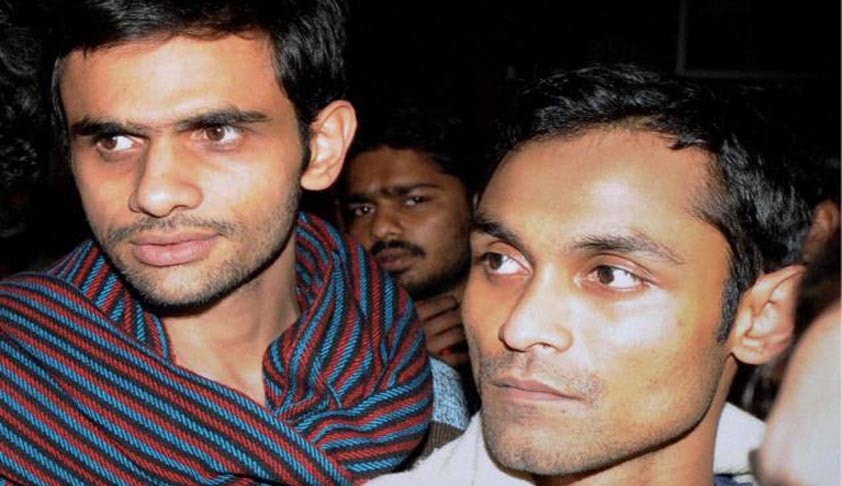
Save Democracy, Release Umar, Anirban and SAR Geelani, Enact Rohith Act – JNU Marches again in Delhi

For the fourth time since the early February, students, faculty and their friends marched in Delhi. Once again, there were thousands of people, walking from Mandi House to Jantar Mantar. This time, there was focused attention on the demand for the release of the detained JNU students – Umar Khalid and Anirban Bhattacharya, the DU Professor S.A.R Geelani, solidarity with JNU Prof. Nivedita Menon and the poet-scientist Gauhar Raza against their media trials, and a direct attack on the creeping fascism of the Modi regime. Here are some moments from this march.

(Thanks to Aniket Prantdarshi, Kavita Krishnan, Samim Asgor Ali and Anish Ahluwalia, ‘We are JNU’ for their photos and videos, which I have taken from their Facebook pages and Youtube Channels)

Continue reading Save Democracy, Release Umar, Anirban and SAR Geelani, Enact Rohith Act – JNU Marches again in Delhi

Of False Binaries and ‘Dirty’ Politics: Divya Kannan

This is a guest post by DIVYA KANNAN

Manu Joseph’s latest commentary regarding the ongoing crisis in Jawaharlal Nehru University (JNU) and the larger debate on Indian ‘nationalism’ smacks of crass elitism, as a journalist pithily pointed out online. If one were to use a ‘different term’, as Joseph himself keeps venturing to do in his writing, it is simply nauseating. This is for several reasons. To begin with, he harbours a convoluted understanding of what research in higher educational institutes entails, the nature of student politics, the lasting dangers of right wing assaults, and the pathetic misrepresentation carried out by the media, including himself, of the pressing issues in this country. Continue reading Of False Binaries and ‘Dirty’ Politics: Divya Kannan

हममें से देशद्रोही कौन नहीं है?

P

राष्ट्रवाद या यूं कहें कि ऑफिशियल राष्ट्रवाद इन दिनों सुर्खियों में है. एक तरफ ‘भारत माता की जय’ का नारा लगाते हुए और दूसरे ही सुर में मां-बहनों के नाम अपशब्दों की बौछार करते हुए लंपटों के गिरोह हर स्वतंत्रमना व्यक्ति को लातों-मुक्कों से, या जैसा कि बीते दिनों इलाहाबाद की कचहरी में देखने को मिला, लोग लाठियों की मार से राष्ट्रवाद का असली मतलब समझा रहे हैं. शांतिपूर्ण प्रदर्शनकारियों पर टूट पड़ते दिख रहे इन निक्करधारी गिरोहों के साथ जगह-जगह खाकी वर्दीधारियों की भी मौन सहमति नजर आ रही है. और दिख रहा है कि आप अगर किसी को मार भी डालें और सफाई में यह कह दें कि वह पाकिस्तान जिंदाबाद कह रहा था तो उसे माफ कर दिया जाएगा.

विडंबना ही है कि इन दिनों देश की किस्मत के आका कहे जाने वाले लोग नकली ट्वीट की बैसाखी के सहारे ऐसे तमाम उत्पातों, उपद्रवों और उद्दंडता को वैधता का जामा पहनाते नजर आ रहे हैं. आए दिन हो रही संविधान की इस खुल्लमखुल्ला अनदेखी को लेकर संविधान को सबसे पवित्र किताब का दर्जा देने वाले वजीर-ए-आजम मोदी भी अपना मौन बनाए हुए हैं. अंधराष्ट्रवाद की आंधी चलाने की तेज होती कोशिशों को देखते हुए बरबस राजेश जोशी की बहुचर्चित कविता की पंक्तियां साकार होती दिख रही हैं कि ‘जो इस कोलाहल में शामिल नहीं होंगे मारे जाएंगे.’

(Read the rest of the article here : http://tehelkahindi.com/who-is-not-anti-national-among-us-opinion-by-social-scientist-subhash-gatade/?singlepage=1)

Encounters With the State and Other Comedies: Asmit Pathare

This is a guest post by ASMIT PATHARE

In response to JNUSU’s call for observing 2nd March as International Day of Protest and to demand justice for Rohith Vemula and the release of the then three arrested students, numerous organisations decided to gather outside Dadar station (E) and carry out a peaceful protest. Among them were All India Students’ Association (AISA), All India Students’ Federation (AISF), Students’ Federation of India (SFI), Democratic Youth Federation of India (DYFI), All India Youth Federation (AIYF), University Committee for Democracy and Equality (UCDE) and others. The protest was supposed to begin at 5pm. Continue reading Encounters With the State and Other Comedies: Asmit Pathare

St Louis Universities Stand With JNU: A Statement


Kanhaiya Kumar, the president of the Jawaharlal Nehru University Student Union (JNUSU) in New Delhi, India, was arrested on Feb 10 on charges of sedition and criminal conspiracy. Kanhaiya was present at a meeting on the evening of Feb 9, where incendiary slogans were allegedly raised. Seven other students were also charged. Mr. Kumar is not accused of raising the slogans; indeed the identity of the person(s) who raised the slogans remains a mystery. Charging a student leader for sedition for another’s mere sloganeering is prima facie absurd. Further, the assault of Mr. Kumar, other students and faculty, and even journalists, in court premises by lawyers and others sympathetic to the government, do not inspire confidence in a fair judicial process. Continue reading St Louis Universities Stand With JNU: A Statement

Conversations on Sedition: Ritanjan Das and Abhijit Sengupta

The weeks following the February 9th incident within the JNU campus have been nothing but eventful in India’s social and political discourse. At least, this is something most of us will agree on, no matter which side of this increasingly impermeable “fence” we sit on.  There have been arguments, counter arguments thrown from each side to the other, names have been dug up and hurled across, evidence in favour of what purportedly happened or did not happen have been put up by each side for the other to see. Videos have been made, unmade; cartoons have been drawn, redrawn; political figures have been idolised, lampooned; students have been demonized and idolized; dangers of the increasing menace of nationalism and anti-nationalism have been stuffed down one’s throat through the so called idiot box or the smart net.

In the midst of this deluge of opinions and ideas, information and misinformation, the question that some have raised is, are both sides losing the plot a bit? What exactly are we discussing or debating so vociferously? Are we really listening to the other sides’ arguments, or are we just hearing a few words we want to hear and voicing our own opinions in pre-designed responses? These are some of issues we are highlighting in this piece, hopefully in a slightly different format than what we are used to elsewhere.

What follows is a conversation between two intelligent people from opposite sides of the fence. The conversation is based on some real ones, which the authors of this piece had actually engaged in with different individuals over the last few weeks. We have attempted to distil the central ideas of both sides and present it to the readers. We cannot and have not included every aspect of the ideas and opinions of both sides, and we will not include the abuse. But what we have attempted to capture, is a reasoned and rational attempt at understanding the real problem(s), as understood by each side. Continue reading Conversations on Sedition: Ritanjan Das and Abhijit Sengupta