The cast in this short film: Sharma- Rajesh, Mishra- Nishant, Choudhury- Roshan, Dalit- Dinamani
Camera- Babita, Script and Direction- Dinamani (dina_bhim@yahoo.co.in). Special thanks to Anoop for making the office available for the shoot.

The cast in this short film: Sharma- Rajesh, Mishra- Nishant, Choudhury- Roshan, Dalit- Dinamani
Camera- Babita, Script and Direction- Dinamani (dina_bhim@yahoo.co.in). Special thanks to Anoop for making the office available for the shoot.

Less than a month before the 2009 Lok Sabha elections, the wedding of a top Uttar Pradesh bureaucrat’s daughter at the Taj Hotel in Lucknow presented senior journalists invited from Delhi with an opportunity to interact with the state’s leading bureaucrats—who are, in Chief Minister Mayawati’s reign, more important than politicians. For a select few celebrity editors, there was even a rare durbar with Mayawati herself, who carefully arrived after the governor had left, presented flowers to the newly married, and proceeded to a barricaded enclosure to meet India’s opinionmakers. I don’t know what the conversation was like, but I saw the journalists’ lips move more than hers.
After the meeting was over, I asked one celebrity TV anchor what he thought the election results were going to look like. He said the Mayawati-led Bahujan Samaj Party (BSP) was very strong, and predicted she could win 50 of the 80 seats the party was contesting. The Delhi media’s awe of Mayawati was at a historic peak; they had taken her prime ministerial ambitions seriously. I told this studio journalist that the buzz in Lucknow was that the Congress could spring a surprise. “No chance,” he said. “They don’t have any organisation. Azharuddin is my friend and he called me to say he needs my help. Even a celebrity like Azharuddin is going to lose!” Read More…
This is the text of a pamphlet released by the PASMANDA INTELLECTUALS FORUM, Lucknow. It comes to us via Khalid Anis Ansari
पसमांदा समाज की मुख्य माँगें
हमने उत्तर प्रदेश विधान सभा चुनाव, 2012 के मद्देनज़र पसमांदा (दलित और पिछड़े) मुसलमानों की पांच बड़ी मांगें तय की हैं. आइए, आगे बढ़ने से पहले हम इन मांगों पर नज़र डालें:
Continue reading उत्तर प्रदेश चुनाव 2012 और पसमांदा मुस्लिम समाज
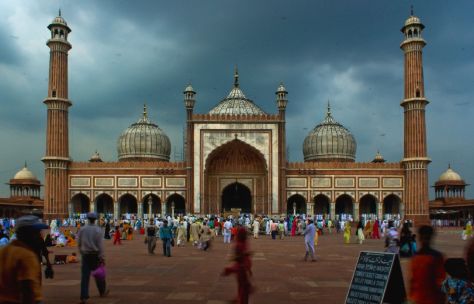
The Imam of the Delhi Jama Masjid has issued a statement that calls upon the Muslim voters of Uttar Pradesh to vote for the Samajwadi Party of Mulayam Singh Yadav. A whole lot of poll experts are going to rejig their forecasts to factor in this new and hitherto unexpected development.
We would be told that this call is going to alter the political equations in UP in a very profound manner. We will be told that the Muslim electorate is going to shift to the SP and that this shift will create serious problems for the Bahujan Samaj Party in its bid for a comeback and for the Congress that is making serious efforts to emerge as Number Two.
The assumption behind these two assertions is that Muslims who voted for these parties in the last election are going to desert them now because of the statement issued by the Imam of Jama Masjid of Delhi.
Before the psephologists get down to business with their abacuses, their TINA factor analysis, their complex equations dealing with social demographics, voter fatigue, identity markers and what have you, it might be useful for them to contemplate three questions: Continue reading You can’t show light to those who have chosen darkness: The Case of Imam Bukhari
Guest post by RAJU MOZA

It was in the month of January in 1990 that the onset of militancy in Kashmir resulted in the exodus of Kashmiri Pandits to Jammu, Delhi and elsewhere. Every year since then, January brings back the question of their return to their homes, in the press and increasingly on the internet.
There was something different about it this year. Several recent incidents have given the question of return a new impetus. Continue reading Why Kashmiri Pandits May Never Return to Kashmir: Raju Moza
Guest post by SAJAN VENNIYOOR
In the first few weeks of the year 2012, when members of the Muslim, Christian and Sikh communities were successively offended and humiliated, Hindus are feeling left out.
Even as the Hindu community was reeling under the refusal by a Russian court to ban the Hare Krishna version of the Bhagavad Gita, the year began well for Christians when Oscar-winning composer AR Rahman offended their sentiments by using the word ‘Hosanna’ in a song for Ekk Deewana Tha. The Catholic-Christian Secular Forum, which in the past has been shamefully humiliated by other films, many of which were not released in India, demanded the deletion of the H-word “claiming it is a sacred term for Christians and Jews and should be used only in prayer.” They admitted it was negligent on their part not to have taken offence when the song was released with the same hurtful lyrics in a Tamil film in 2010. Continue reading Hindus offended by lack of offence: Sajan Venniyoor
This guest post by MEENA MENON is an extract from her recently published book, Riots and after in Mumbai- Chronicles of Truth and Reconciliation
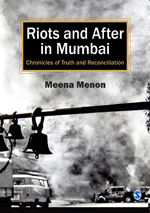
It was all in the eyes. Beneath the finely drawn brows, they were haunted and distant. For Naina Bane, the night of 8 January 1993 will remain a night of absolute terror. Her escape was miraculous as was her recovery. It took me several months and wrong leads before I met her finally at a family reunion in the suburbs. Dressed in a long mustard coloured ‘maxi’, her hair was drawn back tightly. I found it hard to recognize the same girl who was almost burnt alive on that fateful night in Gandhi chawl. Now 40, there is a faraway look about her and her eyes widen when I ask to speak to her. She got married in 1996 and lives outside Mumbai. Her 6-year-old son keeps her busy. Her husband worked for a mill which closed down, a typical story in Mumbai. He was a badli (temporary worker) and he lost his job. He now works as a watchman. Continue reading The Gandhi Chawl Incident: Meena Menon
Oh, It’s silly season again. (Has it ever not been silly season? Silly me for making a silly rhetorical opening to this post). Anyway folks, aam aur khas janta, baba log and bibi log, it’s time, once monotonously again, for quarantines and piety, for bans and shoe-throwing contests, for frothing at the mouth and froth on the telly. Its Rushdie-Nasreen-Husain Time, again! Ta-Raa! And like a ‘sanjog’ made by a pretend-god in a made up marquee heaven, the stars of ‘Rushdie Time’ are crossed with the suddenly brightly shining stars of what would have otherwise been a lackluster, effigy-tarpaulined, mid-winter provincial election. Ta-Rant-Ta-Raa! Not even a Saleem Sinai or a Gibreel Farishta, let alone a jeeta-jagtaa Salman Rushdie in his weirdest magic-realist moment could have imagined himself mixed up in a plot as diabolical as this one. If this was a court case we could call it Satanic versus Moronic. Whatever it is, there is no denying that it is a P2C2E – a ‘Process Too Complicated To Explain’. But explain we must. Process we can. Pyaar kiya to darna kya?
Continue reading Satanic Versus Moronic: How Salman Rushdie Lost the UP Election
This release comes from the PEOPLE’ S UNION FOR CIVIL LIBERTIES, RAJASTHAN
16 January 2012, Jaipur: PUCL strongly condemns Muslim organisations, the Congress and the BJP for opposing Salman Rushdie’s proposed visit to Jaipur
Some Muslim organisations have opposed Salman Rusdie’s participation in the Jaipur Literature Festival. Leaders of the Congress and the Bhartiya Janta Party have also come out strongly in opposition to Rushdie’s visit. Some newspaper reports have carried announcements that Rushdie could be forcibly prevented from coming and attending the literary event.
The opposition is not merely ideological but is also by threatening to disturb law and order. The Rajasthan unit of the PUCL expresses deep concern at such announcements. Such regressive threats are not only an attack on the individual’s right to freedom of speech and expression and a violation of rights granted by the Constitution of India. Such threats also promote communal disharmony, if not deliberately seek to widen communal rifts. Continue reading PUCL condemns those opposing Salman Rushdie’s visit to Jaipur
In September last year, the Tamil Nadu police killed six Dalits in a firing incident in Paramakudi town of Ramanathapuram district. This guest post by RAVIKUMAR is a set of six poems on the Paramakudi killings. The English translation by RAVISHANKER is followed by the Tamil original. For more on the incident, see articles in Kafila archives by V. Geetha and Bobby Kunhu and over at Atrocity News, a fact finding report (.pdf).
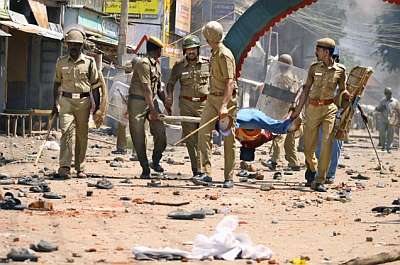
This release comes from ALL INDIA CHRISTIAN COUNCIL comes to us via John Dayal
All India Christian Council concern at Srinagar Sharia court statement against Christian pastors
New Delhi, 13 January 2012
The All India Christian Council is deeply disturbed at the Srinagar based Sharia Court issuing a statement against Christian pastors Jim Borst and C M Khanna Srinagar, Jan 11: Supreme Court of Islamic Sharia Wednesday indicted Christian Pastor C M Khanna and Dutch national, Jim Borst for their involvement in luring people to convert their religion. The Sharia court has threatened it will issue a sentence shortly. Such statements can encourage extremist elements to indulge in violence, the Council fears. Continue reading On the Srinagar Sharia court’s statement against Christian pastors: AICC
This release comes from the PEOPLE”S UNION FOR CIVIL LIBERTIES
The People’s Union for Civil Liberties (PUCL) views it with deep concern that some organizations have demanded ban on entry of Salman Rushdie in the country. The present call is illogical, preposterous and untenable as the writer has visited the country for several times after the Satanic Verses book controversy. Continue reading Demanding a ban on visit of Salman Rushdie to India is outrageous: PUCL
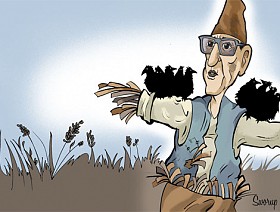 Kanak Mani Dixit’s efforts to portray 1990s as blissful, and Maoists to solely blame for all of Nepal’s ills, is revisionist history, facts be damned. Dixit’s rejoinder (‘The perils of executive presidency’, Jan 5) to my column (‘A question of form’, Jan 4) reveals fundamental differences in how we see recent Nepali history. The gist of Dixit’s rather simplistic world view is that the 1990s were wonderful and the Maoists destroyed it and are all evil. Let us examine this in more detail.
The 1990s
The 1990 constitution opened up Nepali society; it guaranteed fundamental freedoms and allowed groups to organise themselves at all levels; and economic policies pursued then led to the creation of a bigger middle class.
But there were two fundamental drawbacks of that period, which is what led to its eventual breakdown. Continue reading Nepal – The Nostalgia for 1990
An Appeal Signed by Tamils on the Eviction of Northern Muslims 21 Years Ago
Since the end of the war in May 2009, it has become important for all ethnic communities of Sri Lanka to re-examine and reevaluate their past. It is through this process of self-reflection that some of the major issues that confront state and civil society today can be meaningfully reconceived and reconfigured for the future.
While the war has drawn to a decisive close, the ethnic conflict is far from over and demands solutions short- and long-term. The quest for a viable political solution from a majoritarian state is a primary concern for the Tamil community today. Continued insecurity in the face of militarisation is an urgent matter. Armed militancy and a political culture of violence have further eroded into the democratic fabric of society. Resettlement and rehabilitation remain unresolved problems. Distribution of land, access to state and social networks, language parity, devolution of power, inter-ethnic reconciliation and the continued presence of gender, class and caste stratifications are a part of the political landscape today.
It is in this regard we raise the question of the eviction of the Northern Muslims 21 years ago. In October 1990, the LTTE evicted roughly 80,000 Muslims from the north in the wake of increasing hostilities and armed conflict in the north and east. The LTTE, which was militarily dominant in the north at that time and controlled large swathes of territory, ordered an entire community to leave the province in two days. In the Jaffna peninsula they were given just two hours’ notice. Subsequent to the eviction, several attempts were made by institutional mechanisms to facilitate the return of the communities to their original lands. During the Ceasefire Agreement (CFA), there were renewed attempts, particularly through the Secretariat for Immediate Humanitarian and Rehabilitation Needs (SIHRN), to negotiate the return of the Muslims with the Sri Lankan state and the LTTE.
In the current political landscape, the eviction of Muslims from the north and their return and resettlement pose a distinct political challenge to civil and political societies of the Tamil community. Continue reading An Appeal to the Tamil Community and its Civil and Political Representatives
Guest post by RAHUL RAO
It’s not clear what (or whether) David Cameron was thinking when he suggested recently that British aid should be linked to respect for LGBT rights in recipient countries. Almost immediately, the statement evoked homophobic responses from political and religious leaders in Tanzania, Uganda, Ghana and elsewhere. Perhaps more importantly, African social justice activists (including many of the leading LGBTI activists on the continent) advanced a comprehensive critique of ‘gay conditionality’ in a letter criticising Cameron’s statement, signed by 53 organisations and 86 individuals. Warning that the refusal of aid on LGBT rights grounds could provoke a backlash against queers who would be scapegoated for reduced aid flows, the critics have pointed out the insidious ways in which such initiatives could drive a wedge between queers and a broader civil society in recipient countries, besides reinforcing perceptions of the westernness of homosexuality as well as the imperial dynamics already prevailing between donor and recipient countries.
Continue reading On ‘gay conditionality’, imperial power and queer liberation: Rahul Rao
Some musings here about the liberation of Goa from Portugese rule by India:
But the interaction between Portugal and India also produced vibrant cultural hybrids in architecture, music and food. Among the state’s most famous dishes is the spicy vindaloo, a curry whose name is thought to be a contraction of the Portuguese phrase “vinho de alho,” or garlic wine. Besides, as Mr. deSouza pointed out, Goa was where the influence of the Enlightenment and the Renaissance in Europe was felt much before it reached other parts of India. As a result, the practice of sati – or widows immolating themselves on their husbands’ funeral pyres – was abolished in Goa 200 years before the British banned it in the rest of India. [Naresh Fernandes]
And on Portugese language, 50 years after the Portugese were sent back to Portugal:
The popular history of the Portuguese period in Goa has largely been restricted to the gory tales of the initial conquest of the island of Goa, of the Inquisition, and the dramatization of the anti-colonial episodes in the territory’s history. To a large extent, this nationalist history dissuades Hindus from subaltern castes from studying the language. This has ensured that it is solely dominant-caste narratives that are incorporated into the histories of the territory, preventing alternative and liberatory narratives to emerge from a re-reading of the texts and narratives of the period of Portuguese sovereignty over the territory. It is little known for example, that the knowledge of Portuguese is critical to the bahujan challenge to Hindu upper-caste groups’ monopolistic control of the Goan temples. This monopolistic control of the temples was forged in particular through these latter groups’ knowledge of Portuguese. [Jason Keith Fernandes]
Guest post by BOBBY KUNHU

Between the occasion of the memorial anniversary of Immanuel Sekharan that falls on 11th September and that of Muthuramalinga Thevar on 30th October are 30 odd road kilometers, 49 days, incalculable castiesm and this year (2011) 7 more Dalit lives. Almost the entire Big Media portrayed the 11th September, 2011 murders at Paramakudi as retaliatory State violence to an unruly and violent mob – to the convenient delight to the defenders of the State administration. Dissenting voices mostly Dalit – located the violence squarely where it belongs – in caste. In his note “Paramakudi Violence: Against Dalits, Against Politics”, inthe November 5th, 2011 issue of the Economic and Political Weekly, Muthukaruppan Parthasarathi clearly outlines the historical and current context in which the this year’s spate of violence that claimed 7 lives happened!
Continue reading A Caste(d) Drive – Paramakudi to Pasumpon: Bobby Kunhu
I want to begin writing this by wishing a very happy Christmas to Reverend C.M. Khanna, a Protestant presbyter in the All Saint’s Church, Srinagar, Indian held Jammu & Kashmir, who has been facing a situation that no free man should ever have to countenance. He has had to face an arrest (though, thankfully now he is out on bail) and social ostracism for doing nothing that can be construed as criminal or harmful to any individual or society at large. I write this in solidarity with him and his family, and with all those who have been harassed for their faith, or for their lack of faith, anywhere.
(Please follow this link for a comprehensive report on Rev. Khanna’s situation, in the form of a press note submitted by John Dayal)
I know that many people in Kashmir continue to be in prison for reasons of conscience, because they want to be free of the occupation. And this Christmas, my greetings are to them and to their families too. I know that Reverend Khanna is out on bail now, and that many others are not. And I hope that they too will see freedom soon. I am writing about Reverend Khanna not because I value his freedom more than that of others incarcerated in Kashmir, but because if we value freedom, we should not have to measure its value, or calculate its worth depending on who happens to get bail, and who happens to rot in jail. Continue reading Merry Christmas, Rev. Khanna: Thinking about Freedom and Intolerance in Kashmir
This guest post by HASEEB ASIF is in Urdu, in Roman script
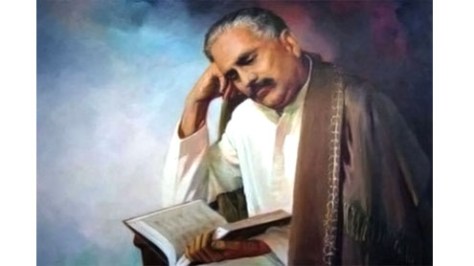
Islami Jamhooriya Pakistan ki tareekh Hindustan se bohut purani hai. Balkay Islam se bhi purani hai. Jab aathveen sadi mein Muhammad Bin Qasim Islam phelane bar-e-sagheer tashreef laye tau ye jaan ker sharminda huwe ke yahan tau pehle hi Islami riyasat maujood hai.
Yahan kufr ka janam tau huwa Jalaaludin Akbar ke daur mein, jo Islam ku jhutla ker apna mazhab banane ko chal diya; shayid Allah-ho-Akbar ke lughwi maani le gya tha.
Baharhal, in kafiron ne butparasti aur mehkashi jaisay gheir munaasib kaam shuro kerdiye aur apne aap ko Hindu bulaane lage. Sharaab ki aamad se Pakistan ke Musalmanon ki woh taaqat na rahi jo tareekh ke tasalsul se honi chahiye thi. Iski vaja ye nahin thi ke Muslaman sharaab peene lag paray the, balkay ye kay unki saari quwat-e-nafs sharab ko naa peene mein waqf hojati thi, hukmarani ke liye bachta hi kya tha.
Is ke bawajood Musalmanon ne mazeed do sau saal Pakistan per raaj kiya, phir kuch dinon ke liye angrezon ki hakoomat agayi (hamari tafteesh ke mutabiq yehi koi chalees hazaar din honge).
San 1900 tak Pakistan ke Musalmanon ki haalat nasaaz hochuki thi. Is dauran aik ahem shakhsiat hamari khidmat mein hazir huwi, jis ka naam Allama Iqbal tha. Continue reading Pakistan ki Tareef: Haseeb Asif
Guest post by GITA SEHGAL
10 December was Human Rights Day, anniversary of the Universal Declaration of Human Rights. Does the idea of human rights with their firm assertions, their belief in the ‘rule of law’ and their globalised vision, remain relevant in the world? The idea that there are absolute standards has come under attack from both the left and the right. The philosopher Alasdair MacIntyre , author of ‘After Virtue’, said, Natural rights and self evident truths proclaimed in the American declaration of independence are tantamount to belief in witches and unicorns. While from the left, in ‘Human Rights and Empire’, Costas Douzinas has called human rights the political philosophy of cosmopolitanism and argued that human rights now codify and ‘constitutionalise ‘ the normative sources of Empire. Continue reading Does the Universal Declaration of Human Rights impose Western values?: Gita Sehgal
Lagaan was a groundbreaking film, but a Bollywood film nonetheless. My favorite song-dance sequence is the one where the villagers, well Gauri and Bhuvan and friends, celebrate Krishna’s birthday. In the song, the girl complains that Radha is anxious about Krishna’s philandering ways and the boy replies that Radha should be understanding because there’s no one else in Krishna’s heart but Radha.
When the meaning of the song is explained to her, Elizabeth asks Gauri: Is Radha Krishna’s wife?
Oh no, Krishna’s wife is Rukmini!
Of course Radha-Krishna are anything but married. Imagine the shock the Victorian girl would have felt upon realizing that the villagers were celebrating an extra-marital affair with such fanfare.
It is not just that Bollywood village in the high noon of Raj. Gita Govinda and other songs celebrating Radha-Krishna are sung in every modern Indian language. And not just in India. Songs on the theme were thriving in an unexpected place, in an unexpected time. Among Bangladeshi youth, in the early years of this century, when the country seemed to increasingly Islamicising. Partly influenced by the music coming out of the diaspora in Londonistan, songs like this one, celebrating the union of Radha-Krishna in the Nikunja Temple became massive hits.
Over the fold, let me note a few examples of Bangla rock – and let’s not be pedantic here, I’ll use rock as a shorthand for western-influenced urban music, including pop, reggae, hip hop and other genres.
 KAFILA - COLLECTIVE EXPLORATIONS SINCE 2006