The entry to a temple in Gunjmandi. All photos by Shiraz Hasan
In the early 19th century, the British made Rawalpindi the central seat of military power as they aimed towards Afghanistan. This was in line with their strategic approach towards the Russian Empire in order to enjoy and retain complete control over central Asia. Known as the Great Game, the conflict continues today in another form. Continue reading The abandoned mandirs of Rawalpindi: Shiraz Hassan→
There’s a time for everything. When a cartoonist is being arrested for his cartoons, for cartoons that caused no harm, incited no violence, killed no people, then do you discuss his art or his incarceration? Continue reading Aseem Trivedi and the guardians of good taste→
Turn on the television any given day now, and you will be greeted by the news-media in unison informing you about the psychosis of fear—“north east fear/scare” is a useful shorthand—that seems to have gripped some of our fellow citizens. The numerous characterizations, all of which are variations on a theme, are not only ill-informed, they are also wholly inadequate and directionless. What does it mean to say that north-easterners are in the grip of fear, running away herd-like to their corners of the home-world? The bovine image, though useful in the sense of visualizing the sheer numbers involved, doesn’t allow us to think beyond.
This piece is an attempt in that direction. The fear is real, it is palpable on the railway platforms and at airports of major cities, and it surely has had the potency to disrupt a large number of people in the steps and motions of their daily lives. Others, including on Kafila, have written about the contentious issue of borders and migrants, of numbers and mutable identities; The Hindu has featured a series of interesting articles under the Sunday Story section, delineating the central role of information-technology and communication—technology whose role itself has radically transmuted amidst the last few months of the troubles, where we have seen the emergence of the cellphone screen as the new, unchartered frontier of radical, affective simulacra. Fingers have been raised, especially by our ever-articulate military-intelligence-scholarly community, against the customary foreign hand, and many of their accusations, might, in the days ahead, speak their own truth.
I am utterly shocked and pained to read about the violent rally that many Muslims took out at Azad Maidan in Mumbai on 11 August 2012 in protest against the recent communal carnage in Assam and Burma. More than the accidental death of two men and 50 injured in yesterday’s protest, what alarmed me was the public anger targeted on the media for “not reporting about the violence against Muslims in Assam and Myanmar”. Several vans of TV channels and their equipment were smashed or burnt besides a number of police vehicles destroyed. Of course, the authorities are still probing as to who really began the violence in an otherwise peaceful rally (and we are open to the results of such a probe). But my worst fear came true with this assertion of one of the protesters in a newspaper report: “Why is the media not covering Burma and Assam? We learnt about the incidents from videos posted on the Internet.” This seems to be a very disturbing statement on various accounts. Of course, the media can sometimes be biased, and the Muslims do feel victimised by it all the time. But are the random videos and images posted on the Internet any less biased or misleading? Continue reading How to start a riot out of Facebook: Yousuf Saeed→
Set in 2002, shot in 2009, Aamir Bashir’s film Harud will be in select PVR cinemas on Friday, 27 July. Harud is clearly inspired by Iranian films which manage to say a lot without saying much. Like a lot of Iranian cinema, a child is at the centre of the film. The brilliant acting by Shahnawaz Bhat, who plays the protagonist Rafiq, makes the film. In the expressions on his face there is ambiguity and wonderment as much as there is humiliation, helplessness and a desire to do something to change things around him. Here is a film about Kashmir that does not begin with beautiful landscape and does not end with a big encounter between militants and forces. This is not a film that seeks to explain the Kashmir conflict – rather, it takes you inside the lives of ordinary people and how they faced the madness of a conflict. Regardless of what your views on Kashmir are, Harud succeeds in making you empathise with Rafiq and others around him. That, for any narrative on Kashmir, is no small achievement.
It is a minute and a half long, and from the moment you see it, you will know that there is something sinister about it—a scenario of forced forgetfulness. It is displacement incarnate, and what is it doing, this aesthetic of obscenity? Is this retribution or charity, or retribution through charity, the developmental discourse of murderous sustainability through erasure? You will be puzzled and worried, harried and then it will make you sleep again in pious numbness, for isn’t the world—its deep blue sky and crystal fluid and cleansing sunlight, and bright flowery faces, its innocent time—just so beautiful! You will find that you cannot respond to it, physically, humanly, for it is not receptive to the organic. It cannot be mediated. It is a ghoul, perched to haunt and hypnotize us out of the memory of its past terrors. You remember, lenore, and wasn’t it to be nevermore? It is an electrical transmission and nothing more, or is it? It is a triumph of pre-postmodern, oily chic, so cloaked in ancient blood, that the blood has caked and turned black and fallen off, revealing the identical colour of the master’s heart, now you see it, now you don’t. The laceration has been hidden by the three-day apoptosis—the extra-cellular matrix, the forgetful memory’s collagen. But you will need to dig outward and inward from here, and very deep. It is there on my screen, this light of blood-lust, “Vedanta: Creating Happiness”, and every time a new or repeated tale from half way across the world is beamed, news every quarter of an hour, this monstrosity accompanies those facts like some leech feeding on reality. You remember Sontag, and isn’t she who had her way with those words: “Now there is a master scenario available to everyone. The color is black, the material is leather, the seduction is beauty, the justification is honesty, the aim is ecstasy, the fantasy is death.”
(A shorter version of this review appeared in Tehelka)
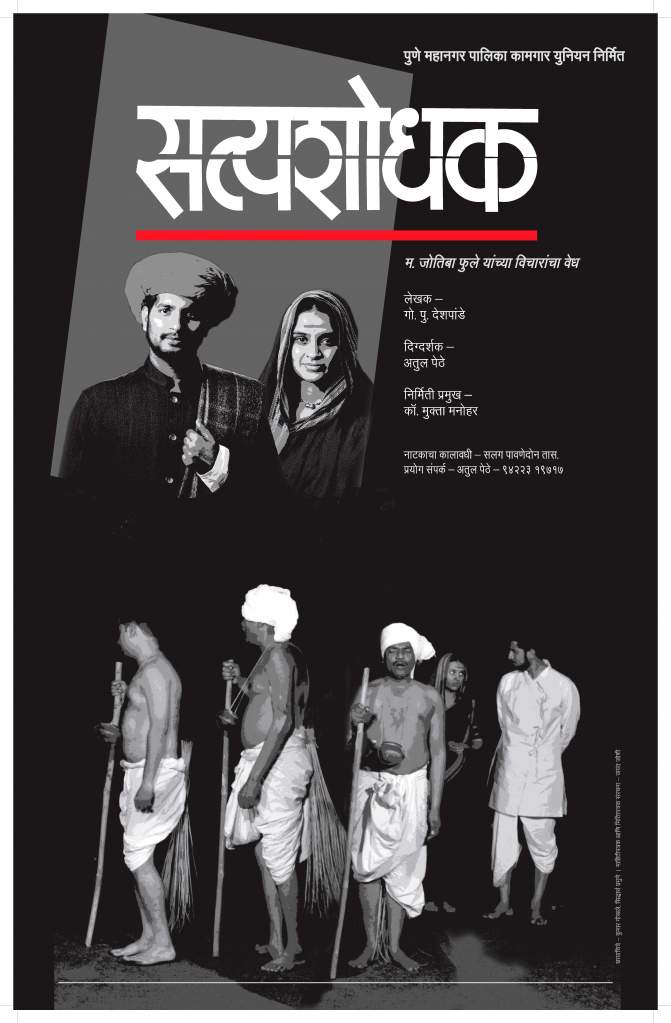
Writer: G P Deshpande
Director: Atul Pethe
Performed by Pune Safai Karmacharis Union
It was apt that a landmark production of G P Deshpande’s 1992 play Satyashodhak on the life of the 19th century anti-caste crusader Jyotiba Phule was performed in a week that witnessed the killing of the head of the Ranbir Sena – a week in which we were reminded that the bitter legacy of caste haunts us as strongly as ever. It was unusual however, that the performance should be held at the recently-opened May Day café and bookstore in Delhi – a space dedicated to the different and more hopeful legacy of the international working class movement, and located close to the heart of a former industrial district in a city that practices careful amnesia about its working classes. It is entirely unusual further that the performers were both Dalit and members of the Pune Municipal Safai Karmacharis Union. While the ancient, poisoned streams of caste and class have often overlapped on the subcontinent, they have not, as we are aware, produced unified or even similar political responses.
A petition from an organization called Change India invaded my Facebook wall today right before – rather ironically, it turns out— my morning auto ride. The petition is filed under a category on the site called “petitions for economic justice.” When you open it, the image pasted below opens. A sharp fanged, dark skinned “auto-rakshasa” demands one-and-a-half fare. The commuter is “harassed.” The petition that accompanies this image urges the ACP of police to create “an efficient system” so that complaints made to report auto-drivers who overcharge or refuse to ply can be tracked. How, it asks, can “concerned Bangalorean citizens” expect “justice” if their complaints are not tracked? We all must, it urges, “join the fight.”
Let me first say quite clearly that I do not mean to undermine the intentions and frustrations of those who launched this campaign and, yes, when the meter goes on without asking, it eases a morning commute significantly. The question is: if this does not happen at times (and indeed it doesn’t) then why is this so and what does one do about it? There is a lot to be said about the economics of the issue itself and I welcome others reading who know more to write about it more extensively. But this piece is not about that. It is about the campaign itself and how we articulate political questions in our cities. It is fundamentally about the easy, unremarked way in which a working urban resident and citizen – who is also, after all, a “fellow Bangalorean” and concerned with “economic justice”– can be termed and portrayed a “rakshasa” as if it were a banal utterance.
During a recent trip to Lahore, I visited the Sang-e-Meel bookshop on Lower Mall Road in search of K.K. Aziz’s The Coffee House of Lahore. Happily, the store was well stocked with the late historian’s final work, and I spent the afternoon reading the text at a table outside the nearby Tollinton Market. It was a betrayal, perhaps, to read the book in this way, sipping cold drinks from the Hafiz Fruit and Juice Corner rather than something appropriately caffeinated, purchased amidst a flurry of conversations in a busy café. I took some solace in the fact that I was sitting not a stone’s throw away from the former Pak Tea House, once a hub of cultural life in the city and among the many spaces of discourse and dissent mapped by Aziz in his narrative of mid-twentieth century Lahore.
Today, the Pak Tea House appears hollowed and shuttered, no longer decorated with a sign to declare its name or to suggest life inside. In spite of recent rumours of a revival, its vacant façade appears a testament to Aziz’s loud lament in The Coffee House of Lahore: that the city’s culture has “disappeared from view”, that its original landmarks “have been obliterated”. The book emerged out of the historian’s desire to capture, before it is lost, the memory of a period of free thought, argument and cultural effervescence, encapsulated in the life of institutions like the Tea House, the Indian Coffee House, the Arab Hotel, the Nagina Bakery, and other important places of assembly, all of which have now vanished from the urban fabric. Aziz chooses to focus on the particularly tumultuous period between 1942 and 1957, when he was an active participant in this culture as a student of politics and later as a lecturer in Lahore’s Government College. Continue reading KK Aziz and the Coffee House of Lahore: Chris Moffat→
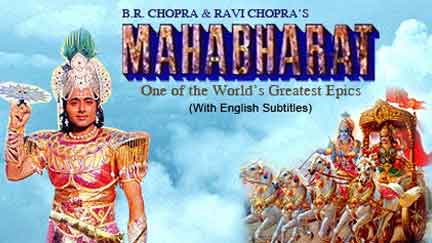
I watch SatyamevJayate on Doordarshan. The word ‘National’ below the Doordarshan logo seems rather appropriate for Aamir Khan’s show about issues of mass frustration. In one of the many interviews that prefaced the airing of his show, the kind of airgun shooting that now heralds any and every kind of release – films, books, television shows, automobiles, increasingly, even babies – Aamir Khan said that he argued with channel producers who wanted to give it a prime-time slot: ‘I wanted to telecast my show on Sunday morning. I want each family to watch the show and connect with it. We have watched Ramayana and Mahabharata and it used to come on Sunday morning. The shows created a different atmosphere’. Continue reading Jaya Hey to Jai Ho to Jayate: Sumana Roy→
With the recent article by Prabhat Patnaik, the controversy over the ‘Ambedkar cartoon’ issue has now moved into a different terrain. In this important statement, Prabhat undertakes the task of pointing out the numerous red herrings that have entered into the debate. These include ‘freedom of expression’ and ‘sense of humour’ and the question of whether Ambedkar had actually seen and let pass this cartoon. Prabhat’s point about the changed sensitivities and increased audibility of the dalit movement today is also well taken.
We must also be thankful to Prabhat for stating his views so candidly over the past few years, on a number of critical issues ranging from Nandigram and the electoral defeat of the Left to the ongoing cartoon controversy. We must thank him because because in my opinion, all his positions on these disparate sets of issues are of a piece and take us to the very heart of the impasse, not merely in the Left but in our politics itself. But before I respond to some of the issues raised by Prabhat, let me restate my positions on some aspects of the ongoing controversy. This is also necessary in order to identify what exactly it is in Prabhat’s piece that is so disturbing.
Dalit Response and Hurt Sentiments
In its initial phases, the cartoon issue was certainly a ‘dalit issue’ – even if it was raised only by a section of the dalit political leadership and intelligentsia. Very soon, however, it became clear that there was a more cynical game being played where the most corrupt and compromised sections of our politicians – especially those in parliament – were using Ambedkar as a shield, in order to deflect the blows that were actually aimed at them. The amazing unity of purpose and determination displayed by the parliament has rarely been seen in recent times; nor has the love for Ambedkar ever been expressed with such vigour.
Ashiya Begum, an elderly widow, had worked as a road construction labourer after her husband’s death. She recalls that when all the workers used to have lunch by the construction site, she tried to sleep under the bushes as there was no food and it was better than seeing others eat. When the pangs of hunger grew insistent, she would drink a lot of water and then tie her saree end tightly around her stomach and continue to work. At night if the children cried and she had nothing to feed them, she peeped out of her tent to neighbours’ utensils and used to beg a glass of ganji (water which is to be drained out of rice once it is cooked) from them. Everybody got 5-6 spoonfuls of ganji before sleeping. Sometimes in the evening, after the road construction work, she cooked in other people’s houses. They gave her four rotis that the entire family ate…‘Even if I tell you (what we eat to survive),’ she told the researcher, ‘will you ever be able to feel what we eat?’
– from the ‘Study on Destitution and Hunger’, Centre for Equity Studies, Delhi
Old age mostly inspires the sentiment of the universal in us, the aesthetics of the general, so much so that when we speak of the old, we often let go of the specific and relish statements that tend to be as wide-ranging as they could be naïve: the old are wiser, we say, the age is just a number, our frames turn more literary, more contemplative, it is the dusk of life, we think, or sometimes being metaphorical, we consider to be old to be in a second childhood. The last one is Aristophanes, no less. Continue reading Resisting the Second Childhood: Towards Universal Pension in India→
[The astoundingly misogynist representation of Aswathy Senan’s appointment as the Liaison Officer in Calicut University by the Deshabhimani newspaper was discussed earlier on Kafila in a guest post by APARNA ESWARAN]
Just as issues of gender and ethical journalism have been raised with regard to the Deshabhimani report on 30.04.2012 by C. Prajosh Kumar, a legal and ethical concern bothers any interested reader, who is beginning to feel involved. The reporter while correcting himself as a response to my letter stated it thus: “For a post that was advertised on 21-12-11, a bio-data was sent more than a month back, and a recommendation by VC was made on it: it is this irregularity in the procedure that the report tried to bring forth. And thus, the reporter has done the duty of an ideal journalist.” Continue reading “Ideal Journalists” and a Woman’s Right to Dignity: Aswathy Senan→
Increasingly, a section of young unmarried Malayali women are choosing to leave the comforts and shackles of their homes in Kerala, to live independently in alien cities in an unapologetic pursuit of their particular dreams. The patriarchal society of Kerala negotiates this category of women with a strange ambivalence, and the Malayalam media tackles her in two convenient ways. Continue reading Facts and Fiction – Creative Journalism and Real Consequences: Aparna Eswaran→
Well, the truth is that I care two hoots for Indulekha Hair Oil, their stupid ads, and the wide-eyed chubby-cheeked teenage girls who they usually cast as epitomes of Malayalee feminine grace. All of Mallu FB world is agog with discussion about a brainless ad for the Indulekha Hair Oil, in which a fiery-looking woman whose dress-style follows the dress conventions of our Malayalee AIDWA Stars, bursts with indignation over the terrible harassment that women with long hair face on buses, how we are all forced to cut off “the hair that we have” (‘Ulla mudi’) and go about with short hair “like men” because of this horrible injustice, and finally, how we all ought to grow our hair long (and let it down, possibly) and hit back at such harassers. This stupid ad is actually only one among other stupid ads for this hair-oil which uses currently-common ideas like ‘women’s collectives’ (stree koottaimakal). All of them are jarring since the concepts they use, and what they aim at, simply don’t mix.Part of the outrage has been fueled by the fact that the ad uses as a model Sajitha Madathil, who is well-known as a feminist theatre activist in Kerala. Continue reading Forget Hair-Oil-Powered Indulekha, Remember the Muditheyyam→
April 14 was Ambedkar’s birth anniversary. There is no single pan-India political icon, certainly not Gandhi, whose birth and death anniversaries are celebrated as public festivals, by the public, in the way the Ambedkar’s is. Some newspapers on 15 April typically had photos of the top leaders of the country paying homage to Ambedkar but that’s about all. When historians turn these pages they will not find, in the first drafts of history, any reports about how people celebrated Ambedkar’s birthday like a festival. They will not find a record of the singing and dancing, of drums and plays, of Dalit housing socities and employees’ unions holding celebrations bang under the nose of the Indian Parliament at Parliament Street as much as in Dalit bastis is villages across India. Such is the public ignorance of this celebration at Parliament Street in Delhi that most Delhites enjoying a free holiday don’t even know about it. Parliament street is whereSIDDHI BHANDARItook these photos in 2010.
In a remarkable book about slumdwellers in Mumbai, Katherine Boo brings to light an India of “profound and juxtaposed inequality” – a country where more than a decade of steady economic growth has delivered shamefully little to the poorest and most vulnerable. But though indeed a thoroughgoing and perceptive indictment of post-liberalization India, the book fits into a troubling narrative about the roots of India’s poverty and squandered economic potential.
This is a beautifully written book. Through tight but supple prose, Boo offers an unsettling account of life in Annawadi, a slum near Mumbai’s international airport. In Boo’s words, this “single, unexceptional slum” sits beside a “sewage lake” so polluted that pigs and dogs resting in its shallows have “bellies stained in blue.” It is hidden by a wall that sports an advertisement for elegant floor tiles (“Beautiful Forevers” – and hence the title). There are heartrending accounts of rat-filled garbage sheds, impoverished migrants forced to eat rats, a girl covered by worm-filled boils (from rat bites), and a “vibrant teenager,” who kills herself (by drinking rat poison) when she can no longer bear what life has to offer.
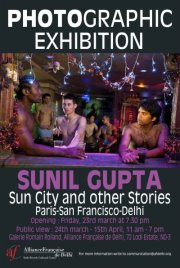
On Friday, March 23 2012, Sunil Gupta’s photographic exhibition ‘Sun City & Other Stories’ opened at the Alliance Francaise in Delhi. That evening itself, plainclothes men of the Delhi Police from the Tughlaq Road Police Station arrived at the show and ordered the removal of numerous photographs. In the chaos that followed, the photographs were removed by the Alliance Francaise under the ‘supervision’ of the Delhi Police and the exhibition was closed for the evening. The next day, the Alliance Francaise informed Sunil -via a third party – that the entire show would be shut down.
Why did this happen? On that day itself the Delhi Police said that someone had called the emergency police hotline, and complained to the Delhi Police about this exhibition which, according to the complainant, was ‘against Hindu culture’. Another version of events, also produced by the Delhi Police, claims that they received a complaint at the Tughlaq Road Police Station from someone who had made a video of the exhibition, complaining about the nudity in the photographs. Continue reading Nigah statement condemning the shutting down of Sunil Gupta’s exhibition ‘Sun City & Other Stories’→
Indian Mass Media and the Politics of Change; Edited by Somnath Batabyal, Angad Chowdhry, Meenu Gaur and Matti Pohjoen; Routledge, UK; 230pp. £65
It has taken me some time to finish reading the assemblage book entitled Indian Mass Media and the Politics of Change. An overly long reading list has been haunting me for the past few months, but I was slow and self-indulgent as I read and re-read many sections of this insightful book which is path breaking in many ways. First, it is a unique collection which emanated from intense thinking and collaborative action; and second, given the fairly recent rise of Indian mass media (also applicable to South Asia in general) this is quite a seminal work of its kind. Continue reading Mass media and the Indian national project: Raza Rumi→
Guest post byYASEEN ASHRAF, associate editor of the Malayalam weekly, Madhyamam
An article by Viju V Nair in Madhyamam Weekly (issue 727, 23 January 2011) has raised the hackles of the Kerala Government and its political allies. Strange, because the report was about the excesses of the police intelligence, something which can be – and should be – investigated and corrected. The investigative report claimed that 268 email accounts were ordered by the Kerala state intelligence to be tapped, out of which a huge majority belong to Muslims. None of these persons has any previous criminal history. So it is not clear why they are put under the cyber scanner. Continue reading Confuse and deceive – Email interception in Kerala and the formula for political survival: Yaseen Ashraf→



 Well, the truth is that I care two hoots for Indulekha Hair Oil, their stupid ads, and the wide-eyed chubby-cheeked teenage girls who they usually cast as epitomes of Malayalee feminine grace. All of Mallu FB world is agog with discussion about a brainless ad for the Indulekha Hair Oil, in which a fiery-looking woman whose dress-style follows the dress conventions of our Malayalee AIDWA Stars, bursts with indignation over the terrible harassment that women with long hair face on buses, how we are all forced to cut off “the hair that we have” (‘Ulla mudi’) and go about with short hair “like men” because of this horrible injustice, and finally, how we all ought to grow our hair long (and let it down, possibly) and hit back at such harassers. This stupid ad is actually only one among other stupid ads for this hair-oil which uses currently-common ideas like ‘women’s collectives’ (stree koottaimakal). All of them are jarring since the concepts they use, and what they aim at, simply don’t mix.Part of the outrage has been fueled by the fact that the ad uses as a model Sajitha Madathil, who is well-known as a feminist theatre activist in Kerala.
  This statement has been put out by NIGAH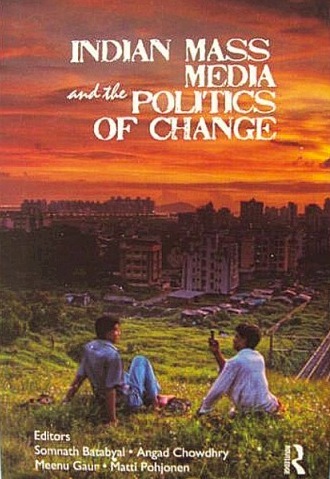

 KAFILA - COLLECTIVE EXPLORATIONS SINCE 2006