Category Archives: Language

The Country With A ‘Balancing Office’: Suvaid Yaseen

Guest Post by Suvaid Yaseen

Of late there has been a rising trend of Kashmiris – professionals, artists, writers, musicians et al presenting their works on Kashmir on a much wider level than before. The larger impression that comes out of it all is that the narrative has been taken up by the people for themselves. A welcome contrast to outsiders flying in and telling us what we want, how we think, and what is actually good for us.

So, every time a Kashmiri artist is presenting his/her work on Kashmir, the expectations among Kashmiris tend to go up. People start feeling that finally their narrative, of how they saw the things, what they went through, would be told to the world, bereft of the lenses of security paradigm through which Kashmir has been usually viewed  –  a strategic territory, with not-so-strategic, dispensable people.

This can be fortunate as well as unfortunate. On one hand there is a ready audience to appreciate and applaud your work. On the other hand there are expectations to ‘perform’. For the artists themselves, there are additional pressures of ‘balancing’ and having a ‘non-biased’ view from the other side.

Continue reading The Country With A ‘Balancing Office’: Suvaid Yaseen
Come Frolic with Me in the Streets of Delhi: Amrapali Basumatary

Guest post by AMRAPALI ‘TARA’ BASUMATARY

Another Report on the Gathering of the Night of 31st of December 2012/Ist January 2013 against Patriarchy in Delhi

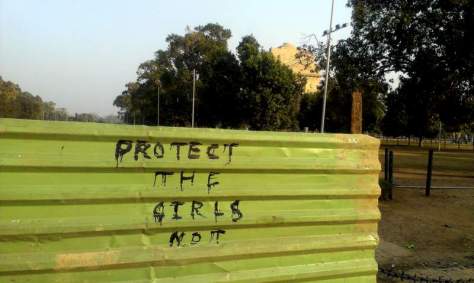
It was 31st December 2012, city-Delhi, the same Delhi which has gained the infamy of being the Rape-Capital of a country called India, a nation whose ‘dignity’ has been maligned by the increasing cases of sexual assault on women. Around three hours before the clock struck the decisive moment of New Year, many of us gathered at the PVR Anupam complex in Saket to “take back the night”, back from the shackles of misogyny, sexual assault, patriarchy and above all from the banal and real fear of being subjected to crimes meted out by multifarious forms of male-supremacy and power. It was a night when ‘dented and painted’ females as well as males were showing that ‘denting and painting’ are not reasons that ‘invite’ rape or sexual assault and those ‘hormone driven gazes’. Continue reading Come Frolic with Me in the Streets of Delhi: Amrapali Basumatary

The Bitter Truth Regarding Delhi Police’s Womens’ Help-Line: Kavita

Guest post by KAVITA, an activist with the Stree Mukti League

Translated from Hindi by Shuddhabrata Sengupta

It would be natural to expect that in the wake of the barbaric Delhi gang-rape of December 16 and subsequent popular upsurge of anger the police and the state machinery would betray a modicum of sensitivity and alertness. The reality is just the opposite of what you expect. We have heard this from many women in the past few days, and a few evenings ago, came face to face with this sad fact ourselves.

For the last few days, we (activists of the Stree Mukti League) have been going to different places in Delhi to hold meetings, demonstrations and to distribute leaflets against sexual violence. The leaflet has a contact phone number for the Stree Mukti League. Since the evening of the 1st of January this year a perverted male individual has been continuously ringing that number, abusing us, threatening us, using obscene and unprintable language. He even said ‘I know all you girls, and you cannot escape me. What I will do to you will terrify people…’, and several other things which cannot be repeated. Continue reading The Bitter Truth Regarding Delhi Police’s Womens’ Help-Line: Kavita

Akbaruddin Owaisi – You are an Enemy of Muslims (and Hindus)

Guest post by IRSHADUL HAQUE
Translated from Hindi by Shuddhabrata Sengupta

Akbaruddin Owaisi, you are an enemy of Muslims. You are the kind of adversary who lurks like a snake in the grass, ready to strike at the person who cares for that patch. Your desire to provoke a confrontation between India’s 25 crore Muslims and 100 crore Hindus reminds us of Muhammad Ali Jinnah. This is why Javed Akhtar has gone to the extent of calling you ‘the greatest enemy of Muslims’. I know that I am not alone when I find myself agreeing with this view. Many other Indian Muslims will be in agreement with me. Continue reading Akbaruddin Owaisi – You are an Enemy of Muslims (and Hindus)

Notes from a Night Walk in Delhi University

[ B&W pictures, courtesy Chandan Gomes. Colour pictures and cell phone video footage, courtesy, Bonojit Husain, New Socialist Initiative ]

Dear young women and men of Delhi,

I am writing to you again because I have been listening to you. This is a strange time, when everybody is talking, and everybody is listening, and the unknown citizen, who could have been any one of you, has transformed us all.

I was with you last night, from five thirty in the evening to around nine at night, while we walked together from the Vishwavidyalaya (University) Metro Station to Vijay Nagar, Kamla Nagar and the North Campus of Delhi University. There were around twelve hundred of you. Several of you held candles. You made yourselves into a moving blur of light. As the shopkeepers of Vijay Nagar, as the rent collecting aunties of paying guest accommodations, as the men and boys and girls and women on the streets and in the verandahs looked at you in wonder, you looked back at them, many of you smiled and waved. I could see some people in the crowd lip-synch with your Hallabols.

[ video of the night march near Delhi University ]

Continue reading Notes from a Night Walk in Delhi University

For Anonymous: Nilanjana Roy

Guest post by NILANJANA ROY

Photo: Ruchir Joshi
Photo: Ruchir Joshi

That girl, the one without the name. The one just like us. The one whose battered body stood for all the anonymous women in this country whose rapes and deaths are a footnote in the left-hand column of the newspaper.

Sometimes, when we talk about the history of women in India, we speak in shorthand. The Mathura rape case. The Vishaka guidelines. The Bhanwari Devi case, the Suryanelli affair, the Soni Sori allegations, the business at Kunan Pushpora. Each of these, the names of women and places, mapping a geography of pain; unspeakable damage inflicted on women’s bodies, on the map of India, where you can, if you want, create a constantly updating map of violence against women. Continue reading For Anonymous: Nilanjana Roy

What Do Men Have To Do With It?: Rahul Roy

Guest post by RAHUL ROY

I have been sitting quietly trying to finish my new film and had promised myself that I would not get side tracked and concentrate on the task at hand. But enough is enough. I am shocked and disappointed at the way men high jacked a protest that could have been and probably still is the most significant pouring out of women who may never have thought in their wildest dreams that they would be facing water cannons and cops giving them a chase with iron tipped sticks. I am sure it is a coming of age moment for many young women of the city of Delhi.

I am aware that there has been a fair bit of cynicism about middle class women running up and down Raisina Hill and whether it adds up to anything. It damn well does. The next time they see adivasis being chased down by the police in Chattisgarh or in Orissa a penny will drop. It already is, today there is an article by a 19 year old student form Lady Sri Ram College narrating her brush with Delhi Police at the Parlaiment Street Police station and quite significantly she adds that if they are capable of behaving the way they did with a group of ‘well connected’ college students in Delhi then what must be happening in the more remote areas of non metropolitan India. Continue reading What Do Men Have To Do With It?: Rahul Roy

Bakht Arif, from Pakistan, sings Zinda Lash for Patronizing Indian Politicians (No, Don’t Listen to Honey Singh)

UPDATED : December 28, 2012

Don’t be a zombie. Never be a Zinda Lash.

No. Don’t Listen to Honey Singh talking about what he wants to do to the bodies of young women.

No. Don’t listen to Sushma Swaraj of the BJP talking about what she thinks is the zinda lash when she talks about the body of a young woman. Continue reading Bakht Arif, from Pakistan, sings Zinda Lash for Patronizing Indian Politicians (No, Don’t Listen to Honey Singh)

An ‘I Witness’ Account of Delhi Police and RAF Violence at India Gate on 23 December: Sangeeta Das

Guest post by SANGEETA DAS

[The Delhi Police has begun systematically lying about what has been happening in the past few days. We have seen spin doctoring around the unfortunate death of Constable Subhash Tomar. There has been efforts to plant generalized and unsubstantiated rumours about the presence of ‘terrorists’ amongst the crowds at India Gate. We have even seen the Chief Minister of Delhi, Shiela Dikshit and a sub divisional magistrate complain about the Delhi Police trying to interfere and influence that process of the recording of testimonies. Here is an important account by an eyewitness, Sangeeta Das, about the way the police behaved on the evening of the 23rd of December. Please note the kind of language that she says policemen were using. Can we trust the city to be safe in their hands.]

I am appalled at the lop-sided relay of events and incomplete images being telecast by some of the NEWS channels on TV, regarding the incident that happened at India Gate yesterday (this is an account of what happened on 23rd of December) at around 5:30 PM.

I was there. We were all on the other side of India Gate towards the Dhyan Chand Stadium.

I think I need to paint the correct picture for the nation. Except for CNN IBN and NEWS X, most other channels are not showing the peaceful gathering. Thus it gives out the wrong message to the nation, to the politicians, to other women that there was violence. Continue reading An ‘I Witness’ Account of Delhi Police and RAF Violence at India Gate on 23 December: Sangeeta Das

हिंदी का संकट: कुलदीप कुमार

जनसत्ता के 23 सितम्बर, 2012 के अंक में प्रकाशित कुलदीप कुमार के स्तंभ “निनाद” को हम थोड़े संशोधन के साथ छाप रहे हैं.

दक्षिण अफ्रीका के जोहान्स्बर्ग शहर में विश्व हिन्दी सम्मेलन हो रहा है। पहला सम्मेलन 1975 में नागपुर में हुआ था जिसमें जवाहरलाल नेहरू विश्वविद्यालय की ओर से एक प्रतिनिधिमंडल शामिल हुआ था। मैं उन दिनों विश्वविद्यालय की साहित्य सभा का सचिव था और पंकज सिंह उसके अध्यक्ष थे। कवि मनमोहन भी प्रतिनिधिमंडल में शामिल थे। तब तक इमरजेंसी नहीं लगी थी। अगर मेरी स्मृति धोखा नहीं दे रही तो वह जनवरी का महीना था। देश में जेपी आंदोलन ज़ोरों पर था और प्रधानमंत्री इन्दिरा गांधी ख़ासी अलोकप्रिय हो चुकी थीं। हम इस सम्मेलन को तमाशा समझते थे और उसका विरोध करने ही नागपुर पहुंचे थे। दिल्ली से ही एक बयान साइक्लोस्टाइल कराके ले गए थे। जैसे ही इन्दिरा गांधी ने अपना उदघाटन भाषण देना शुरू किया, हम सबने उठकर विरोध में नारे लगाने शुरू कर दिये और उपस्थित प्रतिनिधियों के बीच विरोध-वक्तव्य की प्रतियाँ बांटने लगे। सुबह-सुबह कुछ प्रतिनिधियों के कमरों में दरवाजे के नीचे से हम अपने बयान की प्रतियाँ खिसका आए थे। जैसा कि होना था, बाद में हमें पुलिस ने धर लिया। Continue reading हिंदी का संकट: कुलदीप कुमार

A statement against the arrest of Punjabi publishers and editors for publishing the poetry of Babu Rajab Ali

Names of signatories given at the end; for more details on the campaign, see Whitewashing History

The arrest of two Punjabi publishers and two editors for reprinting old books of poet Babu Rajab Ali which allegedly contained some then used caste names, under the Prevention of Atrocities Against Scheduled Castes and Scheduled Tribes Act, is a totally thoughtless, callous and ruthless action taken by the Punjab government.

We understand that Mr. Amit Mittar of Tarak Bharti Prakashan and Mr. Ashok Garg of Sangam and editors Mr. Jagjeet Singh Sahoke from Moga and Mr. Swatantar from Samana, were arrested by the police on September 15 at the behest of the Punjab government. This is absolutely against academic freedom. Continue reading A statement against the arrest of Punjabi publishers and editors for publishing the poetry of Babu Rajab Ali

Stuck Between Gandhi and Cultural Crap: Papilio Buddha Reveals Much

Sometimes a minor cut on the surface of the skin will do to reveal the rot beneath. This is precisely what the film Papilio Buddha, made by the New York-based Malayalee film-maker Jayan Cherian, which draws broadly upon contemporary caste politics in Kerala, has achieved for us. In fact, its achievement on this count is simply amazing. At a single stroke, it has brought to light several stinking sores above which Malayalees, especially many Malayalee intellectuals who  occasionally don the garb of public intellectuals, strut. Continue reading Stuck Between Gandhi and Cultural Crap: Papilio Buddha Reveals Much

Our search for Charasi Kababs: Saba Dewan

Guest post by SABA DEWAN

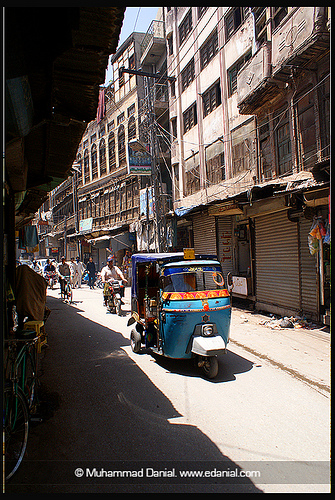
Qissa Khwani bazaar, Peshawar

I was last in Pakistan in 2006 during Ramzan. Rahul had some work in Islamabad, Peshawar and Lahore and I had used that as an excuse to visit my mother’s place of birth. While I had visited my mother’s beloved Lahore a few times earlier this was to be my first trip to Islamabad and Peshawar.

To cut a long story short, on our first evening in Peshawar, post iftaar, we found ourselves in the fabled Qissa Khwani bazaar, the Bazaar of Story tellers. It was here that in 1930 British troops had fired upon an anti-colonial demonstration of non violent, unarmed nationalist Khudai Khidmatgars leaving more than 400 amongst them dead. History has come a long way since then marking contemporary Peshawar as one of the more violence prone cities of Pakistan. Continue reading Our search for Charasi Kababs: Saba Dewan

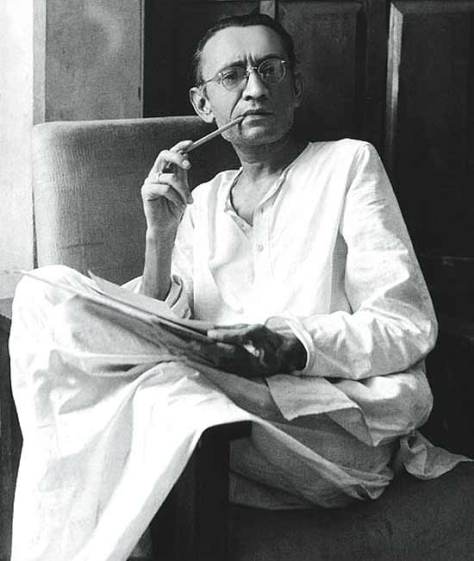
अपुन का मंटो: पाकदिल, सियाहक़लम, अपूर्व, अप्रतिम, अखंड


मंटो ने रचनात्मक अभिव्यक्ति के लिए कला की कोई भी दिशा चुनी हो, हंगामा किसी न किसी तरह अवश्य हुआ।
– बलराज मेनरा व शरद दत्त


कोई सत्तावन साल पहले महज़ बयालीस की उम्र में तक़सीम-ए-हिन्द और शराबनोशी के मिले-जुले असर से अकालकालकवलित मंटो आज सौ का होने पर भी उतना ही हरदिलअज़ीज़ है, जितना हैरतअंगेज़, उतना ही लुत्फ़अंदोज़ है, जितना तीरेनीमेकश। शा यद आज भी उतना ही मानीख़ेज़। बल्कि यूँ मालूम होता है कि वक़्त के साथ उसके अनपढ़ आलोचकों की तादाद कम होती गई है और पिछले दो-तीन दशकों में मुख़्तलिफ़ विधाओं में पसरे उसके लघु-कथाओं व बड़े अफ़सानों, मज़ामीन, रेडियो नाटकों, मंज़रनामों, ख़तों, फ़िल्मी संस्मरणों और अनुवादों के बारीकतरीन पाठों का सिलसिला थमने की जगह ज़ोर पकड़ने लगा है। और पाठ-पुनर्पाठ की ये धारा सिर्फ़ उर्दू या हिन्दी में ही नहीं, बल्कि अंग्रेज़ी में भी मुसलसल बह निकली है। जिसके बूते दक्षिण एशिया का यह अप्रतिम कहानीकार अब समस्त दुनिया की एक नायाब धरोहर बन गया है। यह वाजिब भी है क्योंकि मंटो के अदब व फ़लसफ़े में पश्चिम व पूर्व का अद्भुत संगम हुआ। मोपासाँ, चेखव व गोर्की वग़ैरह से उसने अगर तुला हुआ, मुख़्तसर अंदाज़े-बयान सीखा तो एशियाई माहिरों से रस बरसाने वाली दास्तानगोई का चमत्कार, और तफ़्सीलात का इज़हार।

Continue reading अपुन का मंटो: पाकदिल, सियाहक़लम, अपूर्व, अप्रतिम, अखंड

Aseem Trivedi and the guardians of good taste

There’s a time for everything. When a cartoonist is being arrested for his cartoons, for cartoons that caused no harm, incited no violence, killed no people, then do you discuss his art or his incarceration? Continue reading Aseem Trivedi and the guardians of good taste

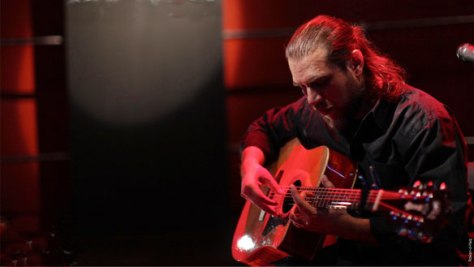
Coke Studio Pakistan – At a crossroads: Nandini Krishnan

Guest post by NANDINI KRISHNAN

Rohail Hyatt, producer of Coke Studio Pakistan

Khabaram raseedah…imshab
Khabaram raseedah imshab kih nigaar khaahi aamad

The words are beautiful; the voices that sing them mellifluous. And yet, I find that instead of being overwhelmed as I usually am by the qawwali of Fareed Ayaz and Abu Muhammad, enraptured by the transcendental waves of their music, parts of my consciousness are held down, niggled. Perhaps it’s the constant drumming and strumming, perhaps it’s the psychedelic sound waves zipping across giant screens, perhaps it’s the acoustics that throw back bits of the singers’ strains at them. But the Coke Studio version of Khabaram Raseedah doesn’t affect me the way even scratchy recordings of live, open-air concerts do. Continue reading Coke Studio Pakistan – At a crossroads: Nandini Krishnan

Why is the Indian media building a case for internet censorship rather than against it?

Hundreds of webpages now stand blocked in India, the government has openly been appealing to internet companies to pre- or post-screen content and remove what the government wants it to remove. One Google Transparency Report after another has been revealing how the number one target of the government is criticism of politicians and government. Just imagine what would the Indian media’s response to such censorship have been like had it been hundreds of books or articles we were talking about? Instead of asking Facebook to ‘pre-screen’ our posts, had Kapil Sibal been asking for someone to pre-screen articles in the newspapers, would it not be like the Emergency?

Okay, point taken. Let us not trivialise the Emergency, which entailed jailing of dissidents and forced sterilisation and so on. But still, there’s so much internet censorship in India now that it is surprising that instead of outrage you find the Indian media actually building the case for censorship. What about hate speech, they ask. What about the trolls, Why is there so much abuse on the internet? Continue reading Why is the Indian media building a case for internet censorship rather than against it?

Yo, Yo Honey Singh and Other Implied Learnings: Aprajita Sarcar

Guest post by APRAJITA SARCAR

Kudiye ni tere brown rang ne, munde patt te ni saare mere town de…..Hun bach bach ke, tenu rab ne husn ditta rajj rajj ke/Main keha kaali teri Gucci, te Prada tera laal/ Kithe challo oh sohneyo, sajh dajh ke ke/ Tere wargi naar ni honi, mainu munde kehnde si /Hoge ni tere charche Star News to BBC /Ho brown brown skin wali, let me tell you one thing /Rab di saunh you so sexy! Continue reading Yo, Yo Honey Singh and Other Implied Learnings: Aprajita Sarcar

Gird Your Loins

A new product ’18 Again’ has hit the Indian market. A vaginal tightening gel, the advertisement left us mildly bemused.

With her newly tautened privates, the saree-clad lady seems in remarkably good cheer, given she apparently ‘feels like a virgin’ and ‘it’ (it presumably being sex), ‘feels like the very first time’. Namely awkward, painful, inexperienced fumbling? Ah well! There’s no accounting for tastes, not least the fantasies of the Indian man.

Regardless, we think this is a step in the right direction. Virgins being a scarce commodity these days, a handy at-home converter for any sacrifices you may have planned is a thoughtfully designed product indeed. (The makers of ’18 Again’ are unclear on what to do with those of us who escaped the wastelands of virginity before 18, but there you have it. You can’t please everyone, certainly not those sluts who didn’t even wait till they were legal). The makers of 18 Again are hoping for strong revenues on the back of exponential domestic demand.

As this article details, the Indian vagina now caters to a broad spectrum of consumer taste and preference. Backed by a strong commitment to product diversification, the Indian vagina is set to enter the 21st century  with applications and appliances, room fresheners and Christmas trees. Needless to say, we are delighted; our only grouse being that the products are somewhat limited in scope and vision. And so with an eye to the future we present a small list of potential uses and a plea that we all broaden, rather than tighten, our imagination. Continue reading Gird Your Loins

Satyashodhak: Brahminical Manoeuvre: Madhuri M. Dixit

Guest post by MADHURI M. DIXIT

G. P. Deshpande’s play Satyshodhak is currently being performed in Maharashtra and Delhi and has received positive reviews in print and electronic media1 .It is praised for portraying Jotiba Phule’s life and work, its relevance for dalit emancipatory politics and also for the participation of the Pune Municipal Corporation’s workers as actors. There is a mood of celebration and a congratulatory back patting tone in the appraisal of a supposedly qualitatively different production. In addition to that, the writer has claimed that the production means a ‘successful and meaningful experiment of political education’ 2 of the workers/actors who are dalits. However, the flaunted success of the play and claims about its political import are belied by a performance that offers a very brahmanised Phule. It is very interesting to see that the author claims ‘a meaningful experiment’ of political education of the workers by offering them a pro-upper caste version of Phule. The very choice of producing a play about Phule in 2012 after a shelf life of twenty years 3, the writer’s articulated positions regarding it and the knowledge of Phule delivered through it, involve, I suggest, an upper caste cultural politics embodied in the brahman friendly figure of Phule.

Continue reading Satyashodhak: Brahminical Manoeuvre: Madhuri M. Dixit

Violence and Laughter: Ajay Skaria on the Ambedkar cartoon controversy

Guest post by AJAY SKARIA

Earlier this month, I signed, with some disquiet, onto this petition. Initiated by some members of the CHS at JNU, the petition protests against the withdrawal, in the wake of the cartoon controversy, of all NCERT Political Science textbooks, and seeks to defend the ‘gains of the new National Curriculum Framework 2005’. One reason I signed the petition was because it seems to me urgent that we try to save the NCF 2005 textbooks. They are, quite simply, amongst the most superb provocations available anywhere to critical thinking for young minds. I have over the years read them with my two children, and I would be very disappointed if other children were deprived of the same experience. There were other reasons too: I share the petition’s criticisms of the government’s arbitrary way of making its decisions about the textbooks, and its demand that textbooks be produced by an ‘academic, collective, democratic and inclusive process’ that excludes any ‘direct government intervention’. Continue reading Violence and Laughter: Ajay Skaria on the Ambedkar cartoon controversy