
 This is a guest post by RIA DE and ACHUTH AJIT: English, the language of a united collective; but also a language that found itself wanting today, as if unable to express the most basic of needs, the most just of demands. Of all days today English was at its banal best. As if clichés had eaten into it, gnawed the life out of it, bent it into prosaicness. Like “We Want Justice.” As we gather here today, at the English and Foreign Languages University – an institution that is just 5 years old with already four student deaths to its tally – to protest the high-handed and insensitive treatment of Mudasir Kamran, to honor his memory, and most of all to claim on his behalf, and on the behalf of all of us, the students at this University demand and urge “We Want Justice”. The prosaic cliché of this oft-repeated slogan was unable to state on our behalf the bare life of it as well as the spontaneity and the enormity of it. Continue reading On the Death of Mudasir Kamran: Achuth Ajit and Ria De
Category Archives: Law
The love story of Quli Qutub and Bhagmati, and other tragic endings

For some strange reason, all, or almost all love legends have a tragic end. I cannot recall too many that end with “and they lived happily ever after”. In fact, Romeo-Juliet, Laila-Majnun, Heer-Ranjha, Sohini-Mahiwal, Sassi-Pannun, Dhola-Maru, Saif-ul-Malook-o-Badi-uj-Jamaal – the list of unhappy lovers separated by the cruel hands of society, scheming relatives, jealous rivals, misunderstandings and plain simple divine design is endless.
Amidst such tears and tragedies, poison-tipped swords and daggers, deceit and chicanery, there is a story of love that makes you believe that this world can’t be all bad. The most fascinating and enduring quality of this legend of love is that it is not a legend, it is fact, well mostly. And this is how it goes. Continue reading The love story of Quli Qutub and Bhagmati, and other tragic endings
Some Urgent Considerations on Genetically Modified Crops and Food Security: Neha Saigal
This is a guest post by NEHA SAIGAL: The Budget Session is upon us and we might be witness to one of UPA’s most ambitious flagship programmes, the National Food Security Bill (NFSB), becoming a reality. So it seems like Food Security is the flavour of this session with President, Mr Pranab Mukherjee, reiterating UPA 2’s commitment to food security in his maiden speech at the start of the Budget Session.
But this commitment comes under serious question when one of the responsible agencies of the Government dilutes the issue of food security and further misleads the debate on an important issue like hunger and malnutrition. I am referring to the Ministry of Agriculture (MoA) under Sharad Pawar mindlessly promoting GM crops as a solution to food security. Continue reading Some Urgent Considerations on Genetically Modified Crops and Food Security: Neha Saigal
Noida Police keeps a labour leader and 6 citizens under illegal custody: Bigul Mazdoor Dasta
Press release by BIGUL MAZDOOR DASTA:
At the behest of the factory owners, the reign of terror of police continues
Noida, March 1. Several mass organizations including Bigul Mazdoor Dasta have strongly condemned the Noida police’s act of illegal detention of the labour leader Tapish Maindola and 6 common citizens. A petition is also being filed today at the Allahabad High Court against the illegal custody.
Ajay swamy of Delhi Metro Kamgar Union told that on the evening of February 27th, 10-12 persons came in 2 Bolero vehicles to the DTP Centre of Navin Prakash in Ghaziabad and forcibly took him and his employee Raju along with them. They forced Navin to call the activist of Bigul Mazdoor Dasta and his friend Tapish by phone and as soon as Tapish reached there, police captured him. Without informing the people present there as to where they were taking them, the policemen took all three along with them. None of the three were allowed to make a call and their phones were taken away and switched off.
Nine prisoners at risk of execution in India: Amnesty International
Statement put out on 21 February by AMNESTY INTERNATIONAL
Following two recent secret executions in India, there is fear that the Indian authorities may execute nine other prisoners whose petitions for mercy have not yet been ruled on.
The mercy petitions of eight men and one woman are pending with either the Union Home Ministry or the President: Gurmeet Singh, Dharampal, Suresh, Ramji, Praveen Kumar, Jafar Ali, Sonia (f), Sanjeev, and Sundar Singh. Ministers have publicly stated that decisions on some of these petitions will be made soon, putting the nine in imminent danger of execution. Continue reading Nine prisoners at risk of execution in India: Amnesty International
Kashmir: Civil society objections to proposed Police Bill
List of signatories at the end; statement put out on 25 February
Following a preliminary reading of the Draft Jammu and Kashmir Police Bill, 2013, made public on 15 February 2013, the undersigned condemn the attempt of the Government to formally put in place powers and structures that the Jammu and Kashmir Police have for long enjoyed and employed to carry out systematic human rights violations in Jammu and Kashmir. Further, specific sections of the Draft Bill that are seriously objectionable are listed. As an immediate step, the Government must extend the time allotted for feedback from people. Continue reading Kashmir: Civil society objections to proposed Police Bill
The Hyderabad blast investigations are doomed to fail: JTSA
This release was put out today by the JAMIA TEACHERS’ SOLIDARITY ASSOCIATION

In a grotesque replay of every investigation that follows a bomb blast, prejudice, misinformation and media blitz rules the direction of Dilsukh Nagar bombings investigation too. The same suspects and shadowy organizations are being paraded as executors of the Hyderabad bombings.
But should we be surprised? A day after the Home Minister’s humiliating capitulation to the RSS-BJP, virtually giving them and their affiliates a clean chit, the message to the investigating agencies must have been crystal clear. When the Home Minister himself discards the bulk of allegations and material pointing to the existence of Hindutva groups in planning and executing terror attacks, should we really expect the investigating agencies, whose past record inspires hardly any confidence, to sincerely pursue all possible angles and leads? This, when Messrs Aseemanand and company are being tried for the 2007 bombing of the Mecca Masjid. By asserting that Hyderabad bombing may have been a reaction to the execution of Kasab and Afzal Guru, the Home Minister himself foreclosed any possibility of unbiased investigation. Continue reading The Hyderabad blast investigations are doomed to fail: JTSA
The colonial legacy of capital punishment
G Mohan Gopal writes:
The British and their collaborators had made a similar mistake. They thought that the common people of India would be deterred and cowed down by the violence of the state. A young scholar from Columbia recently shared with me data collected from the National Archives showing that the British were hanging on average three people daily in the 1920s in a desperate bid to frighten Indians into obeying British rule. We know how that ended. The government should know how this will end too. [Frontline]
And Fahad Shah meets Maqbool Butt’s mother:
“Both Maqbool sahib and Guru sahib were innocent and on the right path. India thinks that this freedom movement will stop but it won’t stop. It will continue. There are so many Maqbools in Kashmir” [The Kashmir Walla]
PUCL statement on Hyderabad blasts
This statement was put out today in Delhi by the PEOPLE’S UNION FOR CIVIL LIBERTIES
PUCL strongly condemns the serial blasts in Hyderabad on 21.02.2013 which has resulted in loss of life and grievous injuries to many. PUCL extends its sympathies to the families of all those who lost relatives and hopes that the injured recover speedily.
PUCL re-iterates its stand that all organizations – whether State or non- state players – functioning for the people and in the public arena are accountable and answerable for their acts. PUCL appeals to all organizations to refrain from acts of mindless violence, especially when they endanger innocent persons. Violence can never offer a solution to any issue however genuine it may be. Continue reading PUCL statement on Hyderabad blasts
India Slept Through a Revolution in Bangladesh: Richa Jha
Guest post by RICHA JHA

This morning, I changed the ‘sleep’ in the heading of this article to ‘slept’. I woke up to the news that Bangladesh’s nearly twenty days long mass uprising was now getting a structured exit. The most moving and visually spectacular part of the Shahbag movement was coming to an end. India, of course, slept through most of it. The past tense, suddenly, paints our selective insularity in even starker shades. Continue reading India Slept Through a Revolution in Bangladesh: Richa Jha
People’s Watch Over Parliament: Bekhauf Azadi Campaign
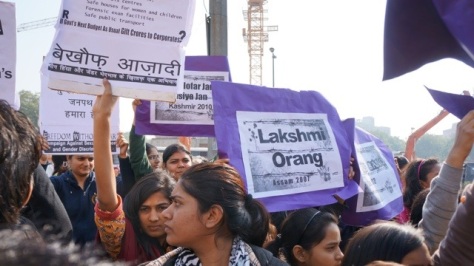
- Protestors at the ‘Freedom Parade’ Rally of the Bekhauf Azadi Campaign, New Delhi, 26 January, 2013
Guest Post by Bekhauf Azadi (Freedom Without Fear) Campaign.
People’s Watch Over Parliament: February 21, 1st Day of the Budget Session, Jantar Mantar
Gather in large numbers – 12 PM onwards at Jantar Mantar, New Delhi.
Are Our Lawmakers Ready to Listen to the Voice of the Movement Against Sexual Violence?
Continue reading People’s Watch Over Parliament: Bekhauf Azadi Campaign
Punishment by Procedure: Saurav Datta
Guest post by SAURAV DATTA
“An advocate, by the sacred duty which he owes to his client, knows in the discharge of that office but one person in the world- the client, and no other…to protect that client at all hazards and costs to all others, and among others to himself, is the highest and most unquestioned of his duties…..Nay, separating even the duties of a patriot from those of an advocate, and casting them if need be to the wind, he must go on reckless of the consequences…” – Lord Brougham, “Law and Other Things”, Cambridge University Press (1937)
“Beneath this face that appears so impassive hell’s tides continually run.” – Walt Whitman,“You Felons on Trial in Courts”
“Nothing rankles more in the human heart than a brooding sense of injustice.” Justice Brennan’s words keep on ringing in my ears when I see the manifestly violent injustice meted out to Mohammad Afzal- the Courts tore to smithereens his inalienable right to a fair trial. The Parliament attack case was the first litigation I had been part of – I was a student intern in the chambers of Ms. Kamini Jaiswal, who was briefing Mr. Ram Jethmalani. I got to see and understand the case from the closest of quarters, and that maybe that exacerbates my indignation at this egregious miscarriage of justice. Continue reading Punishment by Procedure: Saurav Datta
Capital Punishment – An Agenda for Abolition: Yug Mohit Chaudhry
This is (a slightly modified) text of the second Shahid Azmi Memorial Lecture, delivered at the Indian Law Institute on 9 February 2013 by advocate YUG MOHIT CHAUDHRY. The lecture and its topic had been scheduled days in advance, but co-incidentally, Mohd. Afzal Guru was hanged in the morning of the day of the lecture. The Shahid Azmi Memorial Lecture has been instituted by his friends, comrades and students, who want to keep alive the memory of his inspiring work. Advocate was shot dead in his office on 11 February 2010, at the age of 32. At the time of his murder, Shahid was fighting several terrorism cases, including of those falsely accused in the Malegaon blasts and the 26/11 Mumbai attacks.You can read tributes to Shahid Azmi in Kafila archives by Mahtab Alam, Arvind Narrain and Saumya Una, and Susan Abraham.
In Furman v. Georgia (1972), where the U.S. Supreme Court struck down the death penalty, Justice Marshall said that if citizens were fully informed about how people are sentenced to death, they would find capital punishment shocking, unjust and unacceptable. However, research on the death penalty and public awareness of the exact nature of the death penalty have been the most neglected areas in the abolition campaign in India. The last three challenges to the constitutionality of the death penalty in India were rejected by the Supreme Court, inter alia, on the grounds that there is no empirical data to support the abolitionists’ claims. Unfortunately, the situation has not changed at all, and even now there is hardly any research on this subject. Therefore, the highest priority in any abolition campaign is to produce empirical research on the death penalty. That, and doing our utmost to stop each proposed execution and, failing that, to make it as difficult as possible for the state to carry out an execution, adopting all legal, political and social means at our disposal. Continue reading Capital Punishment – An Agenda for Abolition: Yug Mohit Chaudhry
Arindam Chaudhuri promises to get Kafila page unblocked

Until Nikhil Pahwa of Medianama.com informed me, I had no clue that India’s unjust and arbitrary internet censorship regime had finally affected Kafila. Medianama published on Friday 15 February a list of 78 URLs that the Department of Telecommunications had ordered ISPs to block. 73 of them were webpages critical of the Indian Institute of Planning and Management (IIPM), whose Arindam Chaudhuri has a long history of complaining about the Internet. Continue reading Arindam Chaudhuri promises to get Kafila page unblocked
On bloodlust: notes towards four imminent executions: Rijul Kochhar
Guest post by RIJUL KOCHHAR
Into my heart an air that kills
From yon far country blows:
What are those blue remembered hills,
What spires, what farms are those?
That is the land of lost content,
I see it shining plain,
The happy highways where I went
And cannot come again.
~A.E. Housman
ज़िन्दगी और मौत ऊपर वाले के हाथ हैं जहापनाह, उसे ना आप बदल सकते हैं न मैं, हम सब तोह रंग-मंच की कठपुतलियाँ हैं, िजनकी डोर उपरवाले की उँगलियों मे बंधी हैं: कब, कौन, कैसे उठेगा, कोई नहीं बता सकता.
~Anand (1971)
I write in an evening shrouded in anticipation, but it is an anticipation of death.
Continue reading On bloodlust: notes towards four imminent executions: Rijul Kochhar
PUCL statement on the President’s rejection of the mercy pleas of four Veerappan associates
Press release put out on the evening of 16 February by the PEOPLE’S UNION FOR CIVIL LIBERTIES
CHENNAI: The PUCL strongly condemns the rejection by the President of India of the commutation petitions of Simon, Meesakara Mathayan, Bilavendran and Gnanaprakasam. Equally condemnable is the action of the Prison Authorities of Belgaum Central Prison, Karnataka who in the morning of 13.2.2013 merely intimated orally to the convicts of the rejection of their mercy petitions without giving them the written orders of rejection. In sharp contrast, signed acknowledgements of receipt have been obtained from all 4 convicts! Continue reading PUCL statement on the President’s rejection of the mercy pleas of four Veerappan associates
‘Death penalty in India is a legal lottery’
Justice Ajit Shah says that it has been proven beyond doubt that death sentence does not serve as a deterrent against crime; the reason why two third of the world has abolished it all together. He explains the bizarre nature of how the death sentence in India is judge centric and how under the same set of circumstances, some have received the death sentence, while others have been given life and still others acquitted. Death sentence is judge centric with many judges having a history of doling out death penalties and other being kind. Death sentence is thus nothing but a ‘legal lottery’ where if you are lucky you get a lenient judge you survive, else you end up at the gallows. He talks about the caste and class connection to death sentence, where the lower castes and lower classes are usually the ones sent to the gallows because they cannot afford proper legal aid. He says that this discriminatory nature renders death penalty unconstitutional and that there is the need for a larger debate on the same. Continue reading ‘Death penalty in India is a legal lottery’
Death Penalty – an agenda for abolition: Yug Mohit Chaudhry
This is the audio of the Shahid Azmi Memorial Lecture delivered on 9 February 2013 by YUG MOHIT CHAUDHRY at the Indian Law Institute in Delhi. While the lecture date and topic – death penalty – were scheduled weeks in advance, it co-incidentally happened that Mohd Afzal Guru was hanged on the morning of the lecture. Shahid Azmi was a lawyer in Mumbai. He was 32 when he was shot dead on 11 February 2010.
On Shahid Azmi from Kafila archives:
- Arvind Narrain and Saumya Uma: Can the love of justice be assassinated?
- Mahtab Alam: Remembering Shahid Azmi, the Shaheed
- Susan Abraham: Deshbhakts at Arthur Road Jail
Previously in Kafila by Yug Mohit Chaudhry:
See also:
- A profile of Yug Mohit Chaudhry – A Pledge for Mercy
More on Afzal Guru from Kafila archives:
- Nirmalangshu Mukherji: The Day Afzal Died
- Gazala Peer: When the Indian nation’s ‘conscience’ was satisfied
- Nagesh Rao and Navine Murshid: Lessons from Delhi and Dhaka
- Shuddhabrata Sengupta: Satyameva Jayate? On the impending execution of Afzal Guru
- Chandan Gomes: What Afzal Deserves
- Statement by 83 feminists against death penalty
- A letter of protest to the President of India: JTSA
- Four statements on the execution of Afzal Guru
Arindam Chaudhuri, Silchar
Given below is the text of a press release put out by THE CARAVAN magazine in 2011. This was first published in Kafila on 22 June 2011 and is being republished today for all those who may be interested in following up on the defamation case filed against The Caravan for a profile of Arindam Chaudhuri. The Supreme Court had stayed the case in August 2011.

When I read The Caravan‘s cover story on Arindam Chaudhuri some months ago, I wondered when he was suing them. And he’s done it! While a court injunction has made The Caravan remove the story from their wesbite, you can read it thanks to Google cache. No wonder Chaudhuri’s sued Google India as well! Given below is the full text of the press release put out by The Caravan. Unlike when Chaudhuri took on bloggers in 2005, I’m glad it is an organisation with the resources to fight the case and take him head on – not to say that requires some spine as well. After you’re done reading the release below, entertain yourself with all the Arindam jokes on Twitter.
IIPM’s Rs500-million lawsuit against The Caravan
In response to our February profile of Arindam Chaudhuri, the IIPM has sued The Caravan. Here’s why we’re fighting the suit. Continue reading Arindam Chaudhuri, Silchar
When the Indian nation’s ‘conscience’ was satisfied: Gazala Peer
Guest post by GAZALA PEER
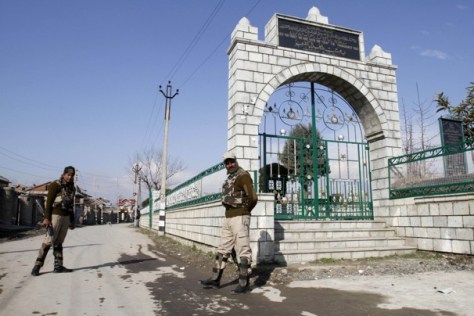
People who mourn under siege are not supposed to write. We cry and beat our chests. Kashmiris have long faced such predicaments, always forced to find alternatives for everything. Anything that is normal and fair is denied to them! Like a fair trial, for instance. I am not sure if everybody knows Mohd. Afzal Guru’s story. I am not sure if I can be fair to him, but whatever I could gather from legal documents, commentaries and articles, is summarised here. Continue reading When the Indian nation’s ‘conscience’ was satisfied: Gazala Peer
Why the Delhi rapists should not be hanged
The shameless and cynical Manmohan Singh government has found an easy way out to appear strong, deflect attention from its failures and save itself from the opposition’s questioning. Just hang a death row convict before every Parliament session! It is very likely that if the 16 December Delhi rape-and-murder accused are placed on death row by this time next year, the UPA government will hang them just in time for the 2014 general elections.
I am opposed to death penalty in principle, and there are good reasons why so many democracies have abolished death penalty. But even if you do not agree that death penalty should be abolished, please consider why it should not be applied to the five accused in this case.
About a month ago I visited the Ravi Das “camp”, a slum colony near RK Puram where four of the six accused lived. I met the mother of one of them. Champa Devi’s son Vinay Sharma was the first to plead guilty and say he should be hanged; his father agreed on television. Continue reading Why the Delhi rapists should not be hanged

