Category Archives: Left watch

Secret hanging a major setback: Human Rights Watch on the execution of Afzal Guru

Statement put out on February 9 by HUMAN RIGHTS WATCH

(New York) –The hanging in New Delhi of Mohammad Afzal Guru makes it more urgent for India to reinstate its previous informal moratorium on executions as a step towards abolishing the death penalty, Human Rights Watch said today. Azfal Guru, executed on February 9, 2013, was convicted for his role in the attack on the Indian parliament in 2001.

In November 2012, India ended its eight-year unofficial moratorium on executions when it hanged Ajmal Kasab, convicted for his role in the 2008 Mumbai attacks. Continue reading Secret hanging a major setback: Human Rights Watch on the execution of Afzal Guru

Some questions for comrade Karat on the killing of Afzal Guru: Satya Sivaraman and Manisha Sethi

Guest post by SATYA SIVARAMAN and MANISHA SETHI

Shri Prakash Karat,

General Secretary,

Communist Party of India (Marxist)

Dear Comrade,

Afzal Guru was hanged yesterday in utter secrecy, denied in his last moments the right to meet his wife and children one final time. Denied to him also was the ultimate judicial resort, due to every condemned convict after his/her mercy petition has been rejected.

The entire legal proceedings against Afzal were shot through with contradictions, fabrications and travesties of legal procedure. The Supreme Court bench that finally sentenced him to death did so to ‘appease the national conscience’ despite inadequate evidence of his role in the Parliament attack case.    Continue reading Some questions for comrade Karat on the killing of Afzal Guru: Satya Sivaraman and Manisha Sethi

Condemn Police Repression on Maruti Suzuki Workers’ Protest Rally: MSWU

Guest post from Provisional Working Committee (MSWU)

We from the Maruti Suzuki Workers Union (MSWU) and our families continue to face not only an exploitative company management but also continous state repression since we started our agitation demanding justice and legitimate rights of workers.

This morning, Imaan Khan, one of the members of the Provisional Working Committee, MSWU, was picked up by the Haryana police while a Press Conference was underway, from outside the union office of Sarva Karmachari Sangh in Civil Lines, Gurgaon near Puspanjali Hospital.

Continue reading Condemn Police Repression on Maruti Suzuki Workers’ Protest Rally: MSWU

Some thoughts on rape, sexual violence and protest – responding to responses: Devika Narayan

Guest Post by Devika Narayan

Rarely does a city experience the sort of upheaval that Delhi is witnessing.  Everyone is talking about it. Everyone has an opinion. It is impossible to walk down the street without overhearing snatches of conversation. Issues that usually find brief mention in some obscure corner of the newspaper are now being subject to analysis by every passer-by. A rickshaw driver refuses to take any money when he realises I am on my way to a protest. I remember the old man at a photocopy shop who had looked up and asked no one in particular: do you think she will die? The receptionist at the doctor’s clinic is distraught, providing waiting patients her explanation for the recent events. Men huddled around tiny fires littered across the foggy city carp on about the state of politics, the police and the government. Everyone is invested in this moment of reckoning.

An opportunity, in the most brutal manner, has been thrust upon us to challenge, critique and reconstruct unjust social relations. This is an opportunity to pledge our commitment to a vision of a gender just society. Unless we assert in powerful ways that women are autonomous beings and equal citizens it will not end. Continue reading Some thoughts on rape, sexual violence and protest – responding to responses: Devika Narayan

Mowgli meets the Maoists: Satya Sagar

Guest post by SATYA SAGAR

Hello folks! I need your help and hence this appeal to all of you!

I have been a journalist for a long time but never managed to write a full book on my own all these days. One reputed publisher has now approached me to write a book about the Maoists and I am very excited about it. The publisher thinks that the Maoists are a very ‘sexy’ topic and I should write about them because as a veteran journalist I am qualified to write on anything under the sun.

Let me give you some background. Basically publishers have figured out there seems to be lots of money in printing anything penned by an Indian writer. Novels, plays, travelogues, diaries, memoirs, collections of old essays, homework notes from school, whatever- because the entire world is willing to read anything written by Indians. It seems people around the planet had assumed all these decadesthat Indians were completely illiterate and now that has been finally proven untrue they want to read EVERYTHING they write. Continue reading Mowgli meets the Maoists: Satya Sagar

A 26/11 victim who refuses to celebrate Kasab’s execution

While the media has reported most families of those who died in 26/11 as hailing the execution of Ajmal Kasab, Bollywood actor Ashish Chowdhry refuses to be one of them. His sister Monica and her husband were amongst those who were killed at the Oberoi trident hotel. Given below are screenshots of Chowdhary’s tweets. Read from the last tweet upwards. Continue reading A 26/11 victim who refuses to celebrate Kasab’s execution

Molecular Socialism – A Possible Future for Left Politics

The end of the twentieth century saw the collapse of soviet-style state-socialism and the beginning of neo-liberalism’s triumphal march, which has ravaged the planet in a little over two decades. The destruction of the earth has proceeded with renewed vigour since, as has the dispossession of the poor. Cities have been re-made for the luxury living of the rich and the upwardly mobile middle classes. And for their luxury, for their ‘free movement’ across the city and beyond, settlements of the poor have had to make way, as shopping malls, freeways and expressways began defining the new imagination of the city.

If it took soviet-style socialism close to six-seven decades to finally face mass rejection, the neoliberal order has taken far less time. Faced with major opposition movements across the Western world, from the Occupy Wall Street movement to the Indignados in Spain and Greece and powerful new political formations in many parts of South America, the neoliberal order no longer seems as unchallengeable as it used to till just some time ago. Its advent on the horizon came as a new kind of theology that brooked no dissent. It came to us apparently telling us some elementary truths about ourselves and the world we inhabit. And it was quite amazing to see the speed with which the new religion gained converts in those early years. Continue reading Molecular Socialism – A Possible Future for Left Politics

Some Reflections on Capital and the Workers’ Movement After Manesar

Workers’ Violence and Corporate Violations of Law

It has been a long time in the making. The violence at Maruti-Suzuki’s Manesar plant on 19 July 2012, that led to the ghastly killing of the general manager, Awanish Kumar Dev was waiting to happen. While the killing was gruesome, I believe this is merely a ‘freeze shot’ of a larger film that has been playing for a very long time now. While it is the media’s wont to focus only on these moments of spectacular violence and then dish out reports from handouts provided by managements and the police, sometimes, such moments of conflagration do illuminate what has been in the dark for so long.

What follows below is an attempt to think through some of the issues that seem to me to lie at the bottom of the violent event. The ‘violent event’ here is not simply what took place in Maruti-Suzuki’s Manesar plant now; it is rather a shorthand for the whole series of such conflagrations that have been taking place over the past few years in the National Capital Region (NCR) – starting with Honda Motors and Scooters 2005,  Graziano Trasmissioni 2008, and many others since – Rico Auto Industries, Pricol Ltd and so on. The struggle in Honda Motors that had been brewing for a long time had eventually spilled over into a series of public protests with severe police violence in the full glare of the media. Things have never been the same in the entire belt since. Rico Auto Industries incident in September-October 2009 subsequently became an important milestone – galvanizing as it did a number of other workers’ strikes. There it had started when the workers struck work after 17 of their colleagues had been dismissed ‘on disciplinary grounds’. Actually, the workers rightly felt that this was to quash their attempt to form a union. And while the workers were protesting at the gate, a group of hired goons attacked them, killing one of the workers and injuring many others. In the Graziano Trasmissioni the issue of contention was the reinstatement of 136 dismissed workers which led to a massive unrest in the unit in Greater NOIDA, leading eventually to an incident not very different from the present one. Continue reading Some Reflections on Capital and the Workers’ Movement After Manesar

Of Peace and Other Illusions

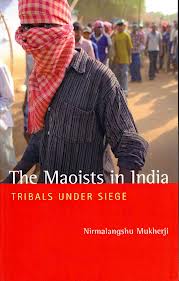
This week I reviewed War and Peace in Jangal Mahal, edited by Biswajit Roy, for The Hindu. Kafila readers will be familiar with at least two of the essays in the compilation – by Nivedita Menon and Aditya Nigam and will remember our hectic debates on the subject.

The collected letters of correspondence between the Communist Party of India (Maoist) and the Indian state is an archive of corpses: policemen and guerrillas, commanders and comrades, police informers and Maoist sympathisers. The body count racked up by each serves as a signalling mechanism for the other.

Except for the police and Maoist commanders, the dead usually don’t get to choose sides; their identities are written in reverse, a teleological narration that details seemingly insignificant decisions that end in death.

In June this year, the CRPF, state police and CoBRA battalion killed 19 men, women and children in an anti-Maoist operation, claiming those killed were hardened Maoists. When newspapers reported that villagers said they were conducting a public meeting when they were surrounded by police and shot, the police pointed to six troopers injured in the encounter and asked why villagers were holding a meeting in the middle of the night.

The Maoists have an explanation for their violence as well. “The notion of just principle in a normal situation is different from that [in] a war-like situation,” wrote Maoist commander Kishenji in a letter to the Bengali daily, Dainik Statesman , in which he explained his party’s policy of killing police informers, “During war, freedom of thought, consciousness, initiative and innovation is much limited in scope.”

Read the rest of the review here

Mad Rush for Top CPM Jobs!: CPI (Mohammad Rafi) News Service

Guest Post by CPI ( Mohammad Rafi) News Service

Mad Rush for Top CPM Jobs!:  CPI (Mohammad Rafi) News Service

New Delhi, 15 July 2012: The CPI(M) headquarters saw a mad rush of job applicants after General Secretary Prakash Karat said in a magazine interview that his party paid Rs. 3000-4000 to its whole-time cadre as salary every month. Job seekers from around the country clamoured for immediate appointment to as full time party cadre amidst unruly scenes reminiscent of a typical day at the Indian Parliament.

Karat had mentioned this figure while answering a question as to why the Party’s leaders were mostly from upper caste and middle class backgrounds. According to the CPM General Secretary working class members were hesitant to become whole-timers as ‘ it’s not easy to survive on this small amount’. Continue reading Mad Rush for Top CPM Jobs!: CPI (Mohammad Rafi) News Service

CPI(M)’s ‘July Crisis’ and Challenges for Rebuilding the Left

In an unprecedented move ,  the JNU unit of the SFI (SFI-JNU) has been dissolved by the ‘Delhi State Committee of the Students’ Federation of India’ [SFI is the CPI(M) student wing]. What is interesting about the press statement issued by the ‘Delhi State Committee’ following this momentous decision, is that it is signed by the Acting President and the Acting Secretary. The state secretary Robert Rahman Raman has since resigned in protest against the decision and the state president, according to him happens to be among those expelled. The state secretary in his statement has protested against the SFI Delhi state committee’s decision, ‘taken with just 12 members present and without adequate consultation or effort to retain the unit.’  The matter then, is far bigger than that of an errant SFI unit.

Clearly, leading state functionaries of the organization too are involved in the heresy that has called forth this action by the high priests of the CPI(M). Anyone who knows the command structure of the CPI(M) and how it works, can see immediately that a decision as important and unprecedented as this cannot have been taken by something as inconsequential as the Delhi state committee of the SFI. Indeed, even the Delhi state committee of the CPI(M) could not have taken this decision without the concurrence of the highest leadership – in this case Prakash Karat, the general secretary, himself. Continue reading CPI(M)’s ‘July Crisis’ and Challenges for Rebuilding the Left

Satyashodhak: Brahminical Manoeuvre: Madhuri M. Dixit

Guest post by MADHURI M. DIXIT

G. P. Deshpande’s play Satyshodhak is currently being performed in Maharashtra and Delhi and has received positive reviews in print and electronic media1 .It is praised for portraying Jotiba Phule’s life and work, its relevance for dalit emancipatory politics and also for the participation of the Pune Municipal Corporation’s workers as actors. There is a mood of celebration and a congratulatory back patting tone in the appraisal of a supposedly qualitatively different production. In addition to that, the writer has claimed that the production means a ‘successful and meaningful experiment of political education’ 2 of the workers/actors who are dalits. However, the flaunted success of the play and claims about its political import are belied by a performance that offers a very brahmanised Phule. It is very interesting to see that the author claims ‘a meaningful experiment’ of political education of the workers by offering them a pro-upper caste version of Phule. The very choice of producing a play about Phule in 2012 after a shelf life of twenty years 3, the writer’s articulated positions regarding it and the knowledge of Phule delivered through it, involve, I suggest, an upper caste cultural politics embodied in the brahman friendly figure of Phule.

Continue reading Satyashodhak: Brahminical Manoeuvre: Madhuri M. Dixit

MEGA, the recovery of Marx and Marxian path: Sankar Ray

Guest post by SANKAR RAY

In sharp contrast to the scenario of the unprecedented debt-driven crisis of neo-liberal world economic order, a new era of radiant expectations seems to open up for Marx-followers and Marxists around the international project, Marx-Engels-Gesamtausgabe or complete works of Karl Marx and Friedrich Engels (MEGA) and it’s hitherto ‘unexplored Marx’. MEGA , a collation of original texts is ‘the historical-critical edition of works of Marx and Engels’, an imperative ignored during the 20th century by official Marxists. Fifty-nine out of 114 volumes , have already been published. The MEGA editorial board, following prolonged debate decided to put together the whole of 164 volumes of original manuscripts in 114 volumes.

A critical approach to history  is essential for scholarly inquiry. Yet  scholarship alone isn’t enough where an enterprise such as this is for it also requires unbiased collation and editing. The development of Marxist studies had been throttled due to widespread vulgarisation which had dominated Marx studies from the 1890s to the end of the 20th Century. Early Marxists like Franz Mehring and Vera Zasulich – and Rosa Luxemburg – adopted a more critical approach which is a essential for the ‘Marxist temper’. Marx’s prescription, de omnibus dubitandum (doubt everything), wasn’t meant to be just a quotation. Unfortunately, Lenin and his followers often deified Marx. Lenin’s words – “Marxism is omnipotent, because it is true” – is one such instance as if Marxism represents the end of philosophy. Continue reading MEGA, the recovery of Marx and Marxian path: Sankar Ray

Swami Sahajanand Saraswati – A Contested Legacy: Manish Thakur and Nabanipa Bhattacharjee

Guest post by MANISH THAKUR and NABANIPA BHATTACHARJEE

Observers of the political scene in Bihar would have hardly failed to notice a renewed interest in the life and works of Swami Sahajanand Saraswati (1889-1950), the founder president of the All India Kisan Sabha, and arguably the most influential peasant leader of Bihar in the 1930s and 1940s. Over the last decade or so, his birth (22 February, 1889) and death (26 June, 1950) anniversaries have been celebrated with great pomp and show with full attendance of political luminaries of the state including Nitish Kumar, its present Chief Minister. Not only have glowing tributes been paid to his legacy but there has also been a spurt of writings on his life and times.

Swami Sahajanand Saraswati

New biographiesi have been released, and his collected works been published in six volumesii. In fact, there is a Swami Sahajanand Saraswati Foundation based in New Delhi as well as a Swami Sahajanand Saraswati Forum on the internet. Curiously enough, Swami Sahajanand Saraswati figures prominently on the internet in the caste-specific web-portals such as www.bhumihar.com; www.bhumiharmahasangh.com and www.bhumihar.net where his name appears along with Bhagwan Parashuram, Chanakya, Mangal Pande, Sri Babu, Ramdhari Singh Dinkar, C.P Thakur, and so forth in the long list of supposedly Bhumihar icons. Indeed, Saraswati’s legacy has always been the bone of contention between the Bhumihars and the communists. What needs explanation is the BJP’s concerted efforts in appropriating this iconic peasant leader as ‘samajik samrasta ke sant’.

Continue reading Swami Sahajanand Saraswati – A Contested Legacy: Manish Thakur and Nabanipa Bhattacharjee

The Anti-Politics of Murder

No, this post is not mainly about the ghastly murder of the rebel communist leader T P Chandrasekharan at Vatakara in Kerala early this month. It appears clear now that irrespective of whether the CPM leadership was directly involved or not, local CPM cadre were involved in the conspiracy. Certainly, it is an act gruesome enough to feed nightmares through many nights. And the way the gory details of the planning and execution of the murder continue to appear in the print and visual media, the Malayalee public is almost on its knees, holding on to their stomachs, racked by seemingly never-ending bouts of nausea. But I have my reasons for not wanting to focus on this incident here, reasons more than the sheer irritation felt with sections of the media that demand shrilly that ‘cultural leaders’ have not condemned the murder sufficiently. Continue reading The Anti-Politics of Murder

“Ideal Journalists” and a Woman’s Right to Dignity: Aswathy Senan

Guest post by ASWATHY SENAN

[The astoundingly misogynist representation of Aswathy Senan’s appointment as the Liaison Officer in Calicut University by the Deshabhimani newspaper was discussed earlier on Kafila in a guest post by APARNA ESWARAN]

Just as issues of gender and ethical journalism have been raised with regard to the Deshabhimani report on 30.04.2012 by C. Prajosh Kumar, a legal and ethical concern bothers any interested reader, who is beginning to feel involved. The reporter while correcting himself as a response to my letter stated it thus: “For a post that was advertised on 21-12-11, a bio-data was sent more than a month back, and a recommendation by VC was made on it: it is this irregularity in the procedure that the report tried to bring forth. And thus, the reporter has done the duty of an ideal journalist.” Continue reading “Ideal Journalists” and a Woman’s Right to Dignity: Aswathy Senan

Facts and Fiction – Creative Journalism and Real Consequences: Aparna Eswaran

Guest post by APARNA ESWARAN

Increasingly, a section of young unmarried Malayali women are choosing to leave the comforts and shackles of their homes in Kerala, to live independently in alien cities in an unapologetic pursuit of their particular dreams. The patriarchal society of Kerala negotiates this category of women with a strange ambivalence, and the Malayalam media tackles her in two convenient ways.  Continue reading Facts and Fiction – Creative Journalism and Real Consequences: Aparna Eswaran

मई दिवस और गणपति

मई दिवस और गणपति में सम्बन्ध ही क्या हो सकता है? दोनों की न तुक मिलती है और न ही अनुप्रास की छटा दोनों के पासपास होने से बिखरती है. फिर गणपति  शुद्ध हिन्दू देवता हैं, गणेश चतुर्थी के अवसर पर तो उनका नामजाप समझ में आता है, लकिन मई दिवस पर उनका आह्वान? इससे बड़ा दूषण हो ही नहीं सकता और इसका दंड उन्हें तो किसी न किसी रूप में भुगतना ही पड़ेगा. सो हुआ.

सती  अनामंत्रित अपने पिता दक्ष के घर गई थीं  और अपमान न सह पाने के कारण उन्हें यज्ञ वेदी में ही कूद कर जल  मरना पड़ा . किसी भी जगह बिन बुलाए  नहीं जाना चाहिए, इसकी सीख देने के लिए   यह कथा वे  सुनाते हैं जिन्हें इस समय भी कुछ कथाएँ याद रह गयी हैं. निश्चय ही त्रिथा को यह प्रसंग या तो पता न होगा या वे इसे भूल गईं जब मई दिवस पर जवाहरलाल नेहरु विश्वविद्यालय में  एक वामपंथी छात्र संगठन द्वारा आयोजित एक संगीत संध्या में मंच पर वे  अनामंत्रित गाने चली गईं. एक तो वे स्वयं अनपेक्षित , अतः किंचित अस्वस्तिकर उपस्थिति थीं , दूसरे आयोजकों और श्रोताओं  को , जो मई दिवस पर संघर्ष और क्रान्ति के जुझारू गीत सुन कर अपने शरीर के भीतर जोश  भरने आये थे इसकी आशंका थी कि वे इस पवित्र अवसर पर जाने  क्या गा देंगी. और आखिरकार  उन्होंने इस आशंका को सही साबित कर दिया, जब वे शास्त्रीय संगीत के नाम पर वक्रतुंड, महाकाय …. गाने लगीं. थोड़ी देर पहले जो  सैकड़ों शरीर हिल्लेले हिलोर दुनिया पर झूम रहे थे, उनसे नहींनहीं का शोर उठा. इस छात्र जनता के नेता जनभावना का आदर करते हुए मंच पर पहुंचे और त्रिथा को अपना गाना बीच में रोक कर मंच से जाना पड़ा. Continue reading मई दिवस और गणपति

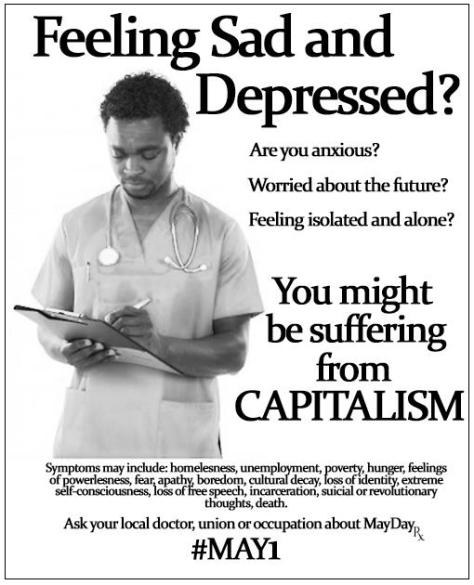
Happy May Day!

Life After Capitalism? A Document From Another Time

The French Marxist philosopher Louis Althusser, who perhaps reflected most on the question of ‘ideology’, once wrote that “ideology moves, but with an immobile motion that keeps it where it is”. Althusser did not make any claim about the truth or falsity of ideology. At a certain level, ideology undoubtedly refers to something that is real or true. What interested Althusser instead, was the relationship of ‘ideology’ to what he called ‘science’ – namely, that critical activity, which continuously works to take knowledge forward. Science, according to him, always lived by focusing on that which it did not know; ideology on the other hand, was that which remained with the obviousness of the already-known. Every new question that a science poses is effectively subsumed by ideology to give us something that we already knew. That is why science, he believed, was always  pursued, beseiged and occupied by ideology and had to continuously struggle to free itself from its grasp in order to live.

The CPI(M)’s ‘Draft Resolution on Some Ideological Issues’ prepared by the party for discussion and adoption at the party’s 20th Congress that began in Kozhikode today, is truly an ideological document in Althusser’s sense. It claims to move with the times and update the party thought apparatus but in reality, moves in order to stay where it is. It works to relentlessly re-present all the difficult questions of our times as if they were already known to the founders of something called ‘Marxism-Leninism’.

Continue reading Life After Capitalism? A Document From Another Time

CPI(M) shelves class struggle in action: Sankar Ray

Guest post by SANKAR RAY

[As the CPIM)’s 20th Congress began in Kozhikhode today, we bring two pieces marking the occasion. AN]

Unbelievable though it may seem even to the staunchest critic of CPI(M), ‘class struggle’ is totally missing in the 20950-plus word Draft Political Resolution (DPR) of the CPI(M), circulated and debated inside the party for over two months, that will be finalized with amendments, deletions and additions, at the 20th party Congress at Kozhikode between 4 and 9 April. The finalized political resolution is to be party’s tactical line until the 21st Congress four years later. The omission of ‘class struggle’ in the DPR, a basic document for committed struggle is stupefying as communists the world over frequently quote Marx that the history of mankind is “the history of class struggles”.

It’s not new as class struggle was omitted in the Political Resolution adopted at the 19th Congress ( Coimbatore, 29 March- 3 April 2008). But unlike at Coimbatore, the latest draft document talks of ‘people’s democracy’, CPI(M)’s main ideology, enshrined in the Updated Party Programme ( adopted at a special party conference in October 2000 at Thiruvananthapuram). But the pledge for moving forward to “a new, alternative path – towards people’s democracy and socialism” is vague.

Continue reading CPI(M) shelves class struggle in action: Sankar Ray