Category Archives: Media politics

The Military and ‘Peripheral’ Violence in Naya Pakistan

Guest post by ZEHRA HASHMI

It has been many months now since the Hazaras in Quetta were attacked. They were targeted during the month of January in 2013 and then only 36 days later in February, both times on Alamdar road where most Hazaras live – an area that has been termed an “open air jail”. Both times the banned Sunni organization Lashkar-e-Jhangvi claimed responsibility. In recent years, as many as 2000 Hazaras have lost their lives to similar acts of targeted violence in Balochistan. As power has been handed over from one civilian government to another for the first time in Pakistan’s history, the systemic nature of this kind of violence should be central to the concerns of Pakistanis – maybe even more than electricity, dare I argue? As Pakistanis think long and hard about what democratic change could mean, I write about the Hazaras now in order to point to the seemingly peripheral minorities as central to Pakistan’s issues. These attacks speak to the complex ways in which violence embeds itself into the everyday lives of some Pakistanis. In other words, the kind of structural issues that trying to wish a ‘naya Pakistan’ into existence will not assuage. Continue reading The Military and ‘Peripheral’ Violence in Naya Pakistan

From Koodankulam, an open letter to the Indian media

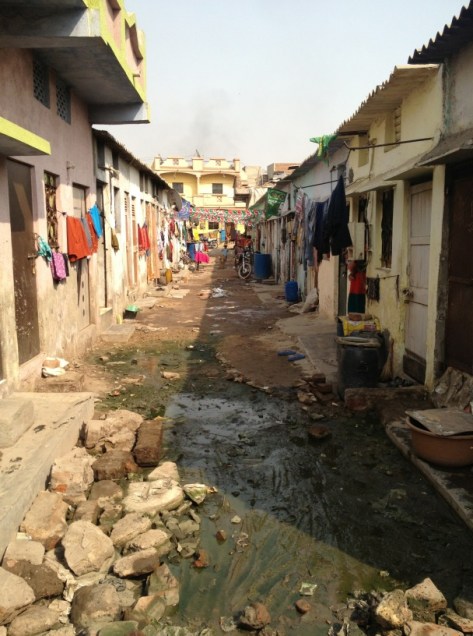
koodankulam

Press release issued by the PEOPLE’S MOVEMENT AGAINST NUCLEAR ENERGY (PMANE), based in Idinthakarai in Tirunelveli district of Tamil Nadu.

Dear friends,

Greetings!

Please allow us to bring the following to your kind attention in the larger interests of our country, people and most importantly, our democracy and freedom.

As the Fourth Pillar of our democracy, the media in India plays an important role in the smooth running of our country and the perpetuation of our democratic heritage.

We are sure that you have noticed the postponement of the commissioning of the Koodankulam nuclear power project (KKNPP) to July 2013 without giving any reasons or explanations. Continue reading From Koodankulam, an open letter to the Indian media

A memorable evening with Vidya Charan Shukla

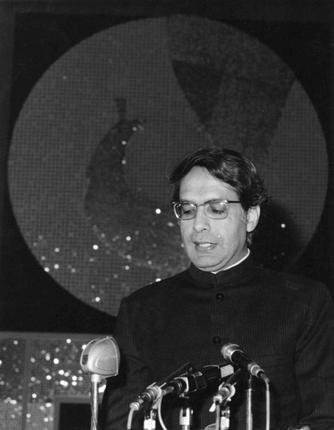
In this January 3, 1977 photo, V.C. Shukla, Union Minister of Information and Broadcasting inaugurates the sixth International Film Festival of India in New Delhi. The Justice Shah Commission of Inquiry which went into the Emergency execesses, had mentioned Shukla's name in its report. Photo: The Hindu Archives / TheHindu.com
In this January 3, 1977 photo, V.C. Shukla, Union Minister of Information and Broadcasting inaugurates the sixth International Film Festival of India in New Delhi. The Justice Shah Commission of Inquiry which went into the Emergency execesses, had mentioned Shukla’s name in its report. Photo: The Hindu Archives

By SOHAIL HASHMI: Though the East and the West have great differences in issues cultural, in one matter they are like twin brothers. Both insist we should not speak ill of the dead. This does not apply to Changez Khan, Hitler and Mussolini. Some would add a few more to the list, but there are chances of violent disagreements on some of those names.

There have been honourable deviations from this haloed creed and if my memory serves me right,  at least one of them has been attributed to The Bard, who made Mark Antony declare at the funeral of Caesar, “Friends Romans and Countrymen, we have gathered here to bury Caesar and not to praise him,” or words to that effect.

These were some of the confused musings that floated to the top of the mind when I heard the news of V.C. Shukla’s passing away. Does the fact that he is dead or the dastardly fashion in which death stalked him and ultimately consumed him, give him an escape from his deeds?

It is a commentary on our justice delivery system that V.C. Shukla, one of those who belonged to the coterie that ran the Emergency establishment for Mrs Gandhi, did not spend a long time behind bars for his acts of commission as Minister of Information and Broadcasting. Some of his achievements as Minister of Information included snapping power supply to newspapers critical of the Emergency, introducing Draconian censorship, banning magazines and newspapers, and sealing printing presses that dared to publish anything critical of the infamous Mrs G or her Emergency regime. Continue reading A memorable evening with Vidya Charan Shukla

Disinformation and Journalistic Ethics: A Letter from Harsh Mander

We are publishing below a communication received from Harsh Mander, a former member of the National Advisory Council, regarding misrepresentation of his position and his politics by no less a person than the editor-in-chief of the Indian Express. The misrepresentation could easily have been corrected, had the mistake been really a mistake but by not publishing the letter or even an editorial correction, newspaper and the editor seem to be acknowledging that the error was in fact, intended. In the language of the Cold War, acts such as these were called ‘disinformation’. 
Response to Mr Shekhar Gupta’s article ‘The Bleeding Heartless’ in the Indian Express, June 1 2013
 

In response to an article by Mr Shekhar Gupta ‘The Bleeding Heartless’ in the Indian Express, June 1 2013, I sent the letter reproduced below on 3 June 2013, which has not yet been carried by Indian Express. I try not to respond polemically to articles which disagree with my views on public policy or other issues, as these differences are perfectly legitimate in a democracy. And who is to be sure that I am right, and my critics are wrong? But this was different, because it utterly falsely described my ideological position on Maoism as sympathetic, whereas I have always been passionately and publicly opposed to all forms of violence, including Maoist violence. Moreover it linked this to my membership in the NAC, and through that by implication to the many pro-poor agendas I sought to bring into and support within the NAC in the two years that I was a member. Finally Indian Express did not check with me the full facts reported in the opinion piece. I therefore felt I should respond formally to the report. But since this response has not been carried, and on the other hand it is being publicly referred to by others as well, I felt it would be best to place this reply in the public domain. – Harsh Mander Continue reading Disinformation and Journalistic Ethics: A Letter from Harsh Mander

How to respond to a legal notice from The Times of India

Shamnad Basheer shows the way:

We strongly object to the vile language and the highly aggressive tone used in the notice. We can respond in kind, but we choose to be a bit more civil with you.

You choose to issue this highly malevolent letter, hoping to intimidate us into a meek apology. Unfortunately, while the meek may inherit the earth, they are bound to be shown no favour by corporate powerhouses such as your client.

So, let’s cut to the chase and explore your alleged grievances articulated rather flatulently in over seven pages of a highly intemperate legal notice.

Read the full story at Sans Serif.

Shamnad Basheer for PM!


What Rediff Could Have Done to Support Kavita Krishnan Against Rape Threats: Anja Kovacs

Guest post by ANJA KOVACS: Imagine a TV station inviting a guest and giving the audience the opportunity to freely ask questions, with the guest deciding which questions to respond to. Imagine a member of audience then threatening the guest with rape, and the TV station’s representative responding by simply passing on the microphone to the next person, leaving the guest to fend for herself. Imagine the TV station then also refusing to provide any assistance to the guest following the incident. Outrage would, justifiably, ensue. Last week, Rediff treated a guest in much this way – during a Rediff-organised online public chat.

On 24 April, Kavita Krishnan, Secretary of AIPWA and a leading figure in the anti-rape protests that have been rocking the capital since December 2012, participated in a public chat at the invitation of Rediff. The topic of the chat was the rising incidences of rape and violence against women in the country. During the chat, Krishnan was repeatedly threatened with rape by a participant whose handle read ‘RAPIST’. RAPIST wrote: ‘Kavita tell me where I should come and rape you using condom’. Earlier the same person had made comments such as ‘Kavita tell women not to wear revealing clothes then we will not rape them’, to which Krishnan had in fact responded. All comments by RAPIST were written in capital letters.

Continue reading What Rediff Could Have Done to Support Kavita Krishnan Against Rape Threats: Anja Kovacs

When an April Fool’s Day joke is not funny: Zahir Janmohamed

A colony of 2002 riot affected families in Ahmedabad. Photo by Zahir Janmohamed

This is a guest post by ZAHIR JANMOHAMED: This morning, April 1, Google announced its latest product: Gmail blue. It is email except for one critical difference—everything is blue.

 “I can’t believe I waited so long for this,” a hilarious Google video says.

It works because it is funny and so obviously absurd—you would have to be, well, a fool to believe this April fool’s day joke. But the Google prank is also something else: harmless. It does not hurt anyone nor it does not trigger painful memories.

When does an April fool’s day cross the line? Continue reading When an April Fool’s Day joke is not funny: Zahir Janmohamed

Alan Rusbridger on Open Journalism and the Looming Threat of Supra-Regulation: Saurav Datta

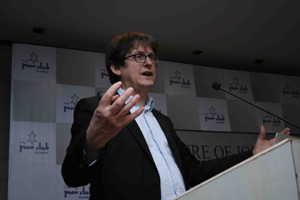
Photo: Bhushan Koyande /Free Press Journal

Guest post by SAURAV DATTA

“Open” Journalism – it’s all about transparency, challenging, correction and clarification.

Marking a refreshing departure from the hackneyed “economic model” analysis of digital journalism, Alan Rusbridger, The Guardian’s Editor-in-Chief recently held forth on its effects and manifestations from the perspective of “journalistic practices”. Whether to fortify stories and content behind “gigantic (pay)walls” or not, is the wrong starting point, because one has to see if actions are “journalistically right,” he said. Continue reading Alan Rusbridger on Open Journalism and the Looming Threat of Supra-Regulation: Saurav Datta

Crude Questions about Crude Bombs: Biju Mathew

This is a guest post by BIJU MATHEW

Tarun Mandal, Narahari Sahu and Manas Jena are dead, blown up by what the media has described as a “crude” bomb. All bombs are crude. They kill. They are meant to destroy flesh and bone. They are aimed at sucking out life. Lakshman Mandal battles for his life in a Cuttack hospital. He knows how crude a bomb is. Hopefully he will live to tell the tale of its crudeness.

This is a partisan piece. But it aims to produce balance. Almost all media reports so far have had a strong spin that the three – Narahari, Tarun and Manas – were killed while making a crude bomb. So says Mr. Satyabrata Bhoi, Jagatsinghpur SP. Nobody has bothered to ask him any further questions. It’s quite understandable. Asking any more questions might make the entire spin untenable. For instance, they could have asked: why is it that something illegal, such as crude bomb making, was being done out in the open and not within the confines of a house? Especially given that for the last month, the police have been constantly in and out of the village? Especially because there are at least a few dozen pro-POSCO folks in the village? Why would three leaders of an oppositional movement sit outside on the porch of a house that is fully identified with POSCO Pratirodh Sangran Samiti (PPSS) and make bombs – openly, for all to see – at 6.30 PM when there is enough light for anybody to see them? Isn’t crude bomb making normally confined to the indoors? How many incidents do we know of where crude bomb making was happening outside in broad daylight? Isn’t the RSS, the most famous outfit that makes crude bombs and occasionally manages to blow up its own, always known to make its bombs indoors? Continue reading Crude Questions about Crude Bombs: Biju Mathew

Pot calling the dynasty black: Ajaz Ashraf

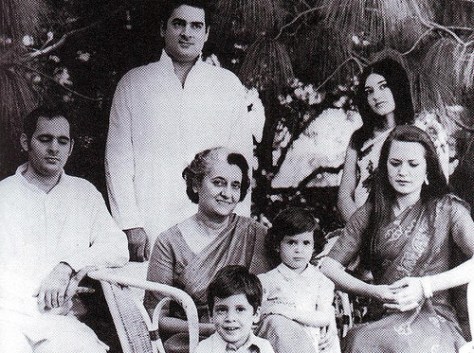
gandhi-family

AJAZ ASHRAF writes: It is time we examined the society we have created before we invoke the rather trite argument of dynastic rule to stridently criticise the Gandhis and the Congress. No doubt, dynasty is antithetical to democratic politics. Yet, it is also true that dynastic succession is the norm outside the Indian political realm as well. Its sheer pervasiveness explains why people dismiss outright the hypocritical media outcry against dynastic succession to routinely vote pater familias to power, in state as well at the Centre. Continue reading Pot calling the dynasty black: Ajaz Ashraf

राज्‍य हिंसा का एक और नमूना – धुले

(An edited version of this Fact-Finding Report appeared in February issue of Samayantar)

गुजरात और मध्यप्रदेश की सीमा से लगे हुए महाराष्ट्र के धुले जिले में 6 जनवरी को होटल में पैसे के लेन-देन के आपसी विवाद को लेकर शुरू हुआ झगड़ा जल्द ही हिन्दू एवं मुस्लिम समुदाय के बीच पत्थर बाजी में तब्दील हो गया। इस हिंसा की परिणति पुलिस की गोली से मारे गए छः मुस्लिम नौजवानों (1) इमरान अली कमर अली (25) (2) असीम शेख नासिर  (21) (3) सउद अहमद रईस पटेल (18) (4) हाफिज मो. आसीफ अब्दुल हलीम (22) (5) रिजवान हसन शाह (24) (6) युनुस अब्बास शाह (20) के रूप में हुई। लगभग 55 मुस्लिम नौजवानों, जिनमें से लगभग 40कोगोली लगी, पुलिस की हिंसा के शिकार हुए। 58ऐसे लोग हैं जिनके घर,वाहन, दुकान, ठेलागाड़ी को क्षतिग्रस्त किया गया। धुले में हुई इस साम्प्रदायिक हिंसा की खासियत यह है कि न तो पुलिस और न ही कोई साम्प्रदायिक संगठन झूठ बोल सकता है, क्योंकि धुले में लगभग 3 बजे के आसपास जब विवाद ने पत्थरबाजी का रूप ले लिया तब उसके बाद के ज्यादातर फुटेज वीडियोक्लिपिंग अथवा फोटोग्राफ के रूप में मौजूद हैं। धुले में हुई इस हिंसा की हकीकत जानने के लिए वर्धा के हिंदी विश्‍वविद्यालय के अध्‍यापक, छात्र, सामाजिक कार्यकर्ता एवं पुणे के स्‍वतंत्र पत्रकार ने 19-20 जनवरी को धुले जिले का दौरा किया। Continue reading राज्‍य हिंसा का एक और नमूना – धुले

The sickening political opportunism of Chetan Bhagat

modi-chetan-bhagat

Snigdha Poonam watches Kai Po Che, whose script was written by Chetan Bhagat, based on his book The Three Mistakes of My Life:

In the film adaptation, Mr. Bhagat has also added what seems like justification for some Hindus to turn violent, like the death by burning of both of the parents of one of the three protagonists in the Sabarmati Express; in the novel, it was his nephew. We all know the level of vengeance with which Bollywood heroes respond to the targeting of their mothers: “Teri maa mari hai kya (Is it your mother who has died?),” the bereaved son explodes at a sensible friend trying to stop him from losing control of himself.

In his book, Mr. Bhagat clearly showed the 2002 riots as a state-sanctioned exercise (“Whatever it takes to quench the hurt feelings,” says a “senior Hindu Party leader”). But he excised that from the film completely. [Read]

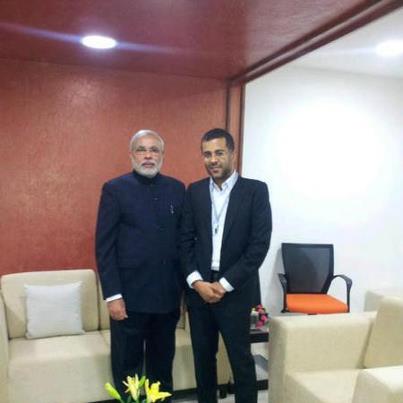
That image above is via DeshGujarat.com, where an article quotes Bhagat as saying in a TV debate:

“It has been discussed much that Modi ji has done well in Gujarat, but what I believe is that he is a very good politician. A politician has to change with public mood. When communal issue mood was there in the country, that was Modi version 1, when he elected for the first time. And when he won the election for second time, he won it on development agenda.”

Clearly, Mr Chetan Bhagat is also a good politician.

Arindam Chaudhuri promises to get Kafila page unblocked

kafila-arindam-c-iipm-blocked
The webpage http://kafila.org/2011/06/22/arindam-chaudhuri-silchar has been blocked by Internet Service Providers in India. Some users will see a blank page (like above) and others will see a note that the page has been blocked on the orders of the Department of Telecommunications.

Until Nikhil Pahwa of Medianama.com informed me, I had no clue that  India’s unjust and arbitrary internet censorship regime had finally affected Kafila. Medianama published on Friday 15 February a list of 78 URLs that the Department of Telecommunications had ordered ISPs to block. 73 of them were webpages critical of the Indian Institute of Planning and Management (IIPM), whose Arindam Chaudhuri has a long history of complaining about the Internet. Continue reading Arindam Chaudhuri promises to get Kafila page unblocked

Arindam Chaudhuri, Silchar

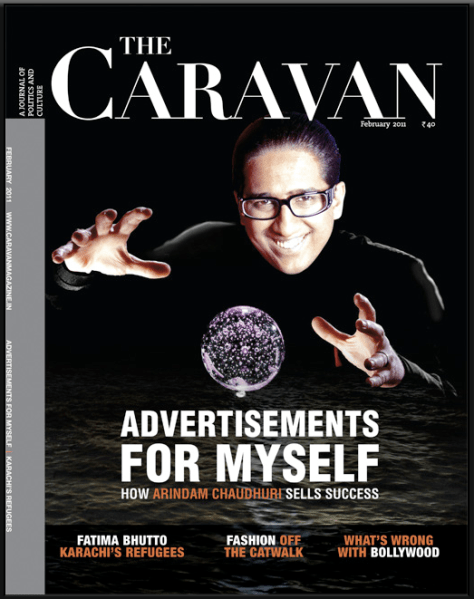
Given below is the text of a press release put out by THE CARAVAN magazine in 2011. This was first published in Kafila on 22 June 2011 and is being republished today for all those who may be interested in following up on the defamation case filed against The Caravan for a profile of Arindam Chaudhuri. The Supreme Court had stayed the case in August 2011.

When I read The Caravan‘s cover story on Arindam Chaudhuri some months ago, I wondered when he was suing them. And he’s done it! While a court injunction has made The Caravan remove the story from their wesbite, you can read it thanks to Google cache. No wonder Chaudhuri’s sued Google India as well! Given below is the full text of the press release put out by The Caravan. Unlike when Chaudhuri took on bloggers in 2005, I’m glad it is an organisation with the resources to fight the case and take him head on – not to say that requires some spine as well. After you’re done reading the release below, entertain yourself with all the Arindam jokes on Twitter.  

IIPM’s Rs500-million lawsuit against The Caravan
In response to our February profile of Arindam Chaudhuri, the IIPM has sued The Caravan. Here’s why we’re fighting the suit. Continue reading Arindam Chaudhuri, Silchar

Newslaundry ki dhulai: Kashif-ul-Huda

Guest post by KASHIF-ul-HUDA

In just a year, Newslaundry has achieved quite a following for its in-depth and hard-hitting interviews.  “Welcome to newslaundry – Sabki dhulai. You watch. We’re watching,” says the “About Us” page of this website. But the question is who will do dhulai of Newslanudry?

Newslaundry’s interview of eminent Islamic Scholar Asghar Ali Engineer makes you wonder what kind of preparation did Madhu Trehan did before doing this interview? How is this interview, asking stupid questions on the topic of women’s education, Salman Rushdie, purdah, etc., any different than idiots that play journalists on news channels? Continue reading Newslaundry ki dhulai: Kashif-ul-Huda

A crumbling fourth pillar, and the forgotten politics of boycott: Manav Bhushan

Guest post by MANAV BHUSHAN

Assaulted as we are by the deafening cacophony of India’s 24-hour news channels (183 of them, as Manav Bhushan tells us below), there are some of us who for a long time now, have simply refused to appear on TV “debates”, to give them sound bytes to be seamlessly incorporated into their endlessly looping mindlessness. Essentially, we have exercised a politics of refusal – we will not add to the din. At a recent meeting on media ethics at the Indian Women’s Press Corps, I had expressed a fervent desire that every single 24-hour news channel should shut shop for one week while they went into deep introspection – one week of blessedly blank screens, one week of healing quiet in which people could once again learn to listen, to remember that there can be more than 2 or 3 sound-bytes through which to capture the complexities of the world in which we live. MANAV BHUSHAN makes a more radical suggestion below –   that we exercise the only power we have under capitalism, our power as consumers, and exercise a week-long boycott of a news channel for specific reasons, to force drastic changes to its policy and style of functioning. “In an age where each channel depends more on our TRPs than we do on any one of them, we hold enormous, albeit unrealized power,” he says. Over to Manav:

In a speech delivered at the Reuters memorial lecture in November 2012 at Oxford University discussing the Indian news industry, Prannoy Roy candidly said that ”Indian news is currently in a race to the bottom”. He further added that upon comparing the average TV viewership in India (1 hour) to that in the US (5 hours), one is led to the utterly dismal conclusion that this race is far from over. Of course, this is nothing new, and anyone who has followed the ‘debates’ (if you can call them that) on the extremely unfortunate incidents at the LOC can testify that the shows conducted by Arnab Goswami and Barkha Dutt were less news and more war-mongering. In fact, the brutal truth about the flourishing news industry- which has gone from one state-run news channel to 183 independent news channels in just 25 years- is that many of its members are in the business of blackmail, of selling sex, violence and are prepared to go to any lengths for the sake of advertising revenues. And there is a difference, though subtle, between advertising revenues and television rating points (TRPs).  Continue reading A crumbling fourth pillar, and the forgotten politics of boycott: Manav Bhushan

Dear Pakistani friends, Put yourself in my shoes

I did not want to write this post.

There are enough Indian voices, from Times Now to Hindutva Online, who point fingers at Pakistan. Like M Ziauddin of the Express Tribune newspaper, I think that the two countries need more unpatriots – not people who ‘hate’ their own countries but who question their own nationalist narratives. People who ask: could we be wrong? Asking questions of yourself is difficult, and blaming the other is instant gratification of ego. Questioning yourself has long-term rewards in helping you make peace with yourself.

I am forced to write this piece because I continue to see well-meaning Pakistanis online continue to complain about the Bad Hospitality given by India to the Pakistani women’s cricket team in Cuttack in Orissa. The complainants online have included some of my Pakistani friends whom I know to be liberal, peace-loving and well-meaning, and who have clearly been influenced by some clever propaganda that is deliberately not showing them the full picture. Continue reading Dear Pakistani friends, Put yourself in my shoes

Ashis Nandy, Media and the Work of Acceleration: Anirban Gupta Nigam

Guest post by ANIRBAN GUPTA NIGAM

The hornet’s nest stirred by Ashis Nandy’s comments at the Jaipur Literature Festival might – hopefully – be dying down, but certain questions raised by the occurrences on the 26th probably require a little reflection on everyone’s part.

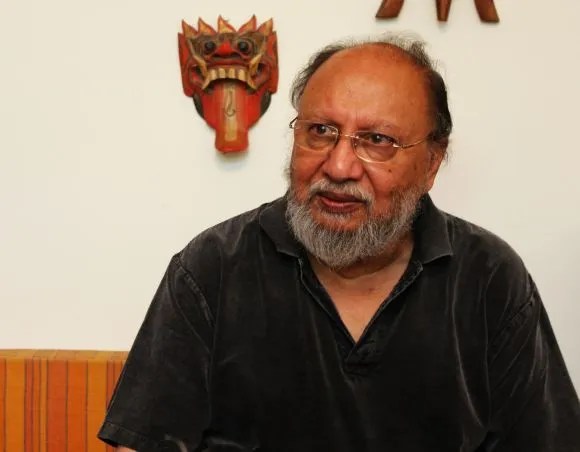
In the corporate and social media blitz, a lot of the details have been forgotten, excised and overlooked. Till yesterday it was not clear what his entire speech consisted of. The most quoted line from his talk at the festival is: “it is a fact that most of the corrupt come from the OBC, the Scheduled Castes and now increasingly the STs and as long as it is the case, the Indian republic will survive.” None of those attacking Nandy for being casteist or spewing hate-speech have in fact even attempted to explain the latter part of the quote: “as long as it is the case, the Indian republic will survive.” How is that a casteist statement? More importantly, media reproductions of his statement have excised a crucial disclaimer he himself gives at the beginning: “It will be an undignified, even vulgar statement, but it is a fact that most of the corrupt come from the OBC, the Scheduled Castes and now increasingly the STs and as long as it is the case, the Indian republic will survive.” Continue reading Ashis Nandy, Media and the Work of Acceleration: Anirban Gupta Nigam

Ashis Nandy’s Predicament and Ours

For the past few days I have been preoccupied in one part of my mind in dealing with two reasons for anguish. The first reason has to do with the profound sense of disappointment and anger with which I heard Prof. Ashis Nandy, a man I consider to be a great teacher, friend and in possession of one of the finest minds of our time, commit himself in public to a flippant and vulgar position when speaking of the relationship between caste and corruption at the Jaipur Literary Festival.

I was saddened because Prof. Nandy’s statements do a great disservice to the suppleness and ethical integrity of his thinking, and represent one of those sadly paradoxical situations where an intellectual can become their own worst adversary. I am unambiguously critical of the Nandy who chooses to be pompously opinionated and misinformed at a forum like the Jaipur Literary Festival or while riding the hot-air currents of television especially because I remain a partisan of the Nandy who can be (when he chooses to be) one of the most thoughtful and insightful witnesses to our time in his writing. Continue reading Ashis Nandy’s Predicament and Ours

Free Naveen Soorinje

This is a public statement; names of signatories given at the end.

As editors and senior journalists representing a cross-section of the print, television and online media, we wish to bring to your notice a matter of serious professional concern for the journalist fraternity.

Naveen Soorinje, a district reporter with the Kannada channel Kasturi Newz 24, was arrested by the Karnataka police on 7 November 2012 for the role he played in covering the 28 July 2012 attack by Hindutva vigilantes on innocent boys and girls who were celebrating a birthday at a homestay in Mangalore. In the two months that Naveen Soorinje has been in judicial custody in Mangalore, his mental and physical health has deteriorated drastically. He was recently discharged from the jail ward of the district hospital after suffering a bout of chickenpox. Continue reading Free Naveen Soorinje

On the Karnataka Police’s charges against KK Shahina: IFJ

This release was put out by the INTERNATIONAL FEDERATION OF JOURNALISTS on 15 January 2012

The International Federation of Journalists (IFJ) is extremely concerned to learn of the criminal charges filed against investigative reporter K.K. Shahina by police in the southern Indian state of Karnataka.

Shahina, who currently works with the weekly magazine Open, faces charges under various sections of the Indian Penal Code, including criminal conspiracy and intimidation of witnesses with intent to commit a crime. The chargesheet filed in the sessions court in the district of Kodagu in Karnataka state, also indicts her under sections of the Unlawful Activities (Prevention) Act, which is most commonly invoked to deal with terrorist offences.

These charges stem from a story published under Shahina’s byline in the weekly magazine Tehelka in December 2010, which appeared to cast doubt on the prosecution of a prominent Islamic cleric and political figure on terrorism charges. Continue reading On the Karnataka Police’s charges against KK Shahina: IFJ