
Lahore-based journalist-singer ALI AFTAB SAEED explains how we can classify news into three kinds, and how doing so helps us make better sense of the world. He says at the end this is true not just of Pakistan – indeed, this is a very useful classification to understand the Indian medial landscape as well!
Category Archives: Media politics
This Troll Has a Very Long Nose
 Ironically, the random arrest of people for tweets or Facebook postings made some of us happy—happy that, at last, citizens have started showing concern about internet censorship. But lock-up gates had to clang at night on the faces of a few people before we realised that, in our pompous democracy, the might of the state is Ctrl-Alt-Deleting opinion with such serious zeal. The arrests have been made under Section 66A of the Information Technology (Amendment) Act, 2008, notified in October 2009. This section makes punishable with up to three years’ imprisonment anything that is perceived as “grossly offensive” but does not set out the parameters of how to decide on that—even if we were to believe that could at all be done. Questions about these arrests are deflected: the government blames the police, the police says a vague law is the problem, and those who file the complaints that lead to such arrests say that they are free to seek enforcement of an existing law.
Anyone can see that the section is not designed to nudge a case towards a conviction verdict. It is designed only to harass. Arrests, courtwork, bail. You are ground down, but the government spokesman is able to say, “The law is taking its own course.” The implication: “Aren’t you grateful you have obtained bail?” But the recent arrests have caused outrage. Taking up a PIL against the section, the Supreme Court had said in December that had it not been filed, it would have taken up the matter anyway. Despite this, the government defended the section in the Rajya Sabha, refusing to repeal it and merely adding guidelines that such arrests should be made by an officer of a higher rank—as if that would make it better.
Read more, here.
In Multiples of Ten Ravanas
Some (more) thoughts on Indian and Pakistani soldiers beheading each other at the ceasefire line in Jammu & Kashmir
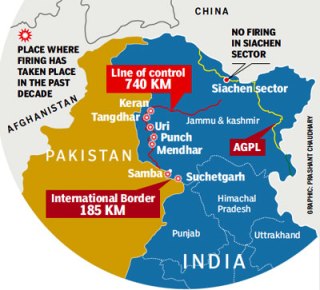
In the early hours of 10 January 2013, I published a post here that asked, “Was an Indian soldier decapitated at the Line of Control or not?” Soon thereafter, the family of Lance Naik Hemraj Singh of 13 Rajputana Rifles cremated his body and went on a hunger strike, demanding the government get the head. Several readers commented that now that it was clear a beheading did take place, I owe them an apology. I do not see why I owe them such an apology considering I never said that an Indian soldier wasnot beheaded. I only pointed to the conflicting reports, the absence of official mention about whether or not a soldier was beheaded, a quoted a Reuters report that categorically said that according to the official spokesperson of the Northern Command, no soldier was beheaded, though the two soldiers’ bodies were mutilated. Despite such an official denial quoted in a trusted news source, I had written, “It is possible the anonymous sources are right, because this is not the first time both sides are blaming each other of showing disrespect to bodies of dead soldiers in violation of the Geneva convention.” Continue reading In Multiples of Ten Ravanas
Dear Barkha Dutt: The Buck Stops Where?
On the of latest edition, (telecast a few hours ago, on the evening of the 15th of January, 2013) of ‘The Buck Stops Here’, (a flagship news show on NDTV anchored by Barkha Dutt) – ‘India-Pakistan:Another Tipping Point‘, Admiral (Retd.) Ramdas, former chief of the Indian Navy said he knew that Indian forces have beheaded Pakistani soldiers in the past. Gen. (Retd.) V.P. Malik, former chief of the Indian Army contradicted him, and said this had never happened. Barkha Dutt was silent on this matter.
Below is a summary of some highlights of the discussion. Continue reading Dear Barkha Dutt: The Buck Stops Where?
Harassment by Times Now: Statement by Shabnam Hashmi
[The following is a public statement issued by Shabnam Hashmi regarding her harassment by Times Now. The report is truly alarming and shows the extent to which this form of ‘media vigilantism’ – Arnab Goswami/ Times Now style can go. It is of course, another matter that when confronted by a Raj Thakre, the same macho anchor can turn into a small and helpless mouse. We are reproducing this statement in public interest.]
I was in Gujarat for over six months and returned to Delhi two weeks ago. While in Gujarat I was asked to appear on different television channels constantly. On one such talk show on Times Now I felt that I was especially being pushed into a corner and it was an absolutely unbalanced panel, I told the Times Now guest coordinator that I will not come on the channel any longer. It continued for about a week or so. Then a representative came from Mumbai and met me in Gujarat office and ensured that it will not happen in future and requested me to come for the Talk Shows.
I agreed and went again whenever I was called.
On December 28, 2012 I released a public statement in Delhi regarding the Gujarat Verdict 2012 and resigned from various UPA committees that I was part of. On the same day I was invited to Times Now and I found the same attitude of being highly aggressive towards me.
January 2, 2013, I filed a police complaint against Mr Akbaruddin Owaisi in Parliament Street Police Station against the hate speech which he made in Andhra Pradesh. I was called on Times Now and met the same uncivilized and aggressive behavior.
Continue reading Harassment by Times Now: Statement by Shabnam Hashmi
Was an Indian soldier decapitated at the Line of Control or not?
*
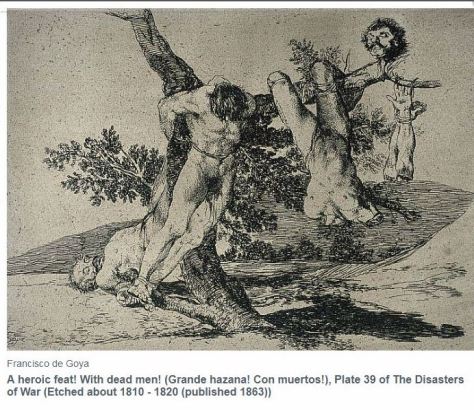
In a skirmish on the Line of Control on Tuesday, 8 January 2013, did Pakistani soldiers behead an Indian soldier or did they not? Or did they behead two soldiers and take away the head of one of them? Or did they behead one and slit the throat of another? Reports in the Indian media have left me utterly confused. I’ll let you decide. Continue reading Was an Indian soldier decapitated at the Line of Control or not?
Fettering the fourth estate: Free Speech in 2012
Fettering the Fourth Estate: Free Speech in 2012
A report of the Free Speech Hub of the Hoot.org
The year 2012 ended with a Kannada TV reporter, Naveen Soorinje, in jail for more than fifty days after the Karnataka High Court denied him bail. Mangalore-based Soorinje, was incarcerated from November 7, 2012 after police charged him under the UAPA and under the Indian Penal Code (IPC) for reporting on the raid on a homestay party by a Hindu fundamentalist group in July. Soorinje’s bail application was rejected on December 26.
The same month, a television journalist, Nanao Singh, was shot dead in a police firing in Manipur.
In 2012, India was a grim place for free speech. It recorded the death of five journalists. Another 38 were assaulted, harassed or threatened. There were 43 instances of curbs on the Internet, 14 instances of censorship in the film and music industry, and eight instances of censorship of content in the print medium. Continue reading Fettering the fourth estate: Free Speech in 2012
For Anonymous: Nilanjana Roy
Guest post by NILANJANA ROY
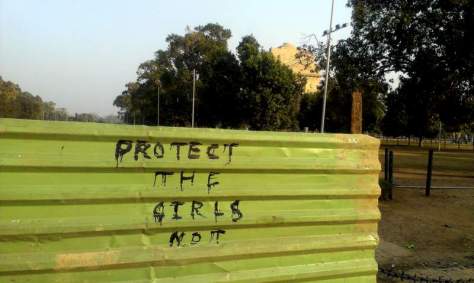
That girl, the one without the name. The one just like us. The one whose battered body stood for all the anonymous women in this country whose rapes and deaths are a footnote in the left-hand column of the newspaper.
Sometimes, when we talk about the history of women in India, we speak in shorthand. The Mathura rape case. The Vishaka guidelines. The Bhanwari Devi case, the Suryanelli affair, the Soni Sori allegations, the business at Kunan Pushpora. Each of these, the names of women and places, mapping a geography of pain; unspeakable damage inflicted on women’s bodies, on the map of India, where you can, if you want, create a constantly updating map of violence against women. Continue reading For Anonymous: Nilanjana Roy
Rape is allowed because most people don’t know what it is: Anonymous
Guest post by ANONYMOUS
Rape is allowed because most people don’t know what it is.
To say that victims understand it is assuming too much. The immediate affect will be a deep, invisible wound. After years of counselling it will still hurt and terrorise. All the strength in the world, at the individual and existential levels, will fall short. Very often the crime will remain unreported. Rather than empowering women, the legal system will manage so few convictions that it will itself be the greatest perpetrator.
The perpetrators, as in the actual rapists, know as much or as little as the victims. They will go unarrested, unnoticed, unashamed, and this will fuel their psychopathy. They may or may not realise that rape is not about sex but power.
Continue reading Rape is allowed because most people don’t know what it is: Anonymous
How not to think about violence against women: Noopur Tiwari
Guest post by NOOPUR TIWARI

I woke up in Paris last weekend to the news of the Delhi protests. I felt relieved. People are not just watching or suffering quietly anymore, I thought to myself. I wanted to be there too, out in the streets of Delhi. For all those times I had to suffer sexual harassment in Delhi, I want to be part of this churning for change now.
My Parisian friends asked me what was going on. And I told them about the new “national outrage” and the stories that had been stoking the anger. That’s when I realised I needed to make a list. What was informing my idea of what’s going on? These stories making it to the headlines, do they have something in common?
Yes, they do have one very obvious thing in common. They are all “sensational” news items. They are either:
Continue reading How not to think about violence against women: Noopur Tiwari
A Government in Hiding
Protestors from Raisina Hill began to be forcibly removed late last night. The police action continued in the foggy cold of this December morning. Aghast at the violence on a completely peaceful gathering of students – some of them just school children – many of us too felt compelled to join the demonstrations. A number of left-wing student groups who have been part of the protests had called for collecting at the Neel Gumbaz at Nizamuddin. At 11 am, we all started collecting there – many of us older folk going there in solidarity with what has been one of the most unprecedented student-youth mobilizations in the city. Yesterday, there had been repeated rounds of water cannons, tear-gas and brutal lathi-charge by the police of a government that has gone into hiding.
Finally, some 600-700 of us began moving in a procession from Nizamuddin to India Gate. When we reached there, we discovered that already large numbers of people had begun recongregating at ‘Rajpath’ – the Power Avenue where every January the Republic displays its military might to the world. The numbers were continuously swelling. A group of supporters of Arvind Kejriwal’s AAP – inclduing Kejriwal and other leaders – were squatting on one side, towards Hyderabad House. This was virtually on the margins of the area where the main crowds were. Apart from the group of people we had come with, there were hundreds who seemed to us to be completely unaffiliated ordinary students, contrary to some claims floating around in Facebook that these were ‘RSS crowds’. At one end a human chain had been erected and slogan shouting for justice continued. Around the Amar Jawan Jyoti, there were processsions of students still coming in. We were there till about 2 pm and there was no question of any violence at all – except for three unprovoked tear gas shells that had been lobbed by the police into the crowd. There had been some minor commotion as the police occassionally tried to push back students with a lathi charge of sorts.
By this time, however, it was apparent that the police was preparing for the offensive. Police briefings were taking place in different groups and gradually the crowd was being surrounded from all sides. And yet, till about 2.50 pm, despite twenty rounds of tear gas being fired by the police, as well as periodic lathi charges – they did not manage to provoke violence from the crowd to justify a crackdown. But the crackdown had to take place. And lo and behold, the justifications for it materialized, suspiciously, very soon. Continue reading A Government in Hiding
Free Naveen Soorinje
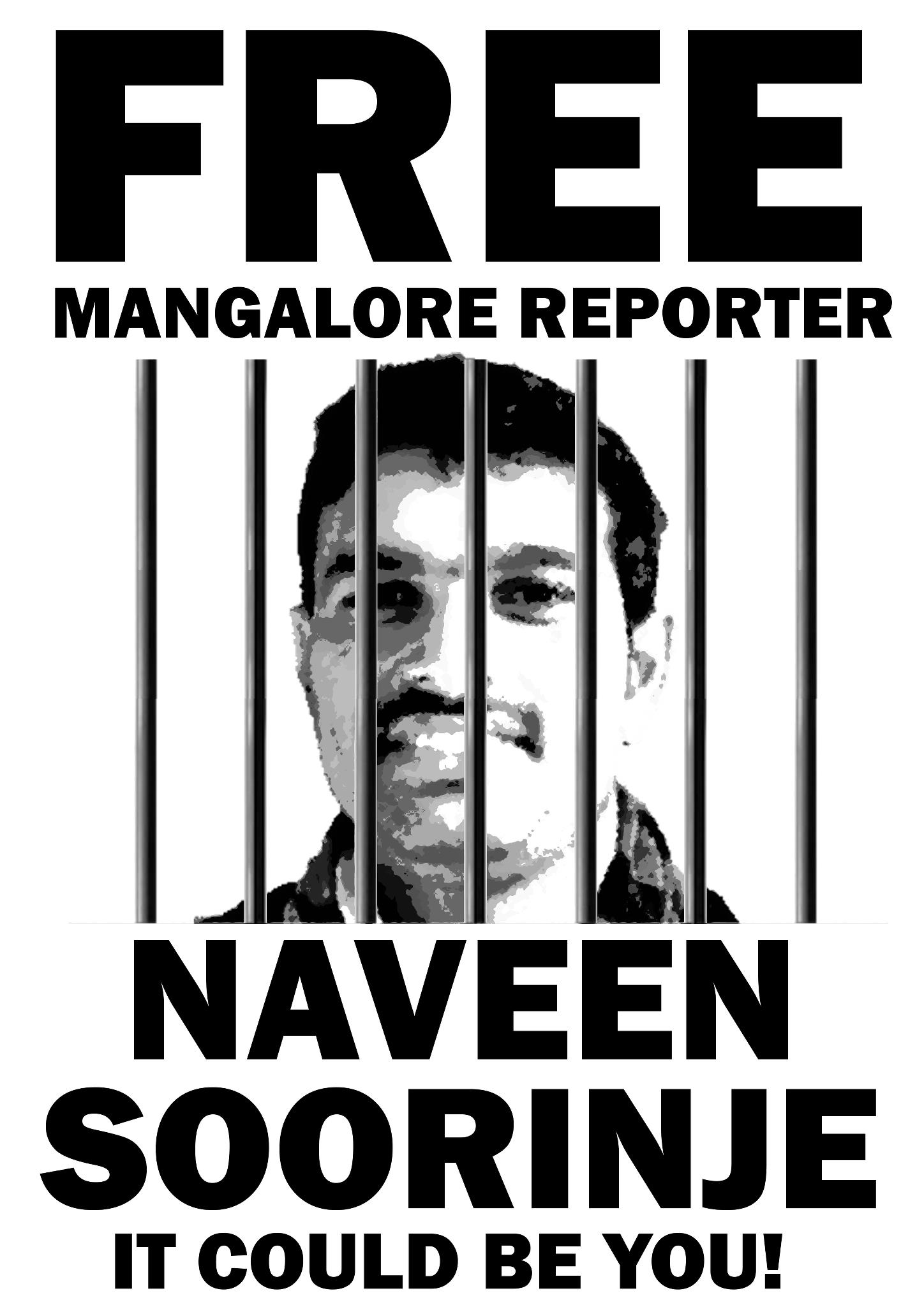
It is a matter of shame that instead of being celebrated, Naveen Soorinje, who followed journalism’s best traditions in reporting the attack by Hindutva vigilantes in Mangalore earlier this year, is now languishing in jail.
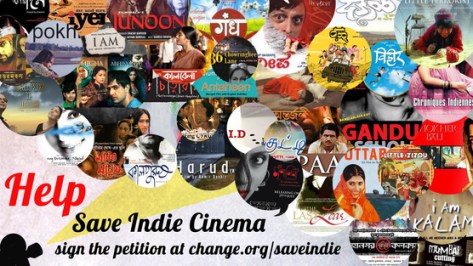
Save indie cinema in India
To:
Door Darshan India (Director General)
President of India (Shri Pranab Mukherjee)
Vice President of India (Shri Hamid Ansari)
Information and Broadcasting Minister (Manish Tiwari)
This petition is jointly filed by: Oscar Award and National Award winning sound engineer Resul Pookutty; National Award Winner and Oscar nominees Ashvin Kumar, Ashutosh Gowariker; National Award winning filmmakers Anant Mahadevan, Aparna Sen, Ashim Ahluwalia, Buddhadev Das Gupta, Girish Kasaravalli, Goutam Ghosh, Jahnu Barua, Janaki Viswanathan, Nila Madav Panda, Onir, Rituparno Ghosh, Sachin Kundalkar, Shivajee Chandrabhushan, Shyam Benegal, Sanjay Suri, Shonali Bose, Sooni Taraporevala, Sudhir Mishra, Suman Mukhopadhyay, Umesh Kulkarni, Vinay Shukla, Vishal Bharadwaj; Film makers Aamir Bashir, Amole Gupte, Anusha Rizvi, Bedabrata Pain, Homi Adajania, Kaushik Mukherjee (Q), Kiran Rao, Krishna D.K., Nandita Das, Rahul Bose, Samar Khan, Srijit Mukherji , Subhash Kapoor, Sudish Kamath, Vinta Nanda, Vipin Vijay, Zoya Akhtar; 5 time National Award winning actror, social activist and MP Shabana Azmi and actor/producer Juhi Chawla
As the country celebrates 100 years of cinema we want to bring to your notice how New Wave Indie Cinema of India is under threat. Among the various challenges that we face as Indie film makers, the biggest is that of exhibition. The multiplexes which were given tax benefits to promote small budget content film have in fact been instrumental in destroying small cinema by only playing the box office game. Continue reading Save indie cinema in India
‘Media ka self-regulation ka drama expose ho jayega’
Madhu Trehan’s fascinating interview of Ravish Kumar:
Reminds me of Trehan’s interview of the more rebellious Punya Prasoon Vajpayee:
Satyameva Jayate? On the impending execution of Afzal Guru
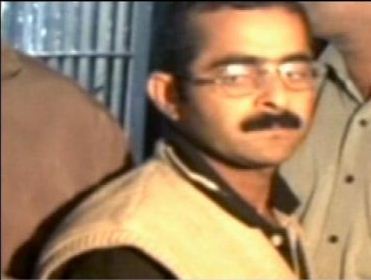
Someday, we will count how many minutes it took for television in India to start baying for Afzal Guru’s blood (once again) after Ajmal Kasab was buried in Yerwada Central Jail in Pune.
A man called Mohammad Afzal Guru, son of Habibullah Guru, currently resident in Ward Number 6 of Jail Number 1 in Tihar Central Prison in Delhi will hang to satisfy the bloodlust of the Indian Republic, unless the President of India decides otherwise. This text is an attempt to make us think about this decision and its ramifications carefully.
Continue reading Satyameva Jayate? On the impending execution of Afzal Guru
Ek Tha Tiger: Death and Bal K. Thackeray
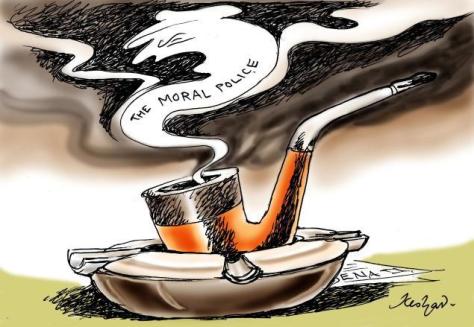
We have reasons to be grateful that Bal K. Thackeray has died, a normal, natural death. Several of those whom he admired, didn’t. Adolf Hitler, the fellow ‘artist’ he often invoked, killed himself, his mistress and his dog. Indira Gandhi, and her son Sanjay, the mother and son firm of despots that Bal Thackeray endorsed, didn’t go gently into the night either. Sanjay Gandhi, the ‘bold young man’ whom Thackeray recognized as a fellow spirit came spiraling down in his own airplane, demonstrating that the indifferent sky does occasionally listen to the prayers of the earth to alleviate its burden. Indira Gandhi and her son Rajiv both fell to the forces that their own ruling dispensation had nurtured, Khalistani zealots and the LTTE. Bal Thackeray was lucky to have lived as long as he did, sipping his lukewarm beer, spitting out his bile. Very lucky. As for us, we are fortunate that Thackeray did not get to go down as a Maratha martyr, just as a lapsed cartoonist, a would-be caudillo and a has-been demagogue. Continue reading Ek Tha Tiger: Death and Bal K. Thackeray
Why is the media not asking hard questions on the deportation of Fasih Mehmood?: JTSA
This statement comes from the JAMIA TEACHERS’ SOLIDARITY ASSOCIATION
In September, we brought out a report, Framed, Damned, Acquitted documenting 16 cases where trials of terror accused had resulted in acquittals for not only lack of evidence but obviously concocted evidence. Each of these cases was accompanied by a section on how media had publicly tried and ‘executed’ these unfortunate men when they were first arrested—to abandon them or bury their stories in the inside pages when they were later acquitted. The release of the report had generated a genuine interest in the media—and one may dare say, an introspection of the media’s own role as the handmaiden of the investigative agencies. Continue reading Why is the media not asking hard questions on the deportation of Fasih Mehmood?: JTSA
The (Ir)resistible Rise of Arvind Kejriwal – Enter The ‘Outsider’
The tide is clearly turning. You know this when former critics and lampooners start talking of him as a ‘game changer’; you know this when weather-cocks turn away from the corridors of power where once they had been ensconced. You know this when rats start deserting the sinking ship.
Suddenly, everybody is talking favourably about the man from the ‘outside’ who is refusing to respect any of the established protocols of protest and politics. More startling perhaps, is the fact that in the past two days we have had senior journalists and political analysts suddenly telling us that they had known all along that there was a ‘post 1980 contract’, a secret code of silence, that never would the dynasty be attacked – indeed never would any apsiring dynasty be attacked. Everybody knew, says Dipankar Gupta in the Times of India, that the issue came up one and a half years ago – and we all do know that. Robert Vadra’s doings had already been known. A senior BJP leader is even reported to have told a senior journalist that his party had indeed been in possession of the very same documents that Arvind Kejriwal brandished at his press conference. But, this leader went to say, “after an intense discussion, the leadership decided not to rake up the issue in Parliament even after submitting a motion in each House asking for a discussion.” Everybody knew – the parties, their leaders, the media persons, political analysts. And yet, nobody spoke out. All of them colluded, in other words, in suppressing the issue. Politicians kept silent for an understandable reason – aspiring dynasties that they are, after all. But the others? Mediapersons? Any guesses?
As someone who has been trying to understand Indian politics over the decades, I have often wondered at what I have referred to as the ‘implosion of the political’ – that is to say, the destruction of politics in the formal political domain. What is called a noora kushti in Hindustani, had come to mark our parliamentary-political grammar. Farcical walk-outs after equally farcical fire-spouting rhetorical speeches in parliament, and a happy bonhomie away from the glare of the media – that was what our politics had been reduced to.
Continue reading The (Ir)resistible Rise of Arvind Kejriwal – Enter The ‘Outsider’
An open letter to the jury of The Economic Times Awards for Global Excellence: G. Ananthapadmanabhan
This open letter has been put out by G. ANANTHAPADMANABHAN of Amnesty International (India)
Dear Mr Deepak Parekh, Mr Kumara Mangalam Birla, Mr K V Kamath, Mr Kris Gopalakrishnan, Mr A M Naik, Ms Chanda Kocchar and Mr Cyril Shroff,
We at Amnesty International India are deeply disappointed by your decision to give the Economic Times Business Leader of the Year 2012 award to Mr Anil Agarwal, Chairman of Vedanta plc.
The Business Leader award is given to individuals who have demonstrated “a strategic direction for success, and pursued a vision”. But Vedanta, in its efforts to have a bauxite mine opened at the Niyamgiri hills in Orissa and expand an aluminium refinery near Lanjigarh, has demonstrated an utter lack of both leadership and vision. What it has shown instead is a brazen disregard for Indian law and an utter lack of respect for the rights of local communities. Continue reading An open letter to the jury of The Economic Times Awards for Global Excellence: G. Ananthapadmanabhan
The Unreality of Wasseypur: Javed Iqbal
Guest post by JAVED IQBAL
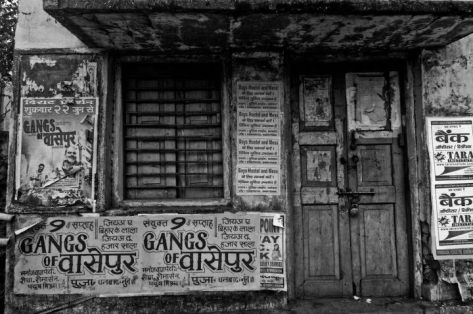
‘The ending of the film was shown properly,’ speak unanimous voices, the well-known folklore of Wasseypur, Dhanbad, ‘Gangster Shafiq Khan was really gunned down at the Topchachi petrol pump like it was shown in the first part of the film.’
‘That’s how it’s done in Dhanbad.’ Continue reading The Unreality of Wasseypur: Javed Iqbal
Letter to the Editor, Times of India: Narmada Bachao Andolan
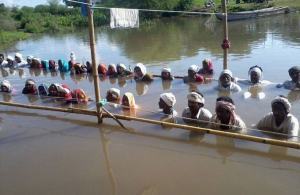 This guest post by CHITTAROOPA PALIT is the text of a letter to the editor of the Times of India, which the paper has not published
Subject: Rebuttal to the story “Reality bites: Khandwa’s made-for-TV protest” published in Times of India.
Dear Sir,
We are shocked to read the story “Reality bites: Khandwa’s made-for-TV protest” in your esteemed newspaper, which has been published with prominence. The story is false and fabricated. The journalist did not meet any Mehtab Singh but she quoted him. The journalist did talk to my colleague and senior activist of NBA Mr. Alok Agarwal but chooses not to quote him. It may be noted that the OB van and a team of your own group Times Now was there at satyagrah site all the time covering live from 6th September but none of these issues were raised.
Continue reading Letter to the Editor, Times of India: Narmada Bachao Andolan
 KAFILA - COLLECTIVE EXPLORATIONS SINCE 2006