
Category Archives: Media politics

Anna At Nehru Place?!: Aditya Sarkar

Guest post by ADITYA SARKAR

On the afternoon of 25 March, Nehru Place felt different. The rectangular maze of shops and offices wore its usual air of busy activity, but instead of being concentrated around a million acts of individualized consumption as it normally is, the energy humming through the place circulated around a public spectacle. Visitors, bystanders, and low-paid office and shop employees clustered in the central square, and on the balconies of the first floor, their gazes fixed on a street play taking place right outside the central Bajaj office. About twenty young men and women, all dressed in black, raised fists, shouted slogans, and mocked the usual suspects – MNCs, netas, and plutocrats, in the name of the aam aadmi. Shop after shop emptied out. Hundreds of people watched, many applauding loudly. The specific target of this public campaign, though, seemed opaque to most, as the publicity leaflets circulated rather more sluggishly than the sentiments evoked by the performers.

Continue reading Anna At Nehru Place?!: Aditya Sarkar

‘Justice on Trial’ in the Times of Tilism: The Absence of Binayak Sen and the Presence of Anna Hazare on Television in April 2011

Sometime today, the Supreme Court bench of the honorable Justices H. S. Bedi and C.K. Prasad will hear arguments for and against the petition asking that  Dr. Binayak Sen, currently sentenced to life imprisonment by the Chhattisgarh High Court on charges of sedition and several other sections of the Indian Penal Code,  be given bail. Continue reading ‘Justice on Trial’ in the Times of Tilism: The Absence of Binayak Sen and the Presence of Anna Hazare on Television in April 2011

‘Anna Hazare’, Democracy and Politics: A Response to Shuddhabrata Sengupta

In an earlier post, (hits to which have broken all records on Kafila), Shuddhabrata Sengupta has raised some extremely important points in the context of the media-simulated coverage and celebrations around the ‘Anna Hazare’ movement. I agree with the central argument made by Shuddha – which is about the authoritarian, indeed totalitarian implications of the proposed Jan Lokpal Bill (though, as many commentators to the post have pointed out, the Bill really remains to be drafted and passed in parliament).

I have no doubt whatsoever that any demand that simply seeks a law of the sort that has been raised by the movement (even in the proposed form), is completely counterproductive. Indeed, it is naive. Matters like corruption or communalism cannot simply be legislated out of existence through tougher laws. Inevitably, they will lead us up to China type situations where you will end up demanding summary trials and executions. Even in the best of cases, a law and state-dependent mode of addressing such problems, adds to the powers of a corrupt bureaucracy. I also agree with his (and Bobby Kunhu’s) criticisms of some aspects of what they have both chosen to designate as ‘mass hysteria’ of sorts – I certainly do not agree with this description but that need not detain us here. I am  interested in something else here and that has to do with the way the movement has struck a chord among unprecedentedly large numbers of people – mainly middle class people I am sure, but the support for it is not just confined to them. In fact, on the third day of the dharna at Jantar Mantar I received an excited call from a CPM leader who works among the peasants in villages of northern India in the Kisan Sabha, about the response to the movement he had encountered in his constituency. I doubt that this was a support simulated either by the government or by the electronic media. Continue reading ‘Anna Hazare’, Democracy and Politics: A Response to Shuddhabrata Sengupta

Of a Few, By a Few, For the Few: Bobby Kunhu

Guest post by BOBBY KUNHU, carrying the debate on the Anti-corruption movement forward

I am distinctly uncomfortable with predictions – using either scientific or unscientific tools. For me it smacks of charlatanry – from astrology to psephology to stock market speculation. But with the charade that was unleashed for the past few days on news television by the mainstream media and of course at Jantar Mantar and a few other town squares across the “mainstream” Indian political landscape by Anna Hazare’s fast – I did dare to make an attempt – both at prediction and more comfortably with dissent. I foretold the outcome of the fast tableau at an emergency meeting that was convened by some co-travellers at the Salem Citizen’s Forum to debate on whether and how to show solidarity to Anna Hazare…

…Well, it is not just Anna Hazare and his team who won this match comfortably. All actors who joined the show have won the match. Everyone – the “civil society” that sat on fast at Jantar Mantar and other places, the Corporate media, the glamour world, the Government, political establishment of all hues and shades – everyone who bothered to join the game. It was like bathing in the Ganges during the Maha Kumbh – everyone’s sins were washed away. And of course nobody in their right minds regardless of political affiliations or ideologies could take a position “for corruption”!!! A veritable Bush-ian position — either you are with Anna Hazare or you are with corruption. And yes, India Incorporated has won the match and it is time for celebrations!

Read the full post on Countermedia

At the Risk of Heresy: Why I am not Celebrating with Anna Hazare

At the risk of heresy, let me express my profound unease at the crescendo of euphoria surrounding the ‘Anna Hazare + Jan Lokpal Bill’ phenomenon as it has unfolded on Jantar Mantar in New Delhi and across several hysterical TV stations over the last few days.

This time around, I have to say that the print media has acted (upto now) with a degree of restraint that I think is commendable. Partly, this has to do with the different natures of the two media. If you have to write even five hundred words about the Jan Lokpal bill, you run out of platitudes against corruption in the first sentence (and who can speak ‘for’ corruption anyway?) and after that you have to begin thinking about what the bill actually says, and the moment you do that, you cannot but help consider the actual provisions and their implications. On television on the other hand, you never have to speak for more than a sound-byte, (and the anchor can just keep repeating himself or herself, because that is the anchor’s job) and the accumulation of pious vox-pop sound bytes ‘against corruption’ leads to a tsunami of ‘sentiment’ that brooks no dissent. Continue reading At the Risk of Heresy: Why I am not Celebrating with Anna Hazare

The Hindu, WikiLeaks and Me: Malarvizhi Jayanth

Guest post by MALARVIZHI JAYANTH

Once upon an election, the ruling party was bullying and booth-capturing recklessly. I was there. I saw it. Outside one booth, three Tata Sumos drove away at mad speeds, their screeching, spinning wheels blowing dust into my eyes in a scene straight out of the Tamil movies. I walked into the booth to find it had been ransacked minutes earlier. I saw weeping government officials and ballots with the stamp over the rising sun scattered everywhere. Other reporters saw similar scenes. Reporters received complaints of cash and biriyani(!) being distributed to voters.The management of the newspaper I worked for chose to run the Election Commission’s claims that the elections had been without incident, rather than accounts from several reporters who had seen the captured booths and heard from voters who had been offered bribes. Two days later, when almost all other media (barring the usual suspects) had run outraged stories about the brazenness of the booth capturing, hesitantly, The Hindu followed suit. Today, they announce to us that cash for votes is a way of political life in Tamil Nadu. Yeah, thanks, we know that already. Too bad you couldn’t believe your lowly brown-skinned reporters who told you all about it. A white man sends off a cable about it to his masters and then it becomes news? Really? Continue reading The Hindu, WikiLeaks and Me: Malarvizhi Jayanth

Journalism of the People: You Feel Like You Gettin’ Real Noose!

And Director General of the al-Jazeera network explains why al-Jazeera could see the Arab revolution coming when the WEstern media could not: Continue reading Journalism of the People: You Feel Like You Gettin’ Real Noose!

Big Media Anyone?

From an article I did for this morning’s Hindu:

DB Power is a subsidiary of DB Corp Ltd, a media conglomerate that owns four newspapers, including the Hindi Dainik Bhaskar and English DNA, that have a combined readership of 17.5 million readers, and the My FM radio station.

The company’s most recent project in Dharamjaigarh shall displace 524 families from six settlements to extract 2 million tonnes of coal every year to fuel a 1320 MW thermal power plant that shall be built in the adjoining district of Janjgir.

No prizes for guessing what the Dainik Bhaskar’s coverage was like:

Black diamond to give sparkle to Dharamjaigarh's destiny

Continue reading Big Media Anyone?

Are Ikhwanis back in Kashmir?

A report by Pradeep Thakur in the Times of India today has stunned a lot of people in Kashmir. The report says that the Ministry of Home Affairs and the Indian Army are reviving Ikhwan units in Kashmir to quell the anti-India movement. Some Kashmiris living in Kashmir feared the era of Ikhwani terror and blackmail will be back. The stunning bit is how openly the effort of the MHA and the Indian Army is being acknowledged in creating a renegade political pro-India militia force in today’s political environment in Kashmir. What is not surprising is that this is happening at all, because it has happened before. At worst, this seemed like a stupid move to publicise an overt political operation of the sort Kashmir has seen no dearth of.

The story, titled, “Two pro-India parties floated in J&K with Army, MHA help” by Pradeep Thakur reads: Continue reading Are Ikhwanis back in Kashmir?

The Answer My Friend, is Blowin’ in the Wind…

Even as the western and Indian media go ecstatic over the new democratic upsurges in the Arab world, something else has begun to happen. The Tunisian ‘virus’ that spread rapidly via Egypt, is now finding newer and equally hospital bodies elsewhere – that is to say, bodies made vulnerable by the years of plunder by corporate capital. Now, what precisely, is the connection between corporate capital and the Arab ‘jasmine revolutions’? On the face of it, nothing. However, as the state legislature in Wisconsin sat considering a bill to severely curb state workers’ rights of collective bargaining a few days ago, thousands of state employees descended on the building, virtually occupying it.

And as protests against Republican Governor Scott Walker’s assault on collective bargaining rights entered the fifth day, the support for the movement has begun to expand. Demonstrators were joined by union supporters from Illinois, Pennsylvania and New Jersey, as well as national union leaders and civil rights advocate the Rev. Jesse Jackson.

An interesting article by Dan La Botz, “A New American Workers’ Movement Has Begun“, underlines the connections of the ongoing struggle in Wisconsin with the Arab virus!

Continue reading The Answer My Friend, is Blowin’ in the Wind…

The ‘Viral’ Revolutions of Our Times – Postnational Reflections

The Arab Turmoil

According to a  report in The Guardian, the movement in Egypt that overthrew the regime of Hosni Mubarak is “a movement led by tech-savvy students and twentysomethings – labour activists, intellectuals, lawyers, accountants, engineers – that had its origins in a three-year-old textile strike in the Nile Delta and the killing of a 28-year-old university graduate, Khaled Said”. It has emerged, says the report, “as the centre of what is now an alliance of Egyptian opposition groups, old and new.” The April 6 Youth Movement (primarily a Facebook network), came into existence in in 2008, in support of the ongoing workers’ struggle in the industrial town of El-mahalla El-Kubra primarily on issues related to wages. The struggle in the past few years, also moved towards a restructuring of unions with government appointed leaders. The list of demands for the April 6 strike also included a demand for raising the national minimum wages that had remained stagnant for over two and a half decades. Increasing workers militancy over the past few years was a direct response to the World Bank imposed ‘reforms’ that had pushed lives of industrial labour to the brink. It was this sharpening conflict, consequent upon the serious impact of structural adjustment policies, that provides the backdrop in which the middle class youth decided to rally in support of the April 6 2008 strike. It was they who converted the call for an industrial strike into a general strike, according to some reports.  It is virtually impossible to get a sense of any of this in the ecstatic reports of the ‘networking babalog’ making a revolution that is now all over the Indian media.

Continue reading The ‘Viral’ Revolutions of Our Times – Postnational Reflections

Tragedy and Anguish: Can We Be True to Soumya?

There are no words to express the terrible anguish into which many of us have been plunged at the entirely-preventable fate of 23-year-old Soumya, raped and brutally murdered on her journey back home from work a week back. A criminal kicked her out of a slow-moving train between Shornur and Vallathol Nagar, robbed her, dragged her into the bushes, where he raped and wounded her fatally. After five days in hospital, she died. There were other passengers, men, who heard her cries. But none of them bothered to pull the chain, which would have saved her from both rape and murder.There are no words for anguish anymore in the Malayalam media. It has plenty of words to convey, to inspire craven fear and rancid sentimentalism, but none to express and pass on anguish. Continue reading Tragedy and Anguish: Can We Be True to Soumya?

The Flea Market of the Indian Media: Dibyesh Anand on the Karmapa story

Guest post by DIBYESH ANAND

India prides itself for having a free and vibrant media. A recent story around Tibetan exile leader Karmapa lama has exposed the Indian media scene as closely resembling a chor bazaar. One where uninformed assertions, distorted facts, libelous statements, ad hominem attacks, and lazy analysis are recycled again and again to create a sensation.
The remarkable convergence in how the different channels and newspapers covered the story of police raids and findings of unaccounted foreign currencies at Karmapa’s temporary establishment near Dharamsala is conspicuous. In the media, the unaccounted money is however presented in salacious and sensationalist manner. Money is not the focus, the Karmapa’s alleged China connection is. A possible financial irregularity of $1.6 million is a non-story in India where scams, schemes and scandals of billions erupt with the regularity of tides. The story becomes one of Karmapa as a probable Chinese spy. Continue reading The Flea Market of the Indian Media: Dibyesh Anand on the Karmapa story

My friend in Thailand, may you be free

‘Prachatai’ means “free people” in Thai. Prachatai calls itself an online newspaper, with Thai and English versions. You can see the English version here. Prachatai in the Thai internet universe is a bit like this website, Kafila, only a lot more popular. Prachatai’s webmaster, Chiranuch Premchaiporn, is facing trial for comments posted on the site that allegedly violated Thailand’s lese majeste (insulting the monarch) laws. While the lese majeste charges against the person who wrote that comment have been dropped, Chiranuch is still being charged under lese majeste and other laws, including ‘intermediary liability’ laws. Intermediary liability laws in relation to internet freedom mean that if you post a comment on my site that violates the law, I too will be charged as having abetted the crime. India’s cyber crime laws were amended some time ago to remove the intermediary clause, not because the Government of India was concerned about free speech, but because of Ebay India, whose head was charged and arrested when a user uploaded a pornographic ‘MMS’ on Ebay India that featured minors.

I first met Chiranuch at an social media workshop in Thailand, and then again last September in Budapest, Hungary, at a Google conference on internet freedom across the world. It is curcuial to note that upon her return from Budapest, she was arrested, given bail for a very high bail amount, and fresh new charges – and a lot of them – were added against her – clearly, they don’t like her talking about internet freedom. If convicted, she faces up to 50 years in jail! See here an article in The Economist. The trial began today, 4 February, a few hours ago.

Chiranuch could easily have escaped Thailand and taken asylum elsewhere by now. She hasn’t done that because she is consciously fighting a battle for freedom of expression in Thailand. She didn’t want to run away because it would have discouraged, rather than encouraged, that crucial fight.

One expresses solidarity with her, one hopes she is free, and that her case becomes the turning point in the fight from democracy and democratic rights in Thailand. Above all, one salutes her courage. For those who are interested in the details, given below are notes from the Thai Netizen Network.

Continue reading My friend in Thailand, may you be free

The Republic of Exploitation

On this Republic Day, while armoured tanks muscle across Rajpath in New Delhi, little ossified museums of culture called tableaux charm the assembled pass-holding citizenry and the Prime Minister sits like a barely-sentient caricature of himself behind a bullet-proof screen, it may do well to think about the other republic that remains hidden within the bosom of Superpower India – the republic of unfree labour.

This is a world where the laws of the upside world are inverted – where the more you work, the less you are paid, the more your company profits, the poorer you end up and if you find yourself the victim of an injustice and god forbid complain about it, the police put your family in jail. It’s a great irony of our times that we believe the choice before us is between loving the Nation and loving the Corporation, not realising that most of the time its the same person wearing two grotesque masks.  All those who believe that the world begins with their newspapers and television sets and ends at their white picket fences (and all those who don’t), please take a minute to go through the excellent documentation of the war that is raging for workers in this country, put together by the Gurgaon Workers’ Solidarity Group, the Faridabad Mazdoor Sangathan and several other exemplary organisations.

GurgaonWorkersNews – Newsletter 35 (February 2011)

Continue reading The Republic of Exploitation

Sound Enough: How to Enjoy the Jaipur Literature Festival: Revati Laul

Guest post by REVATI LAUL

“Excuse me, Mr. Farooqui, I just need a sound byte from you,” said a young reporter from the fairly young news channel News X. He was talking to my friend Mahmood Farooqui, author of Besieged: Voices From Delhi 1857, co-director of the Oscar nominated film Peepli Live and founder-revivalist of Dastangoi – the rich, medieval art of storytelling. Seeing that the setting was the beautiful and quaint Diggi Palace in Jaipur with a substantial gathering of the world’s literati for the Jaipur Literary Festival, Mahmood was preparing to hold forth on storytelling, culture, 1857…when this completely unexpected gem poured forth from the fearless reporter’s lips.

“Can you sum up what you think of literature in one word?” Continue reading Sound Enough: How to Enjoy the Jaipur Literature Festival: Revati Laul

Un-Indianizing Kerala: How to defend K K Shahina

Like the unseasonal and tenebrous rain clouds that are hovering over Thiruvananthapuram in what should be a sunny, light-mist-adorned January, a pall of gloom, of impending danger, hangs around my everyday life in Kerala. This is not a general feeling. It is however shared by many of us who write and speak critically about the powers that be. The space to speak and write thus has been shrinking for a while now, but now there is a sense of dangerously teetering on the edge: the Indian state seems to be upon us, and with a vengeance. Continue reading Un-Indianizing Kerala: How to defend K K Shahina

Ab Bhi Dilli Dur Hain: On ‘No One Killed Jessica’: Kartik Nair

Guest post by KARTIK NAIR

Why does No One Killed Jessica open with the execution of Jessica Lal but rush so quickly to the windswept altitudes of Kargil? And why, when she first blasts on to the screen as embedded journalist Meera reporting on the war, does Rani Mukerji look more like she’s embedded inside an SNL skit on Barkha Dutt? I let out a little laugh then, but the laughs only got bigger from there. Here is a film that knows nothing about how the media works; worse, it fails to pass off its version of the media as believable. Here are a few lessons I learned watching the film:

1. Aspiring reporters will be glad to note that though journalists generally fight tooth-and-nail at press conferences to get their questions heard, a helpful “Yaar, please, mujhe poochne do!” will elicit total co-operation and rapt attention.

Continue reading Ab Bhi Dilli Dur Hain: On ‘No One Killed Jessica’: Kartik Nair

Swami Aseemanand’s Confessions: It’s time for an apology?: JTSA

This note comes from the JAMIA TEACHERS’ SOLIDARITY ASSOCIATION

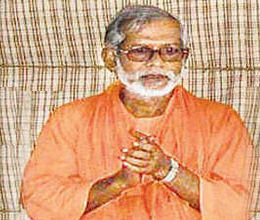
Swami Aseemanand

Swami Aseemanand’s confession before the metropolitan magistrate of Tees Hazari Court has finally put the seal of legal validity over what had been circulating for months now, since the surfacing of the audio tapes seized from Dayanand Pande’s laptop. That Hindutva groups had been plotting and executing a series of bomb blasts across the country—including Malegaon (2006 and 08), Samjhauta Express (2007), Ajmer Sharif (2007) and Mecca Masjid (2007).

For the past several years however, dozens of Muslim youth have been picked up, detained, tortured, chargesheeted for these blasts—with clearly no evidence, except for custodial confessions (which unlike Swami’s confessions have no legal value). Report after report has proved that the Maharashtra and Andhra police willfully refused to pursue the Hindutva angle preferring to engage in communal witch-hunt—or as in the case of Nanded blast—where the evidence was so glaring as to be unimpeachable—weakening the prosecution of these elements.

Continue reading Swami Aseemanand’s Confessions: It’s time for an apology?: JTSA

The Dead Need No Reification: Vasanth Kannabiran

Guest post by VASANTH KANNABIRAN

Kannabiran died on 30 December 2010. As per his wishes and ours, and based on previous discussions we declared that the last rites would be simple, speedy and secular. The secular part we ensured. There were no flowers, no lamps, no mantras, no ceremonies. But the clamour for progressive “traditions” was what I found troubling in the extreme. In doing away with religious orthodoxy, all we have done is replaced it with other orthodoxies. Continue reading The Dead Need No Reification: Vasanth Kannabiran

800 new Radia tapes!

It keeps getting better. The promise of more emperors losing their clothing, the promise of more political gossip and media wars and conspiracy theories. More light will be thrown at crony capitalism, sorry I mean economic growth. Outlook is putting out another 800 Radia tapes in the next few hours. There are a total of 5,000 and they’ve already put out 140.

Of those 140, some 36 yet to be transcribed.