I am posting the Editorial of the latest issue of dissenting dialogues, a social justice magazine on Sri Lanka. The lengthy Editorial discusses the situation two years after the war and the much debated UN Panel Report on accountability for crimes committed towards the end of the war in Sri Lanka.
The May 2011 Issue also has an interesting article by Kanishka Goonewardena on the political economy of World Cup cricket titled, Space, time and cricket: from M.C.C to M-C-M’. The article engages the work of C.L.R. James, David Harvey and Giovanni Arrighi while discussing the shift of cricket (and) capital to India.
It all started on March 16 this year when a Tibetan monk named Phuntsok set himself ablaze in protest against China marking exactly three years since the bloody crackdown by Chinese troops on the people of Ngaba County of Tibet in 2008. Chinese government tightened security and its stronghold on Ngaba in general and Kirti monastery in particular. Tibetans allege the authorities even blocked food supplies to the monastery in an attempt to starve around 2,500 monks. They say many have been arrested and a large number are missing. Continue reading ‘The situation in Ngaba is getting worse’: An interview with Tsewang Rigzin of the Tibetan Youth Congress→
For many who quite rightly guessed that the Lokpal Bill drafted by the Government would be a non-starter, the alternative merited automatic support. However, little was known about the contents of the two Bills, except that the alternative being proposed by ‘India Against Corruption’ had the prefix of being a “peoples” Lokpal. The consequences are too important to leave to the expertise of the drafting committee. The people must comprehend, and play their part in ensuring that there will be an Act that will empower them to fight corruption- not make them surrender their hopes to yet another anti-corruption organization. How people-centric is the Jan Lokpal Bill (JLP)?
While the JLP is going through rapid revisions – 12 so far – the basic framework and some principles have remained constant. Broadly the Bill can be divided into four sections: the mandate and scope of the Lokpal; composition and selection of the Lokpal; powers of the Lokpal; and functioning of the Lokpal. The composition and selection of the Lokpal is substantively one of the least contentious sections – concerned largely with procedural matters and subjective preferences, rather than ideological or legal viewpoints. A discussion of the other three sections follows.
For the last few days, a few lines from Sahir Ludhianivi’s long poem Parchhaiyan, have been repeatedly coming back to me. A poem that I had read ever so often in my early youth and thought I had long forgotten, suddenly reappeared in a flash. Here go some of the lines (not really in the order in which they appear in the poem, but in the order in which they came to me):
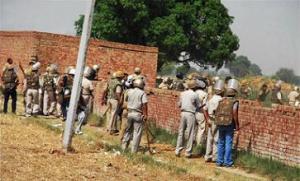
Villages turned into police camps
चलो कि चल के सियासी मुक़ामिरों से कहें/ कि हमको जंगो-जदल के चलन से नफ़रत है
कहो कि अब कोई क़ातिल इधर अगर इधर आया/ तो हर क़दम पर ज़मीन तंग होती जाएगी
हर एक मौजे-हवा रुख़ बदल के झपटेगी…
ये खेत जाग पड़े, उठ खड़ी हुईं फ़सलें/ अब इस जगह कोई क्यारी न बेची जाएगी
[Roughly translated: Come let us tell the political gamblers/ that we hate the business of war and strife
Let us tell them that if a murderer dares to come hither/ The land will shrink with each step
Every wave of the air will turn turn against you
These fields have come alive, with the crops swaying on them
No more shall even a bed (of the field) be sold]
Though Sahir’s poem was written as a protest against war, some of these lines resonate with other, more immediately relevant matters. Ironically, Sahir was protesting against the war mongers pillaging civilain populations but here we are, with the new war mongers of our times: what else is the neo-liberal dream but that of pillage and loot of civilian populations by armed forces of civilian governments. And as they, ‘is hammam mein sab nange hain‘! [All are naked in this in this bathhouse]: From Buddhadev Bhattacharya of West Bengal to Mayawati of Uttar Pradesh – spokespersons all of the oppressed! And it makes little difference whether it is a BJP-led NDA government in power at the Centre or a Congress-led UPA.
मैंने हाल ही में एक डोक्युमेंटरी फिल्म देखी, प्रतिभा परमार की १९९१ में बनायीं हुई खुश, जो कि दक्षिण ऐशिआयि एल.जी.बी.टी (लेस्बियन, गे, बिसेक्सुअल, ट्रांसजेंडर) लोगों कि अलग-अलग ज़िन्दगी के बारे में थी। एक लेस्बियन महिला से जब फिल्म में पुछा गया कि ‘लेस्बियन होने का सबसे बढ़िया पहलु क्या है?’ तो उसका जवाब था ‘मेरे लिए लेस्बियन होने का सबसे बढ़िया पहलु है पूरी तरह से ख़ुशगवार, मज़ेदार सेक्स!’ फिर वो महिला, पूरे नब्बे दशक के फैशन में सजी हुई, ऐसे मुस्कुराई,
कि लगा कि वहीं उसी वक्त, उसी जगह, उसे अपने मज़ेदार सेक्स के सारे पल याद आ गयें हों।
मुझे, एक क्युइर एक्टिविस्ट के नाते, जो कि इस फिल्म के बनने के समय कुछ आठ साल कि थी और जो कि सार्वजनिक ढंग से एल.जी.बी.टी लोगों के बारे में न्यायालयों में और पत्रकारों से बोलती आई है, एक भी ऐसा पलयाद नहीं आ रहा है, जब मैंने सेक्स के बारे में कुछ लिखा या बोला हो। Continue reading ‘मेरे लिए लेस्बियन होने का सबसे बढ़िया पहलू है मज़ेदार सेक्स’→
The workers of Ankur Udyog Ltd., a factory in the Bargadwa industrial area in Gorakhpur, eastern UP were attacked by goons called by the factory owner the morning of 3 May. At least seven workers were seriously injured in firing by the goons. Apparently, the factory owners of Gorakhpur have been very angry with the workers for attending the May Day rally at Jantar Mantar, Delhi and one of them suspended 18 workers as soon as they went to resume work. The workers protested against this and the factory owner sent hired goons who fired on the workers injuring 19 of them. The workers had cornered the goons inside the factory but the police came and took them away and let them free. FIRs have been registered from both sides.
May Day rally- workers' charter movement
As the tension and repression of the factory owners and the district administration mounts, the workers have planned to go on Satyagraha from May 8 (tomorrow) and the administration is determined to not let it happen. We have received messages saying that trade union organizers fear for the life and safety of the workers and their leaders. The voice of protests from many forums and due to the incident being covered by the local media, the administration has refrained from taking any one sided action till now. But conspiracies are being hatched behind the scenes. Its not a distant reality that the leaders might be killed in fake encounters, or slapped with false charges or lynched by mobs instigated by the factory owners or Adityanath’s goons.
In response to the Union Environment Ministry’s decision, given below are two press releases, from POSCO Pratirodh Sangram Samiti and Campaign for Survival and Dignity
POSCO PRATIRODH SANGRAM SAMITI
(based out of villages Gadkujang, Nuagaon and Dhinkia in Erasama block of Jagatsinghpur district, Odisha. )
A Mercenary Minister and a Lying Government Cannot Crush Our People
Money Worth More to Government than Truth, Law and Justice; but the Corrupt and the Criminal Will Not Triumph
2 MAY 2011: Today, in a sanctimonious order riddled with lies and distortions, the Environment Ministry allowed thePOSCO project to proceed. The livelihoods of 4000 families (over 20000 people) and the laws of the land have been sold to the highest bidder. Certain facts should be brought to the notice of the public: Continue reading Two statements on the Environment Ministry’s ‘forest clearance’ to POSCO→
[An edited version of this review has appeared in Biblio.]
The Absent State: Insurgency as an Excuse for Misgovernance
by Neelesh Misra and Rahul Pandita
Hachette India, 2010
272 pages, 495 Rs
Indian journalists have written books on conflict as diaries of their years of reportage, putting together their stories and experiences. The task of looking at conflicts with a broader perspective has been left to the security experts who mostly write from, well, a security ‘angle’. It is great, then, to see a book by two journalists, on the conflicts in Kashmir, the north-east and the Maoist belt. Journalists won’t give you footnotes but at least they can write lucid prose. Continue reading The Present of the Absent State→
We are a country given to idolatry – both the erection and demolition of idols a favourite pastime that buries under the rubble questions of ethics and constitutional morality. While this penchant for idolatry raises larger questions, I will concern myself at this point with the effigy (or the idol upside down) called corruption.
While there has undoubtedly been a marked shift in the languages of corruption in the neo liberal era, calling for new and different strategies to combat it, the fight against corruption is not new. When women’s groups campaigned decades ago against the testing of banned drugs and contraceptives on poor people by the ICMR, the question that was raised was about the nexus between pharmaceutical companies and state actors that involved deals for which poor and vulnerable communities were pushed to the guillotine. With Bhopal, the question came up again on the deals between multinational companies (Union Carbide in this case) and the government that violated every principle of human rights, natural justice, constitutional morality and the ethics of care in governance. Was the derailment of justice effected without corruption at every level? Apart from providing care to the affected, was not the struggle for justice in Bhopal a struggle against corruption? When the People’s War Group (as it was then called) abducted an elected representative two decades ago (who was later released), the reason they gave to the negotiators was that he misused public funds in the district and asserted that theirs was a fight against corrupt representatives.
Till very recently it was not possible to discuss Binayak Sen without referring to the corporate land grab and state repression in Chhattisgarh. Somehow Salwa Judum, the displacement of thousands of adivasis and the Maoist movement would come in the picture. Above all, what would come out is Sen’s work in the specific context of the suffering of the adivasis. Indeed soon after the bail order was granted, it came so naturally for Sen’s beaming wife to state that he will of course go back to resume his work in Chhattisgarh.
Upon his release from Raipur Central Jail on April 18 2011, Sen immediately called for a dialogue between the Maoists and the government and reminded us of so many other political prisoners languishing in the country’s jails. In the video showing Sen being greeted by his supporters after his release he enthusiastically joins in giving slogans saying, ‘Shankar Guha Niyogi Zindabad’. But the supporters soon after break into ‘Binayak Sen Zindabad’. You could immediately see this embarrassed look on his face, totally disapproving this iconisation.
Indeed, Sen seems very far off from celebrating his release as a major victory for democracy or a boost forIndia’s image as a modern democracy and so on. He seems really far off from the dominant discourse which seeks to cleanse the ‘Binayak Sen issue’ of the harsh realities of India’s dirty war, the inequality and the injustice towards the adivasis and their suffering. Continue reading Chronicle of a Bail Foretold: Saroj Giri→
On the afternoon of 25 March, Nehru Place felt different. The rectangular maze of shops and offices wore its usual air of busy activity, but instead of being concentrated around a million acts of individualized consumption as it normally is, the energy humming through the place circulated around a public spectacle. Visitors, bystanders, and low-paid office and shop employees clustered in the central square, and on the balconies of the first floor, their gazes fixed on a street play taking place right outside the central Bajaj office. About twenty young men and women, all dressed in black, raised fists, shouted slogans, and mocked the usual suspects – MNCs, netas, and plutocrats, in the name of the aam aadmi. Shop after shop emptied out. Hundreds of people watched, many applauding loudly. The specific target of this public campaign, though, seemed opaque to most, as the publicity leaflets circulated rather more sluggishly than the sentiments evoked by the performers.
(I am posting a much longer version of my previous article that will also respond to some of the queries and comments. This article is based on my research, field work and interviews in Ralegan Sidhi since 1991.)
This article is focussed mainly on understanding how exactly the rural environmental works in the journey of Anna Hazare and Ralegan Sidhi are articulated within a coherent ideological framework, to acquire their legitimacy and authority, which are fed by, and fed into, some dominant political cultures of the state. Any political theory and practice, built on this framework, can open the possibilities of a strengthening of the conservative and nationalist forces. Certainly, the ideology of a rural organisation or a movement and its appeal is not based on a single plank. In the case of Anna Hazare and his programme, though the developmental and the environmental works form the core of its ideological structures, it includes other issues as well. At times it provides a different scale of activities to its audience, but eventually reinforces its principal ideological framework. Some understanding of the ideological DNA of the green villagers and the fellow environmental travellers also gives us an idea as to what elements of this endeavour and ideology motivate villagers and environmentalists.
The Historical Context of Maharashtra
Anna Hazare and Ralegan Siddhi are not a new addition to the social history of the Maharashtra state. Indeed, the movement has borrowed many features from the historical evolution of the region, and the political culture of the state, with which it negotiates at different levels. There are many factors at play, though three are of prime importance in the context of this paper: (i) nativism and regionalism in Maharashtrian culture and politics (ii) structure and nature of caste and class and (iii) agrarian economy and local environmentalism. Continue reading The Making of an Authority: Anna Hazare in Ralegan Siddhi→
अण्णा हजारे के ‘नेतृत्व’ मे शुरू हुए भ्रष्टाचार विरोधी आन्दोलन का पहला चरण सफलतापूर्वक समाप्त हो गया है. अनेक लोगों को सरकार को हिला देने का सुख और संतोष इस आंदोलन ने दिया है. हजारे ने खुद यह कहा कि एक बार तो भगत सिंह ने अंग्रेजों को भगाया था, इस बार ‘काले’ अंग्रेजों को भगा दिया गया है. इसे दूसरी आज़ादी की लड़ाई भी कहा जा रहा है. इसके पहले एक और ‘दूसरी आज़ादी’ की लड़ाई लड़ी गई थी लेकिन शायद वह असली नहीं रही होगी तभी तो इसे तीसरी नहीं दूसरी आज़ादी की जंग कहा जा रहा है. यह सोचने का विषय है कि इस देश में हर प्रकार के संघर्ष को अपना औचित्य सिद्ध करने के लिए क्यों खुद को स्वतंत्रता संग्राम के रूप में प्रचारित करना पड़ता है. कहा जा सकता है कि यह तो भाषा का रूपकात्मक प्रयोग है, इसे आगे खींचने की ज़रूरत नहीं. इस रूपक को गढ़ने को मजबूर दिमाग जिस ग्रंथि से जूझता है , वह शायद यह है कि हममें से अधिकतर को यह रंज और गम है कि हम 1947 के पहले पैदा नहीं हो सके थे और इस देश को आज़ाद कराने में हमारा कोई हिस्सा नहीं.दूसरे, उस आन्दोलन के अंतिम क्षण के शत्रु रक्त से रंजित न होने के कारण नवीन राष्ट्रीय शिशु के जन्म की वास्तविक अनुभूति से हम वंचित रह गए. इसके कारण हम सबको एक स्तर पर अपना राष्ट्रीय अस्तित्व ही अप्रामाणिक प्रतीत होता है. हर पीढ़ी को इस कुंठा से मुक्ति के लिए कभी न कभी एक स्वतंत्रता संग्राम की आवश्यकता पड़ती है. गोरे अंग्रेजों और काले अंग्रेजों को ‘भगाने’ के जिस विकृत सुख लाभ की आकांक्षा इस तरह के वक्तव्यों में झलक पड़ती है, उसके पीछे छिपी हिंसा को पहचानना भी आसान नहीं होता. क्या यह इसलिए करना होता है कि ऐसे आन्दोलन एक ‘राष्ट्रीय’ कल्पना को उत्तेजित करना चाहते हैं और इस लिए राष्ट्रीय संदर्भों के सहारे अपनी वैधता हासिल करते हैं? जंतर मंतर के अनशन मंच की पृष्ठभूमि में भारत के मानचित्र को आवृत्त किए हुए, बल्कि उसकी सीमा से बाहर राष्ट्रीय ध्वज को लहराते हुए गौर वर्णा भारत माता की छवि के विह्वल आह्वान को जो अनसुना करे क्या उसे दुखियारी माता का पुत्र कहलाने का अधिकार रह जाएगा? क्या उसके उद्धार के लिए, महिषासुर का दलन करने के लिए पुन: अपने अस्त्र-शस्त्र को शाणित न किया जाएगा? Continue reading लोकतंत्र की आत्मसमीक्षा का क्षण→
[This piece is based on my extensive field work on Anna Hazare and his movement in Ralegan Sidhi over some years and is also a part of my forthcoming book Green and Saffron: Hindu Nationalism and Indian Environmental Politics. MS]
The anti-corruption movement, spearheaded by Anna Hazare, and the passage of the Lokpal Bill have generated unprecedented interest amongst a wide spectrum of society about the ideas, politics and organisations of civil society in general, and Anna Hazare in particular. Hazare’s anti-corruption crusade merits attention not only for its importance in ensuring a corruption-free society, but also due to its multifaceted nature. Hazare’s politics however has to be seen in a larger framework and in a wider historical context. Howsoever laudable the goals of anti-corruption movement in India today, the movement is not beyond the categories of gender, caste, authority, democracy, nationalism and ultra-nationalism. Far from transcending them, the movement is transforming and being transformed by the implicit deployment of such categories. I wish to place Hazare in the larger context of his environmental journeys, where the elusive but crucial element is one of authority that is exercised due to a large degree of consent and conservatism. Yet, almost all accounts on him, largely celebratory in nature, do not examine the ideology and politics of his works. These are crucial not only to critically assess the present and the future of our anti-corruption movements, but also to interrogate certain brands of civil society activisms and environmentalisms. Continue reading The Making of Anna Hazare→
In an earlier post, (hits to which have broken all records on Kafila), Shuddhabrata Sengupta has raised some extremely important points in the context of the media-simulated coverage and celebrations around the ‘Anna Hazare’ movement. I agree with the central argument made by Shuddha – which is about the authoritarian, indeed totalitarian implications of the proposed Jan Lokpal Bill (though, as many commentators to the post have pointed out, the Bill really remains to be drafted and passed in parliament).
I have no doubt whatsoever that any demand that simply seeks a law of the sort that has been raised by the movement (even in the proposed form), is completely counterproductive. Indeed, it is naive. Matters like corruption or communalism cannot simply be legislated out of existence through tougher laws. Inevitably, they will lead us up to China type situations where you will end up demanding summary trials and executions. Even in the best of cases, a law and state-dependent mode of addressing such problems, adds to the powers of a corrupt bureaucracy. I also agree with his (and Bobby Kunhu’s) criticisms of some aspects of what they have both chosen to designate as ‘mass hysteria’ of sorts – I certainly do not agree with this description but that need not detain us here. I am interested in something else here and that has to do with the way the movement has struck a chord among unprecedentedly large numbers of people – mainly middle class people I am sure, but the support for it is not just confined to them. In fact, on the third day of the dharna at Jantar Mantar I received an excited call from a CPM leader who works among the peasants in villages of northern India in the Kisan Sabha, about the response to the movement he had encountered in his constituency. I doubt that this was a support simulated either by the government or by the electronic media. Continue reading ‘Anna Hazare’, Democracy and Politics: A Response to Shuddhabrata Sengupta→
Guest post by BOBBY KUNHU, carrying the debate on the Anti-corruption movement forward
I am distinctly uncomfortable with predictions – using either scientific or unscientific tools. For me it smacks of charlatanry – from astrology to psephology to stock market speculation. But with the charade that was unleashed for the past few days on news television by the mainstream media and of course at Jantar Mantar and a few other town squares across the “mainstream” Indian political landscape by Anna Hazare’s fast – I did dare to make an attempt – both at prediction and more comfortably with dissent. I foretold the outcome of the fast tableau at an emergency meeting that was convened by some co-travellers at the Salem Citizen’s Forum to debate on whether and how to show solidarity to Anna Hazare…
…Well, it is not just Anna Hazare and his team who won this match comfortably. All actors who joined the show have won the match. Everyone – the “civil society” that sat on fast at Jantar Mantar and other places, the Corporate media, the glamour world, the Government, political establishment of all hues and shades – everyone who bothered to join the game. It was like bathing in the Ganges during the Maha Kumbh – everyone’s sins were washed away. And of course nobody in their right minds regardless of political affiliations or ideologies could take a position “for corruption”!!! A veritable Bush-ian position — either you are with Anna Hazare or you are with corruption. And yes, India Incorporated has won the match and it is time for celebrations!
Justice on Trial: three days of cultural events
April 4 – 6, 2011 @ Alliance Francaise de Delhi
72, Lodhi Estate, New Delhi 110003
Justice on Trial (Facebookers RSVP here) is a collaborative programme put together by leading contemporary artists, photographers, film makers, musicians, performers, and activists to commemorate struggles for democracy, freedom and rights. An exhibition of photographs and art works, talks performances and screenings all are directed at drawing renewed attention to the trial of Dr. Binayak Sen, who has emerged in recent times as a symbol of courageous resistance, and a reminder of the many injustices that surround us. Our aim is to provoke a dialogue with the colours and sounds that emerge from the idea of what Dr. Sen represents. Continue reading Dastan-e-Sedition→
I wish you empowerment to resist; to fight for social and economic justice; to win your real freedom and equal rights.
I wish you the will and skill to break out of your carefully concealed prison walls. See, in our part of the world, prison walls and thick inviolable doors are all too overt, obvious, over-bearing, choking; this is why we remain restive, rebellious, agitated, and always in preparation for our day of freedom, of light, when we gather a critical mass of people power enough to cross all the hitherto categorical red lines. We can then smash the thick, cold ugly, rusty chains that have incarcerated our minds and bodies for all our lives like the overpowering stench of a rotting corpse in our claustrophobic prison cell.
I do not exaggerate. I am not being hasty. The writing is on the wall. What started as a glimmer in the eyes of the IIC-frequenting bureaucrat, the industrialist with profit-making dreams and the politician with an obscenely large government house in Lutyens’ Delhi is now a raging reality. Pick up any newspaper or magazine and check out the number of advertisements for private universities. Do a google search for the latest news reports on committees on higher education. If you have the time and patience, go through all the government documents on higher education in the past five years, almost neatly coinciding with the exit of Arjun Singh as Human Resources Minister and the entry of Kapil Sibal. Speaking of Mr. Sibal, if his cheerfully unapologetic blundering on the 2G scam is anything to go by, we should have an idea of the kind of subtle and layered approach he has in mind when he speaks of ‘reforming the education system.’
In the video above, Niyamat Ansari, NREGA/RTI activist in Jharkhand, speaks of the threats to his life. Ansari was murdered on 2 March 2011. You can watch more videos of him here.
Given below are facts of how and why Niyamat Ansari was killed, and the follow-up threafter. You can follow the campaign to get justice for Niyamat Ansari on this Facebook page set up in his memory and in pursuit of justice for him. Please share these links widely, because Your Channel will not organise a candle-light vigil at India Gate. See this statement calling for justice.
The struggle of the NREGA is regularly chronicled at Nrega.net.in. NREGA, the world’s largest rural employment guarantee scheme, recently completed five years.