
Category Archives: Scams

Ashis Nandy’s Predicament and Ours

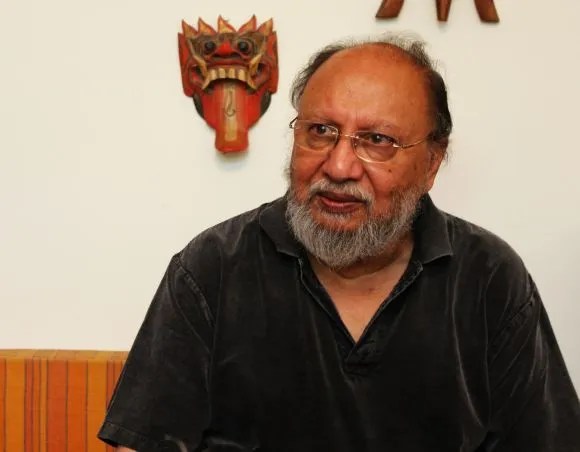
For the past few days I have been preoccupied in one part of my mind in dealing with two reasons for anguish. The first reason has to do with the profound sense of disappointment and anger with which I heard Prof. Ashis Nandy, a man I consider to be a great teacher, friend and in possession of one of the finest minds of our time, commit himself in public to a flippant and vulgar position when speaking of the relationship between caste and corruption at the Jaipur Literary Festival.

I was saddened because Prof. Nandy’s statements do a great disservice to the suppleness and ethical integrity of his thinking, and represent one of those sadly paradoxical situations where an intellectual can become their own worst adversary. I am unambiguously critical of the Nandy who chooses to be pompously opinionated and misinformed at a forum like the Jaipur Literary Festival or while riding the hot-air currents of television especially because I remain a partisan of the Nandy who can be (when he chooses to be) one of the most thoughtful and insightful witnesses to our time in his writing. Continue reading Ashis Nandy’s Predicament and Ours

Everything you wanted to know about the great Kingfisher Airlines scam but didn’t know who to ask

This slideshow requires JavaScript.

All your queries will be answered here.

JTSA lists some more ‘genuine’ encounters in Delhi for the Home Minister

This release comes from the JAMIA TEACHERS’ SOLIDARITY ASSOCIATION

Mr. Chidambram,

You say there shall be no re-visit of the Batla House encounter. You are of course absolutely right. All those agencies who conducted the encounter have already given themselves a clean chit. What further proof could be required of the genuineness of the encounter than the fact that no less than Karnail Singh, Joint Commissioner of Police, Special Cell, Delhi, (who by the by, was also trying to derail the probe into Ishrat Jahan encounter) wrote to the Lt Governor and the NHRC vouching for the innocence of their gallant heroes. Speaking of gallant heroes, we are sure it has been brought to your notice—or maybe it hasn’t—that some of the brave hearts of the Delhi Police Special Cell have been indicted by the courts in the past couple of years for scripting and executing fake encounters. These are the very men whom you have been felicitating with gallantry awards and Presidents’ medals. But Sir, rest assured, we are not asking what sort of democracies fete and glorify killers. Our kind, of course. Continue reading JTSA lists some more ‘genuine’ encounters in Delhi for the Home Minister

Jaypee and Mahyco as Indian Express sponsors: There is conflict of Interest here, Sir

[The following is a statement issued by concerned individuals regarding the sponsorship of the ‘Excellence in Journalism’ awards organized by the Indian Express.]

On January 10 and 11, 2012, half page advertisements in the Indian Express (IE) newspaper (at least in the Delhi edition) announced that on Jan 16, 2012 the IE Excellence in Journalism Awards will be given. The advertisement also said that the main sponsor is Jaypee Group and among other sponsors include the Mahyco Monsanto.

One may recall that Indian Express has been on a campaign mode advocating big dams in general. It has been specifically campaigning against the movements like the Narmada Bachao Andolan. In March April 2006 the paper specifically ran a campaign against NBA and also against the then Union Minister Prof Saifuddin Soz[1]. In Oct 2010 the paper ran a campaign for large hydro projects in the North East India when the then Environment Minister Jairam Ramesh held an open public hearing on these projects in Guwahati and then wrote to the Prime Minister, raising concerns about so many hydro projects being taken up in NE India and the impacts thereof.

Continue reading Jaypee and Mahyco as Indian Express sponsors: There is conflict of Interest here, Sir

When Media is Nuked!: PK Sundaram

Guest post by PK SUNDARAM

After armed forces, nuclear establishment is another holy cow in the post-independence India. Our media does not only outsources all final judgements on nuclear issues to the nucleocrats, but has also happily joined them in slanders against the grassroots anti-nuclear movements.

We have seen the media discourse on nuclear weapons being shadowed almost entirely by national security and nuclear deterrence arguments. On the recent upsurge of mass protests against nuclear energy projects across the country, media is playing the official tune where people challenging these projects are reduced to illiterate crowd, foreign-funded groups, religious identities and even anti-nationals. On 24th this month, the Tamil newspaper Dinamalar published a story titled Truth and hype behind the Koodankulam row. This report is nothing but an utterly malicious piece of journalistic writing with ugly slanders against the leading activists of the ongoing anti-nuclear movement in Koodankulam – S P Udayakumar, M Pushparayan and M P Jesuraj.

Continue reading When Media is Nuked!: PK Sundaram

A few questions about a few thousand new auto-rickshaws in Delhi: Simon Harding

Guest post by SIMON HARDING

On Friday, Supreme Court judges KS Radhakrishnan and CK Prasad gave the go-ahead for 45,000 new auto rickshaw permits to be issued in Delhi. The move has the potential to drastically improve the city’s auto-rickshaw service for passengers and drivers alike, but many unanswered questions about distribution, implementation and numbers remain.
There are currently around 55,000 auto-rickshaws in the capital. The number of autos has not grown since the Supreme Court stopped the issuing of new auto permits in 1997 due to concern about the pollution emitted from the old dirty two-stroke petrol engines (now replaced with CNG).

The number has not remained frozen. Evidence suggests that it has actually fallen since 1997 because around 20,000 autos were lost during the CNG switchover as many drivers had their permits cancelled as they were too slow to convert their autos to the new fuel or simply could not afford the conversion. The fall in numbers contrasts with the growing demand for autos from Delhi’s population, which grew 21.6% in the period 2001-2011.

Continue reading A few questions about a few thousand new auto-rickshaws in Delhi: Simon Harding

Justice for Valsa John of Jharkhand, latest victim of the mining mafia

This press release was put out on 18 November 2011 by the NATIONAL ALLIANCE FOR PEOPLE’S MOVEMENTS (NAPM), the NATIONAL FISHWORKERS’ FORUM (NFF) and the NATIONAL FORUM OF FOREST PEOPLE AND FOREST WORKERS (NFFPFW)

Sr. Valsa, an activist of the Rajmahal Pahad Bachao Andolan (RPBA) and an ordained nun with the Sisters of Charity of Jesus & Mary, who had been working among Santhal Adivasis in the coal rich region of Dhumka, Jharkhand was brutally murdered by a group of about 40 armed men on the night of 15 November 2011. On behalf of Indian peoples’ movements and resistance struggles, NAPM, NFF and NFFPFW condemn this heinous and cowardly act, evidently conceived by the powerful mining mafia, aimed at essentially hunting down individuals and movements to silence the voices of resistance by people.  Continue reading Justice for Valsa John of Jharkhand, latest victim of the mining mafia

Esther’s Story – Battling the Land Mafia in Hardwar: Sumantra Maitra

Guest post by SUMANTRA MAITRA

When you are in journalism, something that slowly builds up in you is your immunity to suprise. You can feel fear, sadness, hopelessness, impatience, and even joy, though the last emotion is increasingly becoming a rare thing in this field. But whatever you feel, one thing is for sure, that you generally don’t get surprised. So when I initially heard about a lone Canadian woman of advanced age and energetic spirits, who had come to India at the age of 19 in the 1960s, fighting the land mafia in Hardwar, without any help from anyone, I was intrigued, but NOT surprised.

I decided to chase the story.

Continue reading Esther’s Story – Battling the Land Mafia in Hardwar: Sumantra Maitra

An open letter to Tarun Tejpal: Hartman de Souza

On 27 October the Hindustan Times published an article by Hartman de Souza and on 30 October a response to it by Tarun Tejpal, editor of Tehelka newsmagazine. This guest post by HARTMAN DE SOUZA is his rejoinder

There are some of us in Goa who will know in about 20 days or so, thanks to two RTIs filed, whether Tarun Tejpal did in fact get all the necessary permissions and clearances needed to add to the lovely property he now owns in the village of Moira… or, as he more pointedly said of the village when he called me up in the Pune, “I mean, look at Moira man, it’s a dying Goan village” …emphasis on ‘dying’, and the implication being one suspects, that the Tejpals of the world can and will breathe life into it. I wonder if he remembers and can parse what I said to him in reply. Continue reading An open letter to Tarun Tejpal: Hartman de Souza

What the Indian media will not tell you about Kingfisher Red

So Kingfisher has decided to ground its low-cost airline, Kingfisher Red. Here’s what the Indian media will not tell you. Continue reading What the Indian media will not tell you about Kingfisher Red

Revealed: The Jihadi Literature that Delhi Police Recovered from the Terrorists They Killed in Batla House

In a damning revelation, a Right to Information application has revealed the Jihadi Literature that Delhi Police recovered from amongst the belongings of the slain terrorists killed in an encounter at Batla House in Delhi two years ago. The hateful, provocative and extremist nature of the recovered literature should be a matter of alarm for everyone. Given below is the cover of the book that contained the Jihadi Lit: Continue reading Revealed: The Jihadi Literature that Delhi Police Recovered from the Terrorists They Killed in Batla House

Are We Talking to the People Who Are Out on the Streets? – Kavita Krishnan

Guest post by KAVITA KRISHNAN  (Editor, Liberation)

The people saying ‘I am Anna’ or ‘Vande Mataram’ are not all RSS or pro-corporate elites. They’re open to listening to what we have to say to them about corporate corruption or liberalization policies. The question is – are we too lofty and superior (and prejudiced) to speak to them?

Throughout the summer, student activists of All India Students’ Association (AISA) and Revolutionary Youth Association (RYA) engaged in this painstaking exercise for months. They campaigned all over the country, in mohallas, villages, markets where there is no visible Left presence. No, these were not areas of ‘elite’ concentration – mostly middle, lower middle or working class clusters, or students’ residential areas near campuses. In most places, people would begin by assuming they were campaigners of Anna Hazare. When students introduced their call for the 9 August Barricade at Parliament, they would be asked, ‘What’s the need for a separate campaign when Anna’s already leading one?’ They would then explain that they supported the movement for an effective anti-corruption law to ensure that the corrupt don’t enjoy impunity. But passing such a law could not end corruption, which was being bred by the policies that were encouraging corporate plunder of land, water, forests, minerals, spectrum, seeds… They learnt to communicate without jargon, to use examples from the state where the campaign was taking place. They would tell people about the Radia tapes, and the role of the corporates, the ruling Congress, the opposition BJP, and the media in such corruption.

Continue reading Are We Talking to the People Who Are Out on the Streets? – Kavita Krishnan

A Great Opportunity, A Serious Danger: A Statement

A Statement Issued by some individuals and friends in social movements

The Anna Hazare situation invites two common reactions: many dismiss it as a middle class driven “urban picnic”; and others, notably the mainstream media, describe it as just short of a revolutionary movement to establish “people’s power.” The same divide exists among progressives and those concerned with social change. Strategies differ on the basis of where one stands on this divide. The problem, however, is that neither of these reactions fully reflects the reality of what is happening.

Continue reading A Great Opportunity, A Serious Danger: A Statement

Benaam Shahidon ke Naam – शेहला मसूद के लिए: Tanzil Rahman

Guest post by Tanzil Rahman

Benaam shaheedoN ke naam (बेनाम शहीदों के नाम )

तंजील रहमान

For Shehla Masood, Niyamat Ansari , Amit Jethwa and many like them who are killed everyday across the world for daring to speak out the truth.

Ye Jang ruki thi kab  ये जंग कब रुकी थी

Ye jang to jaari hai  ये जंग तो जारी है

Ye jang hamaari hai  ये जंग हमारी है

Ye jang hamee’at ki  ये जंग हमी’अत की

Insaan ki qeemat ki  इंसान की कीमत की

Har ahl-e-hawas se hai  हर अहले-हवास से है

Har ahl-e-hakam se hai  हर अहले-हकम से है

Har zuml-o-sitam se hai हर ज़ुल्म-ओ-सितम से ही

Har jhoot se, nafrat se हर झूठ से, नफरत से ही

Auhaam se dahshat se औहाम से दहशत से है

Har rang ki zulmat se हर रंग की ज़ुल्मत से है

Ye jang to jaari hai ये जंग तो जारी है

Ye jang hamaari hai ये जंग हमारी है

Continue reading Benaam Shahidon ke Naam – शेहला मसूद के लिए: Tanzil Rahman

जोश मलीहाबादी की एक नज़्म – आज के नाम

जोश मलीहाबादी की नज़्म ‘रिश्वत’ के कुछ टुकड़े, इस स्वाधीनता दिवस के नाम.

[Apologies for some missing nuqtas, despite my best efforts.]

लोग हमसे रोज कहते हैं ये आदत छोडिये
ये तिजारत है खिलाफे-आदमियत छोडिये
इससे बदतर लत नहीं है कोई, ये लत छोडिये
रोज अखबारों में छपता है की रिश्वत छोडिये

भूल कर भी जो कोई लेता है रिश्वत, चोर है
आज कौमी पागलों में रात-दिन ये शोर है. Continue reading जोश मलीहाबादी की एक नज़्म – आज के नाम

Onwards to the Independence of the Corrupt!

Let us pledge this 15th of August, that we will tirelessly work towards the independence – nay dictatorship – of the corrupt. We must tirelessly fight every attempt to raise  corruption as an issue – by gullible people who do not understand that corruption is not a real issue. We will not allow such people to be misled by demagogues and fascists who are  interested only in power – even if they do not show their hunger for power by contesting elections. Indeed, precisely because they do not contest elections.

Is the new mantra of democracy? How else do we understand the deafening silence on the series of dictatorial measures adopted by the government, on the part of all those who have been vocal, indeed strident, in their attack on the Anna Hazare movement? It is one thing to be opposed to the Anna Hazare movement but the silence – from parties as well as intellectuals, democratic rights groups and self-righteous editorial commentators of the Indian Express – on the desperate measures being adopted by one of the most corrupt governments ever, is inexplicable. It is as if the only threat to democracy today comes from a group of people who want to raise their voice in civil disobedience against public money being looted by elected representatives acting at the behest of powerful corporate interests.

First the Delhi Police simply refused permission to Anna Hazare and the India Against Corruption fast. Then they asked them to hold their protest in Burari! That is to say on the border of Haryana. This was but another way of disallowing it. Then they came out with a novel idea – a set of preconditions that include an undertaking that there will not be more than 5000 people and that the fast will be wound up in three days. Clearly, no self-respecting set of protestors will agree to such conditions and so ‘Team Anna’ refused to sign the undertaking.

Continue reading Onwards to the Independence of the Corrupt!

Cities and Infrastructure – The Road Widening Saga in Bangalore

This evening, I was sitting in a coffee shop and writing about the sociology of information, how information is mired in relationships and how trust, suspicion and social relations develop in the course of circulation and exchange of information. As I was beginning to disentangle the complex web of legitimacy and regulations surrounding information, a friend called to inform that some activists and citizens had been arrested for protesting against the tree felling and road widening at Sankey Road in the northern part of Bangalore. In the last few days, the conflict regarding road widening and tree felling at Sankey Road got strong coverage in the media because citizens began gathering around the trees and the roads to prevent authorities from felling the trees. Despite this, the authorities went about felling the trees for widening the roads. The activists and protestors were clearly becoming a nuisance for the government officials and institutions who have not been able to execute the works. Hence, today, at some point, some of our activist friends were arrested on the false charges that they had assaulted public officials in their conduct of ‘government’ duty. The charges were filed under section 343 or 353 CrPC which also implied that the arrest was non-bailable. Over the course of the evening, news went about on FaceBook and Twitter about these arrests, and people from in and around Sankey Road were called to silently protest at the Aiyyappa Temple where the trees were being felled for enabling the road widening. The arrested activists and citizens were released from jail and all the charges against them were ‘dropped’ at about 6 PM. The court also granted a stay order on the tree felling around the same time, with further hearings and orders to arrive on Monday. Continue reading Cities and Infrastructure – The Road Widening Saga in Bangalore

Corruption, the New Caste: Thomas Crowley

Guest post by THOMAS CROWLEY

In the mainstream coverage of the Ramdev hullabaloo, there has been, unsurprisingly, little substantive discussion about corruption itself: its fundamental causes; its widespread effects; the viability of different plans to combat it. Who would want a dry, intellectual discussion of the root causes of corruption when we can stare uneasily at pictures of Baba Ramdev holding a sword and wait with bated breath for his holy army to congregate?

But let’s – for the moment – take seriously Ramdev’s proposal that the death sentence be meted out to India’s corrupt. If the press is to be believed – especially the foreign press – this may just mean killing every Indian. For, implicit in many media reports is the assertion that corruption is part of the Indian psyche, an essential component of what it means to be Indian. In this sense, corruption serves the same conceptual role as caste: it essentializes an ever-changing historical phenomenon, freezing it in time and obscuring its economic and political roots. Much as the British taught Indians and foreigners alike to understand India predominantly in terms of caste, modern commentators are encouraging both desis and firangis to conceptualize India as the land of unending corruption. (Of course corruption has not replaced caste as a mode of understanding India; the fascination with caste still runs deep.)

Continue reading Corruption, the New Caste: Thomas Crowley

Pranayam was Never so Painful

(Please see an update made at the end of this post.)

I am watching the fog of tear gas shells descend on Ramlila Maidan on the live television feed on my computer. What was supposed to be a ‘yoga camp’ led by Baba Ramdev, and the fully-funded-free circus of his so-called ‘indefinite hunger strike’ against ‘Black Money’ has now turned into a tear-gas purgatory. It is midsummer, but inside that big tent it looks like a particularly foggy-smoggy night in a Delhi midwinter. It must hurt like hell, in the nostrils, in the lungs. With every breath that Ramdev’s disciples take (and how well they know the art and science of heavy breathing) their eyes must sting. Pranayam was never so painful. I hold my insomniac breath as I sit watching, riveted. Continue reading Pranayam was Never so Painful

Commonwealth Games scam: Manmohan knew all, did nothing

RTI activist Subhash Agrawal has obtained correspondence between the then sports minister Mani Shankar Aiyar, and Prime Minister Manmohan Singh, that shows the PM was informed about the scam as early as October 2007. And did nothing. You can download here (.pdf, 4.2 MB) the 52 pages long RTI reply Agrawal got from the PMO.

The ‘Viral’ Revolutions Spread Across Europe

The New Democratic Upsurges

The mainstream Western media that celebrated the democracy movements in the Arab world not very long back, is relatively silent now. For, then it was the Arab youth’s striving for the ‘western values’ of democracy that it was celebrating. Now that the cry of ‘democracy’ is arising from its very midst, it does not seem to quite know what to do. From May 15 on, for almost two weeks Madrid and other Spanish cities have been witnessing some of the largest demonstrations in recent memory. Protesters have thronged the Puerta del Sol, virtually camping there. As government forces started cracking down, demonstrations began to grow in an ever expanding scale spreading to many other Spanish cities. When the government moved to ban demonstrations on May 20, in the run up to the regional and municipal elections, the protests acquired an even more militant form. A ‘snapshot’ of the rallies in defiance of the ban:

The initial protests against the planned multibillion euro bailout plan for banks, austerity measures and against high unemployment almost 45 percent among the youth), according to reports, were not very large but when the government responded by arresting several activists and demonstrators, things started going out of hand. That was the ‘spark that lit the prairie fire’. As Ryan Gallagher’s report in the New Statesmanput it:

A demonstration against the arrests was organised in the city’s main square, Puerta del Sol, and numbers soon snowballed when word got out over the internet. What began as a group of fewer than a hundred activists reached an estimated 50,000 within less than six days.

The protesters whose arrests had sparked the initial demonstration were released and immediately returned to the square. By the time they arrived, the demonstration was no longer just about their treatment at the hands of the police. It was about government corruption, lack of media freedom, bank bailouts, unemployment, austerity measures and privatisation.

Here is another video of a fierce battle being fought on the streets of Madrid: Continue reading The ‘Viral’ Revolutions Spread Across Europe