लखनऊ के बारहवीं कक्षा के एक छात्र आदित्य ठाकुर ने हाल में विदेश मंत्रालय के सचिव को हाल में एक पत्र लिखकर तकलीफ जताई है कि भारत का संचार तंत्र , विशेषकर टेलिविज़न पड़ोसी मुल्कों के खिलाफ नफरत का प्रचार करता है. आदित्य ने यह पत्र ‘इंडिया न्यूज़’ नामक टी. वी. चैनल के एक कार्यक्रम से दुखी होकर लिखना तय किया. कार्यक्रम पाकिस्तान में पोलियो की बीमारी की समस्या पर केंद्रित था. ऊपरी तौर पर एक गंभीर मसले पर चर्चा करने के लिए बनाए इस कार्यक्रम का शीर्षक था, ‘लंगड़ा पाकिस्तान’. आदित्य ने लिखा है पूरा कार्यक्रम पाकिस्तान के बारे में प्रचलित ‘स्टीरियोटाइप’, उसके प्रति अपमानजनक और सनसनीखेज प्रसंगों से भरा पड़ा था.रिपोर्ट लगातार पाकिस्तान को ‘दुनिया को तबाह करने के सपने देखने वाला’ कह कर संबोधित कर रही थी. ‘बम का क्या करोगे पाकिस्तान , खाओगे?’ और ‘दो बूँद से मत डरो पाकिस्तान’ जैसे संवादों से कार्यक्रम की पाकिस्तान के प्रति घृणा जाहिर थी. Continue reading पाकिस्तानी गाली नहीं है : अपूर्वानंद
Category Archives: Violence/Conflict
Palamau, Ardh Satya and the Activist Life: Vikrant Dadawala
This is a guest post by VIKRANT DADAWALA: “We have lost a lot”, says Manoj-ji, president of Vikas Sahyog Kendra. “Aadmi ko ek bar aag choo jaye toh woh ekdam se peeche ho jaata hai.” (If fire touches a man once, he flinches every time)
I am standing outside the Vikas Sahyog Kendra office in Daltonganj, Palamau. It is the end of my first day as an intern with the organization. Manoj-ji is trying to give us, three interns, a sense of why Vikas Sahyog Kendra does not have a signboard. “Niyamat Ansari and Lalit Mehta’s murders shook us badly”, Manoj-ji says. “We’re no longer as fearless as before.”
I am little disappointed, unreasonably so. It is evening but still mindlessly hot. My first impressions of Daltonganj take in its bareness – unfinished buildings, loudspeakers blaring bhajans, the ostentatious houses of minor bureaucrats and contractors standing like castles against the dry summer wind. Continue reading Palamau, Ardh Satya and the Activist Life: Vikrant Dadawala
आत्मा से मुठभेड़ की चुनौती: अपूर्वानंद
इशरत जहाँ एक उन्नीस साल की लड़की थी जब वह मारी गई.शायद उसके बारे में इसके अलावा इस निश्चितता के साथ हम कुछ और कभी नहीं जान पाएंगे. इसकी वजह सिर्फ यह है कि जिन्हें इस देश में सच का पता लगाने का काम दिया गया है वे एक लंबे अरसे से झूठ को सच की तरह पेश करने का आसान रास्ता चुनने के आदी हो गए हैं. उनके इस मिथ्याचार पर कभी सवाल न खड़ा किया जा सके इसका सबसे अच्छा तरीका है राष्ट्र रक्षक की अपनी छवि का दुरुपयोग निस्संकोच करना. जो राष्ट्र की रक्षा करता है उसे उसकी रक्षा के लिए किसी को मात्र संदेह के आधार पर मार डालने का हक है, यह हमारे देश का सहज बोध है. सिर्फ अशिक्षितों का नहीं, उसने कहीं ज़्यादा राजनीति शास्त्र की किताबों से नागरिक अधिकारों का ज्ञान प्राप्त किए हुए स्नातकों का. उन सबका जिन्हें देश की जनता के पैसे से संविधान की हिफ़ाजत के लिए अलग-अलग काम सौंपे जाते हैं. और भी साफ़ कर लें, इन स्नातकों में भी उनका जो प्रशासनिक और पुलिस अधिकारी हैं, जासूसी के अलग-अलग महकमों से जुड़े ऑफिसर हैं, जिनकी असली पहचान कभी उजागर नहीं हो पाती. अगर दूसरे मुल्क में वे पकड़े जाएं तो वही देश उनसे हाथ धो लेता है जिसकी सुरक्षा में वे अपनी असली पहचान छिपाए फिरते हैं.
क्या कोई यह कहने की हिमाकत कर सकता है कि राष्ट्र-राज्य के खिलाफ साजिशें नहीं होतीं, कि राष्ट्र-विरोधी शक्तियों का अस्तित्व ही नहीं! यह बिलकुल अलग बात है कि राष्ट्र विरोधी का बिल्ला किन पर आसानी चस्पां किया जा सकता है और किन पर वह बिलकुल चिपकता ही नहीं. मसलन, इस्लामी राष्ट्र का तस्सवुर धर्मनिरपेक्ष भारतीय राष्ट्र के बिलकुल खिलाफ है, क्या इसके लिए किसी अतिरिक्त व्याख्या की आवश्यकता है? लेकिन यह समझना और समझाना टेढ़ी खीर है कि हिन्दू राष्ट्र की कल्पना भी उतनी ही राष्ट्रविरोधी है! आज से बीस साल पहले और आज भी खालिस्तान का ख़याल इस्लामी राष्ट्र जितना ही राष्ट्र विरोधी माना जाता था. Continue reading आत्मा से मुठभेड़ की चुनौती: अपूर्वानंद
Ishrat Jahan, Narendra Modi and the IB: How Not to be Non-Non Terrorist
The CBI charge-sheet in the Ishrat Jahan encounter case and its aftermath has led the BJP and supporters of Narendra Modi (within and without the Intelligence Bureau) to discover the joys of time travel. Apparently, David Coleman Headley’s testimony in 2010 (which says that Ishrat Jahan was an LeT operative) has given the Gujarat police officials a means to tell us why they killed Ishrat Jahan in 2004. Or, following on from Shivam Vij’s recent tweets, we could say: “The IB says that Headley says that Ishrat Jahan was a non-non terrorist…”
We will discuss more about this heady Headley testimony and ‘non-non terrorism’ later, but for now, let us admit that the secret of how a statement in the future can influence the unfolding an event six years in the past is known only to those who are partisan to Mr. Modi and his party. It is not for nothing that they call him a Yug Purush (‘The Man of Time’)- all times, past, present and future, can do his bidding, or so thinks the BJP. Continue reading Ishrat Jahan, Narendra Modi and the IB: How Not to be Non-Non Terrorist
IB says Headley says it’s too hot…
…CBI says it’s the humidity.
While the implausibility of David Headley having named Ishrat Jahan as an LeT operative has already been called out, there’s another problem here. How does anyone cross-check IB’s claim considering none of us has access to Headley?
In other words, the IB can make any insinuation and say Headley said it and we’ll have to believe at as truth.
This is apart from the fact that the judicial process in the news is not about whether or not Ishrat Jahan was an LeT terrorist. It’s about whether she was murdered in cold blood by Gujarat police. To that extent the IB does have a point in arguing that it cannot be blamed for how a state government interprets its inputs. Technically, the IB cannot be held responsible for murder by Gujarat police. But does that mean the IB cannot or should not be held accountable for what inputs it sends across?
Anyway, I posted a series of satirical tweets the other day making fun of the use of David Headley to justify the murder of Ishrat Jahan. Here are some of them.
The unbearable lightness of drowning in your own myth: Tamer Söyler
This guest post by TAMER SÖYLER is the third of a three-part series on Istanbul’s Taksim Square protests.

This is the final segment of a three-part account of the unrest in Turkey. The first part of the commentary discussed the unrest from the perspective of the political life course of Erdoğan. According to the protestors it was the Prime Minister as the key political figure who set the cat among the pigeons. Neither the opponents and nor the supporters of Erdoğan can make sense of Erdoğan’s turn to authoritarianism on the eve of critical election season. There are two possibilities: First, Erdoğan could have lost his emotional equilibrium and started to react to the events carelessly. Since the Prime Minister surrounded himself with advisors and party members who cannot dare to challenge him, he lost his bearings. Second, as an experienced politician Erdoğan must have a political strategy. Even if he is emotional his emotions are closely related to the concrete problems he faces. Continue reading The unbearable lightness of drowning in your own myth: Tamer Söyler
‘After falling in love, I saw the reality of caste’: E. Ilavarasan
Dalit youth E. ILAVARASAN, whose marriage to a Vanniyar girl had resulted in caste violence in Tamil Nadu last year, was found dead on a railway track yesterday. Given below is an interview Ilavarasan gave to KAVIN MALAR and was published in the Tamil edition of India Today magazine. This translation is by PRAKASH VENKATESAN.

Did you realise you were going to be in the headlines in TN when you got married?
No. Certainly not. I thought ours would be just like any other marriage. Divya thought so too. We thought they (Divya’s parents) would be angry initially but can be eventually reconciled. We simply did not expect these things would happen. I now can really understand the horrendous nature of caste and the heinous things it is capable of after falling in love.
Why do you think Divya is suddenly saying now that she wants to go with her mother? Continue reading ‘After falling in love, I saw the reality of caste’: E. Ilavarasan
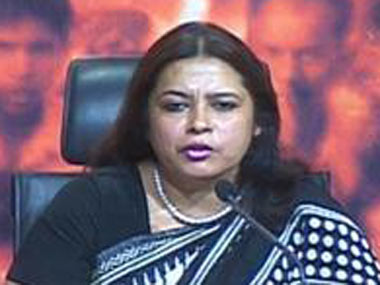
Women condemn Meenakshi Lekhi’s sexist slandering of Ishrat Jahan

Over 115 women have signed a letter seeking an apology from Ms. Meenakshi Lekhi for her sexist slandering of deceased Ishrat Jahan in a television channel. The letter has also been sent to the Chairperson of the National Commission for Women for appropriate action.
As the noose is tightening around the conspirators who cynically and coldly planned and executed the killing of teenaged Ishrat Jahan and three other people in 2004, there is a concerted campaign – the final, last ditch bid to save their skins – by tarnishing the image of this college student. There have been planted stories in the media linking her to a terrorist group –all of them false and concocted, even as the Gujarat High Court has clearly said that the CBI’s mandate is to simply investigate whether Ishrat and others were killed in cold blood. Continue reading Women condemn Meenakshi Lekhi’s sexist slandering of Ishrat Jahan
Reading Violence in the Garo Hills : Rafiul Alom Rahman
This is a guest post by RAFIUL ALOM RAHMAN
The recent mob fury over the rumour of rape of a mentally challenged Garo girl and the consequent outburst of terror on migrant workers in Tura shouldn’t be read as a simple story of Garo men’s concern for women. If it was so, not so many labourers outside Tura would have been killed in cold blood by Garo miscreants. The claim that tribal society is free from the clutch of sexism, and that it is tribal women who face sexual abuse in the hands of non-tribals does not cut ice anymore. Continue reading Reading Violence in the Garo Hills : Rafiul Alom Rahman
Will ACP Kisan Shengal of Mumbai ATS be prosecuted?: Yug Mohit Chaudhry

Guest post by YUG MOHIT CHAUDHRY: On Friday, 8th September 2006, four bomb blasts occurred in Malegaon killing thirty-one persons and injuring three hundred and twelve others. The case was originally investigated by the Maharashtra Anti-Terrorist Squad (ATS). After re-investigating the case, the National Investigation Agency (NIA) has concluded that the ATS fabricated evidence against nine persons. This unprecedented acknowledgement raises important questions about how terrorist cases are investigated, police misconduct and the rule of law in India. It remains to be seen whether the government will take action against the ATS investigating officer, Assistant Commissioner of Police (ACP) Kisan Shengal, for fabricating evidence on a capital charge. Continue reading Will ACP Kisan Shengal of Mumbai ATS be prosecuted?: Yug Mohit Chaudhry
The curious case of the Tamil Nadu police preventing ex-Maoists’ return to electoral path!
Guest post. A statement by Prof A. MARX and other rights activists
We, the undersigned, wish to bring to the public’s notice a curious case of doublespeak by the state. The central and state governments constantly advise Maoists to give up arms and join the mainstream. But, in Tamil Nadu, the government in collusion with the police is torturing a group of ex-Maoists who have joined the mainstream. These comrades have given up armed struggle and have come out to function in the open under a party named People’s Democratic Republic Party (PDRP). They have also accepted the electoral path to pursue their mass line. It is clear from their case that the intention of the state is not to mainstream the armed fighters but to incapacitate anyone who dares to criticize the state’s policies, without any compromise.
Background
Earlier, many PDRP members were part of CPI (Maoist). Some of them were arrested and imprisoned under POTA in 2002, on charges of undergoing arms training in Uthangarai, Tamil Nadu. They eventually came out of the prison with women getting bail in 2005 and men in 2007. Many of the comrades who came out criticized the armed struggle line of CPI (Maoist) and stressed for a mass line. The CPI (Maoist) reacted to this by dismissing them from the party towards the end of 2007. Continue reading The curious case of the Tamil Nadu police preventing ex-Maoists’ return to electoral path!
The Military and ‘Peripheral’ Violence in Naya Pakistan
Guest post by ZEHRA HASHMI
It has been many months now since the Hazaras in Quetta were attacked. They were targeted during the month of January in 2013 and then only 36 days later in February, both times on Alamdar road where most Hazaras live – an area that has been termed an “open air jail”. Both times the banned Sunni organization Lashkar-e-Jhangvi claimed responsibility. In recent years, as many as 2000 Hazaras have lost their lives to similar acts of targeted violence in Balochistan. As power has been handed over from one civilian government to another for the first time in Pakistan’s history, the systemic nature of this kind of violence should be central to the concerns of Pakistanis – maybe even more than electricity, dare I argue? As Pakistanis think long and hard about what democratic change could mean, I write about the Hazaras now in order to point to the seemingly peripheral minorities as central to Pakistan’s issues. These attacks speak to the complex ways in which violence embeds itself into the everyday lives of some Pakistanis. In other words, the kind of structural issues that trying to wish a ‘naya Pakistan’ into existence will not assuage. Continue reading The Military and ‘Peripheral’ Violence in Naya Pakistan
IB’s desperate and dirty tricks to scuttle the Ishrat Jahan investigation
This is a press statement put out on 14 June 2013 by a group of individuals whose names are given at the end.
It is a clear indication of the desperation being felt by the IB establishment as the heat turns on its senior officers in the Ishrat Jahan probe, that they are down to doing what they do best: use pliant sections of the media to plant stories to deflect scrutiny and create a favourable public mood. Following the summons issued to IB Special Director Rajender Kumar by the CBI (which is probing the case on the direction of the Gujarat High Court), the IB Director first sought to sell the familiar old story of ‘investigation will hit the morale of the IB’ – it seems as though a blanket immunity from any scrutiny and accountability is the only guarantee of IB morale. The IB then ran complaining to the Prime Minister; and when nothing worked, it used the agency’s tried and tested trick of enlisting the support of discredited ‘journalists’. Continue reading IB’s desperate and dirty tricks to scuttle the Ishrat Jahan investigation
An appeal to help Pakistani Hindu refugees in Jaipur: PUCL
This is the text of a memorandum submitted recently by the PEOPLE’S UNION FOR CIVIL LIBERTIES, Rajasthan, to the state’s chief secretary.
12th June, 2013
Sh. CK Mathew,
Chief Secretary,
Government of Rajasthan, Jaipur
Subject: Urgently providing temporary housing and other support to refugees from Sindh, Pakistan living in Paldi Meena, Jaipur
Dear Sir,
This is in continuance of our telephonic conversation regarding provision of temporary housing to the 23 persons belonging to six families who have come to Jaipur in the last five months from Umerkot, in Sindh province of Pakistan due to deteriorating conditions of the minorities and there existence in fear there. Some came in January 2013 and others came in March. They all arrived in India via the Thar Express which they boarded from Mirpur and first came to Jodhpur before moving to Jaipur. They are mostly on visitors and pilgrimage Indian visas. Continue reading An appeal to help Pakistani Hindu refugees in Jaipur: PUCL
Three questions for Madhu Kishwar: Dilip D’Souza
Guest post by DILIP D’SOUZA
Dear Madhu,
20+ years ago, I picked you up at the airport in Austin and you stayed at my home there for a few days. You had come there to deliver a lecture, as I’m sure you remember. We developed a friendship based on a degree of mutual respect and liking. I think you’ll agree? Several years after that I remember a stimulating afternoon sitting with you in Panchgani, catching up on many things and discussing various issues threadbare.
We haven’t met in some years now, but I’m going to call on the privilege of our 20+ years of friendship as I write these lines.
I have no problem at all with your desire to learn about Gujarat and Narendra Modi for yourself. Nor with your desire to see beyond what you’ve called the “targeting” of Modi. Nor with your speaking in support of Modi: if there are people who criticize Modi, I understand and accept that there are those who support him — it’s a democracy we live in after all. Nor with your speaking your mind: you have always done so and it’s the least I expect from you. (In turn, it’s the least you should expect from me). Continue reading Three questions for Madhu Kishwar: Dilip D’Souza
Mourning Reingamphi Awungshi: Pratiksha Baxi
This is a guest post by PRATIKSHA BAXI:
When the police found Reingamphi Awungshi, a twenty-one year woman from Ukhrul district in Manipur brutalised, assaulted and dead in her rented apartment in Chirag Delhi on 29 May 2013, they did not file an FIR. Rather, the Malaviya Nagar police station, a site of anguished protests, began by designating her death as suicide, even as they waited for a post mortem report! Although the family argued that the state of her bloodied and injured body clearly indicated sexual assault and murder, the police ended up filing an FIR, after three days, as a case of abetment to suicide.
It seems very clear that the aftermath of the Delhi gangrape protests have not made a dent in practices of policing—it should not take hundreds of protestors to ensure the registration of a police complaint. Nor is it reasonable for the police without thorough investigation and competent medical examination of the body to conclude that the death was a suicide rather than murder; and that the injuries on the body, the outcome of substance abuse rather than assault. This is evidence of bias, rather than an impartial investigation. Continue reading Mourning Reingamphi Awungshi: Pratiksha Baxi
White Women in the Indian Imagination: Alexandra Delaney
This is a guest post by ALEXANDRA DELANEY:
“Yeah, Indian guys think white girls are easy”, a British-born Indian remarked nonchalantly to me this week. Normally I’d be shocked by such gross racial stereotyping (of Indians) but in this case I’m inclined to agree. Not because Caucasian women by their very skin colour or cultural preferences are any more promiscuous than their South Asian sisters, but because of their sustained portrayal as loose and morally deficient. The image of the sexually liberated and ‘easy’ white woman runs deep in the Indian imagination, a perception which is drip-fed by the country’s all-pervading mainstream media.
The brutal rape and murder of an Indian student in New Delhi last December followed by numerous sexual attacks on foreign women has sparked international outrage. This year alone, a Chinese woman was date-raped in New Delhi, a Korean woman was raped after being drugged in Bhopal, a Swiss tourist was gang-raped by five men in Madhya Pradesh while holidaying with her husband, and a British woman broke both her legs after jumping off a hotel balcony to avoid an alleged sexual attack by the hotel’s manager. These incidents have led to a shift in how tourists perceive India, resulting in a 25% fall in foreigners travelling to the country and a 35% reduction in women travellers, reports New Delhi-based Associated Chambers of Commerce and Industry. Continue reading White Women in the Indian Imagination: Alexandra Delaney
The Jamhuriyat Road to Taksim Square: Shilpi Suneja
Guest post by SHILPI SUNEJA
Istanbul, 4 June

The evening of 3 June, 2013 was the first time I’d experienced the sting of pepper spray. I was walking on Cumhuriyet Caddesi near Taksim Square in central Istanbul, where, for the past five days, civilians and the Turkish police have been clashing over what the international media has called “a matter of a few trees”. Certainly, the spark of what is now a huge mass protest spanning multiple cities with over 1,000 injured, was the issue over Gezi Park, an area in central Istanbul where the Prime Minister, Tayyip Erdogan has proposed to build a shopping complex. The plan was to graze the green space and create a shopping complex. This in an area that already boasts of a Hyatt, a Hilton, a Swiss hotel and shopping centers with national and international brands. “There’s already so many shopping malls here,” said a Turkish friend speaking about the government’s decision. “Why build another?” The grazing of the park was supposed to start on Thursday, May 30th. By that time, hundreds of people gathered and occupied the park, bringing tents, books, and children. The police, in response, burned their tents and dispersed the protesters using pepper spray and tear gas. Continue reading The Jamhuriyat Road to Taksim Square: Shilpi Suneja
Workers in Maruti Suzuki Manesar plant – Justice Delayed is Justice Denied: ICLR
Preliminary report of the findings of the INTERNATIONAL COMMISSION ON LABOUR RIGHTS, released on 31 May 2013, New Delhi
The International Commission for Labor Rights (ICLR) constituted a team of lawyers and trade unionists from France, Japan, South Africa, the USA and India to investigate the incidents that led to the summary dismissal of over 500 permanent workers and over 1800 contract workers at the Manesar plant of Maruti Suzuki India Limited (MSIL) in August 2012. The team was constituted to bring international law and policy perspectives to bear on a situation that has festered for almost a year, with – at a minimum – 147 workers in jail over that period. The Commission reminds the Government of India that, under well-recognised international and domestic principles, “justice delayed is justice denied.”
The group also brings important comparative perspectives on the current or proposed role of this company in the global economy. MSIL has a parent company in Japan, substantial exports to Africa and Europe, a proposed assembly plant in South Africa, and an investor base in the United States – understanding the company’s practices in India is an imperative for those committed to corporate accountability and sustainable development jurisdictions outside India. Continue reading Workers in Maruti Suzuki Manesar plant – Justice Delayed is Justice Denied: ICLR
PUCL statement condemning the Maoist massacre in Darbha Valley
PUCL Condemns Killings of Congress Party leaders, their PSOs and Ordinary Villagers by Maoists in Dharba Ghati of Sukma District, Chhattisgarh
Eleven things India must do in Kashmir: Justin Podur

Guest post by JUSTIN PODUR: I spent a week in Srinagar, the capital of Kashmir, at the end of April 2013, talking to people among whom there was a wide range of opinion. While almost everyone supports freedom, some are resigned to India never letting Kashmir go, others believe that the struggle will go on and take different forms, some are just trying to survive. It seemed to me, at the end of a calm week during tourist season, that India is bringing about all of the things that it fears: Pakistani influence, violence, radicalisation of youth, political Islam, and hatred of India. Continue reading Eleven things India must do in Kashmir: Justin Podur