“Truth and Reconciliation Commission (TRC)” is a recent addition in the lexicon of the Kashmir conflict/dispute. IT gained currency after recent confirmation of reports about presence of unmarked, unidentified and mass graves in Kashmir. The idea of a TRC for Kashmir raises questions about its relevance and context, especially unidentified graves and enforced disappearances.
Truth and reconciliation commissions have been established in the past with varied powers and purposes, usually at points where the parties involved are ‘emerging out of conflict’ or are at ‘transitional stage’, and after modalities have been established for conflict resolution.
This guest post byALIA ALLANA is a despatch for Kafila from Damascus, the Syrian capital. All photos by Alia Allana
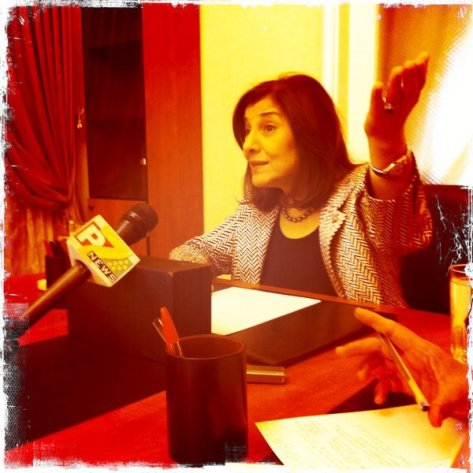
“You don’t think I’m afraid?” asked Bouthaina Shaaban, advisor to Syrian President, Bashar al Assad.
We were sitting in the Ministry of Protocol in Damascus and she tugged on her black pearl necklace and fidgeted with her black and white tweed jacket. She had more reason to be afraid, she said – not just because she was a woman but also because she is a supporter of the current regime.
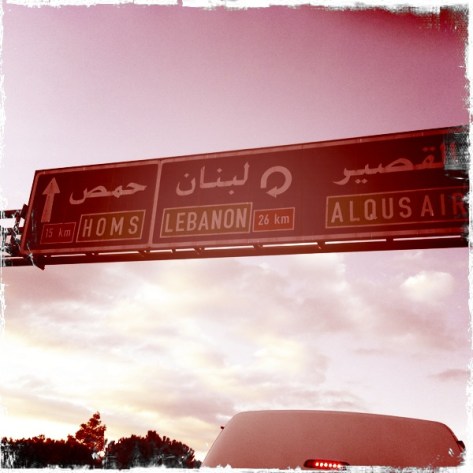
This guest post byALIA ALLANA is a despatch for Kafila from Homs, Syria. All photos by Alia Allana
He was found shot in the chest, bleeding on the streets, alone.
He has no name. He’s just another struggling body in the hospital in Homs — only he’s much younger than most. He’s only four. He doesn’t move, his small frail body is gobbled by wires. The doctors say he hasn’t opened his eyes, hasn’t made a sound, nor has he called out for anyone. Saliva runs down his mouth but there is no one to wipe it off his face. This isn’t the first case and the doctors fear it won’t be the last. There will be other children who will take his place, there will be more victims of random shooting, more deaths and no one knows by whose gun. Continue reading A Despatch from Homs: Alia Allana→
Last weekend, I attended a wonderful rally by the Adivasi Mahasabha in Raipur – some 10-15 busloads of people came from Dantewada and Bastar alone, while large numbers came from other parts of Chhattisgarh and even other states like Maharashtra, Orissa and West Bengal. The procession was flagged off by Dhurwa dancers while the rear end was brought up by Marias with their large dhols and bison horns. In between were thousands of militant marchers shouting slogans against militarization, demanding peace talks, the release of their arrested leaders, the implementation of the Supreme Court judgement on Salwa Judum, and all their constitutional rights with respect to land, forest and water. These were men and women who had lost everything to arson and loot by Salwa Judum, who had been interned in camps but managed to return home and pick up their ploughs again, who face the daily threat of arrests, beatings and encounters by the security forces, who have to negotiate with the Maoists everytime they wanted to access panchayat funds, who live a life on the razor edge of survival. And yet here they were, laughing, cheering and vowing to fight till the last breath, fight for their constitutional rights and in a constitutional way.
This remarkable struggle has been waged, not just over one weekend, but over years. Indeed, the Salwa Judum leaders themselves credit the CPI with the destruction of their movement – both through mass actions and through legal means.
Pakistanis love Bollywood. There is no question about that. Amidst the love-hate perceptions, Indian cinema has for decades fed public imagination. Before the 1965 war that took place when Ayub Khan, Pakistan’s first military ruler, was in power, Indian films were released in Pakistan regularly. They competed with the local cinema. The healthy contest enriched filmmaking and gave choice to Pakistani cinema-goers. The war and competing imaginary nationalism halted this process and for decades, Indian films stayed away from cinemas until another military ruler, Parvez Musharraf, allowed limited releases. Such is the power of Bollywood and its commercial viability that for the past few years, Bollywood flicks have revived cinema in Pakistan. Continue reading Through the screen, not so darkly: Raza Rumi→
Rahul Gandhi’s answer to that question, given to American diplomats who seem to have his ear more than the people of India, was unequivocal: it’s the Hindu right whose violence he fears more. But fellow-Kafila-ite Subhash Gatade makes the point in an interview to Rediff.com that such violence is difficult to quantify and compare because it takes only a few from a community to perpetrate it:
…one sincerely feels that it is difficult to quantify the relative threats. Remember the period when India witnessed Khalistani terrorism, which involved a fraction of the misguided youth of the Sikh community and the danger it posed to peace and tranquility in the country then. [Link]
It is not yet dawn, and I am wondering what is happening inside the Maruti Suzuki Factories in Manesar. How exactly is the Haryana Police, armed, along with its usual ordnance, with a High Court order, and the Haryana Labour Department’s ‘go ahead’, going about its stated business of ‘escorting’ a few thousand unwilling workers out of their factories under cover of darkness? Apparently, the factory fence has been layered with tent cloth. No light gets in, no light gets out. The Maruti Factories in Manesar have become black holes.They are producing more darkness than cars in Manesar tonight.
There is no way of knowing just what is going on inside. And yet, a few hundred surveillance cameras must be recording what the management, police, administration and ‘security personnel’ are doing to ‘convince’ the workers to leave. Someday, this archive, every inch of video footage, should be played and rewound repeatedly, in order to arrive at a clearer understanding of the evolution of class relations in the industrial belt around the National Capital Region in the second decade of the twenty first century in India. Unfortunately, I have a strong feeling that tonight’s footage is going to go where all inconvenient truths go – to the limbo of unsolicited erasure.
Threatening people whose views you don’t like with violence is a sure-shot way of letting the world know who is right and whose argument is morally superior. To those who attacked Prashant Bhushan today for the comments he made in this video below, thank you for bringing more attention to them!
This is how “integral” a part of India Kashmir is – so integral that voices that doubt it must be silenced with vigilante force!
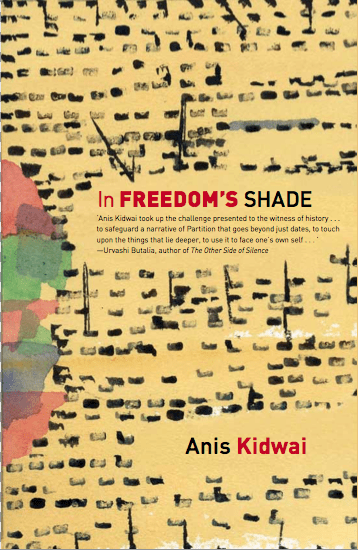
In Freedom’s Shade, by Anis Kidwai; translated from Urdu by Ayesha Kidwai; Penguin Books India 2011, Pp 382, price Rs. 450
Anis Kidwai belonged to the illustrious Kidwai family of Barabanki. The family has made more than a signal contribution to the making of India. Not only in politics and governance but also in diverse fields of creative endeavour. This short piece, though, is not about her or about her family but her most remarkable record of the unfolding tragedy in the Capital of India and in its surroundings in the aftermath of independence and partition.
Anis Kidwai, though extremely politically aware with sharp and clear views on what she saw happening, was not a political activist and would have probably continued to lead a well settled, almost sedentary life in Mussoorie, had the unthinkable not happened. Her husband, Shafi Ahmad Kidwai, the administrator of the Municipality, who had almost single handedly tried to keep peace in Mussoorie when everyone else had either given up or joined the rioters, was murdered.
I could have met Sebald.
I went to Britain in September 2001,
And he died in December.
East Anglia wasn’t all that far way
From London, nothing, really,
Is all that far away in Britain.
I could have met him, if I had known him
Then.
What I would have wanted to say, I think Continue reading Untitled: Najeeb Mubarki→
The police today raided my house between 6.30 and 7 am. I was out of the house when they did it. One of those days when I was not at home. They came with a search warrant and said that a khatarnak Naxalite was being shielded in my house.
My family was unable to gather the name, but they had come looking for a woman they said some Sunit / Sumit Sodi. The Bajaj Nagar police station of Jaipur, which very well knows my house, brought them. It was led by the DY SP of our area Rajendra Singh Shekhwat and they also sent police outside the People’s Union for Civil Liberties office. The Chhattisgarh raid was led by one Mr. Memon who was in plain clothes. His rank we do not know. He got papers from a court that my house has to be searched. Continue reading Kavita Srivastava: ‘Chhattisgarh Police Raided My House Today in Collusion with Jaipur Police’→
PRESS STATEMENT: We, the undersigned, express our deep concern regarding the continuous arrests of Indian and Pakistani fishermen and confiscation of their boats by each country of the other. The poor, innocent fishermen go to sea to catch fish and in the deep sea it becomes virtually impossible for them to recognise where their countries waters end and other’s start.
The fishing season has begun couple of days ago and boats in a big number go to the mid-sea to catch and earn some money. Both the governments need to recognise the fact that these traditional fishermen go to the mid-sea for their livelihood. Arresting them and confiscating their boats means depriving their families from the livelihood, and causing them extreme distress. Continue reading Release Indian and Pakistani fishermen with their boats→
Nothing seems to have changed in the past quarter decade. Past Jhargram, the town in the woods, the metal road connecting Lodhasuli to National Highway No. 6 wraps itself in a shady serenity. At occasional intervals, the artificiality of a clamour, emitted by a motor engine, creates an unquiet irritation, murdering the resonance of the forest and interrupting its slumber. The bus-stops at Kalabani and Boria are as lonely as they used to be; Gar-Salboni, a roadside village, is stuck in its eternal search for a path to survival. The mud road that breaks from the main road to meet the villages Sirsi, Joalbhanga and Lab-Kush, is as tranquil as it had been 25 years ago. Past the lush green rice fields by the road begins the forest that hems the horizon. The leaves that have just had a splash of shower glistens with the brilliance of the sun.
— Last year it was different, whispered the road.
— Yes, I have heard of it – there had been a drought. And it was the same in the year before the last. It used to follow a cycle like this 25 years ago. Rain ensures the crop. Hunger rides free when there is a drought.
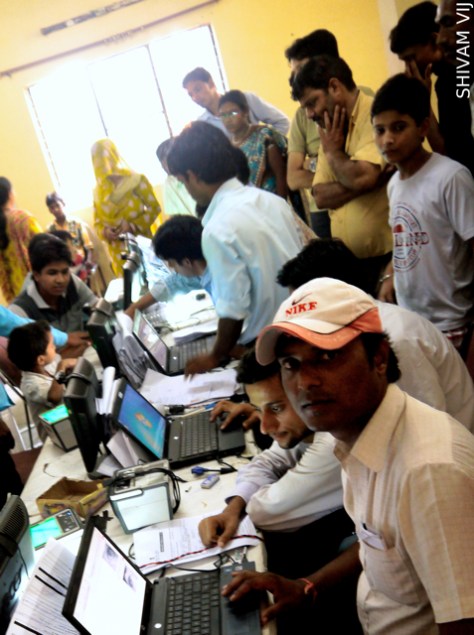
Contrary to what his name suggests, Bechu Lal Yadav, 29, isn’t a seller of goods. He is a recordist of identity. He is amongst a new breed of technical professionals that have come up overnight – the Biometricwallahs. Continue reading The Biometricwallah→
We write to protest the denial of entry to David Barsamian by Immigration Authorities at the New Delhi airport in the early hours of September 23, 2011, and we write to draw attention to the growing arbitrariness of the Indian Government in dealing with dissent of any kind.
David Barsamian is a veteran broadcaster, and founder and director of Alternative Radio, a weekly one-hour public affairs program offered free to all public radio stations in the US, Canada, Europe and beyond. For more than 25 years Alternative Radio has provided information, analyses and views that are frequently ignored in other media. Structured around intensive interviews conducted by David Barsamian, these programs are carried by over 125 radio stations and heard by millions of listeners. He is the author of numerous books with Edward Said, Eqbal Ahmad, Howard Zinn, Noam Chomsky, Arundhati Roy and Tariq Ali.
This release comes from theASSOCIATION OF PARENTS OF DISAPPEARED PERSONS The Bund Amira Kadal, Srinagar – 190001, Jammu and Kashmir
Press Release: 28th September 2011
Yesterday’s (27th September 2011) statement made by Chief Minister Omar Abdullah on unmarked graves and mass graves is hurtful and amounts to trivializing a serious issue of enforced disappearances and unmarked graves. Association of Parents of Disappeared Persons (APDP) believes that Omar Abdullah’s statement created an impression of him being an advocate of the culpable armed forces personnel as opposed to the representative of the people of Jammu and Kashmir.
Omar Abdullah has said, “The families would have to help us, indicating in which graveyard they suspect their member could be buried so that we will do the needful.” This is a shameless assertion. How would families know where their loved ones are buried? If the family members of the disappeared had any clue, as to where their family members are buried, then they would have already sought the permission for the exhumations from the District Magistrates. Continue reading ‘This obfuscation amounts to complicity’ – APDP response to Omar Abdullah’s speech on unmarked and mass graves→
As the session of the Jammu and Kashmir legislative assembly opens in Srinagar, Amnesty International is writing to all members of the legislative assembly (MLAs) to raise human rights concerns in the house and ensure that such issues are not ignored during the session.
Although there appears to be a consistent decrease in the overall numbers of members of armed groups operating in Jammu and Kashmir (J&K), human right violations continue to remain a significant and widespread concern in the state.
Amnesty International calls on all MLAs to raise human rights issues during the assembly session and call upon the state government to take immediate action required to remedy the situation. In particular, Amnesty International asks you to raise the specific issues below. While not an exhaustive list of human rights concerns in the state, discussion on these would indicate the commitment to human rights of the state legislative assembly and be an important step towards improving the human rights of all residents of Jammu and Kashmir.
This release comes from the INTERNATIONAL PEOPLE’S TRIBUNAL ON HUMAN RIGHTS AND JUSTICE IN INDIAN-ADMINISTERED KASHMIR (IPTK)
Srinagar, September 26, 2011
To: Honourable Members Jammu and Kashmir Legislative Assembly Government of Jammu and Kashmir
Re.: Unknown and Unmarked Graves of Kashmir: Investigation, Prosecution, and Reparation
We appeal to the Members of the Jammu and Kashmir State Legislative Assembly to address the following urgent issues in light of the findings put forward by the State Human Rights Commission of Jammu and Kashmir (SHRC) pertaining to unknown and unmarked graves. The SHRC investigated unmarked graves in Bandipora, Baramulla, Kupwara, and Handwara districts across 38 graveyards and verified 2,156 unidentified bodies in unidentified graves, as documented in its report of July 2011. Continue reading Unknown and Unmarked Graves of Kashmir: Investigation, Prosecution, and Reparation: IPTK→
What a farce! What a farce of a fast! One doesn’t quite know whether to laugh or cry over this state of affairs in the world’s largest democracy. It is a sad day in a nation’s history when someone who presided over a state-sanctioned genocide goes on fast in the name of “peace and harmony” and media vultures and assorted politicians rush to canonize him as the apostle of peace. When it comes to political theatre, few can beat our politicians. They have no qualms in mimicking their more successful fellow travelers if it can get them a few more votes or push them a couple of notches up the popularity ladder.
Readers of Kafila might have heard of the horrific shootings that took place at Paramakudi and Madurai on September 11. Officially seven people died when police opened fire on dalits who had gathered to pay their respects to Immanuel Sekaran, a dalit leader who was brutally killed in 1957 in circumstances that pointed to the complicity of dominant caste thevars in carrying out this murder. (The thevars are an important constituent of the ‘Mukkulathor’ complex of castes that includes the kallars and the maravars.) Subsequently, U Muthuramalinga Thevar, Forward Bloc leader was arrested in connection with Sekaran’s death – he stood trail and was released two years later, because the case against him was not established and proved. (Thevar was proud of his anti-communism and his Hinduism; to him he claimed that patriotism and theistic belief constituted his very vision, they were the ‘eyes’ through which he saw the world.) Continue reading Desecrating Memory – The Paramakudi Police Shootings: V Geetha→
In a damning revelation, a Right to Information application has revealed the Jihadi Literature that Delhi Police recovered from amongst the belongings of the slain terrorists killed in an encounter at Batla House in Delhi two years ago. The hateful, provocative and extremist nature of the recovered literature should be a matter of alarm for everyone. Given below is the cover of the book that contained the Jihadi Lit: Continue reading Revealed: The Jihadi Literature that Delhi Police Recovered from the Terrorists They Killed in Batla House→


 KAFILA - COLLECTIVE EXPLORATIONS SINCE 2006