Category Archives: Violence/Conflict

The Japanese are telling you something, MMS

Manmohan Singh is in Tokyo, trying to conclude yet another nuclear deal with yet another country. As the deal is under a cloud, many Japanese citizens have written an open letter to him:

It is true, as India has repeatedly pointed out, that the Nuclear Non-Proliferation Treaty (NPT) is an unequal treaty. However, looking at India now, one cannot help thinking that India believes power and prestige derive from the possession of nuclear weapons. India might have adopted a nuclear no-first-use strategy, but seen from the perspective of the experience of the Hibakusha, the possession of nuclear weapons is by no means a source of power and prestige. Rather, it is the epitome of immorality.

India reaffirmed its moratorium on nuclear testing when the Nuclear Suppliers Group (NSG) amended its guidelines to allow a special exemption permitting nuclear cooperation with India, which is not a member of the NPT. However, India has not promised never again to conduct a nuclear test. Nor has it agreed to IAEA safeguards that would prevent it from using domestically produced material to produce nuclear weapons. Under these circumstances, given that India has not promised not to produce nuclear weapons in future, if Japan were to proceed with cooperation on nuclear technology with India, this would be interpreted by other countries, including Pakistan and other Islamic countries, as meaning that Japan, the victim of nuclear weapons, is cooperating in India’s development of nuclear weapons. [Read the full letter]

Azadi: The Only Way – Report from a Turbulent Few Hours in Delhi

Dear Friends,

I was present and speaking a few hours ago at a meeting titled ‘Azadi: The Only Way’ on the situation in Jammu and Kashmir, organized by the Committee for the Release of Political Prisoners at the Little Theatre Group in Delhi yesterday (21st October). I was not present from the beginning of the meeting as I was traveling from another city, but can vouch for what occurred from around 4:30 pm till the time that the meeting wound up, well after 8:00 pm in the evening.

The meeting took place in the packed to capacity auditorium of the Little Theatre Group on Copernicus Marg at the heart of New Delhi. Several speakers, including the poet Varavara Rao, Prof. Mihir Bhattacharya, Sujato Bhadra, Gursharan Singh, Mr. Shivnandan (?) an activist from Jammu, Professor G.N.Saibaba, Professor Sheikh Showkat Hussain – Professor of Law, Srinagar University, the journalist Najeeb Mubaraki, Dr. N. Venuh of the Naga Peoples Movement for Human Rights, the writer Arundhati Roy and myself spoke at the meeting. (I may be missing out some names, for which I apologize, but I was not present for a part of the meeting, at the very beginning) The climax of the meeting was a very substantive and significant speech by Syed Ali Shah Geelani of the Hurriyat Conference (G), which spelt out the vision of liberation (Azaadi) and Justice that Syed Ali Shah Geelani held out before the assembled public, of which I will write in detail later in this text.

Continue reading Azadi: The Only Way – Report from a Turbulent Few Hours in Delhi

The Ayodhya Verdict: Rohini Hensman

This is a guest post by ROHINI HENSMAN

Reactions to the Allahabad High Court verdict in the Babri Masjid case have varied widely, from triumphalism from some actors, through appeals for calm and hopes of reconciliation from others, to expressions of disappointment and dismay from yet others. This is partly a consequence of the complex character of the split verdict. On the issue of whether a Hindu temple had been destroyed in order to build the Babri Masjid in 1528, S.U. Khan, in a minority opinion, said that it was built on the ruins of a temple, but nothing was destroyed, while Justice D.V. Sharma and Justice S. Agarwal held that a Ram temple had been destroyed in order to build the mosque. On the issue of whether it was the Ram Janmabhoomi, Justice Sharma, in a minority judgment, ruled that the site was the birthplace of Lord Ram, and therefore the entire property should go to the Hindu litigants. The majority judgment of Justice Agarwal and Justice Khan stated that Hindus believed it was the birthplace of Ram, and divided the property three ways, giving one-third to the Sunni Waqf Board and two-thirds to Hindu litigants. The status quo was to be maintained for three months, during which the parties were free to appeal the judgment in the Supreme Court (Allahabad High Court 2010).

Continue reading The Ayodhya Verdict: Rohini Hensman

Sri Lanka’s 18th Amendment: A Charter for Dictatorship: Rohini Hensman

Guest post by ROHINI HENSMAN

Different sections of Sri Lankans protest against the 18th Amendment

Sri Lanka’s claim to be a democracy has been tenuous for years, but the passing of the Eighteenth Amendment to the Constitution by parliament on 8 September 2010 dealt it a fatal blow. It changed Sri Lanka into a de facto dictatorship like Zimbabwe and Myanmar, where it is abundantly clear that elections alone cannot unseat Mugabe or Than Shwe.

Continue reading Sri Lanka’s 18th Amendment: A Charter for Dictatorship: Rohini Hensman

Bovine Intervention

This article on Kashmir by HILAL MIR was written in 2008, when a land transfer dispute became a catalyst for azadi protests of a scale not seen since 1991. Two years later, it remains relevant.

Moo! Moo! Oh ye white men in blue camouflage uniforms and caps, hearken to my bootless cries. Continue reading Bovine Intervention

Repeal AFSPA: Committee for the Release of Dr Binayak Sen Mumbai


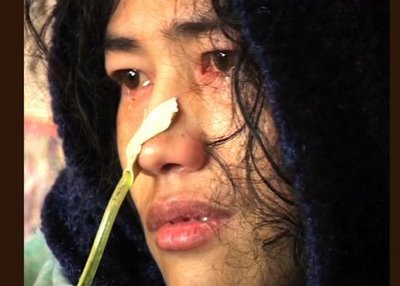
Irom Sharmila has been on a fast unto death for the repeal of the Armed Forces (Special Powers) Act (AFSPA) after troops of the Assam Rifles gunned down 10 civilians at Malom near Imphal airport on November 2, 2000. She is periodically arrested and force-fed by the Indian state.

Dear Prime Minister, Home Minister and Sonia Gandhi,

We have noticed a striking anomaly in the way the armed forces and the state treats the people of Kashmir and the Northeast. When contemplating the use of the armed forces in the forest belt, the armed forces and the state concluded (quite correctly, in our opinion) that they should not be used against the people of this region, including the Maoists, since ‘they are our people’. Yet the very same armed forces have no compunction about being deployed against the people of Kashmir and the Northeast, and the state agrees! Worse still, the armed forces insist that they cannot carry out their duties without AFSPA, which allows them to rape, torture and kill with impunity.

So what is happening here? Are the people of Kashmir and the Northeast not ‘our people’? This is indeed the message that comes across. And if these people feel that they are not regarded or treated as ‘our people’ by the state and armed forces of India, is it surprising that many of them do not want to belong to India?

In fact, AFSPA allows the armed forces to commit atrocities that would be considered war crimes even if they were directed at a foreign enemy. There is no justification for keeping it on the statute books, because it is incompatible with international humanitarian law. Its enforcement in these states has been one of the main reasons why there has been no resolution of the conflicts in them for decades. Consulting the armed forces about the repeal of a law that allows them unlimited power is worse than useless: why would they ever agree? Surely you ought instead to be consulting people like Irom Sharmila, who has been waging a heroic and totally non-violent struggle against AFSPA for ten years!

Shouldn’t the government be asking her why she is ready to sacrifice her life to get this law repealed? And taking her answer deadly seriously before she dies?

FROM
COMMITTEE FOR THE RELEASE OF DR BINAYAK SEN MUMBAI

Kashmir: A Time for Freedom

Guest post by ANGANA CHATTERJI
First published on 25 September 2010 in Greater Kashmir

“Freedom” represents many things across rural and urban spaces in India-ruled Kashmir. These divergent meanings are steadfastly united in that freedom always signifies an end to India’s authoritarian governance.

In the administration of brutality, India, the postcolony, has proven itself coequal to its former colonial masters. Kashmir is not about “Kashmir.” Governing Kashmir is about India’s coming of age as a power, its ability to disburse violence, to manipulate and dominate. Kashmir is about nostalgia, about resources, and buffer zones. The possession of Kashmir by India renders an imaginary past real, emblematic of India’s triumphant unification as a nation-state. Controlling Kashmir requires that Kashmiri demands for justice be depicted as threatening to India’s integrity. India’s contrived enemy in Kashmir is a plausible one – the Muslim “Other,” India’s historically manufactured nemesis. Continue reading Kashmir: A Time for Freedom

Provincial Councils and the 13th Amendment: Interview with Lal Wijenayake

I interviewed attorney at law, veteran Left politician and former Provincial Councillor for fifteen years, Lal Wijenayake in July 2010.  His experience is all the more important given the recent discussions and debates on the 13th Amendment and the Provincial Council system in Sri Lanka.  While this interview from two months back is very much focused on his experience as a Provincial Councillor, in recent weeks, Lal Wijenayake was also a petitioner against the anti-democratic 18th Amendment to the Constitution before the Supreme Court.  This was in contrast to the shameful manner in which all five Members of Parliament of the Socialist Alliance voted for the 18th Amendment. Continue reading Provincial Councils and the 13th Amendment: Interview with Lal Wijenayake

We Are Proud Hindus!

The Times of India carried a story today that we are reproducing here in full. It is the story of a Rajput-owned dog who became outcaste because it was fed a chapati by a dalit woman.  Not only was the dog turned ‘out’  to live in the dalit basti, worse, the woman Sunita was fined Rs 15, 000/-  by the panchayat for the crime. But hold on, there is more: when Sunita and her brother went to lodge a complaint at the police station, the police officer asked her why she fed the dog? So, this is not really a matter of one mad, ‘illiterate’ individual (as if literates are by definition better): This incident reveals an entire structure of thought and belief that extends through from the panchayat to the police itself (which despite the Supreme Court’s directive has not yet filed an FIR). Here is the full report:

BHOPAL: A dog’s life couldn’t get worse. A mongrel brought up in an upper caste home in Morena was kicked out after the Rajput family members discovered that their Sheru had eaten a roti from a dalit woman and was now an “untouchable”. Next, Sheru was tied to a pole in the village’s dalit locality. His controversial case is now pending with the district collector, the state police and the Scheduled Caste Atrocities police station in Morena district of north MP.

The black cur, of no particular pedigree, was accustomed to the creature comforts in the home of its influential Rajput owners in Manikpur village in Morena. Its master, identified by the police as Rampal Singh, is a rich farmer with local political connections.

Continue reading We Are Proud Hindus!

Lucas Tete, Maoist violence and K Balagopal: Biswajit Roy

Guest post by BISWAJIT ROY

It’s a welcome development that Arundhati Roy, G N Saibaba, Mahasweta Devi, Sujato Bhadra and others have condemned the killing of Maoists’ POW and Bihar policeman Lucas Tete as reported by Bengal Post. The civil society personalities sympathetic to the Maoist cause and human rights groups in general are sometimes criticized correctly for being silent on brutalities by Maoists and other insurgents while opposing the atrocities by the security forces and private armed squads, in case of West Bengal, CPM’s armed cadres. The Maoist leadership’s response to the intellectuals’ criticism is still not known. But the condemnations seemed to have played a role in their decision to free the rest three policemen. In an earlier occasion in Bengal, senior Maoist leader Kisenji had succeeded in extracting a huge media mileage by using the captive officer-in-charge of Sankrail police station as a pawn to bargain with the state government.

It is another matter that the Maoists could not extract much from the government except bail for some tribal and non-tribal women undertrials who had been languishing in jails as Maoist sympathizers. But the high-profile drama over Kisenji’s on-camera vitriol against the Centre and state in full camera glare and the eventual release of the ‘POW’ police officer through the good office of media persons had definitely made Kisenji a household name in Bengal and allowed him to occupy the political center-stage.

Continue reading Lucas Tete, Maoist violence and K Balagopal: Biswajit Roy

Kashmir, September 2010. The Reichstag Fire (dispersed) Redux ?

(Apologies for cross posting on the Reader List)

As if by magic, those who had hidden themselves for the past few months in Kashmir are leading mobs and setting schools and public buildings on fire. And many more people have died tragic and unnecessary deaths. This time, unlike in the past, the blame must be squarely shared between those who fired the bullets, and some of those who led the incendiary crowds. Perhaps Kashmir has just entered a new and darker phase, brandishing a burning torch. This situation, in order not to be irreversible, needs the urgent and sane attention of Kashmiris themselves, and of all those who wish Kashmir and its people well.

We could do well by way of beginning by turning our attention to a surprising detail hidden within the reports of the recent events of arson. National Conference apparatchiks, who did not even dare appear in public till recently for fear of being attacked for their role in sustaining the occupation of Kashmir by India’s armed might, are now allegedly seen openly goading mobs of zealots to burn down a school in the name of the defence of religion. If this is true, the what we are witnessing is the realization by them of a wonderful opportunity to wear new costumes and speak new lines in the unfolding theatre of the moment.

Continue reading Kashmir, September 2010. The Reichstag Fire (dispersed) Redux ?

On Torture and Testimonies

I was going to write out a reply to the comments on Shuddha’s post, Kashmir’s Abu Gharaiab, but thought I would expand it into a larger post.

I’d like to make clear that I have been to Kashmir only once – and that too for a few hours in the aftermath of the earthquake, so if anyone writes back saying, “I should see the ground reality in Kashmir”; I concede that point straight off the bat.  I should see the ground reality in Kashmir; we all should.

However, over the last eight months, I have had the opportunity to interact very closely with central paramilitary forces like the BSF and CRPF in the course  of their deployment in Chhattisgarh, where I work. Many of the men conducting anti-Maoist operations in Chhattisgarh have served in Kashmir and the North-East theatres.

Over the last three days, I and a reporter from the Times of India have been working on a story in which a group of adivasis from two villages in Chhattisgarh’s Kanker district have accused the BSF of torturing a number of young men and women from their respective villages by beating them and also administering electric shocks.

Continue reading On Torture and Testimonies

Kashmir’s Abu Gharaib?

Two days ago, I noticed a video posted by somebody on my facebook page. It was yet another video from Kashmir. It was tagged ‘brothers please watch, sisters please do not watch’. In later incarnations of the video, posted repeatedly on Facebook sites, Youtube channels and on blogs. it was tagged ‘Indian Security Forces Kashmiri Youth to Walk Naked on Road’ or ‘Kashmir – India’s Abu Gharib (sic)’.

The video was available on Youtube on the night of 8th/9th September, 2010, before being taken down.

Notwithstanding the misspelling of Abu Gharaib in these tags, there was something compellingly accurate in the designation. What I saw, and what i have seen unfold subsequently as a response by the Indian state to the circulation of this video, makes Abu Gharaib look like child’s play. Welcome to the virtual, viral, televisual reality of the nightmare of Kashmir.

For the past several weeks, I have been watching, and forwarding, several videos uploaded on to Youtube and facebook from Kashmir. Every video that I have seen contains evidence of the brutality of the Indian state’s footprint on the Kashmir valley, and of the steadfast yet resilient courage of its people, and of the innovative use they have been making of the internet to bear witness to their oppression.

See for instance – Innocent Man being Beaten in Kashmir.

I have seen paramilitary and police personnel open fire on unarmed or stone pelting crowds, mercilessly beat up young people and children, attack doctors, patients and nurses in hospitals, smash windows of homes, steal chickens and livestock and hurl the most vulgar invectives at ordinary people. I have watched the armed might of the Indian state retreat in the face of the moral courage of the opposition it encounters on the streets of Kashmir. It doesn’t take much to find these videos. Run a search with ‘Kashmir, Stone Pelting. indian Occupation’ on Youtube. Of follow the links and uploads on the growing cluster of Facebook pages from and about Kashmir. Continue reading Kashmir’s Abu Gharaib?

India and the Kantipur Saga

New Delhi is ranged against not only Nepal’s biggest political party but also its largest media house.

First published in The Hindu, 2 September 2010

The Indian Embassy in Kathmandu is in the middle of a controversy. It stands accused, yet again, of ‘gross interference’ and ‘attacking press freedom in another country’, and faces censure from a parliamentary committee, politicians across the spectrum, and civil society groups. Last week, sections of the media, including Kantipur television which is a part of the larger Kantipur group, reported that a product of Dabur Nepal was substandard and contained harmful substances. On August 27, the embassy said, “Indian joint ventures have informed the embassy they have been approached by such media houses for advertisement and are being threatened with negative publicity if those requests are not met.” It termed the news reports as ‘baseless adverse publicity against products of such ventures’ and said such allegations in the past had proven to be false.

Organisations representing media owners, which included the Kantipur publisher, immediately condemned the statement, said media is free to choose its content, and cautioned the embassy to ‘respect diplomatic norms and values of press freedom’. The embassy reacted again, saying the statement by media organisations would have been more credible if backed by a condemnation of unethical practices adopted in eliciting advertising revenue from Indian joint ventures. Since then, the Parliament’s international relations and human rights committee has instructed the government to seek a clarification from the Indian envoy for the embassy’s statements and termed it as blatant interference in free press.

Continue reading India and the Kantipur Saga

The Azad Murder and the CPM: Biswajit Roy

Guest post by BISWAJIT ROY. Biswajit is a journalist based in Kolkata

The recent controversy over the Maoist top gun Cherukuri Rajkumar aka Azad’s killing by AP police has blurred the usual political division between the apostles of state security and human rights groups. P Chidambaram and AP police chief churned out the usual encounter death theory, but the Maoists and Mamata Banerjee as well as union home minister’s emissary to the rebels, Swami Agniwesh called it a cold-blooded murder and demanded judicial inquiry.

In the wake of Chidambaram’s refusal to ask Rosaiah government to go for a judicial probe, the Outlook investigation into Azad’s death and the forensic experts’ opinion on his post-mortem report only reinforced the suspicion about the fake encounter. While it is yet to be clear whether Azad will become Congress’s Sohrabuddin, CPM’s position on the issue is interesting if not unpredictable.

The CPM made a full-throated condemnation of the killing of Sohrabuddin and his wife by the Gujarat-Rajasthan cops and demanded punishment of Narendra Modi’s protégé and former state home minister Amit Shah for masterminding the murder. Also, the party general secretary Prakash Karat condemned the ‘brutal policing’ against the stone-pelting youth in the valley while counting the mounting toll of young lives during his recent visit to Srinagar. He demanded curbing of the ‘draconian’ provisions of Armed Forces Special Power Act which confer licence to kill while asking the Centre to ‘stop repression and start dialogue’.

But when it comes to Maoists, the Marxists heavyweights kept mum over Azad’s mysterious death – in the parliament and outside and virtually accepted the police version about his death. Pressed about the CPM’s stand on Azad death controversy, its leaders spoke with a forked tongue. The party central committee member and Bengal spokesman, Md Selim was evasive.
He said his party always wanted Centre to reveal ‘truth’ about all such deaths. But he stopped short of supporting the police version on Azad’s end arguing that they had ‘no information to counter the police claims’ or buttress the demand for judicial probe.

Continue reading The Azad Murder and the CPM: Biswajit Roy

On torture in India and China

Guest post by FAHAD MUSTAFA

On 31st May, the Chinese government released guidelines that banned the admissibility of evidence obtained under torture in criminal convictions. This came a few weeks after the revelation of the seemingly bizarre, yet not completely uncommon, case of Zhou Zuohai.  Zhuo was released after being imprisoned for 11 years in Shanqqi, on charges of murder, when his alleged victim was found alive in his village. He was imprisoned on the basis of his confession of the crime.  A couple of days after he was released the authorities admitted that the confession was obtained under torture. Zhuo described his beatings: the pouring of chilli water in his eyes, the bursting of firecrackers over his head, and how he thought he would not survive. When he said what he was expected to say, the torture stopped, and he was convicted.

Lawyers, police, and governments in most countries, including China, understand that torture is counterproductive in extracting evidence. Indeed, China has issued several directives earlier to say that evidence under torture is unacceptable. As in the case of Zuohai, most confessions of this sort are false or misleading, and are given only to make the immediate suffering stop. Why then do police forces continue to use torture or the threat of it as a means to extract evidence? Continue reading On torture in India and China

Governing Kashmir: Critical Reflections on the Historical Present

Guest post by RICHARD SHAPIRO

The Indian state’s refrain to the people of Kashmir is as follows: Indian rule of Kashmir is legitimate because India is a secular democratic republic, organized by rule of law and constitutionally guaranteed human rights. As a democratic state, rule of law may be suspended for national security reasons to protect the state, and such action has been necessary in Kashmir because of cross-border terrorism and ‘separatist’ elements in Kashmir that includes armed militants. The suspension of democratic rights in Kashmir, India states, is necessary to protect India as a secular democratic republic. Elections are periodically held and touted as proof of democracy in India, but without a vibrant civil society ensuring social freedoms, electoral processes obfuscate the subjection of Srinagar to New Delhi and give Indian governance greater legitimacy than if the center took official control over the state of Jammu & Kashmir.

What is the logic of the Indian state to which Kashmiris are subjected? The people of Kashmir must be denied the rights guaranteed to citizens of India because every Kashmiri is considered a real or potential threat to India. Kashmiris are citizens of India who are denied the rights of citizens to protect the state as the guarantor of rights. Law and order demands the denial of democratic rights to the people of Kashmir. Freedom of assembly and movement, freedom of speech and expression, freedom of press, freedom of religion are the basic rights that make India a legitimate state, and it is precisely these rights that must be denied all Kashmiris because when Kashmiris exercise these rights it is considered evidence of the anti-national sentiment of Kashmiris. Continue reading Governing Kashmir: Critical Reflections on the Historical Present

Godhra, arson, terrorism, stone-pelting, Dalits and Muslims, and other such issues in village Lehna

A fact-finding report released today by PUCL Uttar Pradesh

Fact Finding Report on the murder of MNREGA and labour activist Shri Hari Lal, Village Lehna, Block Manjhanpur, District Kaushambhi on 15.08.2010

A fact finding committee to investigate the incident was formed with the following: members

  1. Mr. S.R.Darapuri, Retired IPS, Vice President UP PUCL.
  2. Mrs. Arundhuti Dhuru, Consultant to Commissioner Right To Food Committee of Supreme Court.
  3. Mr. Ram Kumar, Vice President UP PUCL.
  4. Mr. Jawed Rasool, Dyanmic Action Group.
  5. Dr. Nisha Srivastav, Professor  (Deptt. of Economics ), Allahabad University .
  6. Mr. Rajni Kant Rai, HRLN, Allahabad .
  7. Mrs. Bindu Singh, Convener UP Right To Food Campaign .
  8. Mr. Sanjay Singh, convenor, Parmarth, Oriye, Jalaun

The committee visited the site of incident in village Lehna  on 21.08.10 .The fact finding committee met the family members of the late Hari Lal, other residents of the village, and workers and officials of Voice of People’s (VOP). The committee also met the district magistrate and spoke to the superintendent of police. The following facts about the incidents came to light through this enquiry:

Background to the Incident

The main issue behind this incident was of MNREGA and payment of labour wages. According to the available evidence, a pond was dug in the village by 250 labourers from the panchayat quota of MNREGA in April, May and June 2007. However, the gram pradhan, Tirath (Dhobi), did not pay the labourers full wages. The gram pradhan is a mere puppet in the hands of a former gram pradhan, Bassan, and his son Fateh and a criminal named Nakkan. Continue reading Godhra, arson, terrorism, stone-pelting, Dalits and Muslims, and other such issues in village Lehna

Why Kashmiris should speak to Indians, not India

On 28 May this year, the Economic Times, India’s leading business daily, carried a story titled, ‘Kashmir survey finds no majority for independence’. That is a curious headline. What is ‘no majority’? Either there is majority or there is not. Robert Bradnock conducted this survey for Chatham House, a leading British think-tank, Kashmir on both sides of the Line of Control. The survey was conducted in the autumn of 2009, and the copy mentioned that 44 percent in Azad Kashmir and 43 percent in Jammu & Kashmir favoured an independent Kashmiri nation state.

Similar was the reporting of the survey in other Indian papers. They omitted some details, though. They did not mention that the survey was conducted not just in Kashmir but also the Jammu and Ladakh regions. They did not mention that even after factoring in Jammu and Ladakh, the total support for India was 21 percent and for Pakistan 15 percent. So if there was a three-way poll, the whole region’s average figure of those supporting independence (43 percent) would win hands down. Most of the rest (14 percent) favoured making the LoC a permanent border, which means sealing the status quo, something India and Pakistan came very close to doing in 2007. This 14 percent comes only from Poonch (94 percent), Rajouri (100 percent) and Jammu (39 percent).

Further, they did not mention that in the district-wise results the greatest support for independence was in the Indian side of the Valley – an astounding 95 percent in Baramulla, 75 percent in Srinagar, 82 percent in Badgam, and 74 percent in Anantnag. Pulwama and Kupwara were not surveyed. The highest support for India was 80 percent in Kargil and 67 percent in Leh, 73 percent in Udhampur and 63 percent in Kathua. In Jammu district, it was 47 percent – ‘no majority’. In Azad Kashmir, 50 percent wanted to be with Pakistan.

Now read the ET headline again. ‘Kashmir survey finds no majority for independence’. The story does not tell us what they found a majority supporting. If we have to be polite, we can say that such manipulative reporting of a detailed survey amounts to the Indian media being in denial of the fact that Kashmiris don’t want to be with India. If we have to call a spade a spade, we can say that this amounts to telling us a lie. Read More

Murder of an activist

This report comes from KK ROY

MNREGA Fighter and leader of Voice of People (VOP) Hari Lal of District Kaushambi, U.P. has been killed in broad day light at 12.00 Noon in his village Lahna, Block Manjhanpur district Kaushambi on independence day, 15 August 2010 at the instance of the corrupt Gram Pradhan Tirath Lal by the contract killers. Thousands of members of the VOP and other organisation gathered in the village and made militant protest, burnt the houses of the killer. A heavy contingent of armed police lead by District Magistrate, Superintendent of Police, Circle Officers and SHOs of various police stations entered into the village and let loose the reign of terror over the villagers, women and children. Two FIRs has been lodged against the leaders and members of the VOP including the common villagers. The leader of VOP Parvez Rizvi has been named in both the FIRs. One FIR has been lodged u/s 307, 322, 334, 352, 147, 148, 149 IPC and 7 Criminal Amendment Act in which 5 persons have been named and the second FIR has been lodged u/s 353, 336, 506, 427, 352, 436, 392, 147, 148, 149 IPC and 7 Criminal Amendment Act. Both the FIRs have been lodged by police andin both the FIRs VOP leader Parvez Rizvi has been named. Continue reading Murder of an activist

Building, dead bodies and the emergency decree in Thailand

This is a guest post with photographs by ANON.

Sunday 1 August 2010

Activists and people in the red shirt movement organized the event Building, dead bodies and the emergency decree at the memorial “14 October 1973”, a memorial built to remember those who died fighting against the dictator on that date.  This event was organized to raise funds to help the victims and their families, affected by the Thai government crack down during the pro-democracy Red Shirt Political protests in April 2010 and May 2010. Continue reading Building, dead bodies and the emergency decree in Thailand