Moditharam at IFFK 2012 : An Open Letter to the Young People Who Volunteered at IFFK

 Dear Friends

Writing this to you to share the pain, the insult, the deep sense of deprivation that I feel at the end of IFFK 2012.

I am sure many of you would be surprised by this statement. I expect a barrage of irritated questions: didn’t the IFFK 2012 present a most delectable selection of films, and that too, of impeccable political correctness? Weren’t the passes delivered promptly? Weren’t the theaters all spruced up and respectable? Were the loos great this time? So what more do you want, you crude, loud-mouthed female, who was shouting and protesting most of the time? And in any case, why should you write at all to the volunteers,  and not to the authorities if you plan to complain?

Continue reading Moditharam at IFFK 2012 : An Open Letter to the Young People Who Volunteered at IFFK

Finding Women among “Common Men”: Aradhana Sharma

Guest post by ARADHANA SHARMA

Arvind Kejriwal_new2--621x414

I have often wondered about the place of women in all the current talk about the aam aadmi. Is she included in this expansive and apparently un-gendered discourse that claims to represent every ordinary citizen? Who speaks for her and how? And what does this tell us about the gendered, dare I say patriarchal, nature of the contemporary discourse on democratic transformation?

Congress’ claims on the political symbol aside, the aam aadmi’s recent resurgence has much to do with Anna Hazare and Arvind Kejriwal. Be it the mobilizations around the RTI Act or Lokpal Bill, the Gandhian cap or Kejriwal’s new party, the aam aadmi’s durdasha and a fight for his rights are front and center in political debate today. The largely male leadership of ongoing agitations for governance reform and their critics rarely talk about women or gender concerns specifically. They assume, it seems, that women are automatically included under the common man category and therefore are spoken for each time the figure of the ordinary citizen is invoked.

So imagine my surprise, when, during an NDTV show titled “The Kejriwal School of Politics,” gender issues within governance were raised directly, if fleetingly. Continue reading Finding Women among “Common Men”: Aradhana Sharma

Why Pakistan Loves Turkey: Saim Saeed

Guest post by SAIM SAEED

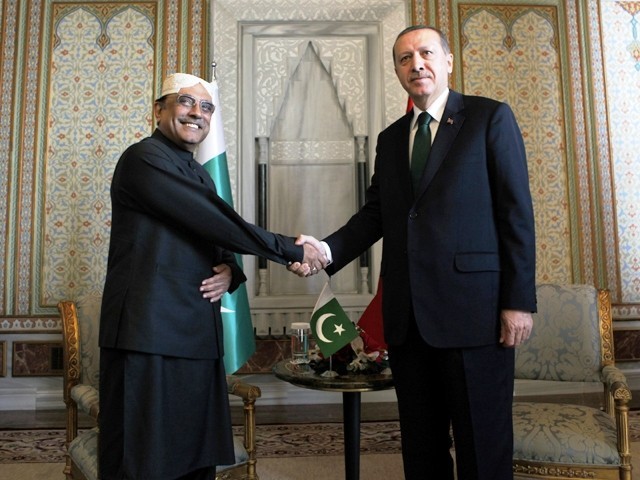
Pakistan's President Asif Ali Zardari with the Turkish Prime Minister Recep Tayyip Erdoğan. Reuters photo
Pakistan’s President Asif Ali Zardari with the Turkish Prime Minister Recep Tayyip Erdoğan. Reuters photo

Everybody loves Turkey. It’s where Pakistani families go for holidays, where students now go for education, where laborers go for work, where clerics go for counsel, and where both civilian and military officials and dignitaries go to find inspiration. Due to Turkey’s momentous economic and political rise, especially in the last decade, it is being held up to the rest of the Muslim world as a country worth emulating, and experts from everywhere have been referring to the “Turkish model” – an Islamic democracy with a robust economy – as the blueprint for a strong and stable (and still Muslim) country. Continue reading Why Pakistan Loves Turkey: Saim Saeed

अकोट में साम्‍प्रदायिक हिंसा: एक पूर्व नियोजित साजिश

Guest post by Sharad Jaiswal, Amir Ajani and others

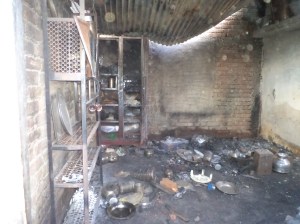
DSC0036223 नवम्‍बर, वर्धा से गये एक जांचदल, जिसमें महात्‍मा गांधी अंतरराष्‍ट्रीय हिंदी विश्‍वविद्यालय के अध्‍यापक, छात्र, वर्धा के सामाजिक कार्यकर्ता और पत्रकार सम्मिलित थे, ने अकोट (जिला अकोला) का दौरा किया। पिछले 23 अक्‍टूबर को अकोट ताल्‍लुका में साम्‍प्रदायिक हिंसा की घटना हुई थी जिसमें 4 लोग मारे गये थे एवं कई लोग घायल हुए थे। मुस्लिम समुदाय के 22 घरों को आग के हवाले कर दिया गया था और लगभग 25 दुकानों को जलाया गया था। मरने वालों में सभी निम्‍नमध्‍यवर्गीय पृष्‍ठभूमि से थे।

साम्‍प्रदायिक हिंसा की पृष्‍ठभूमि :

साम्‍प्रदायिक हिंसा की पृष्‍ठभूमि 19 अक्‍टूबर को तैयार की जाती है। पूरे अकोट ताल्‍लुके में 65 मंडल देवी के लगाये गये थे। प्रत्‍येक मंडल का संबंध किसी न किसी जातीय समाज से रहता है। मसलन माली समाज, कुनबी समाज, धोबी समाज आदि। धोबी और भोई समाज के एक मंडल, जिसके कर्ताधर्ता बजरंग दल, शिवसेना, विश्‍व हिंदू परिषद के लोग थे, के पास से निकलते हुए एक मुस्लिम बच्‍चे ने गलती से वहाँ पर थूक दिया। उसके साथ उसका हमउम्र दोस्‍त भी था। उसका थूक देवी की प्रतिमा को छुआ तक नहीं लेकिन पर्दे पर उसके कुछ छींटे जरूर पड़े। उस बच्‍चे को मंडल के लोगों ने पकड़ लिया और उसकी पिटाई करने के बाद वहीं पर बैठा लिया। इतनी देर में जब कुछ शोर-शराबा हुआ तो लोगों की भीड़ वहाँ पर एकत्र हुई और मामले को समझने के लिए शोएब नाम का व्‍यक्ति भी वहाँ पर पहुँचा और उसने कुछ हस्‍तक्षेप भी किया और मंडल के लोगों को समझाने की भी कोशिश की। उसने बच्‍चे की उम्र का भी हवाला दिया। बच्‍चे की उम्र 7-8 साल की थी। मंडल के लोगों की तरफ से यह भी कहा गया कि आज ये देवी की प्रतिमा पर थूक रहे हैं कल हमारे मुँह पर थूकेंगे। बहरहाल शोएब ने किसी तरह से मामले को शांत कराया और बच्‍चे को मंडल के लोगों से मुक्‍त कराया। इस घटना की चर्चा लगभग आधे घण्‍टे के बाद आस-पास के इलाके में फैल चुकी थी। एजाज नामक टेलर जिसकी घटना स्‍थल से कुछ दूर पर ही दुकान थी मंडल के लोगों के पास आया और उसने जानना चाहा कि मामला क्‍या है और उसके बाद वह भी लौटकर अपनी दुकान पर वापस आ गया। Continue reading अकोट में साम्‍प्रदायिक हिंसा: एक पूर्व नियोजित साजिश

The Ashes of Dharampuri

Image

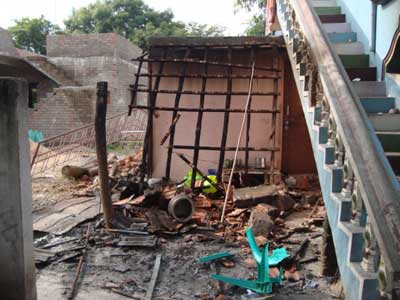
Rajamma, a resident of Natham, looks at her burnt house with vacant eyes. The more she looks at it, the harder the tears fall. Every part of her house — each brick painstakingly collected — is a small fountain of memories for her, reminding her of the backbreaking work done by her late husband at the local landlord’s house.

Now, all that is in the past. Continue reading The Ashes of Dharampuri

The Bodoland (Assam) Violence and the Politics of Explanation by Bonojit Hussain

EVEN though tensions were apparently simmering for many months prior to the outbreak of the violence in the month of July 2012 in the Bodoland Territorial Autonomous Districts (BTAD) area, but the immediate trigger was the killing of two Muslim youths, who were shot dead by unidentified gunmen on 6 July. The needle of suspicion pointed to the former cadres of the disbanded Bodo Liberation Tigers (BLT). In retaliation, four former cadres of Bodo Liberation Tigers were hacked to death by a mob in the Muslim dominated village of Joypur near Kokrajhar town. What unfolded after that was the worst humanitarian crisis to have hit Assam in decades. Continue reading The Bodoland (Assam) Violence and the Politics of Explanation by Bonojit Hussain

Full report: Alleged Perpetrators – Stories of Impunity in Jammu & Kashmir

Given below is a report put out this morning by the Srinagar-based INTERNATIONAL PEOPLES’ TRIBUNAL ON HUMAN RIGHTS AND JUSTICE IN INDIAN-ADMINISTERED KASHMIR [IPTK] and ASSOCIATION OF PARENTS OF DISAPPEARED PERSONS [APDP].

Given below is a press release and the executive summary of the report.

Continue reading Full report: Alleged Perpetrators – Stories of Impunity in Jammu & Kashmir

Can we solve Siachen without solving the Jammu and Kashmir dispute?

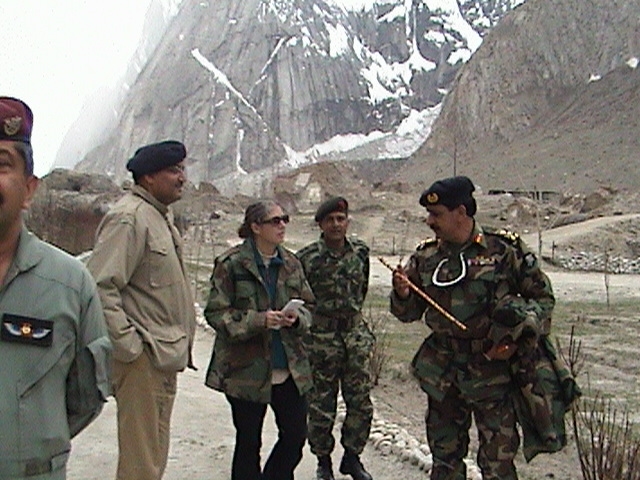
Myra MacDonald with Pakistani Army officers in the Gyari sector in 2004

Myra MacDonald is a London-based journalist with Reuters and a long-time observer of South Asia. She tracks the turning points in Pakistan politics at the Pakistan: Now or Never. MacDonald is best known for her book on the Siachen conflict, Heights of Madness: One Woman’s Journey in Pursuit of a Secret War. Published in 2007, the research for the book took her to both sides of the conflict, on helicopter and on ground. She was bureau chief of Reuters in India in 2000-2003. She then took leave-of-absence to research the Siachen conflict, becoming one of the very few people to visit the war zone on both the Indian and Pakistani sides. She has given presentations on Siachen to the Royal Military Academy Sandhurst and to the International Institute for Strategic Studies in London. Amidst alarmist rumours that track-two parleys between India and Pakistan are urging India to ‘give up Siachen’, MacDonald tells Shivam Vij in an e-mail interview why resolving Siachen without resolving the Jammu and Kashmir dispute may not be easy.

Q1) The idea of demilitarising Siachen is being seen by some in India as a demand to hand Siachen over to Pakistan, or at the very least, to ‘lose’ the territory for which Indian soldiers have made great sacrifices. Do you agree with such an interpretation of demilitarising the glacier? Do you think India has real strategic advantage with its occupation of the glacier? Continue reading Can we solve Siachen without solving the Jammu and Kashmir dispute?

Jharkhand, twelve years later: Mahtab Alam

Guest post by MAHTAB ALAM

The state of Jharkhand was created after several decades of struggle. On 15 November, the state  completed 12 years of its formation. The day is considered to be the birth anniversary of the legendary leader Birsa Munda. The state, famous for its rich mineral resources, occupies an area of 28,833 square miles (74,677 square km) and has a population of nearly 330 lakh people according to 2011 estimates. Like every year, the formation day was celebrated with the great pomp and show by the government and the political elite in the state capital Ranchi and elsewhere.

However, this year, greater effort was made to bolster its ever declining public image due to mass displacement, brutality by police and security forces and rampant corruption in the state over the years, by giving advertisements not only in local and Hindi newspapers but also in major national dailies. On 15th of November, in the Times of India (Delhi edition), a full page advertisement was published with smiling faces of Shibu Sonren, once a popular leader and referred as Dishom Guru or the Great Leader of Tribal, Jharkhand Mukti Morcha (JMM) chief and also head of the ruling alliance, along with chief minister Arjun Munda and his team, in Hindi with the heading, ‘Vikas ke path par agrasar Jharkhand: Zameen par utri Haqeeqat’ (Jharkhand on the path of Development: Reality on the ground), enumerating ‘landmark works of development’ of the government. I was also told by friends that similar advertisements appeared in other newspapers as well. Continue reading Jharkhand, twelve years later: Mahtab Alam

A Case of Dalit Assertion Over Adivasi Land: Agrima Bhasin

Guest post by AGRIMA BHASIN

“We won’t beat you at your house, we will beat you in the bazaar, in front of everyone!” A common caveat, often hurled at a dalit by an upper caste. But in this case, they were dalit men who spat this warning at a tribal family. A group of dalits in Alampur village, Sagar district, Madhya Pradesh are forcefully asserting their rights (since 2003) over a belt of forest land belonging to Balram, a tribal resident and his family. The family have farmed the five acres of land for 40 years and were finally awarded forest rights over it by the state government of Madhya Pradesh in 2009. Continue reading A Case of Dalit Assertion Over Adivasi Land: Agrima Bhasin

Reject amendments to UAPA – An appeal to members of the Rajya Sabha: JTSA

This release was put out by the JAMIA TEACHERS’ SOLIDARITY ASSOCIATION on 3 December 2012. Full list of signatories at the end.

It is saddening and surprising that at a time when more and more evidence is surfacing about the extensive abuse of anti-terror laws in targeting minorities, tribals, deprived sections as well as political activists, the government has chosen to move amendments in the present UAPA 2008. These amendments will make the law even more draconian and amenable to human rights violations.

 You will remember that the amendments in the Unlawful Activities Prevention Act 1967 were passed in December 2008 without any thoroughgoing debate in the aftermath of the horrendous carnage in Mumbai. The Bill was not referred to any Parliamentary committee despite calls by several members for such a scrutiny and consultative process. Whilst the widespread sense of shock and reprehension at the Mumbai killings may have been weighing on the minds of the Hon’ble Members of Parliament then, four years later, surely, there is no reason to push through the amendments without a wider debate.   Continue reading Reject amendments to UAPA – An appeal to members of the Rajya Sabha: JTSA

Kurdistan, a Forgotten Nation of 40 Million People: Kamal Chomani

Guest Post by KAMAL CHOMANI

It has been for about 13 months I am living in Bangalore, India. I am here to study masters. India to me, as it is, is incredible. I feel as if I am at home. People here are friendly. My teachers and colleagues are just great. I have to confess that for a student that is his first time to leave his home for such a long time, certainly, will face many difficulties, but no difficulties have hurt me as much as a question of Indian people ‘where are you from?’

I am from Iraq, but Iraq is not my country. I cannot speak Arabic which is the official language the country. Luckily three more Iraqi people are with me who have helped me to manage my Arabic. My culture is different from Arabs. I don’t want to look like a nationalist, because I am telling the truth. I am a Kurd! My mother tongue is Kurdish. My homeland is Kurdistan.

So, who are the Kurds?

Kurdish community in Italy protesting for Ocalan's release. Photo courtesy demotix.com
Kurdish community in Italy protesting for Ocalan’s release. Photo courtesy demotix.com

Kurds are the original inhabitants of Middle East. They are the biggest stateless nation around the world that they are still struggling for freedom and independence. They have been forgotten by the world.

Yes, Kurds are a forgotten nation of 40 million populations. In India, few people know who Kurds are. I am really surprised when some Indians ‘love’ Saddam Hussein, the former Iraqi president. Saddam has killed more than 300,000 Kurds. He used poisoned gas against Kurds and killed 5000 Kurds in only one hour in Halabja, which is known as Hiroshima and Nagasaki’s sister! He mass murdered more than 182,000 Kurds in Anfal (Genocide) operations. The Anfal case is going to be an international case. Sweden Parliament has just decided to recognize it as a genocide act against humanity. In UK, Kurdish people have started a huge campaign to make pressures on UK parliament to recognize as Genocide. Continue reading Kurdistan, a Forgotten Nation of 40 Million People: Kamal Chomani

On Mourning and Memory: Sameer Khan

Guest Post by Sameer Khan

It was an amazing sight to see Bal Thackeray draped in the National Flag like a decorated war hero on way to his funeral among the sea of followers and curious onlookers. More surprising were the news anchors, media persons and other flag bearers of our proud democracy, singing paens and eulogies on Prime Time TV for two days. I wondered at the reason for this laudatory outpouring from the news anchors, some of whom had been, not too long ago, at the receiving end of the fury of the deceased man

As a person belonging to a minority community who grew up in Central Mumbai in the 80’s, it was extremely painful for me to listen to the news anchors as they heaped praises on the dead cartoonist. It was a shocking sight for someone who had witnessed the searing effects of the policies and the politics of the man that had targeted not only my community but many others, and had also eroded the secular and multicultural society in the city of my birth. Continue reading On Mourning and Memory: Sameer Khan

Sex, Lies and God’s Promise: Response to a Diatribe

An article titled “In Defence Of Israel” is being circulated to media-persons in India by the Spokesman of the Embassy Of Israel in Delhi. This article, published in Open magazine, was written by Jonas Moses Lustiger (a student based in Paris, who has earlier lived in India).  The article names me specifically, and refers to mine and Aditya  Nigam’s posts on Palestine in Kafila, but I was not interested in engaging with Lustiger’s largely ill-informed, propagandist and misrepresenting rant. But now that it appears we are responding directly to the Israeli state, I feel perhaps I should put some things on record.

(Our three posts on Kafila are Nakba and Sumoud, Living the Occupation and Imagining Post-Zionist Futures)

 Let me begin by stating my complete agreement with Lustiger on three of his key statements in the Open article.

First:

It is true that Israel’s current government is one of the worst it has known and most of its citizens have lost hope for peace. It is also true that Israeli society is turning more racist, intolerant and ignorant of the suffering and existence of their immediate neighbours—Palestinians. Of course, the Palestinian people have been denied many rights and have been living under precarious conditions since Israel’s 1967 occupation of the West Bank and Gaza. True, they have been repeat victims of unjustifiable violence and a large proportion of Israeli politicians deny their claim to an independent land, even as Israel threatens the viability of a Palestinian state by wielding tools of colonisation. 

Pretty much sums up our three posts on Kafila – what’s not to agree?

Second:  Continue reading Sex, Lies and God’s Promise: Response to a Diatribe

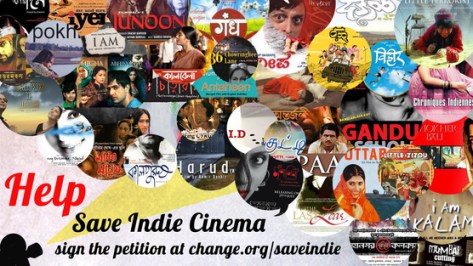
Save indie cinema in India

To:
Door Darshan India (Director General)
President of India (Shri Pranab Mukherjee)
Vice President of India (Shri Hamid Ansari)
Information and Broadcasting Minister (Manish Tiwari)

This petition is jointly filed by: Oscar Award and National Award winning sound engineer Resul Pookutty; National Award Winner and Oscar nominees Ashvin Kumar, Ashutosh Gowariker; National Award winning filmmakers Anant Mahadevan, Aparna Sen, Ashim Ahluwalia, Buddhadev Das Gupta, Girish Kasaravalli, Goutam Ghosh, Jahnu Barua, Janaki Viswanathan, Nila Madav Panda, Onir, Rituparno Ghosh, Sachin Kundalkar, Shivajee Chandrabhushan, Shyam Benegal, Sanjay Suri, Shonali Bose, Sooni Taraporevala, Sudhir Mishra, Suman Mukhopadhyay, Umesh Kulkarni, Vinay Shukla, Vishal Bharadwaj; Film makers Aamir Bashir, Amole Gupte, Anusha Rizvi, Bedabrata Pain, Homi Adajania, Kaushik Mukherjee (Q), Kiran Rao, Krishna D.K., Nandita Das, Rahul Bose, Samar Khan, Srijit Mukherji , Subhash Kapoor, Sudish Kamath, Vinta Nanda, Vipin Vijay, Zoya Akhtar; 5 time National Award winning actror, social activist and MP Shabana Azmi and actor/producer Juhi Chawla

As the country celebrates 100 years of cinema we want to bring to your notice how New Wave Indie Cinema of India is under threat. Among the various challenges that we face as Indie film makers, the biggest is that of exhibition. The multiplexes which were given tax benefits to promote small budget content film have in fact been instrumental in destroying small cinema by only playing the box office game. Continue reading Save indie cinema in India

‘Media ka self-regulation ka drama expose ho jayega’

Madhu Trehan’s fascinating interview of Ravish Kumar:

Reminds me of Trehan’s interview of the more rebellious Punya Prasoon Vajpayee:

Imagined Immunities: The Cure of Idinthakarai

The power of imagined communities was never so evident to us as on the other day, when a group of us — Malayalee people of different political affiliations — made our way to Idintakarai in southern Tamil Nadu. In many ways,we were representative of contemporary Malayalee society — we were from districts spanning the length and breadth of Kerala, had very vocally-expressed mutual differences of opinions and interests, and belonged to of different socioeconomic classes, faiths, and castes, were composed of local residents, NRIs, and Malayalees settled elsewhere in the country. Of course, we were also representative of the gender imbalances that characterize even the oppositional civil society here — there were just two women in a group of nearly thirty. We went there to express solidarity with the people of Idinthakarai who have been struggling valiantly against the monstrosity that the government of India is determined to foist on them — the Koodankulam nuclear power plant — and who have been described as traitors to the Nation by the very people who have ripped apart our sense of what a nation should mean to ordinary people. Continue reading Imagined Immunities: The Cure of Idinthakarai

Shield of Barbarism by Nagarjun

Nagarjun was an avant-garde poet of Resistance in Hindi. His poem, in Tarun Bhartiya‘s translation along with the original, can be read as an obituary 42 years after it was written.

Bal Thackeray ! Bal Thackeray!

At his fascist gods’

Beck and call Thackeray

O be careful, here he comes Bal Thackeray

All agreeing, how shall we crawl Thackeray

Hide, don’t you dare look away

In smart Shiv Sena Uniform – making music hall Thackeray Continue reading Shield of Barbarism by Nagarjun

Can the Love of Justice be Assassinated?: Arvind Narrain and Saumya Uma remember Shahid Azmi

Guest post by ARVIND NARRAIN and SAUMYA UMA

Progressive lawyers, social activists and academics have invested much time in trying to puzzle out what is the progressive potential of law. Sometimes, answers to deep philosophical questions emerge from a single life. Shahid Azmi’s life   (1977-2010) exemplifies one answer to this perennial question. It was a life which took to the legal profession with the objective of using  law as a shield and tool in the quest for justice. It was also a life which was tragically cut short, when Shahid Azmi was assassinated  at the  age of thirty three.

Continue reading Can the Love of Justice be Assassinated?: Arvind Narrain and Saumya Uma remember Shahid Azmi

A City’s Pride

This Sunday, Delhi walks in its fifth annual queer pride parade. Each year at this time the question arises again: why a pride parade? Transgender, lesbian, gay, bisexual, hijra, kothi, and intersex people still have too many answers to give. While a decision on the appeals against the 2009 Naz judgment still remains pending, stories of continuing violence on the bodies of those deemed different do not wait for the Supreme Court. Queer people continue to have no legal protections against discrimination in the workplace; to be forcibly dragged to psychologists; to be forced to lie, cheat and conceal their lives; to be victims of familial, domestic and public violence and to feel, in so many ways both in their own minds and in the eyes of many others, like lesser citizens.

What this past year has reminded us is that they are not alone. The fundamental pillars of what enables this violence – fear, prejudice, intolerance – seem to have dug themselves deeper into our cities just as the institutions and democratic safeguards meant to combat them seem to have floundered. The ranks of urban residents who have experienced that deeply queer moment of exclusion and otherness – whether or not it speaks the particular idiom of sexuality – have grown. This year, as people once again take to the streets, they must do so not just for themselves but for the cities they inhabit and, increasingly, must protect.

Continue reading A City’s Pride

विश्वविद्यालय के विचार का अंत : अपूर्वानंद

दिल्ली विश्वविद्यालय प्रशासन और अध्यापक वर्ग के लिए यह समान रूप से चिंता का विषय होना चाहिए कि मानव संसाधन और विकास मंत्री को प्रशासन को यह सलाह देने की ज़रूरत पड़ी कि परिसर में किसी भी प्रकार का अकादमिक परिवर्तन पर्याप्त और वास्तविक  विचार-विमर्श और संवाद के जरिए ही लाया जाना चाहिए और यह कि दिल्ली विश्वविद्यालय शिक्षक संघ अध्यापाकों द्वारा  चुनी हुई वैधानिक  संस्था है . इसका अर्थ यह है कि विश्वविद्यालय परिसर में संवाद टूट गया है.  शिक्षक संघ से कई मामलों में  जगह असहमत अध्यापकों  का भी  ऐसा महसूस करना  क्या उनकी अतिरंजित प्रतिक्रिया है ?

संवाद की आरंभिक शर्त यह है कि शामिल पक्ष एक-दूसरे के स्वतंत्र मत के अधिकार को स्वीकार करें और उसका सम्मान करें. लेकिन यदि विश्वविद्यालय प्रशासन के किसी प्रस्ताव पर विचार के लिए विभागीय बैठक के पहले अध्यक्ष को यह निर्देश प्राप्त हो कि वह प्रस्ताव के पक्ष , विपक्ष में मत देने वाले अध्यापकों के ही नहीं , उनके नाम भी भेजें जो मत नहीं देना चाहते तो सन्देश स्पष्ट है. प्रशासन के प्रस्ताव से अलग मत रखने  वाले संदिग्धों की सूची में डाल दिए जाएंगे. इसका तात्पर्य  यही हो सकता है कि विश्वविद्यालय अपने अध्यापक की व्यक्तिमत्ता को स्वीकार करने को तैयार नहीं. लेकिन  विश्वविद्यालय की तो खूबी यही है कि वह मुझे अकेले एक व्यक्ति के रूप में खड़े रहने का साहस देता है. इसका अर्थ यह है कि मैं अपनी इस व्यक्तिमत्ता के साहस के साथ अपनी सामूहिकता का चुनाव करने की स्वतन्त्रता अर्जित करता हूँ. इसके साथ यह जोड़ना भी ज़रूरी है कि विश्वविद्यालय एक ऐसा परिसर है जहां  ‘अलोकप्रिय’ और ‘अनुपयोगी’ विचारों को  पनपने और पल्लवित होने की  अनुकूल जलवायु  प्राप्त होती है. इसके लिए अनिवार्य हो उठता है  प्रभुत्वशाली और स्वीकृत विचारों का विरोध.विरोध या असहमति इस प्रकार विश्वविद्यालय का अस्तित्व-तर्क है. इसीलिए विश्वविद्यालय अनुशासन और दंड के विधान से बंधे नहीं होते.

Continue reading विश्वविद्यालय के विचार का अंत : अपूर्वानंद

DISSENT, DEBATE, CREATE