Bootlegging Education – Four Strategies for Fighting Back

Yes, this is what we must do now on a large scale – bootleg education.

Thanks to the conjunction of new heights of intellectual bankruptcy with new regimes of intellectual property, a large scale attack on equitable access to education is upon us. A longer discussion on  ‘Intellectual property’ is required, but the immediate provocation for this post is of course the Delhi University photocopying case. Elsewhere on Kafila, there is a post that links to a petition by authors and academics on this issue. The case, very simply is this: three big corporate publishers, namely Oxford University Press, Cambridge University Press and Taylor and Francis have filed a petition in the Delhi High Court, claiming infringement of copyright with regard to course packs used by students. The offender against these giant publishers is a small photocopy shop in Delhi School of Economics. As many legal experts on intellectual property and the Indian copyright law have stated, this kind of photocopying is well within the framework of the law (See some of the discussion here and here).

At the moment, however, I am not concerned with the pure legality of the issue. The question of ‘course packs’ concerns the vital interests of our society as a whole. For there was a time when teaching at the college and university level was  conducted largely through substandard kunjis, or guidebooks – honourable exceptions apart, of course.  Even today we have at least one of the corporate giants (that happens to be among those suing the little Rameshwari photocopier), producing slightly upmarket versions of such guidebooks. University professors willing to write a substandard book a month that fits into some course or the other, are also published by  publishers like these now, euphemistically called ‘textbooks’. In an earlier time, such books of barely passable scholarship (largely plagiarized cut-and-paste jobs) would be published only by dubious publishers.

Continue reading Bootlegging Education – Four Strategies for Fighting Back
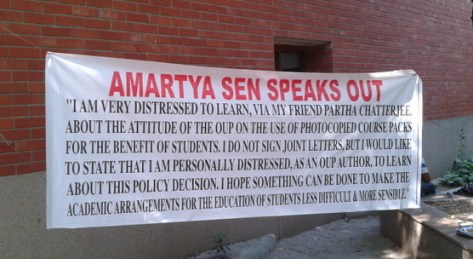
Authors and academics for equitable access to learning material

Three large academic publishers – Oxford University Press, Cambridge University Press and Taylor & Francis – have filed a petition in the Delhi High Court claiming copyright infringement with regard to the course packs used by students of Delhi University in a number of disciplines.  It is clear from DU’s stance in court that they are  distancing themselves from the  photocopier, thus clearing the way for the Court to pass an injunction staying the sale of course packs. It is absolutely critical now  for academics and authors to step up our campaign in support of our students’ access to learning materials:

Please sign the on-line petition at the link below:

“…As authors and educators, we would like to place on record our distress at this act of the publishers, as we recognize the fact that in a country like India marked by sharp economic inequalities, it is often not possible for every student to obtain a personal copy of a book. In that situation the next best thing would have been for multiple copies of the book to be available in the library so that students are able to access these books without any difficulty. But given the constraints that libraries in India work with, they may only have a single copy of a book and in many instances, none at all. The reason we make course packs is to ensure that students have access to the most relevant portions of the book without which we would be seriously compromising their education….”

The Beginning of the Middle of the End: Haseeb Asif

Guest post by HASEEB ASIF

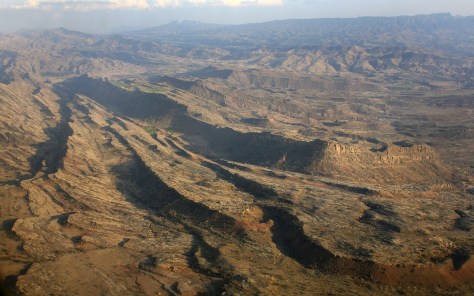
Pakistan’s remote North Waziristan tribal area is seen from the air Feb. 17, 2007. Photo by John Moore/Getty Images

One day as I walked to the market to buy some eggs, I noticed strange graffiti on a wall. Emblazoned in red paint was an invitation to join the fight against zionist subversion, western imperialism and painful hemorrhoids; the end having been muddled with a physician’s note.

It was an open call to Jihad by a militant Islamic organization. Jihad! The camaraderie, the righteousness, the third degree burns; it’s all I’d ever wanted. I was tired of being oppressed. There I was, in the prime of my youth, jobless, eggless, with subnormal visual acuity and four strands of the dengue virus, and who was to blame? I could imagine the conversation with my therapist.

“Doctor, I’m moody, I can’t sleep and I never seem to have enough energy to do anything.”

“Why, I believe you’re suffering from oppression”

I called their toll free number and signed myself up. They sent me a brochure and a medical plan; both had pictures of the same mutilated bodies.

‘Jihad summer camp, three months, graduating candidates get a certificate of martyrculation and up to 72 virgins in heaven (note: amount varies according to stock), HEC accredited, facial hair mandatory’.

I consulted with my parents, my mother was thrilled; she’d always wanted a martyr in the family. Father just grunted and made a time honoured gesture with his middle finger.

Two days later a brother Mehsud showed up at my door, he’d been sent by the organization to escort me back to their base.

“It’s a great thing you’re about to do, brother.” I was only packing my clothes. Continue reading The Beginning of the Middle of the End: Haseeb Asif

The Iron Lady of Jharkhand: Mahtab Alam on Dayamani Barla

Guest post by MAHTAB ALAM

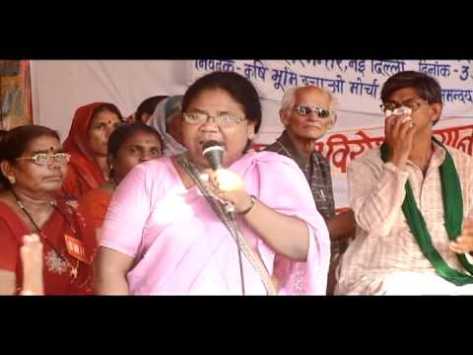
The journalist turned anti-displacement, tribal, woman activist from Jharkhand Dayamani Barla, better known as the Iron lady of Jharkhand amongst people’s movements and activists, or simply as Dayamani Di was granted bail by a local court in Ranchi on Thursday afternoon. She was sent to Jail on Tuesday in fourteen days judicial custody, after she surrendered before the court in a matter of 25 April 2006. Six years ago, she was charged under various sections of the Indian Penal Code (IPC), including Section 148 (rioting, armed with deadly weapons), for participating in a protest demonstration, which blocked the road, demanding job cards for rural laborers under the celebrated National Rural Employment Guarantee Act (NREGA). She had availed bail at that time from the concerned police station and the matter was almost closed one. Continue reading The Iron Lady of Jharkhand: Mahtab Alam on Dayamani Barla

Kazmi Solidarity Committee welcomes SC order to grant bail to Syed Kazmi

This release comes from the KAZMI SOLIDARITY COMMITTEE

The Kazmi Solidarity Committee welcomes the Supreme Court order granting bail to Syed Mohammad Ahmad Kazmi after seven months in custody on charges of involvement in the bomb attack on an Israeli diplomatic vehicle.

The committee deplores the obstructive attitude of the prosecution and the Special Cell of the Delhi Police, which have been perversely attempting to keep Mr. Kazmi in prison despite their inability to file a chargesheet within the extended time granted under the Unlawful Activities Prevention Act. Not only did the prosecution seek an extension of 90 days after the mandated period of judicial custody was over, it also used its inefficiency as an alibi, pleading that it needed more time to send out letters rogatory seeking international judicial assistance. While Mr. Kazmi was in custody, the Special Cell left no stone unturned in orchestrating a media trial to establish his guilt, planting malicious stories of his “confession” (while disavowing responsibility for these in court hearings).

Continue reading Kazmi Solidarity Committee welcomes SC order to grant bail to Syed Kazmi

A statement on the arrest of 13 political activists in Tamil Nadu

Tamil Nadu has always had a very high handed police, infamous for extrajudicial killings, torture and arbitrary arrest of political dissidents of all hues. In recent times, thanks to the popular Koodankulam agitation the authoritarian ways of the state police seems to have acquired a ‘nuclear’ edge.

On 6 October 2012, as 13 senior members of the Peoples Democratic Republic Party met at a school in Kundrathur near Chennai city they were all arrested by the ‘Q Branch’, as the local intelligence bureau is called in Tamil Nadu. The arrested members and supporters of the party have been since remanded to judicial custody in Vellore central prison and a case under section Cr. L.A 17 (1) registered against them. Continue reading A statement on the arrest of 13 political activists in Tamil Nadu

Dronacharyas All

Caste Discrimination in Higher Education


For Bhalchandra Mungekar, ex-vice chancellor of Bombay University and ex-member of the Planning Commission, the exercise of looking into allegations of caste discrimination faced by scheduled caste students at Vardhman Medical College, Delhi, has been extremely disturbing. As the single-member committee appointed by the National Scheduled Caste Commission, it was important that he examine every aspect of the case and ensure that the guilty were brought to book.

Dr Mungekar discovered to his dismay that not only were the 35 scheduled caste students failed repeatedly in one particular subject – physiology – but the authorities had not even bothered to meet them to look into their complaints. He had to resort to RTI to seek information and approach the high court to ensure their rights as equal students. As his report puts it, the faculty of the said department ‘resorted to caste-based discrimination and neglected the duties assigned to them, not by omission but by commission’. Even other administrative people, including the head of the institution, had not seen fit to intervene. Not only did the students lose years because of this apathy, shockingly, the same authorities were guilty of showing leniency towards general category students. While they had no qualms about barring scheduled caste students from taking their examinations due to lack of attendance, four students from the general category, who were detained for inadequate attendance, were allowed to take the examination.

Dr Mungekar, who has finally submitted his report, has put forward wide-ranging recommendations. Apart from asking the authorities to pay compensation of Rs 10 lakh to students Manish and others who had moved court — underlining the fact that ‘the mental trauma that they were/are made to undergo is not measurable in terms of money’ — he has demanded that legal action under the Scheduled Caste and Scheduled Tribe (Prevention of Atrocities) Act, 1989 be taken against former Principal V K Sharma and his then colleagues Professor Shoma Das, head of the physiology department, Principal Jayshree Bhattacharjee and Raj Kapoor, professor of physiology, and a liaison officer. Continue reading Dronacharyas All

The (Ir)resistible Rise of Arvind Kejriwal – Enter The ‘Outsider’

The tide is clearly turning. You know this when former critics and lampooners start talking of him as a ‘game changer’; you know this when weather-cocks turn away from the corridors of power where once they had been ensconced. You know this when rats start deserting the sinking ship.

Suddenly, everybody is talking favourably about the man from the ‘outside’ who is refusing to respect any of the established protocols of protest and politics. More startling perhaps, is the fact that in the past two days we have had senior journalists and political analysts suddenly telling us that they had known all along that there was a ‘post 1980 contract’, a secret code of silence, that never would the dynasty be attacked – indeed never would any apsiring dynasty be attacked. Everybody knew, says Dipankar Gupta in the Times of India, that the issue came up one and a half years ago – and we all do know that. Robert Vadra’s doings had already  been known. A senior BJP leader is even reported to have told a senior journalist that his party had indeed been in possession of the very same documents that Arvind Kejriwal brandished at his press conference. But, this leader went to say, “after an intense discussion, the leadership decided not to rake up the issue in Parliament even after submitting a motion in each House asking for a discussion.” Everybody knew – the parties, their leaders, the media persons, political analysts. And yet, nobody spoke out. All of them colluded, in other words, in suppressing the issue. Politicians kept silent for an understandable reason – aspiring dynasties that they are, after all. But the others? Mediapersons? Any guesses?

As someone who has been trying to understand Indian politics over the decades, I have often wondered at what I have referred to as the ‘implosion of the political’ – that is to say, the destruction of politics in the formal political domain. What is called a noora kushti in Hindustani, had come to mark our parliamentary-political grammar. Farcical walk-outs after equally farcical fire-spouting rhetorical speeches in parliament, and a happy bonhomie away from the glare of the media – that was what our politics had been reduced to.

Continue reading The (Ir)resistible Rise of Arvind Kejriwal – Enter The ‘Outsider’

An open letter to the jury of The Economic Times Awards for Global Excellence: G. Ananthapadmanabhan

This open letter has been put out by G. ANANTHAPADMANABHAN of Amnesty International (India)

Dear Mr Deepak Parekh, Mr Kumara Mangalam Birla, Mr K V Kamath, Mr Kris Gopalakrishnan, Mr A M Naik, Ms Chanda Kocchar and Mr Cyril Shroff,

We at Amnesty International India are deeply disappointed by your decision to give the Economic Times Business Leader of the Year 2012 award to Mr Anil Agarwal, Chairman of Vedanta plc.

The Business Leader award is given to individuals who have demonstrated “a strategic direction for success, and pursued a vision”. But Vedanta, in its efforts to have a bauxite mine opened at the Niyamgiri hills in Orissa and expand an aluminium refinery near Lanjigarh, has demonstrated an utter lack of both leadership and vision. What it has shown instead is a brazen disregard for Indian law and an utter lack of respect for the rights of local communities. Continue reading An open letter to the jury of The Economic Times Awards for Global Excellence: G. Ananthapadmanabhan

To Build A Bridge in Kashmir: A fable by Abhijit Dutta

Guest post by ABHIJIT DUTTA

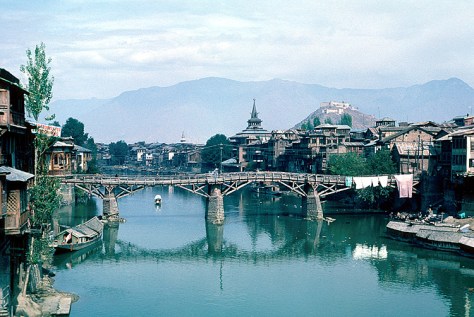
Once upon a time, a young politician – young enough to have a ‘baba’ appended to his name – came to Kashmir to build a bridge in Srinagar. Now as anyone who knows Srinagar knows, the city is filled with bridges. Some are famous, like Gawkadal, some are pretty, like Zero Bridge, and some are simply without charm, like the Abdullah Bridge that goes from fountain square to Rajbagh. There are several others too, each with their own unique character, their own unique relation to the Jhelum.

When he was told about the many bridges in Srinagar, the politician shouted, “I want to build a bridge.”

“But we don’t need a bridge,” said a man softly to him, wanting not to embarrass this well-meaning man who had come to Kashmir from aafar. In response, the young politician turned around and shouted once again: “I want to build a bridge.” Continue reading To Build A Bridge in Kashmir: A fable by Abhijit Dutta

Fifty villages

This report was released in Srinagar today by THE CITIZENS’ COUNCIL FOR JUSTICE. It is a statistical study of violence in north Kashmir between 1990 and 2011

An appeal to release three Pakistani fishermen imprisoned in India since 1999: Jatin Desai

Given below is the text of a letter sent yesterday by JATIN DESAI to the Indian foreign secretary

Shri Ranjan Mathai,
Foreign Secretary,
Ministry for External Affairs,
Government of India,
New Delhi -110001

Shri Ranjan Mathai ji,

Greetings from Pakistan-India Peoples’ Forum for Peace & Democracy (PIPFPD).

This is in regarding three Pakistani fishermen arrested in 1999 when their boat was destroyed in a cyclone and they strayed into Indian water. The Indian Coast Guard arrested few Pakistani fishermen including Nawaz Ali Jat, Usman Sachu son of Haji Ibrahim Jat, Zaman Jat son of Haji Jat and Usman Jat son of Ali Mohammad Jat.

Nawaz Ali passed away on September 8 2012 in Civil Hospital, Ahmedabad and his body was sent to Karachi, Pakistan on October 1 2012 by PIA’s Mumbai-Karachi flight. We believe, remaining 3 arrested Pakistani fishermen are in some prison of Gujarat and most probably in Rajkot as Nawaz was taken to Civil Hospital, Ahmedabad from Rajkot Prison. Continue reading An appeal to release three Pakistani fishermen imprisoned in India since 1999: Jatin Desai

Shabbo Kumari patrols the border

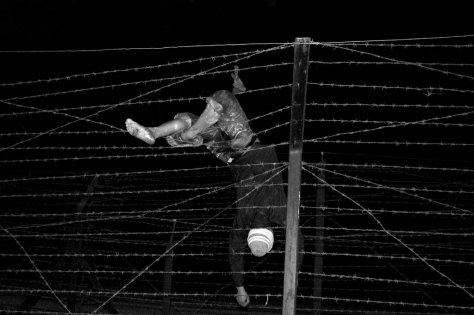
Photo by Poulomi Basu

The Lens blog at NYTimes.com has a photo essay by Poulomi Basu about women guards of the Indian Border Security Force.

Most of the recruits were from impoverished rural areas. If she could observe them not only in training but with their families as well, she would be able to tell the story of their transformation from villagers into soldiers.

The most haunting image Basu has  is the one above.

One of the most riveting photographs shows a dead man hanging upside down, his legs caught in the high barbed wire fence that India has constructed to demarcate the border. Guards had shot the man as he and others tried to enter Pakistan near Attari, in Punjab State, Ms. Basu said. Continue reading Shabbo Kumari patrols the border

The intruders were not found in possession of any objectionable material apart from a large cache of fish

An arrested Indian fisherman sits at a police station in Pakistan’s port city of Karachi on October 1, 2012. Pakistan maritime security agency arrested 33 Indian fishermen and seized five boats for allegedly fishing illegally in Pakistan’s territorial waters. By Asif Hassan/AFP/Getty Images.

The insensitive governments of India and Pakistan are not moved even when one of their citizens dies in the other country, especially if the citizen was a poor fisherman arrested for the crime of inadvertently crossing a maritime boundary.

After 23 days of lying in the morgue of Ahmedabad’s Civil Hospital, the body of 32 year old Nawaz Ali Jat will finally reach Karachi on Monday by a Pakistan International Airlines flight. His family waited 14 years for his return, but they didn’t even get to know when he died of kidney failure on September 8. Continue reading The intruders were not found in possession of any objectionable material apart from a large cache of fish

How not to handle online hate speech in India

The first amendment to the Indian Constitution, passed in 1951, allows the government to impose “reasonable restrictions” on a citizen’s right to freedom of speech and expression, in order to protect “the interests of the sovereignty and integrity of India, the security of the State, friendly relations with foreign States, public order, decency or morality or in relation to contempt of court, defamation or incitement to an offence”.

The means to impose these “reasonable restrictions” are described in several sections of the Indian Penal Code (IPC) and the Code of Criminal Procedure (CrPc). Section 298 of the IPC makes punishable words uttered “with the deliberate intent of wounding religious feelings”; section 504 addresses “intentional insult with intent to provoke breach of peace”; section 153 makes punishable speech acts that lead or could have led to rioting; section 295A could land you in jail for three years over “deliberate and malicious acts, intended to outrage religious feelings”; section 153B permits the punishment of speech acts that question any social, religious or linguistic group’s allegiance to the Constitution of India or that such a group be denied Constitutional rights. Read more…

Allow UNWGEID to probe disappearances in Jammu and Kashmir: APDP

This press release was put ou on 28 September 2011 by the ASSOCIATION OF PARENTS OF DISPLACED PERSONS, The Bund, Amira Kadal, Srinagar – 190001
In Pakistan the judiciary is attempting to provide justice to the family members of those who have been subjected to enforced disappearance. In 2008, the Chief Justice of Pakistan entered into confrontation with the then President of Pakistan for taking a pro-active stance against disappearances. That confrontation ultimately emboldened the judicial system in Pakistan to be more pro-active on human rights issues. This judicial intervention on enforced disappearances has created an atmosphere in Pakistan which has pushed Pakistani government to invite United Nations Working Group on Enforced or Involuntary Disappearances (UNWGEID). The UNWGEID recently concluded its first 10 day visit to Pakistan and have begun their investigations on enforced disappearances. Continue reading Allow UNWGEID to probe disappearances in Jammu and Kashmir: APDP

Expired Explosives and Health of Kudankulam: Anoo Bhuyan

Guest post by ANOO BHUYAN

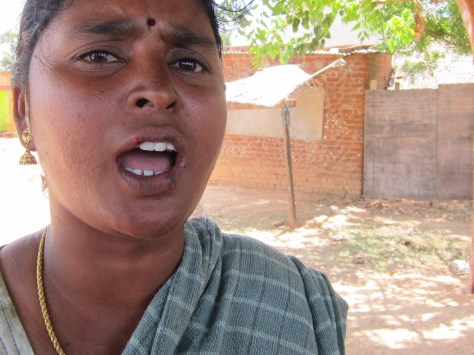
Anitha spits blood and wipes her lips as she talks to me. A few sentences later, a large blister on her lips begins to glisten with blood again, and she has to spit it out one more time. Hundreds of villagers at Idinthakarai have similar clusters of blisters on their lips. They say that they developed the sores as a reaction to the tear gas that was used during the clash that took place between police and protesters who were protesting the Kudankulam Nuclear Power Plant. This event occurred on tenth September. Nearly a week later, the sores continue to remain fresh and open, and a scab does not seem to be forming for any of those who were involved in the clash.

Anitha 


Continue reading Expired Explosives and Health of Kudankulam: Anoo Bhuyan

GPS and receipts will not stop Delhi’s auto-wallahs from overcharging: Simon Harding

Guest post by SIMON HARDING

Last week, the Delhi High Court gave the go-ahead for the compulsory installation of GPS systems and printers in the capital’s auto-rickshaws by dismissing petitions against the policy from auto unions (download judgement .pdf here). The GPS kits are supposed to allow the Transport Department to track the movement of Delhi’s autos. The printer will provide the passenger with a fare-receipt, which will show the distance travelled and the amount paid. The policy will eliminate over-charging and will provide “secure and transparent travel” to the capital, claims The Hindu.

Sadly, the installation of GPS systems will do little to address the problem of over-charging. On the contrary, it may actually exacerbate it. Continue reading GPS and receipts will not stop Delhi’s auto-wallahs from overcharging: Simon Harding

Evidence, Consensus and Policy: Kaveri Gill on the curious case of changes proposed in India’s public health policy

Guest post by KAVERI GILL

The world of development is as prone to fashions as any other. In recent times, ‘evidence-based policy’ has become the new gold standard, following hot on the heels of participation and ownership of policy processes and outcomes by academics, activists and civil society groups. This applies within nation states, especially of the global South. India today epitomises such objective and bottom-up democratic largesse in favour of the ‘aam admi’- for largesse it is, make no mistake – with a near constant refrain of the avowed aim of ‘inclusive growth’. And yet, does it really?

Or is politically correct discourse and seemingly open decision-making processes in the social sector sphere merely dangerous fig leaves for seismic and opaque shifts in policy, which have very little to do with evidence and even less to do with broad-based consensus? Rather, they are an outcome of fixed ex-ante views – which may be termed as a distinct partiality to the Chicago School of Economics – about the path to a fictitious endpoint of a mainstream development paradigm, which itself is faith-based. It is not justified by theory or a heterodox reading of the empirical experiences of presently developed countries, let alone latecomer developing nations which are, for various exogenous and endogenous reasons, likely to have different trajectories altogether. I refer here to the hackneyed line about faster growth being pursued as a necessary, if not sufficient, condition for eventual trickle down, no matter that the ‘dur khaima’ of an equitable society is never arrived at! Continue reading Evidence, Consensus and Policy: Kaveri Gill on the curious case of changes proposed in India’s public health policy

हिंदी का संकट: कुलदीप कुमार

जनसत्ता के 23 सितम्बर, 2012 के अंक में प्रकाशित कुलदीप कुमार के स्तंभ “निनाद” को हम थोड़े संशोधन के साथ छाप रहे हैं.

दक्षिण अफ्रीका के जोहान्स्बर्ग शहर में विश्व हिन्दी सम्मेलन हो रहा है। पहला सम्मेलन 1975 में नागपुर में हुआ था जिसमें जवाहरलाल नेहरू विश्वविद्यालय की ओर से एक प्रतिनिधिमंडल शामिल हुआ था। मैं उन दिनों विश्वविद्यालय की साहित्य सभा का सचिव था और पंकज सिंह उसके अध्यक्ष थे। कवि मनमोहन भी प्रतिनिधिमंडल में शामिल थे। तब तक इमरजेंसी नहीं लगी थी। अगर मेरी स्मृति धोखा नहीं दे रही तो वह जनवरी का महीना था। देश में जेपी आंदोलन ज़ोरों पर था और प्रधानमंत्री इन्दिरा गांधी ख़ासी अलोकप्रिय हो चुकी थीं। हम इस सम्मेलन को तमाशा समझते थे और उसका विरोध करने ही नागपुर पहुंचे थे। दिल्ली से ही एक बयान साइक्लोस्टाइल कराके ले गए थे। जैसे ही इन्दिरा गांधी ने अपना उदघाटन भाषण देना शुरू किया, हम सबने उठकर विरोध में नारे लगाने शुरू कर दिये और उपस्थित प्रतिनिधियों के बीच विरोध-वक्तव्य की प्रतियाँ बांटने लगे। सुबह-सुबह कुछ प्रतिनिधियों के कमरों में दरवाजे के नीचे से हम अपने बयान की प्रतियाँ खिसका आए थे। जैसा कि होना था, बाद में हमें पुलिस ने धर लिया। Continue reading हिंदी का संकट: कुलदीप कुमार

A statement against the arrest of Punjabi publishers and editors for publishing the poetry of Babu Rajab Ali

Names of signatories given at the end; for more details on the campaign, see Whitewashing History

The arrest of two Punjabi publishers and two editors for reprinting old books of poet Babu Rajab Ali which allegedly contained some then used caste names, under the Prevention of Atrocities Against Scheduled Castes and Scheduled Tribes Act, is a totally thoughtless, callous and ruthless action taken by the Punjab government.

We understand that Mr. Amit Mittar of Tarak Bharti Prakashan and Mr. Ashok Garg of Sangam and editors Mr. Jagjeet Singh Sahoke from Moga and Mr. Swatantar from Samana, were arrested by the police on September 15 at the behest of the Punjab government. This is absolutely against academic freedom. Continue reading A statement against the arrest of Punjabi publishers and editors for publishing the poetry of Babu Rajab Ali

DISSENT, DEBATE, CREATE