Amitabh Bachchan in Gaza

T shirt from shop in Ramallah. The Arabic text reads, “My life is an Indian film”. Photo by Sunaina Maira.

Radhika Sainath writes:

Palestinians in Gaza love Indians. They love Indian dancing, they love Indian music, they love Indian clothes. Whenever I walk out of the house, someone inevitably asks “hiyya hindeyee?” Is she Indian? ”I knew it!” they say when the response is in the affirmative. “Bheb al Hind,” I love India….

So Amitabh, Abhishek, Aishwarya, Amir, Hrithik, Kareena, Salman, Shahrukh, if you’re reading this, how about a shout out to 1.5 million of your biggest fans in the Gaza Strip? Israel has forbidden pasta, tea, cement and freedom flotillas from entering Gaza, but it hasn’t stopped Bollywood. We watch you under the Israeli drones and the F-16s, after being shot at by the Israeli navy and army while fishing, picking olives or going to school. You bring a sliver of joy to people living under the world’s longest occupation in the world’s largest prison, and for that we thank you.

Read the rest of this post by Radhika Sainath at Notes from Behind the Blockade Life: politics and nonviolent resistance inside the Gaza Strip.

Ode to the West Wind: Prasanta Chakravarty and Brinda Bose

Guest post by PRASANTA CHAKRAVARTY AND BRINDA BOSE

The ‘lower hanging fruit’ has spoken. If ‘India wants to harness the benefits of internationalizing higher education, foreigners… and even PIOs’ who are currently barred from employment as full-time faculty in Indian universities need to be ‘harvested’. The HRD ministry, according to DeveshKapur in ‘The Elite’s Classrooms’ (BS: Opinion, November 12, 2012), has been barking at the wrong (higher-hanging) fruit in pursuit of this goal, though apparently not up the wrong tree – because as far as Kapur is concerned, the tree of intellectual bounty can only be the one that lies yonder over the seas. The fault, dear Mr. Pallam Raju, Honorable HRD minister, lies not in our stars that we are intellectual underlings, but in your predecessor’s eyeing of the wrong fruit on that delectable tree of knowledge rooted in faraway soil.

Continue reading Ode to the West Wind: Prasanta Chakravarty and Brinda Bose

We are fine in Gaza. How about you?

Palestinians carry the bodies of members of the al-Dalo family during their funeral in Gaza City. Reuters

Listen to the Palestinian singer and writer—Khaled El-Hibr sing these words on Jadaliyya:

We are fine in Gaza

How about you?

We are fine under attack

How about you?

Our martyrs are under the rubbles

Our children now living in the tents

And they ask about you

We are fine in Gaza

How about you?

Satyameva Jayate? On the impending execution of Afzal Guru

Someday, we will count how many minutes it took for television in India to start baying for Afzal Guru’s blood (once again) after Ajmal Kasab was buried in Yerwada Central Jail in Pune.

A man called Mohammad Afzal Guru, son of Habibullah Guru, currently resident in Ward Number 6 of Jail Number 1 in Tihar Central Prison in Delhi will hang to satisfy the bloodlust of the Indian Republic, unless the President of India decides otherwise. This text is an attempt to make us think about this decision and its ramifications carefully.

Continue reading Satyameva Jayate? On the impending execution of Afzal Guru

A 26/11 victim who refuses to celebrate Kasab’s execution

While the media has reported most families of those who died in 26/11 as hailing the execution of Ajmal Kasab, Bollywood actor Ashish Chowdhry refuses to be one of them. His sister Monica and her husband were amongst those who were killed at the Oberoi trident hotel. Given below are screenshots of Chowdhary’s tweets. Read from the last tweet upwards. Continue reading A 26/11 victim who refuses to celebrate Kasab’s execution

The Power of Mercy: Yug Mohit Chaudhry on the execution of Ajmal Kasab

Guest post by YUG MOHIT CHAUDHRY

Under Article 72 of the Constitution of India, the President’s power to grant mercy comes into play only after the judicial system has confirmed the death sentence. Therefore, the confirmation of the death sentence by the highest court is a condition precedent to the grant of mercy. Judicial confirmation of the death sentence does not put the convict beyond the pale or disqualifies him from mercy; in fact it renders him eligible for mercy. Arguments that Kasab deserved no mercy once the Supreme Court confirmed his death sentence are misconceived.

It is only the rarest of rare crimes that shock the collective conscience of society and are truly unpardonable that are given the death sentence. In our constitutional scheme, it is therefore only persons committing such crimes that are eligible for mercy and pardon. If they are to be excluded from the ambit of mercy by the mere fact of having committed truly unpardonable crimes, the President’s power of mercy has no meaning. Paradoxically, the very fact that Kasab had indeed committed an unpardonable crime is what renders him eligible for mercy. Continue reading The Power of Mercy: Yug Mohit Chaudhry on the execution of Ajmal Kasab

Kerala Police arrest one more for hurting some feelings: Sajan Venniyoor

This just in from our Thiruvananthapuram correspondent SAJAN VENNIYOOR

Trivandrum, 21 Nov: An unnamed youth from Thiruvananthapuram was arrested by the Kerala Police cyber-crime squad for allegedly ‘liking’ a Facebook post written by a complete stranger. The Facebook account in the name of ‘Indian Patroit Who Fuking Hates Everybody’ – believed to be an alias – carried a comment that was allegedly critical of something reportedly concerning a recently deceased non-Malayali. The Facebook comment was also withdrawn soon after the arrest of the Thiruvananthapuram native under sections 505 of IPC (“promoting ill-will among groups with different imaginary friends”) and 66A of the IT Act (“causing annoyance while belonging to a minority group”).

It is not known what the offensive post said, but police sources confirm that while the comment “did not actually hurt religious sentiments in the proper sense of the word”, it jolly well hurt the feelings of people who knew someone who had some kind of  sentiments that may well have been hurt had he been alive.

In his defence, the unnamed youth submitted before the Judicial Magistrate First Class, Vanchiyoor, that he had clicked on the Facebook button only because he violently disagreed with the post, thinking it said “Yikes”.

His lawyer confirmed later that the youth, who was let off on bail, was either dyslexic or from Ulloor.

(Clarification: Some Of Us Are Actually Dyslexic and/or From Ulloor. Any offence caused is therefore to us.)

Ek Tha Tiger: Death and Bal K. Thackeray

We have reasons to be grateful that Bal K. Thackeray has died, a normal, natural death. Several of those whom he admired, didn’t. Adolf Hitler, the fellow ‘artist’ he often invoked, killed himself, his mistress and his dog. Indira Gandhi, and her son Sanjay, the mother and son firm of despots that Bal Thackeray endorsed, didn’t go gently into the night either. Sanjay Gandhi, the ‘bold young man’ whom Thackeray recognized as a fellow spirit came spiraling down in his own airplane, demonstrating that the indifferent sky does occasionally listen  to the prayers of the earth to alleviate its burden. Indira Gandhi and her son Rajiv both fell to the forces that their own ruling dispensation had nurtured, Khalistani zealots and the LTTE.  Bal Thackeray was lucky to have lived as long as he did, sipping his lukewarm beer, spitting out his bile. Very lucky. As for us, we are fortunate that Thackeray did not get to go down as a Maratha martyr, just as a lapsed cartoonist, a would-be caudillo and a has-been demagogue. Continue reading Ek Tha Tiger: Death and Bal K. Thackeray

Gaza Solidarity actions in Delhi and Lucknow

Lucknow Monday, November 19, 2012

Delhi, November 19, 2012

Photographs of Delhi demonstration by Benny Kuruvilla. For more pictures, click here.

A dangerous idea

For easy sharing, you can find this image on Twitter and Facebook.

Social Media Regulation vs. Suppression of Freedom of Speech: Pranesh Prakash

Guest post by PRANESH PRAKASH

This morning, there was a short report in the Mumbai Mirror about two girls having been arrested for comments one of them made, and the other ‘liked’, on Facebook about Bal Thackeray:

Police on Sunday arrested a 21-year-old girl for questioning the total shutdown in the city for Bal Thackeray’s funeral on her Facebook account. Another girl who ‘liked’ the comment was also arrested.

The duo were booked under Section 295 (a) of the IPC (for hurting religious sentiments) and Section 64 (a) of the Information Technology Act, 2000. Though the girl withdrew her comment and apologised, a mob of some 2,000 Shiv Sena workers attacked and ransacked her uncle’s orthopaedic clinic at Palghar.

“Her comment said people like Thackeray are born and die daily and one should not observe a bandh for that,” said PI Uttam Sonawane.

What provisions of law were used?

There’s a small mistake in Mumbai Mirror‘s reportage as there is no section “64(a)”1 in the Information Technology (IT) Act, nor a section “295(a)” in the Indian Penal Code (IPC). They must have meant section 295A of the IPC (“outraging religious feelings of any class”) and section 66A of the IT Act (“sending offensive messages through communication service, etc.”). The Wall Street Journal’s Shreya Shah has confirmed that the second provision was section 66A of the IT Act.

Section 295A of the IPC is cognizable and non-bailable, and hence the police have the powers to arrest a person accused of this without a warrant.2 Section 66A of the IT Act is cognizable and bailable. Some news sources claim that section 505(2) of the IPC (“Statements creating or promoting enmity, hatred or ill-will between classes”) has also been invoked.

This is clearly a case of misapplication of s.295A of the IPC.3 This provision has been frivolously used numerous times in Maharashtra. Even the banning of James Laine’s book Shivaji: Hindu King in Islamic India happened under s.295A, and the ban was subsequently held to have been unlawful by both the Bombay High Court as well as the Supreme Court. Indeed, s.295A has not been applied in cases where it is more apparent, making this seem like a parody news report. Continue reading Social Media Regulation vs. Suppression of Freedom of Speech: Pranesh Prakash

Statement of Indian feminists to Irish Parliament on abortion rights for women

About 10,000 people marched through Dublin today, many of them mothers and daughters walking side by side, holding pictures of Savita Halappanavar who died of blood poisoning in an Irish hospital after being denied an abortion. In a symbolic move, they gathered at the Garden of Remembrance dedicated to the memory of Irish freedom fighters, and walked to the parliament building with banners saying, “Never Again”, “No More Tragedies” and “Abortion Rights Now”.

As the campaign for safe and legal abortion rights for women picks up steam worldwide, Indian feminists join Irish feminists in solidarity.

Dear Elected representatives of the Irish Parliament, 

We, the undersigned, are deeply shocked at the callous treatment meted out to Savita Halappanavar who was refused a medical abortion in a hospital in Galway even though it was clear that her baby was miscarrying and had no chance of survival. We hope that the impact and serious consequences of your vote against the Medical Termination (Termination of Pregnancy in Case of Risk to Life of Pregnant Woman) Bill 2012 have fully registered with you now. 

We call upon you to show leadership and bring in legislation urgently that is in tune with the Irish Supreme Court ruling that stipulates that when a pregnant woman’s life is in danger, including from the risk of suicide, she has the right to an abortion in Ireland. We ask that you not be governed by any sentiments and opinions beyond the human right to life of Irish women. You are no doubt fully aware that women’s rights have been internationally recognized as human rights. We believe it is wrong and unjustifiable for religion to interfere with women’s ability to live full, free lives and have control of their bodies, in any part of the world.

November 21st, 2012 Endorsements to this letter are now closed.

Previous posts on abortion on kafila:

Abortion as a feminist issue – who decides, and what?

Dil Se Nahin Dimaag Se Dekho – Thoughts on Satyamev Jayate Episode 1

Proof-reading The New York Times

Sherry J. Wolf writes: Am sending my resume to the New York Times along with this clip. Clearly, they are in need of a copy editor…and a soul.

Why Manmohan Singh should not visit Pakistan

Dr Manmohan Singh is the longest serving Indian prime minister since Jawaharlal Nehru, but history will perhaps note more pertinently that he was the most discredited and unpopular prime minister since Chandra Shekhar Singh, who was in office for a mere eight months. So spectacularly disastrous has his second term in power been that the speed of political crises he battles is now more than one a week. Few will be able to count a single achievement of UPA-2.

And yet there is one achievement, and that is his handling of Pakistan.

The Indian home secretary was returning from a very positive visit to Pakistan when 26/11 happened. The 2008 terrorist attacks in Mumbai shocked not just India but the world. They were not like the bomb blasts we have become accustomed to; their impact was much more than 166 lives. They held India’s commercial capital hostage. They were an act of war and few even in Pakistan pretend that those attacks did not originate from Pakistani soil, across the Arabian Sea. Few in India buy the theory that state actors in Pakistan were not involved. Continue reading Why Manmohan Singh should not visit Pakistan

Worldwide protests as Israel attacks Gaza

List of world-wide protests from Bethlehem to Quebec, November 14-17, 2012

Child wounded in Israeli air strike on November 14th

[From The Electronic Intifada]

Yesterday Israel ended an effective truce with armed groups in Gaza, and carried out the extrajudicial execution of Ahmed al-Jabari, the commander of the military wing of Hamas.

Israeli attacks today killed at least seven people including two young girls in Gaza.

Aside from the fact that it almost always violates truces and ceasefires, seeking escalation where instead there could be calm, what motives might Israel have?

Israel’s “Minister of Home Front Defense” [Avi Dichter] says Gaza must be “reformatted” as if it were a computer hard drive, just like Israel did in the West Bank in 2002 during a series of massacres it called “Operation Defensive Shield.”

Israel’s Ynet reported in Hebrew that Dichter

said in a closed meeting, in the course of his visit in the south under the escalation, that “there is no other choice, Israel must carry out a formatting action in Gaza, actually format the system and clean it out, the way we did in Judea & Samaria during Operation Defensive Shield.” 

Protest in London over Israeli airstrikes in Gaza in 2009

Imagining Post-Zionist Futures – Israeli Apartheid and Palestinian Resistance III

This post is the third of a series based on a visit by Nivedita Menon and myself to Palestine in mid-September 2012. The first two are Nakba and Sumoud and Waiting for the Third Intifada.

It was the 18th of September, our third evening in Ramallah. We were at the Ramallah Cultural Palace to listen to Palestinian youth bands perform. The place was teeming with people, mostly young, in their twenties and thirties. The hall was packed, the atmosphere so electric that even if Magid had not been there to explain, there was no  way we could have missed the excitement and the anger that the songs evoked in the  audience. Interestingly, not all the songs were about Zionist oppression and the travails of everyday life in occupied Palestine.  When a song critical of the PA (Palestinian Authority) began, the hall went up in spontaneous applause, endorsing the  sarcastic lyrics directed at PA that has lately been involved in carrying out repression on its own population.

Liberation Graffitti on Wall in Ayda camp, Photos AN/NM

The complexity of the current phase of the movement arises from the fact that now, the new forces of Palestinian liberation are arrayed, not merely against Israeli occupation but also against this entity called PA and the Oslo Accords that put in place the political arrangements that mark the division of territories today. An arrangement that was supposed to be merely an interim one lasting but a few years, until the question of Palestinian statehood could be settled, has become a quasi-permanent one that is seen to threaten the longer-term goal itself.

Continue reading Imagining Post-Zionist Futures – Israeli Apartheid and Palestinian Resistance III

The Uttar Pradesh administration has a prominent role in the burning of Bhadarsa: Rihai Manch

This release was put out by the RIHAI MANCH on 9 November

Jannatunisa, a victim of violence in Bhadarsa

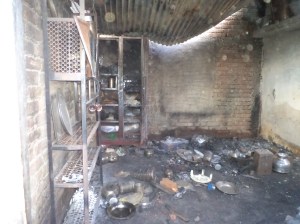
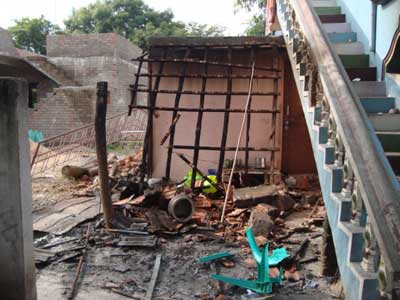
Faizabad 9 November 2012: An investigation team of Rihai Manch visited the Bhadarsa village which was affected by communal violence during Dussehra celebrations. The team found out that the violence was well planned and was executed by communal elements in connivance with the administration. The role of the media in this incident is also suspicious. The team also found that the administration is forcing the affected families to erase any evidence of the incident and they have not even been compensated. No FIR has yet been registered yet. The team has also requested the Sheetla Singh Investigation Commission (constituted by the Press Council of India) to visit the area. Continue reading The Uttar Pradesh administration has a prominent role in the burning of Bhadarsa: Rihai Manch

A Journey in the Punjab: Sohail Abid

Guest post by SOHAIL ABID

In 2010, I embarked on an ambitious bike trip of Punjab, visiting 30 cities in 30 days, covering 5,000km. That was a wonder experience but limited to big cities and towns. This time I want to see the rural side of Punjab. The idea is to avoid highways and travel through the roads connecting villages and small towns of Punjab. The following photographs are from the first phase of this trip, from Rawalpindi to Lahore through the towns and villages in west Punjab, away from the G.T. Road. I quit my day-job a few months ago. The 9-6 life wasn’t meant for me, I guess. Folklore and Punjab are the two things that fascinate me the most. That’s the reason I founded folkpunjab.com. These travels will one day provide me the base for writing something substantial on the folklore of Punjab. Continue reading A Journey in the Punjab: Sohail Abid

भदरसा के जलने में प्रशासन की अहम भूमिका: रिहाई मंच

This release in Hindi about recent communal violence in the Bhadarsa area of Faizabad district of Uttar Pradesh comes to us from the RIHAI MANCH. Please help us translate this into English by translating just one paragraph in the comments

Jannatunisa

फैजाबाद, 9 नवम्बर 2012। रिहाई मंच के जांचदल ने दशहरा के दौरान हुयी साम्प्रदायिक हिंसा से प्रभावित भदरसा गांव का दौरा किया। जांच दल ने पाया कि भदरसा में हुयी हिंसा पूरी तरह सुनियोजित थी जिसे साम्प्रदायिक तत्वों और प्रशासन की मिलीभगत से अंजाम दिया गया जिसमें मीडिया की भूमिका भी संदिग्ध थी। जांच दल ने यह भी पाया कि प्रशासन की तरफ से आगजनी से पीडित परिवारों से घटना के साक्ष्य जबरन मिटवाए जा रहे हैं जबकि पीडि़तों को न तो उचित मुआवजा मिला है और ना ही एफआईआर दर्ज किये गये हैं। जांच दल ने प्रेस काउंसिल द्वारा गठित शीतला सिंह जांच आयोग से भी भदरसा जाने की मांग की है। Continue reading भदरसा के जलने में प्रशासन की अहम भूमिका: रिहाई मंच

“We may weep but we will stay”: Women resist evictions in Palestine: Kalyani Menon Sen

Guest post by KALYANI MENON SEN

Umm Nabil’s settler-occupied house is painted with Israeli symbols. (Photo: Aruna Rao)

Umm Nabil al Kurd is 82 years old. She is tiny and frail – her hands tremble as she takes the mike. But her voice is steady as she describes how she lost her home.

“We came to Jerusalem from Haifa as refugees in 1948” she says. “The Jordanians allotted us our house. We have lived there for 60 years – my children were born there. It was small and broken when we moved in – we extended it and improved it as our family grew. We planted a garden. When my son got married and the grandchildren came, we built a separate unit for him at the back of the main house. We built with our own money, with our own hands. Then, two years ago, the Israelis came with the police and told us to leave. They said the house was theirs. They pushed me to the ground, called me filthy names, turned their dogs on me. They threw out our furniture and moved into the house. We went to court but the judge said we were occupying the house illegally – he told us to pay 100,000 shekels as rent for the years that we had lived in the house. We had to pay – my husband would have been imprisoned if we did not. We are still fighting the case – the next hearing is in July but I don’t know if we will ever get the house back.” Continue reading “We may weep but we will stay”: Women resist evictions in Palestine: Kalyani Menon Sen

Israeli Apartheid and Palestinian Resistance II – Living the Occupation

Planning to visit Palestine? Good news, Indian citizens don’t need a visa to enter Palestine. One small thing though. Palestine is occupied, and you cannot enter Palestine except through Israeli border control. The occupied Palestinian territories (OPT) have no control over their external borders.

Entry to Ayda refugee camp in the West Bank, established in 1950. The key is the symbol of the Right of Return of Palestinians. (Photo AN/NM) 

Whether you fly in through Ben Gurion airport in Tel Aviv, or enter by road from Jordan or Egypt – it’s an Israeli visa that is required – there is no such thing as a visa to Palestine. Indeed, from the point of view of the occupying state, there is no Palestine, only Palestinian Territories – that is, West Bank and Gaza, the two green bits in the fourth map reproduced in the previous post. (There are also no Palestinians, according to Israeli state classifications – there are Israelis and there are bureaucratically differentiated Arabs, as we’ll see below). Continue reading Israeli Apartheid and Palestinian Resistance II – Living the Occupation

DISSENT, DEBATE, CREATE