“SIR” Is a Process of Mass Disenfranchisement

The Solution

After the uprising of the 17th June Election of 2024

The Secretary of the Writers Union Prime Minister’s Office

Had leaflets distributed in the Stalinallee the message sent out via Nagpur

Stating that the people

Had forfeited the confidence of the government

And could win it back only

By redoubled efforts. Would it not be easier

In that case for the government

To dissolve the people

And elect another? – [Courtesy Bertolt Brecht]

The way things are going with the SIR, we are heading for the regime “electing its people” – with the full participation of the Opposition parties, who despite the knowledge of the process, have become unwilling participants. Not knowing how to respond, they seem to be running around like headless chickens. “Vote Chori” and the so-called “Special Intensive Revision” (SIR) are closely tied together and though Rahul Gandhi seems to have got the import of what this means, reports suggest that RSS “sleeper cells” within and outside the Congress Party are hyperactive now, trying to undermine the campaign against vote chori. Some INDIA bloc parties have even openly distanced themselves from it. Continue reading “SIR” Is a Process of Mass Disenfranchisement

The Elite Criminal Man and the Self-Curated Criminal Man: Criminality and Misogyny in the Dileep Case

The verdict in the actor-assault case of 2017, delivered a few day back in the Ernakulam Principal Sessions Court, did not surprise anyone, except the extremely naive. Not just because of the difficulties in proving conspiracies, but also because the trial court seemed so unbelievably biased against the survivor all through and actually in favour of the accused. The man accused of conspiring against the female actor and hiring a gang of thugs to abduct and rape her in a moving vehicle, Dileep aka Gopalakrishnan, is an actor in the Malayalam industry. But he is also accused of being a notorious fixer in the Malayalam movie industry, the go-to person for people who want to get things done — someone who bends things to their will, cuts through all institutional procedure and safeguards using invisible chains of influence and violence. The verdict convicted the six men who actually committed the crime – and declared that the prosecution had not proven Dileep’s involvement in the crime. In other words, the man escaped for entirely technical reasons — or the blind spots of the law.

Continue reading The Elite Criminal Man and the Self-Curated Criminal Man: Criminality and Misogyny in the Dileep Case

Beware of Aadhaar – A Warning on India’s Biometric Identity Model: Statement by Organizations and Concerned Individuals

Following is a statement issued on 10 December 2025, by over 50 organizations and 200 plus individuals on the reported adoption of the “Aadhar model” by some other countries.

We, concerned Indian citizens and organisations, are alarmed to note that efforts are being made to promote biometric identity systems similar to Aadhaar in other countries.

Aadhaar is India’s unique identity number, linked with a person’s biometrics (fingerprints, iris and photograph as of now). The number was rolled out with fanfare from 2009 onwards. The use of this number, and of Aadhaar-based biometric authentication (ABBA), was promoted to the hilt by the Indian government in close collaboration with the IT industry. Aadhaar was supposed to be voluntary, but it quickly became clear that living without it would be very difficult for most. Today, it is as good as compulsory. Most social benefits are out of reach without Aadhaar.

Aadhaar was rolled out in an explicitly “evangelistic” mode from day one. In recent years, it has been projected as a grand success by its promoters. Their friends in high places (like Davos, the World Bank, and the B&M Gates Foundation) are on board. There is an attempt, partly successful already, to project Aadhaar as a model and “export” it to other countries. Continue reading Beware of Aadhaar – A Warning on India’s Biometric Identity Model: Statement by Organizations and Concerned Individuals

Wildlife-Human Conflict – Non-intervention is No Longer a Choice: Sandeep Menon

Guest post by SANDEEP MENON

[Earlier this year, Kerala government sought the permission of the central government to kill wild animals that “post a threat to life and property”, declaring human-wildlife conflict a state-specific disaster.  As wildlife-human conflicts rage with a new intensity across different parts of India, the author underlines the need to go beyond knee-jerk reactions and put in place proper policy measures. The issue itself is highly controversial and even emotive and we present this essay here to put things in perspective and proposes some measures that are currently being debated among wildlife enthusiasts. – AN]

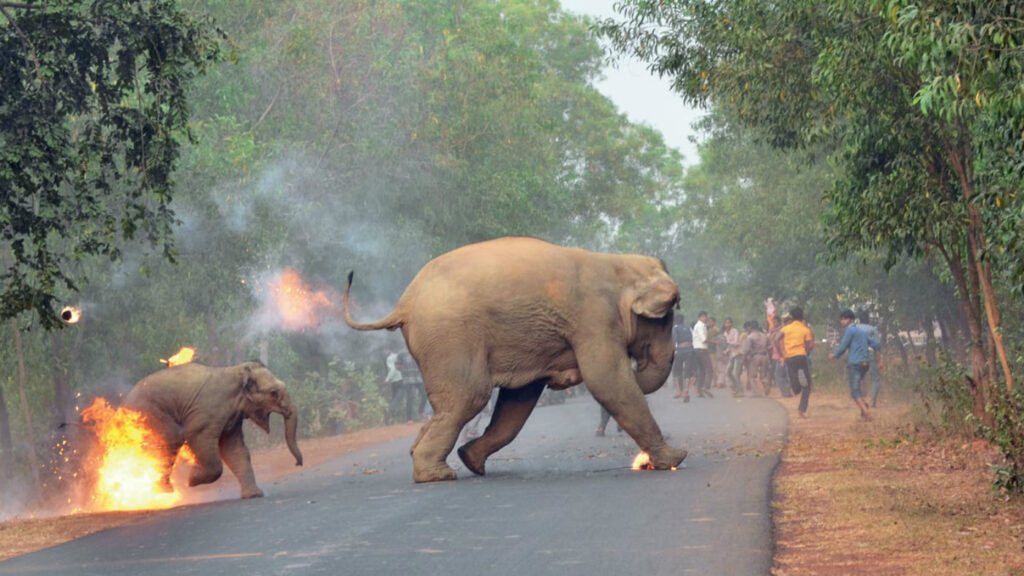
Photo courtesy Biplab Hazra and Think Wildlife Foundation

On the 24th of Nov 2025, a 70-year-old Adivasi woman was tending her goats on revenue lands near Masinagudi in Tamil Nadu, when she was killed and dragged into the bushes by a Tiger. It paid little heed to the shouts of witnesses who saw it moving the body to a nearby waterhole. Between late October and November, multiple attacks on people and livestock were reported from the Nugu region near Nagarhole in Karnataka, leaving 3 farmers dead and one critically injured. Including one farmer who had just recovered from a broken hip bone caused by an earlier elephant attack. In response to intense public pressure, over 23 tigers (including many cubs) have been captured from non-forest areas in a span of one month. A huge number for a small rural landscape around two sanctuaries. In many cases, operations were hindered by mobs, who screamed and pelted stones upon sighting the animal, leading to heightened aggression. One of the tigers was found to have a festering snare wound, while another was the mother of 5 healthy cubs. Things took an interesting turn, when experts found it hard to match one of the Tigresses to existing wildlife databases. Raising the possibility that she might have been completely raised outside protected areas. Nor were they all transitionary, weak or infirm animals. Some of them were found to be healthy individuals, simply finding new spaces to eke out a living. It is unclear what the department intends to do with all the captured tigers and cubs. If they end up in captivity, that would be a tragic outcome that serves neither the individual animal nor the species. Continue reading Wildlife-Human Conflict – Non-intervention is No Longer a Choice: Sandeep Menon

Remember the Children: The Palathayi Case in Kerala and the Need for Urgent Changes in POCSO laws: Althea Women’s Friendship

[The ‘Palathayi’ case refers to a shocking instance of child abuse — of a 10-year-old female child in Palathayi, Kerala, by her school teacher, K Padmarajan, a noted BJP leader. Not just the act, but also the way in which the police and the ruling CPM handled it contributed to the public outrage around it. Worse, the child counselors’ role in intimidating the child, bombarding it with invasive, sexualised and irrelevant leading questions, and the police’s long interrogations, revealed, once again, the terrible rot in Kerala’s child protection machinery. The police investigation proved extremely biased in favour of the accused, and the team had to be replaced after protests by activists including feminists, and the family’s pleas. Despite complaints by the child’s mother against the counselors, the higher authorities, including the much-romanticized Minister for Women and Children of that time, K K Shailaja, did little to deliver justice. The verdict of the court in this case which sentenced the accused to life imprisonment, condemned the counselors’ questioning and asked for immediate action against them. The counselor was suspended after the verdict, but suspension hardly suffices as a punishment form blatant verbal rape of a ten year old.

Althea has been raising concerns about the state of child welfare, especially of female children from historically-marginalized social groups and family circumstances in Kerala even before. It is apparent that we need to keep speaking about it, and we will. This statement appeared first in the Malayalam online journal Truecopy Think. This is a translation of the original Malayalam statement by Gayatri Devi, who is part of Althea.]

Continue reading Remember the Children: The Palathayi Case in Kerala and the Need for Urgent Changes in POCSO laws: Althea Women’s Friendship

The Day the Colloquium Fell Silent – Bureaucratic Diktat and the Fate of Thought: S. M. Faizan Ahmed

Guest post by S. M.  FAIZAN AHMED

Image courtesy The India Forum

The resignation of Professor Nandini Sundar from the convenorship of the seminar colloquium at the Department of Sociology, Delhi School of Economics, has left an emptiness that language struggles to fill and words can barely cover. The seminar she was to host, titled Land, Property and Democratic Rights, was to be delivered by Dr. Namita Wahi, a senior fellow at the Centre for Policy Research and one of India’s most thoughtful legal scholars on land rights.

The event formed part of the department’s long-standing Friday Colloquium series—among the oldest and most cherished intellectual traditions in Indian academia. Over the decades, nearly every major figure in the social sciences has presented a paper here at least once. More than a seminar, it has been a ritual of conversation—one that has weathered political shifts, personal rifts, intellectual disagreements, and institutional flux, sustaining across generations a living legacy of thought, dialogue, and learning. Continue reading The Day the Colloquium Fell Silent – Bureaucratic Diktat and the Fate of Thought: S. M. Faizan Ahmed

A Shadowed Present and the Onus of Thought – Remarks, Non-Polemical or Otherwise: Sasheej Hegde

[This concluding essay of the series in Kafila titled Decolonial Imaginations. Links to the previous essays are given at the end.

The terms ‘decolonization’ or ‘decolonial’ have become quite critical now, given that the impulse of justice lies at the core of these concepts. Neither postcolonial nor decolonial perspectives are compatible with right-wing ideologies but the fact that Hindutva ideologues in India and the rightwing globally are now trying to appropriate that language makes it seem to some that the very idea of the postcolonial or decolonial is suspect. We believe that this demonizing of decolonial theory from a position defensive of the European Enlightenment needs to be unpacked in the interests of a mutually productive debate. Kafila has been publishing a series of interventions on what the idea of the decolonial imagination involves, locating decolonial theory as speaking from the margins, drawing attention to identities which the orthodox Left subsumed under ‘class’ and which the rightwing in India seeks to assimilate into Brahminism. Additionally the orthodox Left’s rejection of spiritual beliefs and inability to engage with them is also a factor that may have produced the space for right wing appropriations of a field marked “religion”. 

We hope that these interventions will clear the ground for productive conversations on the Left rather than polarised and accusatory claims that mark some spurious claims to ‘correctness’.]

Register

In a superbly crafted, and provocative, essay titled ‘In Defense of Presentism,’ the historian David Armitage (2023) has tried to re-present the prospects of ‘presentism’ for historians particularly (even though the essay has its lessons for various practitioners across domains, critical or otherwise).  As he notes: ‘Historians are trained to reject presentism: we are likely to argue that our duty is to the past and its inhabitants – and not to the present and certainly not to the future.’  But, as he shows with great analytical acuity and detail, historians are deploying the word ‘presentism’ in a variety of ways, which he then goes on to unravel, while making a case for what historians ought to be opposing and what about the present they can comfortably be accepting.  My brief is surely not to detail the intricacies of Armitage’s argument for my readers here – although I would urge them to read and absorb the essay themselves (even as my moves here have been made possible by it).  Rather, my effort is to quickly address some critical aspects of the ‘presentism’ that underwrites contemporary scholarship in India (and elsewhere) – although, again, for the purposes of this formulation, I shall limit myself to Meera Nanda (2025) and the terms of her critique of postcolonial and decolonial theory (henceforth PDT).  My own relationship with PDT has been an ambivalent one – and, hopefully, a recent contribution will clarify that (Hegde 2025) – and there are also aspects of the critique mounted by Meera Nanda that I agree with.  But this is not the ground that I will be traversing here in this short note. Continue reading A Shadowed Present and the Onus of Thought – Remarks, Non-Polemical or Otherwise: Sasheej Hegde

We Will Fight, We Will Win: ASHA Workers Vow to Continue the Protest

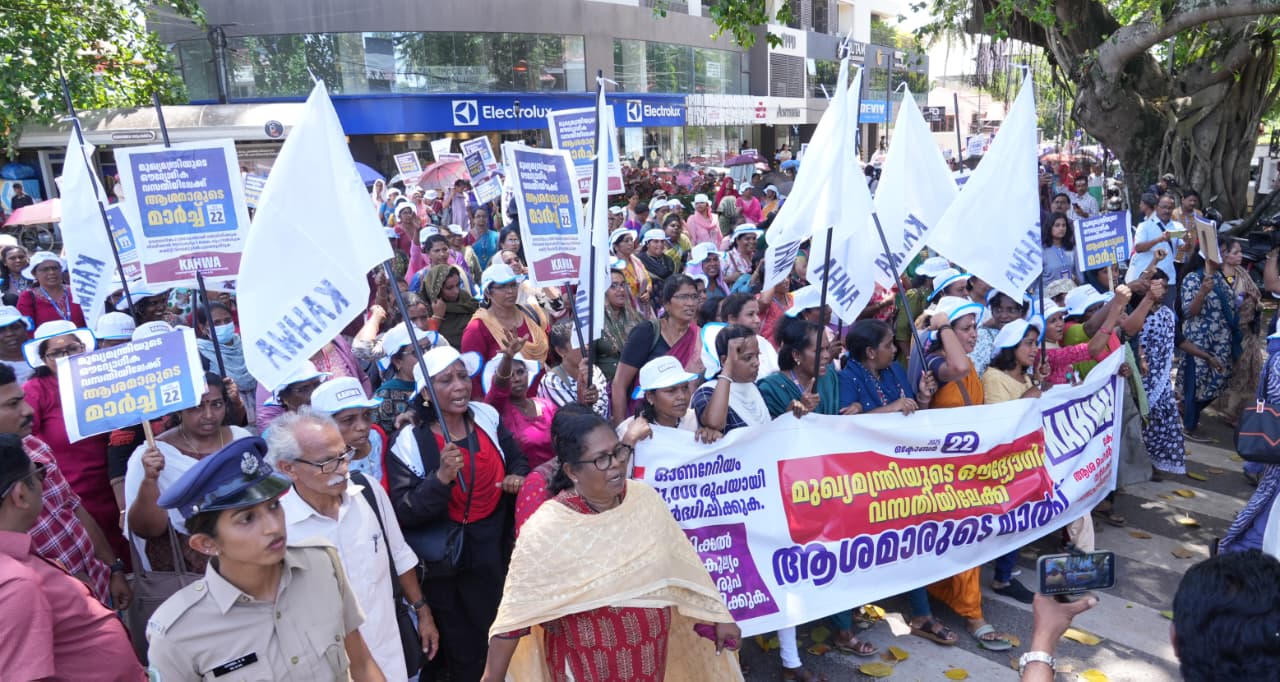
Today, exactly 266 days after it began, the ASHA workers’ protest led by the Kerala ASHA Health Workers’ Association vowed to continue the protest in a new form. Since the evening before, news channels and in the morning, newspapers, were claiming that the protest had ‘ended’ or was going to be ‘wound up.’ The meeting the KAHWA organised in front of the State Secretariat in Thiruvananthapuram was both a celebration of the victory the workers had secured over the hubris of the CPM and its lord and master, the Chief Minister of Kerala. But more importantly, it was a declaration of the workers’ determination to continue the struggle. The local body elections are imminent, and the protesting workers intend to turn their grievance into a campaign issue.

Continue reading We Will Fight, We Will Win: ASHA Workers Vow to Continue the Protest

Is Kerala a Destitute-free State or Extreme Poverty-free State?

[Below is the English Version of a Public Statement in Malayalam released by a group of concerned economists and social activists that appeared in the Malayalam and Kerala-based English Newspapers today (31 October 2025)]
 

Background: The Government of Kerala have been preparing to declare the State of Kerala as India’s First Extreme Poverty-Free State on 1 November, 2025 being the State formation day. Th government claims that this achievement was attained through sustained efforts to eradicate extreme poverty in the state since July 2021, with just 64,006 extremely-poor families identified through a survey conducted by the Kudumbashree Mission and the Panchayats and Municipalities. The criteria used, as the government claims, were (i) households with no income, (ii) not even food for two times a day, (ii) those unable to cook food even with food articles available from ration shops, and (iv) those with very bad health conditions. This makes Kerala the first state in India to attain the two Sustainable Development Goals of No Poverty and No Hunger. However, this raises a number of crucial questions. It is in this background the following public statement was issued.

Continue reading Is Kerala a Destitute-free State or Extreme Poverty-free State?

Countering Propaganda against the ASHA Workers’ Struggle in Kerala: A Response by Anamika A. and others

Rejoinder written collectively by Anamika A, Archana Ravi, Ayana Krishna D, J Devika, Divya G S, Gayatri Devi, Shraddha Jain, Shradha S and Srimanjori Guha

[This piece was written in response to a flagrant misrepresentation of the ASHA workers’ ongoing struggle in Kerala, by Binitha Thampi and Varsha Prasad, which appeared in the Economic and Political Weekly early this month, titled “Labouring on the Margins: ASHA Workers’ Protests in Kerala and Working-class Solidarities” (Oct.4, 2025, LX, 40, 13-17). A group of us — scholars, activists, artists and others who have been closely following the struggle since its beginning — wrote a rejoinder to it. The EPW editor verbally agreed to consider it, but the edit desk insisted that it be subjected to the same peer-review process (as their special articles, it seemed). Commentary pieces, as those who have published in the EPW earlier know, were dealt with at the editorial desk, and the editor was back then obviously competent to judge whether a rejoinder to a commentary piece was a fair one or not. Now that seemingly requires a review process! That does not suit us simply because this atrocious piece of slander is aimed at an ongoing struggle, at the lives of struggling women workers, by other women steeped in academic, social, and political privilege. There is, then, the need to respond quickly, to defend the struggle from the verbal equivalent of a shower of stones thrown at it. At the same time, the very fact that B Thampi’s and V Prasad’s piece, which parrots the CPM troll position in each line and trips over themselves several times empirically and theoretically, has clearly not been subjected to peer-review by the same EPW editorial, for it would definitely would not have got published like it is now — biased in the extreme.

Continue reading Countering Propaganda against the ASHA Workers’ Struggle in Kerala: A Response by Anamika A. and others

Left, Right, Left – Notes on Radical Post/De-Coloniality: Gita Chadha

[This post is the ninth – and penultimate – essay of the series in Kafila titled Decolonial Imaginations. Links to the previous essays are given at the end.

The terms ‘decolonization’ or ‘decolonial’ have become quite critical now, given that the impulse of justice lies at the core of these concepts. Neither postcolonial nor decolonial perspectives are compatible with right-wing ideologies but the fact that Hindutva ideologues in India and the rightwing globally are now trying to appropriate that language makes it seem to some that the very idea of the postcolonial or decolonial is suspect. We believe that this demonizing of decolonial theory from a position defensive of the European Enlightenment needs to be unpacked in the interests of a mutually productive debate. Kafila has been publishing a series of interventions on what the idea of the decolonial imagination involves, locating decolonial theory as speaking from the margins, drawing attention to identities which the orthodox Left subsumed under ‘class’ and which the rightwing in India seeks to assimilate into Brahminism. Additionally the orthodox Left’s rejection of spiritual beliefs and inability to engage with them is also a factor that may have produced the space for right wing appropriations of a field marked “religion”. 

We hope that these interventions will clear the ground for productive conversations on the Left rather than polarised and accusatory claims that mark some spurious claims to ‘correctness’.]

Much has already been said in this set of essays on the difference between two kinds of Indian responses to colonial western modernity. These responses can be classified as the left leaning post(de)-colonial theories and the right-wing responses that may also be classified, by some, as post(de)-colonial theory. This set of essays are in conversations around the allegation that the former feeds into the latter. It is evident to many of us doing post(de)-colonial theory on the left that the difference between the two is unmistakable. Yet, this is missed by many on the left, leading to much misrepresentation; and by many on the right, leading to much appropriation. We also know that the responses to modernity from post(de)-colonial theories on the left are fractured on multiple axes, religion and faith being a major one. Due to the common worlds we inhabit, it is indeed possible for much confusion to occur. I think the act of demarcating the players, the fields, and the actions of the oeuvres, the right and the left is important, especially for a pedagogic purpose.  Each generation seeks clarification in the classroom on several of these confusions and debates. While demarcating the difference regularly and rigorously is an important intellectual exercise for everyone in the discourse, doing this is also an ethical responsibility, particularly for those who do not wish to be either misrepresented or appropriated, which is basically those who are not bedfellows with the orthodox left and definitely not with the orthodox right. The demarcation is required to be done in multiple domains of theory as well as practice. This set of essays seeks to precisely do that. Continue reading Left, Right, Left – Notes on Radical Post/De-Coloniality: Gita Chadha

Rising international Student migration from India: ‘Mad rush’ or reflection of the domestic labour market situation?  : Shraddha Jain

On 21 September 2025, The New Indian Express published an interview with Professor Irudaya Rajan about migration patterns from Kerala where the Professor characterised the rising trend of student migration from Kerala as a ‘mad rush’ and said that young people fail and don’t benefit much from migration. He also said that overseas employment as care providers, a growing form of employment in the developed countries, was a form of ‘slavery’. 

Continue reading Rising international Student migration from India: ‘Mad rush’ or reflection of the domestic labour market situation?  : Shraddha Jain

Do not Steal Our Voices, Mr Vijayan! The ASHA Workers’ March to the Chief Minister’s Residence

Dear Mr Vijayan

Yesterday, the protesting ASHA workers marched to your residence in the pouring rain, seeking to rouse you from your utterly inexcusable stupor. Yes, over the past eight months, you tried to first crush the strike, and then to kill it by ignoring it. Who does not know that the worst form of violence is indifference?

Photo credits : Shradha S, Harsh, Ashna Thambi, Santhosh Nilakkal.

Continue reading Do not Steal Our Voices, Mr Vijayan! The ASHA Workers’ March to the Chief Minister’s Residence

When Decolonisation turns Inward – On the Dangers of Methodological Nationalism: Sabah Siddiqui

[This post is the eighth essay of the series in Kafila titled Decolonial Imaginations. Links to the previous essays are given at the end.

The terms ‘decolonization’ or ‘decolonial’ have become quite critical now, given that the impulse of justice lies at the core of these concepts. Neither postcolonial nor decolonial perspectives are compatible with right-wing ideologies but the fact that Hindutva ideologues in India and the rightwing globally are now trying to appropriate that language makes it seem to some that the very idea of the postcolonial or decolonial is suspect. We believe that this demonizing of decolonial theory from a position defensive of the European Enlightenment needs to be unpacked in the interests of a mutually productive debate. Kafila has been publishing a series of interventions on what the idea of the decolonial imagination involves, locating decolonial theory as speaking from the margins, drawing attention to identities which the orthodox Left subsumed under ‘class’ and which the rightwing in India seeks to assimilate into Brahminism. Additionally the orthodox Left’s rejection of spiritual beliefs and inability to engage with them is also a factor that may have produced the space for right wing appropriations of a field marked “religion”. 

We hope that these interventions will clear the ground for productive conversations on the Left rather than polarised and accusatory claims that mark some spurious claims to ‘correctness’.]

When I first encountered postcolonial theory as a young scholar, it felt like an opening into a new way of understanding the world. Much of my introduction came through Indian thinkers, some of whom were not located in India, yet their work spoke powerfully to questions of colonial legacies, subjectivity, and the politics of knowledge. These early engagements helped me grasp the goals of postcolonial scholarship: to make visible the structures of power that colonialism left behind and to explore the ways in which it continues to shape our systems of knowledge and self-representation. Over time, however, I noticed a subtle shift; the language of postcolonial studies seems to have receded somewhat, while the term decolonial has gained prominence as a way to address questions of knowledge and authority in the present moment. Other contributors to this blog series have traced the rise and relative decline of postcolonial thinking in South Asia. I still resonate with postcolonial analysis, and have used it within my own work, but for the purposes of reflecting on the current politics of knowledge in Indian universities, I am choosing to engage now with the decolonial project.

Continue reading When Decolonisation turns Inward – On the Dangers of Methodological Nationalism: Sabah Siddiqui

Rotting Civil Society, Mounting Insecurity: Understanding Hijabophobia in Kerala

Last week, when most mainstream media was in the middle of yet another paroxysmal bout of Islamophobia over a thirteen-year-old child’s wish to wear the hijab to school, I was thinking: why is hijabophobia the most acceptable manifestation of the hatred of Islam in Kerala? Why is it that it seems to provoke many non-Muslim women to the point of anti-Muslim hysteria?

Continue reading Rotting Civil Society, Mounting Insecurity: Understanding Hijabophobia in Kerala

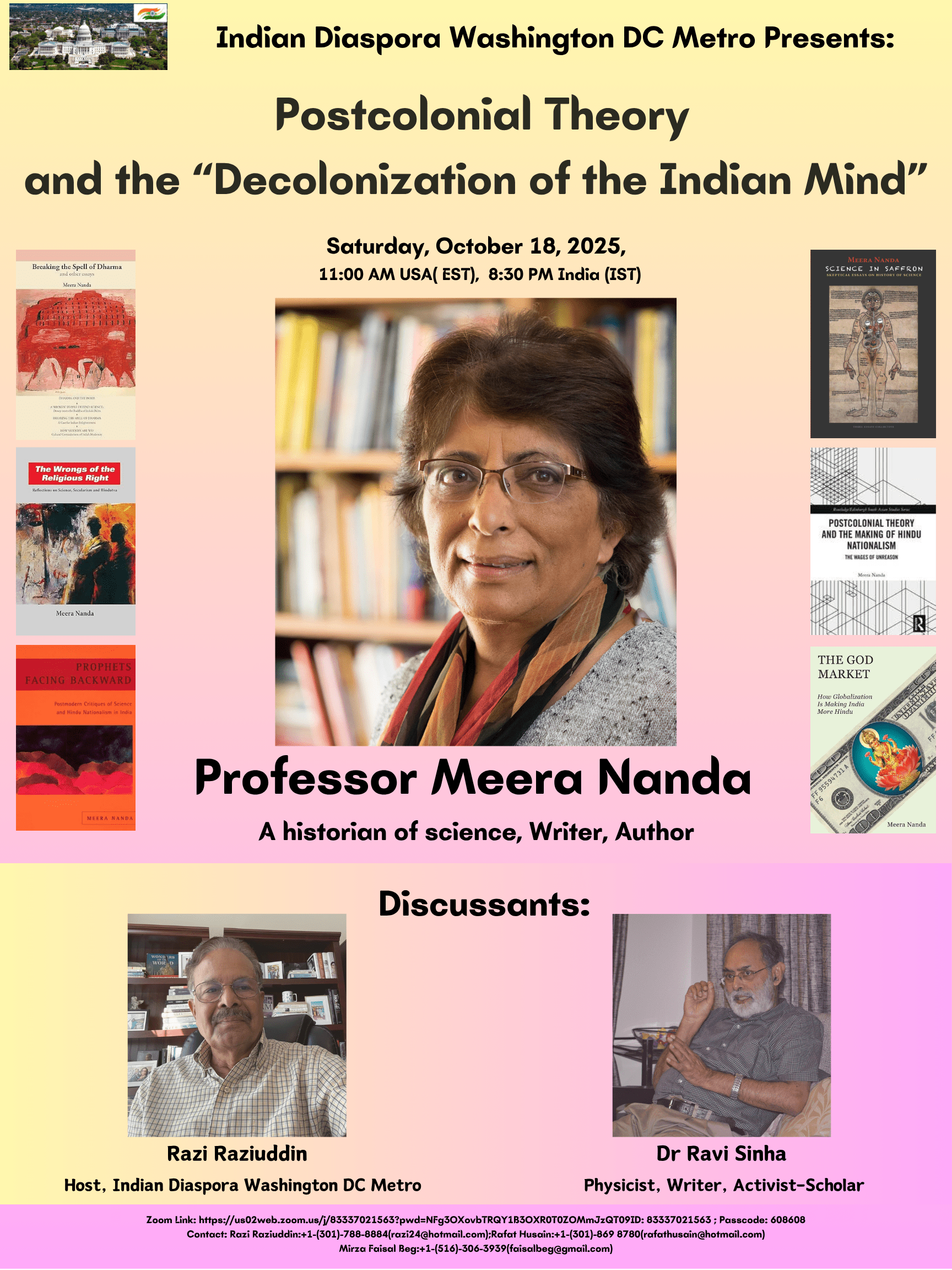
Postcolonial Theory and the “Decolonization of the Indian Mind” : Professor Meera Nanda

Indian Diaspora Washington DC lecture series

Topic: Postcolonial Theory and the “Decolonization of the Indian Mind”

Speaker: Professor Meera Nanda

Finally, an Answer to Why Kerala’s CPM-led Government is Determined to Break the ASHA Workers’ Strike

Finally, I am able to understand why the government of Kerala, led by a leading communist party, the CPM, is so doggedly against the demands of Kerala’s internationally-celebrated ground-level women health workers — the ASHA workers — who have been on strike since February 2025.

Continue reading Finally, an Answer to Why Kerala’s CPM-led Government is Determined to Break the ASHA Workers’ Strike

Colonialism, Modernity and Science: K. Sridhar

[This post is the seventh essay of the series in Kafila titled Decolonial Imaginations. Links to the previous essays are given at the end.

The terms ‘decolonization’ or ‘decolonial’ have become quite critical now, given that the impulse of justice lies at the core of these concepts. Neither postcolonial nor decolonial perspectives are compatible with right-wing ideologies but the fact that Hindutva ideologues in India and the rightwing globally are now trying to appropriate that language makes it seem to some that the very idea of the postcolonial or decolonial is suspect. We believe that this demonizing of decolonial theory from a position defensive of the European Enlightenment needs to be unpacked in the interests of a mutually productive debate. Kafila will be publishing a series of interventions on what the idea of the decolonial imagination involves, locating decolonial theory as speaking from the margins, drawing attention to identities which the orthodox Left subsumed under ‘class’ and which the rightwing in India seeks to assimilate into Brahminism. Additionally the orthodox left’s rejection of spiritual beliefs and inability to engage with them is also a factor that may have produced the space for right wing appropriations of a field marked “religion”. 

We hope that these interventions will clear the ground for productive conversations on the left rather than polarised and accusatory claims.]

It is impossible to think of modernity and colonialism, without thinking of their third sibling – science. They are not just siblings, in fact, but a set of triplets which took birth within the same western context and period – and hence, the adjectives ‘modern’ and ‘western’ are used to qualify science, often by the colonizers themselves. Just as the notion of ‘savage native’ was a part of colonial construction, so was the idea of ‘modern science’. Not only did the colonial powers conquer people and knowledge systems across the world, but they also established hegemony within their own societies, colonizing them from within. This was done using complex mechanisms of power, control and appropriation. Continue reading Colonialism, Modernity and Science: K. Sridhar

JNU – The State of the University: JNU Teachers’ Association

Report prepared by Jawaharlal Nehru University Teachers’ Association

 (October 7, 2025 – updated version of report first released in September 2023)

Jawaharlal Nehru University (JNU) has suffered terribly under the effects of the concerted attack it has faced since February 2016. The vicious campaign slandering the image of the institution, its faculty, and its students, that was unleashed at that point of time was only the beginning of a long drawn process of sapping the institution of the vital energies that underlay its remarkable achievements and earned the institution such great prestige across the country and the world. What followed that attack has been a systematic process of undermining the institution from ‘within’, with the office of the Vice Chancellor serving as its hotbed. The current and the previous occupant of that office have shared the responsibility for this. Even as old wounds continue to fester, new injuries continue to be inflicted on the institution’s body politic – whereby JNU is being subjected to a process of death by a thousand cuts. This is happening despite the current Vice Chancellor being an alumna of the University.

In the last one decade, the terms ‘governance’ and ‘leadership’ have been turned on their heads to acquire rather ominous meanings, whereby they have in effect become synonyms for their antonyms. From being a ‘public’ institution in which the quest for knowledge and learning in all its dimensions thrives through the lives of its students and faculty, the University has been steadily pushed in the direction of being reduced to being an expression of the Vice Chancellor’s persona, into a fiefdom in which the writ of the occupant of that office reigns supreme. Displaying utter contempt for institutional norms and statutory provisions that made for democratic self-governance and orderly functioning, a centralised, arbitrary and dictatorial mode of (mis)governance was put in place, which tolerated no questioning of decisions. Currently, the JNU Administration under the leadership of the Vice Chancellor is waging a war against the University faculty. Continue reading JNU – The State of the University: JNU Teachers’ Association

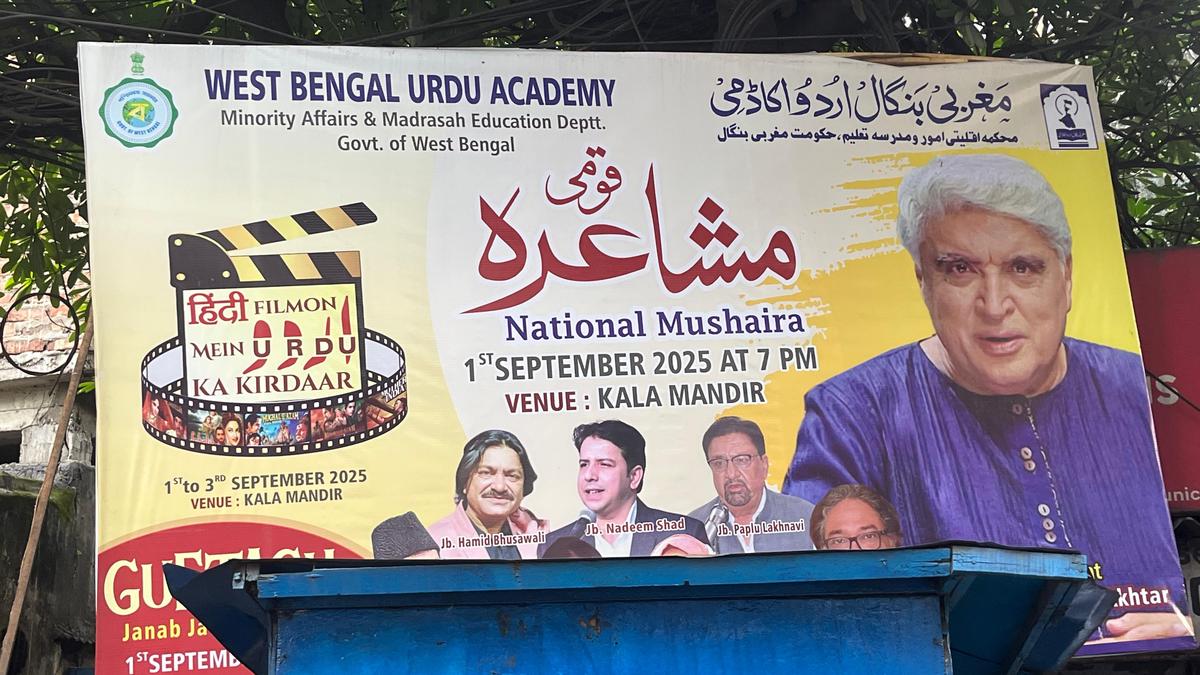
Javed Akhtar, Bollywood and Urdu’s Ghostly Existence – Rashid Ali

Guest post by RASHID ALI

Image courtesy The Hindu

Javed Akhtar’s recent ‘exile’ from the West Bengal Urdu Academy event did more than generate headlines. It dwarfed a bigger debate about Urdu in Hindi cinema, which was the event’s main theme. The media precipitately reduced the whole issue to the conflict between the lyricist and the Urdu Academy. The controversy carried a tinge of ‘Muslim fundamentalism,’ reflecting today’s cultural and political ideologemes. However, the discussion on Bollywood’s uneven relationship with Urdu was lost in the sound and fury of cultural climate of the country. Et tu, Brutus?’ finds a new stage – ‘Et tu, Bollywood?’ You speak against the very world that gives you voice. Continue reading Javed Akhtar, Bollywood and Urdu’s Ghostly Existence – Rashid Ali

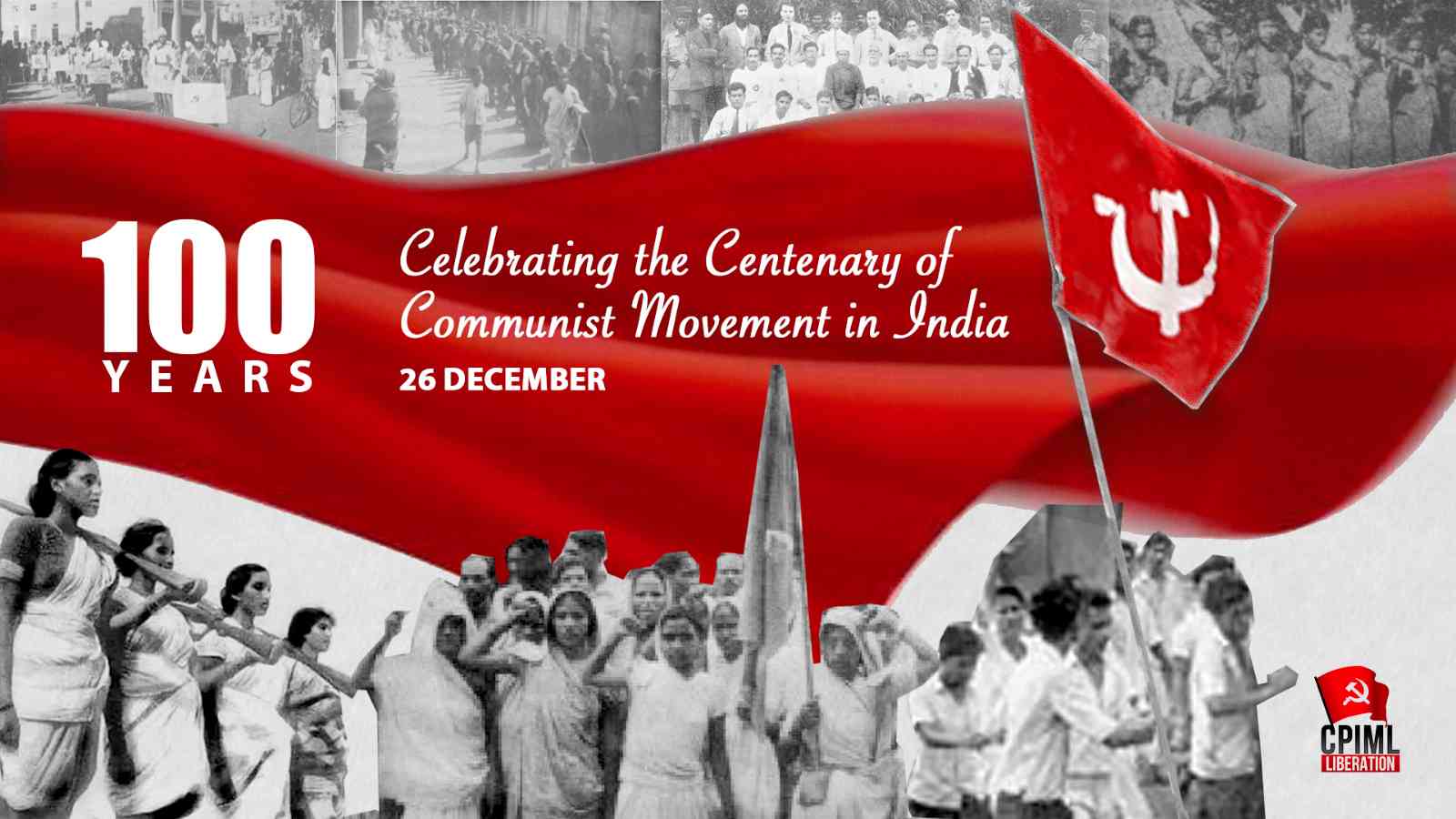
Red Dreams, Saffron Marches – Longue Durée of India’s Struggles and Strategies of Power: S. M. Faizan Ahmed

Guest post by S.M. FAIZAN AHMED

[The author writes about the current scenario, reflecting on the one hundred years of the communist movement as well as of the RSS. In these important reflections Ahmed recounts the great achievements of the communist Left, while at the same time speculating on where the RSS scored over it – leaving us with a number of questions to seriously ponder about. – AN]

Image courtesy Liberation

On October 1, 2025, a day before Gandhi’s birth anniversary, long revered and associated with ahimsa and moral conscience, the government unveiled a ₹100 coin at the Dr. Ambedkar International Centre, 15 Janpath, marking a century of the Rashtriya Swayamsevak Sangh. A day earlier, as if to turn ideology into spectacle,  a Shakha parade, named Path Sanchalan, traced its way through Jawaharlal Nehru University—once a fortress of dissent and the audacious poetry of thought. The rhythmic march of uniformed bodies through corridors once alive with debate did more than display ceremony; it signaled a shift in the republic’s moral conscience, where the choreography of discipline seeks to mute the dialectic of doubt, and the university—once a sanctuary of questioning minds—becomes a stage for the theatre of obedience. Continue reading Red Dreams, Saffron Marches – Longue Durée of India’s Struggles and Strategies of Power: S. M. Faizan Ahmed

DISSENT, DEBATE, CREATE