Statement by feminists on Facebook campaign to “Name and Shame”

As feminists, we have been part of a long struggle to make visible sexual harassment at the workplace, and have worked with the movement to put in place systems of transparent and just procedures of accountability. We are dismayed by the initiative on Facebook, in which men are being listed and named as sexual harassers with no context or explanation. One or two names of men who have been already found guilty of sexual harassment by due process, are placed on par with unsubstantiated accusations. It worries us that anybody can be named anonymously, with lack of answerability. Where there are genuine complaints, there are institutions and procedures, which we should utilize. We too know the process is harsh and often tilted against the complainant. We remain committed to strengthening these processes. At the same time, abiding by the principles of natural justice, we remain committed to due process, which is fair and just.
This manner of naming can delegitimize the long struggle against sexual harassment, and make our task as feminists more difficult.
We appeal to those who are behind this initiative to withdraw it, and if they wish to pursue complaints, to follow due process, and to be assured that they will be supported by the larger feminist community in their fight for justice.

Ayesha Kidwai

Brinda Bose

Janaki Abraham

Janaki Nair

Kavita Krishnan

Madhu Mehra

Nandini Rao

Nivedita Menon

Pratiksha Baxi

Ranjani Mazumdar

Sabeena Gadihoke

Shikha Jhingan

Shohini Ghosh

Vrinda Grover

 

Taj Mahal as Tej Mahal – Once again “There is a Bee in the Bonnet”

It was probably late sixties or early seventies – when a gentleman called P N Oak started appearing in Marathi magazines peddling his weird theories about well known monuments in and outside India. An article which made lot of news then was centred around Taj Mahal where it was claimed that it was ‘Tejo Maha Aalay’ or hindu god Shiva’s abode. It tried to establish through various ‘explanations’ that a Shiva Temple was destroyed to build Taj Mahal and if we dig deep we can find ‘remnants’ of the earlier structure. Mr Vinay Katiyar’s latest advice to Uttar Pradesh Chief Minister Yogi Adityanath that he “should go into the Taj Mahal and see the Hindu signs inside it” reminded one of P N Oak. Continue reading Taj Mahal as Tej Mahal – Once again “There is a Bee in the Bonnet”

Thinking a local Cosmopolitanism – the Kochi Muziris Biennale: Interview with Dilip Menon by Riyas Komu and CS Venkiteswaran

English transcript of  interview published in Malayalam in Mathrubhumi Weekly, October 17 2017.

CSV

Kochi is a curious choice as a site for an international art event like Biennale, isn’t it? It has played no prominent role insofar as art activity, practice or market is concerned, nor is it a metropolitan city like Mumbai or Delhi. One qualification, of course, could be its long cosmopolitan history of trade and the movement of people, ideas, religions or goods from time immemorial. Is KMB in a way, trying to invoke and re-imagine the cosmopolitan past or heritage of a place like Kochi?

Dilip Menon

I think there is a particular history to why such an event should happen in Kochi, and why it could be successful here alone. Kochi, being a port city, was always part of a universe that was much larger than the immediate geography within which it is located. So, like most port cities, it sits on the edge of land and looks out to the sea. When one thinks about the idea of cosmopolitanism, there is something about the already existing cosmopolitanism of port cities, whether it is Malacca, Kochi or Venice. It is not without significance that two of the more important biennales are in Venice and Kochi. I think that a port city is located in a much longer history of movements of people, ideas, materials and political ideologies across the ocean.  Even though these ports are now part of nation-states, their histories and memories are much deeper and much longer. The Kochi Muziris Biennale (KMB) is able to summon up these memories.

Continue reading Thinking a local Cosmopolitanism – the Kochi Muziris Biennale: Interview with Dilip Menon by Riyas Komu and CS Venkiteswaran

Deendayal Upadhyaya : BJP’s ‘Gandhi’ !

( This article would appear in the coming issue of ‘Think India Quarterly’)

(Photo Courtesy : jansatta)


 ..Kovind acknowledged that “the key to India’s success is its diversity” and “our diversity is the core that makes us so unique” and ended his speech with a call to build an egalitarian society as “envisioned by Mahatma Gandhi and Deendayal Upadhyayaji”… The Congress took umbrage at the way Kovind mentioned Upadhyaya in the same breath as the Mahatma. “The President should remember that he is not a BJP candidate any more. He is the President of India. He has to… rise above and think beyond party politics,” Congress veteran Ghulam Nabi Azad said.

(https://www.telegraphindia.com/1170726/jsp/frontpage/story_163934.jsp)

1.

In Search of an Icon

Fighters for Hindu Rashtra who have reached topmost echleons of power in this part of South Asia and are expected to extend and deepen their influence in coming times – if secular and democratic and left forces do not act together now – find themselves in a typical quandary. Continue reading Deendayal Upadhyaya : BJP’s ‘Gandhi’ !

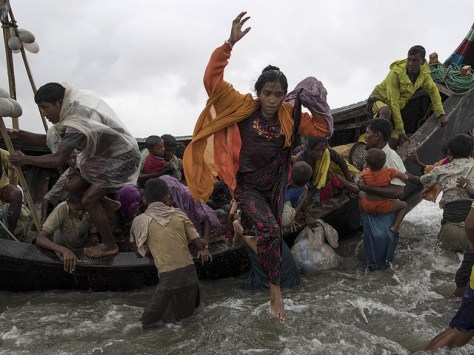
The Bharatiya Janta Party has issues with Rohingyas – Indians don’t: Nabanipa Bhattacharjee

Guest post by Nabanipa Bhattacharjee

36364213904_e54b03ce50_z
Image by Dan Kitwood / Getty

On 13 September 2017 the Union Home Ministry, following the 2015 order of the Supreme Court, decided to grant citizenship to Chakma and Hajong refugees. Victims of religious persecution in the Chittagong Hill Tracts of Bangladesh, the predominantly Buddhist Chakmas and Hindu Hajongs began immigrating to the north eastern region of India 1960s onwards. The then central government, eventually, moved a large number of these refugees to Arunachal Pradesh; while Arunachal Pradesh is their zone of concentration, a considerable number of Chakmas and Hajongs live in Mizoram and Meghalaya too. The decision of the Home Ministry, however, did not go down well with the indigenous tribal population of Arunachal Pradesh; the All Arunachal Pradesh Students’ Union protested against the move citing threats to life and livelihood of the native inhabitants of the state. On 14 September 2017 the Union government assured the protesters that a middle-ground – between honouring the law and commitment towards protecting the rights of the people of Arunachal Pradesh – would be found.

Continue reading The Bharatiya Janta Party has issues with Rohingyas – Indians don’t: Nabanipa Bhattacharjee

एक  नायक की तलाश में भाजपा 

दीनदयाल उपाध्याय: भाजपा के ‘गांधी’

Image result for deendayal upadhyaya

( Photo Courtesy : thewire.in)

एक पेड़विहीन देश में एक एरंड भी बड़ा पेड़ कहलाता है – एक  संस्कृत सुभाषित का रूपांतरण

/In a treeless country even castor counts for a big tree/

/संदर्भ: http://www.epw.in/journal/2006/12/


राष्ट्रपति कोविन्द ने इस बात को स्वीकारा कि ‘‘भारत की कामयाबी की कंुजी उसकी विविधता में है’’ और ‘‘हमारी विविधता ही वह केन्द्र है जो हमें इतना अनोखा बनाती है’’। अपने भाषण का अन्त उन्होंने समतामूलक समाज बनाने के आवाहन के साथ किया जैसी ‘‘कल्पना महात्मा गांधी और दीनदयाल उपाध्यायजी’’ ने की थी।… महात्मा गांधी के साथ दीनदयाल उपाध्याय का नाम लेने पर कांग्रेस ने एतराज जाहिर किया। कांग्रेस के नेता गुलाम नबी आज़ाद ने कहा कि ‘‘राष्टपति को यह याद रखना चाहिए कि वह अब भाजपा के प्रत्याशी नहीं हैं। वह भारत के राष्ट्रपति हैं। उन्होंने दलीय राजनीति से ऊपर  उठना चाहिए।’’

(https://www.telegraphindia.com/1170726/jsp/frontpage/story_163934.jsp मूल अंग्रेजी से अनूदित )

1

एक प्रतीक की खोज़

हिन्दु राष्ट्र के निर्माण के लिए प्रयासरत जमातें – जो फिलवक्त़ दक्षिण एशिया के इस हिस्से में हुकूमत के सबसे उंचे मुक़ाम पर पहुंची है – वह अपने आप को एक विचित्र दुविधा में फंसी पाती है। Continue reading एक  नायक की तलाश में भाजपा 

Violence against women – two patriarchal judgements: Gargi Mishra and Shreya Munoth

Guest post by GARGI MISHRA AND SHREYA MUNOTH 

Do a woman’s attire, appearance, sexual history or prior relationship with a perpetrator of sexual violence constitute a valid defence for a perpetrator of a sexual offence? Does the meaning of consent vary for educated women? The law, as it stands, doesn’t permit these factors to be taken into account while adjudicating crimes of violence against women nor does it prescribe varying standards. Unfortunately, however, deeply ingrained patriarchal mindsets rear their ugly heads ever so often flouting express statutory proscriptions, most recently demonstrated by two judgments delivered in the last fortnight dealing with rape.

The Punjab and Haryana High Court suspended the sentences of three students granted by the trial court for the rape of another student. The basis for this suspension, amongst others, was the victim’s “misadventures and experiments”, her “promiscuity” and the absence of brutal violence accompanying the sexual assault. Close on the heels of this, the Delhi High Court, on appeal, acquitted Mahmood Farooqui, a filmmaker, overturning the trial court’s verdict of finding him guilty of rape having performed forced oral sex on a visiting woman scholar.  While so doing, the Delhi High Court purposively misinterpreted the position of law on what constitutes consent and seems to have been largely influenced by the victim’s previous relationship with Farooqui, her being educated (a “woman of letters”), the supposed feebleness with which she said ‘no’ to the sexual act, and the fact of Farooqui’s bipolar disorder. Continue reading Violence against women – two patriarchal judgements: Gargi Mishra and Shreya Munoth

Modi mocks ‘pessimists’, but RBI says a whole lot of Indians are pretty pessimistic about the economy

Last week, Prime Minister Modi gave an hour long speech denouncing ‘pessimists’ who refused to see the bright side of demonetisation and other transformations that his government’s able management had visited upon the economy.

We at Kafila, did a quick fact-check offering many reasons for pessimism, but as they say in Delhi – humari kya aukaat hai?

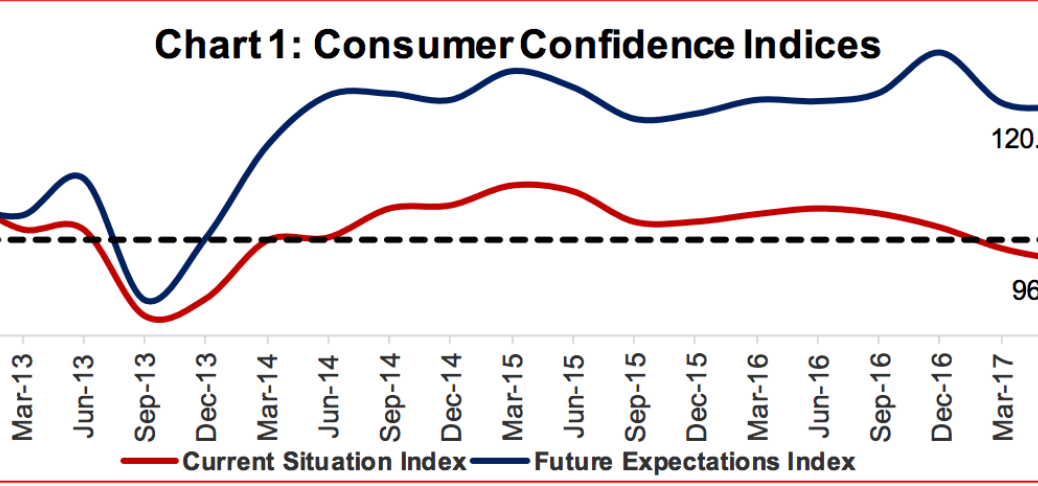
Now, a set of surveys by the Reserve Bank of India have concluded that 65% of the 5100 metropolitan households polled feel the economic situation has either worsened or stayed the same. It’s a small sample, but the results are revealing.  To quote :

Households’ current perceptions on the general economic situation remained in the pessimistic zone for four successive quarters, with the outlook worsening — RBI

For those you wondering – “four successive quarters” is a full year.

I would urge most readers to read the report in full, but here are some key takeaways:

Continue reading Modi mocks ‘pessimists’, but RBI says a whole lot of Indians are pretty pessimistic about the economy

Defend the tradition of fighting for the oppressed: Sohail Hashmi writes to the Chief Minister of Kerala

(This is the text of the open letter written by the eminent left cultural activist Sohail Hashmi to Com. Pinarayi Vijayan on the Hadiya case)

Continue reading Defend the tradition of fighting for the oppressed: Sohail Hashmi writes to the Chief Minister of Kerala

Modi says the economy isn’t so bad; He’s right – it’s worse

by Samarth Bansal and Aman Sethi

On October 4, Prime Minister Narendra Modi offered a robust defence of his government’s management of the economy, shortly after the Reserve Bank of India lowered its Gross Value Added (GVA) growth estimates for the current fiscal year from 7.3% to 6.7%.

Since then, the ruling party has been pains to push a positive narrative on the economy,  extent of emailing clips of the speech to journalists who write about the economy.

So, what is the current state of the economy? Here’s a reality check.

How many jobs has the economy created?

Modi said: “Upto March 2014, the subscriber base of the Employees Provident Fund Organization (EPFO) stood at 3.26 crore. Over the last three years, the numbers increased to 4.8 crore. Some people forget that this number can’t increased without a corresponding increase in employment.”

Reality Check: EPFO numbers have increased, but this doesn’t necessarily mean that total employment has increased. In July this year, this jump in EPFO subscribers was attributed to a government amnesty scheme which allowed firms to come clean on their actual staff strength without being penalized. In a detailed note, Mahesh Vyas, Managing Director and CEO of the Centre for Monitoring Indian Economy (CMIE), explained why using EPFO data as a proxy for job creation is “fraught with danger.”

Referring to the jump in the subscriber base, Vyas wrote: “This is not new employment. It is merely enrollment of employed persons into EPFO.”

Continue reading Modi says the economy isn’t so bad; He’s right – it’s worse

Preserve Kerala as the Shining Example of Democracy for India : Prof. Satish Deshpande writes to the Chief Minister of Kerala

(This is the text of the open letter from Prof. Satish Deshpande to the Chief Minister of Kerala on the Hadiya issue. Satish’s work Contemporary India, translated as Samakalika India, has been hugely influential in shaping the progressive understanding of Hindutva nationalism and communal hatred in Kerala.)

<!–more–>

The Honourable Chief Minister of Kerala

Shri Pinarayi Vijayan

6th October, 2017

Respected Sir,

Ever since I first came to Kerala in 1981 to study at the Centre for Development Studies (CDS) at Thiruvanathapuram, I have been a committed supporter of everything that the left tradition of your great state has achieved by way of democratic innovations in governance and social practice. Even today, I believe that Kerala continues to be a shining example in many spheres where the rest of India lags far behind.

I was therefore shocked to read about the Hadiya case and the tacit and explicit state support that underwrite her virtual house arrest today. I am told that the man that Hadiya has chosen to marry and the organisation with which he is associated may have a questionable past. Whatever be the truth of this matter, the fact is that an adult citizen’s personal choices in matters like marriage cannot be undone by the state no matter how ill-considered that choice may appear to others. Moreover, in the current climate, it is surely not irrelevant that the religion in question is Islam – it is highly unlikely that this case would have attracted any attention if Hadiya had chosen to convert to some other religion.

It is highly embarrassing – to the say the least – that a government led by a party that can claim to have played a major role in transforming Kerala society for the better is today seen to be siding with the reactionary forces.

I appeal to you to use the power vested in you by the people of Kerala to end this travesty of justice and ensure that Hadiya is left free to live her life as she chooses.

With best wishes,

Satish Deshpande

(Professor of Sociology, Delhi University)

End the isolation and imprisonment of Hadiya: Feminists write to the Chief Minister of Kerala

[A version of this letter has also been sent to Com. MC Josephine, Chairperson, Kerala State Women’s Commission] Continue reading End the isolation and imprisonment of Hadiya: Feminists write to the Chief Minister of Kerala

Let us rise to the defense of the Indian Constitution: Letter to the Kerala Chief Minister from Prof. Amit Bhaduri

[This is the text of the open letter written by eminent economist and leading development activist Prof. Amit Bhaduri, to Com. Pinarayi Vijayan] Continue reading Let us rise to the defense of the Indian Constitution: Letter to the Kerala Chief Minister from Prof. Amit Bhaduri

The Gravity of Newton : Rituparna Sengupta

This is a guest post by RITUPARNA SENGUPTA


Amit V Masurkar’s recently-released film Newton explores facets of Indian democracy at its most vulnerable. For these times of ‘nationalist’ bravado, this is a courageous topic.  The film is so named because it adopts for the most part, the point of view of its protagonist, Newton (Nutan) Kumar (Rajkummar Rao, thank you once again!) who resists corruption and hypocrisy at home and work. Continue reading The Gravity of Newton : Rituparna Sengupta

Help us resist the Hindutva thought-machine: K Satchidanandan writes to the Chief Minister of Kerala

[This is the text of the open letter written by the eminent poet and public intellectual K Satchidanandan to Com. Pinarayi Vijayan] Continue reading Help us resist the Hindutva thought-machine: K Satchidanandan writes to the Chief Minister of Kerala

Restore Hadiya’s Dignity as an Adult: Prof. Samita Sen to the Chief Minister of Kerala

(This is the text of the open letter from leading women’s studies scholar and renowned feminist intellectual, Prof. Samita Sen, to the Chief Minister of Kerala on the Hadiya case) Continue reading Restore Hadiya’s Dignity as an Adult: Prof. Samita Sen to the Chief Minister of Kerala

Check Hindutva Patriarchy: Prof. Akeel Bilgrami writes to the Chief Minister of Kerala

 (This is the text of the open letter written by the eminent philosopher Prof. Bilgrami, who was honoured by the Government of Kerala a few years back, to Com. Pinarayi Vijayan, on the Hadiya case)
Dear Mr. Vijayan,

You may not remember me from a couple of years ago when you and Prof. Pannikar were kind enough to award me the Social Science Research Prize and attend my lecture on that occasion in Trivandrum. I write out of the blue now —an impertinent liberty— to urge you to intervene in the case of Hadiya where an important constitutional right to choose one’s religion is being violated since, as is well-known, there was absolutely no force exercised upon her in her conversion.   Both Hindutva mischief and patriarchal attitudes are at play in her plight and they need to be strongly resisted.  Moreover it seems to me that the NIA’s being allowed to play a role in this matter is a deplorable interference in the the state of Kerala’s autonomy in the federal system of governance to which our country is committed, and should also be resisted.
  Won’t you please lead the way on this  —your voice, speaking out on all these issues and your support of Hadiya from your position of authority as Chief Minister, will make all the difference.
With my very best wishes,
Akeel Bilgrami
Akeel Bilgrami
Sidney Morgenbesser Professor of Philosophy,
Professor, Committee on Global Thought,
Columbia University,
Tel: 212 316 3458
Fax 212 854 4986

The Left Must Fight for Human Rights: AIPWA to the Chief Minister of Kerala

This is the text of the open letter to Com. Pinarayi Vijayan from Kavita Krishnan, Secretary, All-India Progressive Women’s Association]

Continue reading The Left Must Fight for Human Rights: AIPWA to the Chief Minister of Kerala

Make your report on the human rights violations in the Hadiya case public: AIPWA to the Kerala State Women’s Commission

[This is the text of the open letter to M C Josephine, Chairperson, KSWC, from Kavita Krishnan, Secretary, All-India Progressive Women’s Association]

Continue reading Make your report on the human rights violations in the Hadiya case public: AIPWA to the Kerala State Women’s Commission

Free Hadiya March on 3 Oct: Citizens for Hadiya

On October 3, students, human rights activists, muslim-dalit-adivasi-bahujan organisations from all over India are converging in Thiruvananthapuram to march for the freedom of the twenty-four-year-old Hadiya, who is under virtual house arrest in the home of her father, Mr Asokan after the shocking annulment of her marriage to her chosen partner by the Kerala HC. The march will begin from the Martyr’s Column, Palayam, at 11 AM and end at the Kerala State Government Secretariat junction. Through this we hope to draw the attention of the public to the grave dangers posed by these decisions of the judiciary and by the shameful silence and criminal inaction of the Kerala government , which claims leftist and secular credentials. We invite all to participate in this march and strengthen the hands of those who are fighting to undo this unspeakable violation of justice to an Indian citizen and the gross attack on the fundamentals of Indian democracy. We also request you to kindly change your Facebook profile pictures to Citizens for Hadiya and/or write supporting posts.

Continue reading Free Hadiya March on 3 Oct: Citizens for Hadiya

Feminists say ‘NO’ to recent rape judgments: There is nothing feeble about it

The following is a statement by feminist organisations . To add your name to the statement, please sign in the comments section.

In the wake of the protests following the 2012 Delhi gangrape, India had witnessed a welcome sharpening of understanding around sexual violence and consent. Legal reform recognized the principle of affirmative consent – i.e the principle that consent must be nothing short of an unequivocal positive ‘Yes’ (whether through words or gestures) to engage in a sexual act.

In public discourse and popular understanding too, the understanding that ‘No means No’ had been strengthened. Recent Court verdicts and orders have however dealt a deep blow to this hard-won progressive advance.In the wake of the protests following the 2012 Delhi gangrape, India had witnessed a welcome sharpening of understanding around sexual violence and consent. Legal reform recognized the principle of affirmative consent – i.e the principle that consent must be nothing short of an unequivocal positive ‘Yes’ (whether through words or gestures) to engage in a sexual act. In public discourse and popular understanding too, the understanding that ‘No means No’ had been strengthened. Recent Court verdicts and orders have however dealt a deep blow to this hard-won progressive advance.

Continue reading Feminists say ‘NO’ to recent rape judgments: There is nothing feeble about it

DISSENT, DEBATE, CREATE