The Supreme Court has time and again emphasized the significance of adducing reasons while rendering administrative and judicial orders. Indeed, a reasoned opinion is arguably the fullest expression of the principle of audialterampartem and is a sine quo non in the dispensation of justice. It appears, one might argue, that the Delhi High Court (hereinafter ‘Court’) in its order granting interim bail to Kanhaiya seems to have taken the dictate of the Supreme Court rather earnestly in what was, needless to say, a very ‘detailed’ and ‘incisive’ analysis of the bail application.
While poetic prose is neither repugnant nor unknown to our Court’s jurisprudence, and the present order is yet another captivating addition to that, it is when prose and poesy subsumes legal reasoning, one begins to wonder whether the rule of law would be better served without it. It is more worrisome however, when the judiciary sidesteps its role from enforcing a strict interpretation of criminal law in an attempt at articulating its own perceived sense of nationalism, loyalty and allegiance, wholly divorced from the Constitution and the laws.
[ Here are five joyous excerpts of recordings from a recent night on the JNU campus – after Kanhaiya Kumar came back – recorded by a young person called Veer Vikram. We do not know who Veer Vikram is, but came across his Youtube Channel, and were struck by the raw freshness of the voices and of the footage. So we are sharing them with you, saluting the generosity of Veer Vikram, who recorded these and uploaded them on to Youtube for everyone to enjoy. May there be many long nights of joy, music, dancing and poetry – in campuses, factories and neighborhoods – everywhere Think so what a beautiful sight a ‘vishaal jan jagaran’ (as distinct from a ‘bhagawati’ jagaran) can make in different corners of Delhi, and in every city and town where young people can no longer take the rubbish offered by TV channels and the Modi regime. The revolution will be danced, sang, dreamt, recorded, uploaded, downloaded, shared and enjoyed. No more words necessary ]
In response to JNUSU’s call for observing 2nd March as International Day of Protest and to demand justice for Rohith Vemula and the release of the then three arrested students, numerous organisations decided to gather outside Dadar station (E) and carry out a peaceful protest. Among them were All India Students’ Association (AISA), All India Students’ Federation (AISF), Students’ Federation of India (SFI), Democratic Youth Federation of India (DYFI), All India Youth Federation (AIYF), University Committee for Democracy and Equality (UCDE) and others. The protest was supposed to begin at 5pm. Continue reading Encounters With the State and Other Comedies: Asmit Pathare→
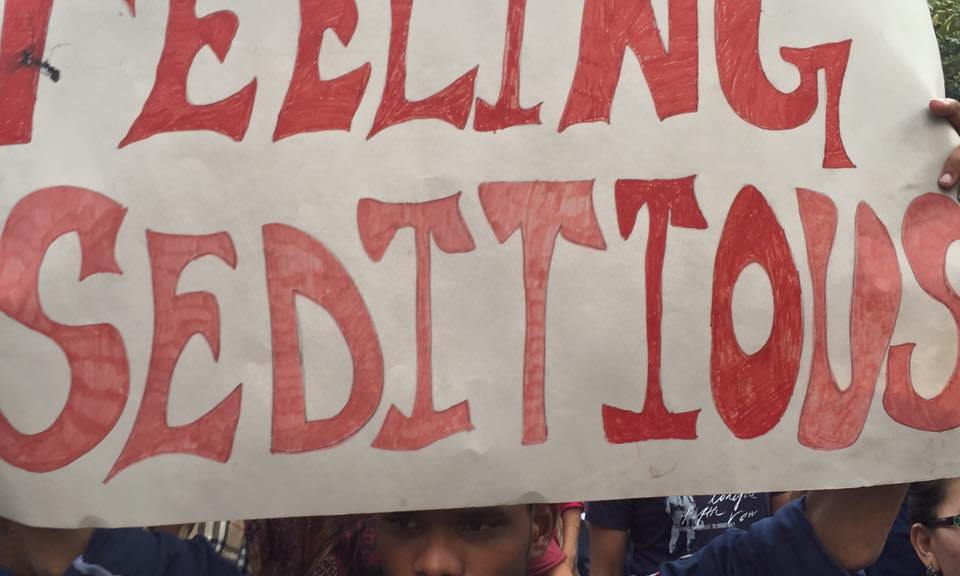
Kanhaiya Kumar, the president of the Jawaharlal Nehru University Student Union (JNUSU) in New Delhi, India, was arrested on Feb 10 on charges of sedition and criminal conspiracy. Kanhaiya was present at a meeting on the evening of Feb 9, where incendiary slogans were allegedly raised. Seven other students were also charged. Mr. Kumar is not accused of raising the slogans; indeed the identity of the person(s) who raised the slogans remains a mystery. Charging a student leader for sedition for another’s mere sloganeering is prima facie absurd. Further, the assault of Mr. Kumar, other students and faculty, and even journalists, in court premises by lawyers and others sympathetic to the government, do not inspire confidence in a fair judicial process. Continue reading St Louis Universities Stand With JNU: A Statement→
Freedom at midnight put some people in a spot – those Muslims who chose to stay back in India and did not opt for Pakistan. Pakistan was always conceived as a nation that would be created in areas where Muslims were in a majority in undivided India i.e., the north-western portion and a part of the eastern portion. It was difficult to visualize how all of India’s Muslims would be accommodated there because the reality was that Muslims were and are found in every nook and corner in this country. How then was Pakistan going to fulfill its purpose? It clearly could not. Recognizing this and recognizing the danger to those Muslims who could not go to the ‘promised land’, many Muslim leaders opposed the creation of Pakistan. Muslims against Partition by Shamsul Islam (Pharos Media, 2015) is their story. It details how such leaders were in effect betrayed after having striving unreservedly for a united India. Continue reading Betrayal at Midnight – Review of ‘Muslims against Partition’ : Guest Post by Karthik Venkatesh→
The weeks following the February 9th incident within the JNU campus have been nothing but eventful in India’s social and political discourse. At least, this is something most of us will agree on, no matter which side of this increasingly impermeable “fence” we sit on. There have been arguments, counter arguments thrown from each side to the other, names have been dug up and hurled across, evidence in favour of what purportedly happened or did not happen have been put up by each side for the other to see. Videos have been made, unmade; cartoons have been drawn, redrawn; political figures have been idolised, lampooned; students have been demonized and idolized; dangers of the increasing menace of nationalism and anti-nationalism have been stuffed down one’s throat through the so called idiot box or the smart net.
In the midst of this deluge of opinions and ideas, information and misinformation, the question that some have raised is, are both sides losing the plot a bit? What exactly are we discussing or debating so vociferously? Are we really listening to the other sides’ arguments, or are we just hearing a few words we want to hear and voicing our own opinions in pre-designed responses? These are some of issues we are highlighting in this piece, hopefully in a slightly different format than what we are used to elsewhere.
What follows is a conversation between two intelligent people from opposite sides of the fence. The conversation is based on some real ones, which the authors of this piece had actually engaged in with different individuals over the last few weeks. We have attempted to distil the central ideas of both sides and present it to the readers. We cannot and have not included every aspect of the ideas and opinions of both sides, and we will not include the abuse. But what we have attempted to capture, is a reasoned and rational attempt at understanding the real problem(s), as understood by each side. Continue reading Conversations on Sedition: Ritanjan Das and Abhijit Sengupta→
The dominant narrative around the recent JNU incident has been that the unwarranted police action and the concerted acts of violence, incitement and misinformation that followed are all part of a determined push by the saffron brigade. After love jihad and beef, the story has it, it is “sedition” and “Pakistani agent” this time—we are living in a state of undeclared emergency. A sense of disbelief and apocalyptic doom seem to underpin these sentiments, along with a nostalgic optimism for a quick return to harmony and normalcy. But such things have happened far too many times, and far too often for us to harbour such illusions. For what we are going through is in effect a recalibration of that normalcy.
To read political slogans literally is an absurdity. But in the hands of the present government, it is a calculated absurdity that reads “Bharat ki barbadi…” as armed conspiracy against the state. The variables are many—arrests, fake tweets, rampaging lawyers, patriotic house-owners and now, open calls for murder. But the calculus resolves itself into the same formula every time: national/anti-national.
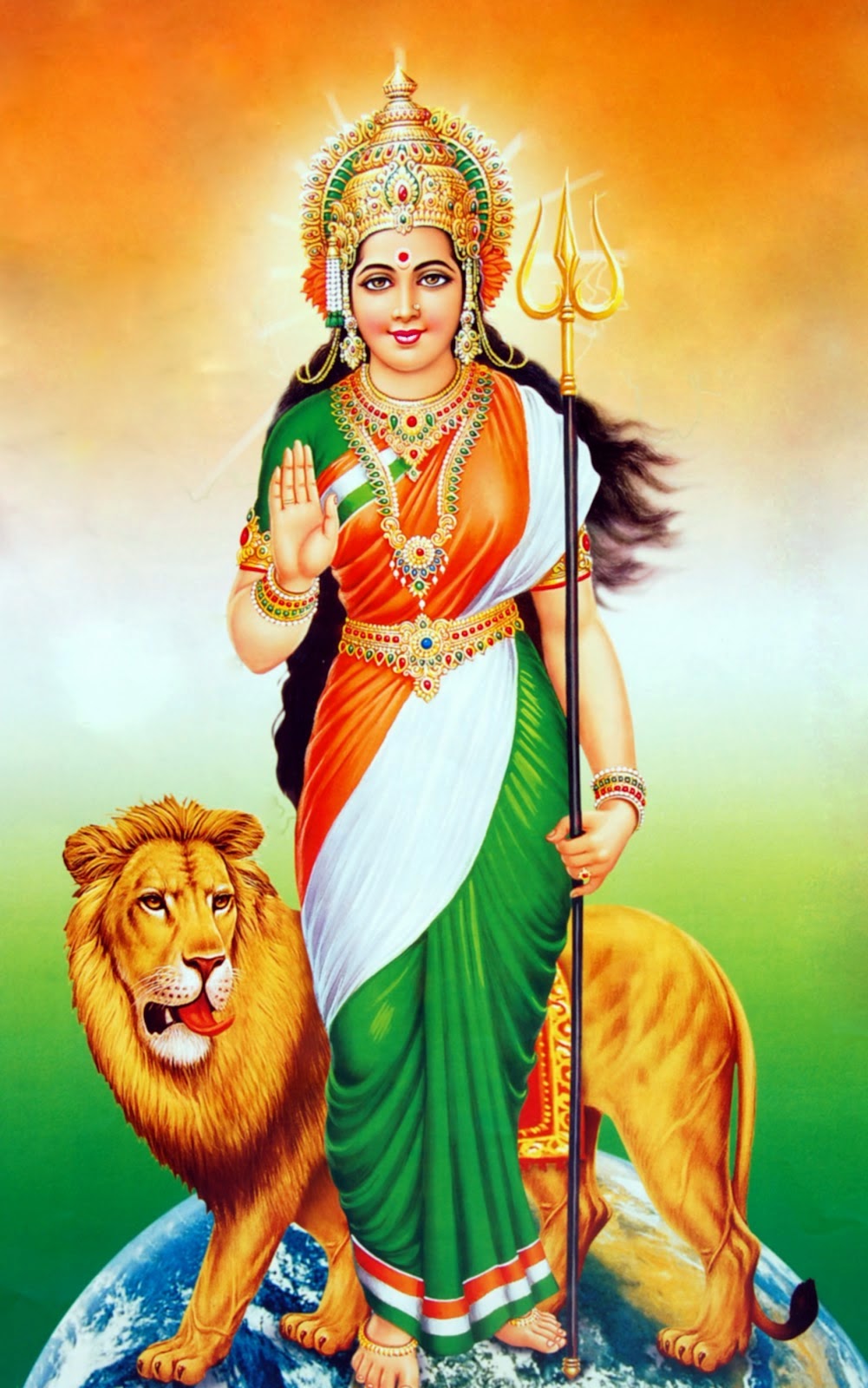
At the outset, the opposition to the attack on the university campus seems to have coalesced around two points—first, maintaining a safe distance from the “anti-India” slogans raised at the meeting; and second, showing themselves as the real nationalists, standing against the saffron thugs in patriot’s disguise. Partly in response to a vicious media campaign, videos of “real nationalist” speeches at the protest venue are being posted on social media everyday. We are told at length about the “real” Indian behind the deshdrohi, his credentials, and how he wants his India to be. Things reached a disturbing pitch when spokespersons of the traditional Left went on record to express their displeasure at the real culprits not being caught. Without doubt, the saffron brigade cannot be allowed the prerogative of deciding what “the nation” means. But why do so from the flimsy ramparts of sedition? Continue reading Sedition is a Shade of Grey or, Bharat Mata’s Smothering Embrace: Ankur Tamuliphukan and Gaurav Rajkhowa→
Muslims were equated to “demons” and “descendants of Ravana”, and warned of a “final battle”, as the Sangh Parivar held a condolence meeting here for VHP worker Arun Mahaur, who was killed last week allegedly by some Muslim youths. Among those present on the dais were Union Minister of State, HRD, and BJP Agra MP Ram Shankar Katheria as well as the BJP’s Fatehpur Sikri MP Babu Lal, apart from other party local leaders, who joined in the threats to Muslims. Speaker after speaker urged Hindus to “corner Muslims and destroy the demons (rakshas)”, while declaring that “all preparations” had been made to effect “badla (revenge)” before the 13th-day death rituals for Mahaur.
What does someone do in the winter of one’s own life when you discover that the values you cherished, the principles for which you fought for have suddenly lost their meaning and the world before you is turning upside down ?
Perhaps you express your anguish to your near and dear ones or write a letter about the deteriorating situation around you in your favourite newspaper or as a last resort appeal to the custodians of the constitution that how you are ‘forced to hang your head in shame’.
Perhaps this is the infection, the gangrene, that Justice Pratibha Rani fears: a slogan, chanted in the streets of Srinagar as a matter of routine, finds an opening at a university campus in New Delhi. Freed from the usual suspects, unmoored from the routine skirmishes, deaths, and encounters, along the Line of Control, the slogan floats through a university corridor – distracting rows of disciplined students from their academic pursuits.
A slogan’s explosive power, it seems, is not just about what is shouted – but rather where it appears, and who takes up the call. This realisation offers us an opportunity, long sought, to think through this troubling question of “Freedom of Expression.” Read the rest of this piece here
students who often raise anti-national slogans and stage protests. It will also help us in preventing clashes among students belonging to different ideologies – the Left, the far-Left and the ABVP.
Remember, dear citizens, the police were actually present at the event at JNU on February 9th. We will return to this point, but they don’t really need CCTV surveillance, they are physically present on JNU campus in civilian clothes, and with JNU ID.
This, also recollect, is the very same police force that stood by while a mob attacked JNU students and faculty and assaulted Kanhaiya at Patiala House; the same police who cannot arrest the man who publicly, with name and phone number, offered a reward for killing Kanhaiya – they “booked him for defacing property”, and will “analyse the poster carefully” before deciding whether other provisions of the IPC apply.
When all the evidence is available – the name, picture and phone number of a man who issues a death threat, he cannot be booked for anything more serious than the actual pasting of the poster on walls, because “the posters have to be analysed”.
Violence unfolds before their very eyes, and the Delhi Police cannot act.
These guys need CCTV surveillance?
This entirely compliant police force, now acting as the private army of the BJP, is concerned about preventing clashes in JNU, which has never ever had violent clashes, when it cannot carry out the normal functions of a police force anywhere else in the city.
So what will a CCTV system establish that the Delhi Police don’t already know?
आजकल दर रोज़ हमें बताया जा रहा है कि हम देश से प्रेम करें, राष्ट्र से भक्ति. बड़े परेशान हैं आज के शासक हमं जैसों की करतूतों से. जोश में आ कर कुछ भी बड़बड़ा देते हैं : कभी आज़ादी की बात करते हैं, कभी काशमीर की. कभी जातिवाद से छुटकारा चाहीए, तो कभी पूँजीवाद से. ऐसा लगता है हम न भक्ति जानते हैं, ना प्रेम. तो चलीए, भक्ति ओर प्यार, राष्ट्र ओर देश: इन चारों संज्ञाओं का विश्लेषण कीया जाए.
पहला प्रस्ताव: भक्ति में मिला हुआ है डर; प्यार के साथ चलती है रज़ामंदी.
प्यार मासूम नहीं होता. बच्चे प्यार ज़रूर करते हैं, पर प्यार बड़ों का खेल है. प्यार करना जोखिम भरा काम है दोस्त. ख़तरे की खाई है प्यार. क्योंकि डर लगता है कि जिससे हम प्यार करते हैं, वह हम से फ़क़त दोस्ती जताना चाहता है. “Let’s just be friends.”है इस वाक्य से बड़कर कोई अनर्थ? किसी नौजवान से पूछिए जिसने काँपते हाँथों से Valentine’s card दीया, ओर वापस मिला,”Thanks.” हँसी तो फँसी नहीं, हँसी तो भंग आशाओं की शिखंडी कलेजी में घुसी. पर होता है दोस्त. होता है. क़बूल करना पड़ता है. रो कर, हस कर, दोस्तों के साथ मदहोश शाम में पुरानी फ़िल्मों के गाने बेसुरी आवाज़ में रेंक कर, सुन कर, सुना कर. जब बैंड बजती है तो गाना गाओ दोस्त. गोली मार कर प्यार तो करवाया नहीं जा सकता. Continue reading क्या यही प्यार है? कहो, कहो ना…→
कन्हैया ‘देशद्रोही’ से देश का दुलारा बन गया है.कल तक जो उसकी जान लेने को आमादा थे, आज उसे अपने भविष्य का नेता मान रहे हैं.ऐसा क्यों हुआ और कैसे?
ऐसा हुआ तो इसलिए कि इस बार कन्हैया को ध्यान से, गौर से सुना जा सका है. पहले कन्हैया की आवाज़ नारों के शोर में दब गई थी.आज हम टेलीविज़न चैनलों की आपाधापी में,उनके शोर शराबे में कन्हैया को सिर्फ देख नहीं रहे, सुन रहे हैं,सुनने की कोशिश कर रहे हैं.
सुनना एक सचेत क्रिया है. ‘सुनो, सुनो’, आप फुसफुसाते हुए गाँधी को सुनते हैं, जब वे उत्तेजित भीड़ को शांत करने की कोशिश कर रहे होते हैं. सुनने के लिए पहले उत्तेजना का शमन आवश्यक है.उत्तेजित अवस्था में हम वह सुनते हैं, जो हमारे भीतर पहले से बज रहा होता है, हमारे अपने पूर्वग्रहों के कारण या कामनाओं के कारण. Continue reading सुनो, सुनो: सुनने में श्रम है→
Justice Pratibha Rani began her bail order on Kanhaiya Kumar with the patriotic song “Mere desh ki dharti”, an upbeat celebration of the beautiful land that yields gold and pearls. Her judgement was emotional about the soldiers who give their lives so that the rest of us can be safe.
Here is another sort of patriotic song from another Hindi film, which Justice Pratibha Rani might connect to. This haunting song about the futility of war also goes out to all those who say it is insulting to the armed forces to raise our voices against widespread militarization of the Indian subcontinent.
The refrain of the song is – “Ask the departing solider, where do you go?” It talks about death and destruction, of weeping women and hungry children. The poet is Makhdoom Mohiuddin (a communist and a Muslim – anti-national on two counts). Whose wars do these men fight?
Would we all be safer, including our soldiers, if the elites of neighbouring countries and a global military industrial complex did not have immense stakes in keeping tensions running high?
There has been a lot of talk about what exactly ‘Azadi’ (freedom) means, especially in the wake of Kanhaiya Kumar’s post release midnight speech at JNU on the 4th of March. So lets talk some more. No harm talking. If there is noise, there must also be a signal, somewhere.
Kanhaiya Kumar clarified in his electrifying, riveting speech that his evocation of Azadi was a call for freedom ‘in’ India, not a demand, or even an endorsement of a demand for freedom ‘from’ India.
This may come as a sigh of relief to some, – Kanhaiya , the man of the moment, proves his ‘good’ patriotic credentials, leading to an airing of the by now familiar ‘good nationalist vs. bad nationalist’ trope. And everyone on television loves a nationalist, some love a good nationalist even more.
[ P.S. : Since writing this last night, a more careful reading of the bail order has suggested to me that the actual terms of bail are not so bad after all. Bail is in fact granted, as far as I can see, fairly unconditionally. Kanhaiya is not asked, for instance, to step down from his position in the students’ union, nor are restrictions placed on his movement and activity. So in technically legal sense, the bail provisions need not be interpreted in a tightly restricted manner. The egregious political hortations, the references to infection, antibiotics, amputation and gangrene, which are over and above the legal instructions, are indeed terrible, but operationally, they have no executive authority backing them.]
But to say just that the text of the bail order is what shaped Kanhaiya’s midnight speech would be ungenerous, and miserly, especially in response to the palpably real passion that someone like Kanhaiya has for a better world, and for a better future for the country he lives and believes in. I have no doubt about the fact that coming as he does from the most moderate section of the Indian Left (the CPI – well known for their long term affection for the ‘national bourgeoisie’ despite the national bourgeouisie’s long term indifference/indulgence towards them), Kanhaiya is a genuine populist nationalist patriot [I have corrected ‘nationalist’ to ‘patriot’ here in response to the criticism and suggestion held out by Virat Mehta’s comment – see below in the comments section] and a democrat moulded as he says, equally by Bhagat Singh and Dr. Ambedkar. There is a lot to admire in that vision, even in partial disagreement. And while some may not necessarily share his nationalism, this does not mean that one has to treat it with contempt either. I certainly don’t.
Salute! Jai Bhim! Laal salam! We will win this war against sedition! March 3rd, International Sex Workers Rights Day, Zindabad!
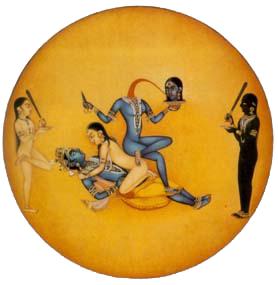
We write from the sex worker’s rights movement to hail your struggle and to add to the discourse you have sparked. We would like to discuss why using the term sex worker in the alleged pamphlet in JNU on Mahishasura Martydom Day is a concept fraught with the Whore Stigma. The use of the politically correct sex worker instead of the commonly used `prostitute’ does not take away from the fact that it is used to depict an insalubrious deed. The use of this term has only led to more misunderstandings of the term itself.
Sex worker is the term used by the sex worker’s rights movement in order to claim dignity to the work adults do consensually by providing sexual services for money. The sex workers use this term to give dignity to those that exchange sexual services for money but the use here is to supposedly strip the `goddess’ in this instance, of any dignity. The term since then has taken a life of its own. From a politically correct term it is now being used to describe anti-nationals, anti-goddesses even anti- patriarchy! But the thinly veiled contempt for the sex worker is huge in every utterance, from the Hindu Goddess Durga to the `anti-national’ women students in JNU.Continue reading Sex workers demand Azadi from ‘Goddess’ Durga: Veshya Anyay Mutki Parishad, Muskan and Sangram→
A petition, signed by 132 “academics” asking Rohan Murty and Narayan Murthy to dismiss Prof Sheldon Pollock from his role as Editor of the Murty Classical Library Series, is receiving attention that the signatories did not anticipate. I put the word “academics” in quotes because the commitment of the signatories to an academic evaluation of Sheldon Pollock’s intellectual leadership is nowhere in evidence, since a quotation from Pollock was changed mid-way through the signature campaign. Nor does it seem as if the signatories have ever held any one of the hot- pink, beautifully produced volumes in their hands, where as much attention has been paid to looks and fonts, as to the quality of translations.
Had they done so, they too would have appreciated the significance of this effort, in bringing to the wider reading public the oceans of literary texts and traditions, in a mind-boggling array of languages, from a period covering two and a half millenia. The individual translators and editors are among the best in the field. Thanks to this series, so many more Indians and others will learn of the sheer beauty and anguish of Punna, a Therigatha poet (translated from Pali, 3rd century BCE). People of the south will hear the voice of Bulle Shah, translated from Punjabi, and those from other parts of India will read Allasani Peddanna, translated from Telugu. True we will miss the mellifluous chanting, or the energetic sounds of performance: for now, we will have to make do with the books on hand. Continue reading A historian’s response to the petition against Sheldon Pollock: Janaki Nair→
It seems that an undeclared state of emergency is sought to be imposed upon us: a series of seemingly unconnected events across the country, in universities (most recently in Hyderabad and Delhi), factory premises and court halls, our streets and over large parts of the countryside, bear this out. We would like to draw wider attention, in particular, to recent disturbing developments in Jagdalpur, Bastar, that have been somewhat overshadowed by events in the Jawaharlal Nehru University, New Delhi.
In Delhi as in Bastar, the state is using its coercive power to stifle dissent and lock up dissenters by labelling them anti-national or, in the case of Bastar, Maoists. In Chhattisgarh, it has long been standard practice to label anybody with an opinion of development contrary to the mainstream view (of development as corporate welfare and environmental destruction) as a Maoist. This is usually a prelude to police action ranging from harassment and intimidation to arrest, torture, and even death. The adivasi inhabitants of Bastar have not enjoyed the rule of law since 2005, when the Salwa Judum, a vigilante paramilitary group, was formed in the name of combating Maoism. Nor does the law offer much protection to ordinary people elsewhere seeking to exercise their constitutional rights as law enforcement agencies and governments trample upon civil liberties in the name of nationalism.
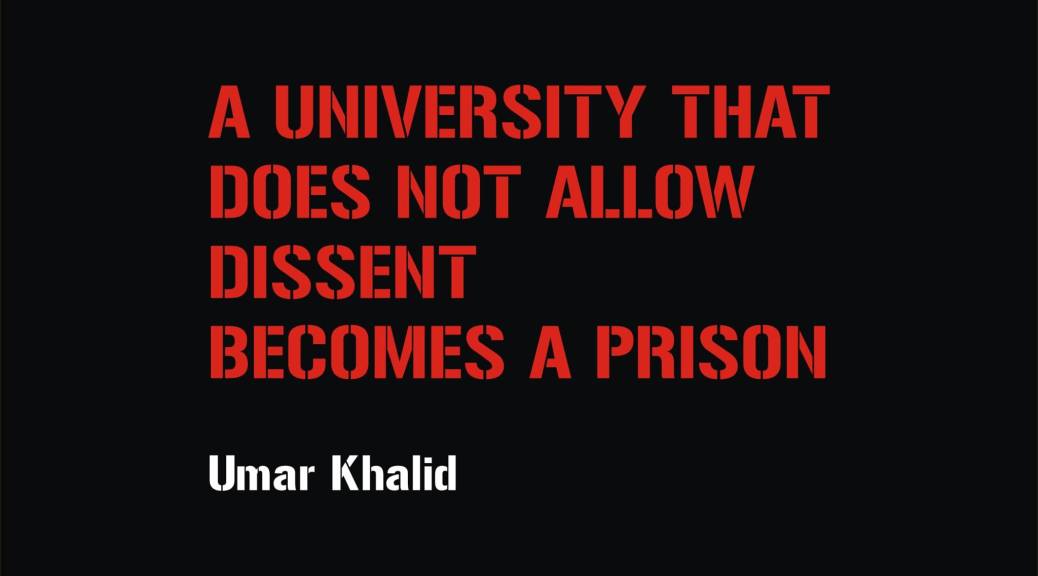
For the third time within a span of two weeks since the middle of February, thousands of people came out on the streets of Delhi to express their solidarity with the detained students of JNU (Kanhaiya Kumar, Umar Khalid and Anirban) and to voice their anger with the venal Modi regime.
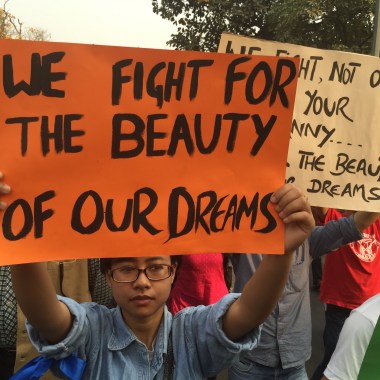
Protest demonstrations (at least in northern India) tend to have something of the monotonous in them, the same cadence, the same rhythm and the same wailing, complaining tone. They tend to have an air of events staged by the defeated, for the defeated. But if we take the last three big protests in the city, and the many gatherings in JNU in the last two weeks or so, as any indicator of what the pulse of our time is, we will have to agree that there has been a qualitative transformation in the language, vocabulary and affect of protests. This afternoon, like the afternoon of the 18th (the first big JNU solidarity march), and of the 23rd of February (the Justice for Rohith Vemula March), was as much about the joy of togetherness and friendship as it was about rage and anger.
Submission by Concerned Teachers and Academics before the Roopanwal Judicial Commission at Hyderabad
(The Roopanwal Commission came to Hyderabad on 23-25th February to enquire into the facts and circumstances leading to the suicide of Dalit research scholar Rohith Vemula. The mandate of the Commission was to review the functioning of existing grievance redressal mechanisms in the university. Concerned with the absence of in-house redressal mechanisms for marginalized students, a joint submission was made by 88 concerned teachers drawn from the state and central universities in Hyderabad. The Submission sought for a rigorous implementation of the 2012 UGC Regulation as well as the setting up a Special Commission to review the major punishments passed by Universities in the case of marginalized students.)
The suicide of Dalit research scholar Rohith Vemula in Hyderabad Central University has brought to the fore the issue of caste discrimination in higher educational institutions. We believe that the suicide is only the tip of the iceberg of many problems that students from Dalit and other marginalized groups are experiencing. University administrations have generally attributed these deaths to personal psychology instead of initiating broad systemic and attitudinal reforms to prevent such suicides.
In 2012, in the wake of series of suicides by marginalized students in higher educational institutions, the University Grants Commission formulated two Regulations to ensure social equity and set in place grievance redressal mechanisms. In 2013, Andhra Pradesh High Court took suomoto notice of the student suicides in Andhra Pradesh in PIL No 106/2013 and issued several directives to the Universities to prevent the recurrence of suicides. However, neither the UGC Regulations of 2012 nor the Court directives have been implemented by the Universities. Continue reading Submission Before Inquiry Commission by Concerned Teachers and Scientists, Univ of Hyderabad→
Guest post by SIDDHARTH PETER DE SOUZA and SABA SHARMA
In a world where breaking news cycles drive our imagination and interaction with events and incidents around us, it often becomes difficult to not to have a fragmented idea of trends because they evolve and develop so rapidly. Does this volume of information necessarily imply that we become unable to view similar types of stories because they are portrayed as isolated, anomalous and disconnected? Is this also because it is much more comfortable to forget, rather than remember and reflect on an accumulation of incidents that maybe unpleasant, inglorious and inconvenient. Amartya Sen recently stated that “The problem is not that Indians have turned intolerant. In fact to the contrary we have been much too tolerant of intolerance”. Is our numbness because we are overwhelmed by these incidents or because we perceive them to be isolated without an underlying systemic pattern?
Intolerance Tracker is a visual story telling and crowd-mapping platform that seeks to engage with some of these issues. The idea of using a map is because it provides a compelling medium through which information can be consolidated, and presented across temporal and spatial boundaries.
It aims to utilize the power of the community to identify, report and map instances of intolerance across South Asia, and organically create and curate a visual storytelling database. This initiative is primarily led by students at the University of Cambridge, and has been set up on an entirely voluntary basis by people who are passionate and committed to the cause of documenting intolerance across the region. Continue reading Intolerance Tracker – A Community Curated Visual Storytelling Platform: Siddharth Peter de Souza and Saba Sharma→
Kafila posted a set of solidarity statements recently in support of the students, faculty and autonomy of JNU. We are posting another set, received from the following organisations:
First-Decade JNU Graduates and Other Graduates – 548 signatories.
Faculty, Staff and Students at the Indian Institute of Management, Bangalore.
California Students and Faculty. California, U.S.
Current Fellows of the Jawaharlal Nehru Institute of Advanced Study, JNU, Delhi.
Colorado College, Colorado, U.S.
Faculty at DePaul University, Chicago, U.S.
Faculty, Students and Staff, Brown University, Rhode Island School of Design (RISD) and University of Rhode Island, Providence, U.S.
McGill and Concordia Universities, Canada.
Canadian Academics from Various Universities.
Please click on Read More below for the statements and signatories:





 KAFILA - COLLECTIVE EXPLORATIONS SINCE 2006