Tag Archives: Bangladesh

Beyond ‘Islamists vs Awami League’ – The Political Reality of July Uprising of Bangladesh: Sohul Ahmed

Guest post by SOHUL AHMED

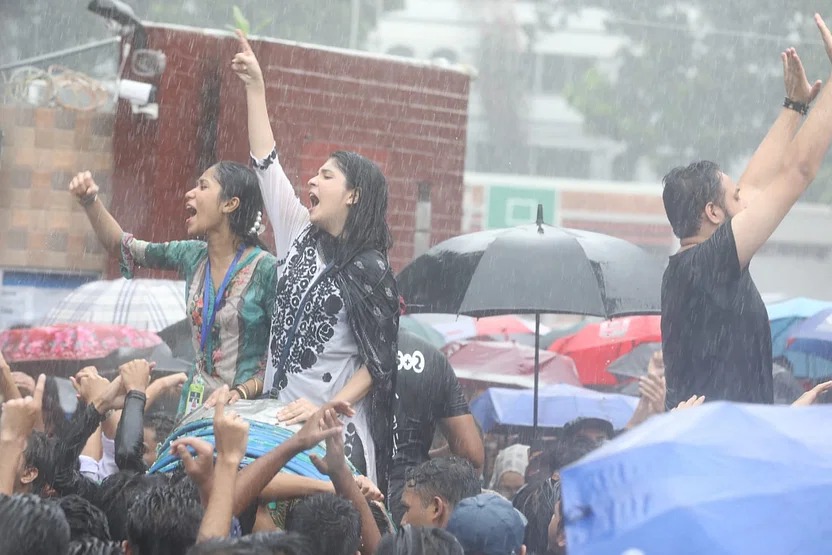
Students protesting in Uttara, Dhaka, August 2, 2024. Photo: Ashraful Alam

Sheikh Hasina, often labelled as fascist and autocratic leader in Bangladesh, was forced to flee the country following a popular uprising in July-August 2024. Many writings have appeared exploring the character of the movement and the consequent developments. Recently, renowned Indian historian and journalist Vijay Prashad published an article titled ‘Will Bangladesh be another Egypt?’, where he expressed the concern that Bangladesh could follow a path similar to Egypt’s. Vijay presents the  popular uprisings as both a continuation and, to some extent, a counter-response to the Shahbagh movement, while drawing parallels to the Arab Spring. However, his disregard for certain political realities in Bangladesh—such as the country’s long tradition of democratic movements and the presence of major centrist parties like the BNP—makes his comparison uneven and incomplete in some respects.

Continue reading Beyond ‘Islamists vs Awami League’ – The Political Reality of July Uprising of Bangladesh: Sohul Ahmed

A Misguided Narrative – A Response to the Lemkin Institute’s Statement on Bangladesh: Sohul Ahmed

Guest post by SOHUL AHMED

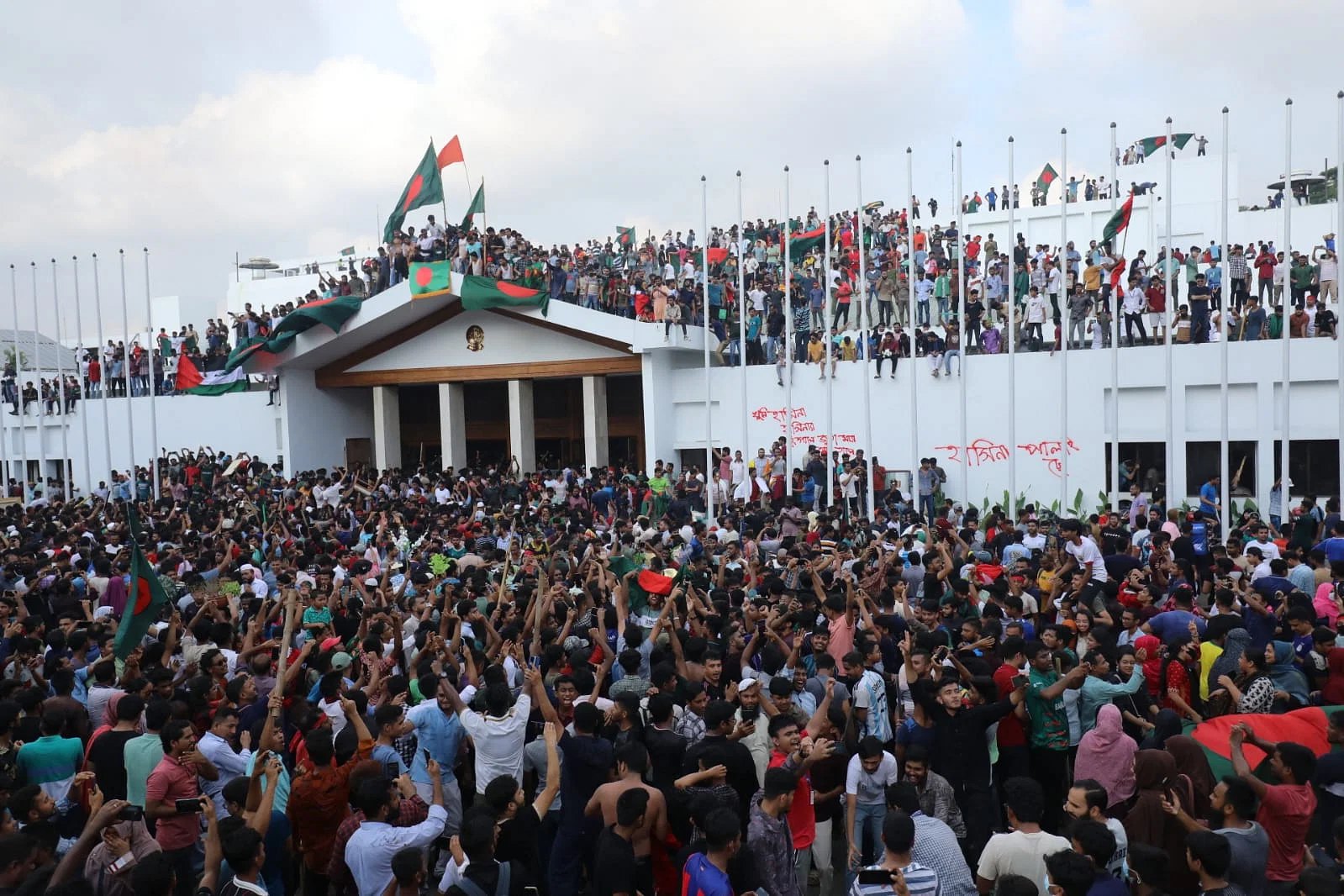
Crowds outside the prime minister’s office during the Uprising. Photograph by Dipu Malakar, courtesy Prothom Alo

The statement issued on 24 September 2024 by the Lemkin Institute for Genocide Prevention titled ‘Statement on Threats to Democracy in Bangladesh’[1] has drawn our attention not only due to misrepresentation of facts but also because it aligns more with the narrative of the ousted autocratic regime led by Sheikh Hasina and her party Awami League than with the aspirations of the people of Bangladesh. The statement has failed to capture the complexities of the situation in Bangladesh and thereby presents a misguided narrative about the uprising and its aftermath. Under the circumstances we feel obligated to respond to set the record straight and point out the inaccuracies in the statement.

Continue reading A Misguided Narrative – A Response to the Lemkin Institute’s Statement on Bangladesh: Sohul Ahmed

In Defense of the Bangladeshi Students’ Uprising


One of the innumerable anti-quota protests across Bangladesh, image courtesy Pressenza – International Press Agency

This post is dedicated to the innumerable young students of Bangladesh who have lost their lives in the last few days of struggle. This wasn’t supposed to be our first post on the Bangladesh students’ struggle because our friend Sarwar Tusher, one among the group of dynamic young critical intellectuals associated with the journal Rashtrochinta, was supposed to write a first hand analytical account. Meanwhile, from Thursday night (18 July) the Sheikh Hasina government enforced a total internet shutdown as the Army moved in to quell the protests. Tanks had already been seen moving in some streets and the protesters were expecting an exponential increase in state violence. Another Tienanmen Square seemed to be in the offing.

Continue reading In Defense of the Bangladeshi Students’ Uprising

Aggressors Claim Hurt Sentiments While Victims Face Trial

History is a thin excuse for unrelenting majoritarianism in India and its neighbourhood

Recently, a senior advocate in Karachi was charged with blasphemy after another fellow lawyer complained about his having affixed ‘Syed’ to his name in an affidavit. This, supposedly, hurt the lawyer’s religious sentiments. The case is just one instance of the tremendous persecution the Ahmadiyya minority in Pakistan has faced since the eighties when the Benazir Bhutto regime declared it non-Muslim. Ever since, no Ahmadiyya can use Islamic symbols or names, such as Syed. Their persecution began with the notion that Islam has no space for another prophet, as the followers of Mirza Qadiani, founder of the sect, believed he was. That declaration brought the community into the spotlight of Pakistan’s blasphemy law, and their exclusion has continually expanded—from being denied space in public life, education, and employment, now they are even proceeded against for using certain names or titles.

The situation in India is sometimes no different. ( Read the complete article here)

Talking Faiz: ‘In This Hour of Madness’

( Note : To be published in the Annual Number of ‘Mainstream’)

In this conversation academician, writer and social activist Zaheer Ali talks about his latest book ‘Romancing With Revolution : Life and Works of Faiz Ahmed Faiz’ (Aakar Books, Delhi, 2019) and why Faiz is ‘ extremely relevant in today’s India’

This is the hour of madness, this too the hour of chain and noose You may hold the cage in your control, but you don’t command The bright season when a flower blooms in the garden. So, what if we didn’t see it? For others after us will see The garden’s brightness, will hear the nightingale sing

(This Hour of Chain and Noose (Faiz, Tauq o dar ka Mausam, 1951)

Continue reading Talking Faiz: ‘In This Hour of Madness’

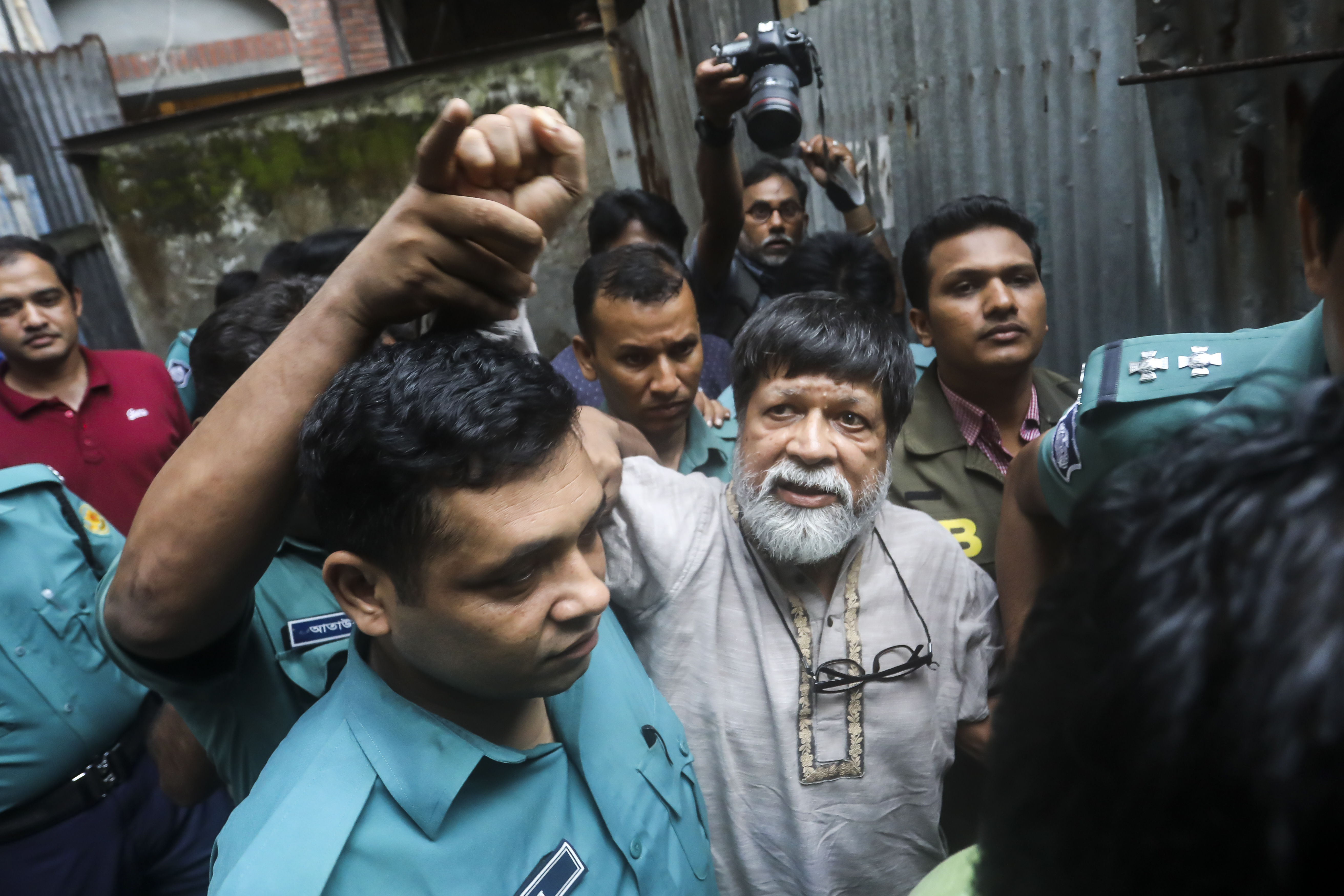
100th day of Shahidul Alam’s Detention – Eminent South Asians Write to Bangladesh Prime Minister

Today, it is 100 days of the detention of acclaimed photographer and cultural activist Shahidul Alam. On this occasion, Arundhati Roy, Aparna Sen, Vikram Seth, Romila Thapar, Amitav Ghosh, Shabhana Azmi, Buddhadeb Dasgupta, Nandita Das, Mohammad Hanif, Anish Kapoor among other eminent persons from across South Asia have written a letter to Bangladesh Prime Minister Sheikh Hasina Wazed demanding his immediate release.  on the 100th day of his detention.
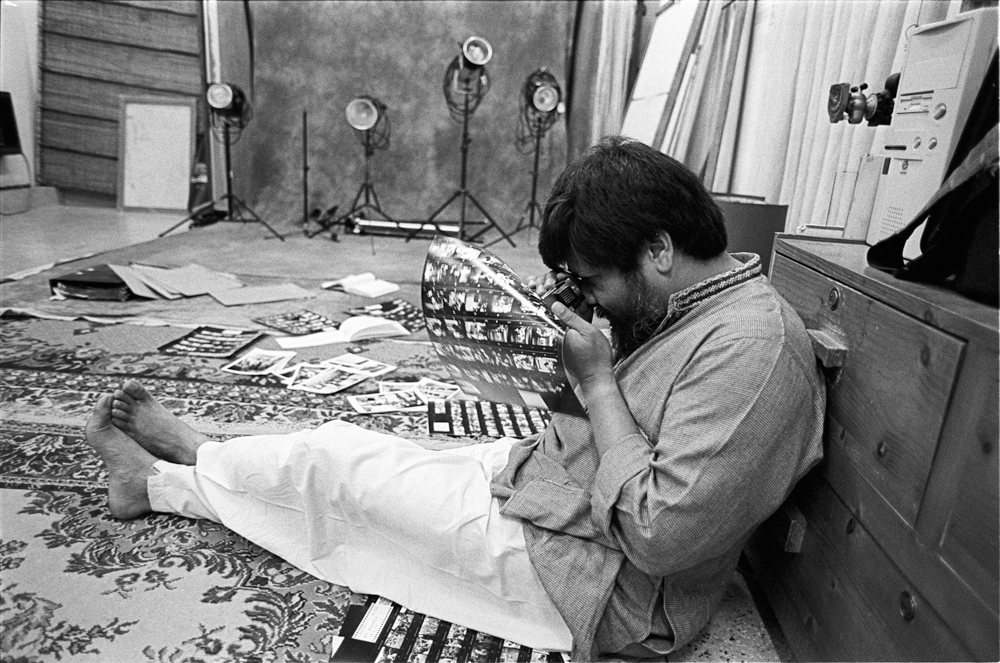
Shahidul 3

H.E. Sheikh Hasina Wazed
Prime Minister of Bangladesh
Prime Minister’s Office
Dhaka, Bangladesh
13 November 2018

Subject: Appeal for release of Shahidul Alam on 100th day in custody

Your Excellency:
As well-wishers of Bangladesh and supporters of its 166 million citizens’ struggle for dignity, social justice and prosperity, we are distressed by the continued imprisonment of photographer and cultural activist Shahidul Alam. Since the founding of the nation in 1971, the people of Bangladesh have led by example, fighting poverty, ending social injustices and being standard-bearers of participatory development. This advance has been made possible by the democratic spirit of the people, who have challenged military rulers and autocrats alike. As well-wishers of Bangladesh, we fear that these gains are in danger due to the rising political intolerance and denial of fundamental freedoms.

Shahidul Alam is a Bangladeshi citizen, but the rest of us in South Asia are also proud to call him our own, for the values of truth, justice and social equality he promotes. His work and activism are respected all over our region and beyond, with innumerable friends who admire his concern for the voiceless and marginalised. One example is his latest work highlighting the tragedy of the Rohingya people, who have been given refuge in Bangladesh by your Government.

Since Shahidul Alam was forcefully taken from his home on the 5th of August, he was remanded first in Detective Branch custody for seven days and, then held at Dhaka Central Jail at Keraniganj. He is accused of ‘hurting the image of the nation’ while reporting on protests by young students demanding road safety.
It is clear to us that the case of Shahidul Alam is being used as a means to suppress criticism by others in civil society. His arrest and continued detention appear to be manifestation of an intolerant political atmosphere, an attempt to threaten and silence the voice of Bangladeshi citizens. With the country preparing for general elections, this is a time when there should be more space for debate and discussion, not less.

As believers in the rule of law, we are shocked to learn that government lawyers continue to oppose Shahidul Alam’s release on bail using various stratagems and delays intended to deprive him of his fundamental rights to liberty and due process. Across South Asia, politicians and citizens have fought for the right to speak, and to write, and it is astonishing to us that a government today, especially one which seeks to harness technology for progress, should choose to use a law to proscribe online speech to jail a citizen.

Prime Minister,

We the undersigned urge you to ensure the release of Shahidul Alam on this, the 100​th​ day of his detention. We look forward to Bangladesh retaining its place as an exemplar of
participatory democracy in South Asia.

Sincerely,
1. Akram Khan, London
2. Amar Kanwar, New Delhi
3. Amitav Ghosh, Goa
4. Anish Kapoor, London
5. Aparna Sen, Kolkata
6. Arundhati Roy, New Delhi
7. Ashok Vajpeyi, New Delhi
8. Buddhadeb Dasgupta, Kolkata
9. Dayanita Singh, New Delhi
10. Ina Puri, Kolkata
11. Jayadeva Uyangoda, Colombo
12. Kanak Mani Dixit, Kathmandu
13. Laila Tyabji, New Delhi;
14. Manjushree Thapa, Toronto
15. Mohammed Hanif, Karachi
16. Moushumi Bhowmik, Kolkata
17. Nandita Das, Kolkata
18. Nimalka Fernando, Colombo
19. Patricia Mukhim, Shillong
20. Pooja Sood, New Delhi
21. Rachana Singh, New Delhi
22. Raghu Rai, New Delhi
23. Rajdeep Sardesai, New Delhi
24. Ramchandra Guha, Bangalore
25. Romila Thapar, New Delhi
26. Salima Hashmi, Lahore
27. Sanjay Kak, New Delhi
28. Sanjoy Hazarika, Shillong
29. Sankha Ghosh, Kolkata
30. Shabana Azmi, Mumbai
31. Sushila Karki, Kathmandu
32. Vijay Prashad, New Delhi
33. Vikram Seth, New Delhi
34. Vrinda Grover, New Delhi

Tough Girls in a Rough Game: Normalizing public discussion of ‘She things’ in Bangladesh — Nazia Hussein

Guest post by NAZIA HUSSEIN

On 28- 29 May, 2015 the play titled It’s a She Thing was first staged in Dhaka, Bangladesh. Inspired by Eve Ensler’s Vagina Monologues, eleven young Bangladeshi women decided to develop a local adaptation with their own accounts of sexual, aesthetic, psychological and emotional experiences of being a woman. Many of the stories were written by the performers themselves while some were taken from Naripokkho, a nationwide women’s advocacy organization. Continue reading Tough Girls in a Rough Game: Normalizing public discussion of ‘She things’ in Bangladesh — Nazia Hussein

And then they came for Oyasiqur Rahman Babu !

Courtesy : m.bangladeshtime.com

….It is not the young who are writing obituaries for the old,…I have seen the blood shed by so many young people steadily mounting up until now I am submerged and cannot breathe. All I can do is take up my pen and write a few articles, as if to make a small hole in the mud through which I can draw a few more wretched breaths. What sort of world is this ? The night is so long, the way so long….

( Lu Xun, Written for the Sake of Forgetting, P 234, Selected Works of Lu Xun, Vol III, Beijing)

Md Oyasiqur Rahman Babu , aged 27 years is dead. A travel agency executive by profession and a secular blogger by passion he was killed by radical Islamists in Tejgaon, Dhaka when he was going to office in Motijheel. The three assailants – who did not personally know each other – met just for planning the murder and then executed it with military precision.

Thanks to the courage exhibited by trans genders living nearby who caught hold of these murderers while the locals who watched the act before their eyes just dithered to move. Zikrullah, a student of Hefazat-e-Islam’s Hathazari Madrasa in Chittagong, and Ariful, student of Mirpur Darul Uloom Madrasa – were caught while the third member of the team, Abu Taher of Mirpur Darul Uloom, managed to flee the spot. The arrestees said they had killed Oyasiqur for writing on religious issues. It is a different matter that none of them had read his blog, they even did not know what blogging is, they  just executed the order issued by some mastermind. Continue reading And then they came for Oyasiqur Rahman Babu !

That Elusive Thing with Feathers – After the Killing of Avijit Roy: Abdul Bari

Guest Post by ABDUL BARI

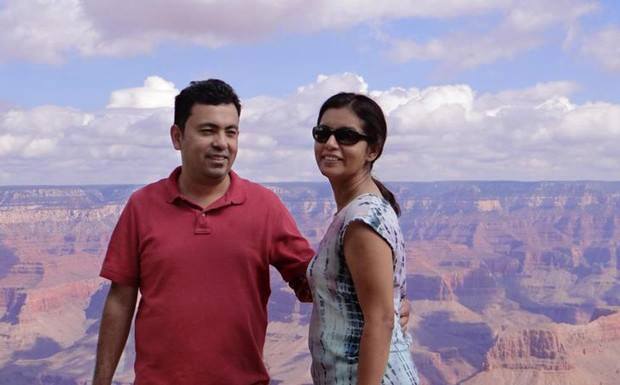
Avijit Roy was brutally murdered in Dhaka a few days ago. His wife, after heroically trying to shield his person with her own body, now lies in an ICU bed, fighting for her life.  I was an infrequent visitor to his website, Muktomona. Visiting it was like running your tongue over that tooth you’re missing, or reflexively checking whether you had your keys with you in the morning. Its presence was a reminder that, no matter how circumscribed, the nation-state of Bangladesh still had men and women who liked to think unconventional thoughts; give expression to unpopular ideas; endeavored to stand, as it is, in the very edge of what the societal limit of what could be expressed, and then take another firm step, not back, but forward. Continue reading That Elusive Thing with Feathers – After the Killing of Avijit Roy: Abdul Bari

Statement on David Bergman Case in Bangladesh: Concerned South Asian Journalists and Others

Guest Post. Statement by Concerned South Asian Journalists, Writers, Historians and Activists

We, the undersigned journalists, writers, historians and activists from South Asia,  are deeply concerned about the use of ‘contempt of court’ law to curb freedom of expression. The conviction and sentencing on December 2, 2014, of Dhaka-based journalist David Bergman by the International Crimes Tribunal 2 on charges of “contempt of court” for citing published research on killings during the Bangladesh Liberation War of 1971, is a serious set-back to Bangladesh’s commitment to free speech and independent scholarship.

At the outset, we reiterate our belief that those responsible for genocide and international crimes during the Liberation War must be prosecuted and punished through an open and transparent process.

Continue reading Statement on David Bergman Case in Bangladesh: Concerned South Asian Journalists and Others

Ghulam Azam : Death of a War Criminal

Wily strategists meet their nemesis in unexpected ways.

Ghulam Azam, the once all powerful leader of Jamaat-e-Islami Bangladesh, who died recently, might have brooded over this old dictum, in his last days in detention. It was only last year that he was sentenced to 90 years of imprisonment for his crimes against humanity which he committed when people of the then East Pakistan – todays Bangladesh – had risen up against the occupation army of Pakistan in the year 1971.

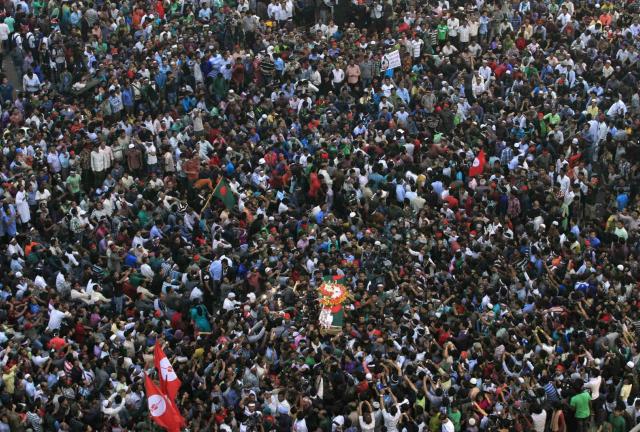
It was not surprising that the funeral of this man who evoked intense hatred and loathing from a large cross-section of the population of B’desh for his role during and after the liberation of the country witnessed protest demonstrations all over the country. There were even demands that his body be sent to Pakistan for final rites and should not be buried here.

“The janaza (funeral prayer) of a war criminal can never be held at the national mosque,”

Ziaul Hasan, chairman of Bangladesh Sommilito Islami Jote, an alliance of progressive Islamic parties, said at a human chain near the Baitul Mukarram National Mosque where Azam’s body was taken for funeral prayers. (The Telegraph, 27 th Oct 2014). Continue reading Ghulam Azam : Death of a War Criminal

A tale of two passports, the year 1979, and walking to India: Fawzia Naqvi

Guest Post by Fawzia Naqvi

For the first time Pakistan’s elected President has completed his full five-year term and has willingly stepped down to transfer power to another elected President, a herculean achievement for a country with chronic dictatoritus.  The people of Pakistan must be congratulated for ensuring that democracy becomes an enduring grace and not just a good idea in some unforeseeable future.  So while there is earsplitting cacophony of debate and disagreement on virtually all issues, there is near unanimous political consensus that the army should remain in the barracks and that there should be peace with India. The time is now. And Pakistanis have accomplished this in an era when Pakistan is suffering its worst hellish nightmare of daily bombings and killings by terrorists, and a loss of over 40,000 of its own citizens in the last decade or so.  Pakistan teeters on the precipice of a very dark abyss, and has been inching ever closer to this dangerous edge for the last 34 years if not more. The first disturbing sign which I can remember was when the state institutionalized bigotry by officially declaring the Ahmadi community non-Muslim in 1974, opening up a hornets nest of discrimination, violence and unequal citizenship.  A tragic disaster, and fatal capitulation to right wing elements, by Prime Minister Zulfikar Ali Bhutto. No one is really safe in today’s Pakistan but clearly those less safe, those hunted and killed are the Shias, the Christians, the Ahmadis and the Hindus. Those doing the killings have given insidiousness to the meaning of “the land of the pure.”

Continue reading A tale of two passports, the year 1979, and walking to India: Fawzia Naqvi

Hefazat-e-Jamaat, Nothing Else : On the Recent Developments in Bangladesh

Image


Talibaner aar ek naam – hefazat-e-Islam!” (Another name for Taliban, Hefazat-e-Islam)               

– Slogan raised at Shahbagh square


To such a degree has Religion fuelled conflict, complicated politics, retarded social development and impaired human relations across the world, that one is often tempted to propose that Religion is innately an enemy of Humanity, if not indeed of itself a crime against Humanity. Certainly it cannot be denied that Religion has proved again and again a spur, a motivator and a justification for the commission of some of the most horrifying crimes against Humanity, despite its fervent affirmations of peace. Let us, however, steer away from hyperbolic propositions and simply settle for this moderating moral imperative: that it is time that the world adopted a position that refuses to countenance Religion as an acceptable justification for, excuse or extenuation of – crimes against Humanity.

(Wole Soyinka, Source: http://www.granta.com/New-Writing/Religion-Against-Humanity)

I

The above quote was part of a long intervention made by Wole Soyinka, Nigerian writer, recipient of the 1986 Nobel Prize in Literature, and the first one from Africa, as part of UNESCO International High Panel, in a Conference on the Culture of Peace and Non-Violence.(21 September 2012) . The immediate context for Soyinka’s speech – was the desecration and destruction of centuries old tombs of Muslim saints in Timbuktu, Mali by radical Islamist group Ansar-al Dime which had ‘discovered’ them to be unIslamic. There were rumours  that the ‘invaluable library-treasures of Timbuktu may be next.’ on their agenda. Cautioning people about the fact that “[t]he science-fiction archetype of the mad scientist who craves to dominate the world has been replaced by the mad cleric who can only conceive of the world in his own image, proudly flaunting Bond’s 007 credentials – License to Kill.” he urged leaders to “..[u]nderstand this, and admit that no nation has any lack of its own dangerous loonies, be they known as Ansar-Dine of Mali, or Terry Jones of Florida, the earlier they will turn their attention to real issues truly deserving human priority. “

One was reminded of Soyinka’s words when one was witness to the march organised by the newly emergent group Hefazat-e-Islam ( can be loosely translated as ‘Defenders of Islam’) on the streets of Dhaka, capital of Bangladesh and the consequent mayhem that followed.  Continue reading Hefazat-e-Jamaat, Nothing Else : On the Recent Developments in Bangladesh

Savar Tragedy: Solution in Solidarity: Navine Murshid

This is a guest post by Navine Murshid The grief surrounding the collapse is unimaginable with more than 500 dead and hudrends still missing. It is clear that the accident was a culmination of the alignment of corruption, greed, inefficiency, and a bid to cut costs, at every level from acquiring lands through illegal means, using sub-standard materials for construction, and forcing workers to work despite life-threatening risks, to foreign buyers who show little regard for human life. It is clear too that the wealthy elite with political connections have capitalized on the textile industry by exploiting the poor; it reveals the evils of capitalism where the bid to minimize costs have led to the complete disregard for human lives, perpetuating the “race to the bottom.”

Thousands of RMG workers have gone on strike and taken to the streets to demand justice for what has happened and to demand changes in working conditions. Many have demonstrated in front of the BGMEA office. On the occasion of May Day, different groups came forward to support the working  class’ struggle for a work environment that is safe and well-equipped for emergency situations and a justice system that actually does them justice. Indeed, such support and solidarity with workers can end these “murders.”

The relevance of Shahbag

Shahbag’s main contribution to the political culture in Bangladesh, arguably, has been to empower people, particularly urban youth, to speak up and realize that even ordinary people can make a difference when they unite; that they do not need political patronage to voice their demands and dissatisfaction. The outpouring of support in the wake of the Savar disaster can be attributed to the understanding of “taking back the nation” that Shahbag had instilled in people to encourage them to be active citizens instead of waiting for the state to take action.

The Savar disaster reveals some key points of convergence between the interests of Shahbag activists and the working classes.

Continue reading Savar Tragedy: Solution in Solidarity: Navine Murshid

बंगलादेशी जनउभार और भारत की मुर्दाशान्ति: किशोर झा

Kishore Jha is a development professional and is working in the field of children’s rights for the last two decades. This piece was originally published on the NSI blog.

सन २०११ में भ्रष्टाचार के खिलाफ अन्ना आन्दोलन में उमड़े हजारों लोगों की तस्वीरें आज भी ज़ेहन में ताज़ा है। उन तस्वीरों को टी वी और अख़बारों में इतनी बार देखा था कि चाहें तो भी नहीं भुला सकते। लोग अपने-अपने घरों से निकल कर अन्ना के समर्थन में इक्कठे हो रहे थे और गली मोहल्लों में लोग भ्रष्टाचार के खिलाफ नारे लगा रहे थे। इंडिया गेट से अख़बारों और न्यूज़ चैनलों तक पहुँचते पहुँचते सैकडों समर्थकों की ये तादात हजारों और हजारों की संख्या लाखों में पहुँच जाती थी। तमाम समाचार पत्र इसे दूसरे स्वतंत्रता आन्दोलन की संज्ञा दे रहे थे और टी वी देखने वालों को लग रहा था कि हिंदुस्तान किसी बड़े बदलाव की दहलीज़ पर खड़ा है और जल्द ही सूरत बदलने वाली है। घरों में सोयी आवाम अचानक जाग गयी थी और राजनीति को अछूत समझने वाला मध्यम वर्ग राजनैतिक रणनीति का ताना बाना बुन रहा था। यहाँ मैं आंदोलन के राजनितिक चरित्र की बात नहीं कर रहा बल्कि ये याद करने की कोशिश कर रहा हूँ कि उस आंदोलन को उसके चरम तक पहुचाने वाला मीडिया अपने पड़ोस बांग्लादेश में उठ रहे जन सैलाब के जानिब इतना उदासीन क्यों है और कुछ ही महीने पहले बढ़ी आवाम की राजनैतिक चेतना आज कहाँ है? Continue reading बंगलादेशी जनउभार और भारत की मुर्दाशान्ति: किशोर झा

In Delhi for Dhaka: A solidarity vigil for Shahbagh

The New Socialist Initiative (NSI), Jamia Teachers’ Solidarity Association (JTSA), Nishant, Anhad, Krantikari Lok Adhikar Sangathan and the Stree Mukti Sangathan have put out this statement in advance of the demonstration tomorrow (9 April) 2 pm before the Bangladesh High Commission in Delhi.

The neighbouring country of Bangladesh is going through a new churning. Hundreds and thousands of people have hit the streets of Dhaka, demanding strict punitive action against ‘war criminals’ and their organisations, who forty-two years ago—at the time of the liberation struggle/war of the then East Pakistan (now Bangladesh)—colluded with the Pakistan army and committed untold acts of atrocities on the general public.

Basically, there are two main demands of the protesters: war criminals should be strictly punished and organisations like the Jamat-e-Islami, Bangladesh, should be banned and all commercial and other kinds of establishments run by it should be proscribed. Continue reading In Delhi for Dhaka: A solidarity vigil for Shahbagh

What a time to be in Dhaka! Kalyani Menon-Sen

This is a guest post by KALYANI MENON-SEN

I am in Dhaka right now.

Being here at this moment, in Shahbagh (Projonmo Chottor, as it is now called) and on the streets with activists from the Gonojagoron Mancha – young people, academics, veterans of the liberation movement, singers, artists, writers, professionals and thousands of ordinary people – is a unique and inspiring experience.

Battle for the soul of Bangladesh – Rally in February against the killing of Rajab Haider, the blogger who was a key figure in the protests against Islamists

The similarities and differences with the Delhi mobilisation are striking. Continue reading What a time to be in Dhaka! Kalyani Menon-Sen

Muslim Right: Baring Its True Fangs!

Image

Any death is regrettable and those who died due to police fire may also come under this category. What is interesting is Jamaat’s modus operandi. The lone survivor of 14 December mass murder of intellectuals described in a recent TV documentary how Al Badr killed Prof Munier Chowdhury and others. Some were bitten with iron bars to death and at the final point; they would insert such bars into the head of their victims to ensure death. Jamaat-Shibir reportedly did exactly the same couple of weeks ago when they killed some police constables and others. It shows Jamaat-Shibir’s Standard Operating Procedure has remained unchanged for the last four decades…

(Rabiul H. Zaki, 1952, 1971, the genocide and Shahbagh)

“The Pakistani soldiers unleashed a reign of terror on the soil of Bangladesh in 1971. They brutally killed innocent people, molested Bengali women and ruined the economy. The Jamaat leaders, Ghulam Azam and Matiur Rahman Nizami, issued the fatwa that those activities were permissible to save Islam” (Dr Mohammed Hannan, Page 252, Bangladeshe Fatwar Itihas, 1999).

 I

What is common between Syed Md Nurur Rahman Barkati, Shahi Imam of Tipu Sultan Masjid, Kolkatta and Maulana Syed Athar Abbas Rizvi, imam, Cossipore Masjid or Md Qamruzzaman, general secretary, All Bengal Minorities Youth Federation ? Well, if media reports are to be believed then they would be the leading lights of a demonstration to be held on March 30 th in Kolkata demanding stepping down of Bangladesh Prime Minister Sheikh Haseena’s resignation. Continue reading Muslim Right: Baring Its True Fangs!

The Jamaat factor in Bangladesh politics: Jyoti Rehman

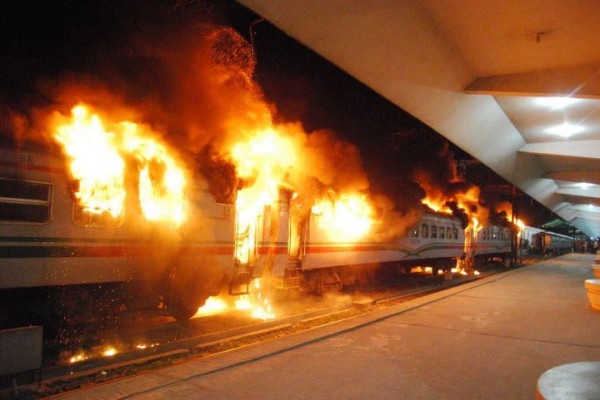
jamaat-train
A train in Bangladesh set on fire by activists of the Jamaat-e-Islami Bangladesh

This is a guest post by Bangladeshi commentator JYOTI REHMAN: Delwar Hossain Sayedee, an Islamic preacher and a senior leader of Jamaat-e-Islami Bangladesh, the country’s largest Islam-pasand party, was sentenced to death on 28 February for war crimes committed during the 1971 Liberation War. Within hours, Jamaat cadres and activists clashed violently with police and law enforcement agencies. Scores have been killed in some of the worst political violence the country has experienced in recent years.

Five other senior Jamaat leaders, including its current and former chiefs, are being prosecuted for war crimes committed in 1971. Another leader was sentenced to life imprisonment on 5 February. That sentence triggered what has come to be called the Shahbag Awakening—a month of largely peaceful gathering of tens of thousands of people in the middle of Dhaka. A key demand of the largely government-supported Awakening is to ban Jamaat. Continue reading The Jamaat factor in Bangladesh politics: Jyoti Rehman

Wave of violent attacks against Hindus in Bangladesh: Amnesty International

Press release put out on 6 March by AMNESTY INTERNATIONAL: A wave of violent attacks against Bangladesh’s minority Hindu community shows the urgent need for authorities to provide them with better protection, Amnesty International said.

Over the past week, individuals taking part in strikes called for by Islamic parties have vandalised more than 40 Hindu temples across Bangladesh.

Scores of shops and houses belonging to the Hindu community have also been burned down, leaving hundreds of people homeless. Continue reading Wave of violent attacks against Hindus in Bangladesh: Amnesty International

India Slept Through a Revolution in Bangladesh: Richa Jha

Guest post by RICHA JHA

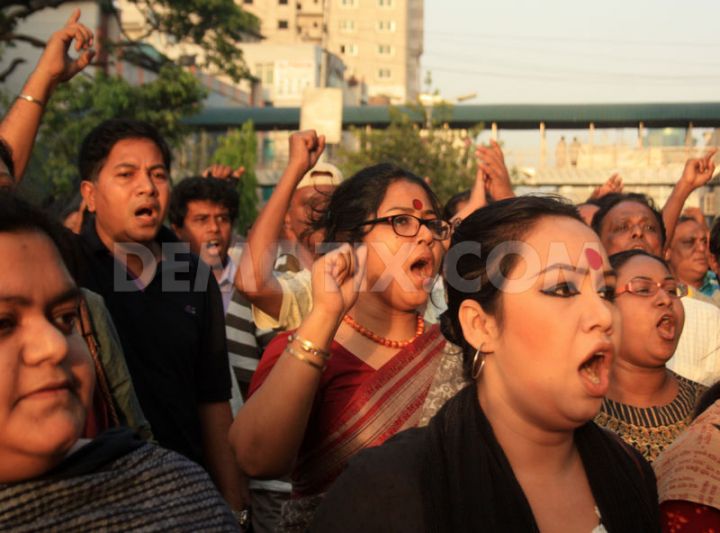
Dhaka, Bangladesh. 18th February 2013 -- A woman shouts on a microphone. -- A demonstration for the death penalty to be given to war criminals, is continuing at Shahbag crossroads, and has reached its fourteenth day,.
Dhaka, Bangladesh. 18th February 2013 — A woman shouts on a microphone. — A demonstration for the death penalty to be given to war criminals, is continuing at Shahbag crossroads, and has reached its fourteenth day,.

This morning, I changed the ‘sleep’ in the heading of this article to ‘slept’. I woke up to the news that Bangladesh’s nearly twenty days long mass uprising was now getting a structured exit. The most moving and visually spectacular part of the Shahbag movement was coming to an end. India, of course, slept through most of it. The past tense, suddenly, paints our selective insularity in even starker shades. Continue reading India Slept Through a Revolution in Bangladesh: Richa Jha