
This 17 minutes long film won the Vasudha, Environment Award at the International Film Festival of India in Goa, 2010.
Monthly Archives: January 2011
Release Binayak Sen! Repeal Section 124 A!
Pictures of the rally in Delhi yesterday, January 30th, by PRASHANT TALWAR
‘i swear…i have my hopes’: Agha Shahid Ali’s Delhi Years: Akhil Katyal
This is a guest post by AKHIL KATYAL
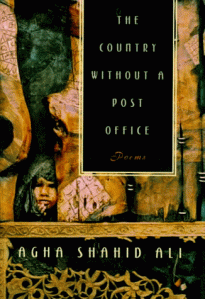
Born on 4th February, 1949, Agha Shahid Ali would have been 62 next month. The Kashmiri-American poet who spent the last half of his life in the States (he migrated to Pennsylvania in the mid 70s) died in the winter of 2001 due to brain tumour. The next year had begun with papers and journals in the States, and in Kashmir and India, remembering Shahid. ‘Your death in every paper,’ Shahid had written for his own idol the singer Begum Akhtar after she passed away in 1974, ‘boxed in the black and white / of photographs, obituaries.’ In his new absence, he similarly reappeared in the words of his friends as an insurmountably beautiful poet, a gregarious Brooklyner, a near perfect cook, an impossibly good teacher and a lasting friend. Apocrypha started building around him very soon after his death. One could say this was the final proof that Shahid’s name would abide – that stories began to be spun around him as soon as he was not around. The Pakistani novelist Kamila Shamsie, Shahid’s creative writing student at Hamilton College in New York and then at the University of Massachusetts in Amherst in the 90’s, and someone who always recounts his indelible influence on her writings (he coloured her drafts red), was one of the first to add to the stories that have multiplied since in this decade after Shahid’s death. Kamila’s friend, also a student of Shahid, had told her that some months after he was diagnosed with brain cancer, Shahid was riding the subway going to teach his class at NYU when he started to feel faint and began to black out. ‘For a moment,’ her friend told her, ‘he thought, “I’m dying,” and then he told himself, “No. First I’ll teach my class, then I’ll die.”’
Continue reading ‘i swear…i have my hopes’: Agha Shahid Ali’s Delhi Years: Akhil Katyal
The Birth of God: Siddhartha Gigoo on Pt Bhimsen Joshi (1922-2011)
Guest post by SIDDHARTHA GIGOO

It was on a nice summer evening in the year 1996 that I first got to attend Pandit Bhimsen Joshi’s concert.
I was studying literature at the Jawaharlal Nehru University in New Delhi. Those were terrible times for me. I struggled with my studies. Good grades evaded me. Failure stared at my face and the world mocked me. It was difficult to trudge through the endless days and the nights. Reading books became a cumbersome task because one had to present seminars and write the boring term papers at the end of the semesters. Some of us slept during the days and idled during the nights. There seemed to be no respite in sight. Life, what atrophy? I laboured somehow from one book to another, sometimes seeking enjoyment and sometimes to broaden my experience and understanding of life and the world. I had heard somewhere that one must not seek knowledge. Some said knowledge didn’t exist, while others argued that knowledge was a perilous trap from which there was no escape. I was perhaps frantically looking for a reprieve from my fears and imperfections. Continue reading The Birth of God: Siddhartha Gigoo on Pt Bhimsen Joshi (1922-2011)
No Idiocy Day
Apparently today is ‘No TV Day’. According to whom? According to Hindustan Times. I’m not sure if this is happening around the country, but here in Mumbai, according to Hindustan Times this means that we have to switch off our televisions and get in touch with the city, with ourselves, with our partners, families, friends, whoever. To help us in this undoubtedly difficult task, Hindustan Times has been providing little tips all week on what to do on the 29th of Jan, culminating in a glossy supplement on the 28th called “No TV Day: Things To Do”.
Egypt today: A first hand account.
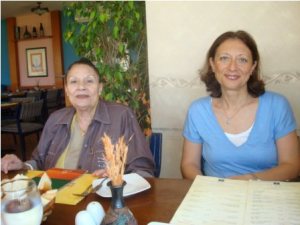
Transcript of a land line phone conversation between my friend NAHED MANCYP (based in Toronto) and her mother a (a blogger herself) and grandmother (both currently in Alexandria). Her mother will write a piece soon which can get to Nahed only after the ban on the internet is lifted in Egypt. Thank you Nahed.
My mom:
We arrived in Alexandria from Cairo right after Friday prayers. The streets where completely empty. I actually made a bet with dad. Dad said, I don’t think anything is going to happen. I said, no something will. Half an hour later I began feeling really embarrassed because it looked like nothing would happen. The streets where deserted, there were no officers or cars. Continue reading Egypt today: A first hand account.
ATS Chief concedes “burst of over-enthusiasm” on part of Nagpur ATS: IAWS press release
A small victory, but heartening in these times to see what solidarity and concerted political action can achieve…
But still worrying given that ATS Chief Rakesh Maria seems to be back-tracking, if he is correctly quoted in the Mumbai Mirror yesterday (see below), which is why the IAWS has issued this press release.
(Clarification – This is a random image and not from the IAWS National Conference! But if anybody can send us some pix from the Wardha Conference, that would be great.)
Press Release dated 28 January 2011 by IAWS Continue reading ATS Chief concedes “burst of over-enthusiasm” on part of Nagpur ATS: IAWS press release
Women Struggling Against Rape in India Find the Assange Case Hard to Digest: Kavita Krishnan
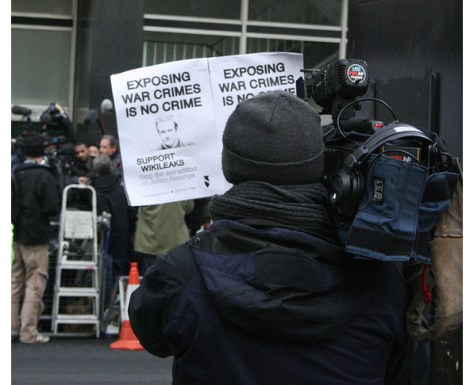
Kavita Krishnan expresses the irritation and anger of many feminists at the attempt to distract attention from the damage Wikileaks has managed to inflict on the powerful, by doubtful charges of sexual harassment against Assange, its architect:
…Certainly, from the perspective of all those women in India who find the most brutal of rapists going free, protected by the police and the state, and their most serious charges of rape trivialized or even suppressed by force, the idea of a man being hunted down by Interpol on charges which are as complex and ambiguous as those in the Assange case is disturbing…. [Full article here]
Open Letter to the Home Minister: Indian Association for Women’s Studies
Dear Mr. Chidambaram,
We, the members of the Executive Committee of the Indian Association for Women’s Studies (IAWS), write to you in shock in the face of our recent experiences of intimidation and harassment at the hands of the Anti Terrorism Squad during the XIII National Conference of the IAWS in Wardha at the Mahatma Gandhi Antarrashtriya Hindi Vishwavidyalaya (MGAHV), from January 20-24th 2011. The IAWS (established in 1982) is an academic and professional association of nearly two thousand Women’s Studies scholars, teachers, students and activists. A National Conference is held once in three years, which deliberates on various scholarly and social concerns focussing on women’s lives in the country. The programme included 5 plenary sessions and 10 subtheme sessions, totalling over 300 submitted papers and 19 plenary speakers. The highest standards of excellence were demonstrated over the course of the conference. There were 750 participants from different parts of the country, including a few South Asian and other participants who had come to understand gender issues in an atmosphere of intellectual exchange and learning. A South Asia plenary is an old practice of the IAWS—this time eminent writers and poets from Sri Lanka, Bangladesh and Pakistan spoke, for whom full clearance had been obtained from the respective Ministries. The university authorities supported the conference throughout, including dedicated volunteers and enthusiastic students and staff. Continue reading Open Letter to the Home Minister: Indian Association for Women’s Studies
Letter from Dr. Ilina Sen to all the supporters of Dr. Binayak Sen
Dear Friends,
As we celebrate 61 years of India becoming a Socialist Democratic Republic we are shocked to witness that the spirit of our Constitution stands violated every so often today, sacrificing people’s democratic rights and throttling the socialist dream of our Constitution makers.
Speaking out against the conviction and incarceration of Dr. Binayak Sen’s case has to be seen in that larger context of lending our voice against the gross injustice that we witness as a daily happening in India day after day. Continue reading Letter from Dr. Ilina Sen to all the supporters of Dr. Binayak Sen
Branding Binayak: Balmurli Natrajan
Guest post by BALMURLI NATARAJAN
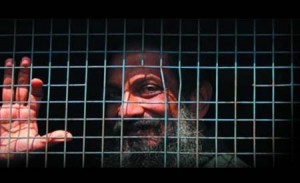
Writing on the history of insanity in the age of reason in seventeenth century Europe, French philosopher Michel Foucault notes: “People know what they do; frequently they know why they do what they do; but what they don’t know is what what they do does.” Foucault’s insight into the workings of power is an incitement for us to think boldly in public, sadly an endangered species in today’s India.
The recent judgment on the Guha-Sen-Sanyal case prompts one to wonder: Could state functionaries know what what they do does? Could ruling elites who watch silently or goad and guide the guardians of law and order to perform at their bidding know what what they do does? Could the state’s branding of Binayak and thousands of others as Naxalites, Maoists, terrorists or seditionists (terms that it conflates but without scholarly or legal basis) allow civil-liberties activists to create a brand Binayak? Continue reading Branding Binayak: Balmurli Natrajan
The Republic of Exploitation
On this Republic Day, while armoured tanks muscle across Rajpath in New Delhi, little ossified museums of culture called tableaux charm the assembled pass-holding citizenry and the Prime Minister sits like a barely-sentient caricature of himself behind a bullet-proof screen, it may do well to think about the other republic that remains hidden within the bosom of Superpower India – the republic of unfree labour.
This is a world where the laws of the upside world are inverted – where the more you work, the less you are paid, the more your company profits, the poorer you end up and if you find yourself the victim of an injustice and god forbid complain about it, the police put your family in jail. It’s a great irony of our times that we believe the choice before us is between loving the Nation and loving the Corporation, not realising that most of the time its the same person wearing two grotesque masks. All those who believe that the world begins with their newspapers and television sets and ends at their white picket fences (and all those who don’t), please take a minute to go through the excellent documentation of the war that is raging for workers in this country, put together by the Gurgaon Workers’ Solidarity Group, the Faridabad Mazdoor Sangathan and several other exemplary organisations.
Ilina Sen harassed again. Long live the Republic!
FINAL UPDATE: Over a hundred names (113) that were received by 9 am on 27th morning have now been added. Apart from the press, the statement will be sent also to the Union Home Minister, Chief Minister of Maharashtra and Chairpersons NHRC and NCW. Final list of names now posted here.
UPDATE: Close to a hundred endorsements from all over the country have been received from academics, social activists, lawyers, film-makers, theatre persons, students, journalists and office bearers of PUCL and IAWS . This will now be sent to the press, and may be circulated widely. All names received by 3 pm are now listed at the end of the statement.
Below is a statement being circulated by some of us for endorsement. Please endorse by 3 pm tomorrow (26th January)
Continue reading Ilina Sen harassed again. Long live the Republic!
‘As followers pushed to get close, the pole broke in several places and the flag tumbled down onto Mr. Joshi’
History repeats itself, and we learn so little from it. Or rather, we learn too much from it. I am excerpting below about half the text of a report dated 27 January 1992, written by EDWARD A. GARGAN in The New York Times, describing in detail Murli Manohar Joshi’s hoisting of the Indian flag in Srinagar’s Lal Chowk. Wish I had a picture!
He [Murli Manohar Joshi] had begun his trek, which he named Pilgrimage for Unity, 44 days before at India’s southernmost point. But the inability of the security forces to protect even their highest officials made it clear that there was no way, despite the presence of several hundred thousand troops in the Vale of Kashmir, to protect a convoy of cars and buses filled with zealous Hindus. So Mr. Joshi and a small contingent of his closest supporters were flown here on Saturday night. Continue reading ‘As followers pushed to get close, the pole broke in several places and the flag tumbled down onto Mr. Joshi’
Sound Enough: How to Enjoy the Jaipur Literature Festival: Revati Laul
Guest post by REVATI LAUL
“Excuse me, Mr. Farooqui, I just need a sound byte from you,” said a young reporter from the fairly young news channel News X. He was talking to my friend Mahmood Farooqui, author of Besieged: Voices From Delhi 1857, co-director of the Oscar nominated film Peepli Live and founder-revivalist of Dastangoi – the rich, medieval art of storytelling. Seeing that the setting was the beautiful and quaint Diggi Palace in Jaipur with a substantial gathering of the world’s literati for the Jaipur Literary Festival, Mahmood was preparing to hold forth on storytelling, culture, 1857…when this completely unexpected gem poured forth from the fearless reporter’s lips.
“Can you sum up what you think of literature in one word?” Continue reading Sound Enough: How to Enjoy the Jaipur Literature Festival: Revati Laul
The doom-sayers are wrong about Pakistan. Here’s proof
If you click on it, you can also see the rest 3 parts of the show with Veena Malik and a maulvi on Pakistan’s Express TV.
The New Cellu-lar Jail: Madhumita Dutta & Venkatachandrika Radhakrishnan
Guest post by MADHUMITA DUTTA and VENKATACHANDRIKA RADHAKRISHNAN
The writers are activists based in Chennai working on issues of land, labour, industry and SEZs.
Sriperumbudur grabbed media attention in 1991 when former Prime Minister Mr Rajiv Gandhi was assassinated during an election rally. Since then, this nondescript little village-town in west Chennai, dotted with paddy fields and large expanses of natural water-bodies, has transformed itself into a little ‘Shenzen’- world’s largest special economic zone in Southern China, which churns out one out of every eight mobile handsets sold anywhere in the world. Slated to attract investments worth $4 billion in electronics and automobile manufacturing, Sriperumbudur is now home to the largest mobile handset making factory of Nokia, a Finnish company that can churn out 7.5 lakhs handsets a day. This town and its neighbouring region is also known as the Detroit of India, churning around 12,80,000 cars every year. With a booming manufacturing industry and a promise of 2 lakhs jobs, Sriperumbudur is touted as the jewel in the industrial crown of Tamil Nadu. But of recent this seemingly success story has turned a little sour. Continue reading The New Cellu-lar Jail: Madhumita Dutta & Venkatachandrika Radhakrishnan
Ambika’s Death: Madhumita Dutta & Venkatachandrika Radhakrishnan
Guest post by MADHUMITA DUTTA and VENKATACHANDRIKA RADHAKRISHNAN
The writers are activists based in Chennai working on issues of land, labour, industry and SEZs.

S Ambika, a 22 year old woman factory-worker, died in the middle of the night in a posh hospital in Chennai on 31st Oct. She was a permanent employee of Nokia Telecom Special Economic Zone (SEZ) in Sriperumbadur in Kancheepuram district of Tamil Nadu. Her agonising death was due to a fatal accident at a panel loading machine in the factory.
Continue reading Ambika’s Death: Madhumita Dutta & Venkatachandrika Radhakrishnan
Un-Indianizing Kerala: How to defend K K Shahina
Like the unseasonal and tenebrous rain clouds that are hovering over Thiruvananthapuram in what should be a sunny, light-mist-adorned January, a pall of gloom, of impending danger, hangs around my everyday life in Kerala. This is not a general feeling. It is however shared by many of us who write and speak critically about the powers that be. The space to speak and write thus has been shrinking for a while now, but now there is a sense of dangerously teetering on the edge: the Indian state seems to be upon us, and with a vengeance. Continue reading Un-Indianizing Kerala: How to defend K K Shahina
Taking Back Pakistan: Beena Sarwar
Text of article by BEENA SARWAR
Reproduced from Viewpoint, January 14, Issue 33; courtesy South Asia Citizens’ Web
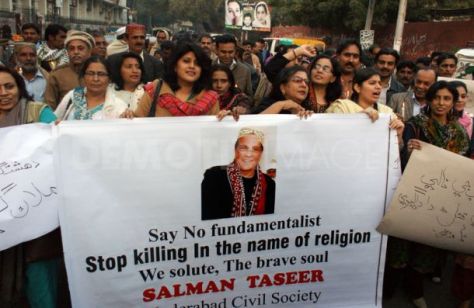
“There are no less than 24 groups as of now supporting Qadri on FB and 1 against what he did, that says it all.”
So went a tweet from a fellow Pakistani early morning on Jan 5, the day after the assassination of Salmaan Taseer, the governor of Punjab who took a courageous stand against religious extremists in Pakistan.
The dirty ‘S’ word in Pakistan: Urooj Zia
Guest post by UROOJ ZIA
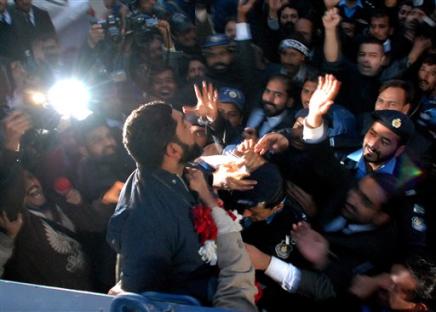
Images aired earlier this month where lawyers and other citizens in Pakistan were seen garlanding and felicitating the murderer of Punjab Governor Salmaan Taseer might have made those involved look tasteless and crude, but their acts were far from shocking. All his faults aside, Taseer had stood up for a Christian woman who had been accused of blasphemy and sentenced to death by a district and sessions (lower) court. He was killed because he had referred to the blasphemy statutes as ‘black laws’ which are abused at will, and had called for reform. As such, Taseer was killed because he had stood up, albeit in a roundabout way, for secularism and basic humanity. Continue reading The dirty ‘S’ word in Pakistan: Urooj Zia
 KAFILA - COLLECTIVE EXPLORATIONS SINCE 2006