A Messiah for our Moderate Liberatti – Guest Post by Brinda Bose and Prasanta Chakravarty

The Indian liberal establishment has found a new hero in Kumar Sangakkara. For his now-famous Cowdrey lecture at the MCC on the ‘Spirit of Cricket’ is not just about remedying corruption and decay in cricket (and by extension, in modern sports), but also crucially a rumination on pluralism and integration in postcolonial societies like Sri Lanka. In his speech he had referred to the1983 July riots, the JVP-led insurgency, LTTE terrorism and the heavy price paid by the military to defeat the LTTE. The Sri Lankan Defence Secretary, Gotabhaya Rajapaksa, had a word of praise for Sangakkara for solidly backing the country’s successful war effort against the LTTE, at a time when a section of the international community is seeking accountability from the Sri Lankan military establishment for its questionable practices during the last few decades.

The speech has also stirred the reformer-liberals of New India, who are not only enthralled by Sangakkara’s refined, rhetorical eloquence but also by his civic, character-building arguments. Mukul Kesavan calls Sangakkara’s first-person-narrative at once a cricketer’s prescription and a citizen’s creed. V. Anantha Nageswaran finds in the speech the unfolding of a triad of competence, integrity and conscience, a ‘lesson’ for our political-reformers. Others rave about how his outstanding legal mind subtly seeks administrative transparency and good governance.
Continue reading A Messiah for our Moderate Liberatti – Guest Post by Brinda Bose and Prasanta Chakravarty

The terrorist and the madman: Nandagopal R. Menon

Guest post by Nandagopal R. Menon

Scepticism is warranted only when patterns are broken. Normally, prejudice alone will suffice. So if there is a bomb blast in a Western capital, it can only be an Islamist “terror plot”. The motivations could be chosen from a short list of grievances of a peculiarly “Islamic” nature –  anger against illegal occupation of “Muslim lands” being the most favourite among them.

In the immediate aftermath of the July 22 terrorist attacks in the government quarters of Oslo, there was no room for doubt. All that was left to be done was to identify the exact name of the “jihadi” group involved (Ansar al-Jihad al-Alami, The New York Times concluded after a swift investigation); and the specific motive that propelled the attack (first choice: presence of Norwegian troops in Afghanistan; second: publication of the infamous Danish cartoons in the Norwegian press; and a distant third: Colonel Gaddafi’s retaliatory attack for Norway’s participation in bombing Libya). Whatever the motive or the group, it was indisputable that it was a “terrorist” attack.

Continue reading The terrorist and the madman: Nandagopal R. Menon

Tagore in film


That is a clip from The Postmaster (the first story in Teen Kanya, directed by Satyajit Ray).

Trisha Gupta on Tagore’s characters, seen better in films than in English translation:

In film after film, we see events through the eyes of the educated Bengali man trying to deal with a world that has either changed too much—or too little. The protagonist is often a young man from the city who arrives at a small provincial outpost, armed with a modern Western education and little else, his head full of glimpses of another world that seem only to succeed in cutting him off from everything around him. Continue reading Tagore in film

Every time there is a bomb blast in India

Jyoti Punwani writes:

Expectedly, the questions were the same. What were you doing on the day of the blasts? Had you gone to Cheetah Camp? Do you know anyone from the Indian Mujahideen? How many times have you been to Pakistan? Why does only your information come to us? Get your house documents.

Amanullah was ready with the answers and documents… [Must Read]

From Kafila archives:
What does it mean to be a Muslim in India today?

The Unending Struggle of Dalit Christians and Dalit Muslims for Equality: S. Japhet and Y. Moses

On the sidelines of a protest at Delhi's Jantar Mantar today

Guest post by S. JAPHET and Y. MOSES

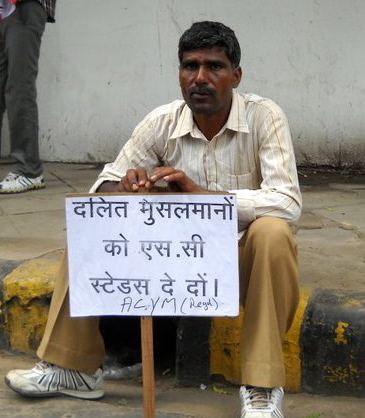
Religious minorities, both Christians and Muslims from different parts of the country have converged in Delhi to demand reservations for Dalit Christians and Dalit Muslims. This is part of a long standing struggle demanding the Government to introduce a bill to amend the constitution to include Dalit Christians and Dalit Muslims in the scheduled Castes list. The Christian community has been agitating since the promulgation of the Presidential Order Government of India 1950 that effectively prevents those professing religions other than Hinduism from being considered as Scheduled Castes. It has been argued that the 1950 Order violates Article 15 that prohibits discrimination on grounds of religion, race or caste and Article 25 that gives the right to all citizens to profess and practise any religion according to his or her choice. The demand is that affirmative action or positive discrimination of dalits, providing reservations in government jobs, educational institutions and representation in Parliament and state legislatures should be extended to all dalits irrespective of whatever religion they may profess and practise. Continue reading The Unending Struggle of Dalit Christians and Dalit Muslims for Equality: S. Japhet and Y. Moses

Half Widow, Half Wife? Responding to Gendered Violence in Kashmir: APDP

This is a press release from the ASSOCIATION OF PARENTS OF DISAPPEARED PERSONS, The Bund Amira Kadal, Srinagar, 190001. It is about a new report, which you can download in .pdf format at the end of this press release.

Srinagar, July 28, 2011 – The Association of Parents of Disappeared Persons (APDP) today released the report Half Widow, Half Wife? Responding to Gendered Violence in Kashmir. It examines the situation of women in Indian-administered Kashmir whose husbands have ‘disappeared,’ but not yet been declared deceased. Members of APDP who are themselves half widows released this report at SK Municipal Park, Srinagar. Continue reading Half Widow, Half Wife? Responding to Gendered Violence in Kashmir: APDP

Few Hearts to Live for

This slideshow requires JavaScript.

Photographs by Amruta Mehta

Just when Shantuben held her meditative poise at a Vipassana camp at Igatpuri on the morning of January 26, 2001, her dream turned to rubble back home in Bhuj. When she reached home, her labour of love of the last 5 years was gone, razed to the ground. It all had to start afresh. Continue reading Few Hearts to Live for

Statement of Indian Women’s Rights Activists in Solidarity with Women in Sri Lanka

It’s been more than two years since the supposed end of the war in Sri Lanka. The issues of concern are many, particularly with regard to the period after the end of direct combat. The Sri Lankan government has been abysmal in acknowledging the range of human rights violations that have been committed by the armed forces, which has been documented without a kernel of doubt by the United Nations report as well as the Channel 4 documentary. This documentation has been made in spite of circumstances where any neutral observation of the last stages of the conflict was made impossible by the Sri Lankan government and its army.

Continue reading Statement of Indian Women’s Rights Activists in Solidarity with Women in Sri Lanka

“I never knew this before, but now I know I am a human being”: A despatch by Caelainn Hogan from a new country

This guest post for Kafila comes from CAELAINN HOGAN, an Irish journalist who was in Juba for South Sudan’s independence day, 9 July 2011

This slideshow requires JavaScript.


All photos by Caelainn Hogan

At midnight on the eve of independence, the birth of the Republic of South Sudan was heralded with an outburst of celebrations. In Juba, the capital city, people ran through the streets singing and ululating, in the delirium of a moment they never though would come to be. In a local church the congregation sang happy birthday to the new nation. The next day at the official declaration ceremony thousands gathered to witness the new flag raised high and to sing the national anthem together. Many broke down in tears, thinking of loved ones who had fought or struggled and never got to see this day. The declaration brought an end to a long history of conflict; one that many believed could now be relegated to the past. Others still found inspiration and strength in the past, singing the old revolutionary song, “We will never surrender”. Continue reading “I never knew this before, but now I know I am a human being”: A despatch by Caelainn Hogan from a new country

The question we are not asking about Fai, Tramboo and Shawl

GN Fai

(Please see two updates at the end of this post.)

‘Gotcha!’ That is the sound I hear in the Indian media and amongst patriotic fellow-Indians in response to the arrest of Syed Ghulam Nabi Fai, an American citizen of Indian origin, by the Unites States Federal Bureau of Investigation.

Most analyses of the Fai arrest say it’s part of the ongojng tussle between the American CIA and the Pakistani ISI but some in India think it’s part of the American reward to India for opening up its nuclear energy and other markets to American corporations, thus creating jobs for Americans. This may have some truth in it, considering that the Americans asked their ambassador to take a flight to Srinagar four months ago to pat Omar Abdullah on the back for successfully presiding over the killing of 120 Kashmiris the previous summer, and for halting the killings when President Obama was in Delhi, so that the media attention on the President’s visit is not diluted. (And then Americans wonder why ‘Muslims hate us’). Continue reading The question we are not asking about Fai, Tramboo and Shawl

Dear Manmohan Singh: BPL households don’t think cash transfers will be better than the PDS

Given below is the text of a letter written by research scholars and student volunteers to the Prime Minister of India. Given below the letter is a table listing the findings of the survey that the letter speaks about.

21 July 2011

Dr. Manmohan Singh
Prime Minister of India

Respected Prime Minister,

We are a group of research scholars and student volunteers who have just spent three weeks surveying the Public Distribution System (PDS) around the country. We are writing to share a few thoughts on the National Food Security Act in the light of this experience.  Continue reading Dear Manmohan Singh: BPL households don’t think cash transfers will be better than the PDS

A rape in Kulgam; the dishonouring of India continues

Imagine there had been a rape in Delhi. Imagine the headlines in the papers. They would have been loud and angry. As they are, and as they must be. Do you think any of the papers would have said that the woman in question has ‘accused’ or ‘alleged’ who the perpetrator was? But there has been a rape in Kashmir and your media wants you to know that a woman has ‘accused’ an army jawan of having done so. Journalistic restrain and caution are good things when they are useful. After all, let an inquiry establish this is the truth.

Continue reading A rape in Kulgam; the dishonouring of India continues

New Phase in Struggle for Release of Political Prisoners in West Bengal: Biswajit Roy

Guest post by BISWAJIT ROY

Civil society, including human rights groups, in Bengal are now divided on Mamata Banerjee government’s ‘open and hidden’ conditions regarding the release of political prisoners who have been jailed during the Left front rule as well as talks with Maoists and Maoist-backed Peoples Committee against Police Atrocities in Bengal’s tribal hinterland, known as Junglemahal.

Mamata and her ministers have rejected the demands for unconditional release of all political prisoners, immediate withdrawal of joint forces from Junglemahal and public announcement on non-enforcement of the draconian central law, the Unlawful Activities Prevention Act. Maoists and PCPA have accused Mamata of eating up her pre-poll words on those demands. A large section in the human rights movement including the intellectuals and activists who actively joined the Mamata-led campaign for regime-change now supported these demands. But some of their fellow travellers have differed on political and legal grounds.

The differences revealed contradictions between the pre-poll and post-poll positions of Mamata as well as chinks in the armour of human rights groups on the attitude to the new government, Maoists and PCPA. Tension among all the stakeholders in the process— Mamata, Maoists, human rights groups and individuals— was well-known within the concerned circles for quite some time. But none of the stakeholders dwelt on it in public before the assembly polls when they had made common cause against the CPM, particularly, the atrocities by CPM-joint forces combine.

I would like to dwell on post-poll dilemmas and fissures in the pro-Paribartan civil society in Bengal later. But this piece is primarily aimed at reporting the increasing manifestations of the hitherto latent tension.

Continue reading New Phase in Struggle for Release of Political Prisoners in West Bengal: Biswajit Roy

Delhi Police solve Mumbai blasts case

The Times of India reported today that Delhi Police intercepted a call immediately after the Mumbai blasts on Wednesday, which has given them crucial clues to solving this case.

Read the full report here

Basically, immediately after the blasts,  the ever alert Delhi police intercepted a call from  Mumbai  to the NCR to ask the person in the NCR if  ‘the work had been done’ and whether ‘Sharif” had been informed. On getting the answer ‘yes’, the caller hung up, and not just hung up, but ‘immediately’ hung up. The call lasted for about a minute.

This brief call was not too brief for the Delhi Police’s keen forensic skills.

Continue reading Delhi Police solve Mumbai blasts case

A note of protest to Aditya Sinha, editor, DNA

To: asinha at dnaindia dot net

Aditya Sinha,
Editor,
DNA, Mumbai.

Dear Sir,

I have long been a fan of your column, tweets and have admired The New Indian Express and DNA under your editorship. I am, however, saddened to se that you chose to publish Subramanian Swamy’s column that is Islamophobic in the extreme, presumes the people behind the Mumbai blasts were Muslims without evidence, and in hardly veiled terms calls for violence against Muslims. Continue reading A note of protest to Aditya Sinha, editor, DNA

The Values of Property

The recently announced Rajiv Awaas Yojana (RAY) has brought back an old ghost to debates on how to allow the urban poor a foothold into the city and the possibility of upward mobility. The central policy initiative of the Ministry of Housing and Urban Poverty Alleviation is the most significant contemporary attempt to address urban poverty through providing housing to the urban poor. The “slum-free city” is back. Now more than ever, then, it is time to ask: what is a “slum-free city”?

Continue reading The Values of Property

Two Years On: No War but No Peace for Women still facing the Consequences of the War – CMTPC

Statement by COALITION OF MUSLIMS AND TAMILS FOR PEACE AND COEXISTENCE

The coalition of Muslims and Tamils is a Sri Lanka based organization-comprising Muslim and Tamil identified persons who as a general principle are committed to pluralism and social justice in all its forms. Specifically, we are committed to the peaceful coexistence of Muslims and Tamils in the country, particularly in the north and east, and to a just and equitable solution to the ethnic conflict.

We can be contacted at: ctmpc_srilanka@yahoo.com

We have changed our blog site and the new address will be up soon!
Old blogsite: http://www.ctmpc.blogspot.com/

Two Years On: No War but no peace for women still facing the consequences of the war

Women in the north and the east of Sri Lanka have undergone severe hardships during the war, including the loss of loved ones, family’s support structures, livelihoods, houses and also a loss of life and dignity. While there have been numerous changes announced by the Government the situation for women on ground, however, has continued to be challenging. It is sad since the end of the brutal war women’s lives have not seen a dramatic transformation over the last two years and they have continued to face the basic challenges of safety, shelter and basic facilities. It in this light that we wish to put forward a few issues that these women have been facing within the broader context of life in the north and east for the communities living there.   We have chosen to highlight these issues because of their gravity, the State’s involvement in the same and the inability of women to seek justice in such cases owing to the lack of an effective civilian administration, security threats and the lack of a concrete remedy within the local legal system.  While we write of the issues relating to women, they raise broader concerns impacting the families and communities. The incidents and the report cover only the Northern and Eastern Province of Sri Lanka.     Continue reading Two Years On: No War but No Peace for Women still facing the Consequences of the War – CMTPC

Solidarity letter to anti-POSCO movement from Korean jail: Sung-Hee Choi

Madhumita Dutta has sent us this powerful letter in solidarity with the people of Jagatsinghpur opposing the POSCO project, written by a South Korean activist SUNG-HEE CHOI, in prison for opposing a naval base.

Dear residents in Jagatsinghpur,

I am a woman and activist living in South Korea, the country of the POSCO you oppose. I am currently being jailed in the Jeju prison, under the charge of ‘interruption of business’, because of my resistance against the enforcement of the naval base construction in the Jeju Island located in the south of South Korea. As of today, July 3, I met 46th day since my arrest and 44th day since my being restrained.

I accidently happened to see two of your struggle photos and a photo in the Korean Times, June 13, 2011 had a  caption underneath it:
‘Anti POSCO action in India: A village sprays water to relieve children lying with other villages along the entry point to prevent policemen and officials from entering their area at Jagatsinghpur district, about 140 kilometers(87 miles) east of eastern Bhubareshwary India, Saturday. The villagers have been protesting against turning their farmland into an industrial developed area for a $12 billion steal plant of South Korean conglomerate POSCO (AP-Yonhap).’

Continue reading Solidarity letter to anti-POSCO movement from Korean jail: Sung-Hee Choi

Don’t let Mumbai blasts investigations fall victim to prejudice and shortcuts: JTSA

Statement by Jamia Teachers’ Solidarity Association

JTSA offers its heartfelt sympathies to the bereaved and the injured in the Mumbai serial blasts. We sincerely hope that the perpetrators of this mindless violence will be brought to justice swiftly. There are early indicators though that this investigation will be marred by prejudiced investigating agencies. There are news items appearing in various media outlets which cite the interrogation report of Md. Salman, a supposed operative of the Indian Mujahideen (IM) to establish that Mumbai was on IM’s sights.

Already we see that, though the Home Ministry has restrained from holding any group culpable, the investigation is being gently pushed in one direction. But even if one leaves aside for a moment the criticism that investigators react in stereotypical ways, their compass needle invariably pointing towards Azamgarh, there are serious issues arising out of this reliance on Salman’s interrogation report for getting to the bottom of the Mumbai serial blasts conspiracy.

Continue reading Don’t let Mumbai blasts investigations fall victim to prejudice and shortcuts: JTSA

‘Ask Brazil, South Africa and India to help stop the bloodshed in Syria’

AMNESTY INTERNATIONAL wants you to sign the statement below

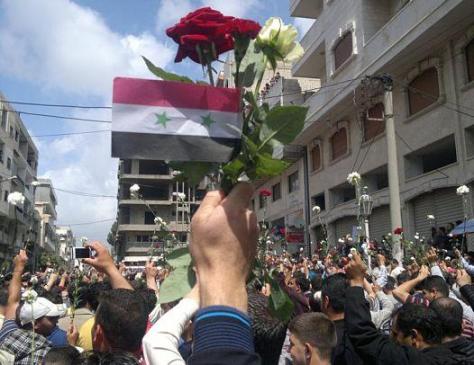
It has been over four months since the beginning of largely peaceful protests in Syria calling for political reform and for the Syrian President to step down. The Syrian authorities’ response to their people’s demands has so far been brutal to say the least.  Continue reading ‘Ask Brazil, South Africa and India to help stop the bloodshed in Syria’

Indian and Pakistani Citizens Condemn Serial Blasts in Mumbai

We the citizens of India and Pakistan strongly condemn the inhuman and dastardly serial blasts in Mumbai on 13 July 2011 in which 21 innocent people were killed and over 140 injured.  We offer our heartfelt condolences and sympathies to the bereaved families and pray for quick and complete recovery of all those injured. It is clear that these blasts are a well orchestrated heinous conspiracy to derail the resumption of the dialogue and peace process between India and Pakistan that was stalled following the terrorist attack in Mumbai in 2008. Continue reading Indian and Pakistani Citizens Condemn Serial Blasts in Mumbai