“The more they censor the internet the bigger we become” – An interview of Anonymous India

In which I interview “Anonymous India” who have organised a massive protest against internet censorship across 11 Indian cities on 9 June.

Some say such attacks (hacking and defacement of Web sites) could be used by the political class to actually strengthen their argument in favour of control and regulation of the Internet. What do you say to that?

Anamikanon: People on the ground are vulnerable to people with a lot of power and no problems misusing it. Anonymous can’t be found to defame, threaten, suppress, stall…. wrong means? Ok. Worth it.

Netcak3: I say the more they censor the Internet, the bigger we become. We strive in users from across the world. Pro tip: Once an idea has been made, you cannot kill it.

Anamikanon: In my view, these are the means that can be safely used without risking life, limb, careers, reputations, family…

Gummy: Defacing is like posting a nill which is illegal and can be removed. Like people post their advertisement bill (poster) at the back of buses and other public places.

Anamikanon: Except we post it in inside their drawing rooms! [Read the full interview.]
KK Aziz and the Coffee House of Lahore: Chris Moffat

Guest post by CHRIS MOFFAT 

During a recent trip to Lahore, I visited the Sang-e-Meel bookshop on Lower Mall Road in search of K.K. Aziz’s The Coffee House of Lahore. Happily, the store was well stocked with the late historian’s final work, and I spent the afternoon reading the text at a table outside the nearby Tollinton Market. It was a betrayal, perhaps, to read the book in this way, sipping cold drinks from the Hafiz Fruit and Juice Corner rather than something appropriately caffeinated, purchased amidst a flurry of conversations in a busy café. I took some solace in the fact that I was sitting not a stone’s throw away from the former Pak Tea House, once a hub of cultural life in the city and among the many spaces of discourse and dissent mapped by Aziz in his narrative of mid-twentieth century Lahore.

Today, the Pak Tea House appears hollowed and shuttered, no longer decorated with a sign to declare its name or to suggest life inside. In spite of recent rumours of a revival, its vacant façade appears a testament to Aziz’s loud lament in The Coffee House of Lahore: that the city’s culture has “disappeared from view”, that its original landmarks “have been obliterated”. The book emerged out of the historian’s desire to capture, before it is lost, the memory of a period of free thought, argument and cultural effervescence, encapsulated in the life of institutions like the Tea House, the Indian Coffee House, the Arab Hotel, the Nagina Bakery, and other important places of assembly, all of which have now vanished from the urban fabric. Aziz chooses to focus on the particularly tumultuous period between 1942 and 1957, when he was an active participant in this culture as a student of politics and later as a lecturer in Lahore’s Government College.
Continue reading KK Aziz and the Coffee House of Lahore: Chris Moffat

Ambedkar’s Cartoon and the Caste question: Rajkumar

Guest post by RAJKUMAR

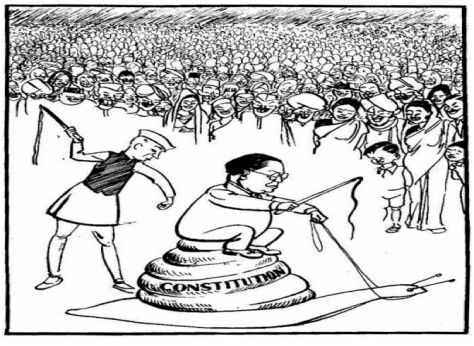
A harrowing monologue is in vogue in the popular media and academic forums apropos a cartoon of Dr. Ambedkar in a Political Science textbook prepared by NCERT for its Class XI students. Apparently, in the cartoon, Ambedkar is depicted being whipped by Jawaharlal Nehru for delaying the framing of the constitution. The cartoon was first published in 1949 and was drawn by cartoonist Shankar Pillai. Though in interior Dalit circles, the cartoon was being despised for denigrating ‘Baba Saheb’ as they lovingly call him, no heed was paid to their sentiments till the issue was raised in the Parliament and taken up by Bahujan Samaj Party chief Mayawati. Government had to concede and the cartoon was removed from the textbook and HRD minister made a public apology for the goof-up followed by resignation of two academicians involved with the curriculum committee.

Continue reading Ambedkar’s Cartoon and the Caste question: Rajkumar

Humiliation condemned to remain ‘Hurt’ – Notes from a talk by Gopal Guru: Parth Pratim Shil & Ankita Pandey

Guest post by PARTH PRATIM SHIL and ANKITA PANDEY

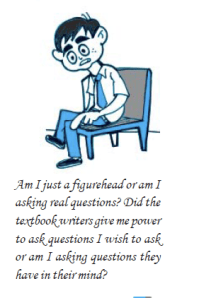
Unni [a cartoon character] asks:

“Am I just a figurehead or am I asking real questions? Did the textbook writers give me power to ask questions I wish to ask or am I asking questions they have in their mind?” [Page 85, Chapter 4: Executive, Indian Constitution at Work, for class XI]

This cartoon appears in the context of the discussion on the powers of the President of India in the political science textbook of NCERT. It seems this question has a function far wider than the limited task of revealing the institutional blueprint of Indian politics. It pushes the student to ask something very uncomfortable. Am I really the one asking the questions I ask? Or am I rehearsing questions that someone else has decided for me?

As teachers of political science, our constant effort is to understand the ways in which power operates. None of the themes of our syllabi can be taught without reference to the resistance, critique and offending positions taken by groups who challenge the status quo. Sanitizing the history of critique and resistance that is encapsulated in satirical modes of representation like cartoons, can only be at the cost of keeping the discipline of political science uprooted from its very object of study. In the recent cartoon controversy, however, the issues at stake are many more than a defence of critical pedagogy.

Continue reading Humiliation condemned to remain ‘Hurt’ – Notes from a talk by Gopal Guru: Parth Pratim Shil & Ankita Pandey

Mangoes and me

My childhood memories are so deeply intertwined with mango eating that it is difficult to separate the two. One reason for this is probably because the season of mangoes and the summer breaks in school coincided. We took our last exam and the schools closed their doors, to reopen after two and a half months. Educationists had not yet discovered Holiday Homework, the Summer Break torture, For parents and children and the summer vacations were an unmitigated joy. Those days we stayed at Aligarh, and every year we travelled to Delhi to spend time with our aunts and uncles, all cousins of our father.
Continue reading Mangoes and me

Dalit organisations demand NAC to recommend SCP/TSP legislation

This press release comes from the SC/ST BUDGET ADHIKAR ANDOLAN 

The SC/ST Budget Adhikar Andolan welcomes the draft recommendations of the NAC to the GOI. However, it is very disappointing that the National Advisory Council (NAC) has not suggested legislation for SCSP and TSP. It is a known fact that without legislation, accountability would not be possible, and the entitlements under the SCP will not be implemented. The Dalit  organisations strongly urge the NAC to recommend SCP/TSP legislation and that this be placed in the parliament in the coming session.

The recommendations of the NAC on the reform of the Scheduled Caste Sub-Plan (SCSP) were sent to the Government in December 2011. In line with the recommendations of the NAC, the Working Group of the NAC on Dalit Issues have now enunciated a set of Essential Elements of Implementation Framework of SCSP. Some of the recommendations of the NAC are as followed: Continue reading Dalit organisations demand NAC to recommend SCP/TSP legislation

Trials, errors and the art of compromise

This morning The Hindu carries a long piece I wrote on one of Jaipur’s more sensational trials. The idea of “samjhauta” or “compromise” has informed a lot of my work over years, and this instance is particularly heart breaking. Court documents and chargesheets are always interesting things to read; in this instance, it was intriguing how the police accorded one woman – Pushpa – infinite agency when she creates a cycle of repression and exploitation; while the other – Shweta – has zero agency and is thoroughly incapable of independent action.

One dawn in January last year, a young woman slipped out of her house, walked down to the Gandhi Nagar station and stepped into the path of an oncoming train.

She survived, but lost her left leg and all sensation below her waist. Last Wednesday, the woman, Pushpa*, was brought before the Special Judge for Women Atrocities and Dowry Cases to identify the three policemen who, she alleged, had sexually tortured her to the point of suicide. Also in court was Shweta*, a 20-year-old known to Pushpa, who claimed that Pushpa and her cohorts had drugged, raped and blackmailed her in December 2010.

The two women had been friends, meeting occasionally in Pushpa’s room to gossip, experiment with cigarettes and alcohol and on one occasion photographed themselves kissing. In many ways, their twin trials document the contradictory impulses of the small Indian town grown big, where tech-savvy youth shun the contractual new economy for the security of the bureaucracy, the government school, and the government bank, and the sheher’s liberatory promise is tempered by the lingering claustrophobia of the samaj.

Read on

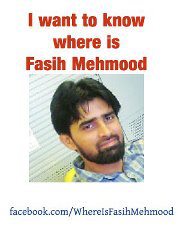
Produce Fasih Mahmood before an Indian Court, NOW: JTSA

This release comes from the JAMIA TEACHERS’ SOLIDARITY ASSOCIATION
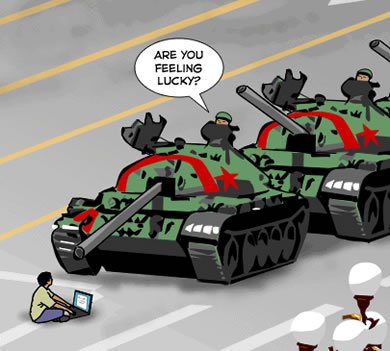
It has been over two weeks that Fasih Mahmood was practically disappeared from his residence in Jubail, Saudi Arabia, where he worked as an engineer. On 13 May, Sunday, Mahmood was taken away by a group of Indian and Arab men, all in civil dress, and their house searched, while his wife, Nikhat Perveen, was held in a room by an Arab woman. Continue reading Produce Fasih Mahmood before an Indian Court, NOW: JTSA

Oppressing the teacher, democratic style

( In 2006 the Parliament had debated and lambasted  Hindi NCERT textbooks prepared as part of the NCF, 2005 process . Our Parliamentarians were then offended  by Premchand, Pandey Bechan Sharma Urg, Dhoomil, M. F. Husein,  Avtar Singh Pash and Omprakash Valmiki. The argument of hurt sentiments had united political parties from left to right to demand action against  the culprits. In the eyes of MPs like Sushma swaraj , Ravi Shankar Prasad and Sita Ram Yechury ,  Hindi textbooks  were full of offensive and abusive words and descriptions which could hurt Brahmin, Women , Dalit and Hindu sensibilities. They were also very concerned about the the effect that these books were to leave on the impressionable minds of our children. The extra-ordinary unity seen this time in the Parliament in   the case of  the  ‘offending’ Political science texts books is not unprecedented. What we need to ask is that why did we not react to This debate and assault on Hindi textbooks then.

Back then I had published this open letter to our MPs in Tehelka. I am re-posting it here to bring historical context to the ongoing debate on an NCERT political science textbook.)

In an open letter, Apoorvanand asks members of Parliament to stop politicising education

Do we really need to legislate on how languages should be used by our writers? Should the State be given authority to issue licenses to our poets? Continue reading Oppressing the teacher, democratic style

Net Loss: Sajan Venniyoor

Guest post by SAJAN VENNIYOOR

Image via dailygalaxy.com

Net: noun, verb.

1. a contrivance of strong thread or cord worked into an open, meshed fabric, for catching fish, birds, or  other animals
2. anything serving to catch or ensnare

The other day, in a Parliamentary debate on Internet Rules 2011, the leader of the Opposition in the Rajya Sabha said something so absurd that for a moment I thought he had joined the government. “You can control print and electronic media, but not internet,” he said, only removing his foot from his mouth to add, “If internet had been in existence, Emergency would have been a fiasco.”

Actually, if the Emergency had been in existence, the Internet would have been a fiasco. Continue reading Net Loss: Sajan Venniyoor

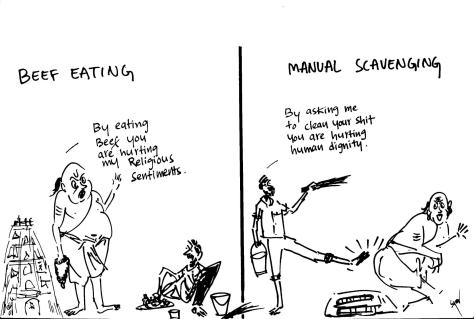
I have a beef with you: Unnamati Syama Sundar

This guest post by UNNAMATI SYAMA SUNDAR is a cartoon

From Kafila archives:


Jaya Hey to Jai Ho to Jayate: Sumana Roy

Guest post by SUMANA ROY

I watch Satyamev Jayate on Doordarshan. The word ‘National’ below the Doordarshan logo seems rather appropriate for Aamir Khan’s show about issues of mass frustration. In one of the many interviews that prefaced the airing of his show, the kind of airgun shooting that now heralds any and every kind of release – films, books, television shows, automobiles, increasingly, even babies – Aamir Khan said that he argued with channel producers who wanted to give it a prime-time slot: ‘I wanted to telecast my show on Sunday morning. I want each family to watch the show and connect with it. We have watched Ramayana and Mahabharata and it used to come on Sunday morning. The shows created a different atmosphere’. Continue reading Jaya Hey to Jai Ho to Jayate: Sumana Roy

’बिगड़ैल बच्चे की खोज में’: हिमांशु पंड्या

“क्या आपको इस बात का अहसास है कि ताकाहाशी को ‘तुम्हारी पूँछ तो नहीं है?’ पूछने पर कैसा लगा होगा” बच्चे शिक्षिका का जवाब नहीं सुन पाए. उस समय तोत्तो चान यह नहीं समझ पायी कि पूंछ वाली बात से हेडमास्टर साहब इतना नाराज़ क्यों हुए होंगे क्योंकि अगर कोई उससे यह पूछता कि तोत्तो चान तुम्हारे क्या पूंछ है? तो उसे तो इस बात में मजा ही आता.
-‘तोत्तो चान’ (तेत्सुको कुरोयांगी, अनुवाद – पूर्वा याग्निक कुशवाहा)

दलित चेतना और कार्टूनों का पुनर्पाठ
इस कार्टून पर चली ऐतिहासिक बहस के बाद अब यह पक्के तौर पर कहा जा सकता है कि साहित्य से आगे अभिव्यक्ति के अन्य क्षेत्रों में भी दलित चेतना ने दस्तक दे दी है। शायद हम कल चित्रकला और बहुत आगे संगीत में भी दलित चेतना युक्त दृष्टि से इतिहास का पुनर्पाठ देखेंगे। Continue reading ’बिगड़ैल बच्चे की खोज में’: हिमांशु पंड्या

India asks Google to remove 2 items every 3 days

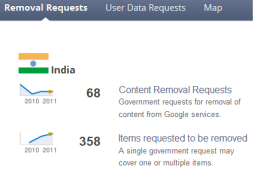
Google’s just released fourth biannual Transparency Report says that between January and June 2011, India asked it to remove 358 different items from various Google-owned web services such as Orkut and YouTube. Google complied in 51% cases. The requests were made by various central and state government departments through 68 different requests. The fourth such report, it goes against communications minister Kapil Sibal’s claims that internet companies are not willing to “self-regulate”.

Worryingly, the report also confirms the allegations that what bothers government officials the most about the internet is not defamation or hate speech but government criticism. Continue reading India asks Google to remove 2 items every 3 days

(Updated) List of websites blocked in India

Given below is a list of websites blocked in India by one or more Internet Service Providers. This list was hacked from Reliance servers by the hacker group ANONYMOUS, which claimed in a web press conference that while most of this list of 434 is blocked as a result of government or court orders, some have been blocked by Reliance on its own. The ones blocked by Reliance on its own relate to Satish Seth, a Reliance ADAG executive. Continue reading (Updated) List of websites blocked in India

A democratic process in Pakistan: Abdullah Zaidi

Guest post by ABDULLAH ZAIDI

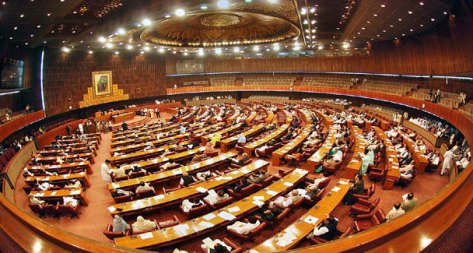
Pakistan’s National Assembly

In a way, the story of Pakistan is the story of a centralised state manipulating the provinces. It is also the story of an overgrown and overfed military destabilising all political forces that posed a challenge to its narrative. It is also the story of institutions wrestling for their due and undue share of power. Finally, it is the story of a powerful state and a weak society. The one thing that is common to all of these dynamics is the power struggle between elected and unelected institutions.

After return to civilian rule in 2008, the country has seen several developments that have somewhat changed these dynamics. Continue reading A democratic process in Pakistan: Abdullah Zaidi

Forging a Nepal for all its peoples

As the constitutional endgame approaches, Nepal is witnessing its most fierce and polarised political debate since the process to transform the state began with the Comprehensive Peace Agreement in 2006. Strikingly, it is not a battle between political parties, but different social groups.

This is the battle over the nature of federalism, the boundaries of future states, and the names and number of provinces. The issue of state restructuring perhaps resonates most among ordinary citizens, especially those belonging to communities excluded from the power structure due to their ethnic, caste, regional and religious identities. It is a battle that has been fought in Constituent Assembly (CA) committees, the State Restructuring Commission, and in the past week, on the streets. Continue reading Forging a Nepal for all its peoples

Is the Hurriyat divorcing democracy and freedom?: Gowhar Geelani

Guest post by GOWHAR GEELANI

By any stretch of imagination, the All Parties Hurriyat Conference [APHC] has ceased to be an amalgam of ‘all parties’. It seems that this conglomerate of several pro-freedom political, social and religious parties is actually being run by a chosen few in a dictatorial manner. It is no secret now that the fissures in the Hurriyat ‘M’, the one led by the popular head-priest based in Srinagar, Mirwaiz Umar Farooq, run neck deep.

The APHC was formed on 10 March 1993 to find a political solution to Kashmir dispute after a large-scale armed rebellion since 1989 had successfully highlighted the need for a resolution to the long-standing dispute. Essentially, this conglomerate was formed with the clear aim of achieving the “right to self-determination” for Kashmiris in accordance with the United Nations’ Security Council Resolutions vis-à-vis Kashmir.

But all is not well with the Hurriyat (M). One of its prominent leaders, Professor Abdul Gani Bhat has openly challenged group’s constitution by declaring that the UN resolutions on Kashmir have become “irrelevant”.

Continue reading Is the Hurriyat divorcing democracy and freedom?: Gowhar Geelani

If ‘temporary’ meant special, what would ‘special’ mean?: Gazala Peer

Guest post by GAZALA PEER

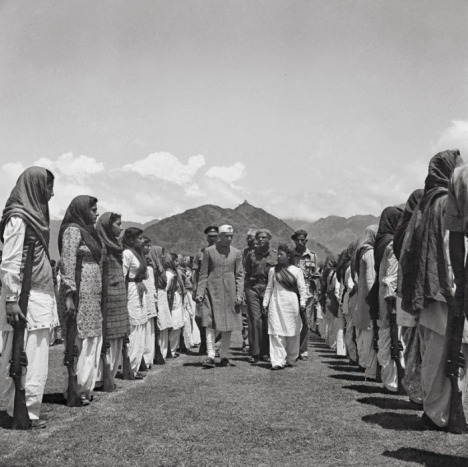
Circa 1948, this photograph shows Jawaharlal Nehru inspect a women’s militia in Kashmir. Via andrewwhitehead.net

On 13, October 2010 a team of interlocutors was appointed by the Government of India to hold dialogue with all the sections of the society in Jammu and Kashmir. The team of interlocutors consisted of journalist Dileep Padgonkar, educationist Radha Kumar and the former Information Commissioner M. M. Ansari. After almost one and a half years the report was released on 24 May 2012 by the Ministry of Home Affairs (.pdf here). The report calls for formation of a Constitutional Committee to review the extension of central laws to the state of J&K from 1952 onwards. Some of the major recommendations are: changing the temporary nature of Article 370, dividing the state into three Regional Councils and appointment of the Governor but after consultation with the state legislature. The Report further says that the findings of this Constitutional Committee shall be binding on all the ‘stake holders’ in the State. Continue reading If ‘temporary’ meant special, what would ‘special’ mean?: Gazala Peer

Violence and Laughter: Ajay Skaria on the Ambedkar cartoon controversy

Guest post by AJAY SKARIA

Earlier this month, I signed, with some disquiet, onto this petition. Initiated by some members of the CHS at JNU, the petition protests against the withdrawal, in the wake of the cartoon controversy, of all NCERT Political Science textbooks, and seeks to defend the ‘gains of the new National Curriculum Framework 2005’. One reason I signed the petition was because it seems to me urgent that we try to save the NCF 2005 textbooks. They are, quite simply, amongst the most superb provocations available anywhere to critical thinking for young minds. I have over the years read them with my two children, and I would be very disappointed if other children were deprived of the same experience. There were other reasons too: I share the petition’s criticisms of the government’s arbitrary way of making its decisions about the textbooks, and its demand that textbooks be produced by an ‘academic, collective, democratic and inclusive process’ that excludes any ‘direct government intervention’. Continue reading Violence and Laughter: Ajay Skaria on the Ambedkar cartoon controversy

This, that and other cartoons: Prabhat Kumar

Guest post by PRABHAT KUMAR

I wish to intervene in the ruckus over usage of Shankar’s cartoon in the NCERT’s political science text book. At the outset I want to clarify my personal impression (although inconsequential!) of the book and the cartoon therein. I feel the textbook in general is pedagogically superior to the previous ones for it does not infantilise young students as lacking critical ability. I also believe, as Aditya Nigam has rightly pointed out, it has accorded Ambedkar the status of a leading political and intellectual figure so far ignored. The cartoon in particular, both in the context of the narrative of the textbook as well as of its production in 1949, is not attacking Ambedkar the crusader of Dalits’ rights.

Continue reading This, that and other cartoons: Prabhat Kumar