Who’s Afraid of JNU? Or, The Sedition That Wasn’t: Sania Hashmi

This is a guest post by SANIA HASHMI

JNU Sedition

Over the past couple of days, Zee News has been declaring to the world that Lance Naik Hanumanthappa died because he’d rather not breathe the same air as we at JNU do. That this statement is the worst possible trivialisation of a martyr’s death which is being exploited for petty sensationalism by our own version of the fourth estate is a separate issue, too nerve-wracking to be given precedence over the tragedy that unfolded in our campus yesterday with the arrest of our democratically-elected President Kanhaiya Kumar. A Zee News screen grab showed the word ‘Deshdrohi’ in 72-pt screeching yellow font pasted across Kanhaiya’s unsuspecting face. What was his fault? As an eyewitness from ground zero who was present at Sabarmati at the time of the protest, let me begin by answering the obvious questions that despite the numerous clarifications on part of the students and the JNUSU on social media and elsewhere are meeting deaf ears. It is interesting how despite being told that the Students Union and the student body in general had nothing to do with it and have in no uncertain terms condemned any alleged slogan against our country, the trolls are still putting decibels to shame with the very same questions. And no, I am not just talking about Nupur Sharma. So yes, let me begin by putting a few things on record in respect of Kanhaiya’s arrest. Did Kanhaiya organise the event? NO. Did he raise anti-India slogans? NO. Did he hail Pakistan? NO. Did he intervene to prevent ABVP-instigated violence in his capacity as the President? YES. Has he been vocal against the brahmanical tyranny of the RSS? YES. Has he been tirelessly fighting for the Rohith Vemulas of this world? YES. Has he been a torchbearer for students’ rights across the country? YES. Is this why you have arrested him? Is this your justice? If this struggle for a just society is anti-national in your eyes, we all plead guilty! If this is your witch-hunt for people who cannot conform to your ideological blinkers, we all plead guilty! If we must be party to the violent hooliganism of the ABVP in order to be called patriotic, rest assured, we all plead guilty!

WATCH KANHAIYA KUMAR’S SPEECH HOURS BEFORE HIS ARREST TO SEE WHAT THE GOVERNMENT OF INDIA CONSIDERS ANTI-NATIONAL. Clearly, Kumar’s fault was that he said in this speech that he doesn’t need the RSS’s certificate to be called a nationalist.

Continue reading Who’s Afraid of JNU? Or, The Sedition That Wasn’t: Sania Hashmi

Massive Turnout at JNU Protest Meeting

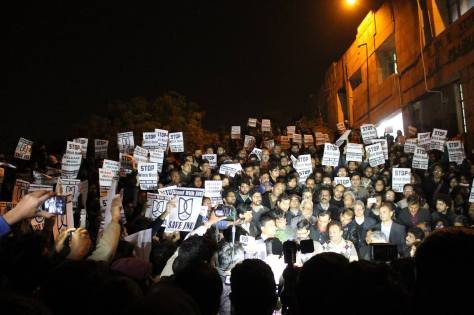
Even as the  government and the new JNU administration under the hand-picked  new Vice Chancellor step up their witch-hunt, the waves of protest grow stronger with a massive turnout at the admin block this evening. Despite the administration withdrawing at the last minute, permission to use mikes,…more and more students and teachers stand up to be counted. The will to fight grows stronger!

Protest meeting JNU
Protest Meeting in JNU outside the administration block. Image courtesy India Resists


Compilation of Resources on Sedition Law

Given that there is considerable debate on sedition right now, and how woefully off some of the reporting and comments on the ongoing JNU case has been, thought it may be useful to compile a set of existing resources to help anyone writing or commenting on the issue.
This is a compilation of resources on various facets of sedition law in India. I have provided a link with a very short summary of what the article/monographs say, and they contain very detailed historical and legal overviews,  highly recommended for anyone writing on sedition and looking for material.

Continue reading Compilation of Resources on Sedition Law

Statement by Educators, Intellectuals, Artists and Writers on Police Action in JNU

We, the undersigned, (educators, professors, intellectuals, writers and artists), are shocked by the appalling conduct of Delhi Police at Jawaharlal Nehru University in New Delhi yesterday. We also condemn the irresponsible sloganeering by some people at the fringes of a gathering on the JNU campus to mark the third anniversary of the execution of Afzal Guru. We believe that such calls to ‘war, until the destruction of India’ erode the gravity of any serious discussion on any political question, be it capital punishment, human rights or even the question of self-determination. Such conduct is shameful, regardless of who does it, and deserving of the sharpest criticism.

That said, the only way to counter such incidents, when they occur, is through a deepening of dialogue, not through police action. The police has no business to enter places of learning and harass students (including students who were clearly trying to defuse the situation and to take a stand against the irresponsible elements who gave the objectionable slogans) when there had been no breach of peace.

We condemn the arrest of Kanhaiyya Kumar, president of the Jawaharlal Nehru University Students Union on trumped up charges of sedition and demand that he be released immediately. Kanhaiyya’s public statements, which are widely available, clearly show that sedition is the last thing that you can charge him with. The University Authorities must take steps to ensure that the witch hunt that is ensuing against other students must also cease immediately. We demand that there be no more arrests of students. We are saddened by the new JNU Vice Chancellor’s readiness to submit to the diktats of the police, and we condemn the totally outrageous statements by the Union Home Minister Rajnath Singh, and the Minister for Human Resources Development Smriti Irani which virtually declare war on universities as spaces for dissent and debate.

We demand an unconditional withdrawal of police personnel from campuses, and reiterate our support and solidarity with the students, faculty and staff of JNU, and with students everywhere in India who are pursuing a courageous resistance against the ongoing assault on higher education unleashed by the BJP government.

Aditya Nigam, Professor, Centre for the Study of Developing Societies, Delhi

Ashis Nandy, Distinguished Fellow, Centre for the Study of Developing Societies, Delhi

Bharti Kher, Artist, Delhi

Debjani Sengupta, Associate Professor, Department of English, Indraprastha College, Delhi University

Gauri Gill, Artist, Delhi

Gayatri Sinha, Curator, Delhi

Geeta Kapur, Curator, Delhi

Iram Ghufran, Filmmaker, Delhi

Jeet Thayil, Poet, Delhi

K. Satchidanandan, Poet, Delhi

Karen Gabriel, Department of English, St. Stephen’s College, Delhi University

Lawrence Liang, Alternative Law Forum, Bangaluru

Moinak Biswas, Professor, Department of Film Studies, Jadavpur University, Kolkata

Nancy Adajania, Curator, Mumbai

Nandini Datta, Associate Professor, Miranda House, Delhi University

Neha Choksi, Artist, Mumbai

Nivedita Menon, Professor, Centre for Comparative Politics & Political Theory, School of International Studies, Jawaharlal Nehru University, Delhi

P.K.Vijayan, Department of English, St. Stephen’s College, Delhi University

Pallavi Paul, Artist/Filmmaker, Delhi

Parnal Chirmuley, Associate Professor, Centre of German Studies, School of Language, Literature and Culture Studies, Jawaharlal Nehru University, Delhi

Pratiksha Baxi, Associate Professor, Centre for the Study of Law and Governance, Jawaharlal Nehru University, Delhi

Rajarshi Dasgupta, Assistant Professor, Centre for Political Studies, Jawaharlal Nehru University, Delhi

Rajeev Bhargava, Professor, Centre for the Study of Developing Societies, Delhi

Ravi Sundaram, Professor, Centre for the Study of Developing Societies, Delhi

Ravi Vasudevan, Professor, Centre for the Study of Developing Societies, Delhi

Romila Thapar, Historian, Emeritus Professor, Jawharalal Nehru University

S. Kalidas, Critic, Delhi / Goa

Sahej Rehal, Artist, Mumbai

Sabina Kidwai, Associate Professor, AJ Kidwai Mass Communication Research Centre, Jamia Millia Islamia, Delhi

Sabeena Gadihoke, Associate Professor, AJ Kidwai Mass Communication Research Centre, Jamia Millia Islamia, Delhi

Sanjay Kak, Filmmaker, Delhi

Sarnath Banerjee, Artist, Delhi / Berlin

Saumyajit Bhattacharya, Associate Professor, Department of Economics, Kirori Mal College, University of Delhi

Sibaji Bandyopadhyay, Fellow, Centre for the Studies of Social Sciences, Kolkata

Shohini Ghosh, Professor, AJ Kidwai Mass Communication Research Centre, Jamia Millia Islamia, Delhi

Shuddhabrata Sengupta, Artist, Raqs Media Collective, Delhi

Subodh Gupta, Artist, Delhi

Sumit Sarkar, Historian, Formerly Professor, Department of History, Delhi University

Tanika Sarkar, Historian, Formerly Professor, Centre for Historical Studies, Jawaharlal Nehru University, Delhi

Vivan Sundaram, Artist, Delhi


PLEASE SIGN AND SHARE WIDELY BY VISITING THIS PETITION PAGE ON CHANGE.ORG

ചിത്രലേഖയുടെ സമരം – ഒരു ഓർമ്മപ്പെടുത്തൽ കൂടി


“ആ ചിത്രലേഖയ്ക്ക് ഇനിയും സമരം ചെയ്ത് കൊതി തീർന്നില്ലേ,” കഴിഞ്ഞ ദിവസം ഒരു പരിചയക്കാരൻ എന്നോട് ചോദിച്ചു. “അവർക്ക് പൊതുജനശ്രദ്ധയോട് അഡിക്ഷനാണ്, അയാൾ തുടർന്നു. ആവശ്യം ചില്ലറയല്ല – സ്ഥലവും വീടും. ഇങ്ങനെ നാട്ടിലെല്ലാവരും തുടങ്ങിയാൽ സ്ഥിതി കഷ്ടമാകുമല്ലോ.” Continue reading ചിത്രലേഖയുടെ സമരം – ഒരു ഓർമ്മപ്പെടുത്തൽ കൂടി

JNUSU Statement on the Police Action and ABVP slander in JNU: JNUSU

Guest Post by Kanhaiya Kumar, Shehla Rashid Shora and Rama Naga, office bearers, JNUSU

We, the office-bearers of JNUSU, are appalled at the way an uproar has been created over the 9th February incident that happened in JNU and the way the entire incident is being used to malign JNU students and the democratic traditions of JNU.

At the outset, we condemn the divisive slogans (‘bharat ke tukde honge hazar’) that were raised by some people on that day. It is important to note that the slogans were not raised by members of Left organizations or JNU students. In fact, when such sloganeering took place, it was the Left-progressive organizations and students, including JNUSU office-bearers who asked the organizers of the programme to ask the people who were raising the slogans to stop slogans that are regressive. The divisive slogans and the ideology behind it has never been a part of the progressive tradition that JNU and the JNUSU uphold. On the contrary, the unity of the people of different parts of the country in challenging divisive, authoritarian, anti-people and anti-student forces is what we stand with and look up to. Even in the recent times, the JNU student community and the JNUSU have joined nation-wide students’ voice to defend the country against casteist and authoritarian power lobbies. The Left-progressive organizations were present at the programme only to ensure that no violence takes place, as ABVP had called in hooligans from DU to disrupt the program and the general atmosphere in the campus. And so, to interpret our presence as endorsement of some divisive slogans which were raised by some (and was protested and stopped) is extremely mischievous and manipulative. Continue reading JNUSU Statement on the Police Action and ABVP slander in JNU: JNUSU

CPDR Condemns Arrests of JNUSU President and Delhi University Professor under Sedition Charges : Anand Teltumbde

Guest Post by Anand Teltumbde

CPDR condemns the arrests of Kanhaiya Kumar, president of the Jawaharlal Nehru University Students Union (JNSU) and Prof SAR Gilani of Delhi University by the Delhi Police today (12 February 2016) at the behest of the Home Minister Rajnath Singh on charges of sedition and criminal conspiracy for holding a protest demonstration on February 9th against the judicial hanging of Afzal Guru, three years ago.

The BJP Government is completely exposed in using the state power in support of its student’s wing- Akhil Bharatiya Vidyarthi Parishad, which was totally isolated in the campuses all over the country in the flare up over the institutional killing of Rohith Vemula. Instead of learning a lesson from this episode, it has chosen to use its fascist fangs in suppressing the democratic activities of students in university campuses.

CPDR does not hold any brief for those who indulge in anti-national activities but certainly objects to gross misuse of this label to suppress democratic rights of the students. In view of the fact that the hangings of both Afzal Guru as well as Yakub Memon have not been beyond controversy, the students’ questioning them cannot be termed sedition or anti-national activity. It is the same fascist definition of anti-nationalism that had prompted the Hyderabad University administration to clumsily punish the five Dalit students which led to one of them, Rohith Vemula, committing suicide. In both, the sinister role of ABVP and BJP in making the university administrations to crawl and police to terrorize the non-ABVP students is completely exposed.

The higher education campuses are not factories to produce inert charge to feed corporate mills. They are fundamentally expected to shape future thought leaders of the country endowed with critical faculties for sustenance of democracy. Analyzing, reviewing, criticizing, protesting, agitating and being alive to issues of national life are an integral part of this process. It cannot be suppressed by labeling it sedition or anti-national activity. Exercising checks on the Government is the right of people that is subsumed in democracy and cannot be subverted by such sentimental ploys. The students who partake in such activities must rather be respected for their concern for the future of the country than those who opportunistically choose to be on the side of the state and exhibit their pseudo patriotism. It is sad that the so called nationalists who blame every evil to colonial powers shamelessly cling to colonial provisions of sedition and other such draconian acts to terrorize people.

In the light of the above, CPDR demands immediate release of both the JNUSU President, Kanhaiya Kumar and Prof S. A. R Geelani and quashing of Sedition charges against them and unknown persons.

Dr Anand Teltumbde

General Secretary, CPDR, Maharashtra

12 February 2016

Democratic Ethos of the University Under Threat: JNU Teachers’ Association

Statement by JNUTA
JNU has always been a University where there has been a vibrant democratic culture, where diverse political ideological and academic views have engaged with each other in a spirit of peaceful dialogue and debate. The JNU teaching community is extremely concerned at the threat to the democratic ethos, which has played a critical role in ensuring that the University serves its social functions and secures its position as one of the premier institutions of higher education.
The University, having already instituted an enquiry to ascertain the facts and to take necessary action and there being no disruption of academic or any other regular functioning of the University, JNUTA strongly believes that the current excessive police action is totally uncalled for and it has only aggravated the situation. In view of this, JNUTA expresses its deep anguish over the University Administration’s decision to give a carte blanche to the police to enter the campus to search different premises and even make random arrests.
The teachers of JNU have always stood for upholding the Constitution of India and values enshrined therein and are opposed to any unconstitutional activity in the campus or outside. This very sentiment makes us express our strong opposition to attempts to use the law and the police to suppress democratic dissent and conduct a witch-hunt on our campus. The fact that the JNU Students Union (JNUSU) President is the first to be arrested establishes it. The JNUTA, following its Emergency Meeting, expresses its deep concern on the recent developments on our campus. The teachers of the University condemn the massive police presence and the attempt to escalate tensions.
JNUTA stands with the entire JNU community to maintain normalcy on our campus by immediately withdrawing the police and releasing all those detained.

JNU under seige: Ayesha Kidwai

AYESHA KIDWAI, Professor at JNU, on her Facebook page yesterday

For whom Our Constitution and its values are dear

There is no doubt that the Jawaharlal Nehru University is under siege right now. You will all have to forgive me the length of this post, but it is necessary so that we all understand that maintaining calm and mutual support is the only way we are going to get through this.

1. The JNUSU President Kanhaiya Kumar has been picked up and produced at the Patiala Court, which has remanded him to three days of police custody. He has legal representation, but the charges are, as you all know, serious. He is the first person who the police went to pick up even though he was not an organiser of the event that is being used to legitimise what has happening.

2. We are told that the police/IB has a list of twenty odd names of students that they want to pick up, although the FIR itself is against unidentified students. This happened while classes were taking place, seminars were being held and the whole university was normal. Even after that, no incident that disturbed the peace of the campus has taken place. AND WE ARE GOING TO KEEP IT THAT WAY. Continue reading JNU under seige: Ayesha Kidwai

Restore Normalcy in JNU, Release All Detained Students, Delhi Police Quit JNU

12716438_10153221773131150_2421721007167708352_o
Students, Professors and Staff of JNU Stand Together in Protest on February 12, 2016 against the Police Action on Campus and the Assault on JNU by ABVP-BJP

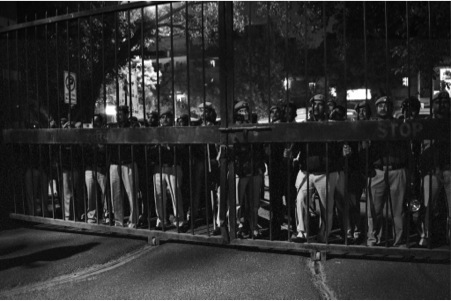
In an unprecedented and draconian move, Delhi Police personnel entered the precincts of Jawaharlal Nehru University in Delhi yesterday afternoon, and began a search operation based on malicious complaints against ‘unnamed persons’ filed by a Delhi BJP leader in response to an event titled – ‘Country Without a Post Office’ – organized by some students to commemorate and protest against the execution of Afzal Guru on February 9th.

Continue reading Restore Normalcy in JNU, Release All Detained Students, Delhi Police Quit JNU

Arrest of Kanhaiya Kumar : A Short Summary of the law of Sedition in India

News reports are indicating that an FIR has been registered with respect to a public meeting organized on the JNU campus on the evening of 9th February. These reports claim that the meeting was about the hanging of Afzal Guru, and it is alleged that during its course, some people raised incendiary slogans. According to reports, the FIR has been registered under Section 124A of the Indian Penal Code (sedition), and the Police have already arrested one person.

It is important to note that under the Indian law of sedition, the events at the public meeting, even if completely true, do not even come close to establishing an offence. In Kedar Nath Singh’s Case, 5 judges of the Supreme Court – a Constitution bench – made it clear that allegedly seditious speech and expression may be punished only if the speech is an ‘incitement’ to ‘violence’, or ‘public disorder’. Subsequent cases have further clarified the meaning of this phrase. In Indra Das v State of Assam and Arup Bhuyan v State of Assam, the Supreme Court unambiguously stated that only speech that amounts to “incitement to imminent lawless action” can be criminalized. In Shreya Singhal v Union of India, the famous 66A judgment, the Supreme Court drew a clear distinction between “advocacy” and “incitement”, stating that only the latter could be punished.


Continue reading Arrest of Kanhaiya Kumar : A Short Summary of the law of Sedition in India

Dissent in dark times : Ajita Banerjie

This is a guest post by AJITA BANERJIE

In the dark times, will there also be singing?

Yes there will also be singing.

About the dark times

– Bertolt Brecht.

In the dark times we live in right now, resistance to fascist forces could lead to arrest or death. Dissent comes with a rather heavy price to pay.Issues of democratic-national relevance  have ranged from consuming beef, resisting death penalty, resisting political control over academic institutions, protesting against privatisation of education and the most recent tragedy of Rohit Vemula’s suicide. Continue reading Dissent in dark times : Ajita Banerjie

Tibetan Artists Silenced at Dhaka Art Summit: Ahmad Ibrahim

This is a guest post by AHMAD IBRAHIM

20160207_200806
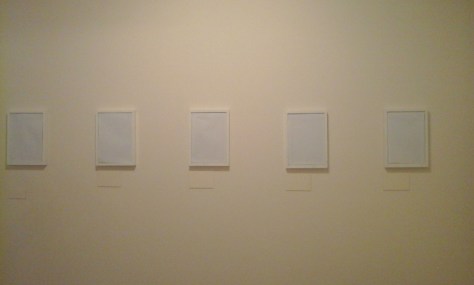
These pictures, which depict blank walls, are symbolic of the attack. Pictures of the original art cannot be shared due to copyright issues.

On the 7th of February, Tibetan artist Nortse and Indian artists Ritu Sarin and Tenzing Sonam had their photographs and art installations removed at the behest of the Chinese ambassador to Dhaka from the Dhaka Art Summit taking place in Shilpakala Academy in the capital of Bangladesh. The art project by Nortse was titled Prayer Wheel, Big Brother and Automan (2007) which showed the artist don traditional Tibetan clothes along with modern objects to show the surveillance that marks their lives. .Ritu Sarin and Tenzing Sonam produced a piece called “Last Words”, which consists of five facsmilies of five last messages written by the self-immolators in Tibet, along with their English translations. Ritu Sarin and Tenzing Sonam depicted Tibetan monks in the act of self-immolation as a way of political and religious protest against the occupation of Tibet by the Chinese government. At the end of the 6th of February, both artists were still depicted on the walls of the Art Summit. On the 7th, what greeted the visitors and patrons were blank stretches of white wall with white frames. It was as if the works had never existed. This is not the first time the Chinese government has tried to shut down political art work that aims to show the real face of Chinese occupation of Tibet. What is even more reprehensible is that it happened inside the walls of an institution that was proclaiming itself to be a haven of bold art and artistic expression. That the Chinese government could go to such lengths to silence an exhibition happening thousands of miles away shows the depth of their oppression over an entire country. Since February 2009, 142 Tibetans have self-immolated in their homeland, 120 dying from their actions.

A link to Tenzing Sonam’s twitter:

A Facebook link to a picture when the exhibit was still standing. 

Ahmad Ibrahim is a Dhaka based journalist.

If You Can’t Beat Them, Join ’em – Or, Ente Dinkeswara!

A new wave, nay, tsunami, of (THE) Faith has risen in Kerala. Soon, it will sweep the Nation.  This is the mighty thrust of Lord Dinkan, now known all over Kerala as Dinkamatam – or Dingoism.

…. Yellow, and black, and pale, and hectic red/ Pestilence-stricken multitudes: O Dinka,/ Who chariotest to their dark wintry bed ... [from ‘Ode to Dinka’ by the early Dinka devotion poet Muroidea Muridae Murinae, later stolen by Shelley and rewritten as ‘Ode to the West Wind’. Note that Dinkan,  superhero airborne rat and Shelley’s West Wind are both powers of the Air]

If you don’t believe me, visit this url:

https://www.dinkoism.com/

Now, like many others, I too was an unbeliever until I went there. One click, and I knew this was truly Faith. Market logic is nowadays the true marker of anything genuine (redefined an anything worth pursuing), and Dinkoism is unmatched in this regard. Even Amritanandamayi who successfully packages and sells all styles of Hinduism (the astrologer-obsessed style, the Saibaba-singing-style, the Sivakasi-print style, the shallow version of the Upanishadic style, the Christian-inflected Hugging-Mother style, the belligerent Hindutvavadi-style) cannot match him. Upon opening this Divine page, my eyes fell upon a notice in Malayalam which said: Mega offer before the world ends in 2012 [that needs updating, I suppose – small error; the spirit is more important] . 100 % guarantee in securing sin-free existence. Many years of service. Ridding of curses undertaken responsibly. We have no branches. Now, what further proof did I need to be convinced that this was the true Faith? Who doubts now that faith in the Logic of the Market precedes faith in faith? The Logos of Dinkan and the Logic of the Market are in perfect harmony!

Continue reading If You Can’t Beat Them, Join ’em – Or, Ente Dinkeswara!

Vocabulary of justice and being

After the Supreme Court delivered its verdict in Suresh Kumar Koushal v. Naz Foundation (2014) overruling the Delhi High Court’s decision, the National University of Juridical Sciences brought out a special law review issue assessing the judgment. Prof. M.P. Singh, the constitutional scholar and former vice chancellor of the university, wrote an article praising the judgment for its judicial restraint, in which he described the use of constitutional litigation by sexual minorities as a case of “misplaced hope in courts”. Prof. Singh prefaced his article with a cautionary extract from Judge Learned Hand that warns us against “placing our hopes too much upon constitutions, upon laws, and upon courts. These are false hopes; believe me, these are false hopes”. Prof. Singh similarly suggests that what activists ought to do is to educate legislators rather than pin their hopes on the judiciary. Underlying these opinions seemed to be an unwritten rule of an economy of hope (that one could have a little but not too much of it) but the essential trait of hope is that it is greedy sentiment that demands the impossible, and the Naz judgment with its rich evocation of dignity, liberty and equality had already proven that we could not just demand but hope for the impossible.

Continue reading Vocabulary of justice and being

Stop the attack on Rohith’s mother! Solidarity Committee for Rohith’s mother Radhika

STATEMENT BY SOLIDARITY COMMITTEE FOR ROHITH’S MOTHER RADHIKA

We believe there  is a concerted effort on the part of the powers-that-be to diffuse the nation-wide mass protests against Dalit research scholar Rohith Vemula’s death and caste discrimination in higher educational institutions. They are keen to demonstrate that Rohith did not face caste discrimination by claiming that his mother Radhika is not a Dalit. Rather than addressing the critical issues that his death and the protests have raised, these misdirected attempts seek to dissolve the issue in narrow legalese. And thereby somehow save the people named in the students’ complaint from the stringent penal provisions of the SC/ST Atrocities Act. This malicious campaign is unethical, illegal and undemocratic. Continue reading Stop the attack on Rohith’s mother! Solidarity Committee for Rohith’s mother Radhika

The Terror That Is Man: Shaj Mohan

Guest post by SHAJ MOHAN

Manifold is the un-homely, yet nothing is more un-homely than man — Sophocles

The middle of the previous century is understood to be the termination of all kinds of containments of man, having witnessed the worst containment in the Camp[i]. This termination resulted from a crisis that is both philosophical and political: what is the de-termination of man such that he is not the contained? A summary of this scenario is found in a trivial understanding of Foucault’s statements concerning “the end of man” (The Order of Things) and Derrida’s deconstruction of the notion of the “the end” in his essay “Ends of Man” (Margins of Philosophy). As a result of the exigencies of the philosophical and the political, the concept of the state located itself, in the occidental domain, away from the containers. The State would no longer claim to be the clergy and the sovereign of containers such as race and religion. Instead, the State demanded only the right to primary containment—first Indian and then Muslim, first British then White, first Spanish then Basque. The list, the differences, the classification and the management of all the other containers—religion, caste, language, race, public, private—were left up to the new clerics, the new academic disciplines and the NGOs. If all containers were opened up then everything should have flooded out and mixed to form a substance of a new world of people; rather, a substantiality for the in-terminable formation of people. This new people-substance should have dissolved the traces of all the containers, the way science-fiction often imagines the future to be. It should have left for us tales which are the negative of memories, that is, taboos, or myths. For example, the tales that we received about incest from the ancients, the tales of cannibalism in fairy tales, the tales of the world’s resistance to Nazism. Continue reading The Terror That Is Man: Shaj Mohan

Disability, Language, and Empowerment: Dorodi Sharma

This is a guest post by DORODI SHARMA

In 2009, as a writer for a disability news portal I got a note back with one of my stories from the director of the organisation. “Suffering from disability”, I had written about someone. The note said “I have been a wheelchair user since the age of 15, and trust me I am not suffering.” Over the years, the first document I shared with new employees of the disability rights organisation I worked for in Delhi was a document on ‘disability etiquette’ that outlined not just terminologies but also the acceptable ways of interacting with people with disabilities. Yes, even in the 21st century we need to coach people on ‘interacting’ with a section of humanity. The discourse on importance of language has taken a new meaning when recently Prime Minister Narendra Modi called people with disabilities ‘divyang’ or people with divine abilities. The reaction to this has been outrage, to shaking of heads, to complete indifference. But it is important to talk about language when it comes to disability because it reeks of charity and reflects the patronizing attitude that prevents people with disabilities in India from getting their due.

Let us be very clear, disability is part of human diversity. Disability is as normal or abnormal as being a man, woman, gay, lesbian, person of colour, or any other variation of being human for that matter. Why then do we look at disability as something that needs to be ‘overcome’? With the proliferation of social media, we are now faced with innumerable ‘inspiration porn’ posts. Yes, inspiration porn. As described by Stella Young, Australian journalist, comedian, and activist – inspiration porn is objectifying people with disabilities for the benefit of non-disabled people. Young said the purpose of these images is to inspire people, to motivate them, so that they can look at them and think “Well, however bad my life is, it could be worse. I could be that person.” Precisely for that reason, people living with a disability are tired (and angry) of all the euphemistic terminologies used about them. No, they are not specially-abled, or differently abled, or ‘divyang’ for that matter. They are persons with disabilities and disability is a crucial part of their identity, just like one’s gender, race, or nationality.

Continue reading Disability, Language, and Empowerment: Dorodi Sharma

Missing the Forest for Trees – Caste System’s Shadow on Rohith’s Suicide : Sanjay Kumar

Guest Post by Sanjay Kumar

(Photo Courtesy : Prokerala.com)

Mainstream politics over Rohith Vemula’s suicide is becoming hot and ugly. Although whisper campaigns against Rothith’s dalit identity were on since his suicide, the BJP’s central leadership had been relatively quiet after HRD minister’s rather shrieky ‘appeal’ to not play caste politics over his suicide. However, now it seems daggers are out. The party in power, whose two ministers are accused of creating conditions leading to Rohith’s suicide, has decided that Rohith’s non-dalit status is the dog it is going to beat to counter its anti-dalit image. Rohith’s mother is a Mala, a Scheduled Caste, who lives seperately from his father, a backward caste Vaddera. He got an SC certificate on the basis of showing that he grew up in his mother’s Mala household. BJP’s strategy may look petty, but it is based on the age-old great Hindu tradition which can not contenance any violation of the privileges of the patrilineal system. After all, marital rape does enjoy legal sanction in India to this day. Continue reading Missing the Forest for Trees – Caste System’s Shadow on Rohith’s Suicide : Sanjay Kumar

Why is the World Ignoring Palestine’s ‘Third Intifada’? Shubhda Chaudhary

Guest post by SHUBHDA CHAUDHARY

Already ravaged by two political Intifadas in the past, Palestine is now undergoing a third ‘leaderless Intifada’ in West Bank and Gaza. In fact, there is disagreement over whether a leader is even needed. In a striking paradox, several names are being considered for the leadership that does not exist: Jerusalem Intifada, Mass Intifada, Revolutionary Wave and Third Intifada.

Third Palestinian Intifada - On its way or Already Arrived? image courtesy Alwaght
Third Palestinian Intifada – On its way or Already Arrived? image courtesy Alwaght
revolutionary woman intifada streetby Quadraro, image courtesy Deviant Art.
‘revolutionary woman intifada street’ by Quadraro, image courtesy Deviant Art.

As West Asia is too gripped in sectarian conflict and the rise of ISIS, this emerging trend is going unnoticed. But the violence is already cementing the layers of distrust that Palestinians harbor against Jews, with calcifying hatred.

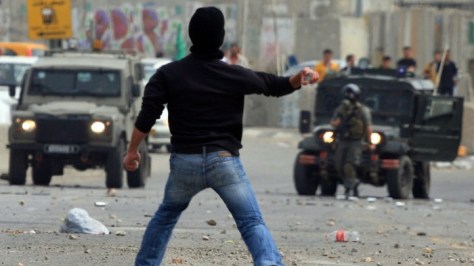
After the desecration of Al-Aqsa Mosque and other sacred Islamic sites in various parts of the occupied Palestine by Israelis, Palestinians have been pouring out on the streets. The retaliatory attacks by Palestinians have claimed the lives of seven Israelis while leaving a number of them injured. It should be noted that the average age of demonstrators and people responsible for stabbing and running over people is less than 20 years old. They were born after the Oslo Accord between the Palestinian Liberation Organization and Israel in 1993 and 1995. They are just coming of age, and it’s hard for them to see any future but a bleak one. Continue reading Why is the World Ignoring Palestine’s ‘Third Intifada’? Shubhda Chaudhary

In solidarity with Rohith Vemula: Concerned students and faculty at the Indian Institute of Management, Calcutta

Open letter to the President of India from Concerned students and faculty at the Indian Institute of Management Calcutta.

To

The President of India

Subject: An urgent appeal to address discrimination and political interference in academic institutions in the wake of the death of RohithVemula.

We, a group of students and faculty of the Indian Institute of Management Calcutta,expressour grief over the loss of the precious life of RohithVemula, a Dalit research scholar, at the University of Hyderabad.The events that transpired in the particular case were indeed tragic, with allegedinfringement of freedom of expression, caste discrimination and partisan interference by the higher State apparatus. This event is symptomatic of the larger malaise of failure of our institutions to provide a climate where students, irrespective of their social backgrounds, could find a way to excel. To create such a climate would require synchronised efforts in the parts of the State, the educational institutions and the society at large. Continue reading In solidarity with Rohith Vemula: Concerned students and faculty at the Indian Institute of Management, Calcutta