Hey Ram ( Rajya) !

Teachers as Cannon Fodder During Covid 19 ?
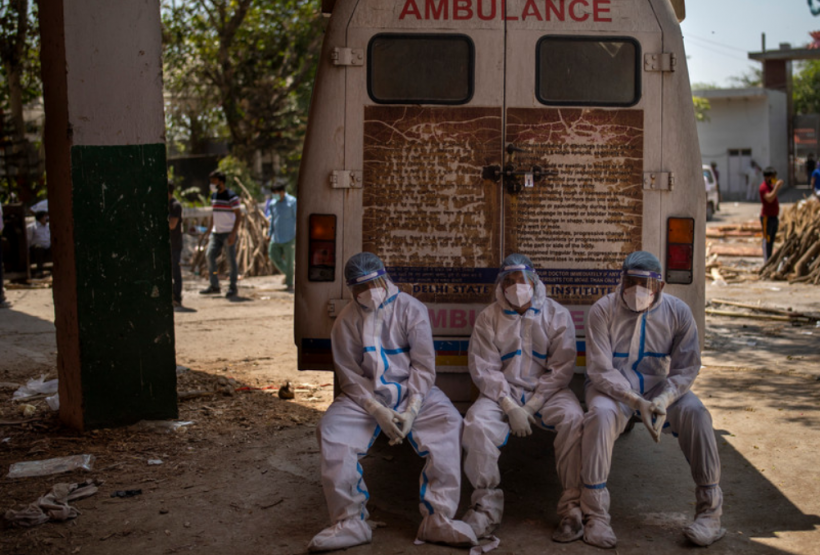
covid 19 ram rajya

There is in every village a torch – the teacher; and an extinguisher – the priest.” -Victor Hugo

Hugo, the great French writer and activist, had famously described the role education or a teacher plays in a backward society, where education was still a preserve of the few.

Perhaps we Indians can associate with it more since this has been a society where education was denied to the vast majority of people for hundreds of years just because they were born into so-called unclean families. How the mere exposure to rudimentary education could transform someone like a Muktabai – a girl born to one of the depressed caste families – challenges these age-old denials with vehemence.

It can be said with a degree of certainty that Hugo would not have envisaged a situation when the Priest himself assumes power or where a monk himself becomes the ruler.

The biggest state within the Indian Union, namely Uttar Pradesh, with a population of more than 200 million people, provides a glimpse of this phenomenon unfolds in the field of education. The state is presently governed by monk-turned-politician Yogi Adityanath; a man who till he became Chief Minister was a member of Parliament and had the sole experience of running a religious mutt.

Reports mention that 135 teachers and teaching assistants died owing to their duties in Panchayat elections in the state. A teachers’ association said how right from the days of training teachers for election duty to the actual elections, thousands of teachers and teaching assistants had contracted COVID-19.The counting of votes for these elections will occur on May 2.

( Read the full article here)

Ominous Dark Clouds Over Bengal’s Skies…

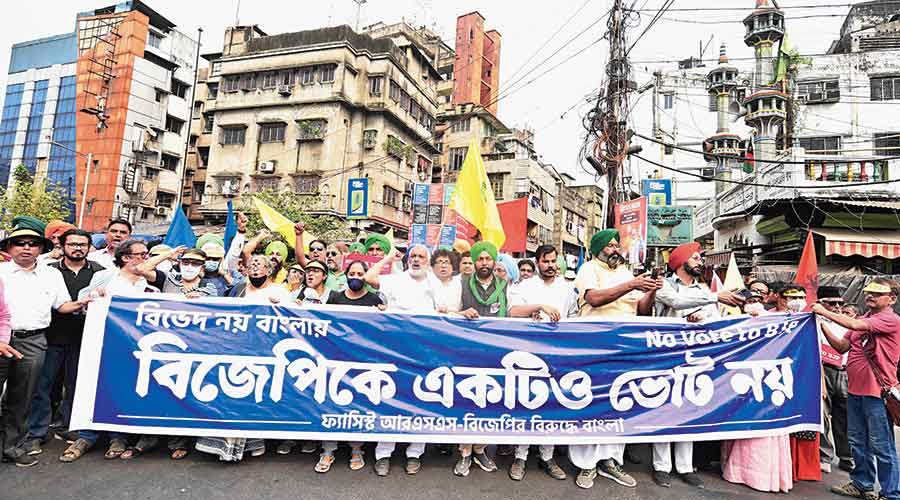
A demonstration by the ‘No Vote to BJP’ campaign in Kolkata, (older image) courtesy The Telegraph

As close to 8.5 lakh voters spread over 35 Assembly constituencies go to vote today in the last phase of Bengal’s elections, the line from the famous jatra Nabab Siraj-Ud-Doula from which the title of this post is extracted, haunts. The original ‘jatra pala’, written by Sachin Sengupta was staged in 1938 had a dialogue that announced the dark clouds collecting at Bengal’s horizons. The lines ‘Banglar akashe aaj durjoger ghanaghata/ Taar shyamal prantore rakter alpona’ have since resounded in the many iterations of the play, over the decades. The figures of Siraj-Ud-Daula and the traitor Mir Jafar have generally become part of Bengal’s political vocabulary but this time round the sense of Bengal being under attack from ‘outsiders’ has been pervasive. Along with that other episode of political folklore – repeated attacks by the borgis or the plunderous cavalrymen of the Maratha Empire, on Bengal has been recalled often. The attacks by the borgis were followed, only a few years later, by the Battle of Plassey (Palashi), in which Siraj-Ud-Daula was defeated after Robert Clive bribed Mir Jafar, his army commander, to betray the Nawab. 

This time round too, it is widely believed, the aggression by ‘outsiders’ cannot and will not succeed but for the Mir Jafar’s who collaborate with the aggressors.

Continue reading Ominous Dark Clouds Over Bengal’s Skies…

Why ensuring dalit human rights is still a tough task in the 21 st century

‘Sunped in Haryana and Natham in Tamil Nadu, separated from each other by hundreds of kilometers, populated by communities speaking different languages and cultures, find themselves connected because of this ‘Unity in Diversity’ of a different kind; being witness to atrocities on Dalits in very many ways.’

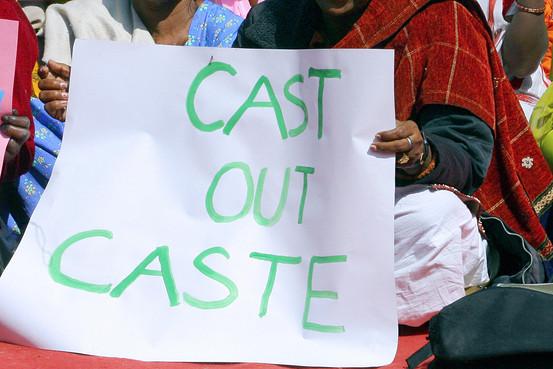
Representational image. | Image Courtesy: Wall Street Journal

“The Smallest Coffins are the Heaviest”.

Sunped, a small village in Faridabad, Haryana, hit the national headlines recently once again, when a CBI court gave its verdict in case of the deaths of two Dalit children.

If memory does not fail you, one would recall that this village had witnessed the deaths of two children – two and a half year-old Vaibhav and ten-month-old Divya – who were burned alive and their parents Rekha and Jitender suffering burn injuries half a decade ago. 

These deaths in a village which had a background of simmering conflict between dominant castes and Dalits, despite police protection provided to the ill-fated family, had caused  tremendous uproar at the national level. Rallies and marches were held in different parts of the state and in the rest of India as well, demanding justice for the family. A callous statement by a Union Cabinet Minister about the incident where he argued that the government cannot be held responsible if “someone throws stones at a dog” had then added further fuel to the fire.

Perhaps to douse popular anger, the state government led by Manohar Lal Khattar had ordered a CBI enquiry into the case. It also took into custody eleven members of the dominant caste (namely Rajputs) from Sunped for their alleged involvement in these killings, based on a complaint by the victims.  

The verdict by the CBI court in the case has landed the struggle for justice in this particular case into a black hole. 

( Read the full article here)

What happens when faith overrides sense ?

The severity of the second wave and the government’s unpreparedness demonstrate the limits of ‘strong’ leadership and religion-based politics.

What Happens When Faith Overrides Sense?
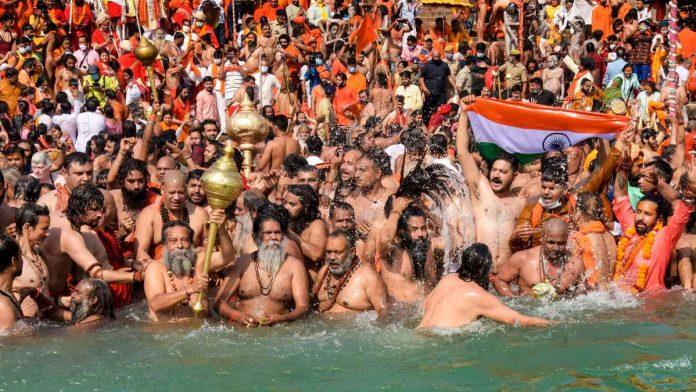
Image : Courtesy PTI

It was 1527, and Martin Luther, leader of the Protestant Reformation, wrote a letter advising a Lutheran leader what a believer should do during an epidemic. Europe was in the deadly grip of the bubonic plague at the time. It had killed thousands of people.

Extracts of his letter are relevant even today, especially the parts where Luther talks about what to do during an epidemic: “…Then I shall fumigate, help purify the air, administer medicine, and take it. I shall avoid places and persons where my presence is not needed in order not to become contaminated and thus perchance infect and pollute others, and so cause their death as a result of my negligence.”

Tirath Singh Rawat, the Chief Minister of Uttarakhand, perhaps does not know of this letter or its contents. Surprisingly, he does not even seem to recall the experiences from last year. In fact, much of what happened during the Covid epidemic seems lost on him. In 2020, public places of worship and religious gatherings became super-spreaders of the virus. That is why, for the first time, religious congregations were banned everywhere from Mecca to the Vatican to arrest the spread of the pandemic.

So, it is strange that Rawat cannot recall how believers took the back seat and ceded space to science during the first wave. Indeed, he has made a specious claim that faith in God will overcome the fear of the virus, in the context of the Kumbh Mela, a gathering where tens of lakhs of people gathered earlier this month.

( Read the full text here )

Sitalkuchi And After – A Flashback to CPI-M Rule in West Bengal

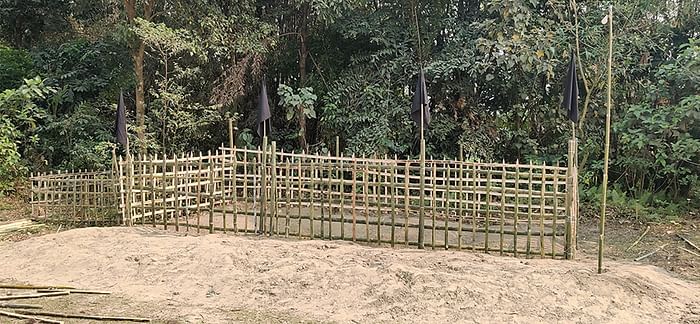
Graves of the four young men killed in Sitalkuchi, courtesy Newslaundry

As the news of the killings of four youth in Sitalkuchi in Cooch Behar district by the Central Industrial Security Force (CISF) came in on 10 April, reactions of horror and anger became evident all around. This reaction among politically informed sections was only natural, for anybody with a little bit of common intelligence will tell you that the BJP is making an all out bid to capture power in the state. And anyone who has watched the Modi-Shah duo in action over the past few years, does not need to be told what this means. It is always ‘Heads I win; Tails you lose’ with them. It doesn’t matter what dirty trick you have to play, all is fair in this game of capturing power with them. They will form the government, no matter who wins but first, every effort has to be made to ‘win’ by any means. And that means by ANY means, ranging from killing people by engineering violent communal incidents to buying off opposition parties’ winning legislators. Despite the full battery of BJP’s star campaigners ranging from Narendra Modi and Shah to Yogi Adityanath making repeated visits to the state, their rallies have seen very low turnout and in some instances meetings had to be cancelled. So the desperation is growing. The first four of the unprecedented eight rounds in the state’s elections were to be in the areas where TMC is relatively weak. But even in these areas the reports were not very encouraging for the BJP. Thus, every child in Bengal could see what these killings meant. Except the CPI-M that is.

Soon the story of the killings was being given a typically BJP IT Cell spin: a mob of Muslim TMC people surrounded the CISF and tried to snatch their rifles. This was followed by identical tweets by a range of people describing how they could not sleep all night because of the sounds of the explosion of bombs, suggesting that things had been going on all night – and the CISF action in the morning was therefore, only justified.

Seasoned CPI-M stalwarts on Twitter apparently neither saw those tweets or more likely, jumped at them to immediately amplify the BJP narrative of provocation by TMC (Muslim mob is often implied). It is certainly not possible that anybody with a little bit of common sense would not have immediately seen this copy paste job for what it was – a BJP IT Cell operation. The CPI-M leaders and their social media warriors went on, willfully, to reinforce the ‘provocation’ narrative that was being circulated by the BJP.

Meanwhile, many people including poll analysts and former bureaucrats started asking that if there really was an irate mob attacking the CISF party, where was the footage? Was there any video evidence? No such question crossed the CPI-M leaders’ minds and from all appearances, from Biman Bose to Mohd Salim (and the pathetic Sujan Chakrabarty) pushed ahead with not-so-subtle ways of relaying the BJP narrative and indeed, it was not difficult to discern that they were in fact, gloating.

Continue reading Sitalkuchi And After – A Flashback to CPI-M Rule in West Bengal

Living with the Virus ?

Whether people of the world will have to learn to live with the virus?

As India and many parts of the world seem to be engulfed by the second or third wave of the Coronavirus epidemic – which looks more dangerous – this idea is being pushed from different quarters.  Newspaper articles or surveys or studies have appeared in different publications which seem to be pushing this narrative.

Sample conclusions of a study done jointly by Emory and Penn State University which say “One year after its emergence, severe acute respiratory syndrome coronavirus 2 (SARS-CoV-2) has become so widespread that there is little hope of elimination.” This appeared in an article in USA Today . A famous journal Nature also shared a survey which talked to Scientists and around 90 per cent of the Scientists polled talked of how Covid is likely to be endemic in pockets of the global population.(do)

Continue reading Living with the Virus ?

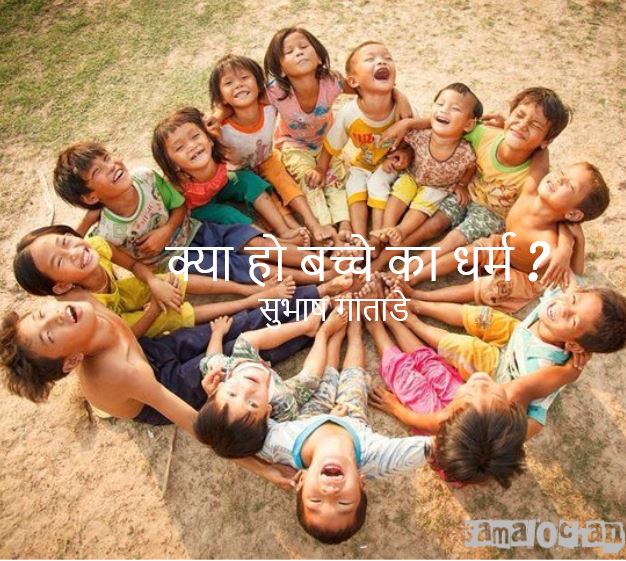
क्या हो बच्चे का धर्म ?

“Five minutes after your birth, they decide your name, nationality, religion, and sect, and you spend the rest of your life defending something you did not even choose.”

: Quote, unnamed

1.

आप कह सकते हैं कि पहली दफा मैं इस पहेली से तब रूबरू हुआ था या कह सकते हैं कि अधिक गंभीरता से सोचने लगा जब बंबई की इस ख़बर ने ध्यान खींचा था.

किस्सा थोड़ा पुराना लग सकता है अलबत्ता आज भी मौजूं.

मराठी परिवार में जनमी एक युवती और गुजराती परिवार में पले युवक ने- जिन्होंने अन्तरधर्मीय विवाह किया है और बम्बई में बसे थे- दरअसल यह तय किया कि वह अपनी नवजन्मी सन्तान के साथ किसी धर्म को चस्पां नहीं करेंगे. उनका मानना था कि बड़े होकर उनकी सन्तान जो चाहे वह फैसला कर ले, आस्तिकता का वरण कर ले, अज्ञेयवादी बन जाए या धर्म को मानने से इनकार कर दे, लेकिन उसकी अबोध उम्र में उस पर ऐसे किसी निर्णय को लादना गैरवाजिब होगा.

निश्चित ही अपने इस फैसले पर अमल करने में उनके सामने काफी बाधाएं आयीं. सन्तान का जन्म प्रमाणपत्र तैयार करने में अलग-अलग दफ्तरों के चक्कर काटने पड़े, एक अफसर ने तो युवती से पूछ लिया कि क्या तुम्हें अपने धर्म पर गर्व नहीं है ?  युवती ने तपाक से जवाब दिया कि भले ही वह धर्म को मानने वाले परिवार में जन्मी हो, लेकिन किसी भी रीति रिवाज को नहीं मानती और अहम बात यह है कि क्या एक जनतांत्रिक धर्मनिरपेक्ष देश में मां बाप यह फैसला नहीं ले सकते कि वह अपनी संतान को किसी धर्म से नत्थी नहीं करेंगे.

( Read the full text here)

Nandigram – An Introduction to Political Analysis

Nandigram 2007, Image courtesy Kolkata24x7

Mamata Banerjee recently stirred up a fresh new controversy by accusing her former party colleague Suvendu Adhikari, now adversary in the Nandigram Assembly seat as BJP candidate, of being complicit in the 14 March 2007 violence. Had it not been for the complicity of the ‘father-son duo’ (Suvendu and his father Sisir Adhikari, both in the BJP now), she claimed in the heat of the electoral campaign, the police could not have entered Nandigram. She also asked rhetorically how it came to be that these two were spared by the police? To my mind, the claims seem difficult to sustain, if only because, the CPI(M) was at the height of its power and would have had little to do with these Trinamool Congress leaders. Listening to her speak, it did seem that she was quite rattled. Who would not be – with Amit Shah and central government on one side, the aggressive BJP goons in the state, her erstwhile collaborators now on the BJP side and, to cap it all, the aggressive, misogynist, patriarchal campaign against her from the CPI(M)? One meme by people obviously linked to the CPM, for instance, portrayed her witch-like, with a haggard and wicked expression, which was counter-posed to the young beauteous CPI(M) candidate Meenakshi Mukherjee. The meme describes Meenakshi as the ‘beloved daughter of Bengal’, while Mamata is described as the ‘old hag spinster sister-in-law’. (After a lot of hue and cry, this meme was taken off though the page continues to be on Facebook).

Continue reading Nandigram – An Introduction to Political Analysis