All posts by Aditya Nigam

One month at an Indian Yoga Centre: Dhruv Ramnath

Guest post by DHRUV RAMNATH

“When you are in India, you must follow Modi. When you are in America, you must follow Trump,” said the semi-literate Odia instructor to a batch of 70-odd students at Swami Vivekananda Yoga Anusandhana Samsthana (S-VYASA), a university which received crores from our prime minister not so long ago. 30 kms from Bangalore, its Vice-Chancellor, Dr. H. R. Nagendra (“Guruji” to his devotees), went further. “Thanks to Modi, we are now taking yoga to the world,” he said on the first day. Both the Odia speaker and Guruji told us to “have a smile on our face all the time”. Repeated so often whilst we performed our asanas, it became patently corny and destroyed any sense of feeling welcome and of enjoying a simple, one-hour class.
Continue reading One month at an Indian Yoga Centre: Dhruv Ramnath

‘आधार’ न बचा, न मरा, बचा केवल मदमस्त सफ़ेद हाथी : राजेन्द्र चौधरी

Guest post by RAJINDER CHAUDHARY

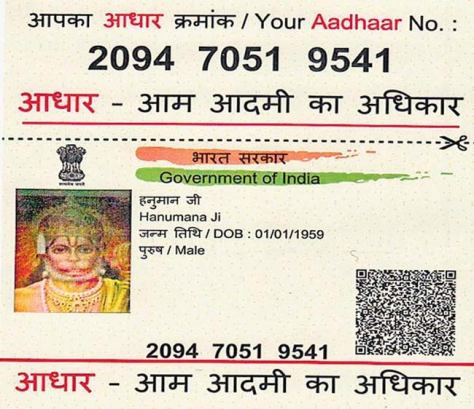
Aadhar for Hanumanji
Aadhar for Hanumanji, image courtesy Aaaj Tak

उच्चतम न्यायालय के बहुमत ने ‘आधार’ पर दिये गए हालिया फैसले में सरकारी योजनाओं, सब्सिडी इत्यादि का लाभ लेने के लिए आधार अनिवार्य करने के सरकारी फैसले को सही ठहराया है। इस के साथ ही आयकर दाता के लिए भी आधार अनिवार्य कर दिया है। इस के अलावा बाकी जगह इस के प्रयोग को अवैध ठहरा दिया है; अब न मोबाइल फोन और न बैंक खातों के लिए यह ज़रूरी रहेगा। न निजी कंपनियाँ इसे मांग या प्रयोग कर पाएँगी। यह सब अब बच्चा बच्चा जानता है। सवाल यह है कि इस परिस्थिति में अब आधार का क्या प्रयोजन बचा है?
सरकार ने अदालत में आधार को कर-चोरी, काले-धन और आतंकवाद के खिलाफ लड़ाई और राष्ट्रीय सुरक्षा के लिए एक सशक्त हथियार के तौर पर प्रस्तुत किया है (बहुमत समेत तीनों फैसलों की एक संयुक्त फाइल का पृष्ठ 1095-6)। काले-धन के खिलाफ लड़ाई के लिए बैंक खातों और पैन को आधार से जोड़ना अनिवार्य किया गया था। आतंकवाद से लड़ने एवं राष्ट्रीय सुरक्षा के लिए मोबाइल फोन के लिए आधार अनिवार्य किया गया था। अब जब बैंक खातों और मोबाइल फोन के लिए आधार अनिवार्य नहीं रहा, तो अब आधार इन दोनों उद्देश्यों की पूर्ति के लिए किसी काम का नहीं रहा। लोगों के छद्म नाम से कई-कई खाते चलते रहेंगे और काले धंधे का कारोबार जैसे अब तक चलता रहा है, वैसे ही चलता रहेगा। आयकर दाता के लिए आधार अनिवार्य करने से काले धंधे और काली कमाई पर कोई खास फर्क नहीं पड़ेगा। अदालत के आधार को वैध ठहराने वाले एक जज ने भी अपने फैसले में कहा है कि बैंक खाता और पैन कार्ड दोनों का लिंक होना ही प्रभावी होगा (अकेला पैन कार्ड नहीं; इस लिए उन्होने बैंक खातों के लिए भी आधार को वैध ठहराया है हालांकि अल्पमत होने के चलते उन के फैसले का यह अंश प्रभावी नहीं होगा (पृष्ठ 55 माननीय जज अशोक भूषण के फैसले का/पृष्ठ 1103 तीनों फैसलों की संयुक्त फाइल का)।
Continue reading ‘आधार’ न बचा, न मरा, बचा केवल मदमस्त सफ़ेद हाथी : राजेन्द्र चौधरी

The Impossible Gandhian Project and its Limits – Remembering the Mahatma Today

Gandhi, Nehru and Azad, Wardha 1935, image courtesy Governance Now

Majboori ka naam Mahatma Gandhi (Roughly: Compulsion thy name is Mahatma Gandhi)

I have grown up hearing this expression and have often wondered about its meaning and at the almost proverbial status acquired by it. Whose majboori or compulsion was Gandhi really? Well, at one level, everybody’s, for practically every current within the anti-colonial struggle was uncomfortable with his presence and his leadership. Jawaharlal Nehru had even remarked once that after independence, his fads would have to be kept in check. All nationalists who fought for independence from colonial rule (as opposed to the pseudo-nationalists who tried to convert it into a cow-protection movement) had their gaze fixed on the state. They wanted control of that coveted instrument – that was the crux of their anticolonial struggle. There were others like BR Ambedkar, who too invested a lot in the state but realized that the state in the hands of the nationalists would be a disaster for his people. But no one among them (poet-thinkers like Tagore apart) was prepared to look beyond the state. And Gandhi’s disavowal of the state – and of politics as such – was something that no one could digest. More than anything else, that was what made him a majboori for this set of people who could only lay their hands on their object of desire as long as Gandhi was in the leadership – for he alone could move millions like no one among his contemporaries could.

But my hunch is that these were not the people who coined this expression. Gandhi was a bigger majboori for another set of people who were, ironically, equally disinterested in the state and its ‘capture’ – at least till recently. Yes, these were the different currents of the Hindutva Brigade (VD Savarkar of the Hindu Mahasabha and his followers and the Rashtriya Swayamsevak Sangh). They had to tolerate Gandhi – that is exactly what their majboori meant – till they could finally eliminate him. And it was one Nathuram Godse, with connections to both Savarkar and the RSS, who eventually killed him. There were earlier attempts too on Gandhi’s life – all from upper caste Hindus (one lot being Chitpavan Brahmins). Continue reading The Impossible Gandhian Project and its Limits – Remembering the Mahatma Today

Sewer Workers Deaths – The Meaning of Dalit for Bhartiya Janta Party

Guest post by PRAVEEN VERMA

If Prime Minister Narendra Modi were to write about the recent deaths of sewer workers in India, the headline would be:

Some people attained moksha (nirvana) while experiencing spirituality,

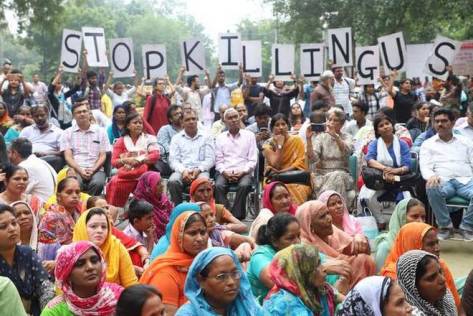
Protest against deaths in sewers, photo courtesy The Hindu

In his casteist book Karmayog, he wrote that manual scavenging is a spiritual experience, hence if some people die during cleaning sewers manually, that would be attaining moksha! In a caste Hindu society this should have been a matter of joy, that even in Kaliyuga, there are still some ‘pious’ soul who could give up all moh-maya and do this punya karma! How true this depiction/ description, one feels like saying: why not make the umpteen godmen-led spiritual movements in India take this route to spiritual moksha? This would perhaps have saved the many rapist-rioter babas from arrest and they could truly do their prayaschit (atonement) in these various, very Indian jails. This is after all the real world of this ‘spiritual experience’ of manual scavenging/sewer cleaning, where ‘Moksha’ means institutional killing!

Continue reading Sewer Workers Deaths – The Meaning of Dalit for Bhartiya Janta Party

The Poverty of Politics and Pre-Requisites of an Anti-Hindutva Front: Moggallan Bharti

Guest post by MOGGALLAN BHARTI

Going by the track record of past four years of Narendra Modi’s government, the only definitive political narrative today is that of the ruling party, characterized by its brand ideological vehemence/ aggression and paralleled by corresponding ideological ennui in the opposition camp. The fact that there is an astronomical rise in hate crimes against Muslims, Dalits, Women and other minorities, silently supported by large numbers of people, underlines the  onset of an ideology, conceptualized by the caste Hindus and institutionalized as Rashtriya SwayamSevak Sangh (RSS).

The electoral success of BJP – the political wing of RSS – only points to a reality which is the logical outcome of the political processes, wherein the Hindu right has been handled with the customary albatross of secularism around all of our necks – defying the social reality of India. In a predominantly caste society, secularism tends to obfuscates real social cleavages and gives preeminence to an idea shaped by the literate elites. That is not to say there is something inherently misplaced with the idea of secularism in this country. Certainly not! On the contrary, it is the dishonesty and the utter insincerity of the India’s political class for whom the politics of secularism remains a mere means to claim political power. Nothing wrong with that too, as long as, this means was directed to its logical end of making an India actually secular. Alas, India’s attempt at constructing a sincere secular society have been halfhearted at its best and nonexistent at its worst, regardless of the secular nostalgia that some people – very sincere and honest people – find themselves attached to.

Continue reading The Poverty of Politics and Pre-Requisites of an Anti-Hindutva Front: Moggallan Bharti

Beneath the glitter – Looking at The Asian Games : Praveen Verma

Guest post by PRAVEEN VERMA

Hima Das

Does it amaze you when you hear the stories of poverty and success in same sentence? Does it amaze us when we hear the stories of some of the best sports-persons and the hardship they have dealt with before and throughout their careers? Does it amaze us when we hear about the sorry state of affairs of sports facilities and some athletes still coming up with great performances? Does it amaze that most of these athletes come from rural India and mostly where they have much economic and social constraints, where work and employment is still precarious? Does it alarm when one get to know that some of these phenomenal sports-persons come from the areas which are still dealing with the issues of hunger, high rate of unemployment, major gender gap? Areas where women coming out and trying to make cut into sports are still taboo? How often does one hear about women from marginal sections (Dalit/Backward caste/tribal) becoming a sportsperson?

Some stories of these kinds make usual snippets in many Hindi newspapers around big sports events. Though, these stories, which are posed as individual heroic one and less of a critical approach to see the working of sports administration, are meant to be sensational and don’t do justice to the entire sports affairs in India. Continue reading Beneath the glitter – Looking at The Asian Games : Praveen Verma

Statement Demanding Immediate Release of Writers, Activists and Human Rights Defenders: IIT Kanpur Alumni and Others

We, a group of alumni of IIT Kanpur and others as students, researchers, faculty, staff and other community members affiliated with the same institute strongly condemn the arrest of IIT Kanpur alumna Sudha Bharadwaj (Integrated MSc., Mathematics, 1979-1984) and other activists namely, Vernon Gonsalves, Arun Ferreira, Gautam Navlakha and Varavara Rao, and the raiding of houses of Anand Teltumbde, K. Satyanarayana and Stan Swamy among many others. These arrests seem to be a mere sequel in an ongoing attempt to intimidate and arrest activists, eminent writers, professors, journalists, and human rights defenders around the country.

Sudha Bhardwaj has a public record of dedicating herself to the most marginalized through her work spanning more than thirty years. She finished her integrated bachelors and masters program of Dept of Mathematics, IIT Kanpur, in 1984. Already socially conscious as a student, by 1986 she had moved to Chhattisgarh working with a workers’ organization and trade union in the mining-industrial belt of central Chhattisgarh. It is here she found her calling as a trade unionist, and later, as a lawyer. We have compiled a short biography of her long journey at https://goo.gl/J6F9kK – it is clear that she dedicated herself entirely to the most vulnerable and powerless, working through the rights and frameworks guaranteed in the Indian constitution. Continue reading Statement Demanding Immediate Release of Writers, Activists and Human Rights Defenders: IIT Kanpur Alumni and Others

Joint Statement Condemning Arrest of Activists and Public Intellectuals

Following is the final statement with the signatures as they were when it was closed for purposes of releasing to the media and sent to us by the initiators of the campaign.

We, the undersigned, are shocked by the serial raids across the country on the homes of activists and public intellectuals who are critical of the government and the ruling party at the Centre. The arrests of prominent activists and intellectuals Sudha Bharadwaj, Vernon Gonsalves, Gautam Navlakha, Varavara Rao, Arun Ferreira and others, are nothing but an attempt by the government to strike terror among those who are fighting for justice for the marginalised. This is also an attempt by the BJP to invent a false enemy and engage in scaremongering in order to polarise the 2019 elections in its favour. Already, the government and the media houses close to the BJP have been trying to spin a false narrative of a Maoist conspiracy since June, 2018. Terms like “urban naxals” are invented in order to stifle any criticism of the government. We have learnt that the Delhi Police, after having arrested Sudha Bharadwaj, waited for Republic TV to arrive before taking her to the court. This simply shows that the arrests are incomplete without the accompanying sensationalist media propaganda to demonise activists, human rights defenders and intellectuals.

Continue reading Joint Statement Condemning Arrest of Activists and Public Intellectuals

WSS Statement Against Arrests of Sudha Bharadwaj, Vernon Gonsalves, Arun Ferreira, Gautam Navlakha and Varavara Rao

The following is a statement by WOMEN AGAINST SEXUAL VIOLENCE AND STATE REPRESSION (WSS) against the raids on and arrests of activists and intellectuals in different cities.

WSS strongly condemns the arrests of its member Advocate Sudha Bharadwaj, and activists Vernon Gonsalves, Arun Ferreira, Gautam Navlakha, Varavara Rao, and the raids at the homes of Father Stan Swamy, Dr. Anand Teltumbde, Prof. K. Satyanarayana, Pavana, Anala, Kurmanath, Kranti Tekula and others conducted by the Maharashtra police along with the state police of Telangana, Jharkhand, Goa and Delhi. These searches and arrests are a diversionary tactic to draw attention away from the spine chilling revelations about Hindu Sanatan Sanstha and Hindu Janjagruti in connection to the assassinations and bomb terror which they have been masterminding.

Continue reading WSS Statement Against Arrests of Sudha Bharadwaj, Vernon Gonsalves, Arun Ferreira, Gautam Navlakha and Varavara Rao

‘अरबन फासिज्म’ की शुरुआत : वैभव सिंह

Guest post by VAIBHAV SINGH

रामचरित मानस में सुन्दर कांड में एक पंक्ति आती है, जो कही तो विभीषण के मुंह से गई है लेकिन वह आज के लोकतंत्र पर भी लागू होती है। चौपाई में विभीषण कहते हैं- ‘सुनहु पवनसुत रहनि हमारी। जिमि दसनन्हि महुं जीभ बिचारी।’ यानी विभीषण कहते हैं कि मैं ऐसे ही रहता हूं जैसे दांतों के बीच जीभ। प्रसंगांतर करके देखें तो भारतीय लोकतंत्र की हालत भी अब फासीवाद, सांप्रदायिकता व पूंजीवादी लोभ-लालच के जहरीले विषदंतों से घिरी जीभ जैसी नहीं हो गई है जिसे कोई भी काट लेना या आहत कर देना चाहता है?  गिरफ्तारियां, सर्चवारंट, नजरबंदी और मीडिया प्रोपगंडा हमारे देश की सर्वप्रमुख सचाई बन चुकी है और अब इस लोकतंत्र के भीतर सशक्त हो चुके अधिनायकवाद के लिए अब यही चीजें उसके शासन की वैधता का प्रमुख आधार बन गई हैं। जिस देश में हर वक्त मुठभेड़, गिरफ्तारी या देशद्रोहियों की खोज का सत्ता-प्रायोजित अभियान चल रहा हो, वहां लोकतंत्र के बारे में सोते-जागते चिंता न होना स्वाभाविक तौर पर संवेदनहीनता या फिर कमअक्ली का लक्षण माना जा सकता है। जैसे साइनबोर्ड पर किसी ने लिख कर टांग दिया है कि लोकतंत्र की अमुख तारीख को हत्या कर दी जाएगी, वह तारीख नजदीक आती जा रही है। ठीक रघुवीर सहाय की ‘रामदास’ कविता में रामदास की हत्या की तरह सभी को जैसे पता चल चुका है कि लोकतंत्र की हत्या हो जाएगी पर सब अपने-अपने काम में मसरूफ़ हैं। रघुवीर सहाय के शब्दों में-

निकल गली से तब हत्यारा/आया उसने नाम पुकारा/

हाथ तौलकर चाकू मारा/ छूटा लहू का फव्वारा/

कहा नहीं था उसने आखिर उसकी हत्या होगी।

Continue reading ‘अरबन फासिज्म’ की शुरुआत : वैभव सिंह

Government should not Fail Children to Cover up Education System’s ailure: A Statement

A statement by concerned organizations, teachers’ unions and academics against government proposal to amend RTE Act to scrap no detention policy and to fail children in class V and VIII. The statement was issued in New Delhi on 25 July 2018

The civil society organisations, teacher unions, and academicians working in the education sector across 20 states of India strongly oppose the Lok Sabha’s decision to pass‘ The Right of Children to Free and Compulsory Education (Second Amendment) Bill, 2017’. This bill paves the way for the scrapping of the provision for ‘No Detention’ by allowing states to detain children in class V and VIII. Over 20,000 Indians had already urged the government to withdraw the bill scrapping the ‘No Detention Policy’.

Continue reading Government should not Fail Children to Cover up Education System’s ailure: A Statement

Some Reflections on Rape in India: Bobby Kunhu

Guest post by BOBBY KUNHU

A couple of days back, representatives of a group that wanted a petition demanding death penalty for all the accused in the Chennai gang rape case sought an appointment with me. I had clarified that I will not be part of any process demanding death penalty and would be glad to meet them on any other discussion they might want on the case. While, I managed to convince those who met me that death penalty cannot be a deterrent against rape, I suggested that instead of the petition they should spend their efforts to energize a change in the current discourse on rape in whatever small ways possible. The meeting ended with plans of a more substantive plan of action to discuss possibilities of advocating accessible spaces for children vulnerable to physical or sexual abuses at least in the neighborhood. I have summed up some of the points that I made at the discussion and I thought it would be important to share them with a wider audience.

Continue reading Some Reflections on Rape in India: Bobby Kunhu

Statement of Jadavpur University Alumni Against University Decision to Scrap Entrance Examinations

Following is a statement of Jadavpur University alumni on the current controversy around the scrapping of the entrance examination by the university authorities. 

There is also a Change.org petition that has been put up for those wanting to sign. Over 5075 people have signed the petition at last count.

Thos who who wish to sign in solidarity with Jadavpur University teachers, students and staff can do so here.

We, the alumni of Jadavpur University, unequivocally condemn the decision of the authorities to not conduct entrance examinations for admission to the university’s Bachelor of Arts programme.

Several departments of the Jadavpur Arts Faculty annually conduct their own entrance examinations. For the last forty years, teachers have carefully prepared question papers and rigorously evaluated the answers in order to admit the candidates that they deem fit. The tradition of the entrance examination, in which thousands of students participate every year, has ensured that the Faculty of Arts continues its legacy of academic excellence. No weightage is given to Board examination marks because the Boards’ prescribed methods of arts education and evaluation simply do not match those of tertiary education in the humanities. The entrance examinations test students for their interest in literature, history, philosophy and arts, their ability to think independently about texts, and their commitment to understanding the world around them using the skills of reasoning and speculation, the theoretical and methodological capital furnished by the humanities.

The entrance examination has enabled these departments to gain talented students year after year. Many of us would have never made it to the top-ranked Arts departments in the country had we been judged solely on the basis of our marks in school-leaving examinations. Admissions based on Board exam scores would have never enabled students from varied cultural, class and economic backgrounds to be trained in the humanities by the best minds in the country. The rich and diverse professional accomplishments of Jadavpur University alumni – in art, academia, film, entrepreneurship, publishing, writing, advertising and many other fields – constitute a further testament to the success of these departments in scouting and honing talent. First-person accounts of how the erstwhile admissions process created equality of opportunity and access for students from across a range of social and educational backgrounds have poured in from Jadavpur alumni since yesterday (3/7/2018). (To read personal testimonials and opinion pieces from faculty, alumni, staff and current students regarding the significance of the admission process, visit https://juforadmissiontest.wordpress.com/)

The admission test is a time-tested process which has ensured academic excellence in the Faculty of Arts and brought glory to the university. To tamper with this process is to threaten the very core of the humanities – to attack free thinking, liberty, and equality of opportunity. It directly undermines the dreams and hopes of the 17,000-odd students who have applied to Jadavpur University this year. Among these 17,000, there must be brilliant young minds that couldn’t obtain 90% or more in the Board examinations. Their merit cannot be reliably boxed into multiple-choice questions. There must be, in those 17,000, young people who do not seek conventional careers, or if they do, wish to combine them with independent thinking, exploring and lifelong learning.

To stop the admission test is to kill the dreams of anyone who does not participate in the mad rat race of public examinations. It is an attack on the community of scholars, researchers, teachers, alumni, students, and staff who have carefully built up the university and its reputation over the years. To stop the admission test is to tear into the very fabric of the university – its tradition and its history. We must recall that Jadavpur University was set up as an alternative to the education imparted by the erstwhile rulers of India, the British. It has always been home to those who dare to defy norms.

The larger implications of this administrative decision concern the scope and function of higher education in this country. Do we, as a nation, wish to create a more homogenised and technocratic culture that rewards learning by rote, or do we wish to invest in greater autonomy for centres of excellence? Difference and dissent are what all democracies should aspire to; they are the touchstones of any free and open society, and any administration that encourages these tendencies signals its confidence in itself and hope for the future. What we are seeing here is, accidentally or not, congruent with a larger attempt to fundamentally redefine the idea of higher education, to increase administrative interference in universities large and small, more and less prominent (similar conflicts are playing out in JNU, to cite just one example) and to condemn generations of young people to the backwaters of real learning, thought and creativity.

As concerned alumni, we strongly condemn the decision of the authorities to take away independent admission tests from the Faculty of Arts. We demand an immediate revocation of this order, which irrationally, pointlessly, and appallingly undertakes to disrupt a fair and successful admission process. This disruption will impact the futures of countless students, and reduce the entry-point of tertiary education in the humanities to a lottery.

We stand in solidarity with the protesting teachers, students and staff of Jadavpur University. Continue reading Statement of Jadavpur University Alumni Against University Decision to Scrap Entrance Examinations

Great Dance of Return in Gaza – Performing Palestinian Dabke in the Midst of Zionazi Attacks

This dance – the Palestinian Dabka – was performed amidst firing by Israeli Zionazis  on the 30th of June 2018. Remember the cowards stepped up their attack on Gaza as the holy month of Ramzan began. This video has all the ambient noises – of the firing of bullets and other war sounds and is therefore worth listening to. It has also gives you a sense of the extremely tense situation at the border.

To listen to the cleaner version, where you can hear the sound of the music more clearly, click here and listen to the second video.


Citizens’ Solidarity with Voices of Democracy – Against the Arrest of Five HR Activists

[This is a statement of solidarity endorsed and signed by over 200 intellectuals, artists, academicians, lawyers, journalists, and students in support of the five arrested in connection with Bhima-Koregaon case. In the 43rd year after Emergency was declared in this country, this statement was issued on June 25th 2018 condemning the arrest of such voices of democracy and demanding their immediate and unconditional release.]

We condemn the arrest of five human rights activists, professors and lawyers in connection with the Bhima-Koregaon clashes early this year. The alarming arrest of Advocate and General Secretary of Indian Association of Peoples’ Lawyers (IAPL) Surendra Gadling, Committee for the Release of Political Prisoners (CRPP) Public Relations Secretary Rona Wilson, Head of English Department Professor Shoma Sen of Nagpur University and member of Women against Sexual Violence and State Repression (WSS), cultural activist and founder of Republican Panthers Jaatiya Antachi Chalwal Sudhir Dhawale and anti-displacement activist and Prime Ministers Rural Development Fellow (PMRDF) Mahesh Raut is a clear manifestation of state terror to crush the voices of dissent in this country.

The intemperate use of sections of the IPC and Unlawful Activities (Prevention) Act (UAPA) on all five reveals legal over-reach and exposes the desperation to foist extraordinary and excessive charges on all five to ensure they remain in the clutches of the Fadnavis-Maharashtra government. All the arrested have consistently worked for the assertion of oppressed and marginalised communities against majoritarian forces, spoken out against Brahmanical patriarchy, upheld peoples’ rights to land, life and dignity, and have strived for the release of political prisoners.

Continue reading Citizens’ Solidarity with Voices of Democracy – Against the Arrest of Five HR Activists

Thoothukudi Massacre – When State becomes Predator: Bobby Kunhu

Guest post by BOBBY KUNHU

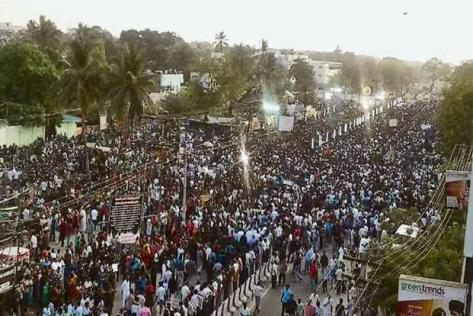
Thoothukudi protests – Image courtesy LiveMint

On 22nd May 2018, in what cannot be imagined even in a dictatorial regime, the police in Thoothukudi, Tamil Nadu – a South Indian state opened fire to kill, on a group of peaceful protesters marching towards the district administration office demanding denial of permission for expansion and closure of the existing copper smelting plant of Sterlite. Sterlite is a subsidiary of the London based corporation Vedanta, which has been dumping toxic waste all over this town since 1998 resulting in widespread health hazards including increase in reports of cancer. This massacre is unimaginable even in the worst dictatorial regimes, because not only were known national and international legal norms and protocols in crowd/riot control violated, but also because the video clippings that have surfaced after the massacre seem to indicate sufficient premeditation – with a plainclothes sniper on the top of a van being ordered to kill at least one person. Continue reading Thoothukudi Massacre – When State becomes Predator: Bobby Kunhu

The Karnataka Moment and the Search for a ‘Bonapartist’ Figure – Looking at 2019

There are enough reasons for for the upbeat and celebratory mood in the anti-BJP-RSS camp following the resignation of BS Yeddyurappa even before the floor test. After all, for once, the game plan of the Modi-Shah duo fell flat, thanks in no small measure, to the Supreme Court’s intervention in directing that the floor test be done by 19 May, knocking down the (RSS) Governor’s initial provision of 15 days to the government to prove its majority. In a manner of speaking, we escaped just by the skin of our teeth.

Both the parties concerned – the Congress and the Janata Dal (S) – were on tenterhooks throughout and the surreal accounts of the high drama of the past three days read like they could be about the nether worlds of crime and mafias. Offers to buy off MLAs with money ranging from Rs 5 crores and a ministry to Rs 100 crores have openly been alleged but these were the relatively minor matters. Congress and JD (S) MLAs were not allowed to leave Bengaluru as their chartered flights were ‘denied permission’. [An MLA, in fact told the Times of India, in the same report linked here that by manipulating resources, the BJP had ‘caged us’ in the state]. Their security cover was withdrawn. The management of the resort in Kochi (another state, not even ruled by the BJP) they had booked into by the Central leadership, actually backed out stating that they were under tremendous pressure. Then began the trip by road to Hyderabad, where eventually, it was the Telengana police that ensured their safety. Stories of individual MLAs, either being offered with withdrawal of pending cases or being threatened with harassment with new ones have also been doing the rounds. And for those who have been following what has been happening to the AAP MLAs in Delhi, nothing of this should be unbelievable.

Continue reading The Karnataka Moment and the Search for a ‘Bonapartist’ Figure – Looking at 2019

How the Supreme Court gave up on Democracy in Karnataka: Bobby Kunhu

Guest post by BOBBY KUNHU

There is all around jubilation in the anti-BJP, particularly the Congress camp that the Supreme Court has cut short the time given to Yediyurappa by the Governor to prove his majority from 15 days to 24 hours. This jubilation is extremely myopic and self serving and is in no way rooted in the tall claims that the Congress has been making about trying to save the Constitution. All the Supreme Court order does is reduce the window of opportunity for the BJP to indulge in horse trading and increase the chances of the Congress-JDS combine to keep their flock together and win the assembly – and also substantially reduce the resort costs.

Continue reading How the Supreme Court gave up on Democracy in Karnataka: Bobby Kunhu

Open letter to the Prime Minister of India on the Kathua and Unnao Rape Cases – The Full Text

To,

The Prime Minister of India,

Prime Minister’s Office, South Block,

Raisina Hill, New Delhi 110 001.

21 April 2018

Mr Prime Minister,

We are academics and independent scholars from India and abroad, writing to express solidarity with, and to endorse the sentiments expressed by, forty-nine retired civil servants in their open letter to you of April 16th 2018 (https://thewire.in/politics/narendra-modi-open-letter-kathua-unnao).

Along with these civil servants and countless other citizens of India and the world at large, we wish to express our deep anger and anguish over the events in Kathua and Unnao and the aftermath of these events; over the efforts, in both cases, of those administering the relevant States to protect the alleged perpetrators of these monstrous crimes; over the subsequent profoundly distasteful efforts of rationalisation, deflection and diversion that have been so much in evidence in the reactions of your party’s spokespersons in the media; and finally over your own prolonged (and by now familiar) silence that was broken only recently with wholly inadequate, platitudinous, and  non-specific assurances of justice for the victims. Continue reading Open letter to the Prime Minister of India on the Kathua and Unnao Rape Cases – The Full Text

Petition to Supreme Court Urging Verdict in Judge Loya Case

The following petition initiated by Prasenjit Bose appeals to the Supreme Court to reconsider the verdict in the case regarding Judge Loya’s death. Since the launch of the petition, over 527 persons have already signed it. A list of 40 prominent signatories is provided below. A hard copy of the petition along with the total list of signatories will be sent to the Supreme Court judges once we collect thousand plus signatures.  The petition can be signed here.

To
The Hon’ble Chief Justice

& His Companion Justices,

The Supreme Court of India

Most Respectfully Sheweth:

We the undersigned citizens of India are deeply anguished by the order passed by a three judge bench of the Supreme Court that there is no merit in the writ petitions seeking an Inquiry into the death of Justice Brijgopal Harkishan Loya on December 1, 2014 at Nagpur.

The three judge bench has concluded that the documentary material on the record indicates that the death of Judge Loya was due to natural causes and that there is no ground for reasonable suspicion about the cause or circumstances of death which would merit a further inquiry. Continue reading Petition to Supreme Court Urging Verdict in Judge Loya Case

नवोदय और भारत की साझी हानि: यश पाल रोहिल्ला व संतोष शर्मा

Guest post by YASH PAL ROHILLA and SANTOSH SHARMA

हाल के वर्षों में हुई दो घटनायें उल्लेख के लायक हैं। पहली एक कॉलेज में पढ़ने वाली छात्रा ने मुखौटा लगाकर भीड़ के सामने अपनी कहानी बयान की, जिसमें उसने बताया कि किस तरह से उसे कॉलेज की पढ़ाई के लिए, लिए गए कर्ज को उतारने में देह फरोख्ती का सहारा लेना पड़ा। दूसरी घटना मे लगभग एक लाख विद्यार्थी सड़कों पर उतर आए क्योंकि उन्हें मंजूर नहीं था कि उनके देश की सरकार परा-स्नातक की पढ़ाई के लिए भी ट्यूशन फीस ले। पहली घटना अमेरिका में हुई और दूसरी जर्मनी में। दोनों घटनाएं विचारधारा सम्मत हैं: पहली पूंजीवाद का फल है और दूसरी लुप्त होते सामाजिक लोकतंत्र की निशानी।

भारत की वर्तमान सरकार ने अमेरिका वाला रास्ता अपना लिया है। इसका एक पुख्ता उदाहरण है जवाहर नवोदय विद्यालय में फीस वृद्धि। जवाहर नवोदय विद्यालय की स्थापना करना एक विशिष्ट व आदर्शोन्मुख कदम था। यह कदम, तब जब राजीव गांधी प्रधान मन्त्री थे और पी.वी नरसिम्हा राव मानव संसाधन विकास मन्त्री, 1986 की राष्ट्रीय शिक्षा नीति के तहत लिया गया। इस नीति के तहत, अन्य कदमों के अतिरिक्त, देश के हर जिले में नवोदय विद्यालय होगा जिसमें छठी कक्षा में 80 सीटों पर दाखिला होगा; दाखिले के लिए पांचवीं स्तर से कठिन व मेधा मापने वाली प्रतियोगी परीक्षा होगी जिसमें कम से कम 75 प्रतिशत सीटें ग्रामीण क्षेत्र के विद्यार्थियों और बाकी शहरी क्षेत्र के विद्यार्थियों के लिए आरक्षित होगीं। एक तिहाई लड़कियों के लिए और अनुसूचित जाति व जनजाति के लिए सरकारी प्रावधान के अनुसार। अन्य पिछड़ा वर्ग का आरक्षण अभी भी लागू नहीं है। हालांकि यह कहना आवश्यक है कि उस वक्त जब नवोदय विद्यालय की शुरूआत हुई थी तब कहीं पर भी यह आरक्षण नहीं था। विद्यालय आवासीय सुविधाएं देगा और सारा खर्च केन्द्र सरकार वहन करेगी।

Continue reading नवोदय और भारत की साझी हानि: यश पाल रोहिल्ला व संतोष शर्मा