All posts by Aditya Nigam

Why is the World Ignoring Palestine’s ‘Third Intifada’? Shubhda Chaudhary

Guest post by SHUBHDA CHAUDHARY

Already ravaged by two political Intifadas in the past, Palestine is now undergoing a third ‘leaderless Intifada’ in West Bank and Gaza. In fact, there is disagreement over whether a leader is even needed. In a striking paradox, several names are being considered for the leadership that does not exist: Jerusalem Intifada, Mass Intifada, Revolutionary Wave and Third Intifada.

Third Palestinian Intifada - On its way or Already Arrived? image courtesy Alwaght
Third Palestinian Intifada – On its way or Already Arrived? image courtesy Alwaght
revolutionary woman intifada streetby Quadraro, image courtesy Deviant Art.
‘revolutionary woman intifada street’ by Quadraro, image courtesy Deviant Art.

As West Asia is too gripped in sectarian conflict and the rise of ISIS, this emerging trend is going unnoticed. But the violence is already cementing the layers of distrust that Palestinians harbor against Jews, with calcifying hatred.

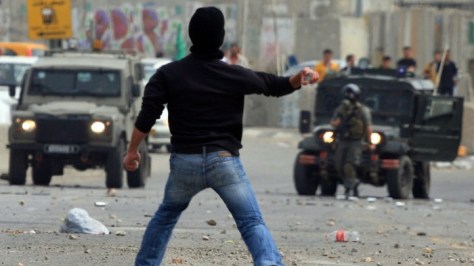
After the desecration of Al-Aqsa Mosque and other sacred Islamic sites in various parts of the occupied Palestine by Israelis, Palestinians have been pouring out on the streets. The retaliatory attacks by Palestinians have claimed the lives of seven Israelis while leaving a number of them injured. It should be noted that the average age of demonstrators and people responsible for stabbing and running over people is less than 20 years old. They were born after the Oslo Accord between the Palestinian Liberation Organization and Israel in 1993 and 1995. They are just coming of age, and it’s hard for them to see any future but a bleak one. Continue reading Why is the World Ignoring Palestine’s ‘Third Intifada’? Shubhda Chaudhary

Survey Report on Losses Sustained during Chennai Floods: Concerned Citizens and Activist Groups

Guest Post on Chennai floods by CONCERNED CITIZENS AND ACTIVIST GROUPS  

[Earlier today we had published a post on the Chennai floods. The following is a report of a Survey on losses sustained during the floods, conducted by Arunodhaya: Centre for Street and Working Children; Bhavani Raman; Citizen consumer and civic Action Group (CAG); Karen Coelho, Kavin Malar; Krishnaveni; Madhumita Dutta; Vettiver Collective; Prem Revathi; Priti Narayan; Students of Madras Christian College; TN Labour blog; and V. Geetha]

Sample Survey of Losses Sustained During Chennai Floods

With special reference to losses and damages of possessions, loss of workdays and damage to homes

January 2016

Executive summary

A group of concerned citizens involved in relief work post-Chennai floods, 20015 undertook a sample survey of 610 households (including migrants) across the city to assess losses suffered/damages incurred to homes, goods, occupational tools and also to get an idea of loss of working days. The purpose of this survey was to identify the exact quantum of losses sustained by the population and to direct government to compensate the populace for damages/loss accruing on account of the floods.

  • Places surveyed: Eekaduthangal, Jaffarkhanpet, Saidpet, Kotturpuram (Adyar flood plains), Mudichur (badly affected suburb), Semmencheri, Perumbakkam (resettlement/new housing tenements for low-income groups), Kodungaiyur, Ponneri (outlying suburbs with poor infrastructural developments.
  • More than 95% of people surveyed had not received warnings about impending flooding.
  • Inhabitants of over 85% of households surveyed have lost 25-40 working days and concomitant wages, ranging from Rs 250-500/per day.
  • Almost all households had lost or were left with irretrievably damaged certificates, household articles, including fridge, washing machine, grinder, mixers, lights, fans, stoves, tools of trade, children’s books, cycles and in some cases bikes and scooters.
  • Total losses sustained by households range from Rs 75,000 (including wages lost and cost of damage to homes) to Rs 50,000.

Continue reading Survey Report on Losses Sustained during Chennai Floods: Concerned Citizens and Activist Groups

Slow violence and the Spectacle – Dispossession, segregation, and the Chennai Floods: Priti Narayan

Guest post by PRITI NARAYAN

[This article is followed by a detailed survey report on the losses sustained by people during the Chennai floods, which can be read here.]

“How, in an age that venerates the instant and the spectacular, can one turn attritional calamities starring nobody into stories dramatic enough to rouse public sentiment,” asks scholar Rob Nixon, in his discussion of Rachel Carson’s seminal 1962 book Silent Spring. It is a question worth asking now, in the aftermath of the floods in Chennai.

The floods were spectacular, the initial neglect by the national Indian media notwithstanding. Enough has been written about both about the floods themselves, and the spectacle of thousands of Chennai residents pouring onto the streets and into the water to undertake rescue, relief and rehabilitation work. Now that the spectacle is fading and the celebration of the city’s spirit is dying down, perhaps we can examine the floods more objectively. Not that the deluge has not deserved the attention it has received – reports estimate that over 400 lives have been claimed, and anywhere between 1.8 to 2 million people have been displaced.

But we do not talk as much about the “attritional calamity” that involves the dispossession of the poor of their land  and their subsequent displacement to the peripheries of the city.The lack of affordable housing stock has historically led the poor to occupy land in the central city, from where they access livelihood and educational opportunities. Their location in the city has enabled them to contribute invaluable labour and services to the city’s economy. Off late however, development projects are putting immense pressure on land in the Indian city. Strategies to make a world class city –“beautification”, “development” and “eco-restoration” – envision no place for the poor in Chennai.Transparent Cities Network estimates that at least 1,50,000people from 63 slums have been displaced for development projects over the course of the last 15 years. Not all those displaced have been rehabilitated: at least 22,000 people have been left homeless. There are no estimates of the number of people who have died during displacement or after resettlement, but the instances of crime(including trafficking, prostitution, and mafia-style murders) and suicides in these government-created ghettoes tell a sordid tale. Continue reading Slow violence and the Spectacle – Dispossession, segregation, and the Chennai Floods: Priti Narayan

Male Dominance, Exploitation and Hypocrisy in Malayalam Film Industry: Interview with Shakeela by Dalit Camera

Guest post. SHAKEELA interviewed by DALIT CAMERA

[With English translation of transcript also by Dalit Camera]

DC: In the early 2000’s, your movies were very popular while those of mainstream heroes were flops. At that time, the government places several restrictions on your movies. What is your response to that?

Shakeela: Even I have watched the movies of these big stars. They have the just as much “glamour” scenes. However, they have termed only my movies as soft porn, A-film, Shakeela movies, bit movies, etc. That is because Kerala, in particular, is a male dominated society. Therefore, their domination is very evident. Men are given preference. Even if girls study well, they are never encouraged. In such a place, can they accept a woman from another state achieving such high status? Yes, it true. There were several problems.

Continue reading Male Dominance, Exploitation and Hypocrisy in Malayalam Film Industry: Interview with Shakeela by Dalit Camera

Observing Human Rights by Defending Food Rights of Dalit-Bahujans and Muslims: Sudarshan, Osmania University

Guest post courtesy DALIT CAMERA

[On 10th December 2015 Osmania University students celebrated Beef festival to mark Human Rights Day in a novel fashion. BJP MLA Raja Singh few days before stated he would kill or get killed to protect the cow. It is strange because the Osmania Uuniversity students had only said they would eat beef which is already available in the market, they never said they would kill cow, but the BJP/VHP was spreading rumours that OU students are killing cow. Print and Electronic media gave a full coverage for the BJP/VHP activists). With threats pouring in from different corners (Police, Judiciary, Administration) OU students organized the Beef festival, and in their support EFLU, TU, UoH organized beef festival. Most importantly TVV organization ate beef in Delhi Red Fort.

Why did OU students hold the Beef festival? Here we present an interview of Sudarshan, key organizer of the Beef Festival in OU for the larger public. The interview was conducted and transcribed by Dharma Teja.]

Continue reading Observing Human Rights by Defending Food Rights of Dalit-Bahujans and Muslims: Sudarshan, Osmania University

गयी भैंस पानी में…. : दाराब फ़ारूक़ी

Guest post by DARAB FAROOQUI

जी हाँ मैं भैंस हूँ और करीब 5000 साल से लगातार पानी में जा रही हूँ. जब भी किसी का कुछ भी बुरा हो रहा होता है तो हमेशा मुझे ही पानी में जाना पड़ता है. ना उस वक़्त मेरे नहाने की इच्छा होती और ना तैरने का मन. पर मुझे ना चाहते हुवे भी पानी में जाना पड़ता है.

तुम लोग कभी उस सफ़ेदमूही गाय को पानी में क्यों नहीं भेजते हो. और वैसे भी हम अल्पसंख्य हैं, हमसे कहीं ज्यादा गायें हैं भारत में. और शायद तुम्हे याद न हो, हमारे संविधान में सब बराबर हैं. पर इतना सब कुछ करने के बाद भी तुम लोगों ने हमें कभी अपना नहीं समझा. हमने क्या नहीं किया तुम्हारे लिये, तुम्हे अपने बच्चों का दूध दिया, तुम्हारे खेत जोते, तुम्हारे चूल्हे जलाये. कितने बलिदान दिए हमने पर तुम्हारे तो कान पर भैंस तक नहीं रेंगी.

सबसे पहला बटर पनीर किसके दूध का बना था? हमारे दूध का, पंजाब में हम ही हैं. और वो जो तुम हमेशा पंजाबी ढाबे पे खाने की रट लगाये रहते हो वहां जाके पूछना, उस खाने का स्वाद कहाँ से आता है? हमारे दूध के असली घी से. चले हैं बड़े गाय की पैरवी करने. कभी अच्छे वक़्त पर हमें याद मत करना. पर जब भी किसी का कुछ बुरा हो, चाहे हम सोती हों या जगती, चाहे हम खाती हों या पीती, हमें ही पानी में भेज देना. तुम्हारे बाप का राज है ना, सरकार तुम्हारी, तुम माई बाप हो, हम तो जानवर हैं. किसी ने सही कहा है जिसकी लाठी उसी की भैंस. Continue reading गयी भैंस पानी में…. : दाराब फ़ारूक़ी

How the Hindutva Propaganda Machine Manufactures Lies

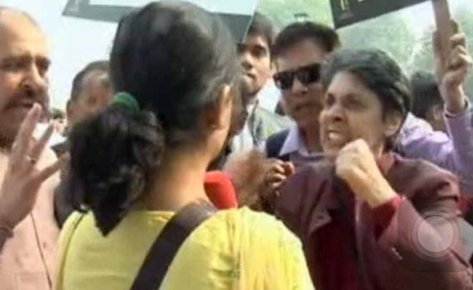
Did you know that the return of awards by writers, film-makers and scientists was a plot hatched jointly by the United States of America, Saudi Arabia and Pakistan? Well, if you did not, you will probably not ever understand why the ‘tolerant’ multitude that turned out at Anupam Kher’s March for India rally today, could so vilely abuse and attack NDTV’s Bhairavi Singh and Aaj Tak’s Mousmi Singh. After all, it is one thing for the netas to simulate their anger and laughter on TV channels and elsewhere, but how do you actually get ordinary people to go crazy? How and why does the ordinary Hindutva footsoldier act the way he or she does? Basically, he (and occasionally, she) is made to believe things that most people would know to be false. So why does as innocuous an act as the returning of awards by writers become such a big threat to India’s position in the world and to the very existence of the government of the day? Well, because, it is not a simple matter of some writers acting out of their conscience but already a part of an international conspiracy plotted by the US-Saudi Arabia-Pakistan nexus!

Defenders of the great tradition of tolerance, image courtesy Saikat Datta

Published below is the text of a note that has been circulating over different social media platforms. We have left the typographical and printing errors as they are in the original. Paranoid in its content, it is also illustrative of the way the RSS ‘rumour-machine’ works to produce lies. In earlier days, it used to start circulating from the morning shakhas via the shakha participants. Nowadays it moves from one social media platform to another, with lightning speed. Continue reading How the Hindutva Propaganda Machine Manufactures Lies

Palestinian Women from Occupied East Jerusalem Call for Protection: Jerusalemite Women ’s Coalition

A Statement by the JERUSALEMITE WOMEN’S COALITION

We women of occupied East Jerusalem call for immediate protection as we witness and suffer the widespread and serious violations of Palestinian human rights, including physical attacks and injuries, severe psychological threats, and persecution by the Israeli settler-colonial state and settler entities.

We urge the international community to act and defend the rights of Palestinian children, women, and men, including the right to a safe life amidst the constant attacks, excessive and indiscriminate use of force used by the Israeli oppressive apparatus, acts of violence and daily terror committed by Israeli Jewish civilians, including settlers. This brutality is intimidating our lives, provoking our youth, willfully causing death and bodily and psychological harm, and disabling and injuring of our community members.

We, a group of Palestinian women, mothers, sisters, daughters and youth—and in the name of the “Jerusalemite Women’s Coalition”—call upon the international community to protect our families, community, and children. We are calling for the protection of our bodily safety and security when in our homes, walking in our neighborhood, reaching schools, clinics, work places, and worships venues. Continue reading Palestinian Women from Occupied East Jerusalem Call for Protection: Jerusalemite Women ’s Coalition

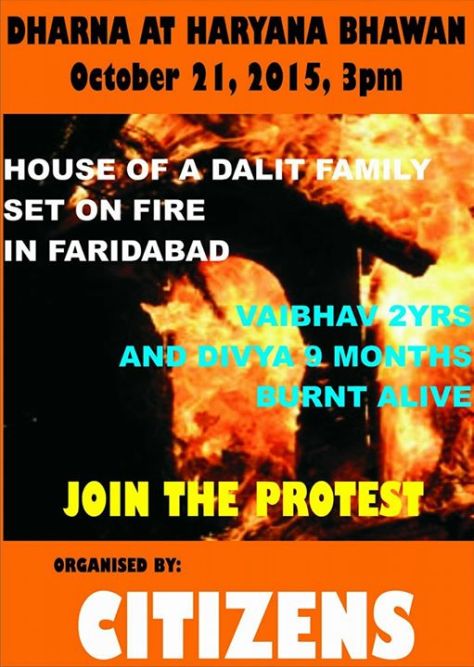
Protest Demonstration Against Burning of Dalit House and Children in Haryana

The endless violence that has always been part of Dalit life is now acquiring new dimensions as Dalits refuse to carry out upper caste diktat and confront aggressive upper castes emboldened by the Hindutva brigade.

Citizens call for demonstration

A Letter to Modi from a Former Supporter: Bhawni Mehrotra

Guest post by BHAWNI MEHROTRA

Dear Modiji,

I’m glad you spoke. Even though it was devoid of any personal remorse and limited to calling the Dadri lynching an “unfortunate and unwarranted” incident at Sasaram. Even though it was to cash in on ‘communal harmony’ during an election rally in Bihar. Even though it was a mere paraphrasing of the President’s quote once before at Nawada (we know of your limited vocabulary beyond acronyms and your “may-the-force-be-with-you” love for quoting). Still, I’m glad that you managed something! However, the one thing that you have failed miserably to manage (and let’s leave the ambling economy and your familial relations out of this) is the ‘fringe elements’ that come as part of the ‘BJP family pack’ offer.  Sadly, under your ‘good governance’, the fringe has been asserting itself as the mainstream. Even sadder is that under ‘you’, the fringe is the mainstream.

The icing on the cake are your own MPs and ministers. Initially, what I thought of as verbal diarrhea on their part is actually proving to be a string of comments that are a part of a larger orchestrated communication message. Each message has a defined audience suited to their language and idioms. They all suffer from a dangerous saffron strain, exactly the kind that has fathered the ISIS, the Taliban and so on. Whether it be Yogi Adityanath’s remark, calling on Hindus to organize themselves; or Sadhvi Niranjan Jyoti’s unparalleled comparison between a “Ramzaada” and a “Haramzada”; or Nitin Gadkari’s reminder of the government being one of “Rambhakts”- all seem to be competing for being the most ridiculous. Did you mean “Hindutva First” and not “India First”? I’m sorry that I was so awestruck by your gazillion rupee election campaign (the one thing that you managed brilliantly) that I didn’t read the fine print. Therefore, it is not your failure, it’s mine. Had I voted sensibly, Mohammad Akhlaq wouldn’t be dead today. Continue reading A Letter to Modi from a Former Supporter: Bhawni Mehrotra

आज़ादी और विवेक के पक्ष में प्रलेस, जलेस, जसम, दलेस और साहित्य-संवाद का साझा बयान

देश भर में चल रहे लेखकों व साहित्यकारों  के विरोध के सन्दर्भ में  लेखकों के पांच संगठनों – प्रगतिशील लेखक संघ, जनवादी लेखक संघ, जन संस्कृति मंच, दलित लेखक संघ व साहित्य-संवाद – ने आज दिल्ली में निम्नलिखित बयान जारी किया :  

देश में लगातार बढ़ती हुई हिंसक असहिष्णुता और कट्टरपंथ के ख़िलाफ़ पिछले कुछ समय से जारी लेखकों के प्रतिरोध ने एक ऐतिहासिक रूप ले लिया है. 31 अगस्त को प्रोफेसर मल्लेशप्पा मादिवलप्पा कलबुर्गी की हत्या के बाद यह प्रतिरोध अनेक रूपों में प्रकट हुआ है. धरने-प्रदर्शन, विरोध-मार्च और विरोध-सभाएं जारी हैं. इनके अलावा बड़ी संख्या में लेखकों ने साहित्य अकादमी से मिले अपने पुरस्कार विरोधस्वरूप लौटा दिए हैं. कइयों ने अकादमी की कार्यकारिणी से इस्तीफ़ा दिया है. कुछ ने विरोध-पत्र लिखे हैं. कई और लेखकों ने वक्तव्य दे कर और दीगर तरीक़ों से इस प्रतिरोध में शिरकत की है.

दिल्ली में 5 सितम्बर को 35 संगठनों की सम्मिलित कार्रवाई के रूप में प्रो. कलबुर्गी को याद करते हुए जंतर-मंतर पर एक बड़ी प्रतिरोध-सभा हुई थी. इसे ‘विवेक के हक़ में’ / ‘इन डिफेन्स ऑफ़ रैशनैलिटी’ नाम दिया गया था. आयोजन में भागीदार लेखक-संगठनों – प्रलेस, जलेस, जसम, दलेस और साहित्य-संवाद — ने उसी सिलसिले को आगे बढाते हुए 16 सितम्बर को साहित्य अकादमी के अध्यक्ष विश्वनाथ प्रसाद तिवारी को एक ज्ञापन सौंपा जिसमें उनसे यह मांग की गयी थी कि अकादमी प्रो. कलबुर्गी की याद में दिल्ली में शोक-सभा आयोजित करे. विश्वनाथ त्रिपाठी, मुरली मनोहर प्रसाद सिंह, चंचल चौहान, रेखा अवस्थी, अली जावेद, संजय जोशी और कर्मशील भारती द्वारा अकादमी के अध्यक्ष से मिल कर किये गए इस निवेदन का उत्तर बहुत निराशाजनक था. एक स्वायत्त संस्था के पदाधिकारी सत्ता में बैठे लोगों के खौफ़ को इस रूप में व्यक्त करेंगे और शोक-सभा से साफ़ इनकार कर देंगे, यह अप्रत्याशित तो नहीं, पर अत्यंत दुखद था. अब जबकि अकादमी की इस कायर चुप्पी और केन्द्रीय सत्ता द्वारा हिंसक कट्टरपंथियों को प्रत्यक्ष-परोक्ष तरीके से दिए जा रहे प्रोत्साहन के खिलाफ लेखकों द्वारा पुरस्कार लौटाने से लेकर त्यागपत्र और सार्वजनिक बयान देने जैसी कार्रवाइयां लगातार जारी हैं, यह स्पष्ट हो गया है कि लेखक समाज इन फ़ासीवादी रुझानों के विरोध में एकजुट है. वह उस राजनीतिक वातावरण के ख़िलाफ़ दृढ़ता से अपना मत प्रकट कर रहा है जिसमें बहुसंख्यावाद के नाम पर न केवल वैचारिक असहमति को, बल्कि जीवनशैली की विविधता तक को हिंसा के ज़रिये कुचल देने के इरादों और कार्रवाइयों को ‘सामान्य’ मान लिया गया है. Continue reading आज़ादी और विवेक के पक्ष में प्रलेस, जलेस, जसम, दलेस और साहित्य-संवाद का साझा बयान

The Curious Case of a Study on Bihar Elections: Kamal Nayan Choubey and Nishant Kumar

Guest post by KAMAL NAYAN CHOUBEY and NISHANT KUMAR

[This article is a response to the lead news-cum-article written by Sanjay Kumar and Suhas Palshikar and published in The Indian Express as well as Jansatta on 7th October about the pre-poll survey related to the Bihar Legislative Assembly Election. We had sent this article to the The Indian Express, but they could not give any space to our views. – Authors]

Politically, Bihar is one of the most complex states in India. It is often difficult to provide a substantially cogent electoral prediction because of the multivariate factors that impact the political outcome in the state. The other obvious reason is the political maturity of the electorates of Bihar, who decide the fate of the candidates based on several considerations including caste orientation and the candidates’ performance in the past. Still many analysts have tried to provide a picture regarding the possible outcome of electoral fray for the Bihar Assembly Elections based on quantitative surveys. The opinion poll conducted by Lokniti-CSDS and published in The Indian Express and Jansatta, two of India’s most respected newspapers, on 7th October, 2015 was one such attempt. In the last two decades election studies in India has seen a dramatic evolution with poll surveys gaining immense popularity among both analysts as well as electorates. Lokniti-CSDS has been one of the most reliable institutions for such studies because unlike other market oriented institutions it has always focused on serious academic and intellectual understanding of electoral competition. Many reputed academicians have been part of its election studies and its publications have given new dimensions to the study and understandings about the dynamics and churnings of Indian democracy. However, the pressure of media as well as the rush to publish opinion polls seems to have affected the way CSDS-Lokniti is known to release its analysis.

The news-item in the front page of The Indian Express read ‘Advantage BJP as Bihar gets ready’. It was claimed in that news-cum-article that BJP led NDA had an advantageous edge in the forthcoming Bihar Assembly Elections over Nitish Kumar’s Grand Alliance. We are not sure whether it was the editors who chose the headline to attract attention of its readers or it was consciously decided by the poll conductors based on their analysis. Whatever the case may be, the projection of ‘Advantage BJP’ exposes fissures at several levels, most of which are evident from the data itself. The publication also forces us to pose significant questions about the way in which such opinion polls are conducted both in terms of methodology as well as the analytical categories used to understand electoral politics in a complex society as in the case of Bihar. It further creates doubts about the aim of such published opinion polls. Continue reading The Curious Case of a Study on Bihar Elections: Kamal Nayan Choubey and Nishant Kumar

Modi’s Speech, his Silence and Dadri Redux in Mainpuri

Every newspaper in India carried the same headline on Friday, the 9th of October: ‘Modi breaks silence on Dadri lynching.’ It says something about the breathless desperation of the Indian press to hear the prime minister say something, anything, that could be interpreted as his disapproval of political barbarism, that there wasn’t, in fact, a word in his speech about the Dadri lynching. – Mukul Kesavan in ndtv.com

You know what has been agitating the minds of millions of us, Indians — the future of our pluralism. You have stated your position in terms of ‘sabka sath, sabka vikas‘. And this is quoted and cited on your behalf repeatedly as a mantra. But, Pradhan Mantriji, this is certainly not adequate. We need to hear you, our Prime Minister, directly and clearly and with an urgent reference to the present situation, which is nothing less than a tragedy. Over the last few months we have had more than one tragedy. Can we really not see the connections between the so-called stray incidences all over the country, from the murders of Dabholkar, Pansare and Kalburgi to that of Mohammad Akhlaq. Your direct voice needs to be heard now, unless you do not consider this an event of significance. And now, the ambiguity of what you said yesterday only makes me send you this appeal for your truthful intervention. TM Krishna’s Open Letter to the Prime Minister

While Modi’s cheer leaders in the media were telling us that the prime minister had finally ‘broken his silence’ (see Apoorvanand’s piece on this here), there were others who read the meaning of his speech far more  accurately.They knew exactly what Modi was saying; they knew without having to do a content analysis of His speech that, if anything, despite being shamed to an extent by the President, Pranab Mukherjee’s statement the previous day, he actually refused to say anything about the Dadri incident let alone condemn the crime or its perpetrators. They understood clearly that his speech was merely a continuation of his sinister and devious silence. They understood like no media commentator or analyst did that what he said in Munger was a green signal for them to go ahead with their activities. Thus what happened in Mainpuri today is nothing to be surprised about.

Mainpuri: Police in action after villagers vandalised properties and resorted to arson in Mainpuri district on Friday over rumours of cow slaughter in the area. PTI Photo (PTI10_9_2015_000290B)

Continue reading Modi’s Speech, his Silence and Dadri Redux in Mainpuri

Dadri Beef Rumour and Lynching – A Report from Bisara village

The following is a report on the Dadri beef rumour and lynching, prepared by a fact finding team from NEW SOCIALIST INITIATIVE, PEOPLE’S ALLIANCE for DEMOCRACY and SECULARISM, SAHELI and DELHI SOLIDARITY GROUP, released in New Delhi on 05/10/2015

 The investigation team with the following members visited the village on 3 October 2015: Bonojit Hussain (New Socialist Initiative), Deepti Sharma (Saheli), Kiran Shaheen (writer and activist), Naveen Chander (New Socialist Initiative), Sanjay Kumar (People’s Alliance for Democracy and Secularism and New Socialist Initiative) and Sanjeev Kumar (Delhi Solidarity Group)

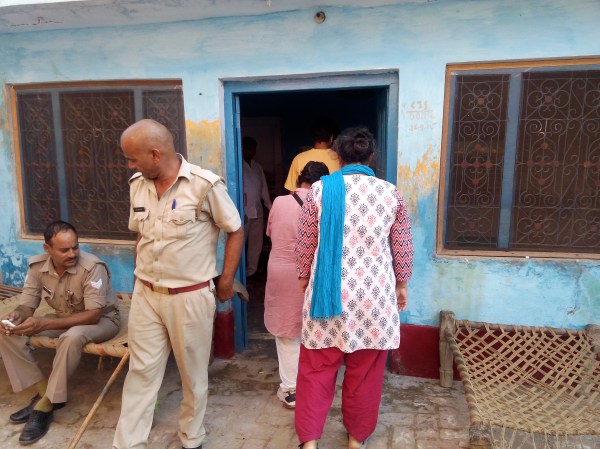
Akhlaq's house
Akhlaq’s house

On the night of 28 September, in a heinous instance of hate crime Mohammad Akhlaq a resident of Bisara village of Dadri in western Uttar Pradesh was lynched to death and his son Danish brutally assaulted by a mob of villagers over a rumour that Mr. Akhlaq and his family had slaughtered a calf and consumed its meat. Just before the lynching, an announcement was made from the local temple to spread the rumour, and within moments a mob constituted itself and attacked Mr. Akhlaq resulting in his lynching. Mr. Akhlaq’s son Danish has been in hospital since that night and despite undergoing two brain surgeries his condition is still said to be critical. Continue reading Dadri Beef Rumour and Lynching – A Report from Bisara village

Volkswagen, Deutsche Bank and Ordoliberalism: Shrinivas Dharma

Guest post by SHRINIVAS DHARMA

News of Volkswagen’s systematic cheating in emission tests by making its cars appear far less polluting than they are, has proved to be a bolt from the blue for the Global Automobile industry, financial markets, European politicians and German society at large. VW is more than just another car company. For German society, it is a heritage brand with iconic status. In a reputed poll last month, two-thirds of Germans named Volkswagen as the country’s number one national symbol, putting it before Merkel, the national football team and Goethe. No wonder, this news destroyed 10% of market value of the VW brand in a single trading day.

VW’s so-called “defeat device”  a piece of software in the car’s computer is already there on 11 million cars on the road which are emitting up to an extra 1m ton of a toxic gas responsible for killing tens of thousands people in various countries. With this insidious deception, VW has not only let down Germans but the entire Global Society by showing sheer contempt typical of a Big Business towards the continuing environmental degradation. No wonder, the news wiped out billions of dollars off the market value of entire car industry providing credence to the suspicion that emissions test rigging may be more widely practiced art, than what has come to light so far. Continue reading Volkswagen, Deutsche Bank and Ordoliberalism: Shrinivas Dharma

NBA Welcomes SC Dismissal of MP Govt Application Denying Right to Land to Sardar Sarovar Oustees

We are publishing below the text of a statement issued by the NARMADA BACHAO ANDOLAN in New Delhi today following a significant Supreme Court order on the rehabilitation of Sardar Sarovar oustees

In a significant Order, the Social Justice Bench of the Supreme Court comprising Jst. Madan Lokur and Jst. Uday Umesh Lalit today dismissed an Application filed by the Government of Madhya Pradesh (GoMP) / Narmada Valley Development Authority (NVDA) seeking a ‘modification / clarification’ of the Apex Court’s previous judgements of 2000 and 2005, thereby denying right to land of a few thousand adult sons of the Sardar Sarovar Project (SSP) affected farmers.

The Hon’ble Court held among other things that the Application by State of MP suffers from gross delay / laches having being filed many years after the judgements were issued (upholding the right to land of the SSP adult sons) and the rights / entitlements already accrued to the oustees in principle cannot be taken away. The Bench also had to take note of the fact that while the entitlement of most of the adult sons have already been recognized many many years ago, one set of oustees have been offered land / Special Rehabilitation Package (5.5. lakhs for 5 acres) since the judgement of 15/3/2005 of the Apex Court and another set of oustees are being denied the same; this would result in a clear violation of Article 14 of the Constitution which guarantees a fundamental right to equality. Terming this “not to be good governance”, the Court summarily dismissed the Application.   Continue reading NBA Welcomes SC Dismissal of MP Govt Application Denying Right to Land to Sardar Sarovar Oustees

A Statement Protesting Approval to Introduce Injectable Contraceptives in the National Family Planning Programme

The following is the text of a letter written by activists and scholars working in the field of medicine, public health and women’s rights, to the Union Minister for Health and Family Welfare:

To

Shri Jagat Prakash Nadda,

Union Minister for Health and Family Welfare,
Ministry of Health and Family Welfare,
Nirman Bhavan, Maulana Azad Road,
New Delhi 110 011

22nd September 2015

Statement Protesting the Approval to Introduce Injectable Contraceptives in the National Family Planning Programme

We, the following health groups, women’s organisations, peoples’ networks and individuals are extremely disturbed by the news report published in the Times of India (dated 16th September 2015) that the Union Health Ministry has approved Depo Medroxy Progesterone Acetate (DMPA) for use in the National Family Planning Programme (FPP).

It may be re-called that following a Supreme Court case filed in 1986 by women’s groups regarding serious problems with injectable contraceptives like Depo and Net-En, the Court directed the government to monitor safety issues in use of injectable contraceptives but did not ban its use. While they are available in the private medical sector, the Drugs Technical Advisory Board (DTAB), the highest decision-making body on technical matters in the Ministry of Health &Family Welfare, in 1995 held that Depo-Provera is not recommended for inclusion in the FPP. Continue reading A Statement Protesting Approval to Introduce Injectable Contraceptives in the National Family Planning Programme

Bihar Needs a Corbyn Moment: Sushil Chandra

Guest post by SUSHIL CHANDRA

If the media discourse on Bihar elections has any semblance of truth, this election is a choice between Pepsi and Coke. Whatever you choose, you get a cola of casteism, corruption and gangsters. On one hand we have winning combination of intermediate castes, the assured Muslim vote, the great legacy of fodder scam and kidnapping rings with added glitter of so called good governance and on the other hand the return of feudal dominance, the guaranteed promise of a theocracy and another band of gangsters. It is difficult to fathom from the media coverage that there is a third alternative available in shape of left which is free from all these attractions and offering a principled platform. You can see on television Upendra Kushwahas and Pappu Yadavs holding forth on their great vision for Bihar, the daily tantrums of Majhi and Paswan for their tug-of-war on seats but talk of the left and even Ravish Kumar forgets to mention them on his daily shouting matches on Bihar election. Is it because of our corporate media is not willing to invest in those not willing to invest on caste and religion? Continue reading Bihar Needs a Corbyn Moment: Sushil Chandra

Cow Slaughter – Can a Directive Principle Trump Fundamental Rights of the Most Marginalized? Mariya Salim

Guest post by MARIYA SALIM

The debates and demands around the issue of the prohibition of cow slaughter in India are a highly volatile, political and contentious subject, with the cow being revered as sacred by most Hindus in the country. Although almost all the proponents calling for a national legislation for a total ban on slaughter of cow and other cattle today look to the directive principles of state policy and use an economic and agrarian argument to defend their demand, it is interesting to note that the constituent assembly debates around this directive principle clearly indicate that it was as much a religious issue, reasoned on science and agriculture instead however, for some of those who wanted it to be an integral part of the Indian Constitution.

After much debate and deliberation in the Constituent Assembly and a demand from a few members of the assembly, to include a total ban on the slaughter of cows as part of fundamental rights in the Indian Constitution, a compromise was reached and the protection of the revered bovine found place in the Directive Principles of state policy, which incorporates this Hindu sentiment in a somewhat guarded and hesitant form[1]. Most notable among the members raising the issue were Pandit Thakur Dass Bhargava and Seth Govind Das[2]. Syed Muhammad Sa’adulla, another member argued that he would rather have the insertion on the protection of cow slaughter as a religious ground, as, the argument on economic grounds will ‘create a suspicion in the minds of many that the ingrained Hindu feeling against cow slaughter is being satisfied by the backdoor’ and he went on to give facts and figures on how cow slaughter is not as bad ‘as it is being made out to be’ from the economic point of view. [3]  Continue reading Cow Slaughter – Can a Directive Principle Trump Fundamental Rights of the Most Marginalized? Mariya Salim

Scramble for Muslim Votes as Owaisi Jumps into Bihar Polls: Abhay Kumar

Guest post by ABHAY KUMAR

Ever since Asaduddin Owaisi, president of the All India Majlis-e-Ittehadul Muslimeen (henceforth MIM), addressed a well-attended public meeting in Kishanganj  on August 17, speculation about his party contesting election in Bihar has been rife. Three weeks after the rally, Owaisi, eventually, decided that he would field candidates in Muslim-dominated Seemanchal region of Kishanganj, Araria, Purnia and Katihar. “MIM will put up candidates in Bihar’s Seemanchal region, which is not only backward but also has a lot of problems. There has to be over all development,” Owaisi told media, giving the leaders of anti-Hindutva Grand Alliance jitters.

Contrary to Owaisi’s latest move, some political observers had held the view that given the weak organisational structure of the MIM in Bihar and late entry in the state, Owaisi was unlikely to jump into assembly election. For example, senior journalist and political commentator, Khurshid Hashmi said that if Owaisi had been serious about Bihar election, he would have launched his campaign much earlier as he did in UP. Continue reading Scramble for Muslim Votes as Owaisi Jumps into Bihar Polls: Abhay Kumar

An Attempt to Make Sense of Culture in Islam: Raoof Mir

Guest post by RAOOF MIR

Purity and corruption has remained one of the recurrent themes in the entire history of Islam. The arrival of Islam in Arabia did not mean a radical departure from the past. Wael B. Hallaq, a noted scholar on Islamic law and Islamic intellectual history establishes through his commendable work that “much of Arabian law continued to occupy a place in the Shari’ah, but not without modification.” Prophet Mohammed, who founded this new faith by introducing new nomos, also let several old customs and institutions to remain unchallenged. Despite his critical attitude toward the local social and moral environment, Prophet Muhammad was very much part of this environment and was deeply rooted in the traditions of Arabia.

Though the new converts to Islam entered into a new cosmological order, they at the same time, continued to adhere to the practices of old pagan culture. Since the arrival of Islam many individual reformists or reform movements have intended to reform Islam and decontaminate it from its ‘accretional’ aspects. These reformative endeavours envisaged a Muslim community that is not only socially distinct but also repudiates the pre-existing cosmological order. However, so far, there has been no end to this conflict. This conflict between the formal ideology of reformists (Textual Islam) and functional behaviour of the majority of the Muslims (Lived Islam) continues till today. Continue reading An Attempt to Make Sense of Culture in Islam: Raoof Mir