All posts by Aditya Nigam

Uttarakhand Women’s Groups’ Statement on the Uttarakhand UCC Draft Bill

[We are publishing this response of the Uttarakhand Women’s Groups to the Uttarakhand Draft for initiating further debate.]

  • The Uttarakhand women’s groups and representatives reject this Bill in toto, in the form introduced in the State Assembly.
  • A Bill criminalizing constitutional behaviour, and introducing moral policing is unacceptable.
  • The Bill which is predominantly a cut paste from the Hindu family laws, does not remove inequalities in family across the spectrum of religious and secular laws, but criminalises the Muslim minority and autonomous, consensual behaviour of adults.
  • Demands that it is sent to the Standing Committee for further deliberations.
Continue reading Uttarakhand Women’s Groups’ Statement on the Uttarakhand UCC Draft Bill

Letter to a Departed Mother About our Times: Vani Subramanian

Guest post by VANI SUBRAMANIAN

21 January 2024

My dearest Amma,

I’m relieved that you aren’t around these days. But I miss the sort of discussions we would have had if you were. Hence this letter, this sort of talking to you, this helpless and possibly meaningless, speaking into the ether because some things must just be said, remembered, felt, resisted, and held on to, even if everything around is telling you to move on, to get into the spirit of things and join the festivities, as it were.

I remember your reaction when you first saw my documentary film, Ayodhya Gatha. ‘Did you have to make our arguments about religion so public? If you get any recognition for this film, remember it’s thanks to me – like all your debating prizes!’ you said, loud enough for all to hear, both embarrassed and proud at the same time. We had a good laugh and a hug together. But in truth, over the years, religion was a topic on which we went from heated, impassioned arguments to considered, more careful discussions. You, tip toeing around my atheism (and asserting that deep down inside I was a believer) and me trying to be sensitive around your faith, even as we talked a lot about everything that’s been happening over the last four decades in the name of that religion.

Continue reading Letter to a Departed Mother About our Times: Vani Subramanian

राम की अयोध्या : विवेक कुमार

Guest post by VIVEK KUMAR

यह पोस्ट सोशल मीडिया पर कई लोगों ने साझा की थी । बताया जा रहा था कि इसके लेखक सरोज मिश्र हैं। इस बीच इसके असल लेखक से हमारा संपर्क हुआ है जिनका नाम विवेक कुमार उर्फ़ विवेक असरी है। मूल लेख 2010 में छपा था जिसे यहाँ पढ़ा का सकता है

अंग्रेज़ी तर्जुमा क़ाफ़िला पर कुछ रोज पहले छपा था। कई लोगों ने मूल हिन्दी का लेख भी देखना चाहा है, लिहाज़ा पेश-ए-ख़िदमत है यह लेख।

अयोध्या का यह 300 साल पुराना जन्मस्थान मंदिर था जिसके लिए ज़मीन एक मुसलमान ज़मींदार के दान की थी। नए राम मंदिर के विस्तार के लिए अगस्त 2020 में इसे ढहा दिया गया। (छवि साभार द वायर)

कहते हैं अयोध्या में राम जन्मे, वहीं खेले-कूदे, बड़े हुए, बनवास भेजे गये, लौटकर आये तो वहाँ राज भी किया। उनकी ज़िंदगी के हर पल को याद करने के लिए एक मंदिर बनाया गया। जहाँ खेले, वहाँ गुलेला मंदिर है। जहाँ पढ़ाई की, वहाँ वशिष्ठ मंदिर हैं। जहाँ बैठकर राज किया, वहाँ मंदिर है। जहाँ खाना खाया, वहाँ सीता रसोई है। जहाँ भरत रहे, वहाँ मंदिर है। हनुमान मंदिर है, कोप भवन है। सुमित्रा मंदिर है, दशरथ भवन है। ऐसे बीसियों मंदिर हैं, और इन सबकी उम्र 400-500 साल है। यानी ये मंदिर तब बने, जब हिंदुस्तान पर मुगल या मुसलमानों का राज रहा।

Continue reading राम की अयोध्या : विवेक कुमार

The Gaza Siege and Need for Subaltern Internationalism – Going Beyond Hanukkah of Uncle Sam: Maya John

Guest post by MAYA JOHN

Herodotus, widely considered as the father of history, mentioned the existence of Palaistinê between Phoenicia and Egypt, and still failed to condemn Hamas. Damn all historians! – An Anonymous Disappointed Liberal

But you are neither a Palestinian nor a Muslim. Why put yourself out there in this climate? –   An Anonymous Sanctimonious Liberal

When I look at the partition of Palestine in 1947 and 1967, the ghost of India and Pakistan rise like smoke from charred buildings of Karachi and Kolkata. Tithi Bhattacharya (A historian from partitioned Bengal)

The solidarity that is needed today will have to be built primarily by the peoples themselves. Only then can hope be reborn…– Samir Amin (Egyptian-French economist of Marxist persuasion)

                On 7 October 2023, the Hamas led an attack on the Gaza envelope, which is part of the southern district of Israel, killing reportedly 1200 people. The Hamas is a political and military organization governing the Gaza Strip of Palestinian territories that are under occupation by Israel. Many considered the military incursions of 7 October as an outright terrorist attack on civilians. Yet, others called this a ‘jail-break’ in terms of a reaction to Palestinian people bearing the burden of around seventy-five years of displacement, apartheid, surveillance, and endless other atrocities. Majority of inhabitants in the Gaza Strip are descendants of refugees who were displaced from the region which became Israel after the 1948 Arab–Israeli War. Nearly two million Palestinians have been notoriously cornered into this densely populated enclave where their movement has been severely restricted, and food, water and electricity supply has been controlled by the Israeli government; making such habitation the largest open-air jail in the world. After this attack, the Israeli military has launched a disproportionately brutal retaliation, resulting in massive suffering and a mounting death toll.  

                Some, of course, seek to rationalize the ensuing Israeli-Palestinian conflict by drawing on the belief that Israelis are the original inhabitants of this region and have suffered two millennia of exodus, and that they have the right to return and settle in what is considered as the ‘promised land’ as per the Biblical belief. Others consider that Israel is a settlers colony, and that Palestinians have all the rights to recover their country. Not so long back, the compromises of the Oslo Accords were thought to be a way forward in settling the crisis by creating two states, within which Israelis and Palestinians would achieve the long-lost peace in the region. Yet, such peace has failed to materialize. In the context of rising Islamophobia, conservative popular opinion asserts that the lack of peace in the region is due to a longer history of religious strife and supposed Muslim bigotry. Needless to say, history is more complex.

Continue reading The Gaza Siege and Need for Subaltern Internationalism – Going Beyond Hanukkah of Uncle Sam: Maya John

CAMPAIGN AGAINST STATE REPRESSION (CASR) DEMANDS THE IMMEDIATE RELEASE OF NEELAM VERMA, SAGAR SHARMA, MANORANJAN D AND AMOL SHINDE CHARGED UNDER UAPA!

The following statement was issued by the CAMPAIGN AGAINST STATE REPRESSION (CASR) yesterday, 14 December 2023

It has come to light that the police have slapped the draconian UAPA on Neelam Verma, Sagar Sharma, Manoranjan D, Amol Shinde, and Vishal Sharma, the five persons held for releasing gas canisters in both the outside premises and inside the Lok Sabha mid-session on 13th December. The Indian state is treating this incident as a ‘terror attack’ and is charging these five individuals under the draconian anti-terror laws. It’s pertinent to point out that all four individuals committed the act as a form of political protest and exploding harmless coloured gas canisters is part of their protest, not an act “terror.” Sagar Sharma is an e-rickshaw driver and the son of a carpenter, Amol Shinde comes from a family of Dalit landless peasants unable to get a job in the Indian armed forces while Neelam Verma and Manoranjan D are MPhil and Engineering degree holders respectively who are both unemployed, with Neelam even cleared the Haryana Teacher Eligibility Test but still not landing a job. Vishal Sharma has also been roped into this case after he provided shelter to the four individuals and was not even involved in the act. Lalit Ojha, a sixth accused and also an unemployed youth is yet to be brought into police custody but has been charged. The political protest of these individuals against the Indian state and its brahmanical Hindutva fascist nature represents the angst of the working class, the peasantry, the academics and the middle class, all of whom are bearing the brunt of the BJP’s Hindutva-corporate nexus politics. The protest slogans raised by the four were slogans of both patriotism towards the people of India as well as dissent against the dictatorial politics of the ruling class.

Continue reading CAMPAIGN AGAINST STATE REPRESSION (CASR) DEMANDS THE IMMEDIATE RELEASE OF NEELAM VERMA, SAGAR SHARMA, MANORANJAN D AND AMOL SHINDE CHARGED UNDER UAPA!

An Unjust Transition – The 111th ILC and the Move to De-carbonized Economies

Guest post by N. SAI BALAJI

This article was earlier published by the AICCTU

The 111th session of the International Labour Conference (ILC) held in Geneva from 5th to 16th June deliberated on climate change along with other issues concerning the situation of decent work in the globe. The issue of climate change was dealt with from the perspective of changes in the nature of work in future. The deliberations were based on a report issued by the ILO named “Achieving a Just Transition towards Environmentally Sustainable Economies and Societies for All”. After deliberations in the concerned committee for Just Transition, conclusions on the same have been published by ILO. The present article looks into the perspective on climate change adopted by the ILO based on the above mentioned documents.

Continue reading An Unjust Transition – The 111th ILC and the Move to De-carbonized Economies

Is the ‘Politics’ of Compassion Transcendental? Sasheej Hegde

Guest post by SASHEEJ HEGDE

Don’t ask for the meaning, ask what’s the point. (Ian Hacking).

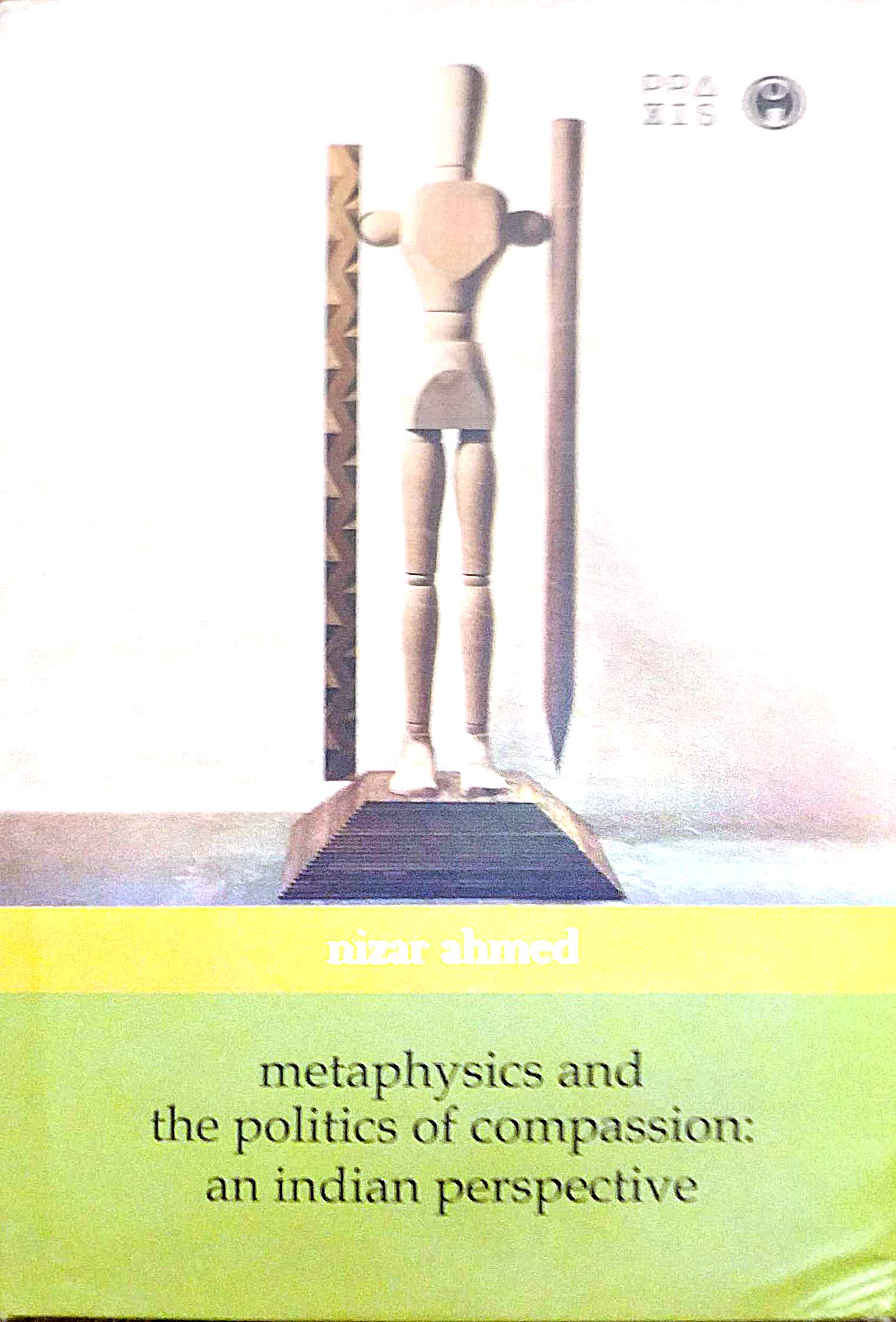
Nizar Ahmed, Metaphysics and the Politics of Compassion: An Indian Perspective (Kozhikode, Kerala: InsightinPublica Printers and Publishers Pvt. Ltd., 2023, pp.93, Rs.300/-).  [ISBN – 978-93-5517-340-9]

1. Introduction

It is no easy task to resist such a forceful and persuasive intervention in a genuinely problematic area of metaphysics and the emotions, as it were, complicated furthermore by the fact that it strives to articulate ‘an Indian perspective’ on the same. The work, emanating from a reclusive philosopher from Kerala and published by a ‘small’ publishing house in the region, requires some attention, yet – and, I attempt to do so without coming across, hopefully, as condescending, or even paternalistic. I must confess, though, that the author Nizar Ahmed (henceforth, NA) is a dear friend for many years now, indeed from the time of his Ph.D. in Philosophy from IIT-Kanpur and taking up a faculty position in the School of Social Sciences at Mahatma Gandhi University, Kottayam (from where he moved to the Sree Shankaracharya University of Sanskrit at Kalady, Kerala, and retiring eventually from that posting).  Dare I say it, NA remains a ‘legend’ in critical circles in Kerala, although he actively resists the attention that his work (both in English, and even more in Malayalam) commands.

Continue reading Is the ‘Politics’ of Compassion Transcendental? Sasheej Hegde

The Nuh Communal Violence and the Conspiracy of the Hindutva Brigade: Ground Report by Janhastakshep

Introduction

A team of Janhastakshep toured areas of Palwal, Sohna and Gurugram, as also spoke with other people from Nuh district on 3rd August 2023 to do a fact finding regarding the incidents of communal violence that hit Nuh town and subsequently areas of adjoining Palwal and Gurugram districts. The impact of this violence however was not limited to just these three districts. Tension and alarm pervaded many more districts of Haryana as also districts of adjoining states of Rajasthan (Alwar and Bharatpur) and Mathura in Uttar Pradesh which have pockets of Muslim Meo population.

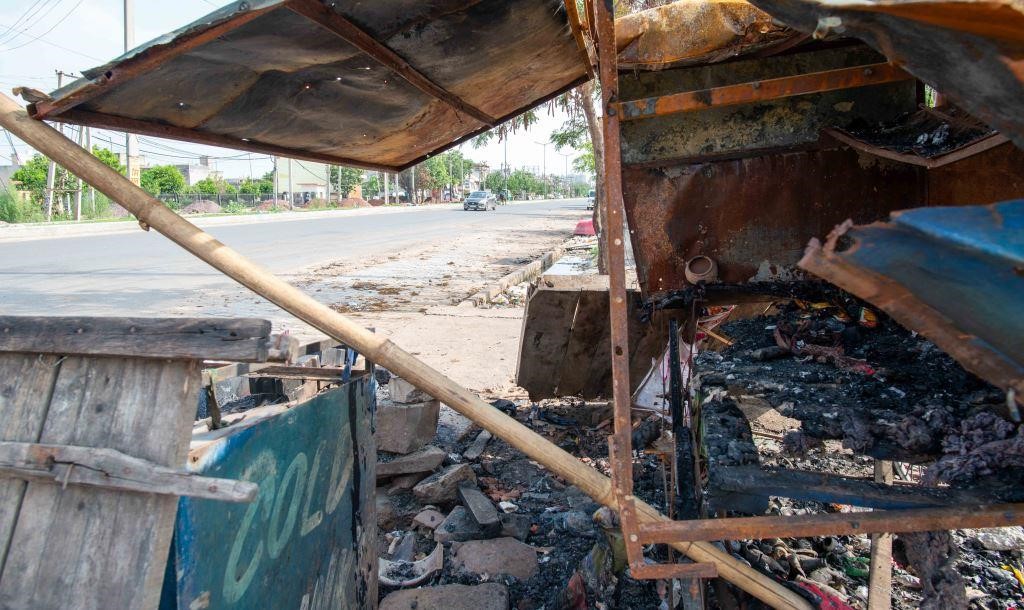
Gurugram, Haryana, India – 2023/08/03: General view of vandalized and burnt street shops along the streets of Ambedkar chowk in Sohna after the communal violence

By the time of our visit many details of the incidents along with evidence by way of eyewitness accounts, photographs and videos was available on various media platforms and the same has been used to guide our fact finding effort. Janhastakshep team set three fold objectives for our visit:

Continue reading The Nuh Communal Violence and the Conspiracy of the Hindutva Brigade: Ground Report by Janhastakshep

NCERT Textbooks, VCs and Others and ‘Updation’

A sample of sections that have been deleted. This page on Gandhi has all the deletions encircled in the text. Image courtesy India Today

Recently, 33 political scientists wrote to the Director, National Council of Educational Research and Training (NCERT) asking for their names to be withdrawn from the Political Science textbooks. This letter followed an earlier one by Yogendra Yadav and Suhas Palshikar where they had similarly asked that their names be removed from the textbooks as chief advisors. Ours was actually a very simple and straightforward demand: since the changes have been made unilaterally without consultation with the authors whose names appear on the textbooks, we would like our names to be removed because both this arbitrary way and the substantive changes make the text books into something other than what a large community of political scientists had produced, through a prolonged collective process.

Continue reading NCERT Textbooks, VCs and Others and ‘Updation’

On the current turmoil in Manipur – what we need to know and what we need to do: NEFIS

The following paper is a detailed examination of the current turmoil in the North-East in its historical context. It has been prepared by a team of activists from different communities of the North-East and is intended for wider discussion and dissemination.  

First released on June 1, 2023 by North-East Forum for International Solidarity (NEFIS)

  1. Introduction

At present, there is an unprecedented social conflict raging in Manipur. The violence has affected all communities in the state. Over 100 people have been killed, 50,000 people are currently in more than 300 refugee camps and lacs have been displaced. Religious places, granaries, and homes belonging to the common people, especially those from the minority tribal communities have been burned. The minority community has a strong feeling of being persecuted. In reality, the lives and livelihoods of the labouring poor across communities have been lost. It is the women of all communities who have been the most vulnerable. To instigate conflicts among communities, fake news, and rumours were peddled by the communal groups which later became the pretext for the alleged lynchings and rapes of women. Miscreants and communal groups have conveniently sought revenge for incidents of violence faced by their respective communities by targeting and punishing those who are unconnected to the acts of violence for which ‘retribution’ is sought. A vicious, never-ending cycle of vengeful violence continues to erupt with the failure of the state to act against such miscreants.

Continue reading On the current turmoil in Manipur – what we need to know and what we need to do: NEFIS

महिला पहलवानों का सुबकता चेहरा – राष्ट्र अपने अंतरात्मा के दर्पण में : माया जॉन

Guest post by MAYA JOHN

यह लेख डेक्कन हेरल्ड में लिखे गए लघु लेख का हिन्दी रूपान्तरण है।

रात के अंधेरे में महिला पहलवानों से दिल्ली पुलिस की हालिया हाथापाई के बाद उनका आँसुओं से भरा  चेहरा दिखा। अंतर्राष्ट्रीय ख्याति प्राप्त यह महिला पहलवान सत्तारूढ़ पार्टी के सांसद और भारतीय कुश्ती संघ के अध्यक्ष द्वारा महिला पहलवानों के कथित यौन उत्पीड़न के खिलाफ लगातार विरोध प्रदर्शन कर रही हैं। पिछले कुछ महीनों में आरोपी सांसद के खिलाफ इन विरोध प्रदर्शनों का यह दूसरा दौर है। विडम्बना है कि सुप्रीम कोर्ट में मामला पहुँचने के बाद ही आरोपी के खिलाफ प्राथमिकी दर्ज हो पाई। आरोपी के खिलाफ लैंगिक अपराधों से बालकों का संरक्षण (पोक्सो) अधिनियम के तहत मामला दर्ज होने के बावजूद उसकी अभी तक गिरफ्तारी नहीं हुई है, और यहाँ तक कि वो अभी भी कुश्ती संघ के अध्यक्ष पद पर आसीन है। पहलवानों के यूँ सुबकते चेहरे, उनके अपमान और हताशा हमारे ज़मीर को भी झकझोरते हैं कि आखिर हमारे देश की क्या हालत हो रही है।

Continue reading महिला पहलवानों का सुबकता चेहरा – राष्ट्र अपने अंतरात्मा के दर्पण में : माया जॉन

How the Jayanagar Vote was Stolen – What Does Not Add Up: Amandeep Sandhu

Guest post by AMANDEEP SANDHU

[This post is a report on what went on in Jayanagar, a constituency in the southern parts of Bangalore, in the Vidhansabha Elections, May 2023]

Yesterday, 13 May, by 2.30 pm or so, the Jayanagar seat had gone in favour of Sowmya Reddy, Congress. It had been a very closely contested election with her rival CK Ramamurthy, BJP in close pursuit. Sowmya Reddy’s final lead, after 16 rounds, was 160 votes.

Flag 1: The Election Commission website was pretty up to date with all candidate results, but Sowmya Reddy’s results were very slow in coming. Her final result came online by around 6 pm while the counting was over, and she had gained her lead at 2.30 pm.

Another candidate stood from Jayanagar with a slight name variation – Sowmya A Reddy. She got 320 votes.

As Sowmya Reddy was leaving to collect her certificate, Ramamurthy also left the vote counting venue – SSMRV college. However, the Election Commission of India rules mandate that since the victory margin was lower than the number of postal ballots, a recount of postal ballots had become mandatory. When Sowmya Reddy was absent, Ramamurthy came back and requested for a recount of the postal ballot. Postal ballot is the term used for those votes which are cast by outstation voters and the pink form submitted by service personnel – police, officers, ambulance drivers and so on – who would be on duty during elections and can’t vote on election day. Their votes are recorded in advance. These votes are counted between 7.30 and 8 am, before strong rooms are opened and EVM vote count starts.

Continue reading How the Jayanagar Vote was Stolen – What Does Not Add Up: Amandeep Sandhu

भारत में अंतर्राष्ट्रीय मजदूर दिवस के 100 साल – तब और अब : माया जॉन

Guest post by MAYA JOHN

यह लेख इंडियन एक्सप्रेस में मई दिवस 2023 पर लिखे गए लघु लेख का हिन्दी रूपान्तरण है।

वो दिन ज़रूर आएगा जब हमारी खामोशी उन आवाज़ों से ज्यादा ताकतवर होगी जिनको आज तुम दबा रहे हो।

  • अमर शहीद अगस्त स्पाइज़ का हेमार्केट शहीद स्मारक पर उद्धृत कथन, अनुवाद हमारा

हर दिन मैं खुद को यह याद दिलाता हूँ कि मेरा अंदरूनी और बाहरी जीवन मृत और जीवित लोगों के श्रम पर आधारित है, और जो मुझे मिला है और मिल रहा है उसको उसी मात्रा में देने के लिए मुझे पुरज़ोर मेहनत करनी होगी।

  • अल्बर्ट आइंस्टीन, द वर्ल्ड एज़ आई सी इट (दुनिया मेरी नज़र में), अनुवाद हमारा

मई दिवस 2023 के साथ भारत में मई दिवस मनाए जाने के 100 साल पूरे हुए हैं। सिंगारावेलु चेट्टियार, जो कि भारत के स्वतंत्रता आंदोलन की बड़ी शख़्सियतों और जाति-विरोधी आंदोलन से जुड़े शुरुआती कम्युनिस्ट नेताओं में से एक थे, उनको भारत में सबसे पहले मद्रास शहर में 1 मई, 1923 को मई दिवस मनाने का श्रेय दिया जाता है। सिंगारावेलु ने भारत में मई दिवस की शुरुआत कर कोशिश की कि भारतीय मजदूरों के संघर्षों को वैश्विक-स्तर के मज़दूरों के प्रतिरोध के साथ जोड़ा जाए। शिकागो में मई 1886 में मजदूरों की रैली से शुरू हुए मई दिवस की तीव्र तरंगें जो भारतीय तट तक 1923 में पहुँचीं, उस संवेग को आज भी दुनिया के विभिन्न हिस्सों में महसूस किया जा रहा है।

Continue reading भारत में अंतर्राष्ट्रीय मजदूर दिवस के 100 साल – तब और अब : माया जॉन

Statement by Historians and Concerned Scholars on Recent Changes Made by NCERT in Textbooks

Received via Maya John, the following statement was issued by over 250 historians and concerned scholars, protesting against the blatantly ideologically driven agenda of the present government in deleting chapters and sections of the school textbooks.

The recent decision of the National Council of Educational Research and Training (NCERT) to drop entire chapters from the history textbooks for class 12, as well as from other classes and to delete statements from other textbooks is a matter of deep concern. Using the period of the pandemic-cum-lockdowns to argue that there was a need to lighten the load of the curriculum, the NCERT initiated a contentious process of dropping topics like the history of the Mughal courts, the 2002 communal riots in Gujarat, the Emergency, mention of Dalit writers, the Naxalite movement, and the fight for equality from social science, history, and political science textbooks of classes 6 to 12. The new editions of these NCERT books have simply made the deletions the norm even when we are in a post-pandemic context in which school education has limped back to normalcy and is no longer in the online mode.

Continue reading Statement by Historians and Concerned Scholars on Recent Changes Made by NCERT in Textbooks

The Goba of Ladakh – Current Relevance of a Traditional Governance System: Shrishtee Bajpai and Ashish Kothari

Guest post by SHRISHTEE BAJPAI and ASHISH KOTHARI

Abstract: Indigenous and other local communities across India have had traditional systems of local governance as unwritten or sometimes written codes of conduct and decision making. Many such systems are still being followed in parallel with the panchayat systems, or getting re-invented by combining the modern forms of governance with the traditional ones, especially in the case of communities still practising traditional occupations and ways of life (forest-based, pastoral, fishing, and/or farming). There are, however, very few studies of these systems interacting with modern state institutions, their current or continuing relevance, and their role in achieving goals of justice, well-being, and ecological sustainability.

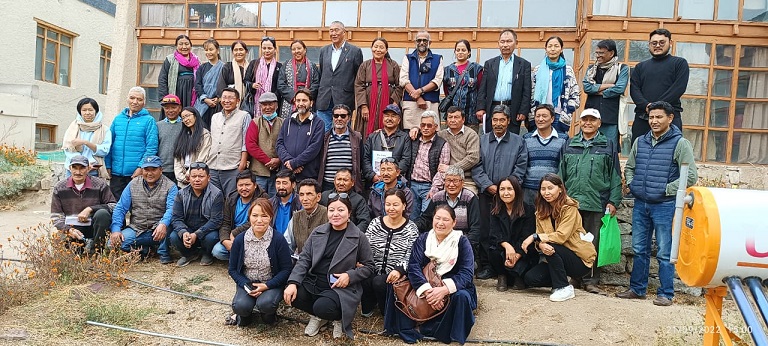
Goba meeting to discuss study results, Leh Aug 2022.

This study focuses on documenting the present status and relevance of the traditional governance system of Ladakhi villages, with a focus on the goba (or lambardar/nambardar). For this, the study also looked at the interface between the local/traditional and new/modern governance systems, viz. the goba with the panchayat, Ladakh Hill Council and UT Administration.

Keywords: traditional governance, goba, democracy, natural resources, indigenous knowledge, environment

Continue reading The Goba of Ladakh – Current Relevance of a Traditional Governance System: Shrishtee Bajpai and Ashish Kothari

G-20 – A Brutal Beautification of the City:  Glory Rose Roy

GUEST POST by GLORY ROSE ROY

The Delhi Durbar of 1911 has great significance in the history of India in terms of hosting King George V, along with the Queen and other guests. Undoubtedly, the entire occasion was recorded as a grand event and moreover, the decoration used on the way to Coronation Park to make it aesthetically beautiful, was magnificent. However, along with the preparations for the amplified royal visit, another incident that catches attention here is the hiding of an entire village, the ‘Dhakka village’.

People living near Dhakka village, 1911
People living near Dhakka village, 1911 (see source below)

The villagers of Dhakka were asked to evacuate the area as their dwellings were not up to the beauty expectations of British officials. The Dhakka village then, represented a strong site of resistance, as the villagers in Dhakka refused to vacate the region for the King’s visit. Thus in response to the recalcitrance of the villagers, the British officials decided to hide the entire village by using huge cloth sheets.. And that is how the village got its name ‘Dhakka’ from the hindi word dhaka which means hidden. The incident portrays to what extent the colonial state could go to welcome its guests. It mulled relocating an entire village and finally covered it out of sight.

Continue reading G-20 – A Brutal Beautification of the City:  Glory Rose Roy

बहुध्रुवीयता – तानाशाही का मूलमंत्र : कविता कृष्णन

Guest post by KAVITA KRISHNAN

[यह लेख The India Forum में अंग्रेज़ी में छपा और उसके हिंदी अनुवाद का एक संक्षिप्त संस्करण सत्य हिंदी में छपा. यहाँ हिंदी में लेख को पूरा (बिना काट-छांट के) पढ़ा जा सकता है. हिंदी अनुवाद के लिए डॉ कविता नंदन सूर्य (सम्पादक, www.debateonline.in) को शुक्रिया.]

बहुध्रुवीयता अंतर्राष्ट्रीय संबंधों की वामपंथी समझ को दिशा देने वाला कम्पास है. भारत और वैश्विक वामपंथ की सभी धाराओं ने लम्बे समय से साम्राज्यवादी अमेरिकी वर्चस्व वाली ‘एकध्रुवीय’ दुनिया की अवधारणा के खिलाफ ‘बहुध्रुवीय’ विश्व की वकालत की है.

दूसरी ओर, ‘बहुध्रुवीयता’ वैश्विक फासीवाद और तानाशाही की साझी भाषा का मूल आधार बन गई है. यह निरंकुश शासकों के लिए एकजुटता का ऐसा आह्वान है, जो लोकतंत्र पर उनके हमले को साम्राज्यवाद के खिलाफ जंग की शक्ल में पेश करती है.  अंतर्राष्ट्रीय संबंधों के साम्राज्यवाद-विरोधी लोकतंत्रीकरण के नाम पर बहुध्रुवीयता को वैश्विक वामपंथ के गुंजायमान समर्थन ने, निरंकुशता का भेस बदलने और उसे वैधता दिलाने के लिए ‘बहुध्रुवीयता’ के इस्तेमाल को असीमित शक्ति प्रदान कर दी है.

राष्ट्र राज्यों के आतंरिक अथवा आपसी राजनैतिक टकरावों पर रुख तय करने लिए कितने आधार उपलब्ध हैं? इस प्रश्न के जवाब में वामपन्थ सिर्फ़ दो विकल्पों – या तो “बहुध्रुवीयता” या “एकध्रुवीयता” – को प्रस्तुत करती है. अगर आपने “बहुध्रुवीयता” को अपना मूल आधार नहीं बनाया तो वामपन्थ मानेगी कि आप ज़रूर अमेरिका/नाटो की दादागिरी वाले “एकध्रुवीयता” के पक्ष में हैं. पर   “बहुध्रुवीयता” या “एकध्रुवीयता” के बीच यह कल्पित बाईनरी हमेशा भ्रामक थी. लेकिन आज “बहुध्रुवीयता” बनाम  “एकध्रुवीयता” के बीच संघर्ष की मनगढ़ंत कहानी भ्रामक ही नहीं, खतरनाक है क्योंकि इस कहानी में फासीवादी और तानाशाह नेताओं को “बहुध्रुवीयता” बनाए रखने वाले नायकों का पात्र दिया गया है.

Continue reading बहुध्रुवीयता – तानाशाही का मूलमंत्र : कविता कृष्णन

The Lady Vanishes – Justice and Law in Our Age: Dilip Simeon

Guest post by DILIP SIMEON

[Names and publications of cited authors are listed at the end of the essay.]

The sophists taught, rather publicly, the view that the summit of happiness is to combine the appearance of justice with actual injustice: Gregory McBrayer (2015), p 44

To speak of justice has always been to plunge into a metaphysical abyss, especially as the issue has been intractable since (at least) Plato’s most famous work, The Republic was written some twenty-five centuries ago. Not least has been the permanently contentious issue – named the theological-political problem by Leo Strauss – of whether we should live according to divine or human guidance. But to speak of justice in India is confront our deeply divided souls; and in the most horrendous cases, to stare evil in the eye.

If Mrs Indira Gandhi dreamt of a ‘committed bureaucracy,’ our current rulers appear to be bent upon the complete domestication of civil society by their ideological enterprise. This requires a committed judiciary too, for which aspiration clues are ample, because they conspire in broad daylight. It was inevitable that some members of the judiciary were and continue to be complicit in this totalitarian project. We should be grateful that there are men and women of courage and conscience within. One of them was named Judge Loya.

Continue reading The Lady Vanishes – Justice and Law in Our Age: Dilip Simeon

The Phantom of Bombay House: Upal Chakraborty

Guest post by UPAL CHAKRABORTY

[Published below is the story of a long fight against harassment and for justice by someone who took his corporate job and the interests of his company seriously, little knowing what it could lead to. It gives a glimpse into the corporate culture even among what are known to be the best corporate entities. ]

There was a gentleman whose name propped up frequently inside the Tata Group headquarters “Bombay House”, but he was more known by his sobriquet – the “Phantom of Bombay House”. He was considered a recluse and shunned social get-togethers as far as possible. Not a soul has ever seen him inside the premises, yet he held an 18.4% stake in the Tata Group. The gentleman was none other than the Late Pallonji Mistry, the father of the previous Group Chairman Cyrus Mistry whose family owned around 18% share of the Group. Tata professionals including Ratanji himself, reportedly, looked up to him for professional support.

It is unfortunate, therefore, that during the stewardship of his son, the episodes described in this article could take place. Mr. Mistry personally may or may not have been aware but for some strange reason the Group chose to turn a blind eye to a series of sordid happenings and preferred to side with an individual whose criminal acts were proved beyond any reasonable shade of doubt.The individual concerned, Mr. Tarun Kumar Samant or Tarun Kumar Sawant, can arguably be described as the new Phantom of Bombay House after the demise of Mr. Pallonji Mistry.

Continue reading The Phantom of Bombay House: Upal Chakraborty

No Reason  to Bow Down to So-called Modi Storm, Time for Unity to Strike: Sankar Ray

Guest post by SANKAR RAY

We have been living through an unnatural and scary time in India. Those in power today are ideologically responsible for destroying the greatest achievement of India’s freedom struggle. The achievement is stable parliamentary democracy, one of the main conditions for whose existence and development is accommodation of dissent and transparency therein. The symptoms of this destruction are often horrendous.

The Bharatiya Janata Party (BJP) won 156 out of 182 seats in the recently held Gujarat Assembly elections. The pattern of state politics was completely reversed as BJP’s number of seats increased from 99 to 182 from 2017 to 2022 and Congress’s seats decreased from 77 to 17. But BJP’s strength in municipal and panchayat elections in Gujarat was decreasing.

Continue reading No Reason  to Bow Down to So-called Modi Storm, Time for Unity to Strike: Sankar Ray

Questioning the Make-in-Odisha Conclave and the Current Development Model: People’s Movements Write to Governor

Following is the text of an open letter sent by the Bisthapan Birodhi Jana Andolon Mancha, a coalition of people’s organizations, activists, journalists and citizens to the Governor of the Odisha. It was released in Bhubaneswar yesterday the 3rd of December 2022.

Respected Sir,

We as concerned citizens, social activists, political and human rights activists, environmentalists and journalists and the leaders of twelve mass organizations on behalf of Bisthapan Birodhi Jana Andolon Mancha, Odisha appeal for the protection of natural resources and an immediate end to the continuous forceful displacement of people from their lands and dwelling places.

We express our protest and dissent against the Odisha government’s Make-in-Odisha Conclave in Bhubaneswar. Inviting more investments in the name of development will uproot the lives and livelihoods of people dependent on these land, forests and coasts. We appeal to your conscience to intervene and prevent the exploration and exploitation of natural resources through unmindful and unwanted mining of bauxite, iron ore, chromite, coal, river sand, china clay and other resources in the name of development. People are struggling against all odds and hardships to protect the same for future generations even as they remain deprived of access to basic needs like education, health and nutritional food security.

Continue reading Questioning the Make-in-Odisha Conclave and the Current Development Model: People’s Movements Write to Governor