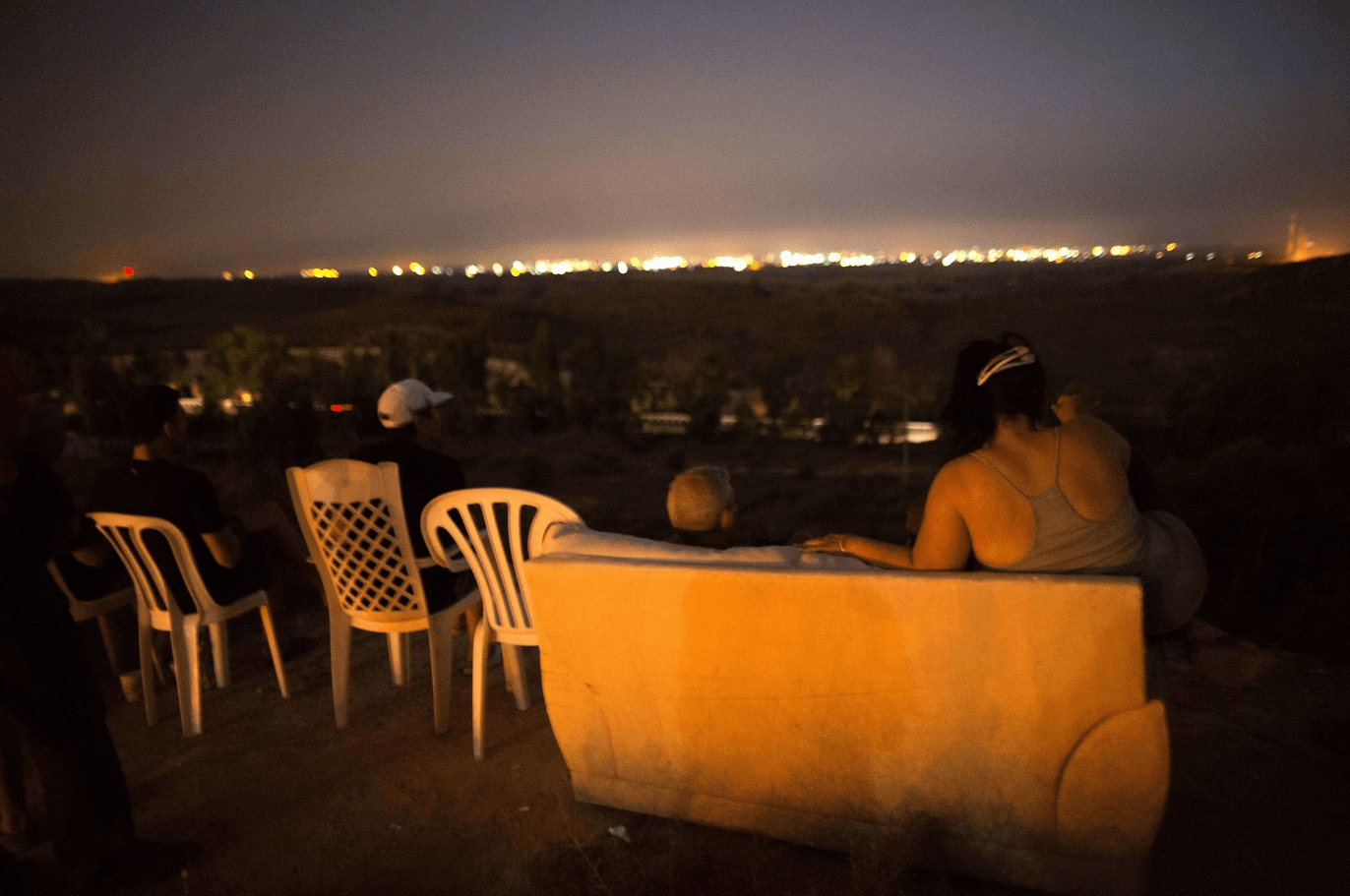
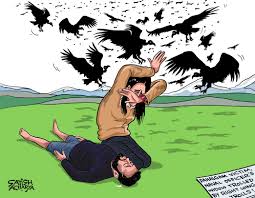
Given its organizational form and nourishment, it is difficult to imagine that the troll machine can genuinely feel. But it has been trained in demonstrations of outrage. One section of the online machine felt betrayed by the declaration of a ceasefire between India and Pakistan. Shocked by the ‘premature’ end of what was desired as a ‘decisive’ war, it lamented that the background conditions of an avenging solidarity and armed forces’ bravery were left under-utilised as Pakistan remained one nation, unlike its split during Indira Gandhi’s time in 1971.
The following is a statement issued by AXOM NAGARIK SAMAJ
Axom Nagarik Samaj condemns the banning of independent media platforms
Guwahati, 10 May: The terrorist attack at Pahalgam was an act of cowardice. To retaliate this the Indian armed forces conducted the ‘Operation Sindoor’ and destroyed several terrorist establishments inside Pakistan. Indian public and political parties irrespective of their ideological affiliation stood solidly behind our armed forces. It goes without saying that the national security of the country is of paramount importance. There shouldn’t be any let up in it. However, on the pretext of escalation of tensions between India and Pakistan there shouldn’t be any curtailment of freedom of expression which is a fundamental right. But unfortunately government of India has done exactly that by banning and blocking ‘4pm’ News Network, the YouTube channel of Punya Prasun Bajpai and ‘The Wire’. These are all truth speaking, independent and trust worthy media platforms. In the time of war mongering, spreading of fake news and falsehood by most of the mainstream electronic media, they tried to report and inform public objectively and truthfully. These platforms are manned by best of professional journalists in the country. What government has done is nothing but gagging of the independent media which is utterly harmful for a democracy. We condemn this and demand that the banning and blocking of all the three media platforms are withdrawn immediately.
Reflecting on what he called the “crisis of authority” or the “crisis of hegemony” from inside Mussolini’s prison, Antonio Gramsci had observed,
“The crisis consists precisely in the fact that the old is dying and the new cannot be born; in this interregnum a great variety of morbid symptoms appear.” (Selections from the Prison Notebooks, International Publishers, 1971, p. 276)
Reduced by Slavoj Zizek to a meaningless tweet that substitutes the last part with his own pop culture expression “now is the time of monsters”, it has become a kind of substitute for thinking what the crisis actually is all about.
Gramsci in fact, was hardly talking about pop culture “monsters”. He was thinking about a very new phenomenon of his time but which has become far more serious today – the crisis of the political party. The crisis of hegemony is tied in his above reflections, to the fact that “the great masses have become detached from their traditional ideologies and no longer believe in what they used to believe previously etc.” (SPN: 276)
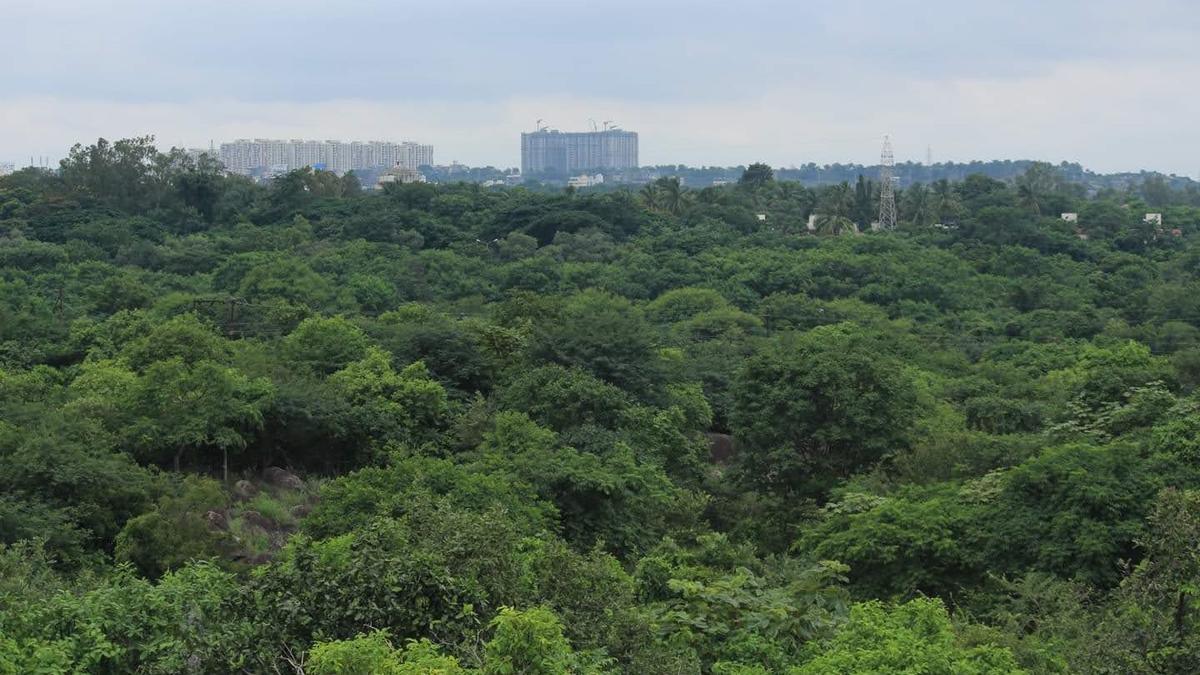
Recently, the students of the University of Hyderabad were protesting the Telangana state government’s bulldozing of 400 acres of ecologically vibrant, species-rich land within the university, undertaken as a preparatory step to auction it off. The state government sought to quell the protest by force, asserting that the land does not belong to the university and that it is within its rights to auction it. However, the Supreme Court has intervened and stayed the activities for the time being. Ego-bruised by the setback they have faced at the hands of the campus community, the Telangana government has now proposed that the entire 2300 acres of the university be turned into an eco-park, uprooting the campus in toto to a hundred-acre campus on the city’s outskirts.
Kancha Gachibowli forest, image courtesy The Hindu
Strangely, the university has not secured legal rights for the land it has occupied for several decades. However, the emphasis in the following note is on an aspect of the protest that lies beyond the legal dispute over ownership. It rather seeks to articulate the inarticulable—why the preservation of the ecology of these 400 or 2300 acres is not a standalone question but one that co-constitutes the very question of preserving the university itself.
[The following post by writer Sadique Hossain highlights the way in which with approaching state elections, Bengal’s Muslims are being increasing forced into silence, as contending political parties, especially the CPI(M) and the TMC, stake out their respective agendas. While the stance of all parties is telling, that of the Left is particularly myopic, argues Hossian. AN ]
2026-এ পশ্চিমবঙ্গে বিধান সভার নির্বাচন হতে চলেছে৷ বাকি প্রায় দশ মাস৷ কিন্তু এখন থেকেই মুখ্য দলগুলো তাদের ন্যারেটিভ কী হতে পারে – তা প্রায় স্পষ্ট করে দিয়েছে৷ তারা দৃশ্যত রমজান মাসটিকেই বেছে নিয়েছিল ভোটের দামামা বাজানোর কাজে৷
ইদের কিছুদিন আগে সেটা শুরু হল বিজেপির বিধায়ক শুভেন্দু অধিকারীকে দিয়ে৷ তিনি বিধানসভার বাইরে ঘোষণা করলেন – বিজেপি ক্ষমতায় এলে তৃণমূল থেকে নির্বাচিত মুসলিম বিধায়কদের চ্যাঙদোলা করে রাস্তায় ছুঁড়ে ফেলবেন৷ তাঁর বক্তব্য ধ্বনিত হতে থাকল বিজেপির অন্যান্য বিধায়কদের গলাতেও৷ ইদের পরেই রামনবমী ছিল৷ মাঝখানে ওয়াকফ বিল পাশ হয়ে গেল লোকসভা আর রাজ্যসভাতেও৷ এরমধ্যে তৃণমূলের হুমায়ুন কবীর শুভেন্দুর কথার প্রেক্ষিতে বললেন শুভেন্দুকে মুর্শিদাবাদে ঢুকতে দেওয়া হবে না৷ এমনকি জোর করে মুর্শিদাবাদে ঢুকতে এলে, দাঙ্গা বাধাতে এলে ভাগীরথের জলে ভাসিয়ে দেওয়া হবে৷ এক্ষেত্রে তৃণমূল অবশ্য তাঁকে থামাতে দেরি করল না৷ শো-কজ করা হল৷ এবং হুমায়ুন কবীর প্রথমদিকে ফোঁসফোঁস করলেও পরবর্তীতে চুপ করে গেলেন৷
Land forms one of the most important planks of private property, because the appropriation of land (or ‘soil’ if one is to follow Karl Marx’s usage) forms the core of capitalist development, and since capitalism cannot sustain without the creation of class antagonisms and the appropriation of productive capacities of workers,[1] capital further uses the appropriation of land as a tool to exploit the non-capitalist classes. This results in the gradual separation of the worker from nature and thus eventually from the society itself, resulting in a state of alienation, which is used to create a ‘certain quantity of labour stocked and stored up’.[2] This stocked up/stored-up labour, as Marx explains, becomes capital. The relationship between manufacturing – the foundation of industrial capitalism – and nature – reflected in Marx’s usage of ‘soil’ – was an integral part of Marx’s definition of ‘capital’ under advanced capitalism. For example, in the discussion on ‘Bonds, or stock’, Marx had quite explicitly put up the relationship that capitalist development shares with the ecological world: ‘Bonds, or stock, is any accumulation of the products of the soil or of manufacture. [This] Stock is only called capital when it yields its owner a revenue or profit’.[3] The struggle for ecological justice thus constitutes an important aspect of the broader social justice movement because land relations constitute an integral part of the social relations, which in turn constitute the basis of not only capital but also the working class itself.[4] It is interesting to view the recent agitation against the auctioning of land within the campus of the University of Hyderabad (UOH), or the Hyderabad Central University (HCU), surrounding the proposed construction of IT parks by deforesting the Kancha Gachibowli Forest (KGF) in this context.
As the debate on the three-language policy has intensified, what was originally an exchange between ministers of the union government and the government of Tamil Nadu, or between leaders of the Bharatiya Janata Party (BJP) and the Dravida Munnetra Kazhakam (DMK), has become a subject of commentaries and criticisms coming from observers, intellectuals and activists. The union government says that no state could be exempted from the implementation of the three-language formula as envisioned in the New Education Policy (NEP) 2020 and adds that Hindi is not made mandatory under the present formula. The condition is that two of the three languages must be native Indian languages. The DMK leadership argues in response that the three-language policy can still be an indirect route to push Hindi into the state. The latter has appeared firm in its argument that it is the state’s prerogative under the federal system to determine its language and education policy (though during emergency education was shifted to the concurrent list of the union government). It also opposes the measure adopted by the union government, that is, to link the funding under the Samagra Shiksha Abhiyan to the implementation of NEP 2020 and the language formula it includes. The parties which are not in alliance with the DMK in the state allege that the DMK has staged this conflict in order to ignite sub-national/regional sentiment to strengthen its position before the elections.
An expanded version of the presentation at the panel on Kafila held as part of the W.I.P alt.FEST held in Bangalore and Delhi in December 2024. While the first post in this series by Subhash Gatade is linked below in the text, the third by J. Devika can be read here.
Kafila was formally launched on 6 November 2006 at a session of the India Social Forum in Delhi, though its first post had gone up a couple of weeks earlier, on 19 October. However, there is a prehistory to the actual formal formation of Kafila which goes back to two earlier movements that had brought many of us together.
As rightly mentioned by Subhash Gatade in his reflections, the first of these was the movement against the relocation of polluting/ hazardous industries starting from late 1996. It was this movement that, perhaps for the first time in India brought the issue of workers’ rights into the discourse on urban pollution and environment. It took the discussions on urban planning, linking air and water pollution, zoning, transport policy and questions of workers’ occupational health, outside the charmed circles of urban planners. Initiated by the Indian Federation of Trade Unions, the formation of the Delhi Janwadi Adhikar Manch was the platform that had enabled this by bringing all of us together.
We are reproducing below a statement by the Democratic Teachers’ Initiative seeking wider support from the university community in the struggle against the termination of employment of Prof Sali Mishra and Prof Asmita Kabra by the Ambedkar University Delhi administration. Those willing to sign may please do so by clicking on the link at the end of the statement.
We express deep shock and rage over the termination of two esteemed faculty members of Dr. B. R. Ambedkar University (AUD), Prof. Salil Misra and Prof. Asmita Kabra, and request your solidarity in building a struggle against this unprecedented and grave act of injustice.
Following is a statement issued by 250 organizations and individuals, including the National Alliance of People’s Movements (NAPM) against arrests and intimidation of activists raising concerns regarding the ecological impact of so-called “developmental” projects. The statement was issued on 13 November 2024
Stop Arbitrary Detentions and Intimidation of Social & Environmental Activists in Jammu & Kashmir
Save Ecology & Uphold Democratic Rights in J&K and entire Himalayan Region
National Alliance of People’s Movements (NAPM), along with other people’s organizations and concerned citizens from across India strongly condemns the arbitrary detention of social and environmental activists in Jammu & Kashmir under the Public Safety Act (PSA). Those detained under the provisions of J&K Public Safety Act, 1978, include Mohammad Abdullah Gujjar (resident of Sigdi Bhata), Noor Din (resident of Kakerwagan), Ghulam Nabi Choppan (resident of Trungi – Dachhan), Mohammad Jaffer Sheikh (resident of Nattas, Dool) and Mohammad Ramzan (resident of Dangduroo – Dachhan), trade union leaders from Kishtwar district.
Following is a letter from the NATIONAL ALLIANCE FOR JUSTICE ACCOUNTABILITY AND RIGHTS regarding recent unlawful detentions and extra-judicial killings in Bijapur.
Urgent Letter to the DGP, Chhattisgarh Regarding Unlawful Detentions and Extra-Judicial Killings in Bijapur District
13th Nov, 2024
To,
Director General of Police, Govt. of Chhattisgarh, Raipur, Chhattisgarh
Sub: Unlawful Detentions and Extra-Judicial Killings in Bijapur District – Seeking Immediate Release of all detenus and impartial inquiry – Reg
Sir,
We the undersigned, as members of a national collective of lawyers, law students, law professors, and other legal professionals, called National Alliance for Justice, Accountability and Rights (NAJAR) write to express serious concern regarding recent actions by security forces in Bijapur District, Chhattisgarh, on 8th Nov, 2024. The mass detention of individuals, including prominent activists, as well as reported killings, raises grave concerns about due process, excessive use of force, and adherence to legal standards.
Students protesting in Uttara, Dhaka, August 2, 2024. Photo: Ashraful Alam
Sheikh Hasina, often labelled as fascist and autocratic leader in Bangladesh, was forced to flee the country following a popular uprising in July-August 2024. Many writings have appeared exploring the character of the movement and the consequent developments. Recently, renowned Indian historian and journalist Vijay Prashad published an article titled ‘Will Bangladesh be another Egypt?’, where he expressed the concern that Bangladesh could follow a path similar to Egypt’s. Vijay presents the popular uprisings as both a continuation and, to some extent, a counter-response to the Shahbagh movement, while drawing parallels to the Arab Spring. However, his disregard for certain political realities in Bangladesh—such as the country’s long tradition of democratic movements and the presence of major centrist parties like the BNP—makes his comparison uneven and incomplete in some respects.
[Maya John has been part of the Left Movement for the past two decades and this piece is in response to ongoing dialogues with Sri Lankan comrades.]
Anura Kumara Dissanayake, photo courtesy AP News
The recent presidential election has installed Anura Kumara Dissanayake (“AKD”) from the Janatha Vimukthi Peramuna (JVP)-led National People’s Power (NPP) alliance as the new president of Sri Lanka. This victory is seen as a result of rising popular hostility towards mainstream parties and rogue dynasts. Consequently, we find that AKD garnered an overwhelming share of the votes from those same electoral constituencies which had earlier voted in bulk for the corrupt Rajapaksas. Prior to this presidential election, the frustrated Sri Lankan masses, plagued by growing economic and political crises, generated the powerful people’s movement – the janatha aragalaya – that ushered in a huge legitimacy crisis for the ruling elites.
Crowds outside the prime minister’s office during the Uprising. Photograph by Dipu Malakar, courtesy Prothom Alo
The statement issued on 24 September 2024 by the Lemkin Institute for Genocide Prevention titled ‘Statement on Threats to Democracy in Bangladesh’[1] has drawn our attention not only due to misrepresentation of facts but also because it aligns more with the narrative of the ousted autocratic regime led by Sheikh Hasina and her party Awami League than with the aspirations of the people of Bangladesh. The statement has failed to capture the complexities of the situation in Bangladesh and thereby presents a misguided narrative about the uprising and its aftermath. Under the circumstances we feel obligated to respond to set the record straight and point out the inaccuracies in the statement.
Following is an Open Letter from ALIFA (All India Feminist Alliance ) to Gauri Lankesh, marking 7 years of her cowardly killing.The Open Letter is in both English and Kannada. The Kannada version follows after the English one. ALIFA is linked to NAPM (National Alliance of People’s Movements).ಆತ್ಮೀಯ ಗೌರಿ ಲಂಕೇಶ್ ಅವರ ಹೇಡಿತನದ ಹತ್ಯೆಗೆ 7 ವರ್ಷಗಳಾಗಿ, ಅವರಿಗೆ ಅಲಿಫಾದಿಂದ (ALIFA) ಬಹಿರಂಗ ಪತ್ರ
Gauri Lankesh, image courtesy Asianet Newsable
Gauri, dear sister, dear comrade!
It has been seven years. We still remember the day, the night! 5th September, 2017 – in fact the very moments – when the ‘news’ hit us. Gauri Lankesh shot in cold blood. Details poured in. Number of bullets. At your residence. By two men. We reeled with shock under immeasurable grief, loss and helplessness. Abandoning so many unfinished conversations, you left a void in all our hearts, the shape and size of a star!
The multiple crises humanity confronts require fundamental shifts in how we relate to the Earth and to each other. This entails tackling the roots of these crises head-on, including the structures and relations of patriarchy, racism, colonialism, capitalism, statism, and anthropocentrism. This in turn needs to be done within the context of visions of the ideal society we want. This essay presents a process in India, Vikalp Sangam (Alternatives Confluences), that has attempted for a decade to document, visibilise, network, and create collaborations amongst movements and groups involved in alternative approaches for justice, equity, ecological sustainability. It describes the process and its various components, the challenges and opportunities of bringing very diverse groups from different cultural contexts together, the potential of a bottom-up and participatory visioning process, and the excitement of attempting to bridge conventional traditional-modern, practitioner-intellectual, urban-rural, and other divides.
Keywords: Democracy; Visioning; Alternatives; Environment; Civil society
Introduction: The Making of Vikalp Sangam
A decade is not a short span of time – and yet, it is too short. These are the contrasting thoughts I have as I contemplate a process that I have been part of since its initiation, as I and my colleagues enter into a phase of reviewing whether it is on course to meeting the objectives it began with. This is Vikalp Sangam, or Alternatives Confluence, a national platform established in India in 2014.
Democracy Vikalp Sangam, School for Democracy, Rajasthan, October 2019
This is the second part of the two-part article by Shahed Suvo, published earlier in Bangla in Ekak Matra on 10 August 2024. The first part appeared yesterday and can be accessed here. This part deals with the last days of the Sheikh Hasina regime and the transition that immediately followed. It has been translated for Kafila by ARUN SINHA.
Responding to the call of the anti-discrimination student movement, student-citizens gathered at Shaheed Minar on August 3. Young people continued to gather at Shaheed Minar with separate protest processions. At this time, elderly citizens were also seen participating in the protest march with them. At around 5:30 PM in the afternoon, the coordinator of the organization leading the quota reform movement Md. Nahid Islam announced a one-point demand in a speech to the students-people gathered at Shaheed Minar – Prime Minister Sheikh Hasina and her cabinet must resign.
Asif Mahmud, another coordinator of the movement, announced the outline program of the non-cooperation movement.
As a lot of motivated propaganda continues to be dished out about the uprising in Bangladesh, with weird and utterly nonsensical stories of it being ‘engineered’ by ‘the CIA’ at one end, and ‘the Islamists’ at the other, we reproduce here this article that gives a virtually blow by blow account of the developments. Published earlier in Bangla in Ekak Matra on 9 August 2024, Twenty Days that Shook the World in two parts, it has been translated for Kafila by ARUN SINHA. This is the first part. Part II can be read here.
Bangladesh protest before 5 August, image courtesy Ekak Matra
The students’ community revolution in July 2024 will be etched as one very important and characteristic event in the annals of history of deconstruction of state in Bangladesh. After declaration of Pakistan as a state, the first voices of protest were raised against Jinnah’s policy of declaring Urdu as the state language. That was Bhasa Andolan (Language Movement) in 1952, then came the movement on 1962 education commission, the mass uprising in 1969 culminating in the glorious Liberation War in 1971. The student community always participated in bringing these momentous changes walking hand in hand with the people in Bangladesh. Whenever people lost their way and paths in independent Bangladesh, it is the movement of the students that showed the road ahead. Therefore, for the people of Bangladesh the student community has always been the symbol of truth and justice.
[More than 900 organizations and individuals speak out against brutal rape and cultures of impunity from Kolkata and Manipur to Uttar Pradesh, Gujarat and other parts of the country. Published below is their statement issued on 26 August 2024.]
WOMEN RIGHTS NOW!
CITIZENS SPEAK OUT AGAINST BRUTAL CASES OF SEXUAL VIOLENCEFROM KOLKATA TO MANIPUR, GUJARAT, UTTARAKHAND, BIHAR, UTTAR PRADESH…
DEMAND URGENT, INDEPENDENT AND UNBIASED INVESTIGATIONS ANDINSTITUTIONAL ACCOUNTABILITY!
NO MORE SHIELDING OF PERPETRATORS AND THEIR PROTECTORS
[Even as the massive Long March in Dhaka’s Shahbagh is going on, reportedly with lakhs and lakhs of people demanding Sheikh Hasina’s resignation, rumours of her having already resigned are coming in. The statement is of course in support of Bangladesh’s struggle for democracy and against the brutal repression unleashed by her Awami League regime.]
We, the undersigned citizens of India, writers, artists, intellectuals and activists, express our deep concern over the recent developments in Bangladesh. As fellow South Asians, we share a common destiny and the destruction of democracy in any part of it is obviously a matter of concern for all of us. The current government that has unleashed massive violence on its own citizens has brazenly hijacked the elections three consecutive times in the last ten years.
The world has been watching in horror the violent crackdown on protesting students and youth in Bangladesh since mid-July. On 15th July, a peaceful protest by students of Dhaka University demanding reform in the quota system was violently attacked by a group of goons said to be from the student wing of the ruling party. The crackdown followed statements by the Awami League general secretary and an important minister that the Chhatra League would teach a lesson to the students, whom the prime minister, Sheikh Hasina had earlier labelled ‘razakars’ – a term used for the collaborators with the Pakistan army during the 1971 Liberation Struggle. Expectedly, the Bangladesh Police, rather than acting against the attackers, started a full-scale crackdown on protesters all across the country from the next day. On 16th July, the police killed Abu Saeed, a student of Begum Rokeya University, as he stood with open arms, without any weapon, in front of the approaching police forces who aimed their guns at the protesters. The murder of Abu Saeed, who posed no threat to the approaching police forces, manifests how the intention behind the crackdown on protesters was not to maintain law and order but to forcefully silence voices of dissent arising from all across Bangladesh.
Interview with SARWAR TUSHER, writer and activist in Dhaka. Sarwar is one of the leading critical intellectuals associated with the important journal of political thought in Bangladesh, Rashtrochinta Journal and is also member of its editorial panel.In this detailed interview Sarwar explains not just the movement but also the larger politics of Bangladesh.The interview was taken by Aditya Nigam over email.
Turbulent July, Photo courtesy Rahat Karim
[After a round of massive repression and killings, the details of which the reader will find below, the movement is now back with renewed strength. This time it is not just the students and youth demanding an end to quotas but rather huge popular movement that is demanding nothing less than resignation of the Sheikh Hasina government and radical reform of the state. The conception behind this demand for “radical reform of the state” has been spelt out by Sarwar Tusher in detail below and the reader can see how it has grown in conjunction with mass movements of the past. Critical political thinking in tandem with the experience of mass movements has now led to the demand also of a new Constituent Assembly and the drafting of a fresh Constitution. It is also significant that “July” is no longer the name of a month but the name of the struggle itself as it reappears with greater vigour. I should add one more point here, which as to do with some misgivings in India about the quota and reservation question. Though Sarwar deals with it at greater length in different part of the interview, my own sense on reading his responses as well as following the discussions over the past one month, is that the situation is more akin to what might have been (and still is) in countries of state-socialism where the communist party certification was crucial in getting jobs and rising in the bureaucracy and other state institutions. The party certified whether you were “revolutionary” (muktijoddha) or “counter-revolutionary” (razakar) and it is not difficult to see why those regimes became so seriously unpopular (to put it mildly) in their own countries. AN]