
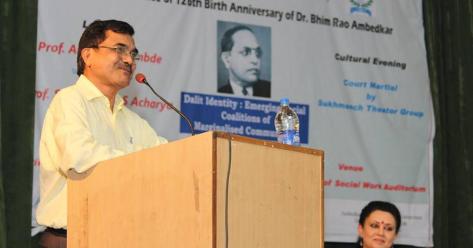
We, the undersigned students, faculty and others from IIT Kharagpur are shocked with the treatment that the police forces have meted out to our ex-colleague, Prof. Anand Teltumbde and other intellectuals. His residence in Goa, where he is working as a Senior Professor and Chair, Big Data Analytics at Goa Institute of Management (GIM), was intruded by the police forces without permission in his absence. This police action was part of the large scale raids and arrests of eminent scholars, intellectuals and lawyers across the country on Tuesday.
Continue reading Statement against police action on Prof. Anand Teltumbde and others – Students, Faculty and Alumni of IIT Kharagpur
All posts by Nivedita Menon
Response to Critics of AAS-in-Asia boycott: Ajantha Subramanian et al
Continuing the debate on the controversial Association of Asian Studies conference recently held in Delhi, to which Pakistani participants were denied visas by the Indian government, following which there was a call to boycott the conference.
Nandini Sundar wrote an article in The Wire which we re-posted on Kafila. This is a response to that article by Ajantha Subramanian, Suvir Kaul, Rupa Viswanath, Rebecca Karl, Ania Loomba and Nate Roberts, also in The Wire.
As signatories to the call for a boycott of the AAS-in-Asia conference in Delhi (July 4-8, 2018), we have been vocal critics of how the Association for Asian Studies – a membership-funded professional organisation based in the US for scholars of Asia around the world – has handled the government of India ban on Pakistani scholars (based on both nationality and descent). We now write because the debate that our call for action provoked raises important questions about location, ethics and nationalism when it comes to the right to protest. These questions are important in our age of escalating international exchange as well as national chauvinism.
Our critique has focused on the AAS, an organisation that was informed of the preemptive ban and which, in conjunction with Ashoka University, their private university partner in New Delhi, concealed it from the general membership – as well as the general public – for months. Although the organisation claims it did its part by putting the letter banning Pakistanis on its conference website, no one would find it unless they were looking for it. Knowledge of the ban only became public when The Wire broke the story on June 7, 2018.
Read the rest of this article here.
Statement condemning the attack on Advocate Sudha Bhardwaj
We the undersigned wish to place on record our utter disgust, contempt and outrage at the latest in the series of machinations by Republic TV, working to its brief as a propagandist for the ongoing crusade against all those who take public stands in defence of democracy, secularism, human rights, Constitutional propriety and rule of law.
Republic TV’s latest target is Advocate Sudha Bharadwaj, National Secretary of the People’s Union for Civil Liberties, Vice President of the Indian Association of Progressive Lawyers and Visiting Professor at the National Law University Delhi. She is widely-known for her three decades of work as a trade unionist, human rights defender, environmental lawyer and a respected advisor to several state institutions including the state legal aid bodies and the National Human Rights Commission. Continue reading Statement condemning the attack on Advocate Sudha Bhardwaj
US scholars of South Asia should boycott Indian Ministers and Officials Attacking Academic Freedom: Nandini Sundar
Kafila had earlier published a letter to Association of Asian Studies (AAS) protesting the exclusion of Pakistani scholars from its conference in Delhi, because the Government of India refused visas to them.
Nandini Sundar, in an article in The Wire, explores the complex ramifications of this issue and urges a more consistent position from scholars that would recognize and resist a) the manner in which the Indian state and Indian capital are embroiled in South Asia studies in the US academy and b) the travel ban in the US that equally excludes scholars from seven countries from participating in academic conferences held in the US.
Regarding the US travel ban, there was an international call in early 2017 for an academic boycott of international conferences held in the US, which I had supported, and renew my support to, after the recent Supreme Court decision upholding the travel ban.
And now read Nandini Sundar in The Wire:
As an India-based scholar, as someone who is not a member of the Association for Asian Studies (AAS), which is primarily located in the US though it has 7,000 members worldwide, and someone who had no plans of attending the AAS-in-Asia conference in Delhi (July 4-8, 2018), the boycott call against the AAS-in-Asia is not something that would ordinarily bother me.
The boycott call arose out of the government of India’s refusal to allow Pakistani scholars to attend the AAS meeting; and the AAS’s failure to take a strong public stand against this and inform its members in a timely fashion so that they could make their own choices about whether to attend while Pakistani scholars were being denied. 649 scholars protested against what appeared to be the AAS’s and the local host, Ashoka University’s quiescence in an unacceptable restriction on academic freedom. I was one of them, even though my primary anger was with the government of India, and not with the AAS. However, feeling that this was not enough, over 200 of the signatories have also decided to boycott the conference, arguing that the AAS should have had the courage to cancel the conference altogether rather than submit to the ban.
CONTINUE READING THIS ARTICLE HERE.
Jadavpur University Scraps Admission Tests – Not going down without a fight: Sritama Chatterjee
Guest Post by SRITAMA CHATTERJEE
The Executive Council (EC) of Jadavpur University recently decided to scrap the admission test in the Humanities for the academic year 2018-2019. This is no surprise to many of us who have been closely following the chain of events that have unfolded at the university in the last couple of days. According to published news reports, the education minister of West Bengal, Partha Chatterjee had “advised” the university back in November 2017, to do away with the procedure of conducting admission tests.[i] This raises a serious question whether the education minister of a state can even advise a university on how to conduct its admission process, especially considering that the university is an autonomous institution. The motives of the EC about the admission tests were becoming increasingly suspicious when they postponed the dates for the admission test twice, thereby causing inconvenience to many applicants, especially those students who had applied from outside West Bengal and had their itinerary planned according to the declared dates. Not only were the dates postponed but also the method of admitting students were changed from the earlier notification of admitting students solely on the basis of admission tests to 50% weightage on board examination and 50% weightage on admission test to completely scrapping the admission test, altogether. Although I acknowledge that the parameters to rank and evaluate the performance of universities have its own set of problems which is outside the scope of this piece, it cannot be denied that Jadavpur University has done significantly well in the National Institutional Ranking Framework(NIRF) published recently by the MHRD, in spite of the fact that as a state university, the funding received by JU is scanty in comparison to the central universities. It is noteworthy that one of the parameters on the basis of which the NIRF rankings are based is perception, in which JU has not scored well. I wonder that after facing the harassment that applicants had to go through because of the fickle-minded decisions of the EC, whether the “public perception” about JU would become better. The VC and the EC must answer. Continue reading Jadavpur University Scraps Admission Tests – Not going down without a fight: Sritama Chatterjee
Higher Education Commission of India Act – Send your responses NOW!
Needless to say, such an act has far-reaching repercussions for higher education in India.
The Union HRD Minister, Sri Prakash Javadekar, has urged all members of the concerned public to respond to the proposed draft of the HECI within the 7th of July, 5 pm.
This is a very short time span, but a response has been prepared by college and university teachers laying out the problems of the draft, strongly opposing the same. We believe that by withdrawing financial powers from the regulator and handing them over to the central government, and by giving the HECI unilateral and absolute powers to authorise, monitor, shut down, and recommend disinvestment from Higher Educational Institutions, the Draft Bill will expose higher education in the country to ideological manipulation, loss of much needed diversity as well as academic standards, fee hikes, and profiteering.
You can read the full draft of this response here.
If you would like to respond to Shri Javadekar along these lines, please click here and follow the simple instructions.
A citizen’s protest at tree felling in Delhi: Poojan Sahil
Video prepared by POOJAN SAHIL
India’s Panicky Response to UN Report on Kashmir: Kavita Krishnan
Guest Post by KAVITA KRISHNAN
The Office of the United Nations High Commissioner for Human Rights (OHCHR) released its first-ever ‘Report on the Situation of Human Rights in Kashmir’ on 14 June, 2018. It is unfortunate though predictable, that India rejected the report and its recommendations out of hand, after having already refused the OHCHR access to Kashmir.
Dismissed Without Reading?
The UN report is, however, a historic opportunity for India’s people to reorient and reassess the conversation around Kashmir. India’s media and columnists could have played an important role in creating a hospitable and educative space for this conversation. Instead, what we have seen is the almost panicky attempt, on part of prominent opinion-makers, to shut down the conversation and dismiss the report as too silly even to merit close scrutiny and debate. Continue reading India’s Panicky Response to UN Report on Kashmir: Kavita Krishnan
Statement from Tata Institute of Social Sciences (TISS) Students, Alumni, Faculty and Staff on arbitrary arrests of academics and activists
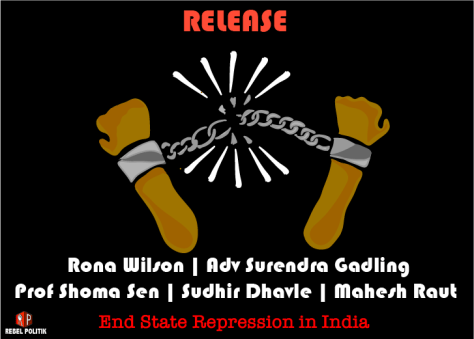
Statement from Tata Institute of Social Sciences (TISS) Students, Alumni, Faculty and Staff
We, the undersigned students, alumni, faculty, staff and other members of the TISS community stand with Mahesh Raut and the four other activists who have been arrested unfairly and demand their immediate and unconditional release.
On the morning of June 6th, 2018, the Pune Police investigating the Bhima Koregaon case arrested Mr. Mahesh Raut. Mahesh is an alumnus of TISS, a former fellow at the prestigious Prime Minister’s Rural Development Programme (PMRD) and an anti-displacement activist working with gram sabhas on implementation of laws like PESA (Panchayat Extension
to Scheduled Areas) and FRA (Forest Rights Act). He was arrested from Nagpur, where he had been staying for his ongoing medical treatment. On the same day, the premises of Mr. Sudhir Dhawale, Dalit activist and editor of Marathi magazine Vidrohi, Professor Shoma Sen, Head of the English literature department at Nagpur University, Advocate Surendra Gadling, general secretary of Indian Association of People’s Lawyers (IAPL), and Mr. Rona Wilson, secretary of the Committee for Release of Political Prisoners (CRPP) were raided and they were arrested too. Even as the police informed that they were being picked up in connection to the Bhima Koregaon case, the media started releasing news about them being ‘top urban Maoist
operatives’. Continue reading Statement from Tata Institute of Social Sciences (TISS) Students, Alumni, Faculty and Staff on arbitrary arrests of academics and activists
Disinheriting Adivasis – The Gadchiroli Game Plan: Vidhya A
Guest post by VIDHYA A

Image courtesy Subcontinental wind
In a statement issued on April 16th 2018, the Ministry of Home Affairs (MHA) claimed that the ‘National Policy and Action Plan’ to combat Left Wing Extremism (LWE) is ‘a multi-pronged strategy involving security and development related measures’[1]. This new policy, apparently in place since the NDA government came to power at the centre, claims to have ‘zero tolerance towards violence coupled with a big push to developmental activities so that benefits of development reached the poor and vulnerable in the affected areas’[2]. The statement talks of substantial improvement in the LWE scenario by indicating reduced incidents of violence over the last four years. Within a week of this statement to the press, several Maoists are killed in an alleged encounter in Gadchiroli district of Maharastra and, then, in Bijapur district of Chhattisgarh[3]. The Maharashtra state police immediately issued press notes and organised a press conference on April 24th declaring the operation an unmitigated success. A week later, Chhattisgarh police did the same. Even as the death count of Maoists kept rising, the police claimed that none of their personnel, primarily the elite C-60 force in Maharashtra and the Central Reserve Police Force (CRPF), were seriously injured let alone killed in action.
Continue reading Disinheriting Adivasis – The Gadchiroli Game Plan: Vidhya A
Letter of protest to Association of Asian Studies on exclusion of Pakistani participants from Delhi conference

A letter of protest by Concerned Scholars/Conference Participants, addressed to the Association of Asian Studies (AAS), is being circulated for signatures.
The AAS has bowed to the Indian government’s directive not to include Pakistani nationals at the AAS-in-Asia Conference to be hosted in Delhi between 5 – 6 July, 2018. The letter of protest states that the organisers of the Conference have thus been complicit in the curtailing of basic academic freedom, and that AAS’ soft stand and lack of transparency in the matter has meant an exclusion of Pakistani voices from an international conference on Asia.
If you agree with the arguments being put forward in the letter, please consider signing and circulating it within your network.
You can access and sign the letter here: Letter to AAS-in-Asia
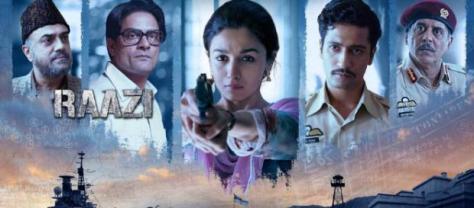
How Does Raazi Resolve The Tension Between Patriotism and Humanity? Kavita Krishnan
Guest Post by KAVITA KRISHNAN
SPOILER ALERT: If you have not seen Raazi, please don’t read this review because it contains spoilers.
Rabindranath Tagore, the composer of the poems that serve as the national anthems of India and Bangladesh, wrote an essay on nationalism in which he asserted, “it is my conviction that my countrymen will gain truly their India by fighting against that education which teaches them that a country is greater than the ideals of humanity.” In a letter to a friend, he wrote, “I will not buy glass for the price of diamonds and I will never allow patriotism to triumph over humanity as long as I live.”
My concern, as I watched Meghna Gulzar’s Raazi, was about how the film handles its central tension – between the values of humanity and patriotism. Continue reading How Does Raazi Resolve The Tension Between Patriotism and Humanity? Kavita Krishnan
Gayatri Mantra – Aryanism versus Hinduism: Rajni K. Dixit
Guest post by RAJNI K. DIXIT
The Gayatri mantra, as it is called these days, has been assigned a very important position in Hinduism. One is supposed to pray to the Sun god with this verse every morning and evening. It is supposed to be a prayer to the Divine Light to guide our mind in the right direction, and to show us the correct way to live life. At the thread ceremony, which was a rite performed as the initiation of a Brahmin child’s education (samskarajanma or dwijatva i.e. second birth), the Gayatri mantra is spoken in the child’s ear because it is a prayer to guide the mind. It becomes his daily prayer to god for the right guidance and upliftment of mind for his whole life henceforth.
However, this verse was composed in a particular political context, understanding which expands our understanding of what is called Hinduism today.
This verse is composed by the great poet-priest Vishvamitra Gathina, and is selected from a poem of eighteen verses, the 62nd poem of the third mandal of the Rigveda. The major portion of this third mandal or group is composed by Vishvamitra. ‘Gayatri’ is actually the name of the metre that the verse is composed in. The verse is about god Savita, i.e. the sun, and the correct name by which this verse was originally known is the ‘Savitri’ mantra.
Gayatri is not the composition of an ascetic sage. It is written by a poet-priest who was a born politician, a Rajarshi as the later Sanskrit calls him. This was a time when all good poets worked as professional priests. Composition of literature had no existence separate from religion in those times.
Continue reading Gayatri Mantra – Aryanism versus Hinduism: Rajni K. Dixit
The Danger of ‘Islamic Terrorism’ Course in JNU – An Open Letter to the President of India: Abhay Kumar
Guest post by ABHAY KUMAR
Dear Ram Nath Kovind Ji,
Within a few weeks I have to submit my PhD thesis at the Centre for Historical Studies, Jawaharlal Nehru University (JNU). Given that the deadline for my submission is at hand, I should have spent all my energies on my thesis rather than writing this letter to you. But I couldn’t help doing this. Through this letter, I would like to bring to your notice a very serious issue that has recently come up in JNU. Since you are the Visitor of this University, I think I should bring this matter to your notice. You are requested to make an urgent intervention.
As the media reports suggest, the Academic Council (AC) of JNU, held on May 18, 2018, took a decision to open a new course called ‘Islamic Terrorism’. It is learnt that the AC meeting approved in principle a new course called ‘Islamic Terrorism’. This course will be one among other courses offered by the proposed centre to be known as Centre for National Security Studies (CNSS). However, some people say that ‘Islamic Terrorism’ is not a new course but it is a theme of a paper on national security that includes other themes like ‘Naxalism’, ‘Insurgency’, ‘Demographic changes’ etc. Dear Sir, much confusion still persists and we are still waiting for the JNU administration to come out with all relevant facts and clarify its stand on these highly controversial issues. But the apprehension among us is growing that the current JNU administration appears adamant to change the character of JNU and push several hawkish agendas ahead. Continue reading The Danger of ‘Islamic Terrorism’ Course in JNU – An Open Letter to the President of India: Abhay Kumar
National Alliance of People’s Movements condemns killing of Anti-Sterlite protestors
NAPM demands Court – monitored Judicial Inquiry by Retired Apex Court Judge & action against senior political leaders, officials responsible for the massacre. Demands that Government of Tamil Nadu must ensure permanent shut down of old and proposed units of Sterlite.
National Alliance of People’s Movements (NAPM) strongly condemns the brutal gunning down of over 11 citizens including a 17 year old girl and violence on more than 60 persons by the Tamil Nadu Police, during the mass and largely peaceful protests against the Sterilite Copper Plant of Vedanta Pvt. Ltd. in Thoothukudi, Tamil Nadu. It is know that the people of Thoothukudi have been protesting against the pollution of ground water and air by the copper smelter for years. This current phase of protest started in early march when the expansion of Sterlite plant to double capacity was announced. On the 100th day of protest i.e. 22nd May, against the Sterlite copper unit Ltd, thousands of people of Thoothukudi took out a pre-announced march towards the Collectorate. The march was to reiterate their demand to shut down the existing copper smelter, causing severe pollution and health hazards. Over 10,000 people – men, women and children marched to meet the collector. Continue reading National Alliance of People’s Movements condemns killing of Anti-Sterlite protestors
Letter from former civil servants to Chief Secretary, Haryana on intimidation of Muslims offering namaz
Former civil servants have written open letters since 2017 (here and here), expressing their anguish at the unchecked attempts to spread hatred and discord among communities. Eleven of these civil servants have now written (on May 7, 2018) to the Chief Secretary of Haryana on the issue of harassment and intimidation of Muslims offering namaz in Haryana, by vigilante groups.
To Shri Depinder Singh Dhesi IAS, Chief Secretary, Govt of Haryana.
Dear Chief Secretary,
We write to draw your attention to an urgent problem.
Over the last one month, Friday namaaz offered by the Muslim community in open spaces have been attacked and disrupted at several locations in Gurgaon district. These attacks have been organised by a dozen or so organisations (including the Vishwa Hindu Parishad, Bajrang Dal, Hindu Kranti Dal, Gorakshak Dal, Hindu Jagaran Manch and Shiv Sena) that have come together under the umbrella of the Hindu Sanyukt Sangharsh Samiti.
The attacks are coordinated, violent and clearly designed to terrorise and intimidate and are taking place across the district. Last Friday a group of hoodlums arrived in four jeeps at a namaaz venue on MG Road and started shouting abusive and provocative slogans at the assembled namaazis. Although a police force was present, it took no action to stop the sloganeering and threats. On the contrary, the police asked the namaazis to disperse. At a namaaz in Sector 40, the Imam who was leading the prayers was pushed to the ground. People who came for the prayers had no option but to fold up their mats and leave.
Media professionals protest against government proposal to regulate online media
In a letter to Ms Smriti Irani, Minister of Information & Broadcasting, a group of over 100 journalists and other professionals related to online media expressed concern over the government proposal to extend traditional broadcasting rules and restrictions to the Internet. This could have a drastic impact on a medium that is widely credited with making the media and information landscape more open and democratic across the world, their letter said.
A website, https://onlinefreedomfoundation.org, has also been set up to allow ordinary citizens to oppose the move to regulate online content.
Letter to Minister of Information & Broadcasting
We are a group of Indian citizens who depend on the Internet to gather and share information on a daily basis.
We have come to know that this ministry has issued an order dated Apr 4, 2018 seeking to establish content regulations for the Internet modeled on those applicable for traditional media like print and TV. This letter is to place on record our feedback on the said order.
In the order, you make the following statements: Continue reading Media professionals protest against government proposal to regulate online media
Impeachment of Chief Justice of India – what is the real danger to democracy? Bobby Kunhu
Guest post by BOBBY KUNHU
Yesterday, on 23rd April 2018, the Vice President of India and the Chairperson of Rajya Sabha declined to admit an impeachment motion against the Chief Justice of India, thereby setting a dangerous precedent that scuttles a constitutionally mandated provision to ensure judicial accountability. There are two things that this action signifies. First, the rumors of the executive subverting judicial independence gains credence as the executive has refused to endorse a Parliamentary enquiry into the same. Second, it provides the needed impunity for any judge to act in any manner she deems fit as long as she curries favor with the executive.
It is the hegemonic notion of maintaining patriarchal, feudal and caste status quo that wants to protect powerful institutions and people from being accountable – and imagines it a scandal if an alleged wrongdoing is investigated. The archaic common law maxim; rex non potest peccare (the King can do no wrong) is rooted in this. The illogical reprimands and criticisms against the attempted impeachment motion against the Chief Justice of India need to be examined in this light. Continue reading Impeachment of Chief Justice of India – what is the real danger to democracy? Bobby Kunhu
On Not Having Sindh – Reflections on an Irredentist Anthem: Sajan Venniyoor
Guest Post by SAJAN VENNIYOOR
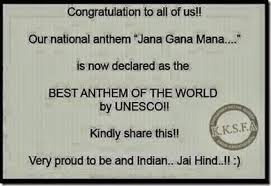
Hoax claim that circulated for a while
(Image added by Kafila for no good reason)
Every once in a while, it dawns on an Indian citizen that, among the list of provinces of British India thoughtfully provided by Tagore in our national anthem, Sindh is an anomaly.
Sindh was a fairly significant part of the British Empire ever since it was absentmindedly conquered by General Napier in the 1840s. (He is believed to sent his superiors a brief message on the conquest, Peccavi, Latin for ‘I have sinned’, which is to say, Sindh. The man was an insufferable nerd).
However, the Partition of 1947 placed Sindh on the wrong side of the Indian border, and its continued presence in the national anthem does not sit well with some Indians. “Why Sindh?” they ask plaintively. “Why not Rajasthan or Jammu & Kashmir? What about the North East States? Isn’t it time we rewrote Jana Gana Mana to reflect our current political realities, etc?”
Passing lightly over the fact that replacing ‘Sindh’ with ‘the North East States and Sikkim’ would play hell with the scansion of the disputed line, there are apparently very good arguments for not tinkering with Jana Gana Mana as it has stood from 1911. I have only the haziest notion of what these arguments are, but among other things, we are told it would “disregard its existence as a poem by Rabindranath Tagore and an associated ethic that you do not take other people’s poetry and make changes to them.” Continue reading On Not Having Sindh – Reflections on an Irredentist Anthem: Sajan Venniyoor
JNU Faculty Stand With The Women Students Of SLS
We, the undersigned teachers of Jawaharlal Nehru University, are deeply distressed to read about extremely grave allegations of moral turpitude against Prof. Atul Johri, amounting to charges of sexual harassment, academic dishonesty, and financial misappropriation. We now hear that seven women have made police complaints. Coming on the heels of recent media stories that Prof. Johri was involved in the forgery of assent by leading scientists in a signature campaign, we are appalled by the university’s silence about an individual that it has vested with so many offices. Prof. Atul Johri is the Director of the University’s Internal Quality Assurance Cell, the Director of the Human Resource Development Cell, a warden, and the Vice-Chancellor’s favourite nominee on several committees.
We demand that Prof. Johri be immediately removed from all these positions, as the allegations against him bring great disrepute to the university. We expect the university to take all the requisite measures to investigate the charges that may be brought against Prof. Johri and to pursue them to their logical conclusion.
As faculty who have fought for and long supported the GSCASH, which this administration has shut down, we are distraught that complainants have had to take charges that should have been pursued within the institution to the police, because of a lack of faith in the university’s internal complaints committee nominated by the Vice Chancellor. We support the complainants’ exercise of their rights to approach the police, but rue the fact that the illegal and immoral dissolution of GSCASH has resulted in a situation in which no aggrieved person seems to have any faith in the delivery of justice within the institution on matters of sexual harassment. This is the second such case when allegations about sexual harassment have been filed under the IPC, because complainants do not have faith in the autonomy, impartiality, and commitment to complete confidentiality of the JNU ICC. We would like to emphasise the complainants’ rights to approach the police with their complaints must be respected and protected, and that the complainants must be given full protection against victimisation and full cooperation by the university authorities in pursuing their complaints. Continue reading JNU Faculty Stand With The Women Students Of SLS
In the wake of the AUD report
This post is not a statement from the Kafila collective, but my individual response to the news about the Ambedkar University report having found Lawrence Liang guilty of sexual harassment. This response will also address some of the comments that were posted on the Kafila statement posted yesterday.
We learnt from media reports that a duly constituted committee of AUD has found Lawrence Liang guilty of sexual harassment. We did not know about this earlier, as some characteristically self-righteous and ill informed twitterati assume we did. Those whose social concern and activism is limited to busy fingertips obviously have no idea about the processes that have been carefully put in place in sexual harassment policies in universities, which protect confidentiality primarily to protect the complainant. So the first we heard of the leaked AUD report was from the media. Lawrence’s own statement was then issued that says that he plans to appeal this decision. This statement too we saw in the media.
From enquiry to report to appealing the decision (which can be done by complainant or accused) – these are all established stages of due process that feminists have worked for decades to establish, from the Vishakha judgement of 1997 onwards. That judgement itself was a result of feminist intervention. I do not understand ‘due process’ as a technicality alone, nor do feminists in general who have worked with women and men complainants on this complicated issue, especially in a context of power in academic contexts. Continue reading In the wake of the AUD report
 KAFILA - COLLECTIVE EXPLORATIONS SINCE 2006