All posts by Nivedita Menon

Vicious cycle of ‘Development’, Displacement and Death

Gujarat Oustees jump into Narmada Canal 

Kashinathbhau Mohite, Wang Marathwadi dam affected activist, commits suicide 

7th October, Narmada Dist/ Satara /New Delhi: False promises; snatching away of  rights  and even hope; continued mistreatment and harassment at the hands of police and administration; physical, psychological and emotional exploitation- these are not just sporadic instances but a common pattern of grave injustices seen where people have been displaced in the name of ‘development’.

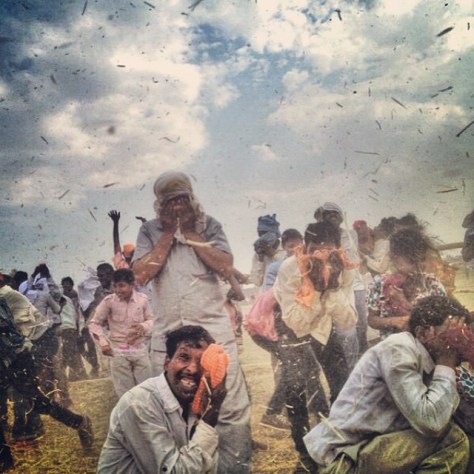
On 6th October, 12 oustees of Sardar Sarovar Dam from Gadher village in Narmada district of Gujarat, jumped into Narmada canal to awaken the administration to their plight of 22 years. The official claim is that they were ‘rehabilitated’ in 1992, however in reality, they still have not been given alternate land and government job to one family member at the time of acquiring their land, which is clear and outright non-compliance of Narmada Water Dispute Tribunal Award 1979, Rehabilitation policy of Government of Gujarat and orders Hon’ble Supreme Court.  After 22 long years, they still await justice and were left with no other option but to resort to this form of protest. On one hand, the Government of Gujarat has always justified Sardar Sarovar Project and glorified the Narmada Canal as the ‘lifeline of Gujarat’, but  on the other, it turns a complete blind eye to its own people of Gujarat who have been so severely affected by  the displacement caused by this very project. Why this apathy? Whose interests are being served? Continue reading Vicious cycle of ‘Development’, Displacement and Death

A Response to ‘Uniform Civil Code – the women’s movement perspective’: Rohini Hensman

Guest Post by ROHINI HENSMAN

Nivedita has done us all a service in kicking off a wider debate on personal laws than the ones which have been taking place within feminist groups. One of the most important points she makes is that we have correctly moved away from the demand for uniformity. Uniform laws need not be either gender-just or secular, which is what we are aiming for; indeed, patriarchal theocracies have extremely uniform family laws! She has also raised several other questions that need to be discussed. I look at some of them here in the hope of taking the debate forward.

Polygamy: Unless polyandry is also allowed, polygyny is not gender-just, and ought ot be opposed. The fact that the vast majority of Muslim women, who are directly affected by the existence of legally sanctioned polygamy, are opposed to it, makes this an obvious move for feminists. To support polygamy on the grounds that it offers more protection to second or third wives sounds like a perverse argument. If we accept it, we should also be demanding that polygamy be made legal in other personal laws! Second or third wives would surely be better protected by being able to sue their fake husbands for fraud and get hefty damages.

Contractualising all intimate relationships: Although legal recognition of stable non-marital relationships would be desirable, contractualising all intimate relationships may not be such a good idea. Continue reading A Response to ‘Uniform Civil Code – the women’s movement perspective’: Rohini Hensman

Of Dirt and Cleanliness – Swachh Bharat Abhiyan: Nityanand Jayaraman

Guest post by NITYANAND JAYARAMAN

108544214-defecation_6The Swachh Bharat Abhiyan (Clean India Campaign) is powerful in its simplicity, and problematic for the same reason. The absence of complexity in the presentation of the campaign, and the inherent contradictions between Modi’s consumerist growth agenda and SwachhBharat’s objectives fuels my skepticism and raises many questions: Which parts of India will be cleaned, which not and why not? What will we do with the wastes we remove? Where will we put it?
If cleanliness is to be the result, dirt would have to be the starting point. In a 1966 classic called “Purity and Danger,” anthropologist Mary Douglas points out that “If we can abstract pathogenicity and hygiene from our notion of dirt, we are left with the old definition of dirt as matter out of place. . .It implies two conditions: a set of ordered relations and a contravention of that order.”

Cleanliness is a loaded word particularly in the Indian context with a notion of caste that is fine-tuned around social and physical interpretations of pure and impure, clean and unclean. Cleanliness, in this context, can be achieved by keeping the clean and the unclean separate.  Continue reading Of Dirt and Cleanliness – Swachh Bharat Abhiyan: Nityanand Jayaraman

Uniform Civil Code – the women’s movement perspective

The BJP has once again raised the issue of a Uniform Civil Code (UCC) for all Indian citizens,  posed in a way that presents the BJP as ‘secular’ and pro-women, and opponents as communal or ‘pseudo-secular’ and anti-women. Since Independence, there has been very little change in the contours of the debate in the public domain, both within the BJP as well as among public intellectuals not necessarily aligned with the Hindu Right. The only change that has come about since the 1990s is that the UCC is now also posed as a ‘women’s rights’ issue and not only as a matter of national integrity, which requires the eradication of multiple legal systems. This new equation of ‘women’s rights’ with the UCC is at least partly a result of the interventions by the women’s movement in the debate in the 1990s. However, within BJP (and mainstream) discourse, it is assumed that only minority women need saving, for ‘we Hindus’ have already given ‘our’ women equal rights.

The women’s movement has developed this debate in complex and multiple directions over the decades, which this essay will briefly outline.

The debate over the UCC in contemporary India is produced by the tension between two notions of rights in the Fundamental Rights (Part III) of the constitution. The bearer of rights is both the individual citizen and the collectivity – the former is the subject of Articles 14 to 24 which ensure the individual’s rights to equality and freedom and the latter of Articles 25 to 30 which protect religious freedom and the educational and cultural rights of minorities [1]. It is from the latter that religious communities derive the right to be governed by their own ‘Personal Laws’. Since these Personal Laws cover matters of marriage, property inheritance and guardianship of children, and since all Personal Laws discriminate against women, the tension in Part III of the constitution can be read as a contradiction between the rights of women as individual citizens and those of religious communities as collective units of a democracy. Continue reading Uniform Civil Code – the women’s movement perspective

After the Flood: Sabah Hamid

Guest Post by SABAH HAMID

The pilot announces we’re approaching Srinagar. I have a window seat near the right wing, and I lean forward to look down. I always do this, trying to catch a first glimpse of the city I call home despite having lived away for more than half my lifetime now. Today, for the first time, I’m afraid of what I’ll see. The entire valley was flooded two weeks ago when the river Jhelum and then the Dal Lake spilled over. This is not the first flood to hit Kashmir, but nothing of this magnitude has been experienced in living memory. As we descend, I see a lot of large muddy tracts wherever I look. The elderly gentleman sitting in the aisle seat next to me mutters something, probably a prayer, and I turn to look at him. He shrugs resignedly, and I shrug back.

There are an unusual number of Indian passengers in the plane, and at the baggage carousel I am reminded of this again. It’s odd to have tourists so soon after the floods. I cannot make sense of it. Catching sight of a pair of fashionably dressed young women I wonder if they are the relatives of armed forces personnel stationed in the Valley.  It does not matter. I collect my lone suitcase, shoulder my backpack, and head to the pre-paid taxi counter. My parents live close by, just two kilometres away, and I am hoping to hitch a ride with someone if no taxis are available.

Exactly two Sundays ago though, when my parents, sister and young cousin landed in Srinagar, those two kilometres turned out to be very long indeed. Continue reading After the Flood: Sabah Hamid

A God by Any Other Name: Sumbul Farah

Guest Post by SUMBUL FARAH

The move from ‘Khuda Hafiz’ to ‘Allah Hafiz’, which Shireen Azam sees as a move towards Arabisation of subcontinental Islam is problematized by Nandagopal Menon when he questions if ‘Arabised’ Islam is an Islam ‘we do not like’. Menon’s argument provides some important ways of thinking about cultural assimilation, territorially bounded nationalisms and notions of piety central to Islam. However, it misses out on the important point that the project of ‘correcting’ belief is often premised on an exclusivist understanding of religious interpretation.

To emphasize the ‘correct’ usage might well in be accordance with Islamic notions of ‘islah’ and piety but unless we stop and question as to who is it that determines ‘correctness’ we risk aligning ourselves with the hegemonic narratives within Islam. The issue underlying the usage of ‘Khuda’ versus ‘Allah’ is not that the Indian version of Islam is somehow more desirable than an Arabised one owing to some notion of cultural nationalism, which is premised on modern nation-states; it is a questioning of the processes through which traditionally acceptable usages and idioms become marked out as ‘incorrect’ in the light of a hegemonic narrative. Particularly in the context of Islam, there is a tendency to seek a return to a supposedly ‘pure’ version of Islam, which in turn, means privileging the Arabian interpretation of Islamic beliefs and practices. Continue reading A God by Any Other Name: Sumbul Farah

Urgent demand to bring Normalcy to Vadodara: Letter to Commissioner of Police by concerned citizens

To Mr. E. Radhakrishan, Commissioner of Police, Vadodara.

Take concrete steps to bring normalcy in the city of Vadodara and take immediate action in the cases of assault on women by police.

Sir,

A team of social activists visited some of the affected areas on 27th September 2014 on the request of affected people.  A detailed report of our visit is under process  but after visiting the area we have personally discussed with you and informed you about the role of Police, (particularly plain clothes police, also known as D Staff). The police should prevent violence and arrest those who undertake violence. Instead many people particularly women, complained about the verbal abuse and physical assault on them by police. The marks of injury were visible on their bodies. You had promised to look in to the matter and assured us that this will not be repeated.

We are shocked to know that brutal police attacks continued on the night of 27th September 2014.

Continue reading Urgent demand to bring Normalcy to Vadodara: Letter to Commissioner of Police by concerned citizens

‘Red Carpet’ in Forests: Kamal Nayan Choubey

Guest post by KAMAL NAYAN CHOUBEY

16737_32027

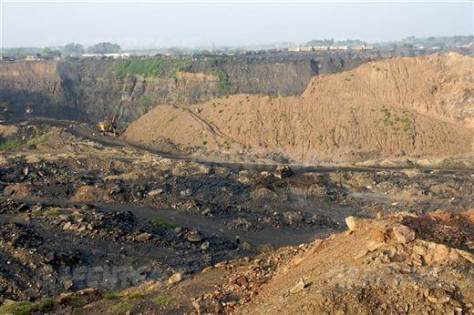
View of the Rajapur Mining Project in Jharia from Bokahapadi village

The Narendra Modi led National Democratic Front (NDA) government had promised, even before its inception, to increase investment in the country and lay down the ‘red carpet’ for investors and corporates. The process of fulfilling that promise started with the formation of NDA government and under the leadership of Mr. Prakash Javadekar, the Ministry of Environment and Forest (MoEF) working overtime to ensure huge investment in the forests for the high growth rate of the economy. Within hundred days of the formation of the government MoEF has given environmental clearance to 240 of 325 projects that had been in limbo as the previous government slowed down the process of giving clearances to various projects due to a variety of reasons. The Government has estimated that these clearances would lead to the investment of 200,000 crore rupees and it would help to revive the economy. In this whole process, the Forest Advisory Committee (FAC) decided on the diversion of 7,122 hectares of forest land into revenue land for the various development projects. It is pertinent to ask, has Modi Government followed the procedure established by law while taking these decisions? Are these decisions in consonance with the promise BJP made to the tribal population, of more decentralized power? Could these decisions empower those communities who have been facing historical injustice from both colonial and post-colonial Indian state? Can we say that this kind of development model would work as a long term strategy to control Maoist violence in the most of the tribal dominated forest areas? Continue reading ‘Red Carpet’ in Forests: Kamal Nayan Choubey

Have the Gods Fled Their Own Country? Mohan Rao

Guest Post by MOHAN RAO

kathakali-performance-in-stree-vesham-in-mumbai

I returned a few days ago after four wonderful days in Trivandrum – having gone back there after some thirty years. Looking over Trivandrum from my seventh floor hotel room was a wondrous sight for sore eyes, a thick lush greenness everywhere. Hardly any high rises, an occasional mosque, temple or church rising above the green.

Going for a walk the next morning, around the medical college area, it was vastly reassuring to still see some old bungalows, and a number of ugly new ones of course. But not that many apartment blocks. Unlike Bangalore, the ones that have come up are not named Malibu Towers or Sacramento, but Revi Apartments.

Yes, it was wondrous to see Lakshmi still spelt Lekshmi and Ramya, Remya. Continue reading Have the Gods Fled Their Own Country? Mohan Rao

Koni koni chhe Gujarat: Rita Kothari

Guest post by RITA KOTHARI

[‘Koni koni chhe Gujarat’ is a poem by Narmadashankar Lalshankar Dave, popularly known as Narmad, who is understood to have introduced the notion of Gujarat in the 19th century, by identifying the region of Gujarati-speaking people. In the poem ‘Koni koni chhe Gujarat’ Narmad wrote that Gujarat belongs to people from different religions and also to those who belong to other parts of the country or globe.]

In 2006, St.Xavier’s College in Ahmedabad (where I then taught) hosted a conference on “Ahmedabad: Past and Present.” Towards the end of the conference a panel discussion focused on religious, linguistic, and other minorities to discuss how for instance, Jews, Muslims, Christians and Parsis felt about the city. Did they feel they belonged to the city, was their experience of citizenship complete, the panel moderator had asked. It was saddeningly clear that Ahmedabad, despite being multi-religious and multi-ilingual, did not hold the same social meaning and comfort for all. The reasons why this city, like some others, has been losing its historical contours of experience and pluralism are not far to seek. Some of the answers could be found in the history of Ahmedabad by Achyut Yagnik and Suchitra Sheth. I would only be reiterating the familiar and well established story of a majoritarian hegemony that has transformed lives irrevocably. Anyway, of the many stories that emerged during this panel, one in particular stayed in mind, reappearing intensely at some times, but receding again in ‘normal’ times.

Continue reading Koni koni chhe Gujarat: Rita Kothari

Indian tea is laden with pesticides: Greenpeace India

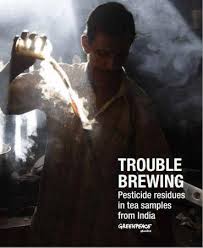
downloadTrouble Brewing – Pesticide Residues in Tea Samples is the result of an investigation carried out by Greenpeace India to understand the situation concerning the use of pesticide usage in tea, which is a quintessential part of Indian culture and critical to the economy. The study has found residues of hazardous chemical pesticides in a majority of samples of the main brands of packaged tea produced and consumed in India. Over half of the samples contained pesticides that are ‘unapproved’ for use in tea cultivation or which were present in excess of recommended limits. The report underscores possible implications for health and the environment, which is both unnecessary and avoidable. While it highlights the fact that the tea industry is stuck on a pesticides treadmill, it suggests that tea companies, which are critical stakeholders in the tea industry, take the necessary steps in moving away from pesticides while adopting a holistic approach is best way forward. Continue reading Indian tea is laden with pesticides: Greenpeace India

Fast Track to Troubling Times: The Ghadar Alliance

1400132554-1045_1

A promise fulfilled? File photo from scroll.in of what was left in the wake of Modi’s helicopter on the election campaign trail (Image by Ravi Mishra)

The first 100 days of the Modi government points to emergent disaster, says this report by The Ghadar Alliance, a US-based educational/watchdog coalition created by concerned citizens in the wake of the BJP victory. The report points to the Economy, Religious Extremism and Human Rights as areas of biggest concern, and is released on the eve of Modi’s visit to the USA as Prime Minister of India.

The entire report can be downloaded at Fast Track to Troubling Times.

In a press release, The Ghadar Alliance said:

The report is the first independent ‘people’s’ report to be published since Modi came into office, and identifies the economy, religious extremism and human rights as grave areas of concern. Continue reading Fast Track to Troubling Times: The Ghadar Alliance

Syrian Jihad spawned the Islamic State: Nauman Sadiq

Guest Post by NAUMAN SADIQ

Let me admit at the outset that Assad is an illegitimate tyrant who must abdicate his hereditary throne to the will of the people when the opportune moment arrives. But at the moment our primary concern shouldn’t be bringing democracy to Syria; at the moment our first and foremost priority should be reducing the level of violence in Syria. There are two parties to this conflict: the regime and the rebels (the majority of whom are takfiri jihadis). It is not possible for the regime to deescalate the conflict because it is holding a tiger by the tail. The regime is fighting a war of defense; and what is at stake in this war is its survival; not only its survival but the survival of its clan: the Alawite minority of 2.6 million people who comprise 12% population of Syria’s 22 million people.

The second party to the conflict is the rebels who are generously supported by the Gulf monarchies, Turkey (Sunni Muslims), Western powers and Israel. Don’t get alarmed and be dismissive of the possibility of an alliance [1] between the Sunni Muslims of Saudi Arabia, Qatar, Jordan, Turkey and the Zionists of Israel. It is realpolitik: the enemy of my enemy is my friend. In fact the Western interest in this war is partly about Israel’s regional security[2] because the Shia axis comprising Iran-Syria-Hezbollah is an existential threat to Israel; and with each passing year the nature of this threat will enhance proportionally with the increased sophistication of Iranian missile program. During the 2006 Israel-Hezbollah conflict in Lebanon, most of the rockets fired by Hezbollah into the Israeli territory missed their target; but according to some reports Iran and Hezbollah have already developed smarter missiles and with every passing year the threat of Hezbollah’s guided missiles so close to Israeli borders will keep on haunting the Israeli strategists’ dreams.  Continue reading Syrian Jihad spawned the Islamic State: Nauman Sadiq

Some Feminist Blogs from India

Please feel free to add to the list!

1. Ultra Violet. Indian Feminists Unplugged

Peacocks-300x132

Image – Sheba Chhachhi 

From

Ultra Violet. Indian Feminists Unplugged

2. The Ladies Finger

A post from The Ladies Finger: The Varied Social Life Of Hindustani Classical Music Before Respectability Took Over

Raja_Ravi_Varma_Lady_in_the_Moon_Light_1889-310x375


3. Savari – adivasi bahujan and dalit women conversing

savari_banner_1

A post from Savari: Sanskritization or Appropriation : Caste and Gender in “Indian” Music and Dance


4. Feminists India

A post from Feminists India: Bhagana rape in the context of Dalit rights to common land

Dalit-rights-India-400x300

The Islam we do not like: Nandagopal R Menon

Guest post by NANDAGOPAL R MENON

Some recent posts on Kafila have identified a “movement of sorts” in South Asian Islam – A Short Memoir On the Arabisation of Islam in India and The Sheepification of Bakistan

Named ‘Arabisation’, this is a “remarkably dispersed” and “subtle” movement most readily evident in certain changes in quotidian linguistic choices, for example, Khuda Hafiz and Ramazan has or is being replaced by Allah Hafiz and Ramadan. This linguistic shift from Farsi/Urdu to Arabic is taken to index a “great cultural battle” under way in South Asian Islam – one that attempts “to ‘correct’ Islam as Muslims in the subcontinent have understood, practiced and lived it, and instead replace it with an Islam which is uniform, seemingly universal and which need not have any affiliation with our cultural and local identities and beliefs”. That ‘Arabisation’ is not something innocuous or laudable is clear, for it “conveniently ignores” – or undermines? – Islam’s “age-old assimilation in the Indian sub-continent”. The following are some thoughts provoked on reading these posts. This is not meant as a coherent response to any of the posts, but just an unsystematic attempt to think through some of the assumptions that condition the creation of concepts like ‘Arabisation’ in public discourse.  Continue reading The Islam we do not like: Nandagopal R Menon

Narmada waters for Coca Cola – really, how much more development can we take?

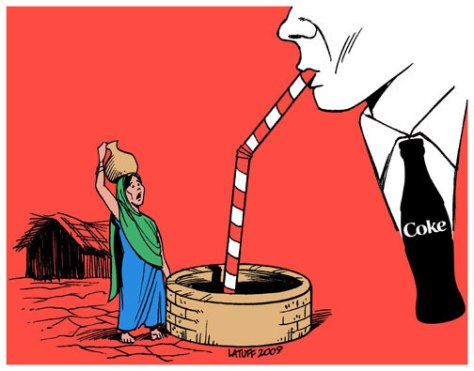
cokeindiaFarmers who have for three decades non-violently protested the brutal ousting from their lands for the dam project on the Narmada river have been castigated for being anti-development. The dam would bring water to the thirsty, to the parched agricultural lands around it, we were told. Continue reading Narmada waters for Coca Cola – really, how much more development can we take?

Look who’s leading the campaign against ‘Love Jihad’!

jihad-l

Hindu Mahasabha members protest against ‘love jihad’ in Lucknow (File photo by Vishal Srivastav in The Indian Express)

Right up in front, a police bike. Imagine the level of intimidation. And the brazen implication of state agencies in what Paul Brass described as “institutionalized riot systems.

Jadavpur University students struggle against gender violence

In Jadavpur University (a State aided university of West Bengal), the Arts Students Faculty Union organizes a students’ cultural festival, Sanskriti. On the second night of the festival, an incident of violence occurred in the campus that resulted in a chain of events.

On the night of 28th August, during the ongoing festival, a second year student from the Department of History, Jadavpur University, was allegedly molested inside campus premises by a group of people from the hostel, and her male friend (not a JU student), was beaten up. According to the victim, she had gone near the hostel to relieve herself given the unavailability of bathrooms at the time, accompanied by her friend. On their way back, a group of hostel boys allegedly passed snide remarks which led to a scuffle, and then escalated to something bigger. While her friend was allegedly pulled away and beaten up, she was dragged into the hostel, where she claims she was molested. Continue reading Jadavpur University students struggle against gender violence

‘Son, you outgrew my lap but never my heart’ – Fauzia Ansari in search of her son: Debangana Chatterjee

On August 14, 2013, Shivam Vij wrote in Kafila  about Hamid Ansari, a young Management Studies graduate from Mumbai who crossed the border illegally to Pakistan in November 2012, to meet a young woman, and has been missing since. At the time Shivam wrote the post, there were indications that Hamid had been picked up by Pakistani security agencies.

Beena Sarwar, Pakistani human rights activist, wrote in July this year about the possibility of ‘cautious optimism’, following the directive of Peshawar High Court to Pakistan’s defence and interior ministries to provide full information about the forced disappearance of Hamid Ansari and of 25 others, who are Pakistani nationals. Her account is worth reading in full, outlining as it does, the ways in which cross border solidarities of democratic forces consistently work to soar above and also to undermine the barbed wire fences of nation-states.

DEBANGANA CHATTERJEE, a Delhi-based MA student, met Hamid’s mother a few days ago, and wrote this piece after talking to her, outlining some new developments in the case. We have retained Fauzia Ansari’s voice as far as possible in this narrative.

The story of Hamid Ansari, a 28 year old IT engineer and management studies graduate, started unfolding when I came across his mother, Fauzia Ansari at a conference on ‘Challenges to Indian Democracy’ organized in Delhi by the Coalition for Nuclear Disarmament and Peace a few days ago, on August 30-31. Fauzia Ansari is a lecturer of Hindi at a college in Mumbai. Like other mothers, Fauzia says she too had vibrant dreams of her son’s bright future. But a nightmare has unfolded instead. Continue reading ‘Son, you outgrew my lap but never my heart’ – Fauzia Ansari in search of her son: Debangana Chatterjee

The European Union And The Twin Civil Wars In Syria/Iraq: Peter Custers

Is this one of those rare occasions where policymakers self-critically correct a gigantic blunder? Or is it a cold turn-about guided by pure self-interest? On August the 15th, the Foreign Ministers of EU-countries gathered in Brussels and decided that each would henceforth be free to supply arms to Kurdish rebels fighting Sunni extremists of ISIS in the North of Iraq. Even Germany which in the past had been unwilling to furnish military supplies to warring parties  in ‘conflict zones’, is now ready to provide armoured vehicles and other hardware to the Kurds opposing ISIS’ advance. The decision of Europe’s Foreign Ministers may surprise some, for barely a year and four months ago, in April of 2013, the European Union had lifted a previously instituted ban on all imports of Syrian oil (1). Moreover, the lifting of this boycott was quite explicitly intended to facilitate the flow of oil from areas in the North-East of Syria, where Sunni extremist rebel organisations had established a strong foothold, if not overall predominance over the region’s oil fields (2). ISIS was not the only Sunni extremist organisation disputing control over Syrian oil fields. Yet there is little doubt but that the fateful decision the EU took last year has helped ISIS consolidate its hold over Syrian oil resources and prepare for a sweeping advance into areas with oil wells in the North of Iraq (3).  Continue reading The European Union And The Twin Civil Wars In Syria/Iraq: Peter Custers

The Wrongs In The Right To Education: Noyonika Bose

Guest Post by  NOYONIKA BOSE

In the winter of 2013 I had carried out a survey as part of an NGO CRY, Child Rights and You in 10 schools in the heavily populated slums of Rajabazar, an area in north Kolkata. The objective of the survey was to see whether the Right To Education (RTE) Act was being properly implemented in these schools.  The findings of the survey though not absolutely abysmal, were not positive either. However what I learnt is that it is not entirely the fault of these government and government aided schools that they were unable to provide their students with quality education. It has also to do with the basic structure of the RTE act which is peppered with several flaws. This article is a critique of the RTE and some possible solutions. Continue reading The Wrongs In The Right To Education: Noyonika Bose