All posts by Shivam Vij

Shivam Vij is a writer and journalist based in New Delhi.

“Report the news. It is not news that there are poor people in India.”

In the morning today The Independent‘s Asia correspondent, Andrew Buncombe, blogged his disagreement with Arundhati Roy’s statement that foreign journalists in India have been asked not to report bad news. As a foreign journalist in Delhi he had faced no such censorship from his editors or the government here.

Buncombe made his case strongly: Continue reading “Report the news. It is not news that there are poor people in India.”

Coke Studio India – the first six songs

So the unanimous verdict is that Coke Studio India (first aired on the Friday that went by) is no match for Coke Studio Pakistan [Wikipedia]. For some it’s been like an India-Pakistan match – I’ve seen Indian congratulate Pakistanis on Twitter for the ‘Coke Studio victory’ and others ask Indian musicians and singers to listen to Pakistani singers and hang themselves. For most, this was not surprising – Coke Studio Pakistan has showcased some of the best music you’ve heard in recent times and it raised the bar too high for Coke Studio India. There’s also the problem of Bollywoodisation of music in India, of dumbing down, producing music aimed at the marriage market and livening up the moods of those stuck in traffic. A celebrity culture has taken the passion out of music in India – it does not seem to come from deep within. New popular music in India leaves you with the kind of feeling that a mall does. Loud and empty.

Continue reading Coke Studio India – the first six songs

Channel 4 documentary on war crimes in Sri Lanka

The Ice-Cream Flavour Mint’s Editors Don’t Like

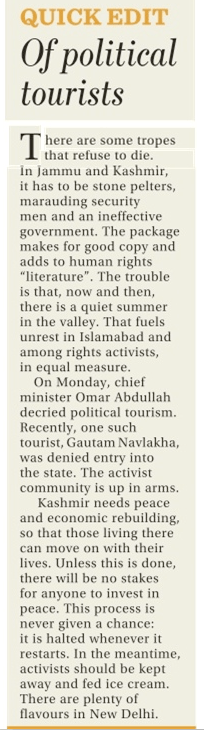
“There are some tropes that refuse to die,” said a “Quick Edit” titled “Of Political Tourists” in Mint on Tuesday, 14 June, “In Jammu and Kashmir, it has to be stone pelters, marauding security men and an ineffective government.” The edit forgot another trope there: the lies and obfuscation that the Delhi media indulges in when it comes to Kashmir. A good example of this is the “Quick Edit” itself, even if it was just 157 words long.

The “Quick Edit” derided human rights work as if it ‘human rights’ is an anti-national and unconstitutional ideology. It supported the Jammu and Kashmir government’s decision to disallow the journalist and human rights activist Gautam Navlakha into the Kashmir Valley. In doing so, it echoed the views of the Jammu and Kashmir chief minister, Omar Abdullah, that activists should be kept away from Kashmir in the summer as they cause political unrest. No wonder that Mr Abdullah recommended the “Quick Edit” on Twitter with a brief comment: “LOL. Short but says it all :-)”.

The edit derisively called activists like Navlakha “political tourists”; would the editors describe the security forces stationed in Kashmir as ‘military tourists’? The edit argued that allowing Navlkaha and activists like him into Kashmir would affect “peace and economic rebuilding,” and said that such people “should be kept away and fed ice cream. There are plenty of flavours in New Delhi.” This suggests that last year’s bloody summer in Kashmir was caused or at least aided by Mr Navlakha and other human rights activists. Perhaps Mint‘s editors were enjoying ice-cream in Delhi and did not want to indulge in conflict tourism. Ignorance, however, should not lead to lies. It is thus pertinent to recall what happened in Kashmir last year.

On 8 January 2010, Inayath Khan, 16, was returning from a computer coaching in Srinagar and was killed by CRPF personnel who were chasing away protestors. After the bullet hit his thigh, he was hit by a CRPF vehicle and eyewitnesses say, CRPF personnel trampled upon him with their boots and beat him with their gun butts.

On 31 January, a 13-year-old, Wamiq Farooq, was shot in his head by the J&K police with a tear gas shell. He was playing carrom in a room when this happened.

Continue reading The Ice-Cream Flavour Mint’s Editors Don’t Like

Dr Khaleel Chishty will finally be free

This note comes from KAVITA SRIVASTAVA of the People’s Union for Civil Liberties

An ailing Dr Chishty will soon be with his family

Dr. Khaleel Chishty, the 78 year old a renowned Virologist from Pakistan, will now go home very soon. A process that began on the 20th of April, 2011 will finally conclude at the Rajasthan end two months later precisely on the 20th of June, with the Governor signing the mercy petition that will let him go, once the MEA give their stamp.  Continue reading Dr Khaleel Chishty will finally be free

‘Locking up gods within caste’

This note comes via Malarvizhi Jayanth. Those in support can leave a comment saying so, and add their designations to their names, if they wish.

We call for all those who support democracy and free speech to express solidarity with Thirumavalavan, Meena Kandasamy and Samya.Kathavarayan and Madurai Veeran are among the gods who are acknowledged to be Dalit and are worshipped by many castes. Clearly, in the oral history of the people, the gods have castes and these castes are not determined by who worships them. The twin brothers Ponnar Shankar inhabit the realm between hero and deity. They have been fictionalised, recreated for the silver screen, and are worshipped across communities. Their origin myth remains contested territory – it is variously read as symbolic of the conflict between agriculturists/warriors and hunters, as part of founding tale of the land-owning agriculturist Kongu Vellala Gounder sub-caste and, in a textbook example of how Hindutva functions, have recently been claimed as reincarnations of the Pandavas. Like other deities of the people, they are firmly located in a historical imagination among a society of human beings, and not in a mythos of gods.

In a footnote in Uproot Hindutva: The Fiery Voice of the Liberation Panthers by Thirmavalavan, MeenaKandasamy describes Ponnar Shankar as dalit. M Loganathan, an advocate from Nanje Goundanpudur and Students Wing Convenor of the Kongu Nadu Munnetra Kazhagam (KMK), has been quoted in news reports as saying that there is evidence proving that Ponnar and Shankar are Kongu Vellala Gounders and claiming that depicting them as Dalits will lead to caste tension. Continue reading ‘Locking up gods within caste’

The Mountains Are Coming Closer

(This article by me has appeared in the Sunday Guardian, Delhi, and the Friday Times, Lahore.)

The voices that reverberate in your head after a visit to Kashmir leave you numb, making you sadder the more you think about them. You know that it is going to be worse when you visit next year. The mountains that you see faintly from over the bridges on the Jhelum river in downtown Srinagar, a thousand-year-old settlement, you know they are coming closer.

An old man you see on the road wants your attention. No, not here. Let’s get inside a parked car. You wonder what secrets are to be passed on. From inside his pheran he takes out a bundle of papers. Both his sons were picked up from Kathmandu in Nepal in 2000, where they were eking out a living. Had they been militants why would they have … look, look, this paper, certificate of registration of Indian nationals in Nepal? The last he heard of his sons some years ago was that Indian intelligence had detained him in Delhi. He is coming to Delhi next month. Could you help? All he wants to know is what happened to his sons, which prison are they in, could he see them once? Read more…

Caste in Urdu Prose Literature: Ajmal Kamal

Cover of "The Adventures of Amir Hamza (M...
A cover of 'The Adventures of Amir Hamza'

Guest post by AJMAL KAMAL

The historical division of society in South Asia on caste lines is now an acknowledged sociological, political and economic fact. However, caste as a literary or social discourse does not, for several reasons, form a part of the predominantly Muslim culture of Urdu. Nor has there been much academic exploration of the role caste plays in the life of South Asian Muslim communities as against others. As far as the Urdu literary writing is concerned, it has traditionally focused exclusively on the lives and concerns of conquerors, their cohorts and their descendants, who typically prided themselves on their real or perceived foreign origins. Even after modern, socially committed writing began in Urdu around the 1930s, caste as a variable for social exploration was largely ignored in favour of economic class. Continue reading Caste in Urdu Prose Literature: Ajmal Kamal

Corruption, the New Caste: Thomas Crowley

Guest post by THOMAS CROWLEY

In the mainstream coverage of the Ramdev hullabaloo, there has been, unsurprisingly, little substantive discussion about corruption itself: its fundamental causes; its widespread effects; the viability of different plans to combat it. Who would want a dry, intellectual discussion of the root causes of corruption when we can stare uneasily at pictures of Baba Ramdev holding a sword and wait with bated breath for his holy army to congregate?

But let’s – for the moment – take seriously Ramdev’s proposal that the death sentence be meted out to India’s corrupt. If the press is to be believed – especially the foreign press – this may just mean killing every Indian. For, implicit in many media reports is the assertion that corruption is part of the Indian psyche, an essential component of what it means to be Indian. In this sense, corruption serves the same conceptual role as caste: it essentializes an ever-changing historical phenomenon, freezing it in time and obscuring its economic and political roots. Much as the British taught Indians and foreigners alike to understand India predominantly in terms of caste, modern commentators are encouraging both desis and firangis to conceptualize India as the land of unending corruption. (Of course corruption has not replaced caste as a mode of understanding India; the fascination with caste still runs deep.)

Continue reading Corruption, the New Caste: Thomas Crowley

On Lathicharging a Satyagraha: Dilip D’Souza

Guest post by DILIP D’SOUZA

So what do you think happened when the police assaulted a gathering of satyagrahis with lathis? Here’s what happened to some people I met from such a gathering.

  • Tulsibai, 45+, was hit on her stomach and wrist.
  • Manglubai, about 40, was hit on her buttocks.
  • Rajkumaribai, who didn’t know her age, had a deep wound on the upper part of her thigh that she showed us shyly.
  • Jiggelal, 60, was hit so hard on his arms and legs that he blacked out. Continue reading On Lathicharging a Satyagraha: Dilip D’Souza

POSCO: Lies, Crimes and Atrocities

This statement about today’s events in Jagatsinghpur, Odisha, comes from the CAMPAIGN FOR SURVIVAL AND DIGNITY

Today, more than a thousand armed police besieged the gram panchayat of Dhinkia in Jagatsinghpur District of Orissa to crush the resistance to the POSCO steel plant. For the entire day thousands of people sat in the heat, where several people (including children) and even two policemen fainted. At noon the Collector declared their protest “unlawful” and subsequently loudspeakers blared threats about use of tear gas, lathi charges, “those engaging in unlawful protests being dispersed” continuously for four hours. Efforts were made to divide the protesters as well. The protesters remained firm. Eventually, perhaps afraid of the heavy media presence and unable to break the will of the people, the police withdrew. The people have left some of their number on guard, fearful of the police’s return at any time.  Continue reading POSCO: Lies, Crimes and Atrocities

Baba Ramdev, Baba Ramdev

Commonwealth Games scam: Manmohan knew all, did nothing

RTI activist Subhash Agrawal has obtained correspondence between the then sports minister Mani Shankar Aiyar, and Prime Minister Manmohan Singh, that shows the PM was informed about the scam as early as October 2007. And did nothing. You can download here (.pdf, 4.2 MB) the 52 pages long RTI reply Agrawal got from the PMO.

The Power of Crowdsourcing

Gautam Navlakha detained, denied entry into Kashmir: Press note from IPTK

Press Note: For immediate release
INTERNATIONAL PEOPLE’S TRIBUNAL ON HUMAN RIGHTS AND JUSTICE IN INDIAN-ADMINISTERED KASHMIR (IPTK)
www.kashmirprocess.org

From: Dr. Angana Chatterji, Convener IPTK and Professor, Anthropology, California Institute of Integral Studies; and advocate Parvez Imroz, Convener IPTK and Founder, Jammu and Kashmir Coalition of Civil Society

TRIBUNAL CO-CONVENER DENIED ENTRY INTO KASHMIR

Srinagar, May 28, 2011: On May 28, 2011, Mr. Gautam Navlakha, Convener, International People’s Tribunal on Human Rights and Justice in Kashmir (IPTK) and Editorial Consultant, Economic and Political Weekly, was stopped at Srinagar airport on his arrival from New Delhi, and asked to go back. Officials invoked Section 144 of the Code of Criminal Procedure. By the time the authorities finalized their decision regarding his return, there were no remaining flights out of Srinagar. Mr. Navlakha is being detained and taken to an undisclosed location until May 29, when he will be allowed to return home.

Mr. Navlakha is a noted public intellectual and peace activist. His denial of entry raises urgent concerns about the status of freedom of speech and movement in Kashmir. Given the egregious violence that was inflicted on people by state forces in the Summer of 2008, 2009, and 2010 in Kashmir, we are deeply concerned that state forces not suppress democratic activities in the Summer of 2011, and not isolate Kashmiris from human rights defenders that travel to Kashmir to bear witness to atrocities and speak for peace and justice.

We understand that harassment, intimidation, and threats to IPTK members or their families are acts aimed to target and obstruct the work of the Tribunal. In November 2010, Professor Richard Shapiro, an academic from the United States and life-partner of IPTK Co-convener Angana Chatterji, was denied entry into India without any charges or due process.

Earlier, in June 2008, IPTK Co-convener Pravez Imroz and his family were targeted and an explosive device was thrown at his home. Imroz has been denied a passport. In July 2008, a First Information Report charged Angana Chatterji and IPTK Co-convener Zahir-Ud-Din, then editor of Etalaat English Daily, with acting to incite crimes against the state, following his publication of an article on mass graves written by Chatterji. IPTK Liaison Khurram Parvez has been threatened and is extensively surveilled. All Tribunal communications and the movements of its members in India and abroad are monitored.

We remain gravely concerned about the physical and psychological safety and integrity of all Tribunal members. We remain gravely concerned about our ability to continue our work, and the ability of out-of-state Tribunal members to travel to Kashmir.

अफ्स्पा: एक काले कानून की आधी सदी: महताब आलम

Guest post by MAHTAB ALAM

आज  बाईस मई की सुबह जब ऑफिस या काम पर जाने की चिंता से बेफिक्र हम सोते रहेंगे, उसी समय नॉर्थ-ईस्ट और कश्मीर की जनता जो सुबह देखेगी, वह कानून के नाम पर बर्बरता की  53 वीं  सालगिरह होगी.  जी हाँ, मैं आर्म्ड फोर्सेस स्पेशल पावर्स एक्ट (अफ्स्पा) की  बात कर रहा हूँ. कानून के नाम पर, ला-कनूनियत नाफ़िज़ करने का घिनौना हथियार. जिसके खाते में अगर कुछ लिखा है, तो सिर्फ ला-क़नूनियत और बरबरियत की न खत्म होने वाली दास्तानें.

 बाईस मई 1958 को नागा लोगों को ‘नियंत्रित’ करने के लिए ये कानून अमल में लाया गया. नागा जनता के पुरजोर विरोध के बावजूद, अपनी आदत के मुताबिक भारतीय संसद ने 18 अगस्त 1958 को इस कानून पर अपनी मुहर लगा दी. पहले- पहल ये कानून  सिर्फ नागा जनता को ‘नियंत्रित’ करने के लिए बना और कहा गया कि जल्द ही हटा लिया जायेगा. पर ऐसा कभी हुआ नहीं. बल्कि धीरे-धीरे ये ‘कानून’ पूर्वोत्तर के 7 राज्यों से निकलता हुआ कश्मीर की घाटी तक पहुँच गया. आख़िरकार, कानून के हाथ लम्बे होते हैं. वैसे भी, अगर भेड़िये को एक बार खून का स्वाद मिल जाये तो फिर उसे कौन रोक सकता है और खासतौर पर खून ‘विदेशी’ या अलग नस्ल का हो. इस पूरे मामले में भी कुछ ऐसा ही दिखता है. Continue reading अफ्स्पा: एक काले कानून की आधी सदी: महताब आलम

Four years after the Mecca Masjid Blast, Justice Still Denied: Lateef Mohd. Khan

This note comes from LATEEF MOHD. KHAN of the Civil Liberties Monitoring Committee, Hyderabad

The Makkah Masjid bomb blast is completely different from all the other blasts of the country because on 18th May 2007, at a time many terrorist attacks took place in the Makkah Masjid. First of all the Hindutva terrorists planted the bombs and targeted the people praying on Friday in the house of Allah i.e. Makkah Masjid, immediately after that, the Hindutva police of Hyderabad through using the firing experts, fired at the praying people and those who were helping the victims. After this, the third terrorist act done by the Police was that they blamed Muslim community itself for the blast through media. Muslims were shocked at this layer by layer terror acts; they never thought that Hyderabad which is considered as the fort of Muslims, the bomb would be blasted at the historical Makkah Masjid. In fact, this act was to attack the fort of Muslims. With this the confidence of Muslims is shaken. Continue reading Four years after the Mecca Masjid Blast, Justice Still Denied: Lateef Mohd. Khan

‘The situation in Ngaba is getting worse’: An interview with Tsewang Rigzin of the Tibetan Youth Congress

Guest post by T RIYAS BABU

Lobsang Sangay meets Tibetan activists in Delhi

It all started on March 16 this year when a Tibetan monk named Phuntsok set himself ablaze in protest against China marking exactly three years since the bloody crackdown by Chinese troops on the people of Ngaba County of Tibet in 2008. Chinese government tightened security and its stronghold on Ngaba in general and Kirti monastery in particular. Tibetans allege the authorities even blocked food supplies to the monastery in an attempt to starve around 2,500 monks. They say many have been arrested and a large number are missing. Continue reading ‘The situation in Ngaba is getting worse’: An interview with Tsewang Rigzin of the Tibetan Youth Congress

The Death of Merit: A short film series by the Insight Foundation

From here.

This documentary is first in the series of our efforts to document caste-based discrimination prevalent in Indian higher education system resulting in large number of suicides of Dalit students in Indian campuses.

It is based on the testimonies of parents and family members. In next few days, we are coming up with few more documentaries to expose the kind of caste-based hostility and harassment Dalit and Adivasi students have to suffer from the faculties, fellow students and administration in some of the country’s premier educational institutions. These documentaries are part of our efforts to make Indian educational system inclusive in real sense and free from caste-discrimination.

Here’s more on The Death of Merit.

Two statements on the Environment Ministry’s ‘forest clearance’ to POSCO

In response to the Union Environment Ministry’s decision, given below are two press releases, from POSCO Pratirodh Sangram Samiti and Campaign for Survival and Dignity

POSCO PRATIRODH SANGRAM SAMITI

(based out of villages Gadkujang, Nuagaon and Dhinkia in Erasama block of Jagatsinghpur district, Odisha. )

A Mercenary Minister and a Lying Government Cannot Crush Our People
Money Worth More to Government than Truth, Law and Justice; but the Corrupt and the Criminal Will Not Triumph

2 MAY 2011: Today, in a sanctimonious order riddled with lies and distortions, the Environment Ministry allowed thePOSCO project to proceed. The livelihoods of 4000 families (over 20000 people) and the laws of the land have been sold to the highest bidder. Certain facts should be brought to the notice of the public: Continue reading Two statements on the Environment Ministry’s ‘forest clearance’ to POSCO

A government that wants to destroy its own airline?: Susmita Dasgupta

Guest post by SUSMITA DASGUPTA

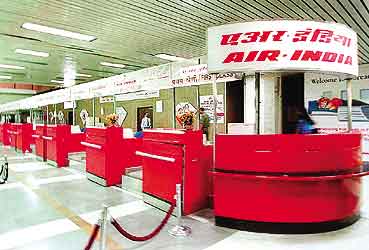
Many moons ago, when our sweet little dupleix in Dover Lane was enlarged into a three storey house to make space for a tenant, our first tenant was an Indian Airline pilot. Similarly, many modern condominiums in our locality were being rented out to pilots and air hostesses. This was a mark of Dover Lane having arrived as a respectable colony in Ballygunje from its rather modest middle class veneer. The airlines are always looked upon as a creamy layer of the middle class; offering prospects and possibilities that are matched only by the IT, bureaucracy and the army. It has the class of being high salaried, élan of professional excellence and the allure of a closed group cadre. In other words, it has the best of all worlds notwithstanding the attraction of international travel with sops like free tickets for dependent members of the family. The pilots, who are the core of this sector, are on strike in India’s only public sector in the aviation sector, namely Air India. Continue reading A government that wants to destroy its own airline?: Susmita Dasgupta