All posts by Shivam Vij

Shivam Vij is a writer and journalist based in New Delhi.

The Jamaat factor in Bangladesh politics: Jyoti Rehman

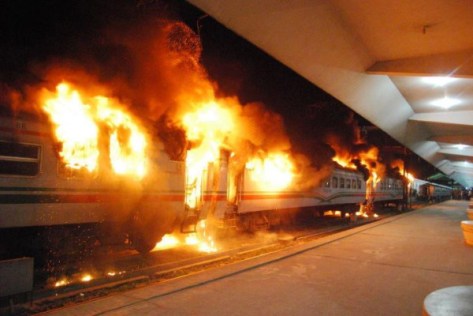
jamaat-train
A train in Bangladesh set on fire by activists of the Jamaat-e-Islami Bangladesh

This is a guest post by Bangladeshi commentator JYOTI REHMAN: Delwar Hossain Sayedee, an Islamic preacher and a senior leader of Jamaat-e-Islami Bangladesh, the country’s largest Islam-pasand party, was sentenced to death on 28 February for war crimes committed during the 1971 Liberation War. Within hours, Jamaat cadres and activists clashed violently with police and law enforcement agencies. Scores have been killed in some of the worst political violence the country has experienced in recent years.

Five other senior Jamaat leaders, including its current and former chiefs, are being prosecuted for war crimes committed in 1971. Another leader was sentenced to life imprisonment on 5 February. That sentence triggered what has come to be called the Shahbag Awakening—a month of largely peaceful gathering of tens of thousands of people in the middle of Dhaka. A key demand of the largely government-supported Awakening is to ban Jamaat. Continue reading The Jamaat factor in Bangladesh politics: Jyoti Rehman
A Curfew in Spring: Rich Autumns

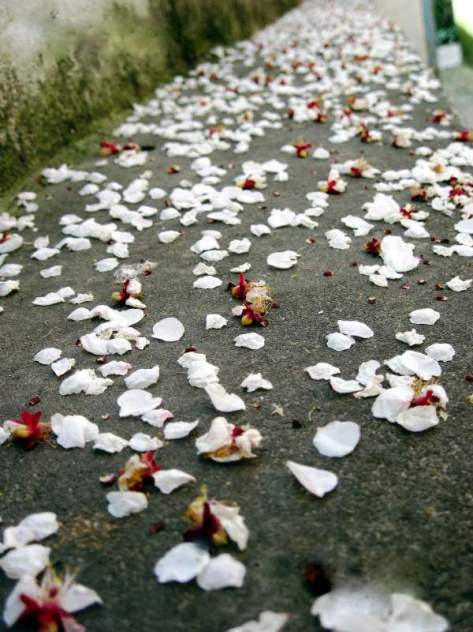
1-rich-autumns2
Photograph by Rich Autumns

RICH AUTUMNS writes from Srinagar: The capital of Kashmir is under tight curfew. Tight does not qualify curfew. It qualifies Srinagar. Srinagar is tight under curfew. The city has stopped breathing. It is an enforced exercise that the Valley undergoes regularly for the sake of law and order. On the deserted streets of Srinagar, Indian Army men stand in army issued jackets nursing rifles under the fresh green leaves of the Chinar. Occasionally a milk man cycles by. Sometimes, he is stopped and turned back. Sometimes he is allowed to pass, after an identity check. Continue reading A Curfew in Spring: Rich Autumns

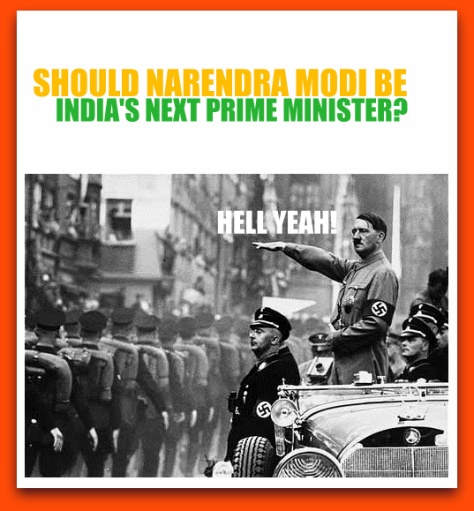
Should Narendra Modi be India’s next Prime Minister?

MODI-HITLER

Sheela Bhatt writes: Continue reading Should Narendra Modi be India’s next Prime Minister?

Wave of violent attacks against Hindus in Bangladesh: Amnesty International

Press release put out on 6 March by AMNESTY INTERNATIONAL: A wave of violent attacks against Bangladesh’s minority Hindu community shows the urgent need for authorities to provide them with better protection, Amnesty International said.

Over the past week, individuals taking part in strikes called for by Islamic parties have vandalised more than 40 Hindu temples across Bangladesh.

Scores of shops and houses belonging to the Hindu community have also been burned down, leaving hundreds of people homeless. Continue reading Wave of violent attacks against Hindus in Bangladesh: Amnesty International

Photographs of Calcutta by Che Guevara, 1959

These three photographs were taken by CHE GUEVARA in Calcutta (now Kolkata) in 1959. The photos are taken from the book Self Portrait by Che Guevara, published by the Centre for Che Studies, Havana, in collaboration with Ocean Books, Australia. They were obtained by Jansatta editor Om Thanvi from the Centre for Che Studies in 2007, and come to us courtesy Thanvi.

1-che-gu-18

Continue reading Photographs of Calcutta by Che Guevara, 1959

Why I need feminism

Here’s wishing all men and women across borders and boundaries, in New Delhi and New Haven, Ranchi and Russia, Dublin and Damascus, Srinagar and Sri Lanka, Bhutan and the Bermudas, a very happy International Women’s Day. These images are from the ‘I Need Feminism’ Campaign at the Lahore University of Management Sciences

This slideshow requires JavaScript.

On the Death of Mudasir Kamran: Achuth Ajit and Ria De

This is a guest post by RIA DE and ACHUTH AJIT: English, the language of a united collective; but also a language that found itself wanting today, as if unable to express the most basic of needs, the most just of demands. Of all days today English was at its banal best.  As if clichés had eaten into it, gnawed the life out of it, bent it into prosaicness. Like “We Want Justice.” As we gather here today, at the English and Foreign Languages University – an institution that is just 5 years old with already four student deaths to its tally – to protest the high-handed and insensitive treatment of Mudasir Kamran, to honor his memory, and most of all to claim on his behalf, and on the behalf of all of us, the students at this University demand and urge “We Want Justice”. The prosaic cliché of this oft-repeated slogan was unable to state on our behalf the bare life of it as well as the spontaneity and the enormity of it. Continue reading On the Death of Mudasir Kamran: Achuth Ajit and Ria De
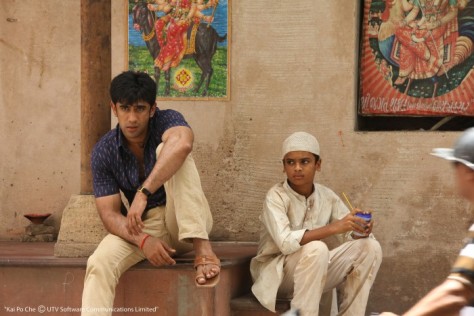
Kai Po Che and the reduction of 2002: Zahir Janmohamed

Guest post by ZAHIR JANMOHAMED

A still from Kai Po Che

When I started conducting research in Gujarat two years ago, I kept being asked the same question among middle class youth in Ahmedabad: “Have you read Chetan Bhagat?” When I asked what other books they have read, I often heard, “Actually I only read Chetan Bhagat.”

So I started to read Bhagat because I wanted to relate to many of the young people I was interviewing. But it was not an easy task.

I understand the frustration with Bhagat’s writing. Unlike other young adult authors like JK Rowling or Suzanne Collins, Bhagat’s books rarely reward a second reading (and yes I have tried). Continue reading Kai Po Che and the reduction of 2002: Zahir Janmohamed

The sickening political opportunism of Chetan Bhagat

modi-chetan-bhagat

Snigdha Poonam watches Kai Po Che, whose script was written by Chetan Bhagat, based on his book The Three Mistakes of My Life:

In the film adaptation, Mr. Bhagat has also added what seems like justification for some Hindus to turn violent, like the death by burning of both of the parents of one of the three protagonists in the Sabarmati Express; in the novel, it was his nephew. We all know the level of vengeance with which Bollywood heroes respond to the targeting of their mothers: “Teri maa mari hai kya (Is it your mother who has died?),” the bereaved son explodes at a sensible friend trying to stop him from losing control of himself.

In his book, Mr. Bhagat clearly showed the 2002 riots as a state-sanctioned exercise (“Whatever it takes to quench the hurt feelings,” says a “senior Hindu Party leader”). But he excised that from the film completely. [Read]

That image above is via DeshGujarat.com, where an article quotes Bhagat as saying in a TV debate:

“It has been discussed much that Modi ji has done well in Gujarat, but what I believe is that he is a very good politician. A politician has to change with public mood. When communal issue mood was there in the country, that was Modi version 1, when he elected for the first time. And when he won the election for second time, he won it on development agenda.”

Clearly, Mr Chetan Bhagat is also a good politician.

Nine prisoners at risk of execution in India: Amnesty International

Statement put out on 21 February by AMNESTY INTERNATIONAL

Following two recent secret executions in India, there is fear that the Indian authorities may execute nine other prisoners whose petitions for mercy have not yet been ruled on.

The mercy petitions of eight men and one woman are pending with either the Union Home Ministry or the President: Gurmeet Singh, Dharampal, Suresh, Ramji, Praveen Kumar, Jafar Ali, Sonia (f), Sanjeev, and Sundar Singh. Ministers have publicly stated that decisions on some of these petitions will be made soon, putting the nine in imminent danger of execution. Continue reading Nine prisoners at risk of execution in India: Amnesty International

Kashmir: Civil society objections to proposed Police Bill

List of signatories at the end; statement put out on 25 February
Following a preliminary reading of the Draft Jammu and Kashmir Police Bill, 2013, made public on 15 February 2013, the undersigned condemn the attempt of the Government to formally put in place powers and structures that the Jammu and Kashmir Police have for long enjoyed and employed to carry out systematic human rights violations in Jammu and Kashmir. Further, specific sections of the Draft Bill that are seriously objectionable are listed. As an immediate step, the Government must extend the time allotted for feedback from people.  Continue reading Kashmir: Civil society objections to proposed Police Bill

The Hyderabad blast investigations are doomed to fail: JTSA

This release was put out today by the JAMIA TEACHERS’ SOLIDARITY ASSOCIATION

hyderabad-blasts-probe-feb2

In a grotesque replay of every investigation that follows a bomb blast, prejudice, misinformation and media blitz rules the direction of Dilsukh Nagar bombings investigation too.  The same suspects and shadowy organizations are being paraded as executors of the Hyderabad bombings.

But should we be surprised? A day after the Home Minister’s humiliating capitulation to the RSS-BJP, virtually giving them and their affiliates a clean chit, the message to the investigating agencies must have been crystal clear.  When the Home Minister himself discards the bulk of allegations and material pointing to the existence of Hindutva groups in planning and executing terror attacks, should we really expect the investigating agencies, whose past record inspires hardly any confidence, to sincerely pursue all possible angles and leads? This, when Messrs Aseemanand and company are being tried for the 2007 bombing of the Mecca Masjid.  By asserting that Hyderabad bombing may have been a reaction to the execution of Kasab and Afzal Guru, the Home Minister himself foreclosed any possibility of unbiased investigation. Continue reading The Hyderabad blast investigations are doomed to fail: JTSA

The colonial legacy of capital punishment

G Mohan Gopal writes:

The British and their collaborators had made a similar mistake. They thought that the common people of India would be deterred and cowed down by the violence of the state. A young scholar from Columbia recently shared with me data collected from the National Archives showing that the British were hanging on average three people daily in the 1920s in a desperate bid to frighten Indians into obeying British rule. We know how that ended. The government should know how this will end too. [Frontline]

And Fahad Shah meets Maqbool Butt’s mother:

“Both Maqbool sahib and Guru sahib were innocent and on the right path. India thinks that this freedom movement will stop but it won’t stop. It will continue. There are so many Maqbools in Kashmir” [The Kashmir Walla]


Sanjay and me: Zahir Janmohamed

Guest post by ZAHIR JANMOHAMED

House of a Naroda Patiya massacre survivor. Photo by Zahir Janmohamed

It was 2002. The week before I left for India, my father invited his Gujarati Hindu colleague Rupa Aunty for dinner at our house in California. When I was a kid, I tied the rakhi brotherhood bracelet on her son. When my mom was diagnosed with cancer, Rupa Aunty was the first to spend the night with us at the hospital.

“If you need anything at all,” she told me just before I left for India, “my family is from Ahmedabad and we will be there for you.”

I grew up in California mispronouncing names of Gujarati dishes like thepla and my trip to Ahmedabad in 2002 was the first time anyone in my family had returned since my grandparents left Gujarat for Tanzania in the 1920s. This – my father kept reminding me – was my trip “home”. Continue reading Sanjay and me: Zahir Janmohamed

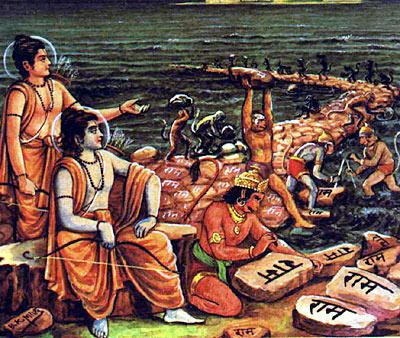
On Ram Setu: ‘Mahakaal ka ling kiya hain?’

The Government of India again seems to be in the mood of going ahead with the Sethusamudram Shipping Canal Project that would reduce travel time for ships around coastal Tamil Nadu and Sri Lanka, and bring economic advantages to both countries. The project involves breaking limestone shoals that some regard to be the remains of the mythological Ram Setu. The controversy is an old one. In 2007, I had interviewed Hindutva ideologue Bharatendu Prakash Singhal, who was particularly vocal against the ‘destruction’ of the limestone shoals. Singhal is a former Rajya Sabha MP and a retired Indian Police Service officer. The bits from the interview that were directly about the Ram Setu controversy had appeared in Tehelka, but Singhal was more interested in talking about “mind, body and soul” than about Ram Setu. Here are the unpublished bits – though I had put them on my blog back then. Every word was transcribed faithfully from the recorded audio. Continue reading On Ram Setu: ‘Mahakaal ka ling kiya hain?’

What happens when a woman decides to walk to the sea in Karachi, all by herself?: Hira Nabi

This video post comes from HIRA NABI

http://vimeo.com/58865627

(Hira Nabi is a visual artist in Pakistan.)

PUCL statement on Hyderabad blasts

This statement was put out today in Delhi by the PEOPLE’S UNION FOR CIVIL LIBERTIES
PUCL strongly condemns the serial  blasts in Hyderabad on 21.02.2013 which has resulted in loss of life and grievous injuries to many. PUCL extends its sympathies to the families of all those who lost relatives and hopes that the injured recover speedily.
PUCL  re-iterates its stand that all organizations – whether State or non- state players – functioning for the people and in the public arena are accountable and answerable for their acts. PUCL appeals to all organizations to refrain from acts of mindless violence, especially when they endanger innocent persons.  Violence can never offer a solution to any issue however genuine it may be.  Continue reading PUCL statement on Hyderabad blasts

22 Years after Kunan and Poshpora, Rethinking Kashmir: Abhijit Dutta

Guest post by ABHIJIT DUTTA; all photographs by the author unless otherwise mentioned

1-kunan 4

It looks like any other village in Kashmir.

You go past a wooden bridge, past open fields winter-barren and wet with rain. Past mountains with snow on their chin. Past wistful looking poplars. Past a brook with clear water. Past grumpy apple trees gnarled like a grinch.

Then the road narrows, and homes – of timber and brick – come into view. Some have fences, unpainted wood. Heaps of hay, dung cakes, piles of dried leaves left to smoke. Ditches and dykes choked with snowmelt. Leafless walnut trees and brunette willows. The chinars, wild redheads just months ago, now old and arthritic. There is a government school on the right, a madrassa on the left. A few houses of stone, fewer of concrete, tin roofs over all.

Before you walk any further, the village ends. The next village is Poshpora. Like Kunan before it, it looks like any other village in the valley. The two villages are so close that people no longer call them by their individual names. Everyone knows this two-in-one village as Kunan Poshpora. Continue reading 22 Years after Kunan and Poshpora, Rethinking Kashmir: Abhijit Dutta

India Slept Through a Revolution in Bangladesh: Richa Jha

Guest post by RICHA JHA

Dhaka, Bangladesh. 18th February 2013 -- A woman shouts on a microphone. -- A demonstration for the death penalty to be given to war criminals, is continuing at Shahbag crossroads, and has reached its fourteenth day,.
Dhaka, Bangladesh. 18th February 2013 — A woman shouts on a microphone. — A demonstration for the death penalty to be given to war criminals, is continuing at Shahbag crossroads, and has reached its fourteenth day,.

This morning, I changed the ‘sleep’ in the heading of this article to ‘slept’. I woke up to the news that Bangladesh’s nearly twenty days long mass uprising was now getting a structured exit. The most moving and visually spectacular part of the Shahbag movement was coming to an end. India, of course, slept through most of it. The past tense, suddenly, paints our selective insularity in even starker shades. Continue reading India Slept Through a Revolution in Bangladesh: Richa Jha

Footprints on a Timeline: Gayatri Ugra

Guest post by GAYATRI UGRA; photographs by JAYANT UGRA

1-20 _MG_2200

“I travel so that people will lose track of me. Then I write, so they can find me again.”

I read these lines by Pierre Foglia, and I know nothing else about him. I do know more about why I travel: to retrace lost tracks. And why I write: not for people to find me but for me to find my own self. The last journey I made was just that. A long walk back into my past, and from there to the present in Kashmir, a living, growing, tense reality that I had to visit.

Facebook never served a better cause than ours when we planned our trip last June. On the spur of a moment of nostalgia, I posted this message on my page: “A family holiday in Kashmir. Any takers? All we need now is a travel agent and a motivator.” I could not have anticipated the response: so many of us wanted to come, hoped to come. My brother Gopal took up the task of making travel plans, reservations, bookings for accommodation, and ultimately made it happen for the eight of us that finally went. Continue reading Footprints on a Timeline: Gayatri Ugra

Why India Needs the Death Penalty

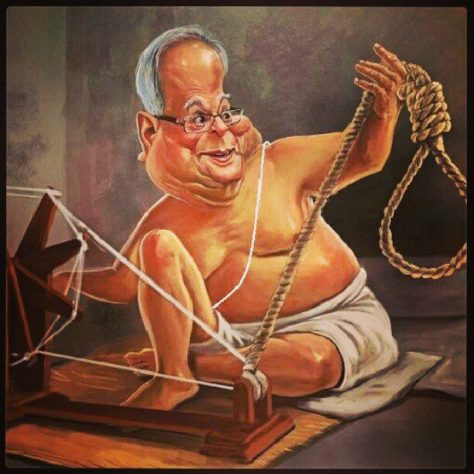
poltu-hangman-gandhi-india

So, The Law has been taking its Own Course, without any help from the political bankruptcy of the Kangress party. The Law took its Own Course and hanged Ajmal Kasab before a Parliament session and co-incidentally Afzal Guru before another Parliament session. The Law’s Own Course is stranger than the river Kosi which changes direction at will (actually, even the Kosi river changes directions because of corruption in the unnecessary embankments the Bihar government builds). Continue reading Why India Needs the Death Penalty