Category Archives: Bad ideas

Periyar – Brahminism’s Nightmare: Satya Sagar

Guest Post By  SATYA SAGAR

Trust Markandeya Katju to rush in where angels fear to tread – casually disparaging the legacy of E.V.Ramaswamy Naicker or ‘Periyar’, founder of the Dravidian movement and arguably one of the greatest social reformers in modern India.

 According to former Justice Katju, in a recent post on his Facebook page, “Periyar ( E.V. Ramaswamy) was objectively a British agent, who preached caste hatred, particularly against Brahmins”

It is perhaps a fitting tribute to the revolutionary character of Periyar that, four decades after his death, he is still reviled by upper-caste Hindus of India,of both the Establishment and ‘anti-Establishment’ variety. And Markandeya Katju is not the only ‘secular, progressive’ intellectual  in this country to have such contempt for or very little knowledge of Periyar and his work. Continue reading Periyar – Brahminism’s Nightmare: Satya Sagar

Enabling Dissent, Defying Silence – In Memory of Sabeen Mahmud: Yaminay Chaudhri and Mariam Sabri

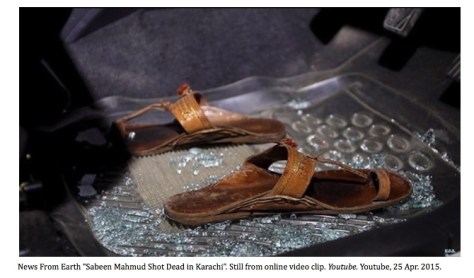
Sabeen Mahmud's Slippers

Guest Post by Yaminay Chaudhri and Mariam Sabri

[ This is a post from two friends in Pakistan responding to the tragic assasination of Sabeen Mahmud, activist and director of ‘The Second Floor’ (T2F) – a space that hosted many wonderful conversations and brave events. Sabeen was killed as she was going home after an event dedicated to a public discussion of disappearances and human rights violation in Balochistan.]

A normally quiet and desolate gali is packed with camera crews and hundreds of attendees for the funeral of Sabeen Mahmud. While there is a steady trickle of mourners entering and exiting the premises of the vibrant community space Sabeen created, the crowd waiting in the gali outside seems to be arrested by a mixture of disbelief, anger and grief.

Similar emotions paralyze us as we write about Sabeen in the past tense. It is difficult to believe she is gone, infuriating to think about the way she went, and, perhaps, the hardest to accept the beginning of her absence.

While watching her interview with PBS NewsHour last month, one is struck by how her cavalier attitude to fear and security, reverberates eerily in the wake of her murder.

“I grew up playing cricket on the streets” she said, “I just feel when the time comes, the time will come”.

Continue reading Enabling Dissent, Defying Silence – In Memory of Sabeen Mahmud: Yaminay Chaudhri and Mariam Sabri

Save Handlooms – Don’t Repeal the Handloom Reservation Act!

Please sign this petition to the Prime Minister drafted by LAILA TYABJI  of Dastkar Delhi, appealing against the proposed repeal of  The Handloom Reservation Act, which protects both an ancient body of knowledge and skill, as well as the livelihoods of hundreds of thousands of handloom weavers.

16040_S_handloom-tant-weaver

Image courtesy Facenfacts

SIGN THE PETITION HERE. TEXT OF PETITION BELOW

Handlooms are India’s unique heritage and the livelihood of lakhs of skilled handloom weavers.

A move is on to repeal The Handloom Reservation Act, which since 1985 has been protecting traditional Handloom weaves, especially saris, from being copied by their machine-made and powerloom competitors. It was a small but important protection for Handloom weavers, who otherwise struggle to survive. Their yarn, their designs and their markets are under attack.

Now the influential powerloom lobby has agitated successfully that this Act be withdrawn. To say that because we have powerlooms, we don’t need handlooms does not make sense. The handloom can create thousands of distinctive regional weaves and designs that no powerloom can replicate, and a tactile wonderful drape that is also irreplaceable by mechanised means. Globally too, more and more ecologically sensitive international buyers look to India as a source for the hand made.

Each weave has a cultural tradition and a story, each linking us to our social and cultural roots. If we remove the protection and incentives for handloom weavers to continue weaving their traditional products and saris, we would suddenly be bereft of both our past and our future.

Handloom lovers, it’s time to raise your voice! Join us in lobbying against the repeal of The Handloom Reservation Act.

SIGN THE PETITION HERE.

An inability to grieve

Sarcasm in the  moment of death? For this you need to be evil. For, the first human reaction to death is silence. Even in the case of a normal death. It suddenly reminds us of our own mortality. Impermanence of our existence. When death is not normal, when it is an accident, a suicide or a murder, it shocks us. Or, it should. A life cut short unnaturally creates a void in us. A sense of unfulfillment. And our gaze turns inwards. We tend to become reflective. Words do not come easily to you. On  most of the occasions they sound false, even obscene. Therefore, we console the grieving not though words but by touching them. It is not easy to make sense of death, in whichever form it strikes us. Continue reading An inability to grieve

जनतंत्र में जन का अकेलापन

बाईस अप्रैल,2015 का दिन भारतीय संसदीय जनतांत्रिक राजनीति की पराजय के एक  दिन के रूप में याद रखा जाएगा. और इसकी वजह यह है कि एक किसान उस वक्त ‘खुदकुशी’ कर लेता है जब उसी के सवाल पर एक जनतांत्रिक प्रतिरोध सभा हो रही होती है.वह उस सभा से ताकत नहीं महसूस करता, वहां इकट्ठा समुदाय को अपनी बिरादरी नहीं मान पाता, खुद को इस भीड़ के बीच इतना अकेला पाता है कि  मंच से किसानों के हक में दिए जा रहे भाषणों और नारों से उसे यह आश्वासन नहीं मिलता कि उनमें उसकी आवाज़ शामिल है.अपनी आवाज़ उसे अकेले ही उठानी है. और  अदाकारी पर टिके इस जनतंत्र में वह तभी सुनी जा सकती है जब खुद नाटक बन जाए.

गजेन्द्र सिंह ने यही किया.भारतीय किसान के अकेलेपन को और कैसे जाहिर किया जा सकता था? इसे लेकर हम निश्चित नहीं कि यह खुदकुशी ही थी. कतई मुमकिन है कि यह दुर्घटना हो.कि गजेन्द्र सिंह का पाँव फिसल गया और उसके गले पर फन्दा कस गया. कि उसने जंतर  मंतर पर एक पीपली लाइव का प्रभाव लाने की कोशिश की जिसका त्रासद अंत हुआ. Continue reading जनतंत्र में जन का अकेलापन

All that is solid melts into air – the hologram protests in Spain: Geeta Seshu

Guest post by GEETA SESHU

The recent hologram protest projected on the street before Spain’s Parliament is an innovative attempt to subvert the country’s ‘citizen security’ provisions that criminalises public protest.

The video of the hologram protest is riveting and surreal, as ghostly figures of women and men march shouting slogans amidst night-time traffic. The figures are clearly distinguishable, the faces discernible. This isn’t computer-aided animation. It’s the real thing.

Or as close to real as a virtual thing can be.

The website ‘hologramasporlalibertad’ (Holograms for Freedom) provides for the subscriber to record her own message and, with a click, a hologram is created. An online petition explains that the ‘citizen security laws’, which obtained final assent in Spain in March, will ‘repress the freedom of peaceful assembly’.

Screen Shot 2015-04-22 at 11.13.01 pm

Continue reading All that is solid melts into air – the hologram protests in Spain: Geeta Seshu

Building Solidarities: Harsh Mander

Guest Post by Harsh mander

Indifference is primarily born out of the failure and the fatigue of empathy. Empathy requires both a leap of imagination—to imaginehow the other feels—and solidarities of feeling—to feel the sufferingand humiliation of the other as though they were one’s own. In otherwords, empathy has both a cognitive and affective element: it engagesboth the mind and the heart. Empathy tends to flow more naturallywhen the suffering person is someone I can relate to and understand,someone whom I feel is similar to me in some essential, relatable way,because I can then better imagine what the other person is feeling.

Empathy breaks down when I can persuade myself that the ‘other’ is, in some ways, not like me, not fully human in the way Iand the people of my family, my community, my caste, my gender,my race and, indeed, my sexual preferences are. I can do so when Irefuse to see or acknowledge that people who are of a differentgender, caste, class, religion, sexuality or culture from me are essentiallyhuman in the same way as I am, when I am in the sway of normativeframeworks and politics which cultivate difference and fosterindifference. Continue reading Building Solidarities: Harsh Mander

Are We Legit? Roanna Gonsalves

ROANNA GONSALVES writes in Southern Crossings, a new blog run by a writers’ collective based in Australia, which aims “to reimagine Australia, South Asia, and the world, through South Asian bodies and minds.”

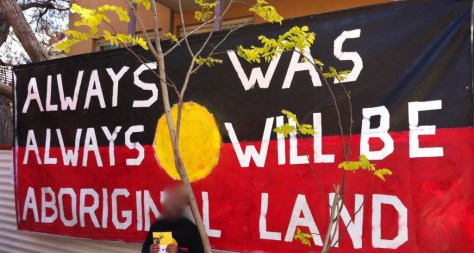
Aboriginal-flag-1-1024x548

One rainy Mumbai day, sitting in an Udipi restaurant, chai cup in hand, I told a dear friend I would soon leave for Australia.

“I’ll never leave India and be a second class citizen in another country”, my friend said. My chai turned colder and a crinkly skin formed on its surface.

Seventeen years later, I realise that in perceiving a hierarchy of citizens in Australia, my friend was right, but in a manner that he did not intend…

…[T]here were certain fundamental truths that I did not grasp before I got here: Indigenous people i.e. Aboriginal people and Torres Strait Islanders, are the First Peoples of this land and the waters that surround it; they formed the First Nations of this continent; this always was and always will be Aboriginal land.

We are not the perpetrators, the ones who wielded the guns in the forgotten wars between invading white settlers and Indigenous Peoples. We are not the victims. However, as mainly economic migrants from South Asia (I acknowledge the many South Asian refugees from the conflict zones of Afghanistan and Sri Lanka), we are not absolved of complicity.

We are beneficiaries of the genocide of Aboriginal people, the dispossession of their land, the loss of their homes, their families, their cultural values, their tongues, their songs. It is such soil that we step on when we first step into Australia, soaked not just with the promise of a ‘first world lifestyle’, but squelchy with the memory of massacre.

Read the rest of this uncompromising and challenging set of reflections here.

Media and the Death of Democracy: Nissim Mannathukkaren

Guest Post by NISSIM MANNATHUKKAREN

We live in a world where there is more and more information, and less and less meaning—Jean Baudrillard

Recently, there has been an outpouring of scathing critique against Arnab Goswami and his television programme, The Newshour in some sections of the English-language Press. One magazine cover story called him, “The Man Who Killed TV News.” The immediate context of this critique is Goswami’s branding of some prominent ecological and political activists as “anti-national” and his calling for a ban on the Nirbahaya documentary and legal action against a competing channel which was supposed to be air the documentary. This unprecedented and shockingly ironic position against free speech by a leading media personality was rightfully termed by a critic “as low as a journalist can sink.”

While these criticisms of the “murderous rage” evoked by Goswami draped in the nationalist tri-colour every night and the punishment he metes out to his opponents in a “medieval-style kangaroo court,” also known as an “open debate,” are entirely apt and necessary, they also miss the forest for the trees. Goswami is only a symptom of the post-liberalization corporatized and privatized media landscape of India. If Goswami did not exist, he would have been created. It is not Goswami alone who has killed news, it is the vast majority of the media, especially, television that has done so. What is more obscene than Goswami’s execrable theatrics is how he is deeply enmeshed in the structures of capital and power that he seemingly rails against every night. These structures have not just enmeshed him, but the others as well who are aghast at his aesthetics (or the lack of it).  Continue reading Media and the Death of Democracy: Nissim Mannathukkaren

Frontline’s Calculus of Caste: C. K. Raju

Guest post by C. K. RAJU

[Frontline carried a historically ill-informed article on Indian calculus which also had mathematical and casteist errors. When the errors were pointed out, the magazine ignored it, contrary to journalistic ethics. Here is Prof Raju’s response to that article.]

Frontline (23 Jan 2015) published an excessively ill-informed article by Biman Nath on “Calculus & India”. The article suppressed the existence of my 500 page tome on Cultural Foundations of Mathematics: the Nature of Mathematical Proof and the Transmission of Calculus from India to Europe in the 16th c. (Pearson Longman, 2007). This suppression was deliberate, for Nath and Frontline ignored it even after it was pointed out to them. They also refused to correct serious mathematical and casteist errors in the article. That is contrary to journalistic ethics. To understand my response, some background is needed.

According to my above book and various related articles, the calculus developed in India and was transmitted to Europe. The second part of the story is lesser known. As often happens with imported knowledge, calculus was misunderstood in Europe. Later that inferior misunderstanding was given back to India through colonial education, and continues to be taught to this day just by declaring it as “superior”. That claim of superiority was never cross-checked to see if it is any different from the other flimsy claims of superiority earlier made by the West, for centuries, for example the racist claim that white-skinned people are “superior”. Continue reading Frontline’s Calculus of Caste: C. K. Raju

Loot in the name of Cholera: Sabareesh Gopala Pillai

This is a guest post by SABAREESH GOPALA PILLAI

The meaning of “health is wealth” is changing. Health — the lack of it in fact — is a gold mine today. India’s health industry is almost growing at twenty per cent year-on-year, and is estimated to reach probably about Rs 1.3 trillion by 2020. While many would attribute this to the increase in life expectancy, higher income levels, greater reach of health insurance and growing lifestyle-related diseases, the story is not so straight or simple. Continue reading Loot in the name of Cholera: Sabareesh Gopala Pillai

सलाम, एदुआर्दो गालियानो , अलविदा !!

ऐसी कलम सदियों में एक  होती है जिसमें इंसानी खून की धमक और दमक साथ हो.ऐसी ही एक कलम , इंसानी दर्दमंदी से लबरेज़ आज रुक गई है. वह किसी एक जुबान की कैदी न थी. पूरी कायनात उसकी नोक पर रक्स करती थी. एदुआर्दो गालियानो , सलाम,अलविदा!!

जूता

1919 को  इंकलाबी रोज़ा लक्समबर्ग का बर्लिन में क़त्ल कर दिया गया.

कातिलों ने उसे राइफल से कुचल-कुचल मारा और एक नहर के पानी में फेंक दिया.

बीच में, उसका एक जूता निकल गया .

किसी ने उसे उठा लिया, कीचड़ में पड़े उस जूते को .

रोज़ा एक ऐसी दुनिया की तमन्ना करती थी जहां इन्साफ को आज़ादी के नाम पर निछावर नहीं कर दिया जाएगा और न आज़ादी इन्साफ के नाम पर तर्क कर दी जाएगी .

हर रोज़ कोई हाथ उस बैनर को उठा लेता है.

कीचड़ से, उस जूते की तरह .

आजादों का राज

यह पूरी सत्रहवीं सदी में होता है.

भाग निकले गुलामों की बस्तियां कुकुरमुत्तों की तरह उग आती हैं. ब्राज़ील में उन्हें क्विलोम्बो कहते हैं.यह एक अफ्रीकी लफ्ज है  जिसके मायने हैं समुदाय हालांकि नस्लवादियों ने इसका अनुवाद किया चंडूखाना या वेश्यालय .

पल्मारेस के क्विलोम्बो में, पूर्व गुलाम अपने मालिकों से आज़ाद रहे और चीनी की तानाशाही से भी जो और कुछ भी उगने नहीं देती.वे हर तरह के बीज रोपते हैं  और सब कुछ खाते हैं.उनके पूर्व-मालिकों का भोजन जहाज़ों से पहुँचता है. उनका मिट्टी से.अफ्रीकी तर्ज पर बने उनके लुहारखाने उन्हें कुदाल, खुरपी, फावड़े देते हैं जिससे वे धरती पर काम कर सकें और छुरे,कुल्हाड़ी और भाले कि वे उसकी हिफाजत कर सकें.

“Those Backward People” – Arun Jaitley and a Long Ugly History

Two days ago, Finance Minister Arun Jaitley sought to make a special mention of “poor, dalits, tribals, backwards, those who are landless.” The occasion was the the Land Acquisition Bill, which,

“we are bringing, as per that the industrial corridors which would be set up in the country, those backward people, the 300 million landless people would get employment opportunities,”

First, Mr Jaitley, what exactly is the mechanism your government proposes by which the “backwards” released from the land will be absorbed into industry? Is there a guarantee by the industry owners? Is there a provision for skill training in the same industrial corridors? Are there ITI institutes being set up? Forget these, is even primary or secondary education going to be expanded so that farmers’ children, at some point in the distant future can take advantage of the supposed industrial boom? Continue reading “Those Backward People” – Arun Jaitley and a Long Ugly History

Being Empowered the Vogue Way – Is There Anything Left to be Said?

Really, nothing. It’s been more than a week since the Vogue Empower video directed by Homi Adajania and featuring Deepika Padukone amongst others, has appeared, been watched, digested, commented upon, counter-videoed, spoofed and counter-spoofed. And a week on the internet constitutes nothing less than a geological age of course, so there’s been a veritable melting Ice Age of responses. To list just some of the reactions to the video – the female fan responses, that say kudos to Deepika for “saying it like it is”. Uncritically starry-eyed as they are, they point to the real chord struck by the video with thousands of young women fighting, thinking, arguing and surviving their way through a breathtakingly conflicted urban India. This is an India that by all appearances works hard and parties hard, in the process occupying a fraught and frequently violent terrain of interaction between the sexes.

Continue reading Being Empowered the Vogue Way – Is There Anything Left to be Said?

Come and see the blood on my skirt: Statement from Organisers

Statement from the organisers of this campaign in University of Delhi : SHAMBHAVI VIKRAM, RAFIUL ALOM RAHMAN, DEEPTI SHARMA, DEVANGANA KALITA

No more Whispers!
No more Murmurs! No More Silence!

Its time we scream!
Come and see the blood on my skirt.

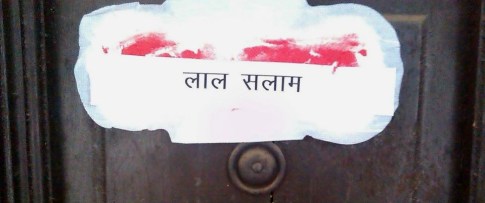
All these years we have been taught to hide or hush up the fact that women bleed. And yet, despite all the hushing up and all the bleeding blue that society, media and our families have been piling upon us, women still continue to bleed and bleed they shall till the end of ‘man'(!)kind. This blood that has been marked ‘impure’, marked ‘dirty’, marked ‘shameful’, has brought many of us much pain and here we are not talking just about menstrual cramps.

lal salaam

Continue reading Come and see the blood on my skirt: Statement from Organisers

धर्मनिरपेक्ष कर्तव्यनिष्ठा और अल्पसंख्यक संकीर्णता

उच्चतम न्यायालय के न्यायमूर्ति कुरियन जोसेफ ने भारत के मुख्य न्यायाधीश एच.एल.दत्तू को ख़त लिखकर गुड फ्राइडे के दिन न्यायाधीशों का सम्मलेन करने पर ऐतराज जताया. उन्होंने लिखा कि इस पवित्र दिन को वे अपने परिजनों के साथ केरल में रहेंगे, “मैं गहरी पीड़ा के साथ इस बात की ओर आपका ध्यान दिलाना चाहता हूँ कि ऐसा महत्त्वपूर्ण सम्मलेन उस समय नहीं किया जाना चाहिए जब हममें से कुछ लोग इन पवित्र दिनों में धार्मिक अनुष्ठान में व्यस्त होते हैं और जो पारिवारिक मिलन का अवसर भी होता है.” उन्होंने कहा कि ऐसे महत्त्वपूर्ण कार्यक्रम दीवाली, दशहरा या ईद में नहीं किए जाते.

न्यायमूर्ति कुरियन ने कहा कि गुड फ्राइडे जैसे धार्मिक और राष्ट्रीय अवकाश के दिनों में इस तरह के कार्यक्रम करके न्यायपालिका दूसरी संवैधानिक और सार्वजनिक संस्थाओं को एक प्रकार का गलत सन्देश दे रही है जिससे वे सभी धार्मिक या पवित्र दिनों को समान महत्त्व और प्रतिष्ठा न देने को बाध्य महसूस करें.

न्यायमूर्ति कुरियन को इसकी आशंका है कि वे ईसाई हैं और इसी कारण उनके ऐतराज को साम्प्रदायिक माना जाएगा, “कृपया यह न सोचें कि मैं कोई साम्प्रदायिक संकेत दे रहा हूँ. चूँकि मैं देख रहा हूँ कि हम जैसे संस्थान, जिन पर संविधान के अनुसार धर्मनिरपेक्ष माहौल की हिफाजत और धर्मनिरपेक्ष छवि को प्रमुखता देने की जिम्मेदारी है, धीरे-धीरे संवैधानिक जिम्मेदारियों से विमुख हो रहे हैं, मैंने इस चिंता को लिखित रूप में व्यक्त करने को सोचा.”   Continue reading धर्मनिरपेक्ष कर्तव्यनिष्ठा और अल्पसंख्यक संकीर्णता

Ban-man on the prowl again: Malvika Sharad

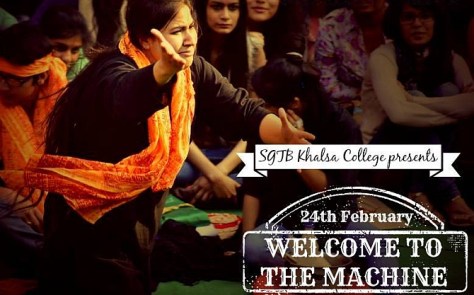
Guest Post by MALVIKA SHARAD on the recent call by Delhi University Students’ Union for a ban on the street play by Khalsa College theatre group, Ankur.

24lead6

Image courtesy rediff.com

One evening in 2013, a group of ‘street play seniors’ as we call them, visited us in the front lawns of my college, Lady Shri Ram College for Women. They were from various colleges across DU who had been actively involved in street theatre, and had been invited to give the newly formed street play team of that year, an introduction to the art form. Among those seniors was a dynamic young chap from Khalsa College, who reiterated several times that street theatre fills you with such immense courage that you end up doing things you never thought you would, for that courage comes from the sheer truth and brutal honesty that street theatre is based upon. He said that freedom of expression is taken to a whole new level when you perform amidst crowds, and state the truth looking directly into their eyes. A fire is born within you that cannot be extinguished, it burns brighter with every performance of the play. You become fearless in voicing your opinions and thoughts, so fearless that you don’t even realize how far you have pushed your own limits and emerged triumphant.

After a whole year dedicated to doing street plays in Delhi, I have learnt how right he was, that young student not much older than us. I find I have come out of my shell, shedding my inhibitions at a pace and scale I had never imagined. Torn chappals don’t bother me anymore, my sun-burned skin makes me look beautiful, I don’t flinch with embarrassment while sitting, sometimes lying, on the floor of the metro station out of sheer weariness, though co passengers stare at me with judgemental eyes, I can’t bring myself to stop romanticizing the mud and the dirt that hug me every time I wear my soiled street play kurta… But above all, I can articulate my thoughts properly now, I am not scared of speaking in public unlike the times when I was a meek docile person, cocooned in the comforts of home and parental pampering. I owe this change in my attitude and personality to street theatre, which taught me what it is to live confidently and fearlessly.

Continue reading Ban-man on the prowl again: Malvika Sharad

And then they came for Oyasiqur Rahman Babu !

Courtesy : m.bangladeshtime.com

….It is not the young who are writing obituaries for the old,…I have seen the blood shed by so many young people steadily mounting up until now I am submerged and cannot breathe. All I can do is take up my pen and write a few articles, as if to make a small hole in the mud through which I can draw a few more wretched breaths. What sort of world is this ? The night is so long, the way so long….

( Lu Xun, Written for the Sake of Forgetting, P 234, Selected Works of Lu Xun, Vol III, Beijing)

Md Oyasiqur Rahman Babu , aged 27 years is dead. A travel agency executive by profession and a secular blogger by passion he was killed by radical Islamists in Tejgaon, Dhaka when he was going to office in Motijheel. The three assailants – who did not personally know each other – met just for planning the murder and then executed it with military precision.

Thanks to the courage exhibited by trans genders living nearby who caught hold of these murderers while the locals who watched the act before their eyes just dithered to move. Zikrullah, a student of Hefazat-e-Islam’s Hathazari Madrasa in Chittagong, and Ariful, student of Mirpur Darul Uloom Madrasa – were caught while the third member of the team, Abu Taher of Mirpur Darul Uloom, managed to flee the spot. The arrestees said they had killed Oyasiqur for writing on religious issues. It is a different matter that none of them had read his blog, they even did not know what blogging is, they  just executed the order issued by some mastermind. Continue reading And then they came for Oyasiqur Rahman Babu !

जीत की राजनीति की जीत

आम आदमी पार्टी में  जो कुछ भी हुआ उससे वे ही हैरान हैं जो पार्टियों की अंदरूनी ज़िंदगी के बारे में कभी विचार नहीं करते. किसी भी पार्टी में कभी भी नेतृत्व के प्रस्ताव से अलग दूसरा प्रस्ताव शायद ही कबूल  होता हो .कम्युनिस्ट पार्टियों पर नेतृत्व की तानाशाही का आरोप लगता रहा है लेकिन कांग्रेस हो या कोई भी और पार्टी, नेतृत्व के खिलाफ खड़े होने की कीमत उस दल के सदस्यों को पता है. ऐसे अवसर दुर्लभ हैं जब नेतृत्व की इच्छा से स्वतंत्र या उसके विरुद्ध कोई प्रस्ताव स्वीकार किया गया हो. जब ऐसा होता है तो नेतृत्व के बदलने की शुरुआत हो जाती है.

भारत में पार्टियों के आतंरिक जीवन का अध्ययन नहीं के बराबर हुआ है.ऐसा क्यों नहीं होता  कि निर्णयकारी समितियों के सदस्य खुलकर, आज़ादी और हिम्मत के साथ अपनी बात कह सकें? यह अनुभव उन सबका है जो पार्टियों में भिन्न मत रखते ही ‘डिसिडेंट’ घोषित कर दिए जाते हैं.यह भी समिति की बैठक के दौरान जो उनके खिलाफ वोट दे चुके हैं वे अक्सर बाहर आकर कहते हैं कि आप तो ठीक ही कह रहे थे लेकिन हम क्या करते!  हमारी मजबूरी तो आप समझते ही हैं ! Continue reading जीत की राजनीति की जीत

Acche Din Are Here Again!

U Turn on Pictorial Warning on Tobacco Products

picture courtesy : WHO

 ..Government is set to defer indefinitely the implementation of notification for increasing the size of pictorial warning on tobacco products beyond April one, when it was to come into force. ..The notification regarding amendment to the Cigarettes and Other Tobacco Products (Packaging and Labelling) Rules, 2008 sought increase in the size of specified health warning from the current 40 per cent to 85 per cent of the principal display area of the package of tobacco products.

(http://zeenews.india.com/news/health/health-news/govt-set-to-defer-tobacco-pictorial-warning-notification_1568427.html)

The week gone by has brought back smiles on the face of Tobacco Corporates.

Thanks to the latest U turn by the Modi government, Acche Din would continue unabated for them. The non-transparent manner in which the decision was taken and the media was kept in the dark has raised further eyebrows. It was only on the evening of 24 th March that while talking to the media, the health minister J P Nadda had assured them that there is no rethink in the government on introducing pictorial warnings covering 85 per cent of packaging for tobacco products from April 1 and within few hours of this interaction he left for Beijing. Continue reading Acche Din Are Here Again!

An Open Letter to Kerala Khap Managers and Madam Principal, CET, in Particular, and to Malayalees in General

Dear Madam(s) and Sirs

Greetings from a long-suffering woman, a shocked and appalled parent, a worried social scientist, an angered citizen, a furious teacher, a firm believer in the Indian Constitution determined to defend it, a irredeemable feminist — I greet you in all these capacities.

Respected Madam(s) and Sirs, my grievances are all about you, in fact, about the incalculable damage you are collectively doing to  young people in Kerala, to the future of democracy here. They are about your utter disregard for the spirit and the letter of the Indian Constitution and your and powerful hatred of young people in general and young women in particular, clearly manifest in your despicable efforts to deny them their rights as Indian citizens. My grievances are also about your utter lack of humane concern for the students under your care, your rank cruelty and disregard of their humanity and dignity.

Continue reading An Open Letter to Kerala Khap Managers and Madam Principal, CET, in Particular, and to Malayalees in General