Category Archives: Bad ideas

Terror, Performance and Anxieties of Our Times – Reading Rustom Bharucha and Reliving Terror: Sasanka Perera

Guest Post by SASANKA PERERA

[ This post by Sasanka Perera is a review of  Terror and Performance by Rustom Bharucha (2014). Tulika Books, New Delhi. Kafila does not ordinarily post book reviews. An exception is being made for this post because we feel that the subject of terrorism, which has interested Kafila readers in the past, is an important one, and needs to be thought through with seriousness. We hope that this post initiates a debate on Kafila regarding terror, the state, performance, and the performances – serious, or otherwise – that typically attend to the discussions of terror, whether undertaken by the agents of the state or by non-state actors, commentators in the media, or by intellectual interlocutors. ]

When I started reading Rustom Bharucha’s latest book, Terror and Performance, it immediately became an intensely personal and gripping engagement. It was difficult to read in a single attempt as the mind kept wandering from one unpleasant moment in our recent annals of terror to another in some of which I had also become an unwitting part – mostly as a spectator. From the beginning, my reading was a conversation with Bharucha’s text through detours of my own experiences and an interrogation to a lesser extent. In 1986, as a young man when I went to the Colombo International Airport to pick up my father who was returning from the Middle East, I was shaken by a tremendously loud sound for which I had no immediate references. I had not heard such a sound before. People started running towards the sound. It was a bomb that had blown up an Air Lanka flight which had come from Gatwick. The Central Telegraph Office in Colombo was bombed in the same year. We learnt that everyone was running towards the sound and not away from it. Dry local political humor very soon informed us that people were trying to get inside the bombed out telegraph office hoping that they could get free phone calls to their relatives in the Middle East as they had heard phones were dangling from the walls with no operators in sight. That was long before mobile phones and call boxes. We were still young in terms of our experiences with terror. However, we soon had very viable references to what all this meant as the political narrative of Lanka unfolded with devastating consequences. But in 1986, when the kind of terror that was to follow in all its fury was still relatively new and quite unknown, we were acutely unaware of the dynamics of the actual act of terror and the structure of feeling it could unleash. This is why many of us in these initial years were naively attracted towards the epicenter of the act rather than being mindful to run away from it. But as the society grew in experience, people soon learned their lessons. Though an academic text in every conceivable way, I was reminded one could always find a few rare books of this kind which might personally and emotionally touch a reader in addition to whatever intellectual stimulation it might also usher in. Terror and Performance is clearly one such book. From the perspective of the writer, Bharucha himself recognizes this personal emotional engagement and investment early in the book. For him, “this writing demands stamina as it faces an onslaught of uncertainties and cruelties at the global level that challenges the basic assumptions of what it means to be human” (xi). It is the same kind of stamina that one also needs to read it as most of us in South Asia would be reading it squarely sitting in the midst of our own worlds of unfolding terror. This is why all those thoughts came gushing into my mind throughout the reading. I was not only reading Bharucha; I was also reading my own past.


Continue reading Terror, Performance and Anxieties of Our Times – Reading Rustom Bharucha and Reliving Terror: Sasanka Perera

Have the Gods Fled Their Own Country? Mohan Rao

Guest Post by MOHAN RAO

kathakali-performance-in-stree-vesham-in-mumbai

I returned a few days ago after four wonderful days in Trivandrum – having gone back there after some thirty years. Looking over Trivandrum from my seventh floor hotel room was a wondrous sight for sore eyes, a thick lush greenness everywhere. Hardly any high rises, an occasional mosque, temple or church rising above the green.

Going for a walk the next morning, around the medical college area, it was vastly reassuring to still see some old bungalows, and a number of ugly new ones of course. But not that many apartment blocks. Unlike Bangalore, the ones that have come up are not named Malibu Towers or Sacramento, but Revi Apartments.

Yes, it was wondrous to see Lakshmi still spelt Lekshmi and Ramya, Remya. Continue reading Have the Gods Fled Their Own Country? Mohan Rao

Let the flower bloom in Jadavpur: Arindam Majumdar

This is a guest post by ARINDAM MAJUMDAR

Last week the columns of many newspapers took a comprehensive look at the imbroglio that has gripped Jadavpur University and concluded that the movement was a backdoor attempt by the beleaguered Left to crawl its way back into the political arena of the state. In doing so, they have unwillingly lend political colours to a movement that has been a silver lining amidst the dark cloud of indecency that has almost but killed the political environment of Bengal, once revered for its Bhadrolok culture and statesman leaders.

Student unrest in college campus is not a new phenomenon in Bengal. This community has always been politically aware and has not hesitated to stand up against any form of oppression or state sponsored violence. In the 1960s when the US forces invaded Vietnam, cries of Amar naam, tomar naam, Vietnam echoed in the anti-war demonstrations in the streets of Kolkata and the students were at the forefront of it. During the heydays of Naxal movement in 1970s, college students, including that of Jadavpur University, participated in the bloody street battles of Kolkata. This author does not intend to dwell on the motives behind those violent days, but it cannot be denied that brilliant students left behind their secure career and dreamt of turning a system, that they considered as oppressive, upside down. Continue reading Let the flower bloom in Jadavpur: Arindam Majumdar

Indian tea is laden with pesticides: Greenpeace India

downloadTrouble Brewing – Pesticide Residues in Tea Samples is the result of an investigation carried out by Greenpeace India to understand the situation concerning the use of pesticide usage in tea, which is a quintessential part of Indian culture and critical to the economy. The study has found residues of hazardous chemical pesticides in a majority of samples of the main brands of packaged tea produced and consumed in India. Over half of the samples contained pesticides that are ‘unapproved’ for use in tea cultivation or which were present in excess of recommended limits. The report underscores possible implications for health and the environment, which is both unnecessary and avoidable. While it highlights the fact that the tea industry is stuck on a pesticides treadmill, it suggests that tea companies, which are critical stakeholders in the tea industry, take the necessary steps in moving away from pesticides while adopting a holistic approach is best way forward. Continue reading Indian tea is laden with pesticides: Greenpeace India

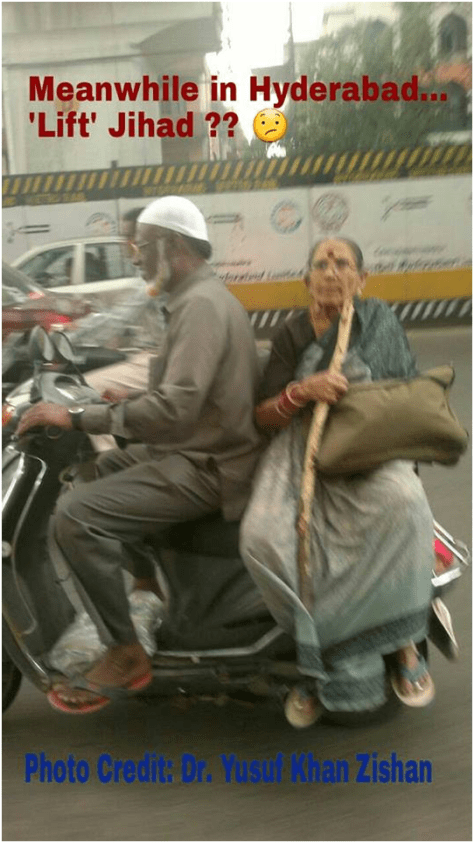
Lift Jihad: Yusuf Khan Zishan

This picture by YUSUF KHAN ZISHAN is circulating widely on Facebook. Received @ Kafila from Janaki Rajan who writes:

I was in Hyderabad on that day – August 19th, the day of the Telengana Intensive Household Survey, when people with two wheelers volunteered to help those arriving by trains to reach their homes as autos and taxis were not permitted to to ply that day… a spontaneous idea..

securedownload


Partha Chatterjee on Partha Chatterjee – An Interview with an Impostor: Partha Chatterjee

Guest Post by PARTHA CHATTERJEE

Continue reading Partha Chatterjee on Partha Chatterjee – An Interview with an Impostor: Partha Chatterjee

Long Years Ago We Made a Tryst, with…Mathematics

I thought it wasn’t that complicated. When you make a new nation, make sure everybody gets a place. A roughly equal place. When you undertake any development in that new nation, make sure the benefits equal the costs. These are easy equations, easy maths. Maa-tha-maa-tics, my school maths teacher would say portentously, full of meaning and threatening.

This summer, quietly, safe from the media’s attention, 17 more metres were added to the biggest dam of the Sardar Sarovar Project, a dam that was already 400-plus metres high. Being ‘weak at maths’, I hesitate to calculate the catchment area of this big big dam, only one of many big dams in the web of waterworks created by the Sardar Sarovar project. I am getting goosebumps writing these words – the Sardar Sarovar project. As I did way back in school, as a fifteen-year old with a mind like an occupation zone for textbooks. Nehru’s photo radiates in waves out from that mind, that iconic Bhakra Nangal photo with him pointing to something in the far distance. The blazing sun, the deep shadows, the monumental respectability of it all…now the photo is fused with a different, equally iconic image – that of Sunil Dutt’s youthful strides across a dam site in Hum Hindustani. Continue reading Long Years Ago We Made a Tryst, with…Mathematics

From Jadavpur University, Kolkata – ‘I am, one of those survivors, who has experienced a nightmare last night’: Tanumay Naskar 


Guest Post by TANUMAY NASKAR

[ This is an account of the events of last night in Jadavpur University, Kolkata, were students sitting in on a peaceful protest against university authorities inaction on a recent complaint of sexual harrassment. What followed (an attack from two fronts, by police and goons affiliated to the Trinamool Congress) brought back memories of the many times that students have been attacked mercilessly in JU. Currently, around 40 students have had to receive medical attention, and 38 are in police detention. Protests against this event are being organized today in Kolkata (at 4:00 in the afternoon, at Jadavpur University, and at 6:00 PM at JNU in Delhi, by the JNU Students Union]

Follow this link to read a detailed time-line of the events as they unfolded.

Follow this hashtag – ‪#‎hokkolorob‬ for details of how people are responding to the situation.


I am one of those survivors who has experienced a nightmare last night.
We were singing. We were dancing. We were peacefully protesting. 
When someone yelled, “Let’s make the barricades, the police is coming”. 
After that, we saw police (READ GOONS) of grade A, barred all the entrances and charged us with Lathis.

Continue reading From Jadavpur University, Kolkata – ‘I am, one of those survivors, who has experienced a nightmare last night’: Tanumay Naskar 


Demolitions in Aya Nagar, Delhi: Thomas Crowley

Guest Post (and photographs) by THOMAS CROWLEY

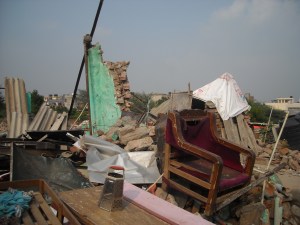
The media is all praise for the central government’s rescue efforts in Kashmir, despite the evident hollowness of the government’s claims to heroism. But the press has little to say about the brutal destruction authored by the government in its capital city. Thursday, September 11, saw another demolition drive in a city that has seen far too many of them, from the Emergency to the Commonwealth Games. The demolition took place in the South Delhi neighborhood of Aya Nagar, where residents say about 250 houses were destroyed.

Aya Nagar 1

Continue reading Demolitions in Aya Nagar, Delhi: Thomas Crowley

Of Money-in-the-Blood and Blood-Money: Ravi Sinha

Guest Post by Ravi Sinha

Recently, the Indian Prime Minister had occasion to report to the Japanese on his genealogy and haematic chemistry. Addressing a house-full of corporate honchos in Tokyo he declared, “I am a Gujarati, money is in my blood”. One does not know what percentage of Gujaratis would feel insulted by such a description. It can be asked, perhaps more meaningfully, if great civilizations are created by money-in-the-blood types and one may wonder if Gujarati greats such as Narsi Mehta, Narmad, Govardhan Ram or Gandhi, too, had money flowing in their blood.

There is also some irony in the situation – prime minister of a country with the largest number of world’s poor boasting about ‘money in the blood’ to the richest men of a country that has, in the post-war decades, made more money per capita than any other on the planet. This prime minister can be accused of many things but not of lacking in hubris unencumbered by learning and cultivation.

One may wonder about something else too. The Indians may deserve their new prime minister and all his speeches – on the Independence Day, the Teacher’s Day and on all the other days. After all, they have elected him. But what have the Japanese done to deserve this? What forces them, despite the depth and dignity of their civilization, to lap up such crassness and banality?

The answer can be given in one word – money. Continue reading Of Money-in-the-Blood and Blood-Money: Ravi Sinha

Thinking through the application for “clarifications” of transgender rights

Newspapers have been reporting about an application for clarification filed, it appears, by the Ministry of Social Justice and Empowerment with the Supreme Court about the NALSA judgment on transgender rights. Here is the full text of that application, and here is a very useful and short summary of its content. The reflections below follow from that summary.

Any move that makes the inclusion of trans-men, non-hijra trans-women, and genderqueer/trans folks in the SC judgment explicit is welcome. Many had written to the Ministry of Social Justice and Empowerment seeking this, following the MSJE report and the judgment. The principle of self-determination of gender identity without psychological and medical examination or surgery is upheld and that remains critical.
Continue reading Thinking through the application for “clarifications” of transgender rights

Gajanan Madhav Muktibodh: Put fire back into firewood


“ Why did Muktibodh  became uniquely significant in the summer of 1964? Why did …almost all the weeklies, monthlies and dailies started introducing him to their readers?” Fifty years ago, Shamsher Bahadur Singh, asked this question in the preface to Chand Ka Munh Tedha hai, the first anthology of poems of Muktibodh being compiled.

Muktibodh then, was in a state of coma , being brought to Delhi from  Rajnadgaon,a small town in Chhattisgarh, by his young writer comrades – like Harishankar Parsai, Srikant Verma and Ashok Vajpeyi, in a desperate, last ditch attempt to save their beloved elder poet. It was not be . He breathed his last on 11 September, 1964 at the AIIMS , before completing his 47th year. And in  the words of Shamsher, the story of heroic struggle of his brief life and tragic, untimely death turned him into an event for the world of Hindi literature.

Gajanan Madhav Muktibodh continues to be an event of Hindi literature, the full meaning of which is still being discussed. And yet, he as a poet was not interested in portraying events . He was more interested in the drama of the human soul, rather soul of a human being, ravaged, wrecked and fatally wounded by industrial modernity. Living the life of a lower middle class family man, constantly changing jobs and places in search of  a modestly secure life which would allow him to write the kind of poetry he wanted, he witnessed  the humanness and individuality of the people being crushed under the ruthless wheels of capitalist modernity. Continue reading Gajanan Madhav Muktibodh: Put fire back into firewood

मीडिया और मज़दूर: फ़ैज़ुल्लाह

Guest Post by Faiz Ullah

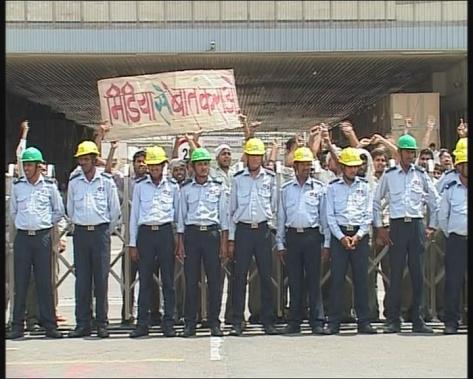
The following text is a version of a text originally written for Faridabad Majdoor Samachar, a workers’ paper distributed in Faridabad, Gurgaon and Delhi. It is an attempt to speak to the concerns often expressed by  workers’ about what they consider to be inadequate and unfair representation of their issues in the mainstream media

Maruti Suzuki Workers Demanding to talk to the Media

मीडिया और मज़दूर

समाज जैसे-जैसे बड़ा और जटिल होता जाता है वैसे-वैसे हमारे एक दूसरे से सम्बन्ध कमज़ोर होने लगते हैं। ऐसे में हम एक दुसरे को कैसे जानें, कैसे समझें? मीडिया के ज़रिये हम अपनी बात आगे रख सकते हैं, दूसरों की सुन सकते हैं और अपने तजुर्बों को साझा कर सकते हैं। चर्चा-बहस भी कर सकते हैं और किस तरह का समाज बनाना है उसकी एक साथ कल्पना कर सकते हैं। समाज में मीडिया की एक बड़ी भूमिका बनती है। वैसे तो मीडिया को आपकी और हमारी बातों को जगह देनी चाहिए पर आमतौर पर ऐसा होता नहीं है। हमारी बातों, हमारे मुद्दों को बड़े टीवी चैनल और अखबार हमेशा ही नज़रअंदाज़ करते रहे हैं।

Continue reading मीडिया और मज़दूर: फ़ैज़ुल्लाह

Striving for plurality in Media – The promises and shortcomings of TRAI’s recommendations on media ownership: Smarika Kumar

Guest post by SMARIKA KUMAR

TRAI published a set of recommendations on issues relating to media ownership on 12 August 2014. A summary of the key points of these recommendations may be found here. But what do these recommendations imply for the freedom of speech and expression in India? This post is an attempt to contextualise TRAI’s recommendations against this question.

From No Regulation on the Business of Speech to Some Regulation on the Business of Speech

In its introductory chapter, TRAI says that the objective of its recommendations is to achieve plurality of views and opinions in media. It states:

The objective of these recommendations is not, in any sense whatsoever, to curb the media or deprive it of its rights – that, in fact, would be a disservice to the Indian citizen – but to put in place suitable safeguards that would ensure citizens the right to obtain objective, unbiased and diverse views and opinions.” (para 1.5)

This is a remarkable move because the idea of media plurality has remained contested in the understanding of Article 19(1)(a) of our Constitution, which guarantees the right to freedom of speech and expression to Indian citizens. The whole dance began in 1961 with the judgment of Sakal Newspapers v. Union of India, where the government sought to regulate the number of pages a newspaper could carry. Since such regulation would make newspaper prices of smaller newspapers comparable to big newspapers, the government argued that it would enable the smaller newspapers to secure larger circulation. One can clearly see how this was an attempt at enabling plurality in the newspaper business, so that the smaller voices are not stifled by the big voices.

Continue reading Striving for plurality in Media – The promises and shortcomings of TRAI’s recommendations on media ownership: Smarika Kumar

Statement of concern regarding PM’s takeover of the Teacher’s Day

We are disturbed by the circulars issued by the CBSE and other authorities dealing with different systems like the Central Board of Secondary Education (CBSE), Directorate of Education, Delhi, Kendriya Vidyalaya Sangathan, etc. asking schools to make arrangements to ensure that all the school children across the country listen to the Prime Minister’s address to the children in their school premises on the occasion of Teacher’s Day on September 5.

It is an extraordinary and unprecedented step in the history of school education in independent India. Not only does this order treat children as passive and captive elements who do not have a view of their own, it also violates the international convention of Child Rights which says that children have a right to form opinion and therefore they need to be asked whether they would like to be part of such an extra-school activity beyond their usual school hours.

Although the MHRD has clarified verbally that this is a voluntary activity and not binding on the schools and children, yet the written orders by the authorities are still in effect asking the schools to furnish the status report by 2nd September and remain prepared for surprise inspections in this regard. Continue reading Statement of concern regarding PM’s takeover of the Teacher’s Day

‘लव जेहाद’ की असलियत – इतिहास के आईने में: चारू गुप्ता

Guest post by CHARU GUPTA

लव जेहाद आंदोलन स्त्रियों के नाम पर सांप्रदायिक लामबंदी की एक समकालीन कोशिश है. बतौर एक इतिहासकार मैं इसकी जड़ें औपनिवेशिक अतीत में भी देखती हूँ. जब भी सांप्रदायिक तनाव और दंगों का माहौल मज़बूत हुआ है, तब-तब इस तरह के मिथक गढ़े गए हैं और उनके इर्द गिर्द प्रचार हमारे सामने आये हैं. इन प्रचारों में मुस्लिम पुरुष को विशेष रूप से एक अपहरणकर्ता के रूप में पेश किया गया है और एक ‘कामुक’ मुस्लिम की तस्वीर गढ़ी गयी है.

मैंने 1920-30 के दशकों में उत्तर प्रदेश में साम्प्रदायिकता और यौनिकता के बीच उभर रहे रिश्ते पर काम किया है. उस दौर में लव जेहाद शब्द का इस्तेमाल नहीं हुआ था लेकिन उस समय में भी कई हिंदू संगठनों — आर्य समाज, हिंदू महासभा आदि –- के एक बड़े हिस्से ने ‘मुस्लिम गुंडों’ द्वारा हिंदू महिलाओं के अपहरण और धर्म परिवर्तन की अनेकोँ कहानियां प्रचारित कीं. उन्होंने कई प्रकार के भड़काऊ और लफ्फाज़ी भरे वक्तव्य दिए जिनमें मुसलमानों द्वारा हिंदू महिलाओं पर अत्याचार और व्यभिचार की अनगिनत कहानियां गढ़ी गईं. इन वक्तव्यों का ऐसा सैलाब आया कि मुसलमानों द्वारा हिंदू महिलाओं के साथ बलात्कार, आक्रामक व्यवहार, अपहरण, बहलाना-फुसलाना, धर्मान्तरण और जबरन मुसलमान पुरुषों से हिंदू महिलाओं की शादियों की कहानियों की एक लंबी सूची बनती गई. अंतरधार्मिक विवाह, प्रेम, एक स्त्री का अपनी मर्जी से सहवास और धर्मान्तरण को भी सामूहिक रूप से अपहरण और जबरन धर्मान्तरण की श्रेणी में डाल दिया गया. Continue reading ‘लव जेहाद’ की असलियत – इतिहास के आईने में: चारू गुप्ता

A civil-war is on the doorstep of India: Interview with Kancha Ilaiah by Mahmood Kooria

This is a guest post by Mahmood Kooria

We are publishing an English translation of an important interview of the intellectual and academic Kancha Ilaiah, conducted by Mahmood Kooria for the Malayalam weekly Mathrubhumi. While what I see as Professor Ilaiah’s underestimation and perhaps misreading of the historic role of the Communists in Indian politics leaves me severely uncomfortable, especially when he exonerates the right from commensurate charges of elitism, his framing of Hindustva and Modi’s appeal within the great stream of caste in the subcontinent is brilliant and thought-provoking, as always. 

Kooria conducted the interview as well as translated it in to English. His introduction is as follows, “At a time when there was no any such discussion, in 2002 Professor Kancha Ilaiah predicted that Narendra Modi will be the prime-ministerial candidate of Baratiya Janata Party. It has come true and now Modi is in the office. At this point, I talked with him at Moulana Azad Urdu University Hyderabad where he chairs the Centre for the Study of Social Exclusion and Inclusive Policy. In the conversation, he talked about the future of Modi government and he predicted that a civil war is going to break out in India if Modi does not cater the needs of backward classes. A Malayalam-version of this interview was published in the Mathrubhumi Illustrated Weekly (August 24, 2014).”

Mahmood Kooria: Ten years ago you wrote that Modi will be the prime ministerial candidate of BJP. What would be your response as your prediction has come true?

Kancha Ilaiah: Well, at that time I was predicting that based on the Left parties’ indifference to understand the caste question. The caste question is not been seriously taken by the Left parties. And, after Mandal, the BJP and the RSS wings started looking at caste-question seriously because when Babari Masjid was demolished they mobilized a lot of backward classes. Though they oppose Mandal reservation, they wanted the backward classes to be part of the Hindu religion. Around 1994, a non-Brahmin called Rajju Bhaiya became the Sarsanghchalak of the RSS. Then he recruited a large number of backward classes, large number of youth, and he promoted the people like Narendra Modi, Uma Bharati at that time. Earlier, the first backward-class chief minister of Uttar Pradesh was a BJP man: Kalyan Sing. He was the chief minister in 1992 when the Babri Masjid was demolished.

The Sangh Pariwar was responding to the backward class demands more. But the Left or the Congress was not responding to the OBCs. The Congress was responding to the Dalits and Muslims. There was upper caste all the time on the top. So, when Narendra Modi became the chief minister and this whole atmosphere was created, I was writing a column in The Hindu. I thought that this seems to be cause/course of India, since the Hindu religion is surviving because of the backward classes. It is inevitable for the Hindutva organizations that they will have to project an OBC for the prime-ministership. But there was resistance from within itself. It is not that the Brahmins have given up the principle of varna-dharma. After that article came and of course after my writing Why I am not a Hindu itself, the backward classes even within RSS seemed to use that material for their advantage. The communists did not use or recognize it. The question of labour and caste which I have been consistently raising, which was also part of their theory, they did not care about. So the Communist Party remained tightly under the control of upper castes.

Continue reading A civil-war is on the doorstep of India: Interview with Kancha Ilaiah by Mahmood Kooria

Strange yet familiar – race politics in the USA

images (1)

Here is a link to Jon Stewart on race politics in the USA, in the context of the recent shooting by a white cop of a black unarmed teenager in Ferguson.

See any resemblances to our own fair country and the politics of caste, class, gender and community here? So familiar are the doubts expressed, questions raised, biases proudly stated, you could be pardoned for thinking it’s not the US of A, but Mera Bharat Mahan.  Continue reading Strange yet familiar – race politics in the USA

Reading the Debate on the Planning Commission

I find it hard to think through the current debate on the Planning Commission (PC) outside a few things. The first is a clear centralisation of power at and within the PMO which I cannot help but be alarmed by. It’s all well and good when the decisions are those you agree with and all to easy to forget what centralisation does in the hands of, let’s please not forget so easily, a man whose IMHO has no H.

Its faults are easy to list but the PC (when it worked) did remain a space for thinking through a centre-state relationship and a development vision outside the government. It was a moment of articulation of intent with an (albeit diminishing) ability to put some weight behind it. I can’t quite bring myself to defend it because of what it refused to become in the more recent years, and the fights it refused to fight, but the need for such an autonomous voice remains. I don’t believe this new body will be anything other than a rubber stamp for a deeply authoritative PMO. In that, I am cautious of what will come. And by cautious, I mostly mean afraid.

Continue reading Reading the Debate on the Planning Commission

In The Virile God’s Graveyard

( I had spent a week in Gujarat in February-March,2007 and published two reports in TEHELKA. Reproducing the first part to remind myself that it was again in  Gujarat where  the fear of ‘Love Jihad’ was invented in its present incarnation.)

For many Gujaratis, Narendra Modi is a man who provides material and spiritual comforts to his people.Gujarat is calm. And is on the march. Every village of the state is a jyotigram. Narmada water is flowing in abundance in the canals quenching the thirst of Gujaratis. “Was not Surat flooded a few months back and did not the people of Gujarat suffer?” I ask my driver. “No, was not Narendrabhai there to take care of everything?”, he replies. How can anything go wrong when Narendrabhai is keeping watch!

Narendra Modi, you see, does not have a family and he works round the clock, we are informed. I find Modi smiling down at us benevolently from the digital billboards that dot Ahmedabad. There is no escaping his firm developmental smile. “The man has impressive qualities. Gujarat is bound to forge ahead under this workaholic chief minister. A citizen may have doubts about  his secularism, but even his enemies don’t doubt his competence,” writes Gunawant Shah, a popular Gujarati columnist. Continue reading In The Virile God’s Graveyard

Strength Of A Woman? Surabhi Shukla and Anubha Singh

Guest post by SURABHI SHUKLA and ANUBHA SINGH

The Sports Authority of India recently excluded Dutee Chand from the Commonwealth Games on the basis that her androgen level exceeds the ‘normal’ range thus enhancing her performance and giving her a competitive advantage over other women athletes. This test seeks to eliminate any ‘unfair’ advantage which some women may draw from tested ‘elevated’ androgen levels and is invoked only when women perform excellently in non-traditional competitive sporting arena. Failing to accommodate the role of environmental factors and variations in ‘female’ bodies, such tests are deep rooted in the ideas of gender stereotyping and discrimination and question women’s abilities to perform beyond traditional gender defined roles. Understanding international standards and the constitutional guarantee of fundamental rights in tandem, the unconstitutionality of these tests and the various rights violations visited upon the athlete Dutee Chand begin to surface. Instead of focusing on this incident as a conspiracy or a political scheme, it is time that the matter is seen as violation of rights of Dutee Chand both on the grounds of the test failing to meet international standards and on its patent unconstitutionality.


“I am completely shattered over the development. I am an athlete and wanted to bring glory to my country. All my efforts have gone astray,”

Dutee Chand as reported to the Daily Excelisor, 19th July, 2014 Continue reading Strength Of A Woman? Surabhi Shukla and Anubha Singh