Dear Student from CDS who pasted the posters criticising our collective effort to stand with JNU
Continue reading Mea Culpa, Mea Culpa! : To A Student from CDS
Dear Student from CDS who pasted the posters criticising our collective effort to stand with JNU
Continue reading Mea Culpa, Mea Culpa! : To A Student from CDS
This is a statement issued by the undersigned, scholars of Departments of Humanities and Social Sciences of IITs across the country.
We, the undersigned, scholars of Departments of Humanities and Social Sciences of IITs across the country, condemn the police action in JNU and the arrest of the JNUSU President Kanhaiya Kumar on the charge of sedition. We also denounce the repeated acts of violence unleashed by some lawyers and others at the Patiala House Court against faculty, students and the media, as well as police inaction regarding the same.
In addition, we appeal for media and public trials to cease and for civil society to instead focus on debating issues in an amicable and reasonable manner, without slandering JNU or questioning the academic integrity or patriotic fervour of JNU and its supporters. We criticise the general atmosphere of fear and intimidation that is being created to target the entire university. Given the fast polarizing political atmosphere in the country, we appeal to the media organisations to display greater responsibility and conduct television debates in such a manner that no prejudicial public opinion is created while there is an ongoing enquiry into the entire episode by the authorities concerned. Resorting to jingoism and sensationalism may cause avoidable hazards. Continue reading Solidarity Statement for JNU by IIT Scholars
After the arrest of JNUSU President Kanhaiya Kumar on 12 February and the entry of the police into JNU Campus, the situation has worsened for our students over the last few days. Sections of the mainstream and social media have carried unsubstantiated rumours targeting students, and organised groups have been making threats against them and indulging in hate speech in order to intimidate. The viciousness of this section of the media and amounts to a public trial and the frightening abuses being hurled at them make us feel deeply concerned for their personal safety and possibilities of their obtaining justice.
We strongly condemn these acts that create an environment of extreme prejudice and potential violence. We demand that the campus be allowed to return to normalcy at the soonest, so that students can return to their regular academic life in an atmosphere of trust and safety. The slander campaign against the University based on unsubstantiated claims not only tarnishes JNU’s image as one of best regarded institutions of higher education in the country, it also destroys JNU’s peaceful academic life. We are deeply concerned about the students’ future, which is being affected by this malicious campaign against JNU.
We the teachers of JNU wish that the Indian people should see through this orchestrated design to transform JNU into a space which will be unable to encourage or sustain critical thinking, so vital to the functioning of our democracy and our nation. It will also endanger the futures of thousands of students who are uncertain about the consequences that such a sustained campaign will have on their futures. We call upon the broadest possible sections of the Indian people to preserve the character of this much cherished national institution.
C.P. Chandrasekhar
G. Arunima
Ayesha Kidwai
Udaya Kumar
Pratiksha Baxi
Chirashree Dasgupta
Saradindu Bhaduri
Rajat Datta
Vinay Kumar Ambedkar
Ranjani Mazumdar
Jayati Ghosh
Navaneetha Mokkil
Rohith Azad
Ameet Parameswaran
Joy Pachuau
Yashadatta Alone
Rajarshi Dasgupta
Mohan Rao
Vikas Bajpai
Sujatha V
Parul Mukherjee
Ramila Bisht
Surinder Jodhka
Happymon Jacob
Supriya Varma
Mallarika Sinha Roy
Parnal Chirmuley
Nivedita Menon
Hemant Adlakha
Lata Singh
Urmimala Sarkar
Rajib Dasgupta
Rama Baru
Prachin Ghodajkar
Vikas Rawal
Partho Datta
Papia Sengupta
Ira Bhaskar
Sandesha Rayipa-Garbiyal
Veena Hariharan
Pradipta Bandyopadhyay
Biswajit Dhar
Neera Kongari
Geetha Nambissan
Brahma Prakash
Brinda Bose
Maitrayee Chaudhuri
Rashmi Barua
We at Kafila have been receiving amazing statements of solidarity with JNU and its elected students’ President Kanhaiya Kumar over the past three days. We are posting them below, along with affiliations: South Asia University (teachers and students); Grinnell College, USA, Ambedkar University Delhi Faculty Association, Democratic Teachers Network, Hyderabad, and over a hundred students from Department of English, Delhi University.
STUDENTS OF SOUTH ASIA UNIVERSITY
We, the students of South Asian University, New Delhi (comprising of students from eight SAARC nations – Afghanistan, Bangladesh, Bhutan, India, Maldives, Nepal, Pakistan and Sri Lanka) strongly oppose the idea that one’s nationalism be defined in terms of hatred towards another nation (for example, Indian nationalism be defined as hatred towards Pakistan, or vice versa). We cherish the common cultural and social heritage of the South Asian region, and shall not let any kind of jingoist nationalism being endorsed by any religious group, political party or state hinder our shared solidarity. However, in recent times, such groups and establishments have unleashed an attack on democratic and critical voices in our universities across the South Asian region, masked under religious conformity, state intervention or sometimes in the form of an act of terrorism.
Thus, we stand in complete solidarity with the student and faculty community of Jawaharlal Nehru University (JNU) in their collective struggle against the ongoing police intervention by slapping the baseless charges of sedition on many students, including the arrest of JNUSU President – Kanhaiya Kumar, and against the massive propaganda terming the JNU as ‘a den of anti-nationals’. We would like to reiterate that our collective nationalism stands responsible only to the interests of our people and our land, and not to the divisive forces which have had and are still trying to create boundaries between us.
STATEMENT OF SOLIDARITY WITH STUDENT PROTESTS IN INDIA, FROM STUDENTS, FACULTY, AND STAFF OF GRINNELL COLLEGE
Continue reading Statements of Solidarity For JNU From Various Quarters
This is a guest post by ADITYA SARKAR
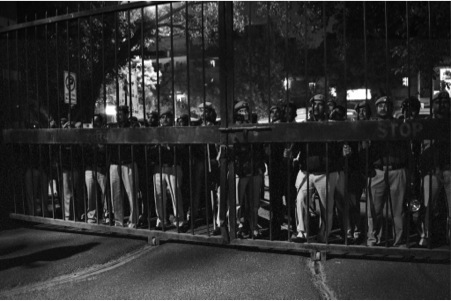
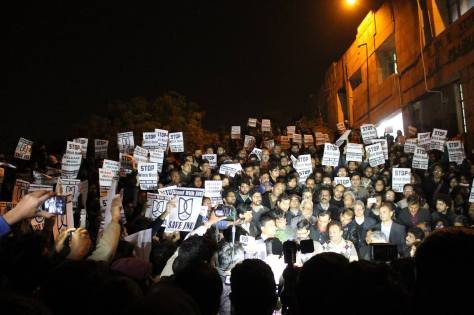
JNU has entered an indefinite state of siege. Police have been swarming all over campus, raiding hostels, picking up students and interrogating them. The ABVP, predictably, have been directing them to the lairs of ‘anti-national elements’. When immense demonstrations of public solidarity with the accused students were organized, ABVP activists have attacked these, in one case mounting a violent physical assault on a visiting speaker. The JNU administration has gone to the extent of cutting off the power supply to the microphones used at a protest meeting. At Patiala House on Monday the 15th of February, the BJP’s MLAs and what appear to be a group of lawyers have assaulted JNU students, faculty and supporters in full view of the police, with what can only be regarded as smug impunity. More than one observer has remarked that this is the Emergency all over again.
It is clear that the arrayed forces of the central government are pitted against a campus which has long been an object of hatred for the Right. There’s no telling how matters will develop in the days and weeks to come. So it might be necessary to step back a bit and consider the sequence of events that led to the current situation.
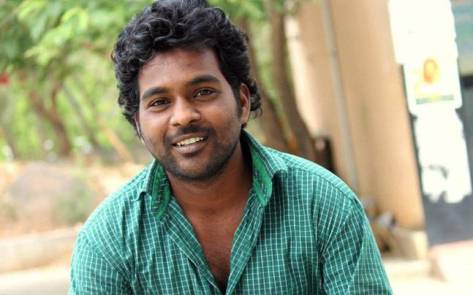
In the past month, JNU students organized a protest meeting which raised the issue of Kashmiri rights, and drew attention – just as Rohith Vemula’s protest in Hyderabad had done – to the execution of Afzal Guru in 2013. Since the mainstream news outlets systematically censor any attempt to reopen that extremely murky case, it’s worth reminding ourselves of precisely why the execution was so controversial. The terrorist attack on Parliament in December 2001 produced a police investigation on which serious doubt was cast from the beginning. Afzal Guru’s laptop and mobile phone, key pieces of evidence, had not been sealed prior to investigation. One of the other accused in the case, a Delhi University lecturer (who was later emphatically acquitted) was viciously framed by Zee News, which used the police charge-sheet to make a documentary ‘establishing’ his guilt. The court proceedings were even more revealing. The Supreme Court admitted that there was no hard evidence to conclusively establish Afzal Guru’s involvement in criminal conspiracy. But these admissions were merely qualifications to what was perhaps the most extraordinary decision in the history of the judiciary in independent India. Afzal Guru was eventually hanged in 2013 on the basis that only this would appease ‘the collective conscience of the nation society’.
Continue reading On framing JNU for an imaginary crime: Aditya Sarkar
In light of the glorious vigilantism being witnessed today, in which the lumpen lawyers at Patiala House are joining hands with Guardian of the Nation Horn-nob Go-Swamy on primetime TV A few years ago, finding myself in a heated but very enjoyable argument on why women change their surnames after marriage, somebody yelled from across the room, “What has JNU done to you?!”
I wasn’t surprised, only annoyed. Reducing my entire biography and political beliefs to an institution I attended once upon a time is a favourite pastime in India, when that institution happens to be JNU. I could have explained to the genius who shouted this that if I do have political opinions, neither were they surgically implanted in me at JNU nor will they wither away like the bourgeois state in Marxism if JNU ceases to exist. I should have been grateful that the JNU-phobia was posed through the formal courtesy of a query. Usually, it takes the form of a statement, “You JNU folk are all lunatics!”
In family settings, JNU-bashing is the preferred insult to shut down an argument, “It’s the JNU in you speaking!” At seminars, a question or a paper can be made illegitimate with the simple investigative exercise of determining if you’re from ‘a particular institution with a particular ideology’. Of course, the person asking the question has miraculously escaped institutions and ideology, remaining gloriously neutral in this fractured world.
Continue reading JNU Bashing is an old pastime, but things just got much, much worse
Dear Friends
Ever since the Hindutva right-wing attacks on the country’s youthful citizens intensified – from the Kiss of Love protests to the attacks on politicized dalit youth on the campuses of IIT Madras and HCU, and now, against JNU – we have come together several times as a group to defend our right to critical thinking, action, and speech and protest against atrocities in the name of national interest and culture. We have come out not to defend our petty interests but in defense of the Indian Nation as we imagine it – differently from the right-wing – as belonging to the communities of peasants, workers, students, artisans, dancers, singers, small traders, and thousands of other groups that contribute to the economy of this country, as the homeland of vast sections of underprivileged people denied humanity in the name of caste, class, culture, ethnicity and gender. Continue reading Fearless Minds and Heads Held High: To the CDS Student Community
This is a guest post by SANIA HASHMI
![]() |
Over the past couple of days, Zee News has been declaring to the world that Lance Naik Hanumanthappa died because he’d rather not breathe the same air as we at JNU do. That this statement is the worst possible trivialisation of a martyr’s death which is being exploited for petty sensationalism by our own version of the fourth estate is a separate issue, too nerve-wracking to be given precedence over the tragedy that unfolded in our campus yesterday with the arrest of our democratically-elected President Kanhaiya Kumar. A Zee News screen grab showed the word ‘Deshdrohi’ in 72-pt screeching yellow font pasted across Kanhaiya’s unsuspecting face. What was his fault? As an eyewitness from ground zero who was present at Sabarmati at the time of the protest, let me begin by answering the obvious questions that despite the numerous clarifications on part of the students and the JNUSU on social media and elsewhere are meeting deaf ears. It is interesting how despite being told that the Students Union and the student body in general had nothing to do with it and have in no uncertain terms condemned any alleged slogan against our country, the trolls are still putting decibels to shame with the very same questions. And no, I am not just talking about Nupur Sharma. So yes, let me begin by putting a few things on record in respect of Kanhaiya’s arrest. Did Kanhaiya organise the event? NO. Did he raise anti-India slogans? NO. Did he hail Pakistan? NO. Did he intervene to prevent ABVP-instigated violence in his capacity as the President? YES. Has he been vocal against the brahmanical tyranny of the RSS? YES. Has he been tirelessly fighting for the Rohith Vemulas of this world? YES. Has he been a torchbearer for students’ rights across the country? YES. Is this why you have arrested him? Is this your justice? If this struggle for a just society is anti-national in your eyes, we all plead guilty! If this is your witch-hunt for people who cannot conform to your ideological blinkers, we all plead guilty! If we must be party to the violent hooliganism of the ABVP in order to be called patriotic, rest assured, we all plead guilty!
WATCH KANHAIYA KUMAR’S SPEECH HOURS BEFORE HIS ARREST TO SEE WHAT THE GOVERNMENT OF INDIA CONSIDERS ANTI-NATIONAL. Clearly, Kumar’s fault was that he said in this speech that he doesn’t need the RSS’s certificate to be called a nationalist.
Continue reading Who’s Afraid of JNU? Or, The Sedition That Wasn’t: Sania Hashmi

In an unprecedented and draconian move, Delhi Police personnel entered the precincts of Jawaharlal Nehru University in Delhi yesterday afternoon, and began a search operation based on malicious complaints against ‘unnamed persons’ filed by a Delhi BJP leader in response to an event titled – ‘Country Without a Post Office’ – organized by some students to commemorate and protest against the execution of Afzal Guru on February 9th.
Continue reading Restore Normalcy in JNU, Release All Detained Students, Delhi Police Quit JNU
This is a guest post by AHMAD IBRAHIM

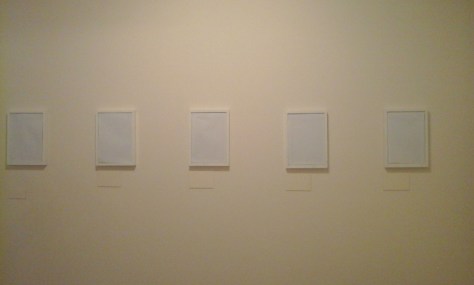
On the 7th of February, Tibetan artist Nortse and Indian artists Ritu Sarin and Tenzing Sonam had their photographs and art installations removed at the behest of the Chinese ambassador to Dhaka from the Dhaka Art Summit taking place in Shilpakala Academy in the capital of Bangladesh. The art project by Nortse was titled Prayer Wheel, Big Brother and Automan (2007) which showed the artist don traditional Tibetan clothes along with modern objects to show the surveillance that marks their lives. .Ritu Sarin and Tenzing Sonam produced a piece called “Last Words”, which consists of five facsmilies of five last messages written by the self-immolators in Tibet, along with their English translations. Ritu Sarin and Tenzing Sonam depicted Tibetan monks in the act of self-immolation as a way of political and religious protest against the occupation of Tibet by the Chinese government. At the end of the 6th of February, both artists were still depicted on the walls of the Art Summit. On the 7th, what greeted the visitors and patrons were blank stretches of white wall with white frames. It was as if the works had never existed. This is not the first time the Chinese government has tried to shut down political art work that aims to show the real face of Chinese occupation of Tibet. What is even more reprehensible is that it happened inside the walls of an institution that was proclaiming itself to be a haven of bold art and artistic expression. That the Chinese government could go to such lengths to silence an exhibition happening thousands of miles away shows the depth of their oppression over an entire country. Since February 2009, 142 Tibetans have self-immolated in their homeland, 120 dying from their actions.
A link to Tenzing Sonam’s twitter:
A Facebook link to a picture when the exhibit was still standing.
Ahmad Ibrahim is a Dhaka based journalist.
This is a guest post by DORODI SHARMA
In 2009, as a writer for a disability news portal I got a note back with one of my stories from the director of the organisation. “Suffering from disability”, I had written about someone. The note said “I have been a wheelchair user since the age of 15, and trust me I am not suffering.” Over the years, the first document I shared with new employees of the disability rights organisation I worked for in Delhi was a document on ‘disability etiquette’ that outlined not just terminologies but also the acceptable ways of interacting with people with disabilities. Yes, even in the 21st century we need to coach people on ‘interacting’ with a section of humanity. The discourse on importance of language has taken a new meaning when recently Prime Minister Narendra Modi called people with disabilities ‘divyang’ or people with divine abilities. The reaction to this has been outrage, to shaking of heads, to complete indifference. But it is important to talk about language when it comes to disability because it reeks of charity and reflects the patronizing attitude that prevents people with disabilities in India from getting their due.
Let us be very clear, disability is part of human diversity. Disability is as normal or abnormal as being a man, woman, gay, lesbian, person of colour, or any other variation of being human for that matter. Why then do we look at disability as something that needs to be ‘overcome’? With the proliferation of social media, we are now faced with innumerable ‘inspiration porn’ posts. Yes, inspiration porn. As described by Stella Young, Australian journalist, comedian, and activist – inspiration porn is objectifying people with disabilities for the benefit of non-disabled people. Young said the purpose of these images is to inspire people, to motivate them, so that they can look at them and think “Well, however bad my life is, it could be worse. I could be that person.” Precisely for that reason, people living with a disability are tired (and angry) of all the euphemistic terminologies used about them. No, they are not specially-abled, or differently abled, or ‘divyang’ for that matter. They are persons with disabilities and disability is a crucial part of their identity, just like one’s gender, race, or nationality.
Continue reading Disability, Language, and Empowerment: Dorodi Sharma
Dear young friends who went to Jhandewala on Rohith Vemula’s birthday,
And all those who were there in spirit, in Delhi, Hyderabad and elsewhere. I am writing to you because I think you might have all taken things much further than anyone can quite imagine or understand at present.
I am writing to you, for today and for tomorrow, so that every time in the future that young people gather to celebrate their friend Rohith’s birthday, we might all begin to have a different kind of conversation. So that the boundaries between mourning and celebration, between anger and joy may always remain blurred enough for us to know what to do next, each time.
Since you had a close encounter with the police and their colleagues in the RSS on Rohith’s birthday, I want to spend a little time thinking about them with you. Bear with me. I sincerely hope we will not have to bear with them for much longer.
This is a guest post by TONY KURIAN and SURAJ GOGOI
Students from different parts of the country started protesting since a Dalit student from one of the premier universities of the country (University of Hyderabad) committed suicide on account of caste discrimination by the administration. This new wave of protests can be traced back to Occupy UGC which erupted when University Grants Commission (UGC) decided to stop the monthly research stipend known as non-net fellowship of Rs 5000 and 8000 for MPhil and PHD respectively. The ministry concerned has since constituted a panel to review the decision on account of student’s protests. On the other hand, we are seeing India becoming part of World Trade Organization (WTO) agreement on higher education. These instances should not be regarded as isolated moments but should be viewed as an integral part of a story unfolding. It is in this context that one should locate the student movement of our time. The movement itself is receiving much media attention, and, it was mostly couched as a student’s movement against the government. For sure, the immediate demands of the students is to ensure justice to Rohith Vemula. The present wave of student movement is aimed at reclaiming academia both from an exclusivist culture which permeates much of our academic institutions, and increasing influence of free market logic in our higher education.
Why are we seeing a new wave of student protests?
To understand why a movement like that we are witnessing now is extremely important for a vibrant and democratic academic space, we should explore some of the unwritten rules of academia itself and our academic institutions. Research is a long-term investment for the person who undertakes it. Every day he or she spends as a full time researcher is a day forgone from the job market. For a research scholar to earn a permanent job, it can take anywhere between five to ten years after the master’s programme.
This is a guest post by KISHALAYA MUKHOPADHYAY
“Nobody killed Rohith Vemula”. Perhaps someday there will be a film like this. Perhaps someday people will start talking about the exploitation of dalits, the need for annihilation of caste, the systematic discrimination in all spheres of society including the government, corporate, bureaucratic and educational sectors. Perhaps caste as an analytical category will become as politically charged as gender has become post-Nirbhaya. Today there is a discourse around marital rape, victim blaming, domestic violence and other aspects of patriarchy that has transcended even if slightly only the small coterie of feminist scholars within whom this discourse used to be limited to. Continue reading “Nobody killed Rohith Vemula”: Kishalaya Mukhopadhyay
Statement of Solidarity for journalists’ movement in Chhattisgarh
We extend our unconditional support to the journalists’ movement proposed on December 21, 2015 in Jagdalpur district of Chhattisgarh demanding the enactment of a protection law for scribes and immediate release of two reporters Santosh Yadav and Somaru Naag, who were arrested in September and July this year in fabricated cases and charged under Chhattisgarh Special Public Security Act (CSPSA). We have seen a surge in the attack on right to freedom of expression in recent times where journalists have been intimidated, bullied and even killed in different parts of the country. This has raised questions over legitimacy of democratically elected governments and is threatening the basic principles of democracy. Continue reading Release Santosh-Somaru! Enact protection law for journalists, Repeal CSPSA: Statement of Solidarity
Report by BIGUL MAZDOOR DASTA
More than 500 jhuggis have been demolished by the Railways in Shakur Basti, Delhi. The demolition took place on last Saturday leading to the death of a six month old child, leaving many injured and an odd 10,000 people homeless in the chilling Delhi winters. The Railway minters Suresh Prabhu is allegedly shocked and unaware. Mr Kejriwal took to twitter to condemn the demolition. Ajay Maken of congress too condemned the demolition. On Monday Rahul Gandhi briefly visited the razed down site where once the shanties stood and thats that! All these electoral political parties have even made what is a tragedy and a very difficult time for the slum dwellers an opportunity of mud slinging onto each other which also doesn’t come as a surprise.

(Image : Courtesy – http://www.tehelka.com)
शोषित-उत्पीड़ित अवाम के महान सपूत बाबासाहब डा भीमराव अम्बेडकर की 125 जयन्ति के बहाने देश के पैमाने पर जगह जगह आयोजन चल रहे हैं। इसमें कोई दोराय नहीं कि वक्त़ बीतने के साथ उनका नाम और शोहरत बढ़ती जा रही है और ऐसे तमाम लोग एवं संगठन भी जिन्होंने उनके जीते जी उनके कामों का माखौल उड़ाया, उनसे दूरी बनाए रखी और उनके गुजरने के बाद भी उनके विचारों के प्रतिकूल काम करते रहे, अब उनकी बढ़ती लोकप्रियता को भुनाने के लिए तथा दलित-शोषित अवाम के बीच नयी पैठ जमाने के लिए उनके मुरीद बनते दिख रहे हैं।
ऐसी ताकतों में सबसे आगे है हिन्दुत्व ब्रिगेड के संगठन, जो पूरी योजना के साथ अपने अनुशासित कहे जानेवाली कार्यकर्ताओं की टीम के साथ उतरे हैं और डा अम्बेडकर – जिन्होंने हिन्दु धर्म की आन्तरिक बर्बरताओं के खिलाफ वैचारिक संघर्ष एवं व्यापक जनान्दोलनों में पहल ली, जिन्होंने 1935 में येवला के सम्मेलन में ऐलान किया कि मैं भले ही हिन्दु पैदा हुआ, मगर हिन्दू के तौर पर मरूंगा नहीं और अपनी मौत के कुछ समय पहले बौद्ध धर्म का स्वीकार किया /1956/ और जो ‘हिन्दु राज’ के खतरे के प्रति अपने अनुयायियों को एवं अन्य जनता को बार बार आगाह करते रहे, उन्हें हिन्दू समाज सुधारक के रूप में गढ़ने में लगे हैं। राष्टीय स्वयंसेवक संघ (RSS) के मुखिया जनाब मोहन भागवत ने कानपुर की एक सभा में यहां तक दावा किया कि वह ‘संघ की विचारधारा में यकीन रखते थे’ और हिन्दु धर्म को चाहते थे।
इन संगठनों की कोशिश यह भी है कि तमाम दलित जातियां – जिन्हें मनुवाद की व्यवस्था में तमाम मानवीय हकों से भी वंचित रखा गया – उन्हें यह कह कर अपने में मिला लिया जाए कि उनकी मौजूदा स्थितियों के लिए ‘बाहरी आक्रमण’ अर्थात इस्लाम जिम्मेदार है। गौरतलब है कि मई 2014 के चुनावों में भाजपा को मिली ‘ऐतिहासिक जीत’ के बाद जितनी तेजी के साथ इस मोर्चे पर काम चल रहा है, उसे समझने की जरूरत है।
प्रस्तुत है दो पुस्तिकाओं का एक सेट: पहली पुस्तिका का शीर्षक है ‘ंहेडगेवार-गोलवलकर बनाम अम्बेडकर’ ( http://www.isd.net.in/Publication/Booklet/2015/Booklet-66.pdf) और दूसरी पुस्तिका का शीर्षक है ‘ हमारे लिए अम्बेडकर’। (http://www.isd.net.in/Publication/Booklet/2015/Booklet-67.pdf)
पहली पुस्तिका में जहां संघ परिवार तथा अन्य हिन्दुत्ववादी संगठनों द्वारा डा अम्बेडकर को समाहित करने, दलित जातियों को मुसलमानों के खिलाफ खड़ा करने, भक्ति आन्दोलन के महान संत रविदास के हिन्दूकरण तथा छुआछूत की जड़े आदि मसलों पर चर्चा की गयी है। वहीं दूसरी पुस्तिका में दलित आन्दोलन के अवसरवाद, साम्प्रदायिकता की समस्या की भौतिक जड़ें आदि मसलों पर बात की गयी है। इस पुस्तिका के अन्तिम अध्याय ‘डा अम्बेडकर से नयी मुलाक़ात का वक्त़’ में परिवर्तनकामी ताकतों के लिए डा अम्बेडकर की विरासत के मायनों पर चर्चा की गयी है।
This is a Guest post by NASARUDHEEN MANNARKKAD
In a democracy, it is beyond argument that court procedures should be accountable and transparent. If the courts start to give its verdicts relying upon the false made up stories of police and the media influenced by its own make-believe ‘public opinion’, that spells disaster for democracy. There is nothing more dangerous than a manipulated and biased court verdict and that can be fatal to the public trust in the judiciary, which is the only claim for an unelected body to be credible before the nation. Continue reading Simply for Making Speeches Some Go to Jail in Kerala: Nasarudheen Mannarkkad

The Occupy UGC movement looks irrelevant or ridiculous to the middle and upper classes in India because it can be made to appear so by the media. Not surprisingly, television channels and leading dailies either ignored the protests altogether, or worse, focused on the apparently far more *critical* issue of the “vandalism” and “disfigurement” of the ITO metro station by the protesting students. Times of India said they were “brazening it out” after their acts of vandalism, and on social media including Kafila, these student vandals have been additionally belittled by some as misguided pawns in the hands of an apparent conglomerate of ambitious lefty professors from JNU! Basically, anything but a legitimate set of demands, some of which this poster from the movement tries to explain…

(Incidentally, it was this image that was painted on the walls of the ITO metro station. Personally I found it cheerful).
Anyway, as Camalita Naicker reminded us in her excellent article on South Africa here on Kafila, student protests against rising student fees and shrinking scholarships and fellowships are no flash in the pan but a burgeoning worldwide phenomenon cutting across political affiliations. This is because you don’t need to be a leftist to understand that in contemporary conditions, pursuing a higher education is both the only guarantee to economic security, and the one thing that may be denied to you if you are from the wrong side of the tracks.
We post below statements from #OccupyUGC and #Occupy SOAS in support of each other. These have been sent to us by Akash Bhattacharya, research scholar in history at JNU.
Continue reading We agree passionately: one world, one struggle, education is not for sale!
Yesterday, in a corner of Delhi-NCR known as Keshopur, a 22-year old sewage worker breathed his last, a final tortured breath inhaled inside a part of the vast network of sewage pipelines that map the city in their own cartography of waste. The pipeline was owned by the Delhi Jal Board, so its function was not simply to transport sewage, but to transform it into potable water through a portion of the pipeline that resembles a septic tank – a portion known as the ‘digester’.

That Vinay Sirohi, 22-year old contract worker with the Delhi Jal Board, who got married last year and had taken up part-time employment to help him get through college, lost his life in a part of the sewage pipeline called the ‘digester’ imparts something so grotesquely apposite to this tragedy that one almost doesn’t want to think about it. One often doesn’t, of course. One has the option of of flipping the page of the newspaper, of resting one’s eyes on more life-affirming images – English Premier League, Bollywood, Modi-Cameron Cameron-araderie…even Kejriwal’s homely navy-blue sweater and baggy trousers are a pleasant distraction. Anything that tells us that life as it was meant to be – humans wearing a clean sweater and trousers with a sofa to sit on after their stomachs and minds are fed and sated – is better than the thought of a body inside a pipe under the city. When I tried to save the image that you see above, the caption read djb_body_759. I don’t want to think about what that caption means. Does it mean the 759th body found inside the DJB’s sewage network? Does it mean the 759th body to have been recovered by the police this year, 2015? Does it mean the 759th body to have died in sewage pipelines across the country, or ever?